市场调整

Search documents
新经济动能支撑租赁需求 深圳写字楼市场凸显韧性
Zhong Guo Jing Ying Bao· 2026-01-22 05:24
Core Insights - The Shenzhen Grade A office market is undergoing structural adjustments in 2025, characterized by high new supply and a transformation in corporate leasing demand, leading to a "total pressure, structural differentiation" pattern [1] - New economic sectors such as consumer electronics, smart manufacturing, and brand expansion are becoming significant drivers of leasing demand [1] Supply and Demand Dynamics - In 2025, Shenzhen will see a peak in new supply with 15 projects entering the market, totaling nearly 1.16 million square meters, the highest in three years, while the overall vacancy rate is expected to rise by 1.8 percentage points to 26.2% [1] - The technology sector continues to dominate market demand, accounting for nearly 30% of transaction area, with smart manufacturing showing particularly strong activity [2][3] - Major tech and financial firms are contributing significantly to net absorption, with over half of the total net absorption in 2025 coming from these sectors [2] Rental Trends - Rental levels in the Shenzhen Grade A office market are expected to decline, with a year-on-year decrease of 11.1% in 2025 [4] - The market is experiencing increased tenant bargaining power, leading to more frequent lease restructuring negotiations to stabilize occupancy rates and reduce tenant turnover risk [4] Future Outlook - In 2026, over 1.5 million square meters of new supply is anticipated, with structural supply-demand contradictions expected to persist, maintaining high competition and continued pressure on rental rates and vacancy levels [5] - Tenants are shifting their focus from price-driven decisions to a comprehensive evaluation of cost-effectiveness, property management, and supporting facilities, benefiting high-quality office spaces in core business districts and emerging areas with mature amenities [5]

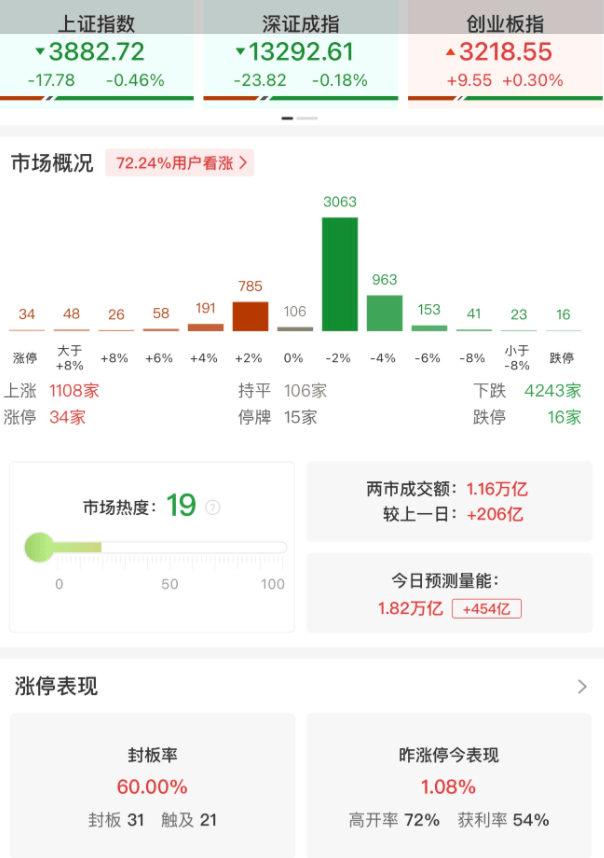
A股午评:三大指数分化,沪指跌0.46%创业板指涨0.3%,商业航天活跃,零售、房地产板块调整!超4200股下跌,成交1.16万亿放量195亿
Ge Long Hui· 2025-12-11 04:00
格隆汇12月11日|A股三大指数涨跌不一,截至午间收盘,沪指跌0.46%报3882.72点,深证成指跌 0.18%,创业板指涨0.3%,北证50跌0.09%。全市场成交额1.16万亿元,较上日成交额放量195亿元,超 4200股下跌。盘面上,风电设备、可控核聚变板块涨幅居前,商业航天板块再度活跃;零售、房地产、 福建板块调整。 ...


惊悚一跳,汗出如浆
猛兽派选股· 2025-11-21 04:12
Market Analysis - The market has entered an adjustment period since September 4, with diminishing upward momentum and shrinking trading volume, indicating a potential for increased pullback [1] - The analysis of market indices is crucial for position control, suggesting a proactive reduction in positions during horizontal market structures to manage risk exposure [1] - The recent gap down is a significant signal marking the beginning of a pullback cycle, emphasizing the need for defensive strategies in advance [1] Technical Indicators - The market appears to be approaching the 200-day weighted average price through a rapid decline, with sentiment indicators showing signs of overselling; however, a true rebound opportunity may require touching the 200-day moving average [2] - The combination of a convex reversal at the 50-day moving average and a gap down often leads to a strong bearish trend within a few days [2]

Thursday's market action is an adjustment as bull sentiment was extreme: Renaissance Macro's deGraaf
Youtube· 2025-11-13 22:06
Market Sentiment and Trends - Current market adjustments are seen as a natural response to previously extreme sentiment, with no significant disruption to long-term trends [3][4] - Improvement in market breadth is noted, particularly in healthcare and financial sectors, indicating a positive shift [4][6] Sector Performance - High-flying stocks in the Russell 3000, particularly in quantum and uranium sectors, are approaching oversold conditions, which may signal a potential rebound [2] - Healthcare and energy sectors are showing better performance globally compared to the US, suggesting a synchronization with international trends [6][7] Energy Sector Insights - The energy sector is experiencing a mixed performance, with refiners and certain marketing and equipment names showing relative strength, while overall sentiment remains lukewarm [11][12] - Stability in crude oil prices is crucial for the energy sector's performance; a significant drop could pose risks, but current conditions appear manageable [13]
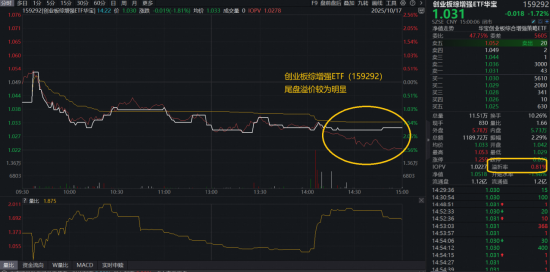
科技股普跌,创业板深陷回调,159292尾盘频现溢价,机构:市场轮动加快,科技股仍是本轮行情重要主线
Xin Lang Ji Jin· 2025-10-17 09:52
Market Overview - The three major indices declined, with the ChiNext index leading the drop, and less than 600 stocks rose throughout the day [1] - The total trading volume in the two markets was below 2 trillion, showing a slight increase compared to the previous day [1] - Key sectors such as new energy, AI, and consumer electronics weakened, while only a few concepts performed positively [1] Sector Performance - The ChiNext Enhanced ETF (159292) fell by 1.72%, marking two consecutive weeks of decline, with a trading volume of 11.89 million [1] - The top ten weighted stocks saw significant losses, with Sunshine Power dropping over 10% and a trading volume of 18.2 billion, the highest in the market [1] - Other notable declines included CATL, New Yisheng, and Shenghong Technology, each falling over 2%, while Zhongji Xuchuang rose by over 1% [1] Fund Flow - Major sectors such as electronics, power equipment, communication, and computing experienced significant outflows of funds, with the electronics sector seeing a net outflow of 18.6 billion [4] - The power equipment sector followed closely with a net outflow of 18.2 billion [4] Investment Sentiment - Analysts suggest that the current market adjustment presents a good opportunity to increase investments in China, emphasizing that external disturbances will not end the trend [3] - Long-term views remain optimistic, particularly for technology, cyclical, and financial sectors, with expectations for more policy support in the near future [3] ETF Advantages - The ChiNext Enhanced ETF tracks the ChiNext Composite Index, focusing on high-growth sectors such as power equipment, electronics, pharmaceuticals, computing, and communication, which together account for 66.8% of the index [5] - The ETF is positioned as a low-threshold investment option, allowing entry with a minimal investment [5] - The fund aims for excess returns through a quantitative multi-factor stock selection model, primarily based on fundamental factors [5]
杨德龙:A股慢牛长牛行情更利于投资者做好投资!拉动消费最好的手段就是启动一轮牛市,这是提振投资者信心最直接方式
Sou Hu Cai Jing· 2025-09-05 10:28
Market Overview - The recent market rally that began in late June has shown strong momentum, with trading volume increasing significantly, reaching historical highs from 2 trillion to over 3 trillion [1] - The margin trading balance surpassed 2 trillion for the first time on August 5, marking a ten-year high, and has since increased by 300 billion [1] - Compared to ten years ago, the current market's circulating market value has significantly increased, with the margin trading balance accounting for less than 3% of the circulating market value, compared to approximately 4.27% a decade ago [1] Market Dynamics - Despite the strong short-term surge, concerns among investors have arisen, leading some to consider profit-taking or withdrawal [4] - A recent adjustment in the market has occurred, but it is viewed as a normal correction within the ongoing bull market rather than a trend reversal [4] - Key drivers of the bull market include supportive policies aimed at economic growth and continuous capital inflow [4] Capital Inflow - Six main sources of capital inflow into the stock market have been identified: 1. Institutional funds, particularly from insurance companies, driving large-cap blue-chip stocks [4] 2. Household savings moving into the market due to low deposit rates, with household deposits increasing by 60 trillion over the past five years [4] 3. Funds flowing out of the bond market as investors shift to equity assets [4] 4. Capital from the real estate market due to a fundamental change in housing price expectations [4] 5. Capital exiting traditional industries, especially those with overcapacity [4] 6. Foreign capital inflow, which reached 10.1 billion in the first half of the year [4] Economic Impact - The current bull market is expected to act as a catalyst for economic growth, potentially becoming the fourth engine alongside investment, consumption, and exports [7] - A strong capital market can enhance wealth effects, leading to increased consumer spending and reduced overcapacity pressures [7] International Context - The U.S.-China trade tensions, particularly the tariff war initiated by the U.S., have had a limited impact on China's economy, with a shift in export structure reducing reliance on U.S. markets [6] - China's exports grew by 7% in the first half of the year despite a complex external environment [6] Future Outlook - The market is anticipated to experience a slow bull market rather than a rapid surge, with potential for multiple adjustments along the way [5] - The focus for future economic growth will be on consumption, finance, and technology sectors, with opportunities arising from adjustments in the market [9]
3800失而复得,谁在砸盘? | 谈股论金
水皮More· 2025-09-03 09:55
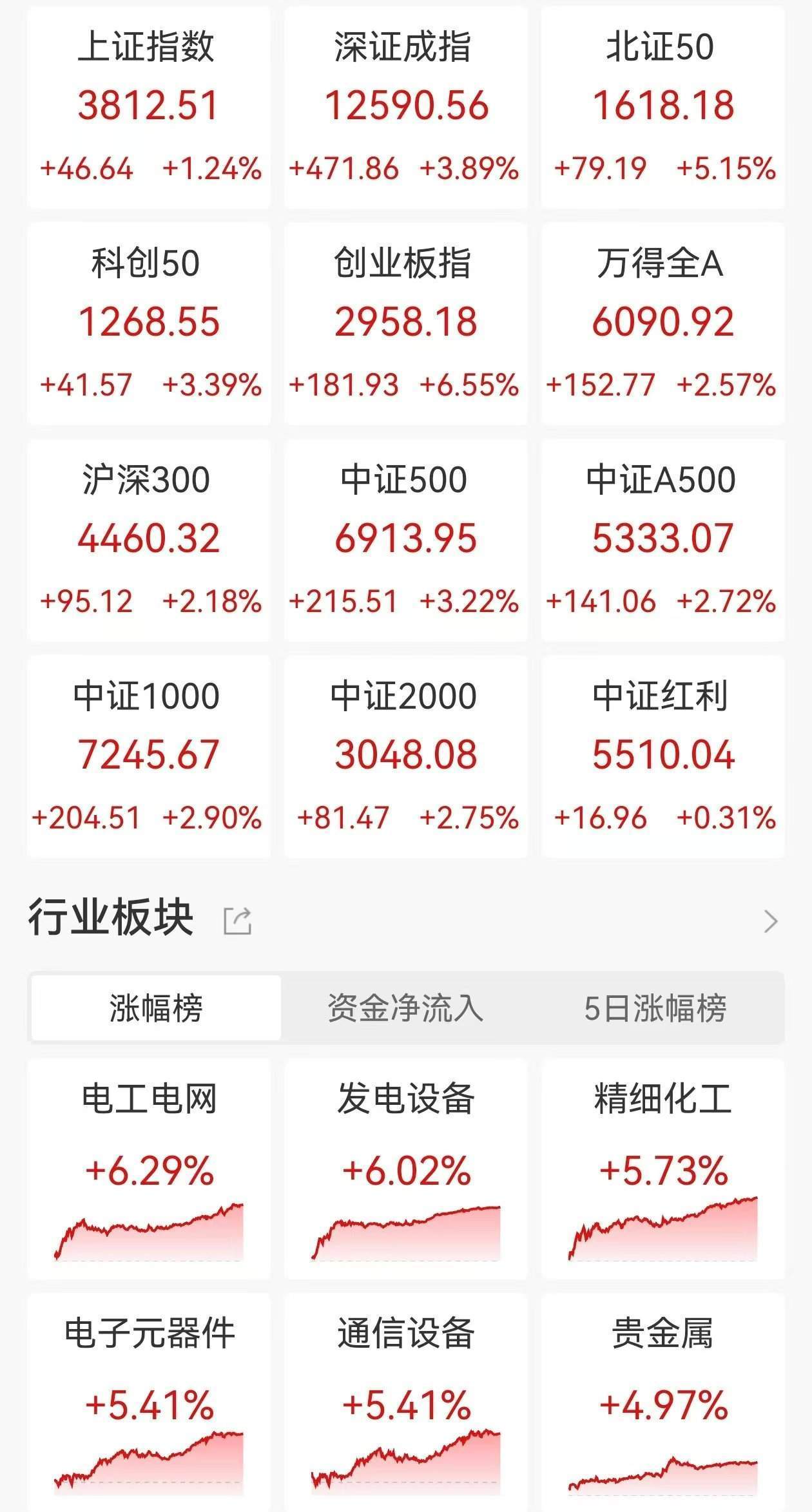
Core Viewpoint - The market is experiencing a shift from offensive to defensive strategies, indicating a potential adjustment phase ahead [11]. Market Performance - A-shares showed mixed results with the Shanghai Composite Index down 1.16% at 3813.56 points, while the Shenzhen Component fell 0.65% to 12472.00 points, and the ChiNext Index rose 0.95% to 2899.37 points [3]. - The total trading volume in the Shanghai and Shenzhen markets was 23641 billion, a significant decrease of 5109 billion compared to the previous day [3]. Key Stock Movements - Ningde Times played a crucial role in supporting the ChiNext Index, with three significant price surges during the day, each exceeding 2% [6]. - Despite the overall market decline, the ChiNext Index managed to close in the green due to Ningde Times' influence, even as nearly 1200 stocks fell [6]. - The semiconductor sector saw mixed results, with leading stock Cambrian Technology opening significantly lower and struggling to recover throughout the day [7]. Trading Dynamics - The semiconductor sector's attempts to rally were characterized as "self-rescue" efforts, with a peak increase of 2% during the day but ultimately closing down by approximately 0.85% [7]. - The overall market saw about 4560 stocks decline, while only 823 stocks advanced, indicating a broader market weakness despite the ChiNext's performance [7]. - The trading volume showed a cautious sentiment among investors, with a total outflow of 891 billion from the market, indicating a trend of risk aversion [8]. Sector Analysis - Financial stocks, including securities, insurance, and banking, experienced notable declines, with maximum drops of around 4%, 3%, and 1.5%-1.6% respectively, contributing to the overall market downturn [9]. - The lack of support from financial stocks during critical market moments raises questions about their role in market stabilization [10]. Future Outlook - The current market dynamics suggest a potential transition to a defensive posture, especially as the technology sector has shown signs of overheating [10]. - The importance of the 3800-point level for the Shanghai Composite Index is highlighted, with the absence of protective measures from key stocks indicating a lack of necessity for intervention at this point [10].

ETF午评:港股医疗ETF领涨2.08%,建材ETF易方达领跌2.49%
news flash· 2025-07-25 03:33
Group 1 - The Hong Kong medical ETF (159366) led the gains with an increase of 2.08% [1] - The energy and chemical ETF (159981) rose by 1.64% [1] - The Hong Kong innovative drug ETF (520880) increased by 1.47% [1] Group 2 - The construction materials ETF (159787) was the biggest loser, declining by 2.49% [1] - The infrastructure ETF (516950) fell by 2.46% [1] - The Hang Seng Internet Technology ETF (159202) decreased by 2.15% [1]
ETF午评:港股通100ETF领涨8.59%,金融科技ETF领跌3.15%
news flash· 2025-07-01 03:33
Group 1 - The ETF market showed mixed performance at midday, with the Hong Kong Stock Connect 100 ETF (159788) leading gains at 8.59% [1] - The Hong Kong Stock Connect 50 ETF (159712) increased by 6.29%, while the Hang Seng Hong Kong Stock Connect ETF (159318) rose by 3.46% [1] - Conversely, the financial technology ETFs experienced declines, with the leading financial technology ETF (516860) down by 3.15%, and others like Huaxia financial technology ETF (516100) and another financial technology ETF (159851) falling by 3.07% and 3.05% respectively [1] Group 2 - The market is undergoing adjustments, suggesting that investors may consider broad-based indices for bottom-fishing opportunities [1]
华龙证券:市场调整主要为情绪面因素导致,支撑性因素未变
天天基金网· 2025-03-25 11:20
Group 1 - The market adjustment is primarily driven by emotional factors, while supportive factors remain unchanged [2][3] - Policy support for the market's positive expectations is clear, with a focus on stabilizing the stock market [3] - Economic data from January to February shows steady improvement, indicating a positive outlook for the fundamentals [3] Group 2 - There are two key time points remaining in the year: the first is the opportunity arising from external risks settling in early April, and the second is the synchronization of the US and China economic and policy cycles mid-year [4][5] - The first key time point involves the resolution of external risks, including the outcomes of the US trade policy investigations and clarity on tariffs, which may lead to a focus on technology themes in April and May [5] - The second key time point anticipates a potential economic stimulus in China due to weakening US economic conditions and increased tariff pressures, which could lead to a significant style shift in the market [5] Group 3 - Short-term fluctuations in technology stocks do not alter the long-term positive trend, as the global economy is undergoing a restructuring under US tariffs, highlighting China's development potential [6][7] - Artificial intelligence is expected to drive industry transformation and technological innovation in China over the coming years, making it a central theme for the market [7] Group 4 - The upward trend in the market has not been broken, despite short-term fluctuations [8][9] - The current domestic economic recovery expectations remain intact, with A-share earnings likely to recover, and the market's short-term adjustments are not indicative of a trend reversal [9] - Focus areas include sectors with strong defensive characteristics and dividend advantages, such as emerging consumption, traditional Chinese medicine, renewable energy, and state-owned banks [9]