
医药医疗

Search documents
市场波动后,还有哪些指数比较低估?
雪球· 2026-02-09 08:29
Group 1: Market Overview - The market experienced significant fluctuations last week, particularly in precious metals, technology stocks, and US stocks [4] - The Hang Seng Tech Index has entered a technical bear market, with a decline of -21.56% from its recent high of 6715.46 points to a low of 5267.63 points [4] Group 2: Index Valuation - Major broad-based indices are generally at normal or higher valuation levels, with the Shanghai Composite Index and CSI 300 at below 50 degrees, indicating low relative valuation [7] - The Hang Seng Index (82.1 degrees), Sci-Tech 50 (82.2 degrees), and State-Owned Enterprises Index (82.7 degrees) are at higher valuation levels, suggesting caution in investment decisions [7] - The overall market represented by the CSI All A is at 62.3 degrees, indicating limited low-valuation opportunities [7] Group 3: Global Index Valuation - Compared to domestic indices, global broad-based indices are at higher valuation levels, with major indices in the US, UK, Germany, and Japan also showing elevated valuations [9] - The high valuations in global markets may lead to increased volatility with any external disturbances [9] Group 4: Dividend Indices - The CSI Dividend Index has a PE ratio around 10 and a dividend yield of 4.89%, which is historically low, indicating a need to wait for better opportunities [11] - The dividend yield of Hong Kong stocks remains higher than that of A-shares, influenced by market factors and tax considerations [12] Group 5: Strategy Indices - Among strategy indices, the Dividend Quality index is currently undervalued, while the 300 Value and 50 Fundamentals indices are relatively low [13] - The AH strategy, which involves arbitrage between A and H shares, is currently at a historically high valuation level [14] Group 6: Industry Indices - The pharmaceutical and consumer sectors are currently at lower valuation levels, with leading consumer indices still undervalued despite some recent rebounds [15] - The technology sector, represented by tech leaders and the All-Information Index, is at historically high valuation levels, driven by advancements in AI and cloud computing [18] Group 7: Other Indices - The agricultural sector, represented by indices like the CSI Livestock and CSI Agriculture, is at a low valuation level, reflecting its status as a "necessity consumer goods" sector [20] - The demand in the agricultural sector is relatively stable, which presents both advantages and limitations in terms of elasticity [21]


近九成投顾看涨全年 市场风格显现均衡迹象
Shang Hai Zheng Quan Bao· 2026-02-03 18:19
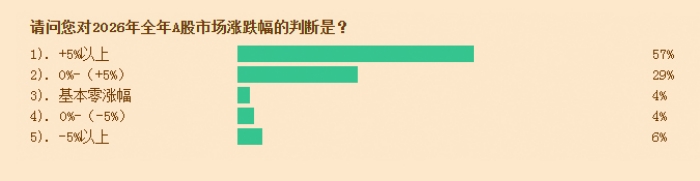
Core Viewpoint - Investment advisors are optimistic about the A-share market in 2026, with nearly 90% expecting an upward trend, and a consensus forming around economic recovery and increased capital inflow [6][7][13]. Group 1: Market Outlook - 88% of investment advisors are bullish on the A-share market for 2026, with 58% expecting an index increase of over 5% [6][14]. - Advisors predict a structural market characterized by fluctuations, with 46% expecting repeated index oscillations and significant gains in certain sectors [14][16]. - The consensus on macroeconomic recovery is strengthening, with 80% of advisors holding optimistic or neutral views on the economy [10][33]. Group 2: Asset Allocation - 67% of advisors recommend increasing allocations to equities, with 68% favoring stocks in the first quarter of 2026 [21][19]. - Advisors are shifting from a focus on growth stocks to a more balanced approach, with 42% expecting growth and dividend styles to converge [16][19]. - High dividend stocks are gaining attention, with 37% of advisors considering them reasonably valued, reflecting a shift in market sentiment [18][19]. Group 3: Investment Strategies - The predominant strategy remains flexible thematic investment, with 47% of advisors advocating for this approach, while 29% are focusing on value investing [22][33]. - Advisors suggest maintaining a higher equity position, with 80% recommending a minimum of 50% equity allocation for clients [22][33]. - The preference for direct stock investments is increasing, with 47% of advisors suggesting this method [21][19]. Group 4: Client Performance and Sentiment - 82% of advisors reported that their clients achieved profits in 2025, a significant increase of 23 percentage points from 2024 [29][27]. - High-net-worth clients are showing increased confidence, with 19% planning to increase their investments, indicating a rising risk appetite [31][27]. - The sentiment towards gold investments is also positive, with 57% of advisors expecting gold prices to continue rising [25][26].
今天,市场跳水三次……
Zhong Guo Ji Jin Bao· 2026-01-28 09:20
Market Overview - The market experienced fluctuations throughout the day, with the Shanghai Composite Index rising by 0.27%, the Shenzhen Component Index increasing by 0.09%, and the ChiNext Index declining by 0.57% [1] - A total of 1,739 stocks rose, with 84 hitting the daily limit up, while 3,640 stocks fell [2] Stock Performance - Among the rising stocks, 169 had gains exceeding 7%, 105 gained between 5-7%, and 252 rose between 3-5% [3] - Conversely, 2,912 stocks saw declines of 0-3%, 558 fell by 3-5%, and 58 dropped by more than 7% [3] - Resource stocks surged, particularly gold stocks, with Sichuan Gold achieving four consecutive limit-ups, and both Zhaojin Mining and Hunan Gold achieving three consecutive limit-ups [3] Sector Highlights - Oil and gas stocks collectively rose, with Tongyuan Petroleum and Zhongman Petroleum hitting the daily limit up, and China National Offshore Oil Corporation (CNOOC) increasing over 6% to reach a new high [4] - The non-ferrous metals sector strengthened, with silver stocks achieving seven consecutive limit-ups, and China Aluminum hitting the daily limit up, marking a 16-year high [5] - The coal sector also saw gains, with Shanxi Coking Coal and Shaanxi Black Cat both hitting the daily limit up [7] Declines - The pharmaceutical and medical stocks faced adjustments, with Bibet and Baipusai dropping over 10% [8] Trading Volume and Activity - The total trading volume reached approximately 29,922.93 billion, with a notable increase in trading activity for major ETFs, including the CSI 300 ETF from Huatai-PB, which exceeded 30 billion in trading volume [11]






收评:沪指震荡小幅上涨0.27% 黄金、石油等资源周期股集体大涨
Xin Hua Cai Jing· 2026-01-28 07:39
Market Overview - A-shares showed mixed performance on January 28, with the Shanghai Composite Index and Shenzhen Component Index slightly up, while the ChiNext Index experienced a small decline. The Shanghai Composite Index closed at 4151.24 points, up 0.27%, with a trading volume of 13,655 billion yuan [1] - Resource stocks led the market, particularly gold stocks, with Sichuan Gold achieving four consecutive trading limits, and China National Offshore Oil Corporation rising over 6% to a new high [1] - The total trading volume in the Shanghai and Shenzhen markets reached 29.7 trillion yuan, an increase of 70.4 billion yuan compared to the previous trading day [1] Sector Performance - Key sectors that performed well included precious metals, oil and gas extraction, steel, combustible ice, rare earth permanent magnets, and coal [2] - Conversely, sectors that saw declines included photovoltaic equipment, medical services, education, recombinant proteins, avian influenza, and Sora [2] Institutional Insights - According to Jifeng Investment Advisors, the A-share market is expected to continue a volatile consolidation pattern in February, with support from policies and valuations, while facing pressure from profit verification. They recommend focusing on cyclical sectors, technology growth, and defensive assets [3] - CITIC Construction highlighted the booming commercial aerospace industry, particularly the advancements in reusable rocket technology, which are expected to drive significant growth in the satellite communication market, projected to grow from $25.2 billion in 2025 to $83 billion by 2035, with a compound annual growth rate of approximately 13% [3] Company Updates - Amazon Web Services (AWS) announced a price increase of approximately 15% for its EC2 machine learning capacity blocks, marking the first price hike in about twenty years. This adjustment reflects the high demand for AI computing resources and the increasing scarcity of supply [4] - Haizhou Intelligent, a subsidiary of Suzhou Keda, announced a price adjustment for certain products, with increases ranging from 10% to 30%, effective March 1, 2026. This adjustment affects a range of products including storage series, front-end cameras, and servers [8]
我国专利含金量不断提升
Xin Hua Wang· 2026-01-26 02:58
Core Insights - The core focus of the news is on the progress of intellectual property work in China by 2025, highlighting significant increases in patent grants, trademark registrations, and the overall quality of patents [1][2]. Group 1: Patent and Trademark Statistics - By 2025, China authorized 972,000 invention patents, received 78,000 PCT international patent applications, and registered 4.206 million trademarks [1]. - By the end of 2025, the effective number of domestic invention patents in China (excluding Hong Kong, Macau, and Taiwan) is expected to reach 5.32 million, with a high-value invention patent ownership rate of 16 per 10,000 people [1]. Group 2: Quality Improvement Measures - The National Intellectual Property Administration (NIPA) has implemented various measures to enhance patent quality, including adjusting indicators to focus on high-value patents and eliminating financial subsidies for patent applications [2]. - NIPA has emphasized the importance of practical value and technological content in patents, discouraging the "quantity over quality" approach [2]. Group 3: Industry Contributions - Enterprises have become the main contributors to high-value invention patents, with 280,000 companies holding 1.764 million high-value invention patents, accounting for over 75% of the total [4]. - The value added by patent-intensive industries has increased from 12 trillion yuan in 2020 to over 18 trillion yuan in 2024, contributing significantly to GDP growth [4]. Group 4: Employment and Economic Impact - The employment in patent-intensive industries reached 52.67 million in 2024, an increase of approximately 1.9 million from the previous year, demonstrating a positive impact on economic stability and job creation [4]. - The digital economy-related industries within patent-intensive sectors have seen a continuous increase, with the combined value added of information and communication technology manufacturing and services exceeding 8 trillion yuan, accounting for over 40% of the total [5].
私募大佬胡建平,重磅发声!
中国基金报· 2026-01-23 06:54
Core Viewpoint - The global economic landscape is undergoing profound changes, yet market pricing has not fully reflected these shifts. The construction of a unified market is expected to enhance industrial quality and efficiency, with opportunities in overseas expansion, the pharmaceutical industry, and AI technology being highlighted as key investment themes for the future [2][4][12]. Investment Insights - In reviewing investment operations for 2025, the company noted gains in sectors such as biopharmaceuticals, new consumption, AI applications, and precious metals, while acknowledging missed opportunities in the AI supply chain affecting industries like electricity and PCB [5]. - The company emphasizes the importance of value investing and the integration of AI tools to enhance investment decision-making, aiming to combine professional judgment with technological capabilities [5][3]. Market Dynamics - The company observes that the capital market's response to changes in the global economic structure has been slow, with many assets, particularly in China, remaining undervalued. The rising prices of gold and certain mineral resources are seen as initial indicators of this shift [5][6]. - The Chinese capital market has experienced significant changes, with a notable recovery from previous bubbles and a shift towards a more robust economic structure, particularly in green industrial revolutions and sectors like biopharmaceuticals and semiconductors [6][10]. Opportunities in Overseas Expansion - The company identifies overseas expansion as a long-term investment theme, highlighting the advantages of China's high-quality human resources across various fields, which positions it well for global investments [11]. - The focus on overseas opportunities includes sectors such as computing supply chains and biopharmaceuticals, reflecting a shift from traditional investment strategies to a more global perspective [11]. Pharmaceutical Industry Outlook - The pharmaceutical sector is viewed as entering a new growth phase, with significant potential for innovation and international collaboration. The industry is transitioning from generic drug manufacturing to research and development, with a strong emphasis on clinical standards and innovative drug policies [13]. - The competitive landscape in pharmaceuticals is expected to intensify, with a focus on high-stakes innovation and the potential for significant market shifts as companies navigate the clinical development process [13]. Consumer Sector Trends - The consumer sector is experiencing a transformation, with traditional consumption patterns evolving. Opportunities are emerging in service-oriented consumption and innovative supply chain efficiencies, driven by new consumer demands [14]. - The company notes that AI remains a critical area for investment, with the potential for significant disruptions in various industries as AI applications continue to develop [14].

A股三大指数收跌,沪指险守4100点
Guan Cha Zhe Wang· 2026-01-16 07:33
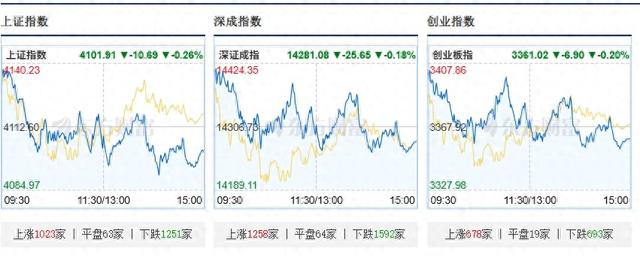
Market Performance - The A-share market opened high but closed lower, with the Shanghai Composite Index down by 0.26%, barely holding above the 4100-point mark [1] - The Shenzhen Component Index fell by 0.18%, closing at 14281.08 points, while the ChiNext Index decreased by 0.2%, ending at 3361.02 points [1] Sector Performance - Approximately 3000 stocks in the Shanghai and Shenzhen markets were in the red, with total trading volume reaching 3.06 trillion [3] - The semiconductor, robotics, electric grid equipment, and computing hardware sectors saw significant gains, with stocks like Tianyue Advanced and Tongfu Microelectronics hitting the daily limit [3] - Robotics concept stocks also performed well, with companies such as Wuzhou New Spring and Founder Electric reaching their daily limit [3] - The electric grid equipment sector surged, with stocks like Siyuan Electric and Jicheng Electronics also hitting the daily limit [3] - Conversely, sectors such as AI applications, oil and gas, pharmaceuticals, and digital currencies experienced declines, with AI application stocks facing a wave of limit-downs, including Xinhua Du and Tianxia Xiu [3]
AI for Scicence
小熊跑的快· 2026-01-11 01:38
Core Viewpoint - The article emphasizes that AI in healthcare is just a part of a broader trend known as "AI for Science," which is driving scientific innovation across various fields, particularly in molecular materials and drug discovery [1][2]. Group 1: AI in Healthcare - OpenAI's new ChatGPT feature is positioned as a "trusted medical advisor," capable of analyzing medical records to enhance patient care and influence retail healthcare products [1]. - The introduction of ChatGPT Health is seen as a watershed moment that could reshape how patients access medical information and the products they choose for treatment [1]. Group 2: Data as the Foundation - The article argues that the most critical foundation for AI is data, with coding and medicine being the two fields that possess the most comprehensive datasets [2]. - Major AI companies are developing vertical models specifically for the medical sector, indicating the industry's potential for innovation driven by data [2]. Group 3: AI for Science - The term "AI for Science" is highlighted as a fitting description for AI's role in driving scientific advancements, particularly in natural sciences like chemistry and physics [2][3]. - AI projects in molecular materials, such as those for electrolyte solutions, are demonstrating rapid advancements and precision in finding optimal configurations for different environments [2]. Group 4: Drug Discovery Innovations - Tsinghua University's AI-driven platform, DrugCLIP, has significantly accelerated drug virtual screening, achieving a speed increase of one million times and covering the human genome scale [3][4]. - The AuroBind system, developed by Shanghai Jiao Tong University, acts as a sophisticated tool for drug discovery, efficiently identifying promising drug candidates among millions of compounds [4][5]. - Traditional drug discovery methods are inefficient and costly, while AuroBind enhances the process by predicting protein-ligand interactions and their therapeutic effects, akin to using GPS for navigation [5].

继续涨!脑机接口概念再掀涨停潮,三博脑科连续“20cm”封板
2 1 Shi Ji Jing Ji Bao Dao· 2026-01-06 09:39
Core Viewpoint - The A-share market saw a collective rise in its three major indices, with the Shanghai Composite Index reaching a ten-year high, driven by strong performance in the brain-computer interface sector [1] Group 1: Market Performance - On January 6, the A-share market indices collectively rose, with the Shanghai Composite Index opening high and continuing to climb [1] - The brain-computer interface concept stocks maintained strong momentum, with companies like Beikang and Sanbo Brain Science hitting their daily price limits [1] Group 2: Company Developments - Elon Musk announced via social media that his company Neuralink plans to start large-scale production of brain-computer interface devices by December 31, 2026, and will advance nearly fully automated surgical procedures [1] - Merge Labs, a startup co-founded by OpenAI CEO Sam Altman, announced its spin-off to focus on non-invasive brain signal reading technology using ultrasound, aiming for broader and more precise interpretation without electrode implantation [1] Group 3: Industry Insights - According to a report by Guokai Securities, brain-computer interfaces are at the forefront of artificial intelligence technology and are expected to accelerate applications in medical, mental health, rehabilitation, and health management sectors with policy support [1] - Since 2025, both domestic and international AI technologies, products, and commercial applications have rapidly developed, with the pharmaceutical industry being a key application area, indicating significant potential for AI in drug development, auxiliary diagnosis, and services [1]

A股三大股指涨幅扩大,深证成指、创业板指涨1%,沪指涨0.53%!可控核聚变、医药医疗、商业航天、汽车产业链领涨,近4400股上涨
Ge Long Hui· 2025-12-19 02:40
Group 1 - The A-share market saw an expansion in gains, with the Shenzhen Component Index and the ChiNext Index both rising by 1%, while the Shanghai Composite Index increased by 0.53% [1] - Sectors such as controllable nuclear fusion, pharmaceuticals and healthcare, commercial aerospace, and the automotive supply chain experienced significant gains [1] - Nearly 4,400 stocks in the Shanghai, Shenzhen, and Beijing markets rose [1]
