
科技互联网

Search documents
长城基金余欢:继续关注成长板块,人形机器人有望量产加速
Xin Lang Ji Jin· 2025-11-12 04:03
Core Viewpoint - The A-share market has experienced increased volatility since November, showing significant signs of style switching, with traditional value sectors like banks and utilities performing well, while previously strong sectors such as metals, new energy, and innovative pharmaceuticals have seen increased fluctuations [1] Group 1: Market Outlook - The market is expected to remain relatively volatile towards the end of the year, awaiting new policy signals, with a likelihood of continuing or improving economic conditions into the next year [1] - The overall AI sector remains strong, indicating potential growth opportunities despite the market's fluctuations [1] Group 2: Investment Focus - Continued focus on growth stocks, particularly in the following areas: - Hong Kong technology and internet sectors with reasonable valuations post-adjustment [1] - Sub-industries benefiting from AI technology, including hardware infrastructure, robotics, smart driving, and AI applications [1] - Growth-oriented consumer sub-industries such as innovative pharmaceuticals, gaming, and overseas consumer products [1] Group 3: Robotics Industry - The humanoid robotics sector is anticipated to see significant catalysts in the short term, including the launch and mass production plans of new generation robots by leading overseas companies and the listing processes of domestic leading robotics firms [1] - The industry is expected to enter a phase of accelerated mass production, making it a key area to watch [1]

港股速报|港股小幅高开 创新药板块早盘走强
Mei Ri Jing Ji Xin Wen· 2025-11-12 02:41
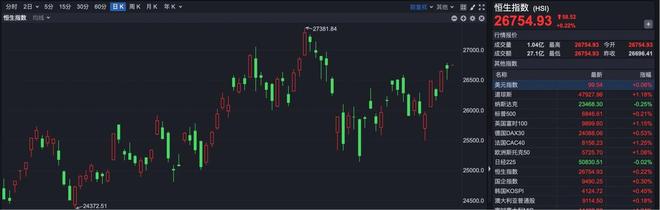
Group 1 - The Hong Kong stock market opened slightly higher, with the Hang Seng Index at 26,754.93 points, up 58.52 points, a gain of 0.22% [1] - The Hang Seng Tech Index reported 5,939.69 points, increasing by 15.30 points, a rise of 0.26% [3] Group 2 - Heisai-W (HK02525) announced a net revenue of RMB 795 million for Q3, a year-on-year increase of 47.5%, and a net profit of RMB 256 million, turning from loss to profit. The full-year net profit guidance was raised to between RMB 350 million and RMB 450 million, with Q4 net revenue expected to be between RMB 1 billion and RMB 1.2 billion, a year-on-year growth of approximately 39% to 67%. However, Heisai's stock fell over 10% in early trading [4] - China General Nuclear Power New Energy (HK01811) reported a cumulative power generation of 15,753.4 GWh for the first 10 months, a decrease of 3.5% year-on-year [6] - Dongyao Pharmaceutical-B (HK01875) announced a revenue of RMB 622 million for the nine months ending September 30, 2025, with a net loss attributable to equity holders of RMB 3.371 million [6] Group 3 - The innovative drug sector saw collective gains in early trading, with BeiGene rising over 4%, Kailaiying up over 1.8%, and Zhaoyan New Drug, WuXi AppTec, and WuXi Biologics each increasing by over 1% [8] - In other sectors, tech stocks showed mixed performance, with Xiaomi up over 2%, Tencent and NetEase rising over 1%, while Alibaba and Baidu fell over 2%. Real estate stocks were active, with Shimao Group increasing over 3%, and some automotive stocks opened higher, with XPeng Motors up over 2% [9] Group 4 - According to China Merchants Securities, the recent volatility in the Hong Kong stock market is partly due to investors taking profits, but this expectation gap creates investment opportunities. With a turning point in the U.S. government shutdown and an upward revision of external liquidity expectations, the market may open new upward space after consolidation [10]

跨境ETF总规模突破9000亿元!港股通互联网ETF、恒生科技指数ETF、恒生科技ETF、中概互联网ETF规模居前
Ge Long Hui· 2025-11-11 03:49
Group 1 - The total scale of cross-border ETFs has surpassed 900 billion yuan, reaching 903.3 billion yuan, with a year-to-date increase of 113% from 424 billion yuan at the beginning of the year, indicating strong investor interest in cross-border investment opportunities [1] - Southbound funds have cumulatively net purchased over 5 trillion Hong Kong dollars in stocks, with a net purchase of 6.654 billion Hong Kong dollars on November 10, contributing to a total net inflow of over 1.3 trillion Hong Kong dollars this year [1] - The largest share of cross-border ETFs is in the Hong Kong market, accounting for 74.69% of the total, with a scale of 676.4 billion yuan, followed by the US market at 17.72% with 160.5 billion yuan [1] Group 2 - The top 20 cross-border ETFs include the Hong Kong Internet ETF with the highest net asset value of 84.8 billion yuan, followed by the Hang Seng Technology Index ETF, Hang Seng Technology ETF, and China Concept Internet ETF, each exceeding 40 billion yuan [2] - The Hang Seng Index and Hang Seng Technology Index have both gained over 30% this year, showcasing strong performance among major global indices [2] - The Hong Kong market has experienced rapid sector rotation, focusing on growth-oriented sectors with strong earnings and price elasticity [2] Group 3 - Long-term outlook for the Hong Kong market is optimistic, with expectations of a recovery driven by improved supply-demand dynamics, AI technology advancements, easing US-China tensions, and supportive monetary policies [3] - The capital expenditure and R&D investments in the technology sector are expected to translate into corporate profits, serving as a new growth engine [3] - The combination of improved fundamentals, upward revisions in profit expectations, and valuation recovery is anticipated to drive a slow bull trend in the Hong Kong market [3] Group 4 - The US stock market is expected to continue its upward trend, driven by strong economic growth supported by macro policies such as interest rate cuts, tax reductions, and regulatory easing [4] - Investment in artificial intelligence is propelling technological prosperity, contributing positively to the US market [4] - The recent rise in US stocks is primarily driven by sustained profit growth rather than speculative bubbles, indicating a healthy market environment [4]
小鹏汽车大涨超14%!近期发布第二代VLA大模型,智能驾驶体现更强大的泛化性
Mei Ri Jing Ji Xin Wen· 2025-11-11 02:29
Core Viewpoint - The Hong Kong stock market showed mixed performance with technology and automotive stocks fluctuating, while XPeng Motors made significant advancements in AI technology with the launch of its VLA2.0 model [1][2] Group 1: Market Performance - The three major indices in the Hong Kong stock market opened high but closed lower, with technology stocks showing mixed results and some automotive stocks gaining strength [1] - The Hang Seng Technology Index ETF (513180) saw a slight increase, with major holdings like Alibaba and JD.com declining, while XPeng Motors, Baidu, and Xiaomi led the gains, with XPeng Motors rising over 14% [1] - The Hong Kong Stock Connect Automotive ETF (159323) experienced a rise of over 2.5%, driven by strong performances from XPeng Motors, Zhejiang Sebao, Li Auto, Geely, and Ganfeng Lithium [1] Group 2: Technological Advancements - XPeng Motors recently unveiled four key applications related to "Physical AI" during its 2025 XPeng Technology Day, including the second-generation VLA model, Robotaxi, a new generation of IRON humanoid robots, and a flying car [1] - The VLA2.0 model is noted for its higher efficiency and faster response times, eliminating the traditional language translation step to enable direct action from visual input [1] - According to Shenwan Hongyuan, VLA2.0 demonstrates enhanced generalization capabilities and can achieve human-like feedback in certain scenarios, indicating potential spillover of technology into other fields such as robotics and low-altitude economy [2] Group 3: Related ETFs - The Hong Kong Stock Connect Automotive ETF (159323) focuses on the new energy vehicle sector, featuring a leading proportion of passenger cars and covering automotive parts and smart technology, poised to benefit from the robotics technology wave [3] - The Hang Seng Technology Index ETF (513180) includes a mix of soft and hard technology, showcasing high growth potential with core Chinese tech assets like Xiaomi, NetEase, Tencent, Alibaba, and Meituan, providing a way for investors without a Hong Kong Stock Connect account to access leading tech stocks [3]
懵了,4月以来最惨!美联储,降息大消息
Sou Hu Cai Jing· 2025-11-08 00:51
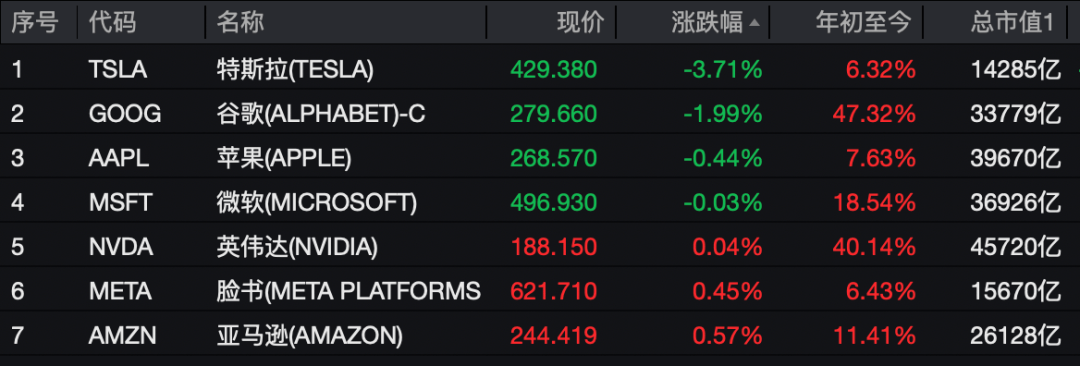
Market Performance - The three major US stock indices experienced a cumulative decline this week, marking the worst week since early April, with the Nasdaq down 3.04%, the Dow down 1.21%, and the S&P 500 down 1.63% [3][2] - Technology stocks dragged down the Nasdaq, with the US Technology Seven Index falling 0.56% and Tesla dropping 3.71% [3][4] Gold Market - Gold prices showed volatility, rebounding to $4000 per ounce on November 7, with a cumulative decline of 0.06% for the week [7][6] - The gold market remains under pressure due to the strong US dollar and the ongoing government shutdown [6][7] Government Shutdown Impact - The US government shutdown has entered its 39th day, with negotiations between Democrats and Republicans stalled, leading to significant economic impacts [10][12] - The Congressional Budget Office estimates that if the shutdown lasts six weeks, economic losses could reach $11 billion, and $14 billion if it lasts eight weeks [12] Federal Reserve Interest Rate Debate - Internal debates within the Federal Reserve regarding a potential interest rate cut in December have intensified, with a 66.5% probability of a 25 basis point cut and a 33.5% chance of maintaining current rates [17][16] - Fed officials express differing views on the necessity of a rate cut, with some advocating for a more aggressive approach due to rising credit market pressures [16][13]



刘强东喊征技术垄断暴利税,该征吗?
经济观察报· 2025-11-07 09:53
Core Viewpoint - The article discusses the potential implementation of a "windfall tax" on technology monopolies, similar to existing taxes in the energy sector, highlighting the trend of increasing tax regulation on tech companies [2][3]. Group 1: Windfall Tax Concept - Windfall tax is a tax levied on excess or unexpected profits, aimed at companies that meet specific government criteria [2]. - The idea of imposing a 90% windfall tax on tech monopolies, as suggested by Liu Qiangdong, is intended to fund public services such as pensions and education [2]. - Currently, there is no specific windfall tax for technology monopolies overseas, but there is a general trend towards stricter tax regulations for tech companies [2]. Group 2: Implications and Considerations - The imposition of windfall taxes could impact the development momentum and dynamism of technology companies, as they have achieved their monopolistic positions through technological advancements [3]. - It is essential to conduct thorough analysis before imposing such taxes, ensuring they are applied only in cases of market dominance abuse and at reasonable rates to avoid continuous shocks to the industry [3]. - Historical examples show that windfall taxes in the energy sector, such as the U.S. oil windfall profit tax in the 1980s, were temporary measures during high oil price periods [4]. Group 3: Historical Context of Windfall Taxes - Previous windfall taxes have primarily targeted the energy sector, with notable instances in Western countries during high oil price periods [4]. - The U.S. enacted the Oil Windfall Profit Tax Act in 1980, imposing tax rates between 30% and 70% based on the type and size of oil companies [4]. - The European Union announced a windfall tax on energy companies in 2022 to curb high energy prices, while China has a special revenue tax on oil companies based on excess income from oil sales [4].

何小鹏再次证明机器人内部没人,机构:对标特斯拉,小鹏汽车未来估值提升空间较大
Mei Ri Jing Ji Xin Wen· 2025-11-07 01:58
Group 1 - The Hong Kong stock market indices experienced a decline, with the Hang Seng Tech Index ETF (513180) showing a slight drop, while the Hong Kong Stock Connect Auto ETF (159323) saw a minor increase, driven by stocks like XPeng and Dongyue Group [1] - XPeng Motors recently unveiled its humanoid robot IRON, showcasing impressive walking capabilities and providing insights into its core technology and commercialization plans [1] - Longjiang Securities highlighted that XPeng's valuation has primarily focused on its automotive business, neglecting AI-related sectors such as autonomous driving and robotics, which could lead to significant valuation growth in the future [2] Group 2 - The Hong Kong Stock Connect Auto ETF (159323) is focused on the new energy vehicle sector, including emerging car manufacturers, and is expected to benefit from advancements in robotics technology [3] - The Hang Seng Tech Index ETF (513180) includes a mix of technology companies and offers exposure to key Chinese tech assets, making it an attractive option for investors without a Hong Kong Stock Connect account [3]
又升了!香港,全球第四!
Zhong Guo Ji Jin Bao· 2025-11-04 11:15
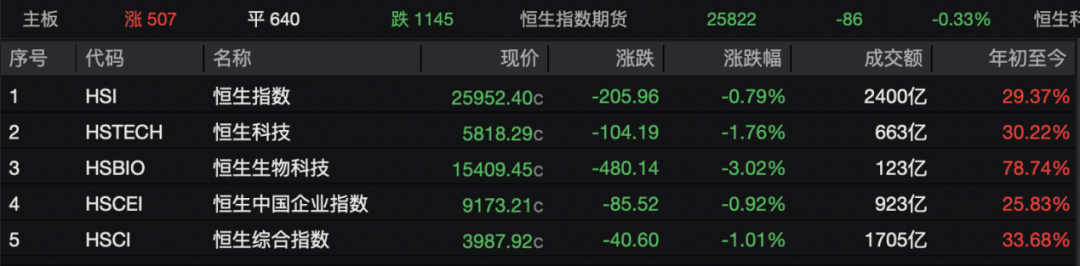
Group 1 - The International Institute for Management Development released the "2025 World Digital Competitiveness Ranking," with Hong Kong ranked fourth globally, improving three positions from the previous year [13] - Hong Kong excelled in the "Technology" and "Knowledge" categories, maintaining third and fifth positions respectively, while its ranking in "Readiness" rose five places to tenth [13][14] - The Hong Kong government aims to enhance its innovation and technology development strategy, focusing on three major innovation parks and five research institutions to attract businesses, talent, and technology [13][14] Group 2 - On November 4, the Hang Seng Index fell by 0.79% to 25,952.4 points, while the Hang Seng Technology Index dropped by 1.76% to 5,818.29 points [1][2] - Bank stocks showed resilience, with notable increases in shares of China Everbright Bank (up 3.09%), Minsheng Bank (up 2.96%), and China Merchants Bank (up 2.37%) [3][5] - The banking sector's net interest margin decline has narrowed, indicating a stabilization in performance, with insurance companies increasing their stakes in several listed banks [5]
又升了!香港,全球第四!
中国基金报· 2025-11-04 11:09
Group 1: Market Overview - The Hong Kong stock market experienced a collective decline on November 4, with the Hang Seng Index falling by 0.79% to 25,952.4 points, the Hang Seng Tech Index dropping by 1.76% to 5,818.29 points, and the Hang Seng China Enterprises Index decreasing by 0.92% to 9,173.21 points [2][3] - The total market turnover was HKD 240 billion, an increase from the previous day's HKD 228.68 billion, with a net inflow of southbound funds amounting to HKD 9.832 billion [2] Group 2: Banking Sector Performance - On November 4, Hong Kong bank stocks showed resilience, with notable increases in share prices: China Everbright Bank up by 3.09%, Minsheng Bank up by 2.96%, China Merchants Bank up by 2.37%, and Chongqing Bank up by 2.36% [5] - Recent quarterly reports from listed banks indicate a further narrowing of the net interest margin decline, suggesting a stabilization in bank performance [7] - Insurance capital continues to actively invest in A-share listed banks, with several insurance companies becoming top ten shareholders in various banks, indicating a positive outlook for bank stocks due to their high dividend yields [8] Group 3: Technology Sector Highlights - Baidu's stock price rose against the trend, with a peak increase of over 7% on November 4, closing at HKD 121.9 per share, following the release of its "2025 Top Ten Technological Innovations" report [12] - Baidu has maintained its position as the leader in AI-related patents in China for seven consecutive years, with significant achievements in generative AI and deep learning patents [12][13] Group 4: Hong Kong's Digital Competitiveness - Hong Kong ranked fourth globally in the "2025 World Digital Competitiveness Ranking" released by the International Institute for Management Development, improving its position by three places from the previous year [19] - The ranking highlights Hong Kong's strong performance in "Technology" and "Knowledge," maintaining third and fifth positions respectively, while showing significant improvement in "Readiness," which rose five places to tenth [20] - The Hong Kong government is committed to enhancing its innovation and technology landscape, with plans to establish new research and development platforms and promote AI and data science industries [21]

国证国际港股晨报-20251104
Guosen International· 2025-11-04 05:23
Group 1: Market Overview - The Hong Kong stock market showed positive movement with the Hang Seng Index rising by 0.97%, the Hang Seng China Enterprises Index increasing by 0.98%, and the Hang Seng Tech Index up by 0.24% [2] - The total market turnover reached HKD 228.68 billion, with short selling accounting for 19.81% of the total turnover [2] - Southbound trading saw a net inflow of HKD 5.472 billion, with Xiaomi Group, CNOOC, and China Mobile being the most bought stocks, while SMIC, Alibaba, and Hua Hong Semiconductor were the most sold [2] Group 2: Sector Performance - The oil and gas sector experienced gains, with CNOOC up by 3.49%, PetroChina by 3.37%, and Sinopec by 1.94% following an OPEC+ agreement to maintain production increases [3] - The coal sector also performed well, with China Qinfa up by 7.53%, PowerChina by 5.48%, and China Shenhua by 2.42%, driven by increased demand due to early heating season in northern regions [4] Group 3: U.S. Manufacturing Insights - The U.S. manufacturing PMI fell to 48.7 in October, indicating a contraction for the eighth consecutive month, with production activity declining sharply [4] - Despite the overall weakness, sub-indices showed some optimism, with the new orders index rising to 49.4 and a slower decline in backlogged and export orders [5] Group 4: Company Analysis - Meta Platforms - Meta Platforms reported a 26% year-over-year increase in total revenue for Q3, reaching USD 51.2 billion, exceeding market expectations [7] - The company’s advertising revenue also grew by 26%, with a 14% increase in ad impressions and a 10% rise in average ad prices [8] - Meta's capital expenditure guidance for 2025 was raised to USD 70-72 billion, reflecting a significant increase from previous estimates [9] Group 5: Financial Forecasts and Valuation - Revenue forecasts for 2025 and 2026 were adjusted upwards by 2% and 5% respectively, while net profit estimates were lowered by 23% and 14% due to tax adjustments and expense expansions [10] - The valuation benchmark was adjusted to 26x 2026E P/E, with a target price set at USD 819, maintaining a buy rating [10]