
新能源车

Search documents
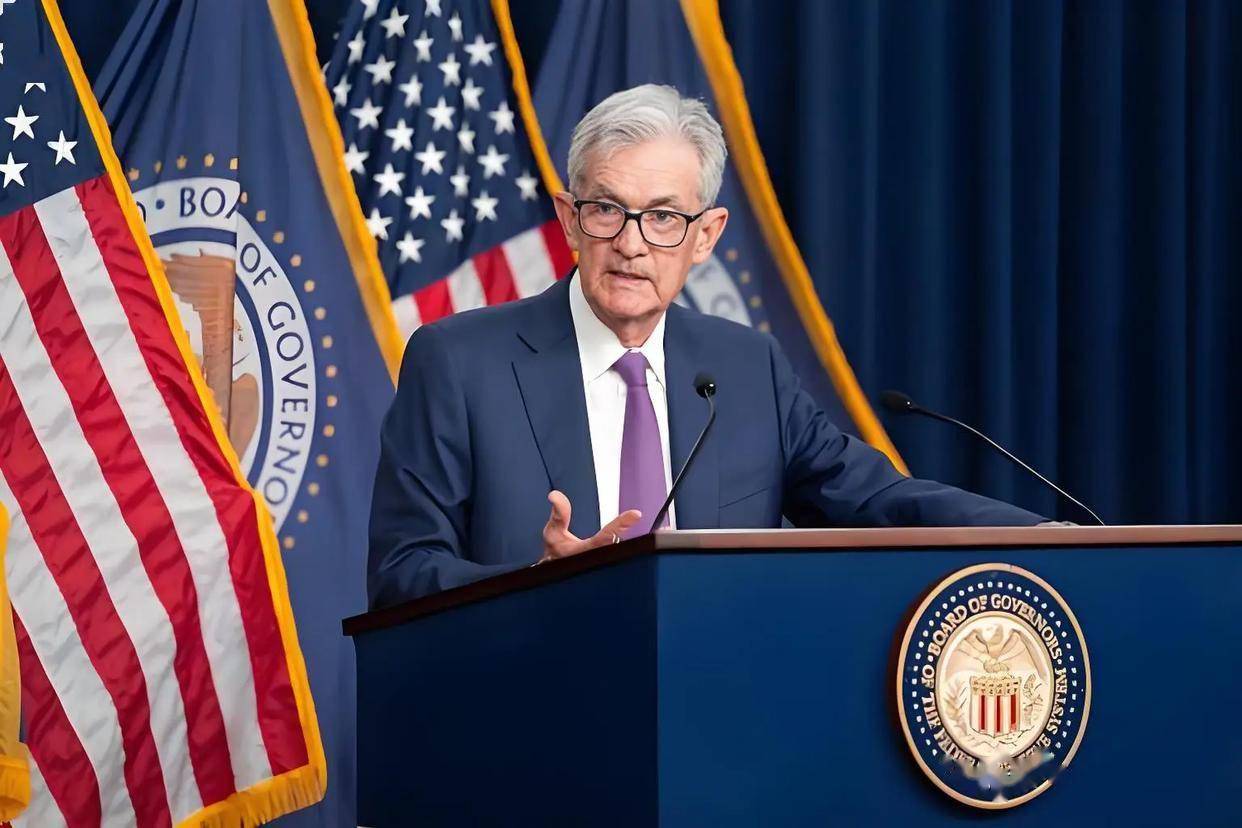
豪赌中国先撑不住?没有收割到中国,美联储就是不降息
Sou Hu Cai Jing· 2025-08-04 03:30
Core Insights - The article discusses the unexpected resilience of the Chinese economy amidst the U.S. Federal Reserve's aggressive interest rate hikes, which have led to significant challenges for the U.S. economy itself [1][4]. Group 1: Economic Resilience - China's economy is described as stable and robust, defying expectations that it would falter under Western monetary pressure [1][3]. - The Chinese government has effectively utilized its $3 trillion foreign exchange reserves to stabilize its markets, countering foreign sell-offs in A-shares with support from state-owned funds [3][4]. Group 2: U.S. Economic Challenges - The U.S. faces a staggering $36 trillion debt burden, with annual interest payments exceeding $1.5 trillion, which is more than the entire military budget [4]. - The commercial real estate market in the U.S. is experiencing a crisis, with office vacancy rates reaching 29% and property values plummeting by 30% [4]. Group 3: Global Financial Dynamics - The article highlights a shift in global financial dynamics, with countries increasingly opting for transactions in currencies other than the U.S. dollar, particularly the Chinese yuan [6]. - The failure of the Federal Reserve's monetary strategy is leading to a reevaluation of global trading rules, as countries seek alternatives to the dollar-dominated system [6].

新能源车渗透率刷新同期历史,零跑、小鹏、小米7月交付齐创新高
Mei Ri Jing Ji Xin Wen· 2025-08-04 03:19
Group 1 - The Hong Kong stock market showed a positive trend with the Hang Seng Technology Index rising nearly 1%, while the Hong Kong Stock Connect Automotive ETF experienced a slight decline, with notable performances from companies like Leapmotor, which surged over 4% [1] - In the first half of the year, the penetration rate of the new energy vehicle market reached 44.3%, marking a historical high for the same period [1] - Several new energy vehicle companies reported record sales in July, with Leapmotor exceeding 50,000 units for the first time, Xiaopeng delivering 36,700 units, and Xiaomi achieving a monthly sales breakthrough of 30,000 units, reflecting a 20% month-on-month growth [1] Group 2 - Huaxin Securities highlighted that the new energy vehicle industry is benefiting from supportive policies and an improving supply-demand structure, with continuous product launches from battery and main engine manufacturers [1] - The industry has experienced significant price declines, leading to reduced capital expenditures, while the supply-demand dynamics are being optimized, with industry associations and companies actively working to enhance capacity and supply [1] - The overall price level in the industry is at a low point, making it easier for prices to rise than to fall, with strong demand resilience providing good investment opportunities, as core companies in the supply chain are currently valued at historical lows [1] Group 3 - The Hong Kong Stock Connect Automotive ETF is based on the Hong Kong Stock Connect Automotive Index, which focuses on the Hong Kong vehicle sector and includes a higher proportion of passenger vehicles compared to similar indices [2] - The index includes emerging players in the automotive sector, such as Zhixing Technology and Horizon Robotics, and has a higher concentration of intelligent driving companies compared to A-share automotive indices [2] - As of August 1, the index's price-to-earnings ratio (TTM) was 19.82, significantly lower than various A-share automotive indices, indicating a favorable valuation [2]


越秀证券每日晨报-20250804
越秀证券· 2025-08-04 03:06
Market Performance - The Hang Seng Index closed at 24,507, down 1.07% for the day but up 22.17% year-to-date [1] - The Hang Seng Tech Index closed at 5,397, down 1.02% for the day and up 20.80% year-to-date [1] - The Dow Jones Index closed at 43,588, down 1.23% for the day and up 2.45% year-to-date [1] - The S&P 500 Index closed at 6,238, down 1.60% for the day and up 6.06% year-to-date [1] - The Nasdaq Index closed at 20,650, down 2.24% for the day and up 6.94% year-to-date [1] Currency and Commodity Performance - The Renminbi Index is at 96.760, up 1.48% over the last month but down 3.91% over the last six months [2] - Brent crude oil is priced at $71.440 per barrel, up 7.67% over the last month but down 1.33% over the last six months [2] - Gold is priced at $3,295.05 per ounce, down 1.31% over the last month but up 17.05% over the last six months [2] Company News - RWA Group received strategic investment from Meta Strategy, which will support technology development and market expansion [11][12] - InnoTech responded to being selected as a partner for NVIDIA's 800V DC power architecture, indicating that the collaboration has not yet generated substantial orders [13] - BYD reported July sales of 344,296 new energy vehicles, a 10% month-on-month decrease [14] - Apple plans to increase spending on data centers and acquisitions to catch up with competitors in AI [15] Economic Indicators - The US ISM Manufacturing PMI fell to 48 in July, indicating a contraction for the fifth consecutive month [17] - The US has raised tariffs on several Asian countries, with rates reaching up to 40% [16] - Trump's administration announced a 35% tariff on certain imports from Canada, while maintaining exemptions under the USMCA [18]

从经济四周期配置大类资产8月篇:轰轰烈烈“反内卷”与10年周期再现
Ge Lin Qi Huo· 2025-08-04 01:56
1. Report Industry Investment Rating There is no information about the report industry investment rating in the provided content. 2. Core Viewpoints of the Report - The anti - involution campaign, initiated by the Central Financial and Economic Affairs Commission, is a 10 - year recurrence of the Juglar cycle. It is expected to have a profound impact on China's economy, with effects surpassing the previous supply - side reform [1][13][16]. - The anti - involution drive rapidly boosts commodity prices, which is the third and final wave of the current Kitchin cycle's upward phase, likely to last until the end of the year [2][17]. - It has a positive impact on listed companies' performance and stock prices. The A - share market shows a wealth effect, attracting more off - market funds [2][24]. - The Fed is likely to resume rate cuts in September 2025 and enter a steep rate - cut phase in 2026. This will narrow the Sino - US interest rate gap, prompting the accelerated return of China's overseas funds [2]. - Global professional investment institutions are reducing their exposure to US assets and increasing their allocation to Chinese assets [2][28][30]. - Gold is in a technical adjustment, and a major opportunity may emerge at the end of the year [2][4][31]. - The anti - involution campaign initiates an upward trend in inflation, opening up downward space for long - term treasury bonds [3][35]. - China is expected to achieve a double surplus in trade and capital, and the offshore RMB exchange rate is likely to strengthen [3][38]. 3. Summary According to the Directory 3.1 Four Economic Cycles - **Kitchin Cycle**: A short - term economic cycle of about 3.5 years. The current upward phase of the Chinese Kitchin cycle started in June 2023 and is expected to peak at the end of 2025, while the US cycle will peak in Q1 2026 [7]. - **Juglar Cycle**: A medium - term cycle of 9 - 10 years, also known as the manufacturing investment cycle. China's current Juglar cycle is in the upward phase and is expected to peak in early 2027 [8]. - **Kuznets Cycle**: An economic cycle related to the housing construction industry with an average length of about 20 years. The current Chinese Kuznets cycle is expected to bottom out around 2030 [9]. - **Kondratieff Cycle**: A long - term cycle of 50 - 60 years, also called the technological innovation cycle. The current Kondratieff depression started in 2020 due to the COVID - 19 shock, is expected to end around 2030, and then enter a 10 - year recovery phase. China is the center of the current technological innovation cycle, with AI and AI humanoid robots as the representative innovations [10]. 3.2 Anti - Involution Campaign - **Campaign Initiation**: On July 1, the Central Financial and Economic Affairs Commission meeting called for in - depth construction of a unified national market, focusing on "five unifications and one opening". Subsequently, various industries carried out anti - involution measures [11]. - **Policy Response to the Juglar Cycle**: It is a response to the manufacturing investment cycle reaching its peak. Similar to the supply - side reform 10 years ago, its goal is to reduce overcapacity, but this time it focuses on emerging industries and the service sector [13][15][16]. - **Differences from the Previous Supply - Side Reform**: It focuses on emerging industries and the service sector, and is expected to have a more far - reaching impact on the Chinese economy [16]. 3.3 Impact on Asset Classes - **Commodities**: The anti - involution campaign drives up commodity prices, which is the third wave of the current Kitchin cycle's upward phase. Prices are expected to rise until the end of the year. After a second - wave correction in late July, they are likely to enter the main upward wave in late August [17][21][23]. - **Equities**: The A - share market shows a wealth effect, attracting off - market funds. The decline at the end of July was a pull - back after breaking through the 3,500 - point platform. The CSI 300 index will have more upward momentum, and the CSI 1000 and CSI 500 indexes are expected to rise more strongly [24][39]. - **Gold**: Gold is in a technical adjustment, and a major opportunity may emerge at the end of 2025 [31][39]. - **Bonds**: The anti - involution campaign initiates inflation, opening up downward space for long - term treasury bonds [35][39]. - **Foreign Exchange**: China is expected to achieve a double surplus in trade and capital, and the offshore RMB is likely to strengthen [38][39].
港股开盘,恒指开跌0.31%,科指开跌0.66%。英诺赛科(02577.HK)开涨4.2%,公司宣布与英伟达达成合作。比亚迪股份(01211.HK)跌2.9%,7月新能源车销量34.42万辆,环比减少10%。
news flash· 2025-08-04 01:24
港股开盘,恒指开跌0.31%,科指开跌0.66%。英诺赛科(02577.HK)开涨4.2%,公司宣布与英伟达达成 合作。比亚迪股份(01211.HK)跌2.9%,7月新能源车销量34.42万辆,环比减少10%。 ...

香港恒生指数开盘跌0.31% 比亚迪股份跌近3%
news flash· 2025-08-04 01:24
香港恒生指数开盘跌0.31% 比亚迪股份跌近3% 智通财经8月4日电,香港恒生指数开盘跌0.31%,恒生指数跌0.66%。英诺赛科涨超4%,公司宣布与英 伟达达成合作。比亚迪股份跌近3%,7月新能源车销量34.42万辆,环比减少10%。 ...

电力设备与新能源行业研究:AIDC 持续驱动电源、液冷高景气,风电26 年量利展望持续乐观
SINOLINK SECURITIES· 2025-08-03 11:03
Investment Rating - The report maintains a positive outlook on the AIDC, wind power, photovoltaic, and energy storage sectors, with specific recommendations for leading suppliers in liquid cooling and power segments [1][2][3]. Core Insights - The report highlights strong performance and upward adjustments in capital expenditures from major overseas CSP companies, indicating robust demand for liquid cooling technologies [5][6][7]. - In the wind power sector, despite a year-on-year decline in July's bidding, the report anticipates stable or even growing installations in 2026, supported by favorable policies and high bidding prices [10][13]. - The photovoltaic and energy storage sectors are seeing significant policy support aimed at reducing competition and stabilizing prices, with a major procurement initiative launched by China Huadian Group [16][18]. AIDC Sector Summary - Major CSP companies, including Google and Meta, reported Q2 earnings exceeding market expectations, with significant capital expenditure increases, particularly for AI infrastructure [6][7]. - The demand for liquid cooling solutions is expected to grow as data centers increasingly adopt this technology to manage rising power consumption [8][9]. Wind Power Sector Summary - July's bidding results showed a total of 5.5GW, a 46% year-on-year decrease but an 11% increase from the previous month, indicating a potential recovery in the second half of the year [10][11]. - The report emphasizes the importance of high bidding prices and the anticipated recovery of bidding volumes following the implementation of provincial policies [13][15]. Photovoltaic & Energy Storage Sector Summary - The report discusses ongoing efforts to combat "involution" in the photovoltaic industry, with government meetings focusing on regulating competition and improving procurement processes [16][17]. - A significant procurement of 20GW of photovoltaic components has been initiated, which is expected to influence pricing trends and market stability [18][19]. Electric Grid Sector Summary - The Ya Xia hydropower project is projected to create a demand for approximately 1,800 kilometers of GIL, with a potential market space exceeding 30 billion yuan [19]. - Companies like Samsung Medical are making strides in international markets, with expectations of strong growth in the coming years [20][21]. Lithium Battery Sector Summary - The solid-state battery industry is advancing, with companies like Guoxuan High-Tech and Defu Technology making significant progress in production capabilities [24][26][28]. - The report notes the increasing commercialization of solid-state batteries, with a focus on overcoming existing technological challenges [25][27]. Hydrogen and Fuel Cell Sector Summary - The "Hydrogen Action in Jilin" initiative and the launch of the national electric power investment green hydrogen project mark significant advancements in hydrogen technology [40]. - The report highlights the global first demonstration of large-scale green ammonia production, indicating a growing market for hydrogen-based solutions [40].
LG新能源签订铁锂储能大单,发改革深入推进招标投标制度改革
GOLDEN SUN SECURITIES· 2025-08-03 10:21
Investment Rating - The report maintains an "Increase" rating for the renewable energy sector [5] Core Insights - The report highlights three main areas of focus: supply-side reform leading to price increases in the industry chain, long-term growth opportunities from new technologies, and industrialization opportunities from perovskite GW-level layouts [15][18] Summary by Sections 1. New Energy Generation 1.1 Photovoltaics - The Ministry of Industry and Information Technology has initiated energy-saving inspections for polysilicon, targeting 41 companies, which is expected to optimize energy-saving efforts and reform outdated capacities [14] - The National Development and Reform Commission emphasizes the need to eliminate "involution" competition and advance the bidding system reform, which has led to an increase in polysilicon prices, potentially restoring component prices [14][15] - Key companies to watch include Xiexin Technology, Tongwei Co., Daqo New Energy, and JA Solar [15] 1.2 Wind Power & Grid - The AR7 wind auction reform has significantly increased wind power prices, with floating offshore wind power prices rising by 10.6% and fixed offshore wind power prices by 10.8% [16] - The contract duration for CfD has been extended from 15 to 20 years, improving project financing feasibility [16] - The introduction of Clean Industry Bonuses (CIB) is expected to drive investment in local supply chains, with a total subsidy budget exceeding £544 million [16] 1.3 Hydrogen & Energy Storage - A major user-side energy storage project in the aluminum industry has been launched by Penghui Energy and Sichuan Zhongfu, with a scale exceeding 100MW/400MWh [18] - The average bidding price for energy storage systems in July was 0.4645 RMB/Wh, with a range for EPC bids between 0.7399 RMB/Wh and 1.5748 RMB/Wh [25][27] - Recommended companies include Longi Green Energy, Sungrow Power Supply, and Kehua Tech [27] 2. New Energy Vehicles - LG Energy has signed a supply contract for lithium iron phosphate batteries worth 5.94 trillion KRW (approximately 30.9 billion RMB), which represents 23.2% of its projected sales for 2024 [28][30] - The contract is expected to enhance the performance of Longpan Technology, which has also signed an agreement to supply 260,000 tons of lithium iron phosphate materials to LG Energy [30]
A股晚间热点 | 央行定调!继续实施适度宽松的货币政策
智通财经网· 2025-08-01 15:05
Group 1: Monetary Policy and Economic Support - The People's Bank of China emphasizes increasing financial support for the economy and continuing to implement a moderately loose monetary policy, including lowering the reserve requirement ratio and using various monetary policy tools to maintain ample liquidity [1] - The central bank aims to reduce policy interest rates and promote a decline in financial market rates and overall financing costs for society [1] Group 2: Employment and Market Expectations - The U.S. non-farm payrolls for July showed a significant miss with only 73,000 jobs added, below the expected 110,000, marking the smallest increase since October of the previous year [2] - The unemployment rate in the U.S. rose to 4.2%, aligning with market expectations, leading traders to fully price in a 75% chance of a 25 basis point rate cut by the Federal Reserve in October [2] Group 3: Tax Policy Changes - The Ministry of Finance and the State Taxation Administration announced the restoration of VAT on interest income from newly issued government bonds starting August 8, 2025, with experts suggesting limited market impact due to the existing large volume of issued bonds [3] Group 4: Trade and Tariff Policies - China's Ministry of Foreign Affairs expressed opposition to the imposition of tariffs by the U.S., stating that trade wars have no winners and that protectionism harms all parties involved [4] Group 5: Financial Market Developments - The Hong Kong Stock Exchange proposed changes to the IPO pricing mechanism to create a more flexible and transparent framework for issuers and investors, allowing for a higher percentage of shares to be allocated to public subscription [8] Group 6: Automotive Industry Performance - In July, BYD reported sales of 344,300 vehicles, a slight increase from 342,400 units year-on-year, while other companies like Li Auto and Xpeng also reported significant delivery numbers, indicating strong performance in the electric vehicle sector [9][10][11][14]

从“买买买”中读懂中国故事|“老外”游上海(四)
Guo Ji Jin Rong Bao· 2025-08-01 08:46
Core Insights - The article highlights the increasing influx of foreign tourists in Shanghai, driven by the city's optimized entry policies and international appeal, making "China Travel" a global trend [1][3]. Group 1: Tourism Growth - Shanghai is experiencing a surge in inbound tourism, attracting foreign visitors who contribute to consumption growth and serve as ambassadors for Chinese brands and culture [3]. - The shift in foreign tourists' shopping behavior reflects a deeper cultural understanding and emotional connection with Chinese aesthetics and design [5][6]. Group 2: Consumer Behavior - Tourists are moving beyond mere souvenir shopping to actively engaging with Chinese brands, showcasing a growing appreciation for local design and technology [5][9]. - The perception of "Made in China" has evolved from a low-cost alternative to a symbol of quality and design, as evidenced by tourists' enthusiastic purchases across various product categories [9]. Group 3: Cultural Experience - There is a notable trend towards immersive cultural experiences, with tourists seeking deeper connections to Chinese culture through activities like traditional clothing trials and non-heritage craft workshops [11][12]. - The integration of digital services in dining and shopping enhances the overall experience for foreign visitors, making their interactions with local culture seamless and convenient [13].