
橡胶

Search documents
拉尼娜现象存在暂时降温影响 橡胶盘面表现偏弱
Jin Tou Wang· 2025-09-18 06:53
Group 1 - The domestic futures market for rubber is experiencing a downward trend, with the main contract for 20 rubber futures opening at 12,550.00 CNY/ton and showing a decline of approximately 3.10% [1] - The market sentiment is influenced by seasonal factors, with expectations for improved terminal consumption during the "Golden September and Silver October" period, despite the current weak performance of rubber prices [1] - Supply constraints are noted due to adverse weather conditions affecting rubber tapping operations in both domestic and overseas production areas, leading to a tightening of raw material availability [2] Group 2 - The macro market sentiment is recovering, and supply disruptions are continuing, leading to a stabilization and potential upward movement in rubber prices [2] - Inventory levels for natural rubber are decreasing, particularly in the Qingdao region, indicating a tightening supply situation [2] - The return of the La Niña phenomenon may impact global weather patterns, although many regions are still expected to experience above-average temperatures [2]
化工日报:天然橡胶社会库存继续下降-20250918
Hua Tai Qi Huo· 2025-09-18 05:11
Report Industry Investment Rating - RU and NR are rated neutral; BR is rated neutral [6] Core View of the Report - For RU and NR, in the next one to two weeks, domestic rainfall is expected to decrease, but overseas main production areas like Thailand are still affected by rainfall, keeping overseas raw material prices firm and providing strong cost - side support. Domestic arrivals are slightly recovering, but downstream concentrated purchasing has led to a significant reduction in Qingdao port inventory. After maintenance, downstream tire开工率 has rebounded, and overall downstream demand is improving seasonally. In the short term, there may still be a slight reduction in inventory, and rubber prices are expected to remain firm. However, there will be pressure for port inventory to rise after downstream stocking ends. - For BR, there are concerns about cost - side drag recently. The weakening of crude oil prices may lead to an adjustment in butadiene prices, and butadiene inventory is gradually rising, which may cause pressure after downstream restocking ends. However, the fundamentals of BR itself are still good, with several production facilities having maintenance plans, expected to lead to a phased decline in supply. Downstream tire demand is in a peak season, and the large price difference with natural rubber supports BR prices [6] Summary by Related Catalogs Market News and Data - Futures: The closing price of the RU main contract was 15,880 yuan/ton, down 160 yuan/ton from the previous day; the NR main contract was 12,590 yuan/ton, down 125 yuan/ton; the BR main contract was 11,590 yuan/ton, down 85 yuan/ton. - Spot: The price of Yunnan - produced whole latex in the Shanghai market was 15,100 yuan/ton, down 100 yuan/ton; Qingdao Free Trade Zone Thai mixed rubber was 15,000 yuan/ton, down 150 yuan/ton; Thai 20 - grade standard rubber in Qingdao Free Trade Zone was 1,860 US dollars/ton, down 10 US dollars/ton; Indonesian 20 - grade standard rubber in Qingdao Free Trade Zone was 1,780 US dollars/ton, down 10 US dollars/ton; the ex - factory price of BR9000 of PetroChina Qilu Petrochemical was 11,900 yuan/ton, unchanged; the market price of BR9000 in Zhejiang Transfar was 11,550 yuan/ton, unchanged [1] Market Information - Import: In August 2025, China imported 664,000 tons of natural and synthetic rubber (including latex), a 7.8% increase from the same period in 2024. From January to August, the total import was 5.373 million tons, a 19% increase. - Export: In the first eight months of 2025, Cote d'Ivoire's rubber exports totaled 1.05 million tons, a 14.4% increase from the same period in 2024. In August, exports increased by 14.8% year - on - year but decreased by 8.9% month - on - month. - Heavy - truck sales: In August 2025, China's heavy - truck market sold about 84,000 vehicles, a 1% month - on - month decrease and a 35% year - on - year increase. From January to August, the cumulative sales were about 708,000 vehicles, a 13% year - on - year increase. - Automobile production and sales: From January to August, China's automobile production and sales were 21.051 million and 21.128 million vehicles respectively, a 12.7% and 12.6% year - on - year increase. New energy vehicle production and sales were 9.625 million and 9.62 million vehicles respectively, a 37.3% and 36.7% year - on - year increase, accounting for 45.5% of total new vehicle sales. In terms of exports, 4.292 million vehicles were exported, a 13.7% year - on - year increase, including 1.532 million new energy vehicles, an 87.3% year - on - year increase [2][3] Market Analysis Natural Rubber - Spot and spreads: On September 17, 2025, the RU basis was - 780 yuan/ton (+60), the spread between the RU main contract and mixed rubber was 880 yuan/ton (-10), the import profit of smoked sheet rubber was - 3,477 yuan/ton (-144.61), the NR basis was 618 yuan/ton (+51); whole latex was 15,100 yuan/ton (-100), mixed rubber was 15,000 yuan/ton (-150), 3L spot was 15,300 yuan/ton (-50). The STR20 was quoted at 1,860 US dollars/ton (-10), the spread between whole latex and 3L was - 200 yuan/ton (-50); the spread between mixed rubber and styrene - butadiene rubber was 2,700 yuan/ton (-150). - Raw materials: Thai smoked sheet was 60.63 baht/kg (-0.05), Thai latex was 56.20 baht/kg (unchanged), Thai cup lump was 51.65 baht/kg (+0.20), and the spread between Thai latex and cup lump was 4.55 baht/kg (-0.20). -开工率: The开工率 of all - steel tires was 66.31% (+5.57%), and that of semi - steel tires was 72.61% (+5.69%). - Inventory: Natural rubber social inventory was 1,235,510 tons (-22,205), Qingdao port natural rubber inventory was 586,639 tons (-5,636), RU futures inventory was 151,740 tons (-10,490), and NR futures inventory was 45,964 tons (-605) [4][5] Butadiene Rubber - Spot and spreads: On September 17, 2025, the BR basis was - 40 yuan/ton (+85), the ex - factory price of butadiene from Sinopec was 9,250 yuan/ton (unchanged), the quoted price of BR9000 from Qilu Petrochemical was 11,900 yuan/ton (unchanged), the market price of BR9000 in Zhejiang Transfar was 11,550 yuan/ton (unchanged), the price of Shandong private - owned butadiene rubber was 11,550 yuan/ton (unchanged), and the import profit of butadiene rubber in Northeast Asia was - 1,629 yuan/ton (unchanged). -开工率: The开工率 of high - cis butadiene rubber was 73.48% (-2.68%). - Inventory: Butadiene rubber trader inventory was 7,820 tons (-390), and butadiene rubber enterprise inventory was 25,900 tons (-400) [5]
五矿期货文字早评-20250918
Wu Kuang Qi Huo· 2025-09-18 01:33
Report Industry Investment Ratings No relevant content provided. Core Views - After continuous upward movement, high - level hot sectors such as AI have shown divergence recently. With the shrinking market trading volume, short - term indices face adjustment pressure. However, in the long - term, the policy support for the capital market remains unchanged, and the idea of buying on dips is still the main strategy [3]. - In the bond market, considering the slowdown of economic data in August, the expected easing of funds, and the need to pay attention to the stock - bond seesaw effect, the bond market is expected to oscillate and repair in the short - term [5]. - For precious metals, although the Fed's interest - rate meeting was not as dovish as expected, the market's expectation of the Fed's rate cut will rise with the appointment of a new chairman. A long - position approach should be maintained, with a focus on the upward price potential of silver [7]. - In the non - ferrous metals sector, different metals have different trends. For example, copper prices are expected to oscillate, zinc and lead are expected to be strong in the short - term, and nickel is recommended to be bought on dips in the long - term [9][11][13]. - In the black building materials sector, although the black sector is currently under pressure from weak actual demand, with the possible implementation of overseas fiscal and monetary policies and the opening of China's policy space, it may gradually become more cost - effective for long - positions, with the key point around mid - October [28]. - In the energy and chemical sector, the views on different products vary. For example, crude oil is recommended for long - positions, while PVC is recommended for short - positions [41][46]. - In the agricultural products sector, the strategies for different products also differ. For example, for pigs, pay attention to the possibility of a low - level rebound and short - selling after the rebound; for sugar, maintain a bearish view [54][62]. Summaries by Catalog Macro - finance Stock Index - **Message**: From January to August, the national general public budget revenue was 14.8198 trillion yuan, a year - on - year increase of 0.3%. The Ministry of Industry and Information Technology solicited opinions on relevant standards for intelligent connected vehicles. CATL's sodium - new batteries will be supplied in batches next year. Dongshan Precision said the supply of optical chips is tight [2]. - **Basis Ratio of Stock Index Futures**: The basis ratios of IF, IC, IM, and IH for different periods are provided [2]. - **Trading Logic**: After the previous rise, high - level sectors have diverged, and short - term indices face adjustment pressure. In the long - term, the policy support for the capital market remains unchanged [3]. Treasury Bonds - **Market**: On Wednesday, the main contracts of TL, T, TF, and TS all rose [4]. - **Message**: From January to August, the national general public budget revenue was 14.8198 trillion yuan, a year - on - year increase of 0.3%. The central bank conducted 418.5 billion yuan of 7 - day reverse repurchase operations, with a net investment of 114.5 billion yuan [4]. - **Strategy**: Considering the slowdown of economic data in August and the expected easing of funds, the bond market is expected to oscillate and repair in the short - term, but pay attention to the stock - bond seesaw effect [5]. Precious Metals - **Market**: Gold and silver prices declined. The Fed cut interest rates by 25 basis points, but the statement was not as dovish as expected, and precious metal prices were under short - term pressure [6]. - **Market Outlook**: Powell's statement on monetary policy was neutral. The voting pattern of the interest - rate meeting implies a change in the probability of the new Fed chairman. The market's expectation of the Fed's rate cut will rise with the appointment of a new chairman. A long - position approach should be maintained, with a focus on silver [7]. Non - ferrous Metals Copper - **Market**: After the Fed's interest - rate meeting, copper prices adjusted. LME copper inventory decreased, and the cash/3M spread was at a discount [9]. - **Outlook**: The Fed's policy was less loose than expected, but there are some disturbances in the overseas copper mine industry. In the short - term, copper prices are expected to oscillate [9]. Aluminum - **Market**: After the Fed's interest - rate meeting, aluminum prices declined. LME aluminum inventory remained unchanged, and domestic inventories increased [10]. - **Outlook**: The Fed's statement was cautious, but the downstream is in the traditional consumption season, and aluminum prices are expected to be supported [10]. Zinc - **Market**: Zinc prices showed different trends in the domestic and overseas markets. Zinc concentrate inventories increased, and processing fees were differentiated [11]. - **Outlook**: The zinc market is expected to be strong in the short - term, and if the zinc ingot export window opens, domestic zinc prices may rise [11]. Lead - **Market**: Lead prices rose. Lead concentrate inventories increased slowly, and the TC decreased. The inventory of lead batteries decreased [12]. - **Outlook**: With the improvement of industrial data and market sentiment, lead prices are expected to break through the oscillation range and be strong in the short - term [12]. Nickel - **Market**: Nickel prices oscillated. The cost of Indonesian nickel ore decreased slightly, and the demand for nickel iron was supported [13]. - **Outlook**: Although refined nickel inventories are under pressure, in the long - term, nickel prices are expected to be supported by policies. It is recommended to buy on dips [13]. Tin - **Market**: Tin prices oscillated. The supply of tin ore in Myanmar was slow to recover, and the inventory of tin ingots increased slightly [14][15]. - **Outlook**: With a significant decrease in supply and a marginal improvement in demand, tin prices are expected to be strong and oscillate [15]. Carbonate Lithium - **Market**: The spot index of carbonate lithium increased slightly, and the futures price also rose [16]. - **Outlook**: The fundamental improvement of carbonate lithium has been reflected in the price. Pay attention to industrial information and the impact of the Fed's policy [16]. Alumina - **Market**: The alumina index declined, and the import window opened [17]. - **Outlook**: The alumina market is expected to be in a state of over - capacity in the short - term. It is recommended to wait and see, paying attention to supply - side policies and the Fed's policy [17]. Stainless Steel - **Market**: Stainless steel prices declined, and the inventory decreased [18]. - **Outlook**: Due to the weak demand in the real estate industry, the overall market demand is weak, and the market is in a wait - and - see state [18]. Cast Aluminum Alloy - **Market**: Cast aluminum alloy prices declined slightly, and the inventory increased [19]. - **Outlook**: Although the peak season characteristics are not obvious, the cost is strongly supported, and prices are expected to remain high in the short - term [19]. Black Building Materials Steel - **Market**: The prices of rebar and hot - rolled coils showed different trends. The inventory of rebar increased, while the inventory of hot - rolled coils decreased slightly [21][22]. - **Outlook**: The demand for rebar is weak, while the demand for hot - rolled coils is relatively strong. If demand cannot be effectively restored, steel prices may decline [22]. Iron Ore - **Market**: Iron ore prices rose slightly, and the supply and demand situation changed [23][24]. - **Outlook**: In the short - term, iron ore prices are expected to oscillate. Pay attention to the recovery of downstream demand and overseas macro - changes [24]. Glass and Soda Ash - **Glass**: Prices declined slightly, and the inventory decreased. The supply increased slightly, and the demand was weak. It is recommended to be cautiously bullish [25]. - **Soda Ash**: Prices declined slightly, and the inventory decreased. The supply decreased slightly due to equipment maintenance, and the demand was mainly for rigid needs. It is expected to fluctuate within a narrow range [26]. Manganese Silicon and Ferrosilicon - **Market**: Manganese silicon and ferrosilicon prices rose. The spot prices were stable [27]. - **Outlook**: Both are expected to oscillate within a range, and it is recommended to wait and see [27]. Industrial Silicon and Polysilicon - **Industrial Silicon**: Prices rose slightly. The supply increased, and the demand was supported. The inventory remained high. It is recommended to pay attention to industry policies [30][31]. - **Polysilicon**: Prices declined slightly. The supply was close to the same - period high, and the inventory transfer was limited. Pay attention to capacity integration policies [32][33]. Energy and Chemicals Rubber - **Market**: The supply of rubber may be affected by weather, and the demand is in a seasonal off - season. The inventory decreased [35][36]. - **Outlook**: Adopt a long - position approach in the medium - term and wait and see in the short - term [39]. Crude Oil - **Market**: Crude oil and refined oil prices rose. The U.S. EIA data showed changes in inventory [40]. - **Outlook**: Maintain a long - position approach for crude oil, as the fundamentals support the price, and if the geopolitical premium returns, prices may rise [41]. Methanol - **Market**: Methanol futures prices rose slightly, and the spot price declined. The inventory was high, and the demand was expected to improve [42]. - **Outlook**: The fundamentals are expected to improve, and it is recommended to look for long - position opportunities and 1 - 5 positive spreads [42]. Urea - **Market**: Urea futures prices declined, and the spot price was stable. The inventory was rising, and the demand was weak [43]. - **Outlook**: Prices are expected to fluctuate within a range, and it is recommended to look for long - position opportunities [43]. Pure Benzene and Styrene - **Market**: Spot prices rose, and futures prices declined. The BZN spread is expected to repair, and the inventory is decreasing [44][45]. - **Outlook**: It is recommended to buy on dips for the pure benzene US - South Korea spread [44]. PVC - **Market**: PVC prices rose, and the inventory increased. The supply was strong, and the demand was weak [46]. - **Outlook**: It is recommended to short - sell on rallies, but beware of upward fluctuations due to policy sentiment [46]. Ethylene Glycol - **Market**: EG prices rose, and the inventory increased. The supply was high, and the demand was stable [47]. - **Outlook**: It is recommended to short - sell on rallies, but beware of the risk of the weak expectation not being realized [48]. PTA - **Market**: PTA prices rose, and the inventory decreased. The supply was affected by unexpected maintenance, and the demand was stable [49]. - **Outlook**: It is recommended to wait and see, paying attention to the improvement of the terminal and raw - material maintenance [49]. p - Xylene - **Market**: PX prices rose, and the inventory decreased. The load was high, and the downstream PTA load was low [50]. - **Outlook**: It is recommended to wait and see, paying attention to the recovery of the terminal [50]. Polyethylene (PE) - **Market**: PE futures prices rose, and the spot price was stable. The inventory was decreasing, and the demand was expected to increase [51]. - **Outlook**: Prices are expected to oscillate upward [51]. Polypropylene (PP) - **Market**: PP futures prices rose, and the spot price was stable. The supply pressure was high, and the demand was gradually recovering [52]. - **Outlook**: In the short - term, there is no obvious contradiction, and prices are expected to oscillate [52]. Agricultural Products Pigs - **Market**: Pig prices declined, and the supply was expected to be high in September [54]. - **Outlook**: Pay attention to the possibility of a low - level rebound and short - selling after the rebound, and continue the far - month reverse - spread strategy [54]. Eggs - **Market**: Egg prices were mostly stable, and the supply was stable [55]. - **Outlook**: It is recommended to wait and see, and consider short - term long - positions in the far - month contract when the price falls and the position increases [55]. Soybean and Rapeseed Meal - **Market**: U.S. soybean prices oscillated, and domestic soybean meal prices declined slightly. The inventory was at a high level [56][57]. - **Outlook**: The soybean import cost is expected to be weak. Soybean meal is expected to oscillate within a range, waiting for a driving factor [58]. Oils and Fats - **Market**: Malaysian palm oil export and production data showed changes. Domestic oil prices declined [59]. - **Outlook**: Oils and fats are expected to be strong and oscillate in the medium - term. It is recommended to buy on dips after the price stabilizes [60]. Sugar - **Market**: Sugar futures prices declined, and the spot price was stable. The supply increased, and the demand was weak [61][62]. - **Outlook**: Maintain a bearish view on sugar prices, and pay attention to the Brazilian production [62]. Cotton - **Market**: Cotton futures prices oscillated, and the spot price rose slightly. The downstream operating rate increased, and the inventory was low [63][64]. - **Outlook**: Cotton prices are expected to oscillate in the short - term [64].
五矿期货能源化工日报-20250918
Wu Kuang Qi Huo· 2025-09-17 23:37
Report Industry Investment Rating No relevant content provided. Core Viewpoints - Maintain the view of overweighting crude oil as the current oil price is relatively undervalued, and the fundamental factors will support the price. If the geopolitical premium re - emerges, the oil price will have more upside potential [2] - For methanol, expect the fundamental situation to gradually improve, and suggest paying attention to long - position opportunities at low prices and the 1 - 5 positive spread [4] - For urea, with weak demand and limited export support, the price is expected to move within a range, and it is recommended to consider long positions at low prices [6] - For rubber, adopt a long - term bullish view, and stay on the sidelines in the short term as the short - term trend follows that of industrial products [11] - For PVC, given the situation of strong supply, weak demand, and high valuation, pay attention to short - position opportunities at high prices, but beware of short - term upward movements [13] - For pure benzene and styrene, expect the BZN spread to repair in the long term. When the inventory reaches the inflection point of destocking, the styrene price may rebound. It is recommended to go long on the pure benzene US - South Korea spread at low prices [16] - For polyethylene, expect the price to fluctuate upward in the long term, and the cost provides support [18] - For polypropylene, in a context of weak supply and demand and high inventory pressure, the price is affected by a large number of warehouse receipts, and there is no obvious short - term contradiction [19] - For PX, with high operating loads and expected inventory accumulation, there is currently no strong driving force, and it is recommended to stay on the sidelines in the short term [22] - For PTA, the pattern of inventory reduction continues, but the processing fee is suppressed. It is recommended to stay on the sidelines in the short term [23] - For ethylene glycol, expect inventory accumulation in the fourth quarter. Given the relatively high valuation, it is recommended to short at high prices, but beware of the risk of unfulfilled weak expectations [24] Summary by Category Crude Oil - **Market Quotes**: The INE main crude oil futures closed up 5.80 yuan/barrel, a 1.18% increase, at 499.30 yuan/barrel. High - sulfur fuel oil futures rose 32.00 yuan/ton (1.14%) to 2831.00 yuan/ton, and low - sulfur fuel oil futures rose 63.00 yuan/ton (1.86%) to 3459.00 yuan/ton [1] - **Data**: The US EIA weekly data showed that US commercial crude oil inventories decreased by 9.29 million barrels to 415.36 million barrels (a 2.19% decrease), the SPR increased by 0.50 million barrels to 405.73 million barrels (a 0.12% increase), gasoline inventories decreased by 2.35 million barrels to 217.65 million barrels (a 1.07% decrease), diesel inventories increased by 4.05 million barrels to 124.68 million barrels (a 3.35% increase), fuel oil inventories decreased by 0.41 million barrels to 20.80 million barrels (a 1.93% decrease), and aviation kerosene inventories increased by 0.63 million barrels to 43.90 million barrels (a 1.46% increase) [1] Methanol - **Market Quotes**: On September 17, the 01 contract rose 1 yuan/ton to 2376 yuan/ton, and the spot price fell 10 yuan/ton, with a basis of - 94 [4] - **Fundamentals**: The high - inventory pattern at ports remains unchanged, and the market structure is still weak, but most of the negative factors have been priced in. Enterprise profits are good, overseas operating rates are high, and arrivals are increasing, resulting in sufficient supply. The profit of port MTO is relatively good year - on - year, traditional demand is weak but there are expectations of a peak season, and demand is expected to improve marginally. Port inventories have reached a new high under high supply, while inland enterprise inventories are lower year - on - year [4] Urea - **Market Quotes**: On September 17, the 01 contract fell 5 yuan/ton to 1681 yuan/ton, the spot price remained stable, and the basis was - 41 [6] - **Fundamentals**: Domestic enterprise inventories are slowly rising, and the overall inventory level is high. It is the off - season for domestic agricultural demand, and the operating rate of compound fertilizers has rebounded but is still in a seasonal decline. Overall, demand is weak, and export support is limited [6] Rubber - **Supply**: The forecasted rainfall in Thailand in the next 7 days is expected to decrease marginally, reducing the positive supply factors [8] - **Market Sentiment**: Bulls are optimistic about rubber due to seasonal expectations, limited rubber production in Southeast Asia (especially Thailand) due to weather and rubber forest conditions, and improved demand expectations in China. Bears are concerned about uncertain macro - expectations, the seasonal off - season for demand, and the possibility that supply benefits may be lower than expected [9] - **Industry Conditions**: As of September 11, 2025, the operating rate of all - steel tires in Shandong tire enterprises was 64.87%, up 6.17 percentage points from the previous week and 5.23 percentage points from the same period last year. The operating rate of semi - steel tires in domestic tire enterprises was 74.30%, up 5.23 percentage points from the previous week but down 4.53 percentage points from the same period last year. The export expectation has declined after the previous rush of export orders to Europe. As of September 7, 2025, China's natural rubber social inventory was 125.8 tons, a 0.7 - ton (0.57%) decrease; the total inventory of dark - colored rubber was 79.3 tons, a 0.5% decrease; and the total inventory of light - colored rubber was 46.5 tons, a 0.7% decrease. As of September 14, 2025, the inventory of natural rubber in Qingdao was 45.8 (- 0.62) tons [10] - **Spot Prices**: Thai standard mixed rubber was priced at 14950 (- 150) yuan, STR20 at 1860 (- 10) dollars, and STR20 mixed at 1855 (- 10) dollars. The price of butadiene in Jiangsu and Zhejiang was 9250 (0) yuan, and the price of cis - polybutadiene in North China was 11500 (0) yuan [11] PVC - **Market Quotes**: The PVC01 contract rose 13 yuan to 4973 yuan, the spot price of Changzhou SG - 5 was 4790 (0) yuan/ton, the basis was - 183 (- 13) yuan/ton, and the 1 - 5 spread was - 303 (- 2) yuan/ton [13] - **Cost**: The price of calcium carbide in Wuhai increased by 50 yuan to 2550 yuan/ton, the price of medium - grade blue charcoal was 680 (0) yuan/ton, the price of ethylene was 850 (0) dollars/ton, and the price of caustic soda was 820 (0) yuan/ton [13] - **Fundamentals**: The overall operating rate of PVC was 79.9%, a 2.8% increase; the operating rate of calcium carbide - based production was 79.4%, a 2.7% increase; and the operating rate of ethylene - based production was 81.3%, a 3.2% increase. The overall downstream operating rate was 47.5%, a 4% increase. Factory inventory was 31 tons (- 0.6), and social inventory was 93.4 tons (+ 1.6). The comprehensive enterprise profit is at a high level this year, with high valuation pressure, few maintenance activities, and high production. Multiple new plants are expected to be put into operation in the short term. Although domestic downstream operating rates have improved, the export expectation has weakened after the determination of India's anti - dumping tax rate [13] Pure Benzene and Styrene - **Market Quotes**: Spot prices rose, while futures prices fell, and the basis strengthened. The BZN spread is at a relatively low level compared to the same period, with significant upward adjustment potential [15] - **Cost and Supply**: The operating rate of pure benzene is moderately volatile, and the supply is still abundant. The profit of ethylbenzene dehydrogenation has decreased, but the operating rate of styrene production has been increasing. Styrene port inventories have been significantly reduced [15][16] - **Demand**: As the seasonal peak season approaches, the overall operating rate of the three S products has been declining [16] - **Fundamentals**: The price of pure benzene in East China was 5970 yuan/ton (no change), the spot price of styrene was 7200 yuan/ton (a 75 - yuan increase), the closing price of the active styrene contract was 7138 yuan/ton (a 20 - yuan decrease), the basis was 62 yuan/ton (a 95 - yuan increase), the BZN spread was 136.12 yuan/ton (a 5.62 - yuan increase), the profit of non - integrated styrene production was - 405.3 yuan/ton (a 30 - yuan decrease), the 1 - 2 spread of styrene was 69 yuan/ton (a 19 - yuan decrease), the upstream operating rate was 75% (a 4.70% decrease), the port inventory in Jiangsu was 17.65 tons (a 2.00 - ton decrease), the weighted operating rate of the three S products was 42.73% (a 1.11% decrease), the operating rate of PS was 61.00% (a 1.10% increase), the operating rate of EPS was 52.52% (a 5.82% decrease), and the operating rate of ABS was 69.00% (a 1.80% decrease) [16] Polyethylene - **Market Quotes**: Futures prices rose. The market is expecting favorable policies from the Chinese Ministry of Finance at the end of the third quarter, and cost support remains [18] - **Fundamentals**: The spot price remained unchanged, and the valuation of PE has limited downward space, but the number of warehouse receipts at the same period in history is high, suppressing the futures price. There are only 40 tons of planned production capacity left, and the overall inventory is being reduced from a high level, providing support for the price. As the seasonal peak season may be approaching, the raw material inventory for agricultural films has started to build up, and the overall operating rate has stabilized at a low level [18] Polypropylene - **Market Quotes**: Futures prices rose. There is still 145 tons of planned production capacity, resulting in high supply pressure. The downstream operating rate has rebounded from a seasonal low [19] - **Fundamentals**: In a context of weak supply and demand, the overall inventory pressure is high, and there is no obvious short - term contradiction. The large number of warehouse receipts at the same period in history suppresses the futures price [19] PX - **Market Quotes**: The PX11 contract rose 10 yuan to 6772 yuan, the PX CFR price rose 2 dollars to 836 dollars, the basis was 71 yuan (+ 5) after conversion according to the RMB central parity rate, and the 11 - 1 spread was 32 yuan (- 10) [21] - **Operating Rates**: The operating rate in China was 87.8%, a 4.1% increase; the operating rate in Asia was 79%, a 2.5% increase. CNOOC Huizhou increased its production, Fuhua Group restarted, and an overseas 19 - ton plant of Japan's Eneos restarted [21] - **Imports and Inventories**: In early September, South Korea's PX exports to China were 10.6 tons, a 0.6 - ton decrease compared to the same period last year. The inventory at the end of July was 389.9 tons, a 24 - ton decrease from the previous month [21] - **Valuation and Cost**: The PXN was 229 dollars (+ 1), and the naphtha cracking spread was 103 dollars (- 11). Currently, the PX operating rate remains high, while the downstream PTA has experienced many unexpected maintenance activities in the short term, with a relatively low overall operating rate. The new plant commissioning is expected to be postponed, leading to continuous inventory accumulation of PX, and there is currently no strong driving force for the PXN to rise [21][22] PTA - **Market Quotes**: The PTA01 contract rose 24 yuan to 4712 yuan, the East China spot price rose 10 yuan to 4620 yuan, the basis was - 77 yuan (+ 3), and the 1 - 5 spread was - 36 yuan (+ 10) [23] - **Operating Rates**: The PTA operating rate was 76.8%, a 4.6% increase. Dushan Energy and Hengli Huizhou restarted. The downstream operating rate was 91.6%, a 0.3% increase, with little change in the plants. The operating rate of terminal texturing remained at 78%, and the operating rate of looms remained at 66% [23] - **Inventories**: On September 5, the social inventory (excluding credit warehouse receipts) was 207 tons, a 5 - ton decrease [23] - **Valuation and Cost**: The spot processing fee of PTA remained unchanged at 131 yuan, and the futures processing fee increased by 11 yuan to 291 yuan. In the future, the unexpected maintenance volume on the supply side remains high, and the inventory reduction pattern continues. However, due to the weak long - term outlook, the processing fee is continuously suppressed. The inventory and profit pressure of polyester fibers on the demand side are low, and the operating rate is expected to remain high, but the terminal recovery speed is slow [23] Ethylene Glycol - **Market Quotes**: The EG01 contract rose 25 yuan to 4297 yuan, the East China spot price fell 12 yuan to 4373 yuan, the basis was 81 yuan (- 10), and the 1 - 5 spread was - 61 yuan (- 11) [24] - **Supply**: The overall operating rate of ethylene glycol was 74.9%, a 1.2% increase. The operating rate of syngas - based production was 76.7%, a 3.1% increase, and the operating rate of ethylene - based production remained unchanged. Some syngas - based plants had production stoppages and restarts, and overseas plants also had some changes in their operating status. The import arrival forecast was 9.4 tons, and the departure volume from East China ports on September 16 was 0.67 tons [24] - **Demand**: The downstream operating rate was 91.6%, a 0.3% increase, with little change in the plants. The operating rate of terminal texturing remained at 78%, and the operating rate of looms remained at 66% [24] - **Inventories and Valuation**: The port inventory was 46.5 tons, a 0.6 - ton increase. The profit of naphtha - based production was - 613 yuan, the profit of domestic ethylene - based production was - 784 yuan, and the profit of coal - based production was 812 yuan. The cost of ethylene increased to 850 dollars, and the price of Yulin pit - mouth bituminous coal powder increased to 570 yuan. Currently, the operating rates of domestic and overseas plants are high, and the domestic supply is large. Although the port arrival volume is expected to be low in the short term, the port inventory is expected to increase in the medium term due to concentrated imports, high domestic operating rates, and the commissioning of new plants. The valuation is currently relatively high year - on - year [24]
瑞达期货天然橡胶产业日报-20250917
Rui Da Qi Huo· 2025-09-17 09:18
1. Report Industry Investment Rating - No information provided 2. Core Viewpoints of the Report - The capacity utilization rate of domestic tire enterprises has significantly increased, and most enterprises are expected to maintain their current production schedules this week to stock up for the "National Day" holiday and make up for previous order gaps. The overall capacity utilization rate is expected to fluctuate slightly. The ru2601 contract is expected to fluctuate in the range of 15,750 - 16,300 in the short term, and the nr2511 contract is expected to fluctuate in the range of 12,450 - 13,000 in the short term [2]. 3. Summary by Relevant Catalogs Futures Market - The closing price of the main Shanghai rubber contract was 15,880 yuan/ton, down 160 yuan; the closing price of the main 20 - number rubber contract was 12,590 yuan/ton, down 125 yuan. The 1 - 5 spread of Shanghai rubber was 15 yuan/ton, down 20 yuan; the 10 - 11 spread of 20 - number rubber was - 60 yuan/ton, down 25 yuan. The spread between Shanghai rubber and 20 - number rubber was 3,290 yuan/ton, down 35 yuan. The trading volume and net positions of the top 20 also changed to varying degrees [2]. Spot Market - The prices of various types of rubber in the Shanghai market and international markets showed different trends. For example, the price of Shanghai market state - owned whole latex was 15,100 yuan/ton, down 50 yuan; the price of Shanghai market Vietnamese 3L was 15,300 yuan/ton, unchanged. The prices of Thai and Malaysian standard rubbers were 1,870 US dollars/ton, unchanged [2]. Upstream Situation - The reference prices of Thai raw rubber in the market showed different changes. The RSS3 theoretical production profit was 158.6 US dollars/ton, down 52.6 US dollars; the STR20 theoretical production profit was - 17 US dollars/ton, down 31.4 US dollars. The monthly import volume of technically classified natural rubber was 121,900 tons, an increase of 1,000 tons; the monthly import volume of mixed rubber was 259,500 tons, a decrease of 21,300 tons [2]. Downstream Situation - The operating rates of all - steel and semi - steel tires increased. The all - steel tire operating rate was 65.59%, an increase of 5.81 percentage points; the semi - steel tire operating rate was 73.46%, an increase of 5.99 percentage points. The inventory days, production volume of all - steel and semi - steel tires also changed [2]. Option Market - The historical 20 - day and 40 - day volatilities of the underlying asset, as well as the implied volatilities of at - the - money call and put options, showed different changes. The historical 20 - day volatility was 17.14%, down 0.33 percentage points; the historical 40 - day volatility was 19.62%, an increase of 0.21 percentage points [2]. Industry News - In the Southeast Asian main producing areas of natural rubber, rainfall in different regions has different impacts on rubber tapping. As of September 14, 2025, the total inventory of natural rubber in Qingdao decreased by 0.95% compared with the previous period. The inventory in the bonded area decreased by 8.32%, and the general trade inventory increased by 0.07%. The inventory utilization rate of domestic tire enterprises increased significantly [2].
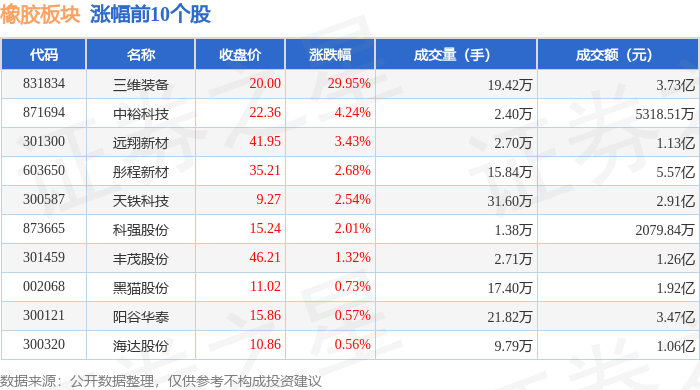
橡胶板块9月17日涨0.88%,三维装备领涨,主力资金净流出367.86万元
Zheng Xing Xing Ye Ri Bao· 2025-09-17 08:42
Market Overview - On September 17, the rubber sector increased by 0.88% compared to the previous trading day, with Sanwei Equipment leading the gains [1] - The Shanghai Composite Index closed at 3876.34, up 0.37%, while the Shenzhen Component Index closed at 13215.46, up 1.16% [1] Stock Performance - Sanwei Equipment (831834) closed at 20.00, with a significant increase of 29.95% and a trading volume of 194,200 shares, amounting to a transaction value of 373 million yuan [1] - Other notable performers include: - Zhongyu Technology (871694) at 22.36, up 4.24% [1] - Yuanxiang New Materials (301300) at 41.95, up 3.43% [1] - Tongcheng New Materials (603650) at 35.21, up 2.68% [1] Capital Flow - The rubber sector experienced a net outflow of 3.6786 million yuan from institutional investors, while retail investors saw a net outflow of 17.8668 million yuan [2] - Conversely, speculative funds recorded a net inflow of 21.5454 million yuan [2] Individual Stock Capital Flow - Tian Tie Technology (300587) had a net inflow of 21.7146 million yuan from institutional investors, while retail investors faced a net outflow of 7.8641 million yuan [3] - Heimao Co. (002068) saw a net inflow of 21.1115 million yuan from institutional investors, but a significant net outflow of 27.6242 million yuan from retail investors [3] - Other stocks with notable capital flows include: - Fengmao Co. (301459) with a net inflow of 7.9802 million yuan from institutional investors [3] - Longxing Technology (002442) with a net inflow of 1.8542 million yuan from institutional investors [3]



商务预报:9月8日至14日食用农产品价格总体平稳 生产资料价格略有下降
Shang Wu Bu Wang Zhan· 2025-09-17 07:59
Agricultural Products Market - The national market prices for edible agricultural products remained stable from September 8 to 14, with a slight decrease in production material prices by 0.2% compared to the previous week [1] - Average wholesale prices for six types of fruits saw a minor decline, with grapes, citrus, and apples decreasing by 3.1%, 2.1%, and 0.6% respectively [1] - The average wholesale price for 30 types of vegetables was 4.75 yuan per kilogram, down by 0.2%, with cucumber, broccoli, and cauliflower decreasing by 8.7%, 4.4%, and 4.4% respectively [1] - Wholesale prices for aquatic products showed a slight decline, with crucian carp, carp, and grass carp decreasing by 1.3%, 1.2%, and 0.5% respectively [1] - Meat wholesale prices experienced minor fluctuations, with pork priced at 19.97 yuan per kilogram, down by 0.6%, while lamb and beef increased by 0.3% and 0.2% respectively [1] - Grain and oil wholesale prices showed slight fluctuations, with rice and rapeseed oil decreasing by 0.2% and 0.1%, while soybean oil and peanut oil increased by 0.2% and 0.1% respectively [1] - Poultry product wholesale prices saw a slight increase, with eggs and broilers rising by 3.3% and 0.1% respectively [1] Production Materials Market - The prices of basic chemical raw materials predominantly decreased, with sulfuric acid, soda ash, and polypropylene declining by 1.6%, 0.6%, and 0.1% respectively, while methanol increased by 0.5% [2] - Coal prices showed a stable decline, with coking coal and thermal coal priced at 1001 yuan and 756 yuan per ton, decreasing by 1.2% and 0.5% respectively, while smokeless block coal remained unchanged at 1136 yuan per ton [2] - Fertilizer prices continued to decline, with urea and compound fertilizer decreasing by 0.5% and 0.3% respectively [2] - Finished oil wholesale prices experienced a slight decrease, with 92-octane gasoline, 0-octane diesel, and 95-octane gasoline dropping by 0.2%, 0.2%, and 0.1% respectively [2] - Rubber prices saw a slight retreat, with synthetic rubber and natural rubber decreasing by 0.3% and 0.1% respectively [2] - Steel prices remained stable, with high-speed wire, rebar, and welded steel pipes priced at 3547 yuan, 3366 yuan, and 3795 yuan per ton, all decreasing by 0.1%, while ordinary medium plates, hot-rolled strips, and channel steel increased by 0.1% [2] - Prices of non-ferrous metals showed a slight increase, with aluminum and zinc rising by 0.8% and 0.6%, while copper prices remained unchanged [2]

能源化工期权策略早报-20250917
Wu Kuang Qi Huo· 2025-09-17 06:49
Report Summary 1. Report Industry Investment Rating No relevant content provided. 2. Core Viewpoints - The energy - chemical sector is divided into energy, alcohols, polyolefins, rubber, polyesters, alkalis, and others. A strategy of building option portfolios mainly as sellers and spot hedging or covered strategies is recommended to enhance returns [3][9]. 3. Summary by Related Catalogs 3.1 Futures Market Overview - The report presents the latest prices, price changes, price change rates, trading volumes, volume changes, open interests, and open interest changes of various energy - chemical futures contracts, including crude oil, LPG, methanol, etc. For example, the latest price of crude oil (SC2511) is 501, with a price increase of 8 and a price change rate of 1.56% [4]. 3.2 Option Factors - **Volume - to - Open - Interest PCR**: It shows the volume, volume change, open interest, open interest change, volume PCR, volume PCR change, open interest PCR, and open interest PCR change of different option varieties. For instance, the volume PCR of crude oil options is 0.87, with no change, and the open interest PCR is 1.15, with a change of 0.03 [5]. - **Pressure and Support Levels**: From the perspective of the strike prices with the largest open interest of call and put options, the pressure and support levels of option underlying assets are analyzed. For example, the pressure level of crude oil is 570, and the support level is 480 [6]. - **Implied Volatility**: It includes the at - the - money implied volatility, weighted implied volatility, weighted implied volatility change, annual average implied volatility, call implied volatility, put implied volatility, historical 20 - day volatility, and the difference between implied and historical volatility of each option variety. For example, the at - the - money implied volatility of crude oil is 29.445, and the weighted implied volatility is 31.93, with a change of - 0.21 [7]. 3.3 Strategy and Recommendations - **Energy - related Options (Crude Oil)**: - **Fundamentals**: European ARA weekly data shows changes in gasoline, diesel, fuel oil, and naphtha inventories. - **Market Analysis**: Since July, crude oil has shown a bearish market with pressure above. - **Option Factor Research**: Implied volatility fluctuates around the average, and the open interest PCR is above 1.00, indicating a sideways market. The pressure level is 570, and the support level is 480. - **Strategies**: Directional strategy: None; Volatility strategy: Build a short - biased call + put option combination strategy; Spot long - hedging strategy: Build a long collar strategy [8]. - **LPG Options**: - **Fundamentals**: Factory inventory and port inventory have increased. - **Market Analysis**: It shows an oversold rebound market with pressure above. - **Option Factor Research**: Implied volatility has dropped significantly to around the average, and the open interest PCR is around 0.90, indicating a sideways market. The pressure level is 5300, and the support level is 4200. - **Strategies**: Directional strategy: None; Volatility strategy: Build a neutral - biased call + put option combination strategy; Spot long - hedging strategy: Build a long collar strategy [10]. - **Methanol Options**: - **Fundamentals**: High port inventory persists, but most negative factors have been priced in. Supply is sufficient, and demand is expected to improve marginally. - **Market Analysis**: It shows a weak - biased market with pressure above. - **Option Factor Research**: Implied volatility has decreased and fluctuates below the average. The open interest PCR is around 0.90, indicating a weak - sideways market. The pressure level is 2400, and the support level is 2250. - **Strategies**: Directional strategy: Build a put option bear spread strategy; Volatility strategy: Build a short - biased call + put option combination strategy; Spot long - hedging strategy: Build a long collar strategy [10]. - **Ethylene Glycol Options**: - **Fundamentals**: Terminal load remains flat, and port inventory has increased. - **Market Analysis**: It shows a weak - biased market with pressure above. - **Option Factor Research**: Implied volatility fluctuates below the average. The open interest PCR is around 0.60, indicating strong bearish power. The pressure level is 4500, and the support level is 4250. - **Strategies**: Directional strategy: Build a put option bear spread strategy; Volatility strategy: Build a short - volatility strategy; Spot long - hedging strategy: Hold a spot long position + buy a put option + sell an out - of - the - money call option [11]. - **Polyolefin Options (Polypropylene, etc.)**: - **Fundamentals**: There are changes in production enterprise inventory, trader inventory, and port inventory, and the downstream average operating rate has increased. - **Market Analysis**: Polypropylene shows a weak - biased market with pressure above. - **Option Factor Research**: Implied volatility of polypropylene has decreased to below the average. The open interest PCR is around 0.70, indicating a weakening trend. The pressure level is 7400, and the support level is 6700. - **Strategies**: Directional strategy: None; Volatility strategy: None; Spot long - hedging strategy: Hold a spot long position + buy an at - the - money put option + sell an out - of - the - money call option [11]. - **Rubber Options**: - **Fundamentals**: China's natural rubber social inventory has decreased. - **Market Analysis**: It shows a weak - sideways market with support below and pressure above. - **Option Factor Research**: Implied volatility has risen sharply and then dropped to around the average. The open interest PCR is below 0.60. The pressure level is 17000, and the support level is 15750. - **Strategies**: Directional strategy: None; Volatility strategy: Build a neutral - biased call + put option combination strategy; Spot hedging strategy: None [12]. - **Polyester Options (PTA, etc.)**: - **Fundamentals**: Downstream load has increased, and social inventory has decreased. - **Market Analysis**: PTA shows a weak - bearish market with pressure above. - **Option Factor Research**: Implied volatility of PTA fluctuates at a relatively high level. The open interest PCR is around 0.70, indicating a sideways market. The pressure level is 5000, and the support level is 4600. - **Strategies**: Directional strategy: None; Volatility strategy: Build a short - biased call + put option combination strategy; Spot hedging strategy: None [13]. - **Caustic Soda Options**: - **Fundamentals**: National liquid caustic soda factory inventory has decreased. - **Market Analysis**: It shows a downward - sideways market with pressure above. - **Option Factor Research**: Implied volatility is at a relatively high level. The open interest PCR is below 0.80, indicating a weak - sideways market. The pressure level is 3000, and the support level is 2400. - **Strategies**: Directional strategy: None; Volatility strategy: None; Spot collar hedging strategy: Hold a spot long position + buy a put option + sell an out - of - the - money call option [14]. - **Soda Ash Options**: - **Fundamentals**: Soda ash factory inventory and delivery warehouse inventory have changed. - **Market Analysis**: It shows a low - level upward market with support below. - **Option Factor Research**: Implied volatility is at a relatively high historical level. The open interest PCR is below 0.60, indicating strong bearish pressure. The pressure level is 1300, and the support level is 1200. - **Strategies**: Directional strategy: Not specified; Volatility strategy: Build a short - volatility combination strategy; Spot long - hedging strategy: Build a long collar strategy [14]. - **Urea Options**: - **Fundamentals**: China's urea enterprise total inventory has increased, but some enterprises' inventory has decreased due to export orders. - **Market Analysis**: It shows a low - level sideways and weak market. - **Option Factor Research**: Implied volatility fluctuates slightly around the historical average. The open interest PCR is below 0.60, indicating strong bearish pressure. The pressure level is 1800, and the support level is 1620. - **Strategies**: Directional strategy: None; Volatility strategy: Build a short - biased call + put option combination strategy; Spot hedging strategy: Hold a spot long position + buy an at - the - money put option + sell an out - of - the - money call option [15].
广发期货期货日评-20250917
Guang Fa Qi Huo· 2025-09-17 05:58
Report Industry Investment Ratings - No specific industry investment ratings are provided in the report. Core Viewpoints - The market may pre - price the Fed's probability of restarting interest rate cuts during the September interest rate meeting this week [2]. - The technology sector in stock index futures has regained strength, and funds are rotating among sectors [2]. - Treasury bond futures first declined and then rose, with an increasing expectation of central bank bond - buying [2]. - The Fed's decision may intensify market divergence and increase short - term volatility [2]. - The main contract of the container shipping index is weakly volatile [2]. - Coal supply contraction expectations have resurfaced, driving up steel prices [2]. - Iron ore prices are supported by factors such as resumed shipments, increased hot metal production, and restocking demand [2]. - The prices of some energy and chemical products are affected by factors such as supply - demand patterns, production maintenance, and inventory changes [2]. - The prices of some agricultural products are influenced by factors like supply, demand, and market sentiment [2]. - Some special and new - energy commodities are affected by factors such as cost, macro - environment, and industry meetings [2]. Summary by Related Catalogs Stock Index Futures - The technology mainline in stock index futures has regained strength, and funds are rotating among sectors. If volatility continues to decline, a double - buying strategy for options can be attempted [2]. Treasury Bond Futures - Treasury bond futures first declined and then rose, with an increasing expectation of central bank bond - buying. A unilateral strategy suggests investors wait and see, and pay short - term attention to changes in the capital market, the equity market, and fundamentals [2]. Precious Metals - Before the Fed's decision, the expectation of easing has been rising, and the US dollar index has fallen to the lowest point of the year. For gold, it is recommended to wait and see and then buy on dips after the decision. An option double - buying strategy at the strike price of 840 can be tried. Silver has high elasticity above $42, but volatility may rise and then fall after the decision. It is recommended to sell out - of - the - money put options on rallies [2]. Container Shipping Index (European Line) - The main contract is weakly volatile, and a spread arbitrage between December and October can be considered [2]. Steel and Related Products - Coal supply contraction expectations have resurfaced, and coking coal has driven up steel prices. It is recommended to go long on steel in the short term. For iron ore, go long on the 2601 contract at dips, with a reference range of 780 - 850, and short hot - rolled coils. For coking coal, go long on the 2601 contract at dips, with a reference range of 1150 - 1300, and short coke. For coke, go long on the 2601 contract at dips, with a reference range of 1650 - 1800, and short coke [2]. Energy and Chemical Products - For crude oil, it is recommended to mainly wait and see unilaterally. For urea, wait and see unilaterally, with a short - term support level of 1630 - 1650 yuan/ton. For PX, it is expected to oscillate between 6600 - 6900 in the short term. For PTA, it is expected to oscillate between 4600 - 4800 in the short term and conduct a rolling reverse spread between TA1 and TA5. For short - fiber, it has no obvious short - term driver and follows raw materials. For bottle - grade polyester chips, its demand may decline in September, and the processing fee is expected to fluctuate between 350 - 500 yuan/ton. For ethylene glycol, wait and see unilaterally and conduct a 1 - 5 reverse spread. For caustic soda, wait and see. For PVC, wait and see. For pure benzene, it follows styrene and oil prices in the short term. For styrene, conduct a rolling low - buying strategy and pay attention to the pressure around 7200, and widen the spread between EB11 and BZ11 at a low level. For synthetic rubber, its price is expected to fluctuate between 11400 - 12500. For LLDPE, it will oscillate between 7150 - 7450 in the short term. For PP, it is slightly bullish. For methanol, conduct range - bound operations between 2350 - 2550 [2]. Agricultural Products - For soybeans and related products, operate the 01 contract in the range of 3000 - 3100. For live pigs, the market is in a weakly volatile pattern. For corn, be cautious about short - selling. For palm oil, soybean oil, and rapeseed oil, observe whether the main contract of palm oil can stabilize above 9500. For sugar, pay attention to the pressure level around 5700 - 5750. For cotton, wait and see unilaterally. For eggs, reduce previous short positions and control positions. For apples, the main contract runs around 8300. For red dates, pay attention to the support at 10700. For soda ash, wait and see [2]. Special and New - Energy Commodities - For glass, wait and see and pay attention to the sentiment of the spot market during the peak season. For rubber, it is in a high - level oscillation due to positive macro - sentiment. For industrial silicon, it is strongly volatile, with the main price fluctuation range expected to be between 8000 - 9500 yuan/ton. For polysilicon, wait and see. For lithium carbonate, the main contract is expected to run between 70,000 - 75,000 [2].
需求端韧性叠加宏观面支撑 天胶偏强运行为主
Qi Huo Ri Bao· 2025-09-17 05:35
Core Viewpoint - The domestic natural rubber market is experiencing a strong upward trend due to a temporary tightening of supply, steady demand growth, and favorable macroeconomic factors [1] Demand Side Expectations - Internationally, expectations for a Federal Reserve interest rate cut have increased, providing support for the commodity market. August non-farm payrolls added 22,000 jobs, significantly below the market expectation of 75,000, which has enhanced market expectations for the probability and extent of rate cuts. The upcoming Federal Reserve meeting on September 16-17 will be crucial [2] - Domestically, multiple policies are working together to boost consumer confidence and improve market development expectations. The reintroduction of national subsidies in September, focusing on the automotive sector, is expected to increase vehicle sales by 10%, directly benefiting downstream demand for natural rubber. In August, domestic automobile production reached 2.815 million units, a month-on-month increase of 223,900 units, with a growth rate of 8.64%. The inventory warning index for automobile dealers decreased by 0.2 percentage points month-on-month, indicating a clear trend of increased production and reduced inventory [2] - With the arrival of the "Golden September and Silver October" consumption peak season, coupled with the national subsidy policy, tire manufacturers' operating rates are expected to further rise. As of September 12, the operating rate of domestic all-steel tires rose to 66.31%, a weekly increase of 5.57 percentage points, while the operating rate of semi-steel tires reached 72.61%, a weekly increase of 5.69 percentage points. Although the inventory days in Shandong remain at a high level compared to the past five years, they have decreased by 1.69% from the previous month, indicating a marginal alleviation of inventory pressure [2] Supply Side Conditions - As rainfall decreases and weather improves in major production areas, the efficiency of rubber tapping has increased, leading to a weakening of support for rubber prices from the raw material side. Although Thailand and Hainan are still experiencing peak rainfall, the weekly rainfall in Thailand has decreased by 1.08%, while Hainan's rainfall has increased by 133.02%. The peak rainfall season in Yunnan has ended, with a recent weekly decrease of 21.21% in rainfall, significantly improving tapping conditions [3] - Raw material prices are stabilizing domestically while showing slight declines internationally. As of September 15, the price of Yunnan rubber remained at 14,800 yuan per ton, stable in recent times. The FOB price of Thai cup rubber has dropped to 51 Thai baht per kilogram, down 1.7 Thai baht per kilogram from the previous week, while the FOB price of cup rubber has slightly increased by 0.2 Thai baht per kilogram compared to last week [3] Potential Risks - On September 10, Mexico proposed to raise tariffs on cars from Asia to a maximum of 50% to protect local jobs. If this policy is implemented, it may impact domestic automobile exports and subsequently affect natural rubber demand. However, there has not yet been a substantial impact [4] - Previously, OPEC+ maintained its production increase strategy, leading to expectations of falling oil prices, which in turn dragged down synthetic rubber prices and affected natural rubber trends. Future international geopolitical conflicts may boost oil prices, causing fluctuations in synthetic rubber prices. As a major substitute for natural rubber, the price trends of synthetic rubber will continue to influence market sentiment for natural rubber [4] - Overall, the current domestic natural rubber market's growth in demand, tightening inventory, and favorable macroeconomic fundamentals remain unchanged. Although the marginal supply from production areas has weakened raw material support, the resilience of demand and macroeconomic support still dominate the market [4]