
食品饮料

Search documents
东兴证券晨报-20260324
Dongxing Securities· 2026-03-24 08:45
Core Insights - The report highlights the strong performance of China Jushi (600176.SH) in 2025, with a revenue of 18.881 billion yuan, representing a year-on-year growth of 19.08%, and a net profit attributable to shareholders of 3.285 billion yuan, up 34.38% year-on-year [7][8]. Revenue and Profit Growth - The growth in revenue and net profit is attributed to both increased sales volume and higher sales prices, with sales of glass fiber and products reaching 3.2026 million tons, a 5.87% increase year-on-year, and electronic cloth sales at 1.062 billion meters, up 21.37% year-on-year [8]. - The average price of glass fiber products, such as the 2400tex product from Taishan Fiberglass, was 3,823.59 yuan per ton in 2025, reflecting a 2.16% increase compared to the previous year [8]. Demand and Market Dynamics - Despite a decline in real estate investment (down 17.2% year-on-year) and fixed asset investment (down 3.8% year-on-year), the overall industry demand remains balanced due to new demand from sectors like wind power, automotive, and electronics [8][9]. - The report notes that the company is actively developing electronic fiberglass and other new demand products, which are contributing to a favorable growth trend in specific segments [9]. Profitability and Efficiency - The comprehensive gross margin for 2025 was 33.12%, an increase of 8.09 percentage points year-on-year, with the gross margin for fiberglass yarn and products at 32.21%, up 7.87 percentage points [9]. - The net profit margin for 2025 was 18.09%, a 2.14 percentage point increase year-on-year, although this was less than the increase in gross margin due to a significant rise in management expenses, particularly in employee compensation [9]. Production Capacity and Competitive Advantage - The company has optimized its product structure with the launch of new production lines, including a 120,000-ton fiberglass production line in Tongxiang and a 200,000-ton project in Jiujiang [10]. - The report emphasizes the company's scale cost advantages and enhanced competitiveness through production line optimization and overseas expansion, which helps mitigate risks from international trade issues [10]. Profit Forecast and Investment Rating - The forecast for net profit attributable to shareholders for 2026-2028 is 5.317 billion, 6.337 billion, and 7.050 billion yuan, respectively, with corresponding EPS of 1.33, 1.58, and 1.76 yuan [11]. - The current stock price corresponds to PE ratios of 17.66, 14.81, and 13.31 for 2026-2028, indicating a strong investment opportunity as the company is positioned as a global leader in the fiberglass industry [11].
中国食品:2025年收入增长2.7%,汽水品类销量保持稳定
Cai Jing Wang· 2026-03-24 08:44
Core Insights - The company reported a revenue of 22.07 billion yuan for the year ending December 31, 2025, representing a year-on-year growth of 2.7% [1] - The adjusted EBIT was 1.979 billion yuan, showing a year-on-year increase of 6.1%, while the adjusted EBITDA reached 2.872 billion yuan, up by 5.5% [1] Revenue Breakdown - The company experienced growth in both sugary and sugar-free beverage categories, with the sugar-free segment achieving high single-digit growth [1] - The market share of the beverage category within the company's operational regions is nearly 60% [1] - The soda category maintained stable sales volume, with revenue increasing by nearly 2% year-on-year [1] Juice and Water Categories - Overall sales and revenue for the juice category saw a slight decline [1] - The company relaunched its second juice brand "Cooler" during the year, introducing multi-specification products in phases and implementing differentiated marketing strategies for different regions [1] - The company focused on core channels to enhance terminal reach, which significantly contributed to revenue growth in the juice category [1] - Adjustments in the water category strategy led to a rapid increase in the distribution network for "Ice Dew," resulting in double-digit growth in sales volume and corresponding revenue increase [1]
康师傅控股:25H2经营韧性凸显-20260324
HTSC· 2026-03-24 02:50
Investment Rating - The report maintains a "Buy" rating for the company with a target price of HKD 15.03 [6]. Core Insights - The company is expected to achieve revenue of RMB 79.07 billion, net profit attributable to shareholders of RMB 4.50 billion, and adjusted net profit of RMB 4.25 billion for the year 2025, reflecting a year-on-year change of -2.0%, +20.5%, and +14.1% respectively [1]. - In the second half of 2025, the company reported revenue of RMB 38.80 billion, net profit of RMB 2.23 billion, and adjusted net profit of RMB 2.13 billion, with year-on-year changes of -1.7%, +20.6%, and +16.3% respectively, indicating that revenue met expectations [1]. - The beverage and instant noodle segments faced revenue declines of -2.9% and -0.5% year-on-year, respectively, while the second half of 2025 showed a recovery in instant noodle revenue with a year-on-year increase of +1.5% [1][2]. - The company’s EBIT margin improved by 1.2 percentage points year-on-year, driven by controlled costs and effective promotional strategies [3]. Revenue and Profitability - The beverage segment's revenue for 2025 decreased by 2.9% to RMB 50.10 billion, while the instant noodle segment's revenue decreased by 0.5% to RMB 28.28 billion [2]. - The gross margin for 2025 increased by 1.7 percentage points to 34.8%, with the beverage and instant noodle segments achieving gross margins of 37.5% and 29.7%, respectively [3]. - The company’s net profit margin for 2025 increased by 1.2 percentage points to 5.7%, with an EBIT margin of 8.8% [3]. Future Outlook - The company anticipates that rising oil prices will negatively impact the costs of PET and palm oil in 2026, but aims to maintain profit margins through improved operational efficiency [3][4]. - The forecasted net profit for 2026 and 2027 is RMB 4.28 billion and RMB 4.63 billion, respectively, with an estimated EPS of RMB 0.76 and RMB 0.82 [4][9]. - The report suggests that the dividend payout ratio may remain at 100% for the next 2-3 years, considering the peak in capital expenditures has passed [1].

华泰证券今日早参-20260324
HTSC· 2026-03-24 02:08
Group 1: Market Strategy and Sentiment - The recent volatility in the AH market is attributed to escalating geopolitical tensions in the Middle East and hawkish signals from the US Federal Reserve, leading to a liquidity feedback loop and heightened panic sentiment [2][3] - The sentiment index for A-shares has reached panic levels, while the Hong Kong stock sentiment remains pessimistic, suggesting a potential for a rebound after sufficient emotional release [2][3] - A shift in funding strategies is observed, with funds moving from offensive to defensive positions, particularly favoring consumer and financial sectors as investors seek safety amid rising uncertainties [3] Group 2: Fixed Income and Economic Indicators - The fiscal data for January-February 2026 shows a strong performance in government spending, with general budget revenue turning positive year-on-year, while government fund income has seen a widening decline [5] - The market is transitioning from a risk-off trading environment to one focused on inflation pressures and liquidity tightening, indicating a new phase in stagflation trading [6] - The ABS market has seen a negative net financing of 86.46 billion yuan in 2026, with a notable increase in issuance but a contraction in net financing, suggesting a cautious outlook for the sector [8] Group 3: Company-Specific Insights - Yushun Technology, which focuses on humanoid robots, reported a significant increase in revenue and profitability, with a gross margin exceeding 60% and a net profit margin of 35% for 2025, indicating strong market confidence in the humanoid robotics sector [10] - Satellite Chemical's 2025 revenue reached 46.068 billion yuan, with a net profit of 5.311 billion yuan, benefiting from lower operating costs and an improved industry supply structure [13] - China Petroleum & Chemical Corporation reported a revenue of 2.7836 trillion yuan for 2025, with a net profit of 31.8 billion yuan, highlighting the company's integrated advantages in upstream and downstream operations [26] Group 4: Industry Trends and Projections - The construction investment landscape is shifting towards integrating safety and development, focusing on collaborative effects across various infrastructure networks, which is expected to stabilize growth in 2026 [11] - The automotive sector is anticipated to benefit from a recovery in restaurant demand, which is expected to drive price recovery for companies like China Resources Beer [18] - The logistics and shipping industry, particularly COSCO Shipping, is projected to see a significant increase in freight rates due to global supply chain disruptions stemming from geopolitical tensions [23]
A股量化择时研究报告:AI识图关注红利低波、银行、地产
GF SECURITIES· 2026-03-23 12:06
Quantitative Models and Construction Methods - **Model Name**: Convolutional Neural Network (CNN) for Price-Volume Data **Model Construction Idea**: The model leverages convolutional neural networks to analyze standardized graphical representations of price-volume data, aiming to predict future price trends. The learned features are then mapped to specific industry theme indices[76][78] **Model Construction Process**: 1. Standardize price-volume data into graphical formats for each stock within a specific time window[76] 2. Train a convolutional neural network to extract features from these graphical representations[76] 3. Map the learned features to industry theme indices, such as dividend low-volatility, banking, and real estate indices[76][78] **Model Evaluation**: The model effectively identifies industry themes based on price-volume patterns, providing actionable insights for sector allocation[76][78] Model Backtesting Results - **CNN Model**: Latest theme configurations include the following indices: 1. CSI Dividend Low Volatility Index (h30269.CSI) 2. CSI Banking Index (399986.SZ) 3. CSI 800 Banking Index (h30022.CSI) 4. CSI Mainland Real Estate Theme Index (000948.CSI) 5. CSI 800 Real Estate Index (399965.SZ)[78] Quantitative Factors and Construction Methods - **Factor Name**: Macroeconomic Indicators **Factor Construction Idea**: Macroeconomic factors are used to assess their impact on asset returns by identifying trends and significant events in historical data[51][52] **Factor Construction Process**: 1. Track 25 domestic and international macroeconomic indicators, such as PMI, CPI, PPI, and M2 growth rates[52] 2. Define four types of macroeconomic events: short-term peaks/troughs, continuous up/down trends, historical highs/lows, and trend reversals[52] 3. Use historical moving averages to classify macroeconomic trends (e.g., 3-month, 12-month averages) and analyze their impact on asset returns over the next month[54] **Factor Evaluation**: The approach identifies effective macroeconomic events that significantly influence asset returns, providing a robust framework for market trend analysis[52][54] Factor Backtesting Results - **Macroeconomic Factors**: 1. PMI (3-month moving average): Positive outlook for equities[55] 2. Social Financing Stock YoY Growth (1-month moving average): Neutral outlook[55] 3. 10-Year Treasury Yield (12-month moving average): Neutral outlook[55] 4. Dollar Index (1-month moving average): Neutral outlook[55]
“附近药店的卫生纸卖光了!”中东战火下日本卫生纸恐慌重现
凤凰网财经· 2026-03-23 11:58
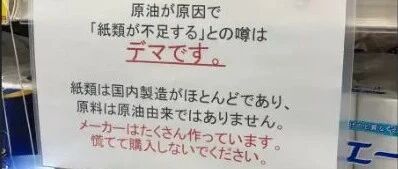
Group 1 - The core viewpoint of the article highlights a surge in consumer panic buying of essential goods in Japan due to concerns over conflicts in the Middle East, with items like toilet paper, cat food, and toiletries being hoarded [1] - A user on a social media platform reported that local pharmacies had run out of toilet paper, indicating widespread panic among the public [1] - Historical context is provided, noting that similar hoarding behaviors occurred during the 1973 oil crisis, the 2011 earthquake and tsunami, and the COVID-19 pandemic, suggesting a pattern of consumer behavior in response to crises [7] Group 2 - According to the Japan Household Paper Industry Association, approximately 97% of toilet paper is made from recycled paper and domestic pulp, indicating no reliance on Middle Eastern imports [5] - The Ministry of Economy, Trade and Industry of Japan urged consumers to refrain from panic buying and to make rational purchasing decisions based on accurate information [6]

达能宣布收购营养代餐品牌Huel
Bei Jing Shang Bao· 2026-03-23 10:49
Core Viewpoint - Danone has signed a final agreement to acquire Huel, a well-known company in the field of complete nutritional meal solutions, aligning with its "Renew Danone" strategy to enhance its presence in the functional nutrition sector and enter the rapidly growing "complete nutrition" market [1] Group 1 - The acquisition is expected to leverage Danone's scale, core capabilities, and global network to accelerate business growth, innovation, and international expansion [1] - Huel focuses on providing comprehensive, convenient, and sustainable food options, including powders, ready-to-drink shakes, savory meals, nutrition bars, super greens powders, and functional beverages [1]

整个社会都在喊没钱了,为什么这些公司反而年赚百亿?
创业家· 2026-03-23 10:15
Core Insights - The article emphasizes that despite the prevailing narrative of economic hardship, certain industries are thriving and generating substantial profits, particularly in Japan and China [3][4]. - It identifies eight key sectors that present significant business opportunities amid a low-desire society, highlighting shifts in consumer behavior and spending patterns [4][5]. Group 1: Key Industries - **Second-Hand Economy**: The second-hand luxury market in Japan, exemplified by "Daikokuya," has seen a surge in revenue, mirroring trends in China with platforms like "Hongbulin" and "Panghu" experiencing significant growth [6][7][8]. - **Pet Economy**: With declining birth rates, spending on pets has increased, as seen with brands like "Inaba" in Japan and "Guai Bao" in China, indicating a robust market for pet food and healthcare products [12][13][15]. - **Adult Care**: The adult diaper market in Japan has surpassed $10 billion, showcasing the economic potential of catering to an aging population [17][18][19]. - **Health Food and Beverages**: The rise in health consciousness has led to increased demand for sugar-free products and functional beverages, with brands like "Oriental Tree Leaf" and "East Peak" gaining traction in China [21][22]. Group 2: Emerging Trends - **Beauty Economy**: The demand for beauty products, including collagen supplements and at-home beauty devices, remains strong, indicating that consumers prioritize personal care even in economic downturns [23][24][26]. - **Outdoor Recreation**: Companies like "Snow Peak" in Japan are capitalizing on the outdoor gear market, reflecting a growing interest in leisure activities despite economic constraints [29][31]. - **Convenience Economy**: The trend towards convenience is evident in the growth of frozen food brands and smart home appliances, which cater to consumers' desire to save time [39][40][42]. - **Low-Desire Society**: The article posits that while some may view the current market as a downturn, it presents opportunities for those willing to invest in counter-cyclical sectors [43][44].

成立超10年,年化超6%,回撤控制在5%以内的稳健型基金 | 1分钟了解一只吾股好基(七十五)
市值风云· 2026-03-23 10:13
Core Viewpoint - The article highlights the performance and management strategy of the Dongfanghong Strategy Selected Mixed A Fund, which has consistently delivered positive returns over the years, making it a suitable investment option for risk-averse investors seeking alternatives to bank deposits [3][20]. Fund Performance - The Dongfanghong Strategy Selected Mixed A Fund has been established for over 10 years, with an annualized return exceeding 6% and a total return of 77.95% since the current manager, Kong Lingchao, took over in August 2016 [3][4]. - The fund has only experienced a slight decline of 0.94% in 2022, while achieving positive returns in all other years, outperforming the CSI 300 index during bear markets and significantly beating performance benchmarks during bull markets [9][10]. Fund Management - Kong Lingchao manages a total of 9 funds, with the Dongfanghong Strategy Selected Mixed A being the best performer among them, currently holding assets of 13.35 billion [4][6]. - The fund maintains a conservative stock allocation of below 25% and a bond allocation of over 70%, with a focus on managing drawdowns effectively, keeping the maximum dynamic drawdown under 5% [11][14]. Asset Allocation - As of the end of 2025, the fund's asset allocation includes 58.6% in financial bonds, with medium-term notes, corporate bonds, and corporate short-term financing bonds making up 22.2%, 10.36%, and 7.46% respectively [15]. - The equity allocation is diversified, with the largest sector being media at 9.18%, followed by electronics, pharmaceuticals, basic chemicals, textiles, non-ferrous metals, and others, all within the 5%-9% range [15][16]. Institutional Interest - The fund has attracted significant institutional interest, with institutional holdings reaching nearly 90% during the weak market of 2022, and still maintaining a 56% share as of mid-2025 [12]. Investment Strategy - The fund's strategy includes a balanced approach to equity investments, with a focus on sectors that may recover from pessimistic earnings expectations, particularly in AI and traditional industries [20].

食品饮料行业跟踪报告:社零温和修复,价格复苏信号渐明
Shanghai Aijian Securities· 2026-03-23 09:49
Investment Rating - The industry investment rating is "Outperform the Market" [1] Core Insights - The food and beverage industry is showing signs of recovery, with social retail sales gradually improving and price recovery signals becoming clearer [1][4] - The white liquor sector is expected to see demand gradually recover as policy pressures ease, with industry valuations currently at low levels and pessimistic expectations fully priced in [3][4] - The overall consumer demand remains resilient, particularly in essential consumption categories, while service consumption is outperforming goods consumption [4] Summary by Sections Industry Performance - The food and beverage industry index decreased by 0.48%, outperforming the Shanghai Composite Index which fell by 3.38% [5] - Among sub-sectors, white liquor increased by 0.32%, while other categories like snacks and processed foods saw declines of up to 4.52% [4][5] Social Retail Sales - In January-February 2026, the total retail sales of consumer goods reached 86,079 billion yuan, growing by 2.8% year-on-year, although the growth rate slowed compared to the same period in 2025 [4] - Essential consumption categories, such as food and beverages, showed strong performance with retail sales growth of 10.2% and 19.1% respectively [4] Price Trends - The Consumer Price Index (CPI) rose by 1.3% year-on-year in February, marking the highest level in nearly three years, with food prices increasing by 1.7% [4] - The Producer Price Index (PPI) decreased by 0.9% year-on-year, indicating a narrowing decline and improving conditions for the industry [4] Investment Recommendations - For the white liquor sector, it is recommended to focus on high-quality leading companies like Kweichow Moutai, which have stable pricing and attractive dividend yields [3] - In the consumer goods sector, attention should be given to companies like Wancheng Group and Dongpeng Beverage, which are expected to benefit from growth trends and new product channels [3]