
化妆品

Search documents
扬州千植迹化妆品有限公司成立 注册资本10万人民币
Sou Hu Cai Jing· 2025-12-04 03:02
天眼查App显示,近日,扬州千植迹化妆品有限公司成立,法定代表人为蔡梦苇,注册资本10万人民 币,经营范围为一般项目:化妆品批发;化妆品零售;个人卫生用品销售;卫生用品和一次性使用医疗 用品销售;互联网销售(除销售需要许可的商品);日用杂品制造;日用杂品销售;美发饰品销售;消 毒剂销售(不含危险化学品);花卉种植;货物进出口;技术进出口;进出口代理;网络与信息安全软 件开发;网络设备销售;网络技术服务;信息技术咨询服务;个人互联网直播服务;日用品销售;美发 饰品生产;医护人员防护用品零售;日用百货销售;食用农产品初加工;食用农产品批发;初级农产品 收购;海洋生物活性物质提取、纯化、合成技术研发;技术服务、技术开发、技术咨询、技术交流、技 术转让、技术推广;发酵过程优化技术研发;生物基材料技术研发;资源再生利用技术研发;普通货物 仓储服务(不含危险化学品等需许可审批的项目);国内货物运输代理;物料搬运装备销售;医用口罩 批发;医护人员防护用品批发;医用口罩零售;第一类医疗器械销售;第二类医疗器械销售;第一类医 疗设备租赁;第二类医疗设备租赁;医护人员防护用品生产(Ⅰ类医疗器械)(除依法须经批准的项目 外,凭营业 ...
招银国际:降巨子生物(02367)目标价至53.89港元 料可复美短期受压
智通财经网· 2025-12-04 03:01
Core Viewpoint - The report from 招银国际 indicates a downward adjustment of the target price for 巨子生物 (02367) from HKD 58.35 to HKD 53.89, a decrease of 8%, while maintaining a "Buy" rating [1] Group 1: Financial Forecasts - The revenue growth forecast for the company for the years 2025/26 has been revised down to -3.5% and 13.6% respectively [1] - The sales performance during the "Double Eleven" shopping festival was under pressure, primarily due to the underperformance of 达播 [1] Group 2: Strategic Adjustments - The company is actively adjusting its channel strategy, which reflects the overall competitive pressure in the industry [1] - Management is maintaining strategic consistency amidst industry changes, focusing on price maintenance and consumer experience, while increasing the proportion of self-broadcast channels to lay a foundation for long-term growth [1] Group 3: Future Growth Prospects - The company plans to launch several key new products next year to drive a new round of growth [1] - The company has been approved to repurchase up to 104 million shares, accounting for 10% of the total share capital, demonstrating confidence in long-term development [1] - Despite short-term challenges for 可复美 due to declining traffic benefits and intensified competition, the steady growth of 可丽金 and the commercialization of medical beauty products in 2026 may offset the risks associated with the slowdown of 可复美 [1] - The company is expected to rely on a dual-drive strategy of "skincare + medical beauty" to return to a growth trajectory by 2027 [1]
招银国际:降巨子生物目标价至53.89港元 料可复美短期受压
Zhi Tong Cai Jing· 2025-12-04 03:00
Core Viewpoint - 招银国际 has downgraded the target price for 巨子生物 (02367) by 8% from HKD 58.35 to HKD 53.89 while maintaining a "Buy" rating due to short-term pressures on 可复美's sales performance [1] Group 1: Financial Forecasts - The revenue growth forecast for the company for 2025/26 has been adjusted to -3.5% and 13.6% [1] - The sales during the "Double Eleven" period were under pressure, primarily due to underperformance in 达播's sales [1] Group 2: Strategic Adjustments - The company is actively adjusting its channel strategy, reflecting overall competitive pressures in the industry [1] - Management is maintaining strategic focus amidst industry changes, aiming to protect pricing and consumer experience while increasing the proportion of self-broadcast channels [1] Group 3: Future Growth Prospects - The company plans to launch several key new products next year to drive a new growth phase [1] - The company has been approved to repurchase up to 104 million shares, representing 10% of its total share capital, demonstrating confidence in long-term development [1] Group 4: Risk Mitigation - Short-term growth for 可复美 is expected to slow due to the decline in traffic benefits and intensified competition [1] - However, the steady growth of 可丽金 and the commercialization of medical beauty products in 2026 may offset the risks associated with the slowdown of 可复美 [1] - The company is projected to return to a growth trajectory by 2027, driven by a dual engine of "skincare + medical beauty" [1]
捷豹酷虎战略转型加速 高嵩出任市场部执行副总裁
Xi Niu Cai Jing· 2025-12-04 02:50
Core Insights - Jaguar Land Rover China has appointed Gao Song as Executive Vice President of Marketing, responsible for brand strategy and comprehensive marketing efforts [2] - Gao Song brings nearly 20 years of experience in corporate marketing and business management, having worked with Procter & Gamble, Clarins, and Michelin [2] - The appointment reflects Jaguar Land Rover's strategic shift in the Chinese market, aiming to innovate marketing models while maintaining brand identity amidst the electric and intelligent transformation in the automotive industry [2] Group 1 - Gao Song's previous achievements include leading the launch of new brands like OLAY Men at Procter & Gamble and driving a 5.5 times sales growth through localization and digital innovation at Clarins China [2] - At Michelin, he disrupted traditional dealership models by building a data platform that generated 12 million precise user leads and over 1 million members in just five months [2] - The automotive industry is facing challenges in redefining luxury and building direct customer relationships while reducing reliance on traditional dealership systems [2] Group 2 - The appointment of Gao Song indicates Jaguar Land Rover's commitment to transforming its strategy in the Chinese market [2] - The company aims to leverage Gao Song's expertise in digital transformation, brand reshaping, and channel innovation to enhance brand presence and market share in China [2] - The industry is currently experiencing a wave of electrification and intelligence, necessitating innovative approaches to marketing and customer engagement [2]


厦门颐樱世家化妆品有限公司成立 注册资本10万人民币
Sou Hu Cai Jing· 2025-12-04 02:21
Group 1 - The establishment of Xiamen Yiying Shijia Cosmetics Co., Ltd. has been registered with a legal representative named Zhang Yangcheng and a registered capital of 100,000 RMB [1] - The company's business scope includes retail and wholesale of cosmetics, personal hygiene products, daily necessities, and various other consumer goods [1] - The company is also involved in internet sales, trade brokerage, and sales of maternal and infant products, among other activities [1]
京东折扣超市安徽首店开业;林清轩再次递表港交所
Sou Hu Cai Jing· 2025-12-04 00:18
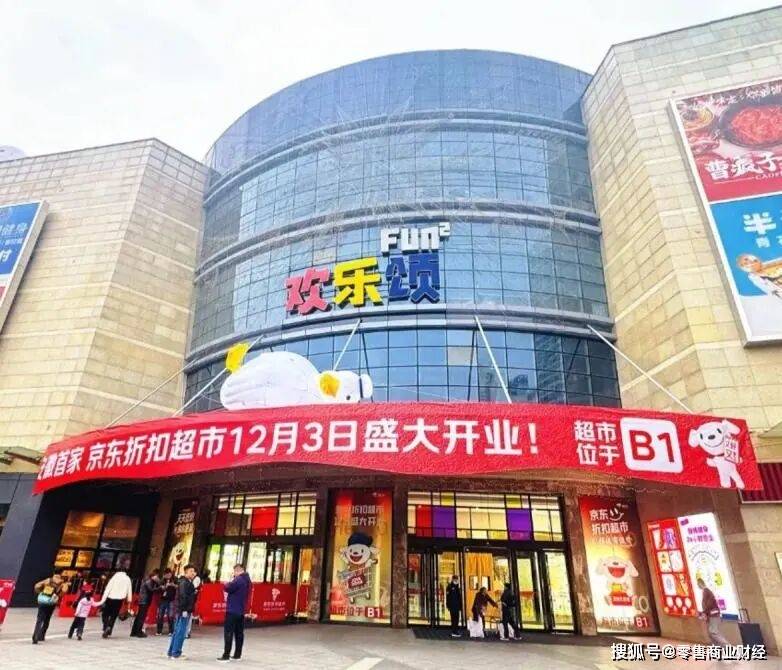
Group 1: JD Discount Supermarket - JD Discount Supermarket opened its first store in Anhui, located in Hefei, with long queues on the opening day [1] - The store follows JD's "large store, multiple SKUs" model, utilizing a self-built warehouse of 14,000 square meters for efficient delivery within a 25-kilometer radius [1] - The product selection focuses on high-cost performance nationwide goods while incorporating local Anhui specialties [1] Group 2: Dingdong Maicai - Dingdong Maicai launched a seafood processing service nationwide, offering various processing options for popular fish types [3] - In Jiangsu, over 70% of users opted for processing services when purchasing black fish, with sliced processing accounting for 60% of those choices [3] Group 3: Meituan and Starbucks - Meituan Longzhu's founder revealed that they exited the first round of bidding for Starbucks China due to failed verification [5] - The founder predicts a slowdown in the tea beverage market growth after reaching a scale of 400 billion yuan, while the coffee market is expected to grow to 600 billion yuan [5] Group 4: Walmart - Walmart announced a $350 million investment to build a second milk processing plant in Valdosta, Georgia, to strengthen its supply chain [12] - The new facility will create over 400 jobs and supply milk to more than 650 Walmart and Sam's Club locations in the southeastern U.S. [12] Group 5: Alibaba Foundation - Alibaba Foundation released a report on its progress in assisting people with disabilities, highlighting the increasing role of AI in creating accessible environments [13] - The foundation's initiatives have helped over 18,000 disabled individuals earn income through various projects [13] Group 6: Cainiao - Cainiao's unmanned vehicle delivery network has expanded to over 30 cities in China, enhancing supply chain efficiency [14] - The solution allows for real-time replenishment and dynamic route planning, upgrading the traditional delivery model [14] Group 7: KFC Expansion - KFC plans to double the number of its restaurants in Europe over the next five years, marking a significant expansion [15] Group 8: Lin Qingxuan - Lin Qingxuan submitted a new application for listing on the Hong Kong Stock Exchange, planning to issue up to 16.06 million shares [17] Group 9: Tianjin Snack Growth - Tianjin's Le Ba potato chips saw a tenfold increase in sales on Pinduoduo, leveraging innovative flavors and nostalgic appeal [18] Group 10: New Store Openings - Sushi Lang will open two new stores in Shanghai, marking its first locations in the city [20] - Beijing added over 960 new stores in the first 11 months of 2025, highlighting the growth of the first-store economy [22]

【公告臻选】多肽药+创新药+原料药+减肥药!公司产品通过药监局化妆品新原料备案
第一财经· 2025-12-03 15:06
Group 1 - The article highlights the importance of efficiently navigating through a large volume of announcements each night, emphasizing the value of the "Announcement Selection" service for making informed investment decisions [1] - Company Wipeptide-18 has successfully registered a new cosmetic ingredient with the regulatory authority, focusing on peptide drugs, innovative pharmaceuticals, raw materials, and weight loss medications [1] - The company plans to invest $150 million in a project in Cambodia, leveraging advantages from the Belt and Road Initiative and its overseas bases, along with a technology referred to as "liquid gold" [1] - A regional infrastructure leader and state-owned enterprise has won a nearly 3 billion yuan engineering project, aligning with national reforms and new urbanization efforts, particularly in Chongqing [1]
开源晨会-20251203
KAIYUAN SECURITIES· 2025-12-03 14:44
Group 1: Wind Power Industry - The domestic wind power demand is stable, driven by the "dual carbon" goals and the 2035 plan for 360 GW of installed capacity, with a projected addition of 86.99 GW in 2024 and a total of 272.1 GW from 2021 to 2024, significantly higher than the 145.5 GW added during the 13th Five-Year Plan period [7][8][9] - The "15th Five-Year Plan" aims for annual new installed capacity of no less than 120 GW, with offshore wind power expected to contribute at least 15 GW annually, indicating a robust growth trajectory for the wind power sector [7][8] - The industry is recovering from price wars, with a 9% increase in the average bid price for onshore wind projects in 2025 compared to 2024, suggesting improved profitability for wind turbine manufacturers [9] Group 2: Retail Industry - The retail sector is slowly recovering in 2025, with segments like high-end gold and fashion jewelry experiencing higher demand due to rising gold prices, while cosmetics and medical aesthetics face intense competition [13][15] - "Emotional consumption" is identified as a key driver of market dynamics, with a focus on brands that can leverage consumer insights and differentiate their products [13][15] - Investment strategies should prioritize high-quality segments with both short-term recovery potential and long-term growth prospects, emphasizing companies with competitive advantages and brand strength [13][15] Group 3: Coal Mining Industry - Yongtai Energy's Hai Zetan coal mine project is progressing ahead of schedule, with plans to repurchase shares worth 300-500 million yuan for cancellation, signaling confidence in long-term growth [20][21][22] - The Hai Zetan project has significant resource advantages, with reserves of 1.145 billion tons and a planned production capacity of 6 million tons per year, expected to reach 10 million tons annually upon completion [21][22] - The company maintains profit forecasts for 2025-2027, projecting net profits of 580 million, 1.05 billion, and 1.47 billion yuan, respectively, with a corresponding EPS of 0.03, 0.05, and 0.07 yuan [20][21] Group 4: Chemical Industry - Wankai New Materials is advancing its rPET and oxalic acid projects, which are expected to drive diversified growth, maintaining a "buy" rating [5][23] - The rPET project, in collaboration with Carbios, aims for an initial capacity of 50,000 tons, with a total investment of approximately 922 million yuan, showcasing strong partnership commitment [23][24] - The oxalic acid project, utilizing low-cost natural gas, aims to establish a production capacity of 100,000 tons, enhancing the company's competitive edge in the market [24]

半年营收翻番,林清轩改名再冲上市
Sou Hu Cai Jing· 2025-12-03 13:25
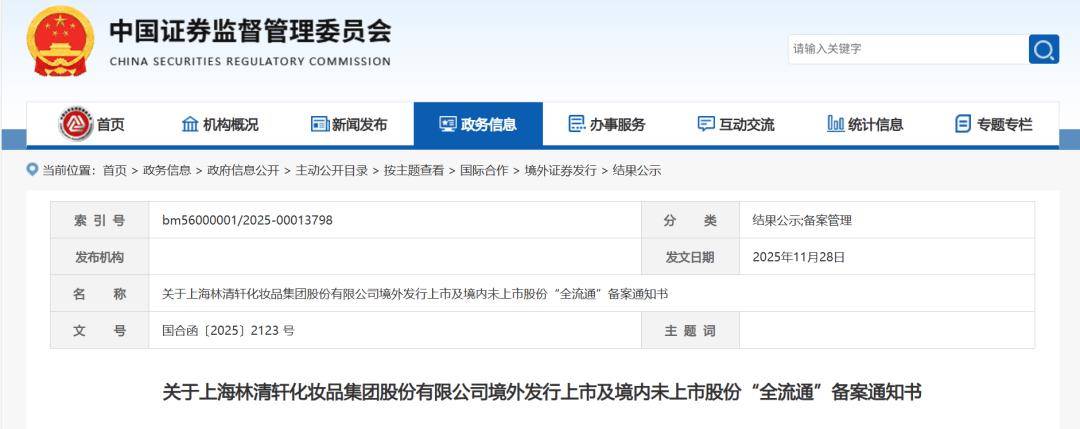
Core Insights - Lin Qingxuan has updated its prospectus for its IPO in Hong Kong, indicating a potential shift in the competitive landscape of domestic beauty brands in China [1] - The company has changed its name from "Shanghai Lin Qingxuan Biotechnology Co., Ltd." to "Shanghai Lin Qingxuan Cosmetics Group Co., Ltd." to reflect its strategic intent towards multi-brand and group operations [2][4] - The updated prospectus highlights a significant increase in revenue, with a 98.3% year-on-year growth in the first half of 2025, reaching 1.052 billion yuan [21][22] - Lin Qingxuan aims to expand its brand portfolio and enhance its market presence through internal incubation and strategic acquisitions [32][36] - The company plans to initiate international expansion starting with Southeast Asia, leveraging its unique plant resources and the concept of "Chinese beauty" [48] Company Name Change - The name change signifies a strategic shift towards a multi-brand and group-oriented operation [2][4] - The term "high-end" appears more frequently in the updated prospectus, indicating a continued focus on premium positioning [5] Financial Performance - Lin Qingxuan reported a revenue of 1.052 billion yuan in the first half of 2025, a substantial increase from 530 million yuan in the same period last year [21][22] - The company’s net profit for the same period was 182 million yuan, with a gross margin of 82.4% [22] - Historical revenue figures show a consistent upward trend, with revenues of 691 million yuan in 2022, 805 million yuan in 2023, and projected 1.21 billion yuan in 2024 [23] Shareholder Structure - The shareholder structure remains largely unchanged, with the founder holding a significant portion of shares [12][15] - Notably, a new investment from Shanghai Kaihui Chuangmei, an affiliate of L'Oréal, has been made, indicating increased interest from international beauty giants [18][20] Product and Brand Strategy - Lin Qingxuan's flagship product, the Camellia Oil, has been a major revenue driver, accounting for 45.5% of total revenue in the first half of 2025 [28][31] - The company is focusing on expanding its product matrix and has introduced new brands targeting different consumer segments [32][35] Retail and Distribution - As of June 30, 2025, Lin Qingxuan operates 554 stores, with over 95% located in high-end shopping malls [44] - The average repurchase rate has slightly decreased to 33.5%, while the active customer base has grown significantly [44] - Online sales accounted for 65.4% of total revenue in the first half of 2025, indicating a strong digital presence [48] Future Outlook - Lin Qingxuan plans to enhance its R&D capabilities, with an increase in the number of researchers to 85, focusing on developing proprietary ingredients and technologies [36][42] - The company is exploring potential acquisitions to strengthen its supply chain and expand its brand portfolio [36][40] - The upcoming IPO could position Lin Qingxuan as the leading domestic high-end skincare brand in the Hong Kong market, potentially altering the competitive dynamics within the industry [11][48]
巨子生物(02367):短期业绩承压,回购彰显信心
Zhao Yin Guo Ji· 2025-12-03 09:13
Investment Rating - The report maintains a "Buy" rating for the company with a target price of HKD 53.89, down from a previous target of HKD 58.35, indicating a potential upside of 35.7% from the current price of HKD 39.70 [2][6]. Core Insights - The company's short-term performance is under pressure due to disappointing sales during the "Double Eleven" shopping festival, primarily attributed to the underperformance of the "Dabo" sales channel. This reflects both strategic channel adjustments by the company and overall competitive pressures in the industry [6]. - Management remains committed to maintaining pricing stability and enhancing consumer experience, which is expected to lay a foundation for long-term growth. The company plans to launch several key new products next year to drive a new growth cycle [6]. - The company has been approved to repurchase up to 104 million shares, representing 10% of its total share capital, demonstrating confidence in its long-term development [6]. Financial Summary - For FY23A, the company reported sales revenue of RMB 3,524 million, with a year-on-year growth of 49.0%. Projections for FY25E and FY26E show expected revenues of RMB 5,347 million and RMB 6,075 million, respectively, with growth rates of -3.5% and 13.6% [2][11]. - The net profit attributable to shareholders for FY23A was RMB 1,452 million, reflecting a year-on-year increase of 44.9%. The forecast for FY25E and FY26E is RMB 1,903 million and RMB 2,126 million, with growth rates of -7.7% and 11.7% [2][11]. - The company's price-to-earnings (P/E) ratio is projected to be 24.0 for FY23A, decreasing to 15.2 by FY27E, indicating a potential increase in valuation as earnings grow [2][11]. Sales Performance - During the "Double Eleven" event, the company's online GMV for "Kefumei" declined approximately 30% year-on-year, with Tmall GMV down about 20% due to the company's decision to avoid aggressive price wars. However, the self-operated and mid-tier influencer channels showed resilience [6]. - The "Keli Jin" brand experienced double-digit growth in online GMV during the same period, particularly strong in the Douyin channel, indicating a successful strategy in diversifying sales channels [6]. Product Strategy - The company is actively cultivating a second tier of products to optimize its product structure, with expectations for significant revenue growth from new product launches in 2025 and 2026 [6]. - The medical beauty product line is set to expand, with the first injectable recombinant collagen product approved and plans for rapid terminal coverage expansion in 2026, which is anticipated to become a significant growth driver with higher profit margins than cosmetics [6].