家电

Search documents
海信家电(00921)附属认购18.15亿元华能信托理财产品
智通财经网· 2026-01-20 08:54
Core Viewpoint - Hisense Home Appliances (00921) announced a financial agreement to invest in a trust product, indicating a strategic move to enhance its financial portfolio and liquidity management [1] Group 1: Investment Details - The company’s subsidiary, the Air Conditioning Marketing Company and the Refrigerator Marketing Company, will subscribe to the Huaneng Trust financial product [1] - The total subscription amount is set at RMB 1.815 billion [1] - The subscription period is from July 16, 2025, to January 20, 2026 [1]
TCL电子与索尼就家庭娱乐领域达成战略合作的意向备忘录 拟成立合资公司共同打造支撑业务进一步增长
Zhi Tong Cai Jing· 2026-01-20 08:52
Core Viewpoint - TCL Electronics has entered into a non-binding memorandum of understanding with Sony Corporation to potentially establish a joint venture focused on Sony's home entertainment business, which will include integrated operations for product development, design, manufacturing, sales, logistics, and customer service globally [1][2] Group 1 - The joint venture will be owned 51% by TCL and 49% by Sony, and it will involve future arrangements regarding patents, technology, and brand licensing [1] - Sony has committed not to engage in discussions or negotiations with third parties regarding similar transactions until March 31, 2026, except under limited circumstances required by law [1] Group 2 - The joint venture aims to leverage Sony's advanced technology, brand value, and supply chain management capabilities in the audio-visual sector, while also utilizing TCL's display technology and global scale advantages [2] - This strategic collaboration is seen as an excellent opportunity for both companies to integrate their resources, enhance competitive strength, and create significant value for all stakeholders involved [2]
TCL电子(01070)与索尼就家庭娱乐领域达成战略合作的意向备忘录 拟成立合资公司共同打造支撑业务进一步增长
智通财经网· 2026-01-20 08:49
Core Viewpoint - TCL Electronics has entered into a non-binding memorandum of understanding with Sony Corporation to potentially establish a joint venture focused on Sony's home entertainment business, which will include integrated operations for product development, design, manufacturing, sales, logistics, and customer service globally [1][2] Group 1 - The joint venture will be owned 51% by TCL and 49% by Sony, and it will involve future arrangements regarding patents, technology, and brand licensing [1] - Sony has committed not to engage in discussions or negotiations with third parties regarding similar transactions until March 31, 2026, as part of the memorandum [1] Group 2 - The joint venture aims to leverage Sony's advanced technology, brand value, and supply chain management capabilities in the audio-visual sector, while also utilizing TCL's display technology and global scale advantages [2] - This strategic collaboration is seen as an opportunity for both companies to integrate their resources, enhance competitive strength, and create significant value for all stakeholders involved [2]
《企业可持续披露准则第1号——气候(试行)》印发,绿债净融资额显著下降:ESG月报(2025年12月-2026年1月)-20260120
Huachuang Securities· 2026-01-20 08:44
Investment Rating - The report does not explicitly state an investment rating for the industry Core Insights - The issuance of the "Corporate Sustainability Disclosure Standards No. 1 - Climate (Trial)" aims to standardize corporate sustainability information disclosure and promote sustainable development in economic, social, and environmental aspects [8][10] - Green loans in China have maintained a high growth rate of over 20% for the past five years, with a balance of 43.51 trillion yuan as of Q3 2025, reflecting a year-on-year increase of 22.9% [13] - The report highlights the importance of collaboration between technology giants and clean energy initiatives to meet climate goals, as emphasized in an open letter urging companies like Amazon and Google to power their data centers with clean energy [14][15] Industry Development Dynamics Policy Dynamics - The "Corporate Sustainability Disclosure Standards No. 1 - Climate (Trial)" was released on December 25, 2025, to regulate corporate sustainability disclosures [8] - The National Development and Reform Commission encourages the integration of national computing hubs with clean energy bases to enhance infrastructure and promote modernization [11] Industry Hotspots - The People's Bank of China reported that green loans have consistently grown at over 20% annually, with a balance of 43.51 trillion yuan as of Q3 2025, outpacing overall loan growth by 16.4 percentage points [13] - An open letter published in the Indianapolis Star called for major tech companies to utilize clean energy for their data centers to achieve climate targets [14] - The "2025 China Enterprise ESG Top 100" list was released, showcasing leading companies in finance and consumer sectors that are integrating sustainability into their core strategies [16][17] Industry Practices - The World Wildlife Fund (WWF) and Yili's brand Jindian have collaborated for nearly a decade to promote sustainable practices in the dairy industry, focusing on wetland protection and grassland restoration [18][19] - BMW Group aims to reduce lifecycle carbon emissions by at least 60 million tons by 2035, with a focus on localized green innovation in the Chinese market [20] Institutional and Expert Perspectives - Wang Zhongmin, former vice chairman of the National Social Security Fund, stated that AI's future is tied to ESG, emphasizing the need for green energy in AI development [21] - Vuk Jeremic, chairman of the Center for Sustainable Development, highlighted the importance of multilateral cooperation for achieving global sustainability goals amid geopolitical challenges [22] ESG Capital Market Dynamics Index Performance - As of January 18, 2026, most major ESG indices outperformed the market, with the Sci-Tech ESG Index rising by 17.6% [23] Public Funds - There are approximately 65 ESG-themed public funds with a total net asset of 36.3 billion yuan as of January 18, 2026, with one new fund launched in December and January [25] Bonds - As of January 18, 2026, there are 2,750 ESG bonds with a total balance of 39,355 billion yuan, with a significant decline in net financing due to increased repayment amounts [29][32] Bank Wealth Management - There are 582 ESG-themed bank wealth management products, with 100 new products launched in December and January [35]
望岳谈|全球贸易承压,山东外贸何以突破3.53万亿
Sou Hu Cai Jing· 2026-01-20 07:08
Core Insights - Shandong's foreign trade achieved a total import and export value of 3.53 trillion yuan in 2025, marking a year-on-year growth of 4.5%, contributing 9.1% to the national foreign trade growth [2] Group 1: Export Performance - Shandong's export of electromechanical products surpassed 1 trillion yuan for the first time in 2025, with 105 electromechanical products ranking first in national exports [3] - Key products such as diesel trucks, containers, concrete mixers, and shuttleless looms accounted for over 10% of the global export value in their categories, highlighting Shandong's emergence as a significant manufacturing hub [3] - The annual growth rate of electromechanical product exports during the 14th Five-Year Plan period is projected at 13.6%, with certain categories like ships and electric vehicles exceeding 30% [3] Group 2: Market Diversification - Shandong engaged in trade with over 250 countries and regions, with nine foreign trade markets exceeding 100 billion yuan in scale [5] - The province's exports to countries involved in the Belt and Road Initiative accounted for 64.1% of total imports and 57.3% of total exports, indicating a strategic focus on diversified markets [5][7] - Exports to Africa represented 58.5% of Shandong's automotive exports, showcasing the province's growing influence in emerging markets [5] Group 3: Business Environment and Growth - The number of foreign trade enterprises in Shandong reached 80,500 in 2025, reflecting a year-on-year increase of 9.7% [8] - Private enterprises contributed 92.9% of market entities and 76.3% of export values, playing a crucial role in stabilizing foreign trade [8] - Shandong's government implemented various measures to optimize the business environment, addressing over 3,100 enterprise requests with a high resolution rate of 99.7% [10]


董明珠称未来供广汽半数芯片
Di Yi Cai Jing· 2026-01-20 06:20
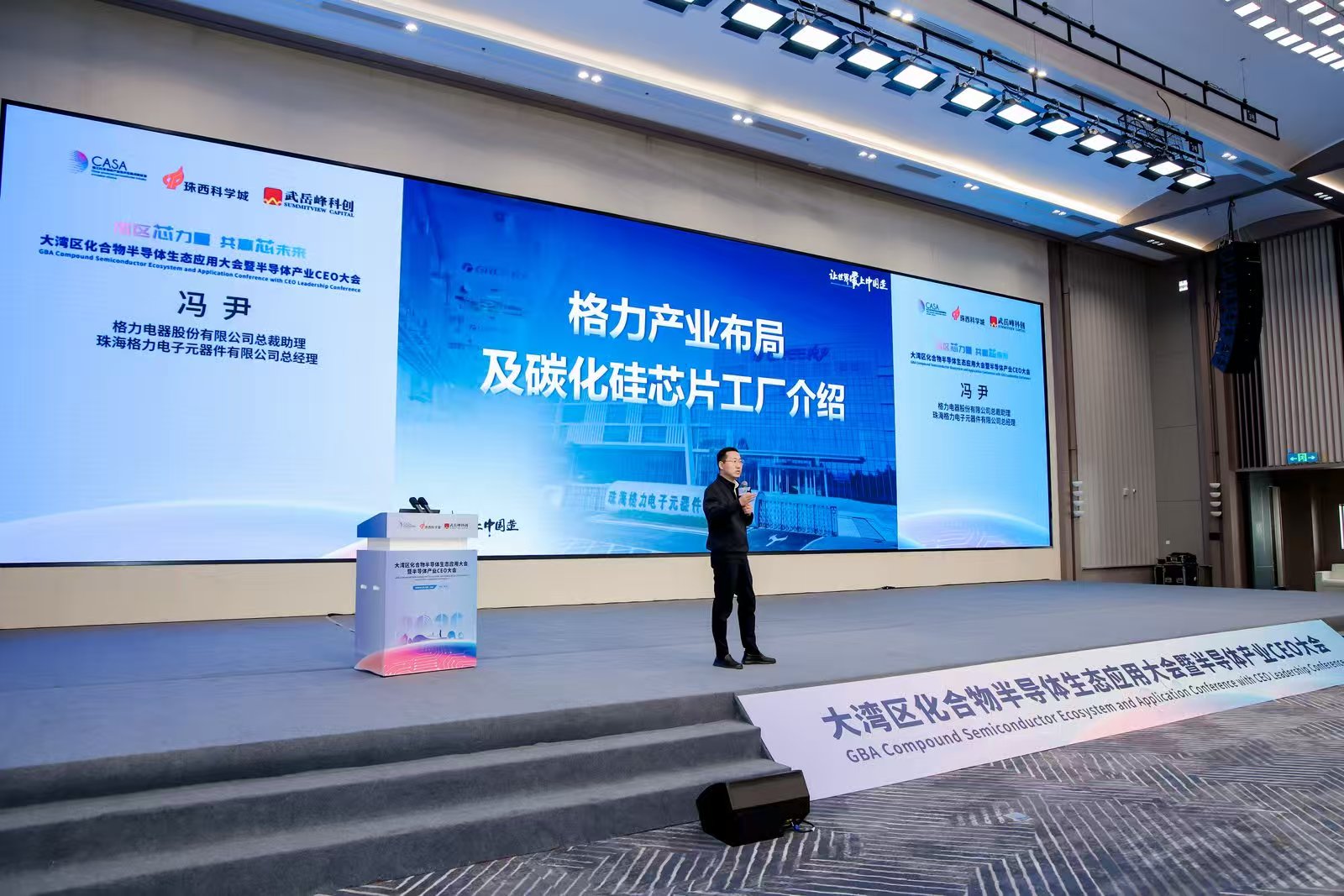
Core Viewpoint - Gree Electric Appliances is expanding its production of silicon carbide (SiC) chips for various applications, including household appliances, photovoltaic energy storage, and logistics vehicles, aiming to enhance energy efficiency and reduce energy consumption in the Chinese market [4][5]. Group 1: Company Developments - Gree Electric has established a silicon carbide chip factory, which will begin mass production of chips for photovoltaic storage and logistics vehicles in 2023 [4]. - The company has a planned annual production capacity of 240,000 six-inch silicon carbide wafers by the end of 2023, with cumulative sales of over 300 million chips expected by 2025 [5]. - Gree's silicon carbide chips have already been installed in over 2 million air conditioning units, contributing to temperature reduction and energy efficiency improvements [5]. Group 2: Industry Context - The Chinese home appliance industry has significant potential for energy efficiency improvements, with new energy efficiency standards expected to save approximately 13 billion kilowatt-hours if fully implemented by 2026 [4]. - Gree's silicon carbide technology is positioned to meet the increasing energy efficiency demands in the industry, particularly in comparison to Japan's leading energy efficiency standards [4]. Group 3: Challenges and Opportunities - Gree faces challenges such as low-price competition in the industry, customer price sensitivity during chip promotion, and reliance on imported components for some machinery [5]. - The company aims to strengthen external collaborations to assist more chip design firms and address industry bottlenecks [5].


董明珠称未来供广汽半数芯片
第一财经· 2026-01-20 06:12
Core Viewpoint - Gree Electric Appliances is expanding its production of silicon carbide (SiC) chips for various applications, including home appliances, photovoltaic storage, and logistics vehicles, aiming to enhance energy efficiency and reduce energy consumption in the Chinese market [6][8]. Group 1: Company Developments - Gree's silicon carbide chip factory is set to begin mass production of chips for photovoltaic storage and logistics vehicles in 2023, following the successful production of chips for home appliances [6]. - The company has established a new electronic components division focused on the design, wafer processing, and packaging of silicon carbide chips, with plans for an annual production capacity of 240,000 six-inch silicon carbide wafers by 2025 [8]. - Gree has already shipped over 200,000 air conditioning units equipped with its silicon carbide chips, which contribute to temperature reduction and energy efficiency improvements [8]. Group 2: Industry Context - The Chinese home appliance industry has significant potential for energy efficiency improvements, with new energy efficiency standards expected to save approximately 13 billion kilowatt-hours if fully implemented [8]. - Gree's silicon carbide technology is positioned to meet the growing demand for energy-efficient solutions across various sectors, including automotive and renewable energy [9]. - The company faces challenges such as price competition in the industry and reliance on imported components for some machinery, prompting a need for increased collaboration with chip design firms and suppliers [9].

国家发改委答21:统一汽车、家电“国补”标准,按季度下达资金
2 1 Shi Ji Jing Ji Bao Dao· 2026-01-20 05:40
Core Viewpoint - The implementation of the "Two New" policy in 2025 is expected to significantly boost China's GDP growth, with a target of surpassing 140 trillion yuan, driven by measures to expand domestic demand and support investment and consumption [1][2]. Group 1: Economic Impact - In 2025, the "Two New" policy is projected to support approximately 8,400 equipment upgrade projects, leading to total investments exceeding 1 trillion yuan and contributing to an 11.8% year-on-year increase in equipment investment [2]. - The policy has resulted in over 360 million people applying for subsidies for replacing old consumer goods, generating sales exceeding 2.6 trillion yuan and directly increasing retail sales of consumer goods by 0.6 percentage points [2]. - The implementation of the "Two New" policy has led to a cumulative energy saving of over 69 million tons of standard coal and a reduction of carbon emissions by more than 170 million tons [2]. Group 2: Policy Implementation for 2026 - The National Development and Reform Commission (NDRC) and the Ministry of Finance have announced the support scope and subsidy standards for the "Two New" policy for 2026, with an initial allocation of 62.5 billion yuan for consumer goods replacement [3]. - The 2026 policy aims to optimize the support scope and subsidy standards, ensuring a smooth transition and orderly implementation of the policy [3]. Group 3: Enhancements to Policy Effectiveness - To improve the effectiveness of fund utilization and amplify policy impact, the following measures are proposed: lowering investment thresholds for project applications, enhancing project review standards, and strengthening regulatory oversight [4][5]. - A unified subsidy standard will be implemented nationwide for various categories, including automobile replacements and home appliances, to ensure consistency across regions [5]. - The policy will also focus on combating fraudulent activities related to subsidies, ensuring strict fund audits and management to prevent abuse [5].
AI赋能制造业,打造新质生产力——《“人工智能+制造”专项行动实施意见》点评
Lian He Zi Xin· 2026-01-20 05:20
Investment Rating - The report does not explicitly provide an investment rating for the industry but emphasizes the strategic importance of AI in manufacturing and its potential to enhance competitiveness on a global scale [4][10]. Core Insights - The issuance of the "AI + Manufacturing" action plan aligns with global industrial competition and domestic manufacturing transformation needs, aiming to empower manufacturing through AI technology [2][4]. - The plan focuses on creating a comprehensive development system that includes technology support, scenario empowerment, product innovation, ecosystem activation, and security assurance [7][10]. - By 2027, the plan aims for China's AI core technologies to achieve reliable supply, with the industry scale and empowerment level ranking among the world's top [6][13]. Summary by Sections Background and Core Positioning - The deep integration of AI and manufacturing is essential for reshaping industrial advantages and seizing development opportunities amid global competition [4]. - The plan is a response to the urgent need for China's manufacturing sector to upgrade and transition from scale expansion to quality and efficiency [4][5]. Key Policy Interpretations - The plan introduces five core measures to build a comprehensive development system, focusing on technology support, scenario empowerment, product innovation, ecosystem activation, and security assurance [7][9]. - It emphasizes the need for a dual-cycle empowerment system that connects technology supply and industrial application, fostering a collaborative ecosystem [6][10]. Challenges and Outlook - The report identifies challenges such as the need for real-time response capabilities in industrial models and the fragmentation of industrial data, which hinders model training accuracy [11][12]. - In the short term (1-2 years), the manufacturing sector is expected to enter a phase of benchmark leadership, with 500 typical application scenarios becoming replicable and scalable [13]. - In the long term, the AI-driven innovation ecosystem is projected to enhance China's global competitiveness in core technologies and industry scale, leading the global manufacturing sector towards intelligent transformation [13].
格力电器车用碳化硅芯片将量产,董明珠称未来供广汽半数芯片
Di Yi Cai Jing· 2026-01-20 04:50
Core Viewpoint - Gree Electric Appliances is expanding its production of silicon carbide (SiC) chips, with plans to mass-produce chips for photovoltaic energy storage and logistics vehicles in addition to household appliances this year [3][4]. Group 1: Company Developments - Gree's silicon carbide chip factory began mass production of household appliance chips and will also produce chips for photovoltaic energy storage and logistics vehicles in 2023 [3]. - The company established an electronic components company in 2023, focusing on the design, wafer fabrication, and module packaging and testing of silicon carbide chips [4]. - Gree's silicon carbide chip factory has a planned annual production capacity of 240,000 six-inch silicon carbide wafers [4]. Group 2: Industry Context - The Chinese home appliance industry has significant potential for energy efficiency improvements, with new energy efficiency standards set to save approximately 13 billion kilowatt-hours if all refrigerators meet the upcoming standards [3]. - Gree's silicon carbide chips have already been installed in over 2 million air conditioning units, contributing to temperature reduction and energy efficiency improvements [4]. - The company aims to enhance collaboration with chip design firms and suppliers to address industry challenges such as low-price competition and reliance on imported equipment [4]. Group 3: Future Applications - Gree is exploring various applications for silicon carbide and gallium nitride semiconductors, including power adapters, LED display power supplies, and electric vehicle charging stations [5]. - The company is looking to expand into new markets such as low-altitude economy and super energy stations, which require innovative semiconductor solutions [5].