电子

Search documents
日经225指数收盘下跌1.1% 受经纪商和电子股拖累
Xin Lang Cai Jing· 2026-01-20 07:02
Core Viewpoint - The Nikkei 225 index closed down 1.1% at 52,991.10 points, influenced by declines in brokerage and electronic stocks, amid uncertainties regarding trade relations between the U.S. and Europe over Greenland [1][2]. Group 1: Market Performance - The Japanese stock market declined due to ongoing uncertainties surrounding trade relations related to Greenland, with investors closely monitoring developments [1][2]. - Long-term Japanese government bond yields surged to multi-year highs, raising concerns about potential fiscal deterioration due to upcoming elections [1][2]. Group 2: Economic Policies - A key focus of the election campaign will be the potential reduction of Japan's consumption tax, as both the ruling and opposition parties aim to alleviate the burden of rising living costs for voters [1][2]. - Prime Minister Fumio Kishida's party is considering a plan to suspend sales tax on food and beverages for two years, which could significantly reduce government revenue and raise concerns about the sustainability of Japan's substantial debt [1][2]. Group 3: Bond Yield Changes - The 40-year Japanese government bond yield rose by 26 basis points to 4.205% [1][2]. - The 30-year bond yield increased by 25 basis points to 3.860%, reaching a historical high [1][2]. - The 20-year bond yield climbed by 15 basis points to 3.405% [1][2].
稀土断供213吨重创日本;高市早苗接到死亡通知:血债必须清算!
Sou Hu Cai Jing· 2026-01-20 06:45
Core Viewpoint - Japan is facing a crisis due to its heavy reliance on Chinese rare earth exports, which have significantly decreased, threatening its advanced manufacturing sector and military capabilities [1][3][21]. Group 1: Economic Impact - China's rare earth exports to Japan dropped by 213 tons in December, leading to critical shortages for companies like Mitsubishi Heavy Industries, which now has only 15 days of alloy powder inventory left [1][5]. - Japan's dependency on Chinese rare earths exceeds 70%, with nearly 100% reliance in heavy rare earths, highlighting the vulnerability of its high-end manufacturing industry [3][21]. - The procurement cycle for neodymium-iron-boron magnets has extended from 1-2 months to 3-4 months, directly impacting the operational readiness of Japan's main fighter jets [11][29]. Group 2: Supply Chain and Regulatory Changes - The Chinese government has mandated that all companies exporting rare earths to Japan must provide detailed information about the entire supply chain, including potential resale to the U.S. [7][9]. - A "rare earth fingerprint" tracking system has been implemented, allowing China to monitor the flow of rare earths and impose severe penalties for any violations, which complicates procurement for Japanese firms [9][21]. Group 3: Geopolitical Tensions - China's maritime patrols near the Diaoyu Islands have intensified, with a recent 29-hour operation demonstrating a show of force against Japan [15][21]. - Japan's government is increasing its defense budget and engaging in military collaborations with the Philippines, indicating a strategic pivot in response to perceived threats from China [15][25]. - The diplomatic landscape is strained, with Japan's provocative statements regarding Taiwan and historical grievances exacerbating tensions with China [19][23][30]. Group 4: Historical Context and Future Outlook - China's recent statements emphasize the need for historical accountability regarding Japan's militaristic past, framing current tensions within a broader historical narrative [23][34]. - The economic repercussions for Japan are severe, with a potential GDP loss of 0.43% due to supply chain disruptions, further complicating its economic recovery [29][30]. - Japan's attempts to balance relations with the U.S. while confronting China may lead to further economic and diplomatic challenges, as it navigates a precarious geopolitical landscape [30][32].


56家科创板公司提前预告2025年业绩
Zheng Quan Shi Bao Wang· 2026-01-20 05:36
Core Insights - 56 companies on the Sci-Tech Innovation Board have issued performance forecasts for 2025, with 18 expecting losses, 18 expecting profit increases, 13 expecting reduced losses, 5 expecting profit declines, and 2 expecting profits [1] Group 1: Performance Forecasts - 35.71% of the companies forecast positive performance, with 18 companies expecting profit increases and 2 expecting profits [1] - Among the companies forecasting profit increases, 8 expect a net profit growth of over 100%, while 6 expect growth between 50% and 100% [1] - The company with the highest expected net profit growth is Baiwei Storage, with a median increase of 473.71% [3] Group 2: Industry Performance - Companies expecting net profit growth of over 50% are primarily in the electronics, pharmaceutical, and machinery sectors, with 7, 3, and 2 companies respectively [1] - The average increase in stock prices for high-growth companies this year is 17.77%, with Baiwei Storage leading at a 52.70% increase [1] Group 3: Capital Flow - In terms of capital flow, the stocks with significant net inflows over the past 5 days include Dingtong Technology, Oke Yi, and Kejie Intelligent, with net inflows of 277 million, 6.3 million, and 3.8 million respectively [2] - Conversely, stocks with high net outflows include Lankai Technology, Zhongke Lanyun, and Qiangyi Co., with net outflows of 217 million, 19 million, and 8.7 million respectively [2] Group 4: Individual Company Forecasts - The top companies by expected net profit growth include: - Baiwei Storage: 473.71% [3] - Zhongke Lanyun: 371.51% [3] - Baiaosaitu: 303.57% [3] - Companies expecting losses include: - Rongbai Technology: -157.45% [5] - Jinge Energy: -173.14% [5] - Tianhe Technology: -105.08% [5]


A股融资保证金比例下调首日:买入金额下降20.35% 热门股分歧显现
Mei Ri Jing Ji Xin Wen· 2026-01-20 05:10
Group 1 - The core point of the article is that A-shares experienced a decline in financing margin on the first trading day, with a significant drop in financing buy amounts compared to previous weeks [1][2] - On January 19, the total financing buy amount for A-shares was 267.4 billion yuan, a decrease of 20.35% from 335.7 billion yuan the previous Friday, and a 40.68% drop from the peak of 450.8 billion yuan on January 14 [1][2] - The financing balance in the market decreased for the first time this year, totaling 2.71 trillion yuan, down by 8.5 billion yuan, indicating that the amount of financing repayment slightly exceeded the financing buy amount [2][5] Group 2 - Only the Beijing Stock Exchange saw an increase in financing balance, which rose by 9.1 billion yuan, a growth of 1.46% [3] - The margin for short selling also saw a slight increase, with a rise of 0.0138 billion yuan, indicating growing market divergence as the Shanghai Composite Index approached the 4100-point mark [4][5] - On January 19, among 3372 stocks eligible for margin trading, only 1619 stocks had a net financing inflow, with 33 stocks exceeding a net inflow of 100 million yuan [6][8] Group 3 - Analysts from Changcheng Securities noted that the market is likely to stabilize after a period of rapid growth, with a focus on performance and fundamentals in the upcoming earnings season [8] - Dongguan Securities highlighted that the recent slowdown in A-share market momentum is a normal consolidation following excessive short-term trading, with overall macro policies remaining accommodative [8]
【中证1000ETF(159845.SZ)下跌1.41%,机构预计A股将在2026年继续走强】
Mei Ri Jing Ji Xin Wen· 2026-01-20 04:54
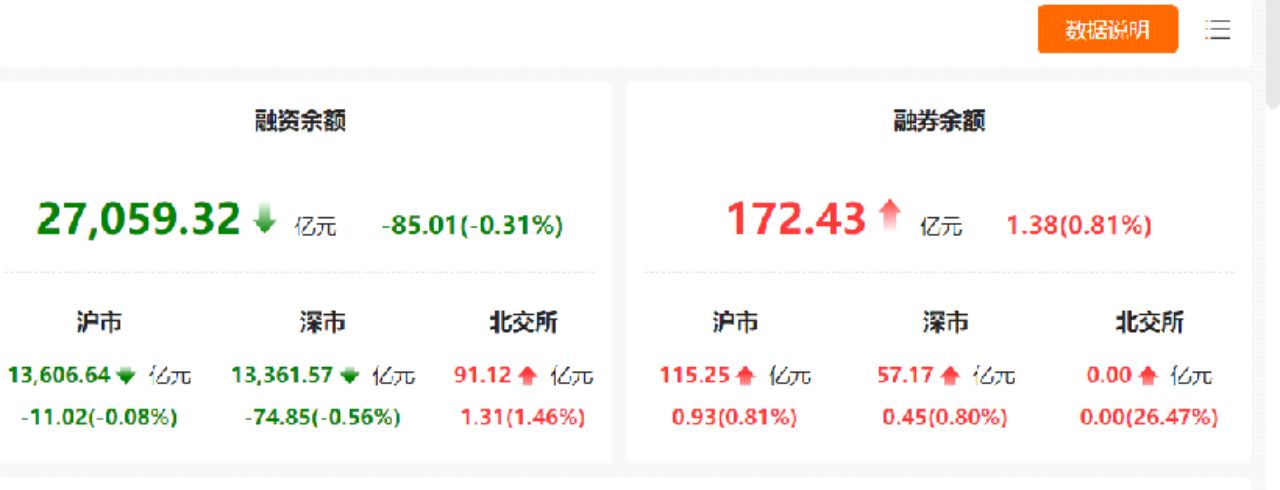
Market Performance - On January 20, the A-share market saw a collective decline in the three major indices, with the Shanghai Composite Index dropping by 0.35% [1] - The CSI 1000 ETF (159845.SZ) fell by 1.41%, while other broad indices such as the SSE 50 decreased by 0.12%, the CSI 300 by 0.52%, and the CSI 500 by 1.22% [1] ETF and Stock Performance - The CSI 1000 ETF's top 50 weighted stocks included notable gainers such as Ming Tai Aluminum Industry, which rose by 9.99%, and Shiyun Circuit, which increased by 2.27% [2] - Conversely, Cambridge Technology and Chunzhi Technology experienced significant declines of -7.96% and -7.45%, respectively [2] Industry Analysis - Key industries within the CSI 1000 ETF showed declines, with Electronics down by 1.58%, Power Equipment by 2.07%, Pharmaceuticals by 0.83%, Computers by 1.44%, and Machinery by 1.57% [3] - The CSI 1000 ETF experienced a net outflow of funds amounting to 9.032 billion yuan over the last five trading days and 8.315 billion yuan over the last ten days [3] Economic Insights - The State Council emphasized the importance of increasing consumer income as a means to boost domestic demand, focusing on the integration of livelihood improvement and consumption promotion [3] - Zheshang Securities projected that the A-share market will continue to strengthen through 2026, driven by liquidity, with a structural market characterized by low volatility dividends and technology growth [3] ETF Overview - The CSI 1000 ETF closely tracks the CSI 1000 Index, which consists of 1,000 small-cap stocks that are liquid and excluded from the CSI 800 Index, reflecting the price performance of a segment of small-cap companies in the A-share market [4]
中证1000指增如何把握Beta与Alpha? | 资产配置启示录
私募排排网· 2026-01-20 03:41
Group 1 - The core viewpoint of the article emphasizes the growing interest in the CSI 1000 Index Enhanced products, which aim to share Beta returns while striving for excess Alpha, particularly in a recovering market since 2025 [3] - The CSI 1000 Index features a small and mid-cap style, covering companies ranked approximately 801 to 1800 in A-share market capitalization, with a significant representation from high-growth sectors such as electronics, electrical equipment, pharmaceuticals, and computers [4] - The CSI 1000 Index typically exhibits higher elasticity and greater volatility compared to broader indices like the CSI 300 and CSI 500, making it more suitable for investors with a certain risk tolerance seeking potential excess returns through accepting short-term fluctuations [4] Group 2 - Since 2021, the Chinese government has introduced various policies to support the high-quality development of "specialized, refined, and innovative" small and medium-sized enterprises, with cumulative fiscal subsidies exceeding 10 billion by 2025 [7] - The combination of industrial upgrades and policy dividends provides a clear growth logic for the CSI 1000 Index in the medium to long term, particularly as high-tech enterprises constitute a significant portion of its constituent stocks [7] - The performance of private equity CSI 1000 Index Enhanced strategies has shown a clear "Beta + Alpha" advantage, with a strategy index return exceeding 36% over the past year, compared to less than 16% for the CSI 1000 Index [7] Group 3 - When selecting CSI 1000 Index Enhanced products, traditional metrics like return rate and volatility are important, but two new indicators are introduced: non-regular investment annualized return and regular investment annualized return [10] - Non-regular annualized return reflects the product's ability to generate returns from a single entry point, while regular annualized return measures the stability of performance over time with fixed frequency investments [12][13] - Products that perform well on both metrics are rare and indicate a more sustainable and evenly distributed source of Alpha, making them suitable for both one-time allocations and long-term regular investments [14] Group 4 - The article highlights the compounding effect of index enhancement, noting that in volatile market conditions, consistent outperformance against a benchmark can lead to significant excess returns over time [18] - The strategy of index enhancement focuses on closely tracking the benchmark while allocating more to quality stocks and less to underperforming ones, aiming to accumulate excess returns [19] - Long-term holding is suggested as the optimal approach for index enhancement, as short-term evaluations may not accurately reflect the strategy's true capabilities [19]

【盘中播报】沪指跌0.73% 国防军工行业跌幅最大
Zheng Quan Shi Bao Wang· 2026-01-20 03:37
Market Overview - The Shanghai Composite Index fell by 0.73% as of 10:27 AM, with a trading volume of 783.95 million shares and a transaction value of 1,378.36 billion yuan, an increase of 0.13% compared to the previous trading day [1] Industry Performance - Real estate, oil and petrochemicals, and beauty care sectors showed the highest gains, with increases of 0.86%, 0.72%, and 0.70% respectively [1] - The defense and military, comprehensive, and communication sectors experienced the largest declines, with decreases of 3.41%, 3.19%, and 3.06% respectively [1][2] Leading Stocks - In the real estate sector, Chengdu Investment Holdings led with a gain of 10.11% [1] - In the oil and petrochemical sector, Blue Flame Holdings increased by 2.86% [1] - In the beauty care sector, Yanjiang Co. rose by 9.34% [1] Detailed Industry Data - Real Estate: 0.86% increase, transaction value of 189.40 billion yuan, up 20.93% from the previous day [1] - Oil and Petrochemicals: 0.72% increase, transaction value of 80.28 billion yuan, up 26.01% from the previous day [1] - Beauty Care: 0.70% increase, transaction value of 35.84 billion yuan, up 11.01% from the previous day [1] - Defense and Military: 3.41% decrease, transaction value of 883.06 million yuan, up 45.81% from the previous day [2] - Communication: 3.06% decrease, transaction value of 754.04 million yuan, up 0.40% from the previous day [2]
基金1月19日参与8家公司的调研活动
Zheng Quan Shi Bao Wang· 2026-01-20 03:35
Group 1 - On January 19, a total of 14 companies were investigated by institutions, with 8 companies being surveyed by funds [1] - Shu Dao Equipment received the most attention, with 4 funds participating in the survey, while Mingyang Electric and Ruipu Biotech had 3 and 2 funds respectively [1] - Among the surveyed companies, there is 1 company from the main board, 6 from the ChiNext board, and 1 from the Sci-Tech Innovation board [1] Group 2 - The total market capitalization of the surveyed A-share companies includes 1 company with a market cap over 50 billion yuan and 5 companies with a market cap below 10 billion yuan, including Tianlu Technology and Shu Dao Equipment [1] - In terms of market performance, 6 of the surveyed stocks increased in the past 5 days, with the highest gains seen in Shiji Information (21.98%), Tianlu Technology (11.08%), and Mingyang Electric (6.95%) [1] - Conversely, 2 stocks experienced declines, with Longxin Technology and Shu Dao Equipment showing the largest drops of 9.72% and 4.68% respectively [1]



115只创业板股最新筹码趋向集中
Zheng Quan Shi Bao Wang· 2026-01-20 02:45
Group 1 - A total of 344 companies listed on the ChiNext board reported their latest shareholder numbers as of January 10, with 115 companies experiencing a decline in shareholder numbers compared to the previous period, and 8 companies seeing a decline of over 10% [1] - The company with the largest decline in shareholder numbers is Yidian Tianxia, which reported 71,862 shareholders, a decrease of 23.09% from December 31, while its stock price has increased by 100.79% since the concentration of shares [1] - Jiangfeng Electronics and Hengshuai Co., Ltd. also reported significant declines in shareholder numbers of 19.29% and 16.65%, respectively, with stock price increases of 37.84% and 24.58% since the concentration of shares [1] Group 2 - 25 companies on the ChiNext board have shown a continuous concentration of shares, with some experiencing a decline in shareholder numbers for more than three consecutive periods, and one company has seen a decline for seven consecutive periods [1] - Huari Co., Ltd. reported a continuous decrease in shareholder numbers for seven periods, with a cumulative decline of 33.32%, while Lingpai Technology and Wanbang Pharmaceutical also reported declines of 15.35% and 7.14%, respectively [2] - The average stock price increase for concentrated shares since January 1 is 9.38%, with notable increases from Yidian Tianxia, Jingce Electronics, and Zhida Mai, which rose by 100.79%, 58.34%, and 45.39%, respectively [2] Group 3 - Among the concentrated shares, four companies have announced their performance forecasts for the full year of 2025, with Fute Technology expected to have a net profit increase of 143.12% [3] - Hanyu Group follows with an expected net profit increase of 0.60 million [3]




华安基金:AI应用爆发!上周创业板50指数涨0.80%
Xin Lang Cai Jing· 2026-01-20 02:44
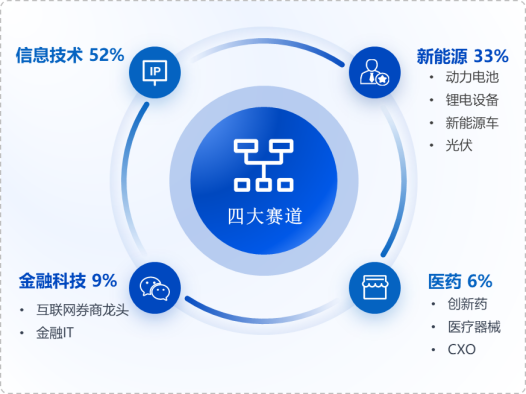
Market Overview - The A-share market exhibited a mixed performance last week, with major indices showing varied results: CSI 300 down 0.57%, CSI 500 up 2.18%, CSI 1000 up 1.27%, ChiNext 50 up 0.80%, and Sci-Tech 50 up 2.58% [1][10] - The average daily trading volume in the A-share market was approximately 3.4 trillion yuan, indicating high investor enthusiasm [1][10] - Key market hotspots included AI applications, commercial aerospace, controllable nuclear fusion, AI healthcare, power grid equipment, computing hardware, tourism and hotels, and non-ferrous metals, showcasing rapid rotation and localized activity [1][10] Investment Recommendations - It is suggested to focus on sectors supported by policy and experiencing a rebound in sentiment, particularly growth assets with performance backing, such as those in AI applications and AI healthcare [1][10] ChiNext 50 Index Insights - The ChiNext 50 Index serves as a direct financing platform for innovative and entrepreneurial companies, focusing on "three innovations (innovation, creation, creativity)" and "four new (new technologies, new industries, new business formats, new models)" [1][10] - The index emphasizes four key sectors: information technology, new energy, financial technology, and pharmaceuticals, reflecting a pure technology growth attribute [1][10] Sector Analysis Technology, AI, and Communication - The ChiNext 50 Index includes 52% of the information technology sector, with a recent surge in AI applications [3][12] - Notable developments include Alibaba's new Qianwen App integrating with its ecosystem for a seamless shopping experience and OpenAI's announcement of testing advertising features in the U.S. [3][12] - The long-term outlook for AI models and ecosystem collaboration is expected to open new commercial avenues, with increasing penetration in e-commerce, healthcare, and manufacturing [3][12] New Energy and Photovoltaics - The power equipment sector received significant positive news as the State Grid announced a projected fixed asset investment of 4 trillion yuan during the 14th Five-Year Plan, a 40% increase from the previous plan [4][12] - The Ministry of Industry and Information Technology emphasized accelerating breakthroughs in solid-state battery technology, with multiple companies investing in related materials [4][12] - The substantial investment by the State Grid is anticipated to enhance new energy consumption capacity, leading to a potential explosion in new energy installations [4][12] Pharmaceuticals and Biotechnology - The recent JPM Healthcare Conference highlighted several Chinese pharmaceutical companies, showcasing their R&D and operational progress to the international market [5][14] - The innovative drug sector is experiencing multiple catalysts, including corporate collaborations and advancements in technology, which are boosting market sentiment [5][14] - The global competitiveness of Chinese innovative drugs is strengthening, with ongoing internationalization and gradual realization of commercial profits [5][14] ChiNext 50 ETF Overview - The ChiNext 50 ETF (code: 159949) tracks the ChiNext 50 Index, focusing on high-quality leading companies in five key technology sectors: new energy vehicles, biomedicine, electronics, photovoltaics, and internet finance [6][15] - The ETF has a robust liquidity profile, with an average daily trading volume of 1.505 billion yuan over the past year, ranking among the top ETFs on the Shenzhen Stock Exchange [6][15] - The latest fund size is 26.981 billion yuan, making it one of the largest funds tracking the ChiNext-related indices [6][15]