券商

Search documents
港股午评:低开低走恒指跌1.14%,科技股、半导体股集体弱势!小米集团跌超3%,福莱特玻璃涨超6%,阿里跌超2%
Ge Long Hui· 2025-11-07 04:43
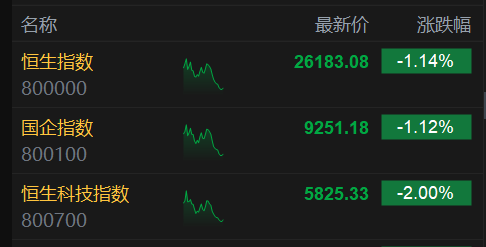
Market Overview - The US tech stocks faced significant sell-offs, leading to a collective decline in the Asia-Pacific stock markets [1] - The Hang Seng Index dropped by 1.14%, the National Enterprises Index fell by 1.12%, and the Hang Seng Tech Index decreased by 2% [1] Key Stock Movements - Major tech stocks such as Xiaomi, JD.com, Tencent, Meituan, and Alibaba all experienced declines of over 2%, with Xiaomi falling more than 3% [1] - Semiconductor stocks, which had rebounded previously, also weakened again [1] Sector Performance - Chinese brokerage stocks, automotive stocks, heavy machinery stocks, and Apple-related stocks all saw declines [1] - Gold prices returned to $4,000, leading to an increase in gold stocks [1] - The photovoltaic sector made significant progress against internal competition, with solar energy stocks showing strong performance [1] Notable Stock Performances in Photovoltaic Sector - The following solar energy stocks showed notable gains: - 福莱特坂璃 (Flatec) increased by 6.69% to 12.920 - 信义光能 (Xinyi Solar) rose by 6.50% to 3.930 - 卡姆丹克太阳能 (Canadian Solar) gained 5.26% to 0.140 - 山高新能源 (Sungrow Power) increased by 4.35% to 1.680 - 阳光能源 (Sungrow Energy) rose by 4.08% to 0.102 [1]


黄仁勋:中国将赢得人工智能竞赛|首席资讯日报
首席商业评论· 2025-11-07 04:11
Group 1 - Nvidia CEO Jensen Huang believes that China will win the AI race due to a more favorable regulatory environment and lower energy costs, criticizing Western cynicism as a hindrance to progress [2] - The International Electrotechnical Commission (IEC) has officially released the world's first international standard for industrial 5G, co-developed by China and Germany, marking a significant milestone in the "5G + industry" integration [3] - New Oriental Education Group's chairman, Yu Minhong, confirmed the departure of CEO Sun Dongxu, emphasizing their good communication and the positive impact of Sun's contributions to the company [4] Group 2 - Arm's executive Drew Henry stated that the company focuses on collaborative chip design with clients rather than manufacturing its own chips, reaffirming its strategy [5][6] - Sunac China Holdings announced the approval of a debt restructuring plan for approximately $9.6 billion in overseas debt, which will convert creditors into shareholders [6] - Porsche has inaugurated its first large-scale overseas R&D center in China, which will develop in-car systems expected to be implemented by 2026 [7] Group 3 - WeRide officially listed on the Hong Kong Stock Exchange, raising a total of HKD 2.39 billion with a share price of HKD 27.1, marking a significant step for the autonomous driving sector [8] - The China Automotive Industry Association announced the upcoming "2025 China Automotive Supply Chain Conference" scheduled for November 24-26, 2025, in Wuhu City [9] - TrendForce reported a severe hoarding phenomenon in the DRAM spot market, with DDR5 chip prices rising by 30% due to supply constraints and strong demand [10] Group 4 - A total of 42 A-share listed brokerages reported a net income of CNY 186.857 billion from proprietary trading in the first three quarters, reflecting a year-on-year growth of 43.83% [11] - Meta Platforms Inc. is facing scrutiny over its substantial capital expenditures, projected to reach $72 billion this year, reminiscent of past challenges related to its metaverse investments [12] - SoftBank reportedly considered acquiring American chip manufacturer Marvell earlier this year, which would have been the largest semiconductor industry merger in history if completed [13]

山西证券研究早观点-20251107
Shanxi Securities· 2025-11-07 01:54
Group 1: Market Overview - The report highlights a positive trend in the domestic capital market, with major indices showing gains, such as the Shanghai Composite Index rising by 0.97% and the Shenzhen Component Index increasing by 1.73% [3] - The average daily trading volume in A-shares reached 2.32 trillion yuan, reflecting a 29.38% increase compared to the previous period [7] - The report notes a mixed performance among major indices from October 27 to October 31, with the Shanghai Composite Index increasing by 0.11% and the ChiNext Index rising by 0.50% [7] Group 2: Industry Insights - The non-bank financial sector is experiencing a favorable outlook due to deepening capital market reforms, which are expected to enhance the fundamentals of brokerage firms [5][7] - The report discusses the communication industry, emphasizing the strong growth in AI computing demand and the mismatch between short-term performance expectations and actual results [6][8] - The report indicates that the North American cloud service providers (CSPs) are expected to significantly increase their capital expenditures, with a projected total of $443 billion to $632 billion from 2025 to 2027 [8] Group 3: Company Performance - Industrial Fulian (601138.SH) reported a revenue increase of 38.40% year-on-year for the first three quarters of 2025, driven by strong demand for AI servers [15] - The company achieved a net profit of 224.87 billion yuan, reflecting a 48.52% increase year-on-year, with significant growth in its cloud computing and communication equipment segments [15] - Xihang West Flight (000768.SZ) reported a revenue of 302.44 billion yuan for the first three quarters of 2025, marking a 4.94% increase year-on-year, with a net profit of 9.92 billion yuan, up 5.15% [11] Group 4: Investment Recommendations - The report suggests a "Buy-A" rating for Industrial Fulian, with projected EPS of 1.78, 2.79, and 3.75 for 2025-2027, indicating strong growth potential in the AI server market [16] - For Xihang West Flight, the report maintains an "Increase-A" rating, forecasting EPS of 0.42, 0.48, and 0.57 for the same period [14] - The report highlights the growth potential of the tire industry, particularly for Wind God Co. (600469.SH), which is expected to benefit from increasing demand for specialty tires and a new production project [24][28]




英大证券晨会纪要-20251107
British Securities· 2025-11-07 01:48
Core Views - The A-share market has shown resilience against external market fluctuations, with the Shanghai Composite Index surpassing the 4000-point mark again, indicating a short-term recovery in market sentiment [2][11] - The report suggests that while the probability of maintaining the 4000-point level has increased, fluctuations are expected due to historical psychological pressure and a lack of strong catalysts in the short term [2][11] - Long-term positive forces remain, supported by macroeconomic policies and resilient corporate fundamentals, particularly from the third-quarter reports [3][12] Market Overview - On Thursday, the three major indices opened higher and the Shanghai Composite Index rose above 4000 points, with significant gains in sectors such as chemicals, non-ferrous metals, and semiconductors, while tourism and media sectors declined [5][6] - The total trading volume exceeded 20 trillion yuan, with the Shanghai Composite Index closing at 4007.76 points, up 0.97%, and the Shenzhen Component Index rising 1.73% [6][11] Sector Analysis - **Chemicals**: The chemical sector, particularly fertilizers and fluorochemicals, has seen significant gains, indicating a recovery phase after a cyclical downturn, supported by policy and demand growth [7][11] - **Non-Ferrous Metals**: The non-ferrous metals sector, especially aluminum, is experiencing new demand opportunities driven by the global data center construction boom, leading to a projected supply-demand gap [7][11] - **Robotics**: The robotics sector has shown substantial growth, with a notable increase in stock prices since early January. The sector is expected to benefit from strong internal growth and supportive government policies [8][11] - **Semiconductors**: The semiconductor sector is anticipated to continue its upward trajectory, driven by national policy support and increasing global demand for AI and high-performance computing [9][10][11] Investment Strategy - Investors are advised to focus on structural opportunities rather than getting overly concerned about index stability. Key investment themes include technology growth sectors like AI, semiconductors, and robotics, as well as high-dividend defensive sectors [3][12] - Caution is advised in the technology growth sector to avoid speculative stocks lacking performance support, while emphasizing the selection of companies with actual earnings [3][12]
中原证券晨会聚焦-20251107
Zhongyuan Securities· 2025-11-07 00:19
Core Insights - The report indicates a positive outlook for the semiconductor and communication sectors, with A-shares showing a steady upward trend, particularly in the context of recent macroeconomic developments and trade negotiations [5][9][10] - The report highlights the ongoing recovery in the photovoltaic industry, with signs of performance improvement despite challenges such as overcapacity and price declines [18][19][20] - The automotive interior and exterior parts industry is experiencing significant growth, driven by the increasing demand for electric vehicles and the shift towards smart and lightweight designs [35][36][37] Domestic Market Performance - The Shanghai Composite Index closed at 4,007.76, with a daily increase of 0.97%, while the Shenzhen Component Index rose by 1.73% to 13,452.42 [3] - The average price-to-earnings ratios for the Shanghai Composite and ChiNext indices are 16.26 and 49.50, respectively, indicating a favorable environment for medium to long-term investments [9][14] International Market Performance - The Dow Jones Industrial Average closed at 30,772.79, down 0.67%, while the S&P 500 and Nasdaq also experienced declines of 0.45% and 0.15%, respectively [4] Industry Analysis - The semiconductor industry continues to show robust growth, with global sales increasing by 21.7% year-on-year, indicating strong demand and market resilience [23] - The photovoltaic sector is witnessing a gradual recovery, with improvements in quarterly performance attributed to increased efficiency and reduced costs [18][19] - The automotive interior and exterior parts market is projected to grow significantly, with China's market share exceeding 30% globally, driven by rising production and sales of electric vehicles [35][36] Key Data Updates - The report notes a significant increase in the production and sales of lithium batteries, with the industry expected to reach a scale of 1.2 trillion yuan by 2024, highlighting China's competitive advantage in this sector [17] - The photovoltaic industry index has shown a slight decline of 1.39% in October, reflecting ongoing adjustments in the market [32] Monthly Strategy - The report suggests a strategy of increasing allocation to value assets while waiting for growth assets to regain cost-effectiveness, indicating a balanced approach to investment [10][13]






8100亿元!年内A股定增大涨
Shen Zhen Shang Bao· 2025-11-06 13:53
Core Viewpoint - The fundraising amount through private placements in the A-share market has significantly increased this year, with financial stocks leading the way in terms of capital raised [2]. Group 1: Fundraising Statistics - As of November 3, 2023, 140 companies have raised a total of 812.37 billion yuan through private placements, marking a 23% increase in the number of companies and a 5.4 times increase in the amount raised compared to the previous year [2]. - Among the top 10 companies by fundraising amount, 6 are financial institutions, highlighting the dominance of this sector in the private placement market [2]. - Four major state-owned banks, including China Bank, Postal Savings Bank, and others, have raised over 100 billion yuan each through private placements, contributing significantly to the overall market size [2]. Group 2: Specific Company Fundraising - China Bank raised 165 billion yuan, Postal Savings Bank 130 billion yuan, Traffic Bank 120 billion yuan, and Construction Bank 105 billion yuan through private placements [2]. - The successful completion of fundraising by these banks indicates a substantial breakthrough in their plans to supplement core Tier 1 capital through the capital market [2]. Group 3: Use of Funds - Companies are utilizing the funds raised through private placements for various purposes, including asset acquisitions and operational funding [3]. - For instance, AVIC Chengfei raised 17.439 billion yuan for acquiring 100% equity of AVIC Chengfei, while Sairisi raised 8.164 billion yuan for a new factory and operational funds [3]. - Guolian Securities raised 29.492 billion yuan to acquire 99.26% of Minsheng Securities [3]. Group 4: Policy Support and Market Dynamics - The revival of the private placement market is supported by policy initiatives, including the China Securities Regulatory Commission's new merger and acquisition guidelines [3]. - Local governments have also introduced measures to support corporate mergers and acquisitions, further stimulating the market [3]. Group 5: Notable Cases and Challenges - Some companies have seen significant participation from major shareholders in their private placements, such as Nanfang Electric, which plans to raise up to 2 billion yuan with substantial backing from its controlling shareholder [3]. - However, not all private placements have been successful; for example, GCL-Poly announced the termination of its nearly three-year fundraising plan, originally aimed at raising 4.842 billion yuan, due to market adjustments in the photovoltaic industry [4].






投顾晨报:新高在望,仍是震荡-20251106
Orient Securities· 2025-11-06 13:41
Market Strategy - The market is expected to reach new highs but will remain volatile due to a lack of strong catalysts in November, which is characterized as a policy and earnings window period [3][9] - The "dumbbell strategy" is recommended for operations, focusing on low-value sectors for medium-term recovery opportunities while short-term investments should target technology growth sectors [9] Sector Strategy - The brokerage sector has ample room for business expansion, particularly in margin financing, with opportunities for valuation recovery as leading brokerages increase their margin financing limits [5][9] - The average margin financing ratio for the top five brokerages is currently at 1.35 times net capital, indicating significant growth potential as the regulatory cap is four times net capital [9] Thematic Strategy - The traditional Chinese medicine sector is at a historic opportunity window, with the recent World Traditional Chinese Medicine Conference highlighting its global development potential [6][9] - The sector's high dividend yield and strong cash flow position it as a defensive investment in a complex macroeconomic environment, contrasting with low institutional allocation [9]
港股打新亏麻了
表舅是养基大户· 2025-11-06 13:33
Group 1 - The market is currently focused on projections for 2026, although it is premature to make such forecasts without key economic reports and updates from the end of the year [1][2] - The A-share market has shown resilience, with the Shanghai Composite Index surpassing 4000 points after a four-day hiatus, driven by significant trading volumes in sectors like electric grid equipment [3][4] - Global stock markets are rebounding, with Hong Kong stocks leading the gains, particularly in the AI sector, as the Philadelphia Semiconductor Index surged by 3% [8][10] Group 2 - Kweichow Moutai has announced share buybacks and a substantial cash dividend, actions aimed at stabilizing its stock price, although it still faces challenges in achieving a more attractive valuation [11][13] - The Hong Kong IPO market has seen over 200 billion in new listings this year, but many new stocks are experiencing significant declines, indicating a challenging environment for new issuances [17][20] - The securities sector has attracted over 90 billion in net inflows into ETFs this year, despite the overall market volatility, suggesting ongoing investor interest in brokerage firms [20][23][28] Group 3 - Xpeng Motors recently launched a humanoid robot, which initially caused skepticism about its authenticity, but subsequent clarifications led to a rebound in its stock price [31][32][35] - The current investment strategy involves no new operations, as adjustments have already been made earlier in the week [38]

A股反弹,沪指重返4000点,磷概念爆发
Zheng Quan Shi Bao· 2025-11-06 10:28
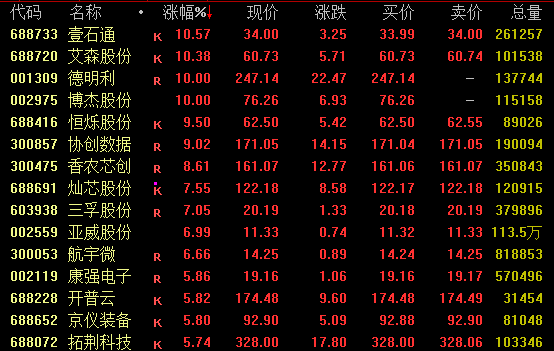
Market Overview - A-shares rebounded on November 6, with the Shanghai Composite Index surpassing 4000 points, and the ChiNext Index rising nearly 2% [1] - Total trading volume in the A-share market exceeded 2 trillion yuan, with the Hong Kong market also seeing gains, as the Hang Seng Index rose over 2% [1] Sector Performance - Nearly 2900 stocks in the market were in the green, with the storage chip concept regaining strength, highlighted by significant gains in stocks like Demingli and Xiangnong [2][5] - The phosphorus concept stocks surged, with companies like Qingshuiyuan and Chengxing shares hitting the daily limit [9][11] - The semiconductor sector saw strong performance, with stocks like Changguang Huaxin and Hanwha Microelectronics experiencing notable increases [5][7] Storage Chip Market Dynamics - The global storage chip market is facing unprecedented structural supply-demand imbalances, particularly for DRAM, driven by high demand from data centers [6][7] - Major manufacturers, including Samsung, have suspended DDR5 contract pricing, leading to a 25% increase in DDR5 spot prices within a week [6][7] - Analysts suggest that the price of DDR5 could rise by 30% to 50% in the upcoming quarter due to these supply constraints [7] Phosphorus Industry Outlook - The phosphorus chemical industry is expected to maintain its favorable outlook, driven by the scarcity of phosphorus ore and increasing demand from downstream sectors [11] - The price of yellow phosphorus has seen a significant increase, with a recent spot price reported at 22,200 yuan per ton, reflecting a rise of 264 yuan from the previous trading day [9][11] AI Industry Chain Activity - The AI industry chain stocks were active, with companies like Yuanjie Technology and Dongtianwei achieving substantial gains [13][14] - The demand for AI data centers is projected to grow rapidly, with strong performance expected in related sectors such as advanced storage and logic chips [14]



利好突袭!黄金股,集体“嗨了”
中国基金报· 2025-11-06 10:16
Market Overview - The Hong Kong stock market experienced a strong rally, with all three major indices rising over 2%, effectively erasing the monthly losses [4][3] - The Hang Seng Technology Index increased by 2.74%, while the Hang Seng Index and the Hang Seng China Enterprises Index rose by 2.12% and 2.1%, respectively [4][5] - The total trading volume in the Hong Kong market reached HKD 234.7 billion, indicating a recovery in bullish sentiment [4] Technology Sector - The semiconductor sector showed robust performance, with Huahong Semiconductor rising over 9% and SMIC increasing by 7.32% [7][8] - Major tech companies like Alibaba, JD.com, and Tencent also saw significant gains, with increases of 4.10%, 3.34%, and 2.38%, respectively [7][8] - Analysts predict a new "super cycle" in the semiconductor industry driven by AI demand and domestic substitution [7] Financial Sector - The financial sector was active, with notable gains in Chinese brokerage stocks; Huatai Securities rose over 5% and GF Securities increased by 4.63% [10][12] - The insurance sector also performed well, with New China Life and China Life both rising nearly 5% [11][13] - China Life reported a substantial net profit increase of 92% year-on-year for Q3 2025, reaching CNY 126 billion [11] Gold Sector - Gold stocks surged as international gold prices rebounded above USD 4000 per ounce, with companies like Zijin Mining and Tongguan Gold rising by 8.67% and 7.14%, respectively [14][15] - The inclusion of Zijin Mining in the MSCI China Index is expected to attract passive fund inflows, providing further support to gold stocks [16] New Listings - Suzhou Wangshan Wangshui Biopharmaceutical Co., Ltd. debuted on the Hong Kong Stock Exchange, closing up 145.73% on its first day of trading [20][21] - The company focuses on developing small molecule drugs in key therapeutic areas, with plans to use the proceeds from its global offering for R&D and operational enhancements [21]