
啤酒

Search documents
港股异动 | 百威亚太(01876)午后跌超5% 前三季度收入下滑6.6% 纯利同比下滑近20%
智通财经网· 2025-10-30 06:10
Core Viewpoint - Budweiser APAC reported a decline in total revenue and profit for the first three quarters, indicating challenges in the market, particularly in China, despite strong performance in India and some regions in Asia [1]. Financial Performance - Total revenue for the first three quarters was $4.691 billion, a year-on-year decrease of 6.6% [1]. - Profit attributable to equity holders was $594 million, down 19.95% year-on-year [1]. - Total sales volume decreased by 7.0% in the first nine months of 2025, with a decline of 8.6% in the third quarter [1]. Regional Performance - The Asia Pacific West region benefited from strong performance in the Indian market, while the Chinese market showed better-than-expected results [1]. - The Asia Pacific East region's third-quarter revenue performance was stronger than anticipated [1]. Management Insights - The CEO and Co-Chairman noted that the business in China continues to face challenges due to weak performance in ready-to-drink channels and overall business layout [1]. - In South Korea, gross margin expansion was observed, with performance across various channels exceeding industry levels [1]. - The company aims to focus on strengthening its core product portfolio, expanding non-ready-to-drink marketing, and enhancing execution capabilities to seize future growth opportunities [1].

收购即墨黄酒告吹,青岛啤酒"啤白" 战略遇阻
Guan Cha Zhe Wang· 2025-10-30 05:23
Core Viewpoint - The acquisition of 100% equity in Jimo Yellow Wine by Qingdao Beer has been terminated due to unmet closing conditions, which means Qingdao Beer will not bear any breach of contract liability [1] Group 1: Acquisition Details - The acquisition process began on May 8, 2025, and lasted for five months before being called off [1] - Qingdao Beer had signed a share transfer agreement with Xinhua Jin Group and Shandong Lujin Import and Export Group to acquire the entire equity of Jimo Yellow Wine [1] - Jimo Yellow Wine, established in 1949, is a significant representative of traditional Chinese yellow wine, with a unique flavor and rich cultural heritage [1] Group 2: Financial Performance - In 2024, Jimo Yellow Wine achieved a main business income of 166.41 million yuan, a year-on-year increase of 13.5%, and a net profit of 30.47 million yuan, up 38.0% year-on-year [1] - Qingdao Beer reported a revenue of 29.367 billion yuan for the first three quarters of 2025, a year-on-year growth of 1.41%, and a net profit of 5.274 billion yuan, up 5.70% [2] - The third quarter of 2025 saw a revenue of 8.876 billion yuan, a slight decline of 0.17%, and a net profit of 1.370 billion yuan, with a growth of 1.62% [2] Group 3: Strategic Implications - The termination of the acquisition hinders Qingdao Beer's "Beer + White" strategy, which aimed to diversify its business and create complementary sales effects with beer products [2][3] - The "Beer + White" strategy has been successfully implemented by other companies, such as China Resources Beer, which has made several acquisitions in the white liquor sector [3] Group 4: Financial Issues of Jimo Yellow Wine - Jimo Yellow Wine's major shareholders, Xinhua Jin Group and Shandong Lujin Group, are facing financial difficulties, including a non-operating fund occupation of 406 million yuan that needs to be repaid [3][4] - Since September, Jimo Yellow Wine has experienced seven instances of equity freezing, totaling over 100 million yuan, primarily related to financial loan contracts and property preservation [4][5]


科技赋能传统 创新引领健康 | 第8届中国(燕京)纳豆文化节打造健康产业新标杆
Zhong Guo Zhi Liang Xin Wen Wang· 2025-10-30 05:09
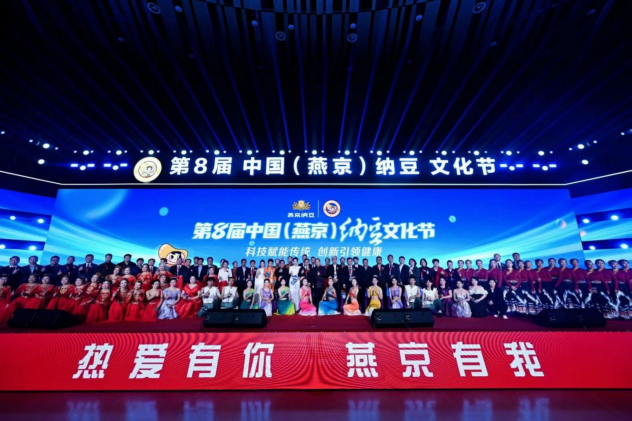
Core Viewpoint - Yanjing Beer is integrating its brand strength into the health industry through natto production, aiming to establish a new trust paradigm for consumers' healthy lifestyles and improve health standards [1][2] Group 1: Company Strategy - Yanjing Beer has recognized the significant value of natto since 2001, collaborating with the Chinese Food Fermentation Industry Research Institute to establish Beijing Yanjing Zhongfa Biotechnology Co., Ltd [5] - The company aims to promote natto from a single product to a health ecosystem, focusing on both traditional fermentation methods and modern biotechnology for quality control [5][6] - Yanjing Health's mission is to ensure that one hundred million Chinese people consume national brand natto, transitioning natto from a traditional food to a health necessity [5][6] Group 2: Health and Nutrition - Natto is highlighted as a highly nutritious food, containing higher levels of protein, fiber, calcium, and iron compared to cooked soybeans, and is easier for the body to absorb due to fermentation [2][5] - The health benefits of natto include the presence of bioactive substances such as nattokinase, isoflavones, saponins, and vitamin K2, which are essential for maintaining health [2][5] Group 3: Cultural Promotion - The 8th China (Yanjing) Natto Culture Festival aims to promote natto health culture and has conducted thousands of health education lectures across various cities, benefiting millions [6][7] - The festival's theme, "Technology Empowers Tradition, Innovation Leads Health," reflects the company's commitment to integrating modern health needs with traditional practices [6][7] Group 4: Market Positioning - Yanjing's entry into the natto market signifies a shift from niche recognition to mainstream demand, indicating a broader acceptance of natto as a health food in the national diet [5][6] - The company is positioning itself as a leader in the health industry by combining brand reputation, technological innovation, and transparency in its operations [6][7]

建银国际:下调青岛啤酒股份目标价至51.5港元维持“中性”评级
Xin Lang Cai Jing· 2025-10-30 04:33
Core Viewpoint - The report from Jianyin International indicates a downward revision of Qingdao Beer Co., Ltd.'s net profit forecasts for the next two years by 3% and 4% respectively, reflecting a slowdown in average selling price growth and a more cautious sales outlook [1] Financial Performance - In Q3, Qingdao Beer reported a year-on-year net profit increase of 1.6% to 1.37 billion RMB, but this fell short of both the bank's and market expectations due to poor revenue performance [1] - The bank anticipates that the fourth quarter and early 2026 will see some support from pre-Spring Festival inventory and consumption stimulus policies [1] Valuation Adjustments - The valuation benchmark has been shifted to 2026, with the EV/EBITDA multiple reduced from 12 times to 10 times to reflect the current state of sluggish consumption and a slower high-end product transition compared to peers [1] Profitability Projections - The bank projects a 0.2 percentage point increase in gross margin to 42% and a 0.3 percentage point increase in EBIT margin to 15.8% by 2026, driven by low-cost barley and continuous improvement in product structure [1] Strategic Decisions - The group has terminated its plan to acquire Shandong Jimo Yellow Wine as of October 26, which eliminates uncertainties related to the transaction's impact on operations [1]
大行评级丨中银国际:维持青岛啤酒H股目标价为58.8港元评级“买入”
Xin Lang Cai Jing· 2025-10-30 04:33
Group 1 - The core viewpoint of the report indicates that Qingdao Beer’s revenue and net profit for the first three quarters increased by 1.4% and 5.7% year-on-year, slightly below expectations [1] - In the third quarter alone, total revenue decreased by 0.2% year-on-year, with volume increasing by 0.3% and price decreasing by 0.5%, attributed to the pricing dynamics from factory to retail for essential consumer goods [1] Group 2 - The target price for Qingdao Beer’s H-shares is maintained at HKD 58.8, corresponding to a price-to-earnings ratio of 15.9 times and 15.3 times for the forecasts of 2025 and 2026 respectively [1] - The rating for Qingdao Beer is set as "Buy" [1]
大行评级丨中银国际:维持青岛啤酒H股目标价为58.8港元 评级“买入”
Ge Long Hui· 2025-10-30 03:46
Core Viewpoint - Bank of China International reports that Qingdao Beer’s revenue and net profit for the first three quarters increased by 1.4% and 5.7% year-on-year, slightly below expectations [1] Group 1: Financial Performance - Total revenue for the third quarter decreased by 0.2% year-on-year, with volume increasing by 0.3% and price decreasing by 0.5% due to ongoing price deflation pressure from factory to retail for essential consumer goods [1] - Sales of mid-to-high-end products increased by 6.8% year-on-year, showing an improvement from 4.8% in the previous quarter, indicating positive structural changes [1] Group 2: Investment Outlook - The target price for Qingdao Beer’s H-shares is maintained at HKD 58.8, corresponding to a price-to-earnings ratio of 15.9 times and 15.3 times for the forecasts of 2025 and 2026, respectively [1] - The rating for Qingdao Beer is set as "Buy" [1]
建银国际:下调青岛啤酒股份目标价至51.5港元 维持“中性”评级
Zhi Tong Cai Jing· 2025-10-30 02:50
Core Viewpoint - Jianyin International has downgraded the profit forecasts for Qingdao Beer (600600) for the next two years by 3% and 4% respectively, reflecting a slowdown in average selling price growth and a more cautious sales outlook [1] Financial Projections - The valuation benchmark has been shifted to 2026, with the EV/EBITDA multiple reduced from 12x to 10x to account for sluggish consumption and a slower premiumization process compared to peers [1] - The target price for the group's H-shares has been lowered by 7%, from HKD 55.6 to HKD 51.5, while maintaining a "Neutral" rating [1] Performance Analysis - In Q3, Qingdao Beer reported a net profit increase of 1.6% year-on-year to RMB 1.37 billion, but this fell short of both the firm's and market expectations due to poor revenue performance [1] - Despite pre-Spring Festival inventory buildup and consumption stimulus policies providing some support, the firm anticipates that the consumption market will remain weak through Q4 and into early 2026 [1] Market Dynamics - The normalization of industry promotional activities limits the risks to the group's sales growth and market share [1] - Revenue growth is projected to accelerate to 2.6% by 2026, driven by a 1.7% increase in sales volume and a 1% rise in average selling price [1] Margin Expectations - With the low-cost structure of Dama and ongoing product mix improvements, the firm assumes that the gross margin will increase by 0.2 percentage points to 42% by 2026, and the EBIT margin will rise by 0.3 percentage points to 15.8% [1] Strategic Decisions - The group has terminated its plan to acquire Shandong Jimo Yellow Wine as of October 26, eliminating uncertainties related to the transaction's impact on operations [1]
建银国际:下调青岛啤酒股份(00168)目标价至51.5港元 维持“中性”评级
智通财经网· 2025-10-30 02:48
Core Viewpoint - Jianyin International has downgraded the profit forecast for Qingdao Beer Co., Ltd. for the next two years by 3% and 4% respectively, reflecting a slowdown in average selling price growth and a more cautious sales outlook [1] Financial Performance - Qingdao Beer reported a net profit of RMB 1.37 billion in Q3, representing a year-on-year increase of 1.6%, but this fell short of both Jianyin International's and market expectations [1] - The company is expected to see revenue growth accelerate to 2.6% by 2026, driven by a 1.7% increase in sales volume and a 1% increase in average selling price [1] Valuation Adjustments - The valuation benchmark has been shifted to 2026, with the EV/EBITDA multiple reduced from 12x to 10x to reflect the current state of sluggish consumption and a slower premiumization process compared to peers [1] - The target price for the H-shares has been lowered by 7%, from HKD 55.6 to HKD 51.5, while maintaining a "Neutral" rating [1] Market Outlook - Despite some support from pre-Spring Festival inventory and consumption stimulus policies, the consumption market is expected to remain weak through Q4 and into early 2026 [1] - The normalization of industry promotional activities limits the risks to sales growth and market share for the company [1] Operational Developments - The company terminated its plan to acquire Shandong Jimo Huangjiu on October 26, eliminating uncertainties related to the transaction's impact on operations [1] - The company is expected to see an improvement in gross margin by 0.2 percentage points to 42% and an increase in EBIT margin by 0.3 percentage points to 15.8% by 2026, aided by low-cost barley and ongoing product structure improvements [1]
食品行业案例丨四川燕京啤酒低氮改造项目
Sou Hu Cai Jing· 2025-10-30 02:44
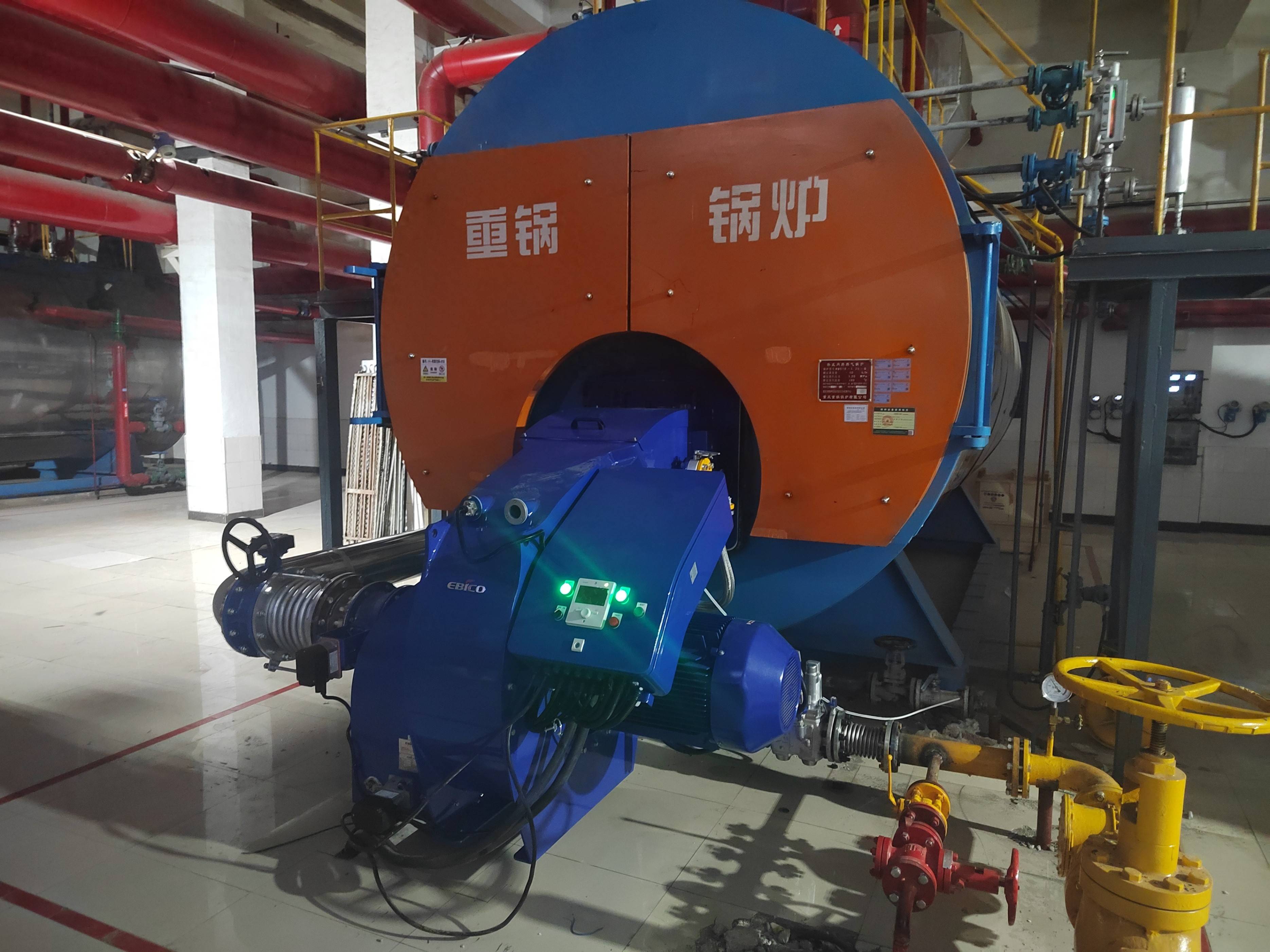
Core Insights - The article highlights the implementation of advanced combustion equipment by Yanjing Beer at its modern brewing base in Sichuan, aimed at enhancing energy efficiency and supporting green manufacturing practices [2] Group 1: Technology and Equipment - The project utilizes three sets of Oubao ES800GE series combustion equipment and an intelligent control system to meet the thermal energy demands in key brewing processes such as malt drying, fermentation temperature control, and steam preparation [2] - The core advantages of the equipment include rapid startup and flexible adjustment, allowing seamless switching of thermal output from low to full load, which addresses the thermal energy gap in production lines [2] Group 2: Environmental Impact - The advanced combustion technology significantly reduces energy consumption and lowers emissions of carbon dioxide, sulfur compounds, and dust, integrating energy-saving and emission-reduction efficiencies throughout the brewing process [2] - This initiative supports Yanjing Beer in enhancing production efficiency while adhering to green manufacturing principles, driving low-carbon upgrades in the traditional brewing industry through clean thermal energy [2]
百威亚太前三季度总收入46.91亿美元
Zheng Quan Shi Bao Wang· 2025-10-30 00:41
Core Insights - Budweiser APAC reported a total revenue of $4.691 billion for the first nine months of 2025, representing a year-on-year decline of 6.6% [1] - The gross profit for the same period was $2.412 billion, down 5.8% year-on-year [1] - The profit attributable to equity holders was $594 million, reflecting a significant decrease of 19.95% compared to the previous year [1] Sales Performance - Total sales volume decreased by 7.0% in the first nine months of 2025, with a more pronounced decline of 8.6% in the third quarter [1] - The decline in sales was primarily attributed to challenges faced in the Chinese market and distribution channels, although strong performance in India partially offset this impact [1]