汽车制造

Search documents
汽车早餐 | 春节假期新能源汽车出行创新高;高翔将任MINI美洲区副总裁;1月销量前十车企销售超196万辆档
Zhong Guo Qi Che Bao Wang· 2026-02-25 01:35
Group 1: Automotive Sales and Trends - In January 2026, the top ten automotive companies in China sold a total of 1.962 million vehicles, accounting for 83.6% of total automotive sales, with notable growth from SAIC Group, Geely Holding, Dongfeng Motor, GAC Group, and Great Wall Motors compared to the same period last year [2] - The consumption of old products in exchange for new ones has driven sales to 204.54 billion yuan, benefiting 30.53 million people, with significant demand for smart and green products, particularly during the Spring Festival [3] - During the Spring Festival holiday, electric vehicle charging reached a record high, with 6.021 million charging sessions and a total charging volume of 14,976.75 million kWh, representing a 52.01% increase in average daily charging volume compared to last year [4] Group 2: Industry Developments and Initiatives - Two national-level quality inspection centers related to the automotive industry have been approved for establishment in Zhejiang, aimed at implementing national quality inspection reforms and enhancing technological capabilities [5] - Changan Automobile is progressing with its solid-state battery project, expecting to validate the battery's integration with robots and vehicles by the third quarter of this year [10] - Li Auto has officially joined the EU-China Chamber of Commerce, aiming to collaborate with other members to promote business development and protect the rights of Chinese enterprises in Europe [11] Group 3: Technological Advancements - Black Sesame Intelligence has partnered with Guoqi Zhikong to develop a mass production solution for the Huashan A2000 chip, targeting L2+ to L3 level intelligent driving functions, with the first mass-produced models expected in 2026 [12] - XPeng Motors' CEO announced plans to achieve mass production of the world's first advanced humanoid robot by the end of this year, emphasizing a commitment to innovation in AI technology [13] - Sien Intelligent has won a project for developing autonomous cleaning vehicles for Shaanxi Automobile Group, aiming to achieve L4 level autonomous driving capabilities [15]

港股股票回购一览:24只个股获公司回购
Mei Ri Jing Ji Xin Wen· 2026-02-25 01:12
Group 1 - On February 24, a total of 24 Hong Kong stocks conducted company buybacks, with 6 stocks having buyback amounts exceeding 10 million HKD [1] - The largest buyback amounts were recorded by Xiaomi Group-W at 99.98 million HKD, Geely Automobile at 53.28 million HKD, and Youjia Innovation at 19.96 million HKD [1] - As of February 24, 132 Hong Kong stocks have conducted buybacks this year, with 13 stocks having cumulative buyback amounts exceeding 100 million HKD [1] Group 2 - The companies with the largest cumulative buyback amounts this year include Tencent Holdings at 6.358 billion HKD, Xiaomi Group-W at 3.632 billion HKD, and ZTO Express-W at 3.269 billion HKD [1]



马年首涨:中概股破局,A股引领全球资本新节奏
Sou Hu Cai Jing· 2026-02-25 01:03
1 State 46.5 0 - 10 1- . 40, 10 0 in r t 9 14.0 8 8 e y t a 1 11 the first 12 27 h ge 197 th - " ice 0 . 版权留片 a 在黄金因美元强势而黯然跳水、A股于春节后首个交易日释放出久违的磅礴巨量之际,大洋彼岸的美股 市场,第一次真切且清晰地捕捉到了来自东方的强劲"发令枪"声。 截至凌晨 5 点收盘,纳斯达克中国金龙指数(HXC)一路狂飙,大涨 1.37%,收于 7581.04 点,涨幅甚 至力压纳斯达克指数本身的 1.04%。分时图上,HXC 指数宛如一条优雅的平滑曲线,从盘中低点 7507.97 点稳步攀升至高点 7596.64 点,尽显强势。成交量的贡献为 1.19%,这是全球资本用实实在在 的真金白银,对 A 股白天上涨的有力回应。 个股表现同样可圈可点,万国数据、世纪互联涨幅超 6%,金山云涨超 4%,小鹏汽车涨超 6%,台积电 涨超 4%。这些领涨的板块——科技、新能源、半导体,恰恰与 A 股白天表现最为强劲的方向不谋而 合。至此,一个完整的传导链条清晰呈现:A 股白天强势大涨,中概股夜间紧密跟涨。至 ...
韩国 Kospi指数今年大涨超40% 史上首次突破6000点
Xin Lang Cai Jing· 2026-02-25 00:58
韩国基准股指首次站上 6000 点关口,年内涨幅已超 40%,跻身全球表现最佳的股市之列。受隔夜美国 股市反弹带动,半导体与汽车股领涨周三市场。早盘交易中,Kospi 指数上涨 0.6%,报 6006.80 点,今 年以来累计上涨 43%。指数权重股、全球最大存储芯片厂商三星电子上涨 1.3%;为英伟达供应高带宽 存储芯片的主要厂商 SK 海力士上涨 0.7%。汽车制造商现代汽车及其旗下起亚分别上涨 4.6% 和 11%。 Kospi 指数此番上涨,跟随了周一 AI 板块大跌后的美股反弹行情。Meta 与 AMD 达成巨额芯片交易, 缓解了市场对 AI 技术冲击现有科技企业的担忧。社交媒体巨头 Meta 宣布一项规模超 1000 亿美元的 AI 芯片采购计划,向 AMD 订购芯片,推动纳斯达克综合指数上涨 1.0%,标普 500 指数与道琼斯工业平 均指数均上涨 0.8%。 上个马年沪指涨近60%!新年新福利来了,炒股排面要拉满,新号启幸运>> 上个马年沪指涨近60%!新年新福利来了,炒股排面要拉满,新号启幸运>> 责任编辑:王永生 韩国基准股指首次站上 6000 点关口,年内涨幅已超 40%,跻身全球表现最 ...
汽车早报|小米诉汽车自媒体一审胜诉获赔500万 福特在美召回总计逾45万辆汽车
Xin Lang Cai Jing· 2026-02-25 00:39
Group 1: Automotive Sales and Market Trends - In January 2026, the top ten automotive companies sold 1.962 million vehicles, accounting for 83.6% of total sales, with notable growth from SAIC Group, Geely, Dongfeng, GAC Group, and Great Wall Motors compared to the previous year [1] - The top ten passenger car manufacturers sold 525,000 units in January 2026, representing 70.4% of total passenger car sales, with growth seen in Geely, FAW-Volkswagen, Dongfeng Limited, and SAIC Motor [1] - The pickup truck market showed strong growth in January 2026, with sales reaching 49,000 units, a year-on-year increase of 22.5%, and production at 52,000 units, up 29.3% [1] Group 2: New Energy Vehicles and Infrastructure - During the Spring Festival holiday from February 15 to February 23, 2026, electric vehicle charging sessions reached 6.021 million, with a total charging volume of 14,976.75 million kWh, marking a 52.01% increase in daily average charging compared to the previous year [2] - The National Energy Administration plans to implement a "three-year doubling" action to enhance electric vehicle charging infrastructure [2] Group 3: Corporate Developments and Investments - Wuhan Economic and Technological Development Zone aims to cultivate six automotive enterprises with a valuation of 100 billion RMB by 2030, promoting a competitive landscape among state-owned, private, and joint-venture companies [3] - CATL and Chery Automobile established a joint venture, Times Chery (Hefei) New Energy Technology Co., Ltd., with a registered capital of 2 billion RMB, focusing on battery manufacturing [4] - Leap Motor increased its registered capital from 4.708 billion RMB to 5.558 billion RMB, an increase of approximately 18% [10] - Weilai Battery increased its registered capital from approximately 2.24 billion RMB to approximately 2.64 billion RMB, also an increase of about 18% [11] Group 4: Company Performance and Financial Results - Lucid Group reported Q4 2025 revenue of $522.7 million, exceeding market expectations of $459.4 million, with an adjusted loss per share of $3.08, compared to the expected loss of $2.68 [12] - Ford is recalling over 450,000 vehicles in the U.S., including certain models from 2017-2019 and 2023-2026, due to safety concerns [13]
中国银河证券:节后多款旗舰新能源产品有望陆续上市,汽车市场消费有望回暖
Mei Ri Jing Ji Xin Wen· 2026-02-25 00:31
Group 1 - The core viewpoint of the article indicates that domestic automobile sales in China have experienced a temporary decline due to the traditional Spring Festival consumption lull and the impact of policy withdrawal [1] - The report anticipates a recovery in market demand following the Spring Festival, as production and work resumption progresses in an orderly manner [1] - The upcoming Beijing Auto Show, scheduled from April 24 to May 3, is expected to stimulate market activity as automakers prepare to launch flagship new models in the first half of 2026 [1] Group 2 - Several new models are expected to be launched, including the Li Auto L9 Livis, Xpeng GX, BYD Datang, Xiaomi YU7 GT, new SU7, AITO M6, Wey V9X, Zhiji V9, and Zeekr 8X [1] - The influx of new vehicle supply is likely to drive a rebound in market demand, with the penetration rate of new energy vehicles expected to hit a bottom and then recover [1]


8点1氪丨凌晨3点候补成功致千元车票作废,12306回应;油价迎来年内第三次上涨;大疆起诉美国联邦通信委员会
3 6 Ke· 2026-02-25 00:07
Group 1 - The core issue of the news revolves around the recent price adjustments in various sectors, including oil prices and luxury vehicles, indicating market trends and consumer behavior [2][5][7]. - DJI has filed an appeal against the FCC's decision to list its products as a security risk, aiming to protect its consumer base in the U.S. [3]. - Major tech companies like Baidu, Tencent, and Xiaomi have introduced new employee benefits in the form of "red envelopes" for the Lunar New Year, reflecting a trend in employee engagement and corporate culture [4][6]. Group 2 - The luxury car market is experiencing significant price reductions, with brands like BMW and Mercedes offering substantial discounts, indicating competitive pressures and changing consumer preferences [5]. - The electric vehicle sector has seen a record increase in charging activity during the recent holiday period, highlighting the growing adoption of electric vehicles [7]. - Panasonic has announced a strategic shift by transferring its TV sales business in North America and Europe to China's Skyworth, focusing on its domestic market and high-end product development [10]. Group 3 - The Chinese government has placed 20 Japanese entities under export control, reflecting geopolitical tensions and regulatory measures impacting international trade [13]. - Anthropic has initiated a stock buyback program based on a valuation of $380 billion, allowing employees to liquidate their equity, which is significant for private AI companies [15]. - Huawei reported a sales revenue exceeding 880 billion yuan, showcasing its robust market position and growth in the technology sector [16]. Group 4 - AMD has secured a significant chip supply agreement with Meta, valued at up to $60 billion, indicating strong demand for AI-related technologies [14]. - Lucid Group reported fourth-quarter revenues surpassing market expectations, reflecting positive performance in the electric vehicle market [16]. - The U.S. stock market saw a collective rise in major indices, with notable gains in tech stocks, indicating a favorable investment climate [14].
新春走基层|春节假期后首个工作日掠影
Xin Lang Cai Jing· 2026-02-24 23:25
2月24日,春节假期后首个工作日,一组组鲜活数据,一个个奋斗故事,交织成中国式现代化新征程上 的奋进图景。 数据里,看见发展速度。 1800余台机器人协同作业,每秒30万条产线数据汇聚到数字中枢。2月24日,位于安徽肥西县的江淮汽 车集团尊界超级工厂全线复工。 控制面板前,车身生产负责人姜志海紧盯着运行参数,"用上人工智能视觉检测系统,数秒内便能扫描 整个车身,0.2毫米的微小瑕疵也不放过。" 南海之滨,全岛封关运作后的海南自由贸易港活力无限。 洋浦国际集装箱码头,借助360度全景影像,远处场桥的集装箱,如搭积木般被起吊平移、落位归置。 "智慧港口建设持续升级,堆存一个集装箱仅需3分钟,位置可记录、全程能追溯。"操作员苏卓怡驾轻 就熟。 岸线扩展、泊位增多、堆场扩大,洋浦国际集装箱码头平均待泊时间,由一年前的7小时,压缩至18分 钟。 春节假期,洋浦港63台场桥设备昼夜不停,8.9万标准箱在此完成吞吐。 钢铁驼队,不舍昼夜,高质量共建"一带一路"走深走实。 正月初五物料进厂,正月初七整条产线空载试运行。工厂负责人魏大卫说:"今天的产能,可恢复到节 前高峰水平的九成以上。" 春风吹过田野,河南唐河县城郊乡党坡村 ...

特斯拉新车现身官网,内饰终于升级!
Xin Lang Cai Jing· 2026-02-24 23:23
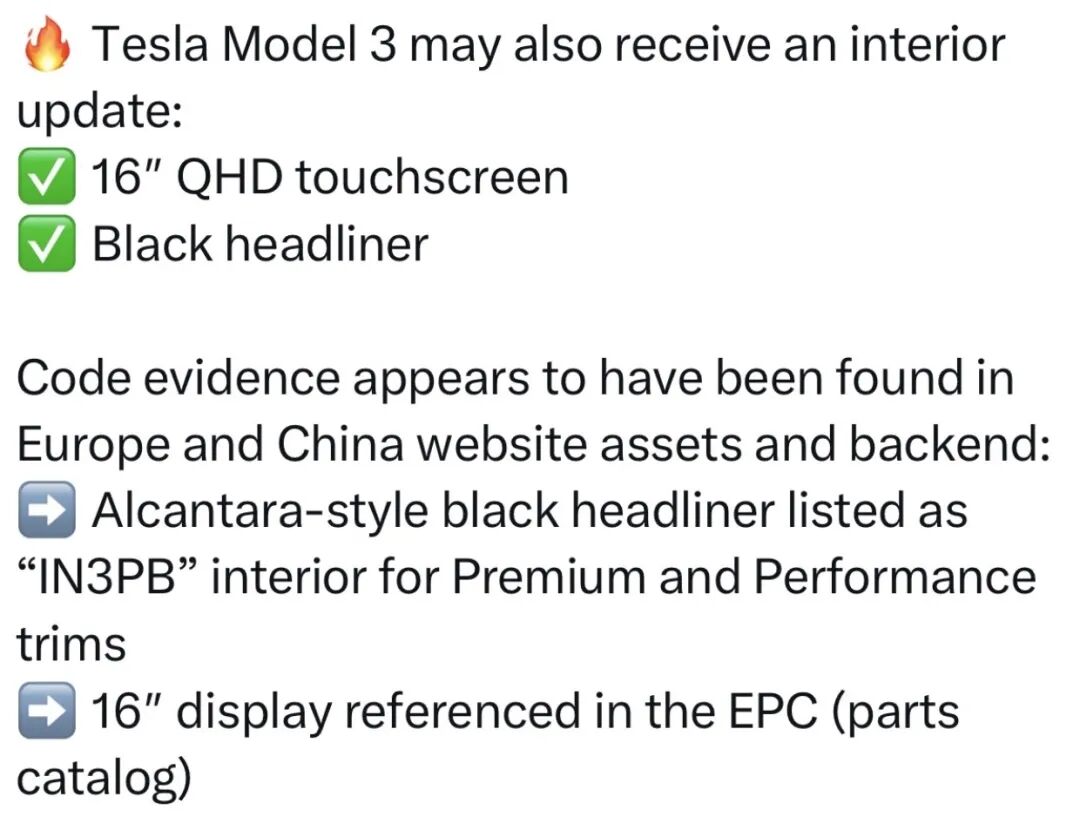
在 1 月初,特斯拉新款 Model Y 升级了 16 英寸中控触摸屏以及黑色织物内饰。 新配置代码现身官网也就意味着新款特斯拉 Model 3 车型即将推出,具体升级点大概和之前的 Model Y 一样,主要就是使用了黑色内饰以及升级 16 英寸 中控屏。 此前所有的 Model Y 车型都已经用上了 16 英寸中控屏,现在就等 Model 3 的改款发布了。 其中有新内饰代码「IN3PB」,代表的是 Alcantara 风格的黑色顶棚,应用在 Premium 和 Performance 车型中。 不过特斯拉 Model 3 在当时还未进行升级,现在特斯拉中国和欧洲官网后端已经出现了新款 Model 3 的相关代码。 还有 16 英寸的中控显示屏也在 EPC(零件目录)中被提及,具体在 EPC 中显示为「Display_16_QHD」。 み > 新浪财经APP Sina Finance Mobile Version 24小时彩地 下载APP > re ...

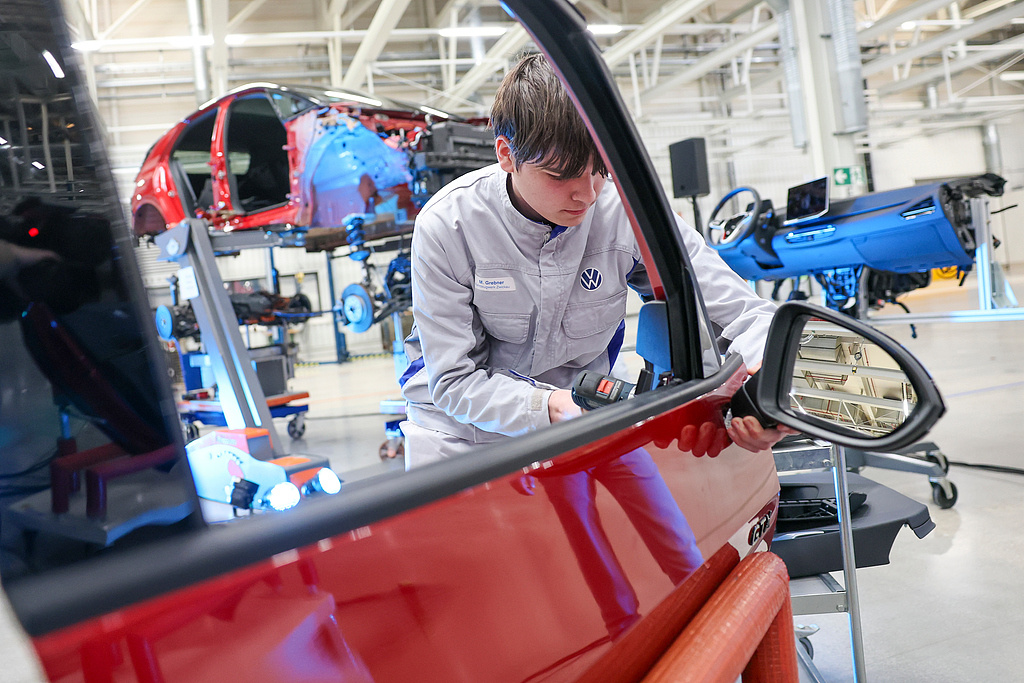
财经观察:庞大商务团开启中德经贸合作新赛道
Huan Qiu Shi Bao· 2026-02-24 22:52
Core Viewpoint - The visit of German Chancellor Merz to China, accompanied by a large business delegation, highlights the importance of the Chinese market for Germany's economy, especially amid rising trade tensions with the U.S. [1][4] Group 1: Business Delegation and Economic Cooperation - Merz's delegation includes around 30 senior representatives from major German companies such as Bayer, Volkswagen, Siemens, and BMW, marking the largest economic delegation since the Merkel era [2][4] - The visit aims to strengthen economic cooperation between Germany and China, mitigating risks from U.S. tariff policies [1][4] Group 2: Importance of the Chinese Market - China is projected to surpass the U.S. as Germany's largest trading partner by 2025, emphasizing its critical role in Germany's economic strategy [1][4] - German companies view the Chinese market as stable and a valuable investment opportunity, leading to increased investments and the establishment of R&D centers in China [4][9] Group 3: Technological Collaboration and Innovation - The visit focuses on fostering collaboration in high-tech sectors such as robotics and artificial intelligence, with German industries recognizing the need to adapt to China's technological advancements [9][10] - German firms are increasingly learning from China's manufacturing capabilities and innovation potential, which are seen as essential for maintaining global competitiveness [4][8] Group 4: Strategic Significance of the Automotive Sector - The automotive industry, including companies like Volkswagen and BMW, relies heavily on the Chinese market for profitability and global competitiveness [10][11] - The German government has introduced a €3 billion subsidy plan for new energy vehicles, indicating a commitment to enhancing cooperation with Chinese automotive manufacturers [11]