
金融

Search documents
中加基金固收周报|为春季躁动积极准备
Xin Lang Cai Jing· 2025-12-25 08:55
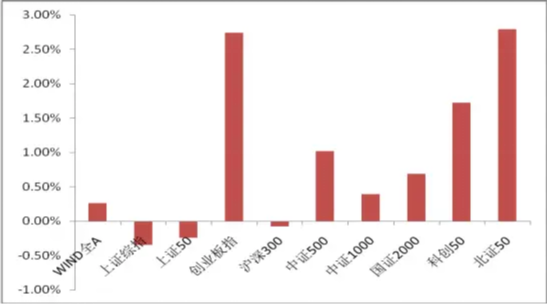
市场回顾 11月美国CPI通胀数据低于市场预期。CPI同比增速降至2.7%(市场预期3.1%),核心CPI同比增长2.6% (市场预期3.0%),为2021年3月以来的最低水平。商品通胀明显回落。4-9月商品CPI通胀上行2.1pct至 1.9%,10-11月回落0.1pct至1.8%。环比增速亦大幅放缓,10-11月合计仅涨0.1%,相比之下8-9月合计涨 幅达到1.0%。原因可能在于财富效应对消费的支撑边际回落和关税影响消退。四季度美股陷入震荡行 情,结束了三季度的单边上涨,财富效应开始拖累居民消费,10-11月商品价格合计仅增0.1%,企业部 门针对关税的调价应该在中美贸易新框架下已经结束。这份通胀数据参考意义实际上比较有限。在美国 政府停摆期间,数据收集停止,劳工局使用非调查数据源进行计算,这使得数据的可比性存疑。降息预 期在数字公布后有所提升,但明年1月不降息的概率仍然高达72.3%,明年3月降息的概率维持在50%以 下,美国政府对于降低国债付息压力的诉求等原因是决定降息节奏的主要因素。 股市策略展望 上周综述 上周A股主要指数涨跌不一,量能小幅提升。 A股主要指数周涨跌幅(%) 资料来源:wind ...

央行:支持通道发展重点领域、薄弱环节的融资和金融创新
Xin Lang Cai Jing· 2025-12-25 08:55
中国人民银行举行新闻发布会,介绍金融支持加快西部陆海新通道建设有关情况。中国人民银行党委委 员、副行长陆磊表示,人民银行将会同相关部门和省区市,探索构建纵向贯通、横向联动、分工协作、 相互支撑的工作机制,以推动《关于金融支持加快西部陆海新通道建设的意见》落实落细。人民银行将 强化金融与各行业部门的联动协作。支持沿线省区市金融管理部门积极与当地政府有关部门合作,充分 动员金融机构力量形成工作合力。积极加强金融与产业、外贸商贸等实体领域的政策协同和信息共享, 提升发展合力。推动建立发布通道重大项目库、重点物流企业和物流园区名录库、通道相关企业清单 等"两库一清单",针对清单内企业的融资结算便利化需求,加强多元化保障支持。加强财政金融联动, 鼓励和支持有条件的地区探索以融资贴息、风险分担等形式,支持通道发展重点领域、薄弱环节的融资 和金融创新。 责任编辑:王馨茹 责任编辑:王馨茹 中国人民银行举行新闻发布会,介绍金融支持加快西部陆海新通道建设有关情况。中国人民银行党委委 员、副行长陆磊表示,人民银行将会同相关部门和省区市,探索构建纵向贯通、横向联动、分工协作、 相互支撑的工作机制,以推动《关于金融支持加快西部陆海新 ...
上海高院发布若干意见 为加快建设上海国际金融中心提供司法服务保障
Zhong Guo Jing Ji Wang· 2025-12-25 08:21
上海市高级人民法院副院长林晓镍表示,下一步,上海法院将以更精准的司法裁判、更高效的解纷服 务、更坚实的协同保障,为上海加快建成与我国综合国力和国际影响力相匹配的国际金融中心提供更加 有力的司法保障。 记者了解到,《服务保障意见》聚焦科技金融、绿色金融、普惠金融、养老金融、数字金融"五篇大文 章",精准施策,以司法保障激活金融服务实体经济新动能。其中,在科技金融领域,支持金融机构基 于专利质量、研发团队实力、数据资产规模等科技企业技术价值,创新信用评价标准,破解"轻资产、 缺抵押"融资难题。在数字金融领域,完善数字金融纠纷案件证据规则,针对涉互联网金融、在线交易 中电子数据存证难、取证难、示证难等突出问题,出台针对性的证据认证规则,规范电子数据证据的审 查认定标准。 此次发布的《服务保障意见》具有三方面突出特点。一是全新对标中央、市委、最高人民法院决策部 署,紧密对接加快建设上海国际金融中心任务安排。《服务保障意见》紧密围绕中央金融委员会《加快 建设意见》中提出的六大核心举措,逐一细化司法服务保障的内容、路径、方法。二是全面回应新时代 上海国际金融中心建设司法需求,系统集成金融司法保障功能。《服务保障意见》首次 ...
政策精准发力护航经济韧性,中国经济向新而行|2025中国经济年报
Hua Xia Shi Bao· 2025-12-25 06:38
Core Viewpoint - In 2025, China's economy is expected to maintain steady growth despite complex external pressures, with a projected annual GDP of approximately 140 trillion yuan, positioning it among the world's leading economies [2] Economic Performance - China's economic growth rate for the first three quarters is 5.2%, with a forecast of 4.6% for the fourth quarter, leading to an overall annual growth rate of around 5% [2] - International organizations, including the IMF and World Bank, have raised their growth forecasts for China in December, with increases of 0.2 and 0.4 percentage points respectively [2] Policy Measures - The government aims to enhance domestic demand and leverage technological development as new economic drivers, emphasizing the need for reforms to achieve supply-demand balance [2][6] - A comprehensive plan for increasing urban and rural residents' income has been implemented, focusing on income distribution, individual tax, social security, and employment [5] Investment Trends - Investment in high-tech industries remains robust, with significant advancements in artificial intelligence and a notable increase in the number of intelligent factories [5][4] - The focus on technology innovation is expected to continue, with policies aimed at nurturing emerging and future industries [6] Future Outlook - Predictions for 2026 indicate a balanced economic operation with a growth rate of approximately 4.8%, driven by domestic consumption and service sector growth [6] - The macroeconomic policy will continue to be proactive, with an emphasis on technology innovation, advanced manufacturing, and quality consumption supply [7][8]
全省绿色低碳高质量发展专题培训班在济南开班
Qi Lu Wan Bao· 2025-12-25 06:16
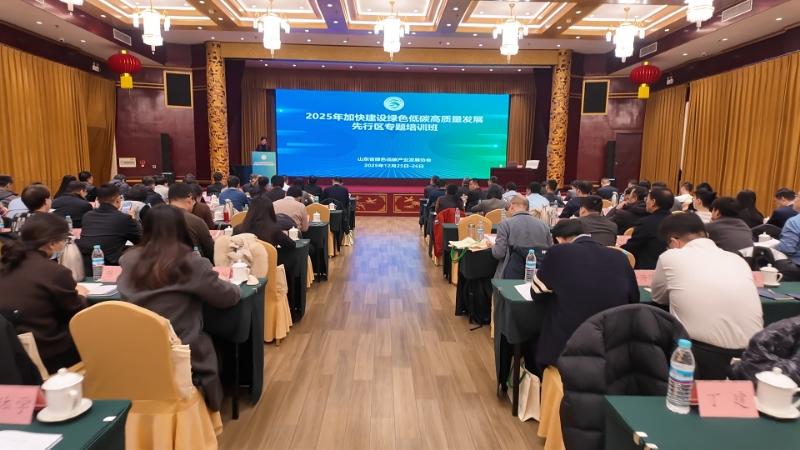
培训首日,山东省工程咨询院专家深入解读了项目谋划的政策机遇;山东社会科学院学者系统分析了双碳背景下 产业与能源转型的挑战与机遇;来自工业和信息化部钢铁行业标准化工作组、上海环境(601200)能源交易所、 中国银行业协会绿色信贷专委会的专家,分别就工业绿色转型实践、碳市场交易分析、绿色金融创新等主题进行 了精彩分享。课程内容既有理论高度,又具实践指导性,现场互动热烈,思想碰撞频繁。 据悉,次日培训将聚焦ESG与可持续发展战略、绿色产品与碳足迹认证实践,并特邀人工智能领军企业专家,探 讨AI大模型如何赋能产业创新变革。培训结束后,学员将带着新的知识、联结与行动共识返回工作岗位,将学习 成果转化为推动本地、本行业绿色转型的具体实践。 本期培训班是山东省绿色低碳产业发展协会发挥平台功能、服务全省战略的重要举措。通过系统化、高质量的能 力建设,旨在培育一支理解政策、精通业务、敢于创新的骨干队伍,为山东省绿色低碳高质量发展先行区建设注 入强劲的专业动能与协同合力。 2025年12月25日,由山东省绿色低碳产业发展协会主办的"2025年全省绿色低碳高质量发展先行区建设专题培训 班"在济南珍珠泉宾馆正式开班。来自全省各级发 ...
金价跌了,白银还在涨!再创历史新高!警惕→
Sou Hu Cai Jing· 2025-12-25 05:42
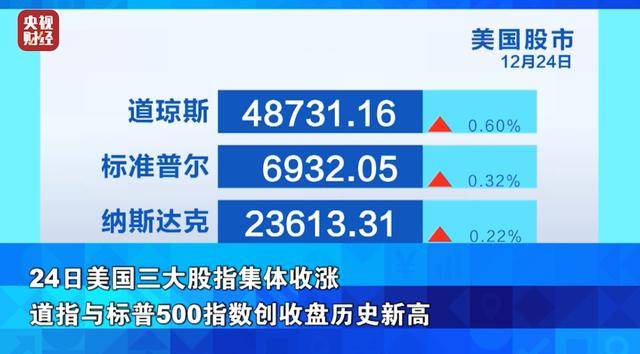
Group 1: Precious Metals - International gold prices stabilized above $4500 per ounce and reached a historical high, but experienced a slight decline as some investors took profits [1][6] - Silver prices continued to rise, marking a historical high for the fourth consecutive trading day, closing at $71.685 per ounce with a gain of 0.77% [8] - Analysts noted that the rapid increase in silver prices included a significant amount of speculative positions, warning investors of the potential for a sharp short-term correction [8] Group 2: Stock Market - On October 24, the three major U.S. stock indices collectively rose, with the Dow Jones and S&P 500 reaching record closing highs [2][4] - The VIX, which reflects market expectations of future volatility, fell to a one-year low, indicating reduced investor concern about short-term risk events [4] - The market anticipates at least two interest rate cuts by the Federal Reserve next year, which has positively impacted cyclical stocks in real estate and finance [4] Group 3: Oil Market - Despite a higher-than-expected economic growth rate in the U.S. for Q3, oil prices experienced a slight decline due to cautious investor sentiment regarding U.S. oil consumption demand [10] - Light crude oil futures closed at $58.35 per barrel, down 0.05%, while Brent crude oil futures settled at $62.24 per barrel, down 0.22% [10] Group 4: Company News - Nvidia has reached a non-exclusive licensing agreement with AI chip design startup Groq, rather than acquiring the company for approximately $20 billion [12] - Key founders and executives from Groq, who were previously involved in the development of Google's TPU, will join Nvidia to enhance its AI inference chip business and reduce chip computing costs [12] - Nvidia's stock experienced a slight decline of 0.32% following the announcement [12]
2025年Q3美国GDP增长率达4.3%!马斯克称未来18个月内美国GDP将两位数增长,你怎么看?
Sou Hu Cai Jing· 2025-12-25 05:30
Group 1 - The core point of the article is that the U.S. GDP growth rate for Q3 is 4.3%, driven by increased consumer spending, exports, and government spending, marking the highest growth rate in two years [1][3] - Consumer spending, which accounts for about 70% of the U.S. economy, grew by 3.5% in Q3, supported by both goods and services, particularly in healthcare, international travel, and pharmaceuticals [4][5] - Exports saw a significant rebound of 8.8%, while imports decreased by 4.7%, contributing to the overall economic growth [4][5] Group 2 - The article discusses the feasibility of Elon Musk's prediction of double-digit GDP growth, highlighting three core issues: the potential growth rate ceiling, the structural challenges in growth drivers, and the global economic context [7][8] - The current economic environment shows that U.S. corporate investment remains weak, and for double-digit growth to be realized, AI investment must expand beyond a single sector to drive broader economic growth [7][8] - The global economic growth rate is only 3.2%, which may not support sustained high U.S. exports, and risks such as government shutdowns could further hinder growth [8][10] Group 3 - AI is recognized as a significant driver of economic growth, with predictions that it could contribute to a 12-13% increase in global GDP by 2040, contingent on supportive policies [15][18] - In the U.S., AI-related credit is expected to exceed $200 billion by 2025, contributing over 20% to GDP growth, indicating its critical role in the economy [15][18] - However, the limitations of AI are noted, as its contribution to GDP growth is projected to be less than 1% in the near term, suggesting it cannot solely drive the global economic recovery [15][18]
广东发布低空金融“十二条”,助力千亿低空经济“腾飞”
Sou Hu Cai Jing· 2025-12-25 05:05
Core Viewpoint - The Guangdong government is accelerating the development of the low-altitude economy, with a focus on financial support through the "Twelve Measures for Financial Support of Guangdong's Low-altitude Economic Cluster" to address industry pain points and promote growth [2][3]. Group 1: Financial Support Measures - The "Twelve Measures" propose 12 initiatives focusing on mechanism construction, product service supply, collaborative interaction, and supporting guarantees to enhance financial support for the low-altitude industry [2]. - Financial institutions are encouraged to explore differentiated regulatory incentives and provide appropriate regulatory tolerance for beneficial financial explorations in the low-altitude economy [3]. - The establishment of specialized service departments or teams within financial institutions is encouraged to better serve the low-altitude economy, leveraging technological innovations [3]. Group 2: Financial Supply Matrix - The current financial supply is insufficient compared to the rapidly growing financing needs of the low-altitude industry, prompting the need for a comprehensive financial supply matrix [5]. - Financial institutions are encouraged to develop targeted financial products covering the entire lifecycle of low-altitude enterprises, from research and development to operation and insurance [5][6]. - Support for differentiated investment in low-altitude economic projects is emphasized, particularly for "hard technology" projects in the early stages of development [5]. Group 3: Industry Chain and Application Scenarios - Financial institutions are urged to support key enterprises in the low-altitude industry chain, facilitating access to capital markets and encouraging mergers and acquisitions [6]. - The focus is on empowering various application scenarios within the low-altitude economy, such as emergency rescue, urban governance, and logistics, by developing specialized credit and insurance products [6]. - The establishment of a "whitelist" for key low-altitude enterprises is proposed to enhance collaboration among government, financial institutions, and enterprises [9]. Group 4: Policy Tools and Collaboration - Financial institutions are encouraged to participate in expanding the scale of Guangdong's low-altitude industry fund and utilize structural monetary policy tools to support quality low-altitude enterprises [10]. - There is a call for enhanced collaboration between industry and financial regulatory departments to improve information sharing and establish a comprehensive support system for the low-altitude economy [10]. - The Guangdong Financial Regulatory Bureau plans to monitor the implementation of these measures and adapt policies to meet the evolving needs of the low-altitude economy [10].

离岸人民币对美元升破7.0关口!为2024年9月以来首次,对A股市场影响几何?
Sou Hu Cai Jing· 2025-12-25 02:42
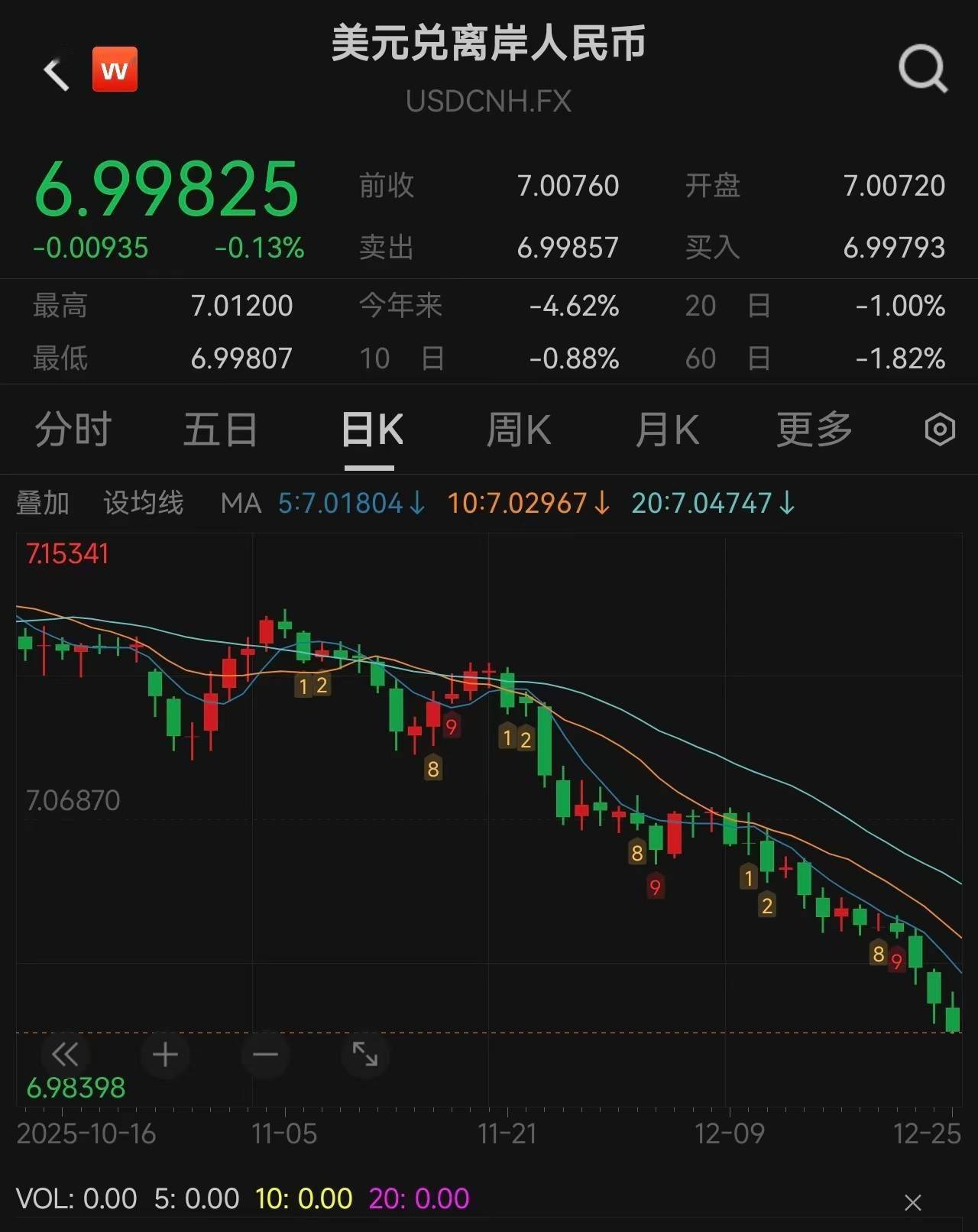
Group 1 - The offshore RMB has surpassed the 7.0 mark against the USD for the first time since September 2024, currently reported at 6.99825 [1] - The People's Bank of China (PBOC) aims to enhance the resilience of the foreign exchange market and stabilize market expectations, preventing excessive fluctuations in the exchange rate [3] - The appreciation of the RMB is expected to increase the attractiveness of RMB-denominated assets, particularly for foreign investors focused on exchange rate gains [3] Group 2 - Historical data indicates that during periods of RMB appreciation, foreign capital, represented by "northbound funds," tends to show accelerated net inflows, favoring liquid assets that align with international valuations [3] - A-share market valuations are currently at historically low levels, and a stronger RMB may catalyze long-term foreign capital to reassess and increase allocations to Chinese assets, potentially stabilizing or boosting market indices [3] - The impact of RMB appreciation on listed companies is not uniform; export-oriented industries such as home appliances, electronics, textiles, and machinery may face reduced price competitiveness in international markets, leading to potential downward pressure on profit expectations [4] Group 3 - Beneficiaries of RMB appreciation include industries with significant dollar-denominated liabilities, such as airlines, which may see improved financial statements due to increased exchange gains [4] - Cost-importing sectors, like paper and basic chemicals, will benefit from reduced procurement costs for raw materials, enhancing profit margins [4] - The psychological impact of RMB appreciation is significant, as it signals economic stability and effective policy, which can fundamentally boost market risk appetite [4] Group 4 - The significance of the RMB surpassing the 7.0 mark is more psychological and directional rather than indicative of long-term trends; sustainable appreciation is contingent on confirmed domestic economic recovery and substantial improvements in corporate earnings [5] - Investors should closely monitor upcoming key economic data releases and monetary policy trends from major economies to gauge the sustainability of RMB appreciation [5]
公安部:立案查处金融领域“黑灰产”犯罪案件1500余起
Bei Jing Shang Bao· 2025-12-25 02:34
北京商报讯(记者岳品瑜董晗萱)12月25日,公安部召开新闻发布会,通报公安部和国家金融监督管理总 局联合部署开展金融领域"黑灰产"违法犯罪集群打击工作举措成效情况,并公布十大典型案例。 公安部经济犯罪侦查局局长华列兵介绍,近年来,金融领域的消费纠纷矛盾较为突出,滋生非法中介乱 象,并借助互联网快速蔓延,已形成完整的黑灰产业链,严重侵害金融消费者合法权益,扰乱金融市场 正常秩序。为从源头上化解金融领域矛盾风险,今年6月至11月,公安部会同国家金融监管总局部署17 个重点省市开展为期6个月的金融领域"黑灰产"违法犯罪集群打击。工作开展以来,全国公安经侦部门 先后组织发起集群打击近60次,共立案查处金融领域"黑灰产"犯罪案件1500余起,打掉职业化犯罪团伙 200余个,涉案金额累计近300亿元,有效净化了金融市场生态,全力维护了国家金融管理秩序和安全稳 定,有力保护了金融消费者合法权益。 ...