
快时尚

Search documents
Parvus增持开云股份;Le Coq Sportif被收购;老佛爷百货任命CEO
Sou Hu Cai Jing· 2025-07-09 04:00
Investment Dynamics - UK hedge fund Parvus has increased its stake in Kering to 5% [1] Financing Dynamics - UK affordable luxury brand Rise & Fall has completed a new funding round totaling £4 million, with £1.4 million from Wealth Club, aimed at supporting its five-year growth strategy [6] - Rise & Fall has achieved annual revenue growth of 100% since its inception three years ago, enhancing its brand appeal [6] Acquisition Dynamics - French-Swiss entrepreneur Dan Mamane has successfully acquired the sports brand Le Coq Sportif, which has faced operational challenges and filed for bankruptcy protection in 2024 [9] Listing Dynamics - Tea brand Hu Shang Ayi announced plans to implement an H-share full circulation plan, converting up to 35,255,992 domestic unlisted shares into H-shares, representing approximately 33.51% of its total issued share capital [11] Brand Dynamics - LV Beauté is set to open its first store in Nanjing, China, featuring a range of high-end beauty products, marking LVMH's accelerated expansion in the Chinese beauty market [13] - The French regulatory authority DGCCRF has fined SHEIN €40 million for misleading promotional practices, highlighting the need for compliance and transparency in the fast fashion sector [16][17] - Dior has expanded its collaboration with UNESCO through the "Women Dior" program, providing guidance to 2,500 women from 140 countries [20] Personnel Dynamics - Isabel Marant has appointed Sophie Condroyer as the new Chief Marketing Officer, bringing over 17 years of experience in the fashion and luxury industry [21] - LVMH has appointed Michael Burke as the Chairman and CEO of its Americas division to enhance its business presence in North and South America [24] - Galeries Lafayette has appointed Arthur Lemoine as the new CEO, marking a new growth phase for the company [27]


“任意消费能和男模店长十指相扣拍合影”,衣服像1688进货的国产快时尚为揽客快整成网红奔现大会了
3 6 Ke· 2025-07-07 08:22
梓渝老师曾担任上海WM一日店长(图源:小红书@W.Management上海) 你既像点菜一样点店员上桌,又像选秀一样给哥哥们做数据。 终于到了这一天,快时尚变成了MCN,像运营爱豆一样运营店员。 以往的BM之流为了吸引你进门,连叠衣服的店员都放上了帅哥美女,你看着别人一天冷脸叠衣服都能拿到70块时薪,对比自己刚刚三位数的日薪,总觉 得帅哥美女们看一次解乏,看多了也腻了。 卖辣妹卖店员,卖到后来快时尚们也无力了无趣了索然无味了,直到有人再创辉煌走到下一个阶段——"卖脸"。 被叫做"辣妹天堂"的、2023年在宁波诞生的快时尚品牌WManagement,终于在7月4日开进北京。别家的颜值博主只是叠衣服,到了WM的地界儿,无论是 颜值博主、500万粉丝大网红还是小明星统统化身爱豆,打投、出道位、互动、直拍、物料小卡一个都不缺。 ("哥哥"为粉圈用语,即粉丝对所喜欢明星的称呼) 01 "卖的不是衣服,是男模爱豆吧" 选秀没有了,选秀又像线面一样在各个领域繁殖再生。 把店员当作爱豆一样运营,WM用这样的方式已经在许多城市搅动风云。从潮人扎堆的上海滩到低价服装生产地的广州城,再到江苏"名义上的老大"南 京。过去2年,WM在 ...

SHEIN冲刺上市背后:华遨服装ERP如何成为快时尚供应链数字化的核心引擎?
Sou Hu Cai Jing· 2025-07-03 08:35
Group 1 - SHEIN is preparing for an IPO in Hong Kong after facing delays in its London listing, aiming to submit its prospectus in the coming weeks and complete the listing within the year [1] - The London IPO was hindered by regulatory delays and the cancellation of the "small company exemption" policy, which could have reduced its valuation to $50 billion, a nearly 25% decrease from its 2023 private funding valuation [1] - This shift in listing strategy has garnered significant attention from global capital markets and the fashion industry, potentially reshaping the fast fashion capital market landscape [1] Group 2 - Since its inception, SHEIN has rapidly grown by leveraging a platform-based, asset-light model, utilizing over 7,000 factories in China and some in Brazil and Turkey to create a vast supply network [3] - The company employs a "factory-to-consumer" model, selling a large volume of low-cost apparel to over 150 countries and regions, achieving annual revenue of $24 billion in 2022, comparable to Zara and H&M [3] Group 3 - Supply chain management efficiency is a key competitive advantage in the fast fashion industry, with SHEIN's global supply chain covering procurement, production, and logistics [5] - Effective management of raw material quality, pricing, and timeliness, along with precise tracking of factory progress and global logistics costs, is crucial for maintaining delivery, quality, and profitability [5] Group 4 - The Huazhao ERP management system offers significant advantages in complex supply chain management scenarios, providing full-chain data integration and real-time information sharing [7] - It features intelligent monitoring for order execution tracking and risk alerts, enabling quick responses to ensure timely delivery [7] - Inventory control is optimized based on sales data, trend forecasts, and order demands, helping to reduce costs and prevent stockouts [7] Group 5 - SHEIN's case illustrates that digital supply chain management has become a core competitive advantage in the fast fashion industry, with many Chinese apparel companies adopting the Huazhao ERP system to enhance supply chain efficiency [9] - This digital transformation supports companies in maintaining a leading position in the competitive global fast fashion market [9]
告别激进?H&M中国战略变了
虎嗅APP· 2025-06-30 10:22
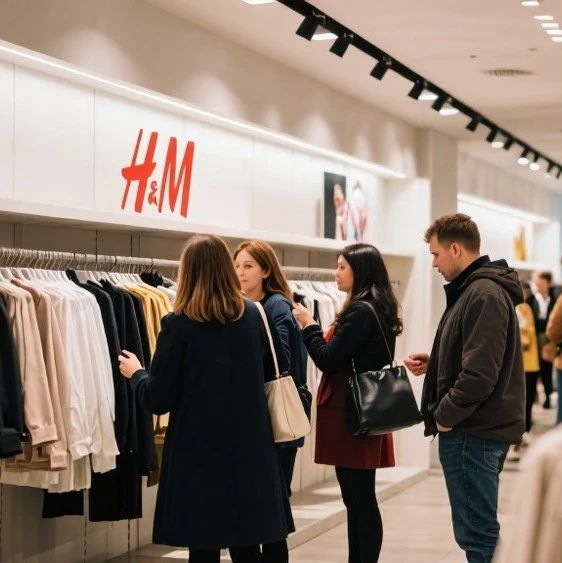
Core Viewpoint - H&M is undergoing a strategic transformation in the Chinese market, shifting from rapid expansion to refined operations, aiming to find effective growth paths amidst intense competition in the fashion retail sector [1][3]. Financial Performance - H&M reported a 3% year-on-year increase in same-store net sales for Q2 of FY2025, indicating a recovery in major global markets. The group's net sales for the first half of FY2025 grew by 1% year-on-year, contrasting with a 0.6% decline in FY2024 [1][2]. - Following the financial report, H&M's stock price surged by 7%, reaching a 15-month high since March 2024 [2]. Strategic Adjustments - The company is focusing on optimizing its store network in China by closing underperforming locations and upgrading remaining stores to enhance customer experience. This includes the renovation of flagship stores in key urban areas [3][5]. - H&M plans to accelerate the opening of flagship stores in the second half of FY2025, with ambitious projects such as a 3,000 square meter immersive flagship store in Shanghai [5]. Market Positioning - H&M is transitioning from a traditional fast fashion model to a focus on experiential retail, emphasizing the quality of individual stores over the quantity of locations [5][6]. - The company has recognized the need to adapt to the competitive landscape in China's fashion retail market, where local brands are gaining traction, leading to a significant reduction in the number of H&M stores from over 500 in 2019 to around 300 by the end of 2024 [6]. Online Retail Strategy - H&M is enhancing its online presence by entering platforms like Douyin and Pinduoduo, moving beyond its previous reliance on its own e-commerce channels [6]. - The establishment of a China Design Center aims to incorporate local aesthetics into product development, with plans for 60% of new products in 2025 to utilize traditional Chinese craftsmanship [6]. Challenges Ahead - Despite these strategic initiatives, H&M faces challenges in maintaining market share, with a noted decline in operating profit margin to 2.2% in Q1 of FY2025 due to external factors and increased promotional activities [6][7].
告别激进?H&M中国战略变了
Hu Xiu· 2025-06-30 04:04
Core Viewpoint - H&M is undergoing a strategic transformation in the Chinese market, shifting from aggressive expansion to refined operations, focusing on store network restructuring, channel layout, and localization to find effective growth paths in a highly competitive fashion retail market [1][3]. Financial Performance - H&M reported a 3% year-on-year increase in same-store net sales for Q2 of FY2025, indicating a recovery in global major markets [1]. - The group's net sales for the first half of FY2025 grew by 1% year-on-year, contrasting with a 0.6% decline in sales for FY2024 [1]. - Following the financial report, H&M's stock price surged by 7%, reaching a 15-month high since March 2024 [2]. Strategic Adjustments - H&M is focusing on the Chinese market as a key battleground for its strategic adjustments, emphasizing brand rejuvenation and optimizing store layouts by closing underperforming stores while upgrading remaining ones [3][4]. - The company plans to accelerate the opening of flagship stores, with significant renovations and new concepts aimed at creating immersive shopping experiences [3][4]. Market Position and Challenges - H&M is gradually moving away from traditional fast fashion labels towards a strategy that emphasizes strong operations and less expansion, in response to increasing competition from local brands and a decline in market share [4][5]. - The company has acknowledged challenges in the external environment, including rising consumer price sensitivity and the need for cost control and product value [5]. Local Adaptation - H&M has established a "China Design Center" to engage local designers and incorporate Chinese aesthetics into its product offerings, with plans for 60% of new products in 2025 to use materials from Chinese intangible cultural heritage [5].
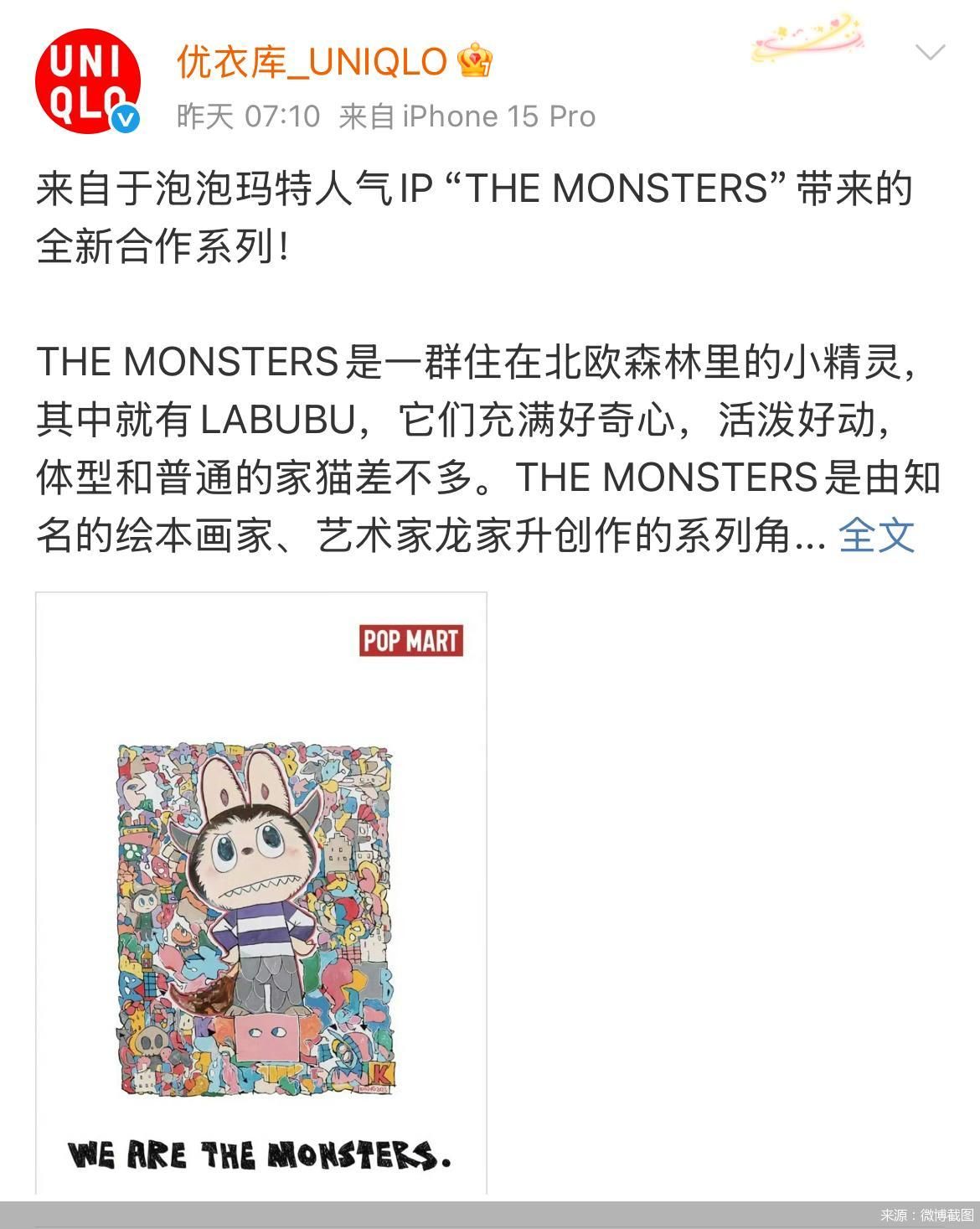
优衣库将与Labubu联名,会再次引发抢购狂潮吗?
3 6 Ke· 2025-06-25 04:08
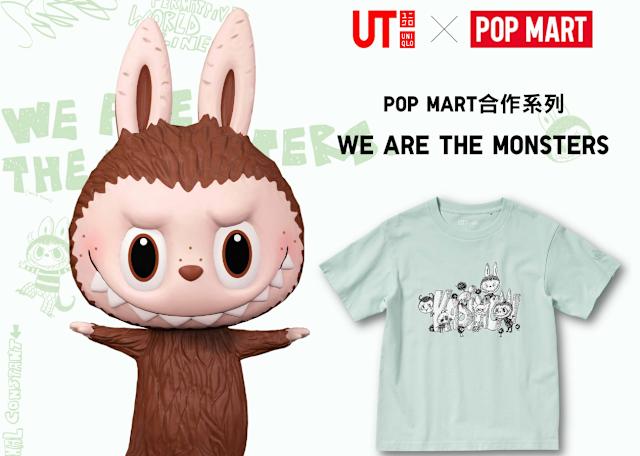
Core Insights - Uniqlo is collaborating with Pop Mart to launch a new collection themed around its IP "THE MONSTERS," featuring the popular Labubu character, set for global release on August 29, 2025 [1][3] - The collaboration aims to tap into the current popularity of Labubu, with T-shirts and sweatshirts priced between 79 to 199 yuan, appealing to both adult and child consumers [1][3] - Uniqlo's previous collaborations have shown significant resale value, with a T-shirt from the 2022 "THE MONSTERS" series increasing from 99 yuan to nearly 500 yuan on resale platforms, highlighting the brand's ability to create scarcity and collector's value [3][4] Uniqlo's Collaboration Strategy - Uniqlo's collaboration strategy is divided into three main categories: artist collaborations, anime/IP collaborations, and designer collaborations [4][8] - Artist collaborations aim to bridge the gap between contemporary art and the public, making art accessible through everyday clothing [5][11] - Anime/IP collaborations leverage the emotional connection fans have with popular franchises, ensuring broad appeal across different demographics [8][9] - Designer collaborations allow consumers to experience high fashion at affordable prices, exemplified by partnerships with renowned designers like Jil Sander [11][13] Marketing and Consumer Engagement - Uniqlo's collaborations are characterized by a keen insight into pop culture trends, allowing the brand to quickly respond to consumer interests and create a sense of urgency [15][16] - The brand employs a strategy of scarcity and limited releases, enhancing the perceived value of products and driving consumer demand [19][20] - Uniqlo's marketing approach includes seamless online and offline integration, creating an immersive shopping experience that fosters emotional connections with consumers [22][23] Cultural and Emotional Value - Uniqlo's products serve as social currency, allowing consumers to express their identities and affiliations through clothing [26][27] - The brand's collaboration model offers a sustainable cultural development path for fast fashion, merging rapid consumption with lasting cultural significance [27]
Zara关闭福州店,彻底退出福建市场
Sou Hu Cai Jing· 2025-06-24 09:16
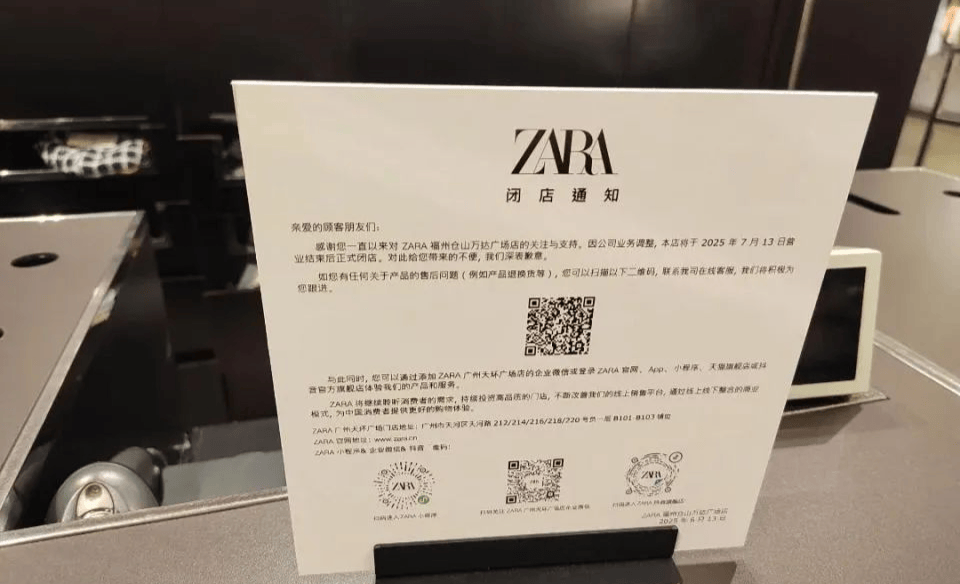
Core Insights - ZARA is closing its last store in Fuzhou, marking its complete exit from the Fujian market due to changing consumer preferences and increased competition from domestic brands [1][3] - The fast fashion sector, once thriving in Fuzhou with multiple brands, is now facing significant challenges, leading to a reduction in the number of stores [3][4] - Domestic brands are gaining popularity, offering stylish designs at competitive prices, which is attracting consumers away from traditional fast fashion retailers [4] Group 1: ZARA's Market Exit - ZARA's Fuzhou store at Wanda Plaza will close on July 13, indicating a strategic retreat from the region [1] - The closure is part of a broader trend where ZARA has been shutting down stores across China since 2024 due to declining sales [3] - The brand's initial success in Fuzhou included three stores, but it has now dwindled to just one [3] Group 2: Changing Consumer Preferences - Young consumers are shifting towards brands that offer more individuality and local cultural relevance, leading to a decline in fast fashion's appeal [1][4] - The rise of e-commerce has also contributed to changing shopping habits, with consumers favoring online platforms for their purchases [4] Group 3: Rise of Domestic Brands - Domestic brands like Wassup, ROARINGWILD, and RANDOMEVENT are increasingly occupying prime retail spaces, showcasing a blend of fashion and lifestyle offerings [4] - These brands are leveraging local insights and competitive pricing to challenge established fast fashion players [4] - The shift towards these brands reflects a broader trend of consumers seeking unique and personalized shopping experiences [4]
聊聊4个出海中最常见误解
3 6 Ke· 2025-06-20 03:08
Core Insights - The traditional cost strategy for Chinese companies going global is becoming less effective as labor and raw material costs rise, necessitating a shift towards automation and smarter technologies [1] - Structural opportunities arise from supply-demand mismatches in foreign markets, which can be addressed by leveraging domestic capabilities to fill gaps in those markets [2][3] Group 1: Supply-Demand Mismatch - Supply-demand mismatch refers to a market situation where there is a clear supply shortage or unmet demand, allowing efficient solutions to gain market share [3] - Successful examples include Insta360, which identified a niche in the action camera market by addressing specific user needs rather than competing on price [2] - DeepSeek capitalized on the need for low-cost AI solutions in the developer community, filling a gap left by higher-cost competitors [5] Group 2: Technology and Differentiation - Companies like Shein have succeeded by integrating technology, user understanding, and ecosystem development to meet the fast-paced consumption needs of Gen Z [10][12] - The combination of technology, market understanding, and a robust operational ecosystem creates a differentiated advantage that goes beyond mere product offerings [15] Group 3: Localization and Cultural Understanding - Effective localization involves understanding local consumer preferences and cultural nuances rather than simply translating products or marketing strategies [16][24] - Shein's experience in Brazil illustrates the importance of adapting product offerings to local tastes, leading to significant sales growth [18][20] - Xiaomi's strategy in India, which includes local manufacturing and cultural adaptation, demonstrates the benefits of a tailored approach to market entry [25] Group 4: Compliance and Regulatory Understanding - Compliance with local regulations can become a competitive advantage, as seen with CATL's proactive approach in Germany, which helped secure production permits and government support [29] - Transsion's focus on data privacy compliance in Africa has built consumer trust and expanded its market presence [31] - Understanding and leveraging local policies can enhance operational efficiency, as demonstrated by Shenzhen's streamlined services for businesses [32] Group 5: Strategic Recommendations - Companies must recognize that succeeding in international markets requires a multifaceted approach that includes addressing supply-demand mismatches, leveraging technology, understanding local cultures, and ensuring compliance with regulations [33][34]
合作“LABUBU”,优衣库为何热衷联名
Bei Jing Shang Bao· 2025-06-17 13:21
Core Viewpoint - Uniqlo's collaboration with the popular IP "THE MONSTERS" from Pop Mart, particularly featuring the character Labubu, is expected to generate significant consumer interest and sales, although the sustainability of this strategy for long-term growth remains uncertain [3][5]. Collaboration and Product Launch - The new product line from the "THE MONSTERS" collaboration will be available for sale starting August 29, featuring adult and children's items such as T-shirts and sweatshirts priced between 79 to 199 yuan [4]. - The popularity of Labubu is highlighted by a record sale of an original Labubu figure for 1.08 million yuan, indicating strong consumer demand and interest in the collaboration [5]. - Uniqlo has a history of successful collaborations with various well-known IPs, including previous partnerships with Pop Mart in April 2022, which saw significant resale price increases for collaborative products [5][6]. Market Performance and Strategy - Uniqlo's collaboration strategy has proven effective in driving traffic and sales, with past collaborations resulting in products selling out quickly and achieving high resale values [6]. - The company has engaged in numerous collaborations this year, including with brands like Ghibli, Pokémon, and others, showcasing its commitment to leveraging popular culture for brand enhancement [5][7]. - Analysts suggest that Uniqlo's collaboration strategy not only boosts sales but also elevates its brand image, allowing it to maintain a fashionable appeal despite being a mass-market brand [7]. Competitive Landscape - Uniqlo faces increasing competition in the Chinese market, which is crucial for its revenue, contributing over 20% to its total income [9]. - Recent financial data indicates a decline in revenue and profit in the Greater China region, with a 3% drop in revenue and a 9% drop in profit projected for the 2025 fiscal year [9]. - Competitors like Zara and H&M are intensifying their strategies in the fast fashion sector, posing additional challenges for Uniqlo [9][10]. Financial Performance - Uniqlo's overall revenue growth has been slowing, with a 20.2% increase in the 2023 fiscal year, followed by a projected 12.2% increase in 2024 [10]. - The company is experiencing pressure from the shift towards online shopping and increased operational costs, which are common challenges faced by many fast fashion brands today [10].
孩子王、欧莱雅布局细分赛道;开云找新CEO|二姨看时尚
2 1 Shi Ji Jing Ji Bao Dao· 2025-06-15 23:57
Group 1: Industry Trends - The French Senate has passed a strict fast fashion bill aimed at imposing an ecological tax on clothing to curb overconsumption and environmental issues [1] - The luxury goods sector is deepening localization and experiential economy strategies, with brands like Bulgari establishing comprehensive after-sales centers and Louis Vuitton sponsoring cultural events to penetrate high-end consumer segments [1] - The industry is witnessing a shift towards sustainable development and localized services as new competitive barriers [1] Group 2: Corporate Developments - Chow Tai Fook reported a 17.5% year-on-year decline in revenue to HKD 89.656 billion for the fiscal year 2025, but operating profit increased by 9.8% to HKD 14.746 billion, driven by a surge in gold product sales [4] - Pinko's parent company announced a turnaround in Q1 with an EBITDA of EUR 5 million, adopting a "de-luxurization" strategy by closing stores and reducing costs [5] - Kidswant acquired Silky Hair for CNY 1.07 billion, expanding its reach in the maternal and infant market, despite facing cash flow pressures [7] Group 3: Mergers and Acquisitions - L'Oréal has acquired a controlling stake in Medik8 for approximately EUR 1 billion, focusing on the efficacy-driven skincare segment [10] - The H&M family has increased its stake in the company to nearly 64%, raising speculation about a potential privatization [8] Group 4: Market Performance - Kering's revenue fell by 14% year-on-year to EUR 3.883 billion in Q1 2025, with Gucci's same-store sales plummeting by 25%, impacting the group's stock price significantly [3] - The auction of a classic Hermès bag is expected to challenge previous records, highlighting the ongoing demand for luxury collectibles [11]