汽车行业

Search documents
众捷汽车:截至9月19日公司股东人数为17052户
Zheng Quan Ri Bao Wang· 2025-09-23 10:42
Group 1 - The core point of the article is that Zhongjie Automobile (301560) has reported its shareholder count as of September 19, 2023, which stands at 17,052 households [1]
帮主郑重解读:美股三连创新高!这波涨势能稳吗?
Sou Hu Cai Jing· 2025-09-23 01:49
Market Overview - The three major U.S. stock indices reached historical highs for three consecutive trading days, with the Dow Jones up 66 points (0.14%) closing at just over 46,381, the Nasdaq rising 157 points (0.7%) to 22,788, and the S&P 500 increasing by approximately 29 points (0.44%) to 6,693 [3][4] - The intraday highs were also notable, with the Dow reaching 46,447, the Nasdaq hitting 22,801, and the S&P 500 touching 6,698 [3][4] Federal Reserve Actions - The core reason for the market surge is attributed to the Federal Reserve's recent interest rate cut of 25 basis points, the first since December of the previous year, which was interpreted as a dovish signal amid signs of a slowing labor market [4][5] - Market optimism has increased, with expectations that the Fed may implement two more rate cuts of 25 basis points by the end of the year [4] Economic Indicators - Key upcoming economic indicators include the PCE price index, which is closely monitored by the Fed. The market anticipates a slight increase in inflation pressure, but a moderate rise would likely allow the Fed to maintain its current policy stance [5] - The risk of a government shutdown is also a concern, as recent bipartisan funding proposals were rejected, and the deadline approaches [5] Federal Reserve Officials' Insights - Recent comments from Fed officials indicate a consensus that current interest rates are too high, with calls for significant rate cuts to prevent rising unemployment and support the labor market [6] - There are differing opinions among Fed officials regarding inflation and the pace of future rate cuts, with some cautioning against aggressive easing due to the risk of overheating the economy [6] Company-Specific Developments - In the tech sector, there are mixed signals, with potential regulatory changes affecting companies reliant on foreign tech workers, and specific companies like Kenvue facing stock declines due to health warnings related to their products [7] - Positive developments include significant stock price increases for companies like Metsera, which is rumored to be acquired by Pfizer, and Tesla, which has seen target price upgrades from various institutions [7] Investment Strategy - While the recent market highs are noteworthy, a focus on long-term investment strategies is emphasized, with attention to key economic indicators and potential risks that could impact market sentiment in the near term [8]

不止稳增长:新一轮十大行业政策发布,背后是国家战略的深刻转变
21世纪经济报道· 2025-09-16 11:40
Core Viewpoint - The new round of ten key industries' steady growth plans aims to stabilize the industrial economy amidst external uncertainties and internal structural adjustments, focusing on maintaining reasonable growth rates to support the overall economy [1][2]. Group 1: Key Industries and Their Importance - The ten key industries targeted include steel, non-ferrous metals, petrochemicals, chemicals, building materials, machinery, automobiles, power equipment, light industry, and electronic information manufacturing, which collectively account for about 70% of the industrial economy [4][6]. - These industries are characterized by long industrial chains, high interconnectivity, and strong driving effects, making them crucial for the overall stability of the industrial economy [6]. Group 2: Policy Differences and Focus - The current steady growth policies differ fundamentally from those in 2023, shifting from "quantitative growth" to "quality and efficiency" [2][10]. - The new policies emphasize structural optimization and long-term high-quality development, focusing on both supply and demand sides [2][11]. - On the supply side, the emphasis is on technological innovation to optimize supply, while on the demand side, the focus is on creating new demand and exploring new markets [11][12]. Group 3: Specific Industry Goals - The automotive sector aims for annual sales of approximately 32.3 million vehicles by 2025, with a 3% year-on-year growth, and a target of 15.5 million new energy vehicles, representing a 20% increase [6]. - The power equipment sector targets an average revenue growth of around 6% for traditional power equipment and aims to enhance the export volume of new energy equipment [7]. - The electronic information manufacturing sector aims for an average growth rate of 7% in value-added output, with a revenue growth target of over 5% for the sector as a whole [7][8].

不止稳增长:新一轮十大行业政策发布,背后是国家战略的深刻转变
2 1 Shi Ji Jing Ji Bao Dao· 2025-09-16 09:45
Core Viewpoint - The new round of ten key industry growth stabilization plans has been launched to support industrial growth amid external and internal economic challenges, focusing on maintaining reasonable growth rates in key industries to stabilize the overall economy [1][2]. Group 1: Industry Growth Plans - The plans include the "Electronic Information Manufacturing Industry Action Plan (2025-2026)", "Power Equipment Industry Growth Stabilization Work Plan (2025-2026)", and "Automobile Industry Growth Stabilization Work Plan (2025-2026)" [1]. - The ten key industries targeted are steel, non-ferrous metals, petrochemicals, chemicals, building materials, machinery, automobiles, power equipment, light industry, and electronic information manufacturing, which collectively account for about 70% of the industrial economy [3][4]. Group 2: Specific Industry Goals - The "Automobile Plan" aims for annual vehicle sales of approximately 32.3 million by 2025, a year-on-year increase of about 3%, with new energy vehicle sales expected to reach 15.5 million, a growth of about 20% [3]. - The "Power Equipment Plan" sets a target for traditional power equipment to maintain an average annual revenue growth rate of around 6%, while the advanced manufacturing cluster in the power equipment sector aims for a 7% annual revenue growth [4]. - The "Electronic Information Manufacturing Plan" anticipates an average growth rate of 7% for major electronic equipment manufacturing, with a target of over 40% market penetration for large-screen televisions by 2026 [4][6]. Group 3: Policy Focus and Changes - The current stabilization policies emphasize quality and efficiency alongside growth, shifting from a focus on quantity to structural optimization and long-term high-quality development [2][8]. - The policies aim to enhance supply through technological innovation and address irrational market competition, promoting a unified national market [2][7]. - The emphasis on creating new demand and exploring new markets marks a shift from the previous focus on restoring consumer growth [7][8].
债券研究:政府融资支持力度减弱,8月社融增速回落
Bank of China Securities· 2025-09-15 09:04
Index Performance - The Hang Seng Index (HSI) closed at 26,388, reflecting a 1.2% increase for the day and a 31.5% increase year-to-date [1] - The Hang Seng China Enterprises Index (HSCEI) closed at 9,365, with a 1.1% daily increase and a 28.5% year-to-date increase [1] - The MSCI China index showed a 1.3% increase for the day and a 34.7% increase year-to-date, closing at 87 [1] Commodity Price Performance - Brent Crude oil closed at $67 per barrel, with a 0.9% increase for the day but a 7.0% decrease year-to-date [2] - Gold prices reached $3,643 per ounce, marking a 0.2% increase for the day and a significant 38.8% increase year-to-date [2] - The Baltic Dry Index (BDI) increased by 111.7% year-to-date, closing at 2,111 [2] Key Macro and Earnings Releases - The US Empire State Manufacturing Index reported an actual value of 11.9, exceeding the consensus of 4.9 [3] - The US Import Price Index showed a year-over-year change of -0.2%, against a consensus of 0.0% [3] - The Federal Funds Target Rate in the US was reported at 4.5%, higher than the consensus of 4.3% [3] China Internet Sector - Six key factors influencing the financials and valuations of China Internet companies in the next 6-12 months include AI, macro recovery, competition landscape, regulatory environments, shareholder return executions, and US-China tensions [8][10] - The ranking of sub-industries is as follows: cloud > online music = online game = online advertising > eCommerce > others [8][10] - Tencent, Alibaba, Netease, and TME are identified as mid- to long-term top picks, while Bilibili and Baidu are recommended for short-term investment [9][10] Auto Sector Update - The "Work Plan for Stable Growth in the Automotive Industry (2025–26)" outlines 15 key initiatives aimed at expanding domestic consumption and enhancing supply quality [14][17] - The new plan emphasizes industry scale expansion and quality improvements, contrasting with the previous plan's focus on maintaining operations within a reasonable range [15][17] - Geely Automobile is favored for its market share gains, while NIO is expected to see a rerating due to operational improvements [16][18] Social Financing in China - The growth of outstanding social financing in China moderated from 9% in July to 8.8% in August, attributed to weakened government bond financing and subdued new loans [5][7] - Despite sluggish household consumption credits and mortgage loans, there is an increasing trend in household stock investment as savings have declined over the past two months [5][7] - Future growth in social financing is expected to stabilize with the advance of next year's bond issue quota for local government hidden debt replacement [6][7] Domestic AI Server Market - The domestic AI server market is projected to grow at 40% due to high demand for AI and uncertainties in Nvidia GPU supply [12][13] - Huawei, Cambircon, and Kunlunxin are ranked as the top three domestic AI platforms based on product competitiveness and supply stability [12][13] - There are concerns about oversupply risks in smaller computing clusters due to lack of economies of scale and inadequate technical support [12][13]

事关汽车行业稳增长,工信部等八部门联合发文!
中汽协会数据· 2025-09-13 12:23
Core Viewpoint - The article outlines the "Automobile Industry Stabilization and Growth Work Plan (2025-2026)" aimed at achieving key economic development targets for the automotive sector, emphasizing the promotion of new energy vehicles and the overall growth of the industry [1][5]. Summary by Sections Overall Requirements - The plan is guided by Xi Jinping's thoughts and aims to implement the spirit of the 20th National Congress of the Communist Party, focusing on stable progress, new development concepts, and enhancing domestic consumption while optimizing the development environment [6]. Main Goals - By 2025, the target is to achieve approximately 32.3 million vehicle sales, a year-on-year increase of about 3%, with new energy vehicle sales reaching around 15.5 million, a growth of about 20%. The automotive manufacturing industry's added value is expected to grow by around 6% [7]. Work Measures - **Expanding Domestic Consumption**: - Accelerate the market expansion of new energy vehicles, aiming for over 700,000 new energy vehicles in 25 pilot cities [8]. - Promote vehicle trade-in policies and enhance the second-hand vehicle market [9]. - Advance the industrial application of intelligent connected technologies [9]. - **Improving Supply Quality**: - Foster technological innovation to stimulate consumer demand and enhance product quality through standard upgrades [10]. - Ensure the stability of the industrial supply chain and promote digital transformation within the automotive sector [11][12]. - **Optimizing Development Environment**: - Improve infrastructure for charging and battery swapping, and reform industry management policies to enhance competition [13][14]. - Strengthen the management of vehicle scrapping and recycling [14]. - **Enhancing International Cooperation**: - Promote the quality and efficiency of automotive exports and improve financial services for export enterprises [15][16]. - Deepen multi-level international cooperation and enhance the influence of international standards [17]. Guarantee Measures - **Strengthening Coordination**: - Enhance inter-departmental coordination for the development of the new energy vehicle industry [18]. - **Monitoring Operations**: - Establish a monitoring and early warning mechanism for key enterprises and sectors [19]. - **Talent Development**: - Implement a talent strategy focusing on the needs of the new energy vehicle sector and enhance local talent cultivation [21].

暑期经济+政策红包发力 8月企业贷款、消费贷环比均回暖
Xin Jing Bao· 2025-09-12 20:41
Group 1: Financial Data Overview - In the first eight months of the year, the total social financing increased by 26.56 trillion yuan, which is 4.66 trillion yuan more than the same period last year [1] - The increase in RMB loans for the same period was 13.46 trillion yuan, with 590 billion yuan added in August alone [1] - The financial sector continues to support the real economy effectively, aided by proactive fiscal policies and moderately loose monetary policies [1] Group 2: Personal Loan Growth - Household loans increased by 711 billion yuan in the first eight months, with 303 billion yuan added in August, showing a year-on-year decrease of 1.597 trillion yuan but a month-on-month increase of 5.196 trillion yuan [2] - The growth in personal loans is attributed to the traditional summer consumption peak and policies promoting consumption [2] - The service industry activity index rose to 50.5%, indicating strong performance in sectors like travel and entertainment [2] Group 3: Real Estate Policy Impact - Long-term loans for households increased by 200 billion yuan in August, with a year-on-year decrease of 1 trillion yuan but a month-on-month increase of 1.3 trillion yuan [3] - New real estate policies in major cities have positively influenced housing demand and mortgage loan inquiries [3] - The average interest rate for new personal housing loans in August was 3.1%, down approximately 25 basis points from the previous year [3] Group 4: Corporate Loan Trends - Corporate loans increased by 590 billion yuan in August, with a year-on-year decrease of 2.5 trillion yuan but a month-on-month increase of 5.3 trillion yuan [5] - Short-term loans for enterprises saw a significant increase, while medium to long-term loans remained stable [6] - The manufacturing sector's PMI rose, indicating improved production and financing demand [6] Group 5: Structural Adjustments in Monetary Policy - The total balance of RMB loans reached 269.10 trillion yuan by the end of August, with a year-on-year growth of 6.8% [8] - The balance of inclusive small and micro loans grew by 11.8%, and medium to long-term loans for manufacturing increased by 8.6% [8] - Structural monetary policy tools are being utilized to enhance financial support for key sectors [9] Group 6: Economic Outlook - The macroeconomic environment is stable, with manufacturing and non-manufacturing sectors showing signs of expansion [11] - The overall economic growth is expected to meet the target of around 5% for the year, supported by continuous and stable macro policies [11] - Experts emphasize the need for reforms in key areas to address deeper issues and promote consumption [11]
从跑得最快,到跑得最久 新浙商不同赛道同样精彩
Shang Hai Zheng Quan Bao· 2025-09-10 18:48
Group 1 - The article discusses the developments in four major industries: solar, automotive, display, and sports [1] - It highlights the growth potential and technological advancements in the solar industry [1] - The automotive industry is noted for its transition towards electric vehicles and sustainable practices [1] Group 2 - The display industry is emphasized for its innovations in visual technology and applications [1] - The sports industry is mentioned in relation to event management and the rise of competitive racing events [1]

Mexico to raise tariffs on cars from China to 50%
Reuters· 2025-09-10 17:57
Core Point - Mexico will increase tariffs on automobiles from China and other Asian countries to 50%, up from the previous level of 20% [1] Group 1: Tariff Changes - The new tariff rate on automobiles will be 50% [1] - The previous tariff rate was 20% [1] - This change reflects a significant increase in trade barriers for automotive imports from specific regions [1]

核心CPI涨幅连续4个月扩大,“反内卷”推动行业价格改善
Di Yi Cai Jing· 2025-09-10 13:10
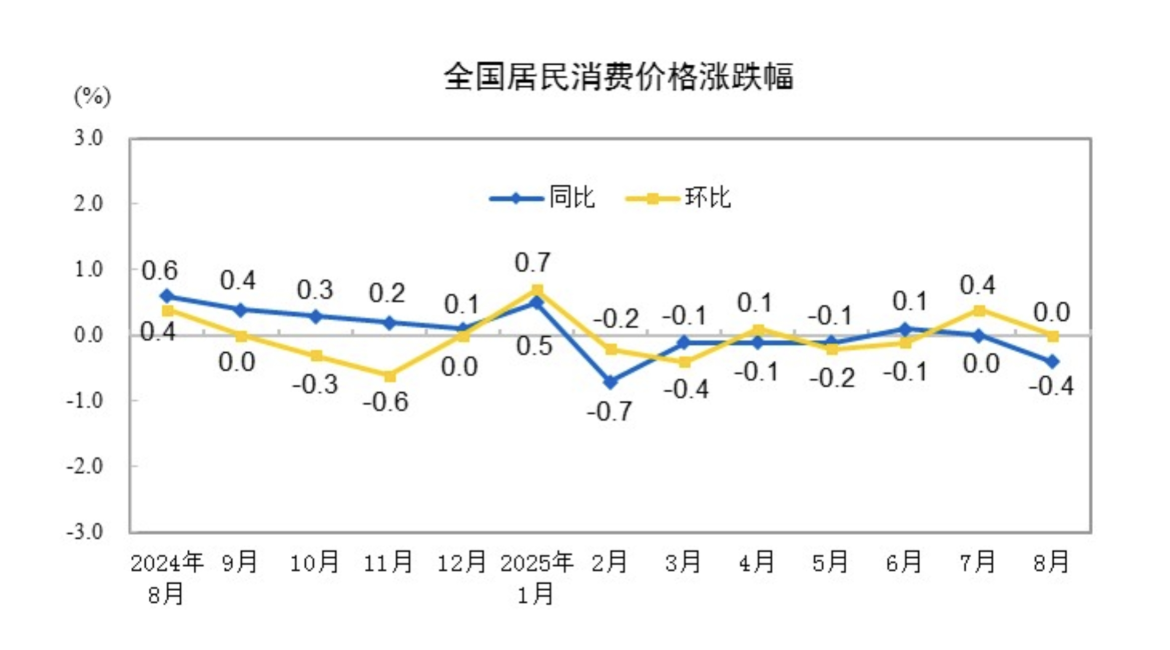
Group 1: CPI and PPI Trends - In August, the Consumer Price Index (CPI) remained flat month-on-month and decreased by 0.4% year-on-year, influenced by a high base from the previous year and a continuous decline in food prices [1][10] - The Producer Price Index (PPI) ended an eight-month downward trend, remaining flat month-on-month and decreasing by 2.9% year-on-year, with the decline narrowing by 0.7 percentage points compared to July [4][5] Group 2: Core CPI and Industrial Prices - The core CPI, excluding food and energy prices, increased by 0.9% year-on-year in August, marking the fourth consecutive month of growth [3][11] - Industrial prices showed positive changes, with certain sectors like coal processing and black metal smelting experiencing a narrowing of year-on-year price declines, contributing to the overall stabilization of PPI [7][8] Group 3: Policy Impact and Market Dynamics - The "anti-involution" policy has led to improvements in the supply-demand relationship, positively affecting industrial product prices and reducing disorderly competition in various sectors [3][9] - The implementation of more proactive macro policies is expected to support a gradual recovery in prices, with forecasts indicating a potential narrowing of PPI year-on-year declines in the coming months [8][12]