
券商

Search documents
A股晚间热点 | 中美关税大消息!双方暂停部分出口管制
智通财经网· 2025-10-30 14:53
Group 1 - The US will cancel the 10% "fentanyl tariff" on Chinese goods, while the 24% tariffs will remain suspended for another year, leading to a significant easing of trade tensions between the two countries [1] - The Chinese government will adjust its countermeasures in response to the US tariff changes, providing a buffer for both economies and potentially boosting exports [1] - The Hong Kong stock market reacted positively, showing a sharp rebound following the announcement of these trade agreements [1] Group 2 - A new policy to enhance duty-free shop regulations will be implemented starting November 1, 2025, aimed at boosting consumption and attracting foreign spending [2] - The policy is expected to stimulate the economy by encouraging overseas consumption to return and promoting healthy development in the duty-free retail sector [2] - The Chinese duty-free operator has seen a significant rise in stock prices, indicating market optimism regarding the new policy [2] Group 3 - A total of 500 billion yuan in new policy financial tools has been fully deployed, expected to drive total project investments exceeding 7 trillion yuan [3] - This financial support is targeted at key sectors and projects that require investment, indicating a proactive approach to stimulate economic growth [3] Group 4 - The China Securities Regulatory Commission has approved the IPO registration application for Moore Threads, a company focused on high-performance computing solutions [4] - The approval aligns with national strategies to advance the integrated circuit industry and reflects a deep collaboration between capital markets and industrial innovation [4] - Other high-tech companies are also preparing for IPOs, which may benefit related firms in the sector [4] Group 5 - China Merchants Securities has raised its margin trading limit from 150 billion yuan to 250 billion yuan, reflecting strong demand in the margin trading market [5] - This increase is part of a broader trend among several securities firms to expand their financing capabilities in response to a booming market [5] - The move is seen as a positive development for the market, although recent stock performance has been mixed [5] Group 6 - The Chinese government is increasing support for the health and elderly care industries, with a focus on promoting sustainable development in these sectors [10] - The elderly care industry is projected to grow significantly, potentially exceeding 12 trillion yuan by 2025, indicating a strong market opportunity [10] - The demand for diverse and specialized services in the elderly care sector is expected to rise, reflecting changing consumer needs [10] Group 7 - The global demand for gold reached a record high in the third quarter, with investment surging by 47% and ETF inflows totaling 26 billion dollars [12] - This trend indicates a growing interest in gold as a safe-haven asset amid economic uncertainties [12] - The increase in demand for gold could present investment opportunities in related sectors [12] Group 8 - The iPhone 17 series is set for increased production, with supply chain orders reportedly surging [13] - This expansion in production capacity may have positive implications for companies involved in the supply chain [13]


国证国际港股晨报-20251030
Guosen International· 2025-10-30 11:10
Group 1: Market Overview - The Hong Kong stock market experienced a decline, with the Hang Seng Index falling by 0.33%, the Hang Seng China Enterprises Index down by 0.97%, and the Hang Seng Tech Index decreasing by 1.26% [2][3] - The total market turnover was HKD 242.7 billion, with short selling amounting to HKD 33.6 billion, representing 15.99% of the total turnover [2] - Southbound capital inflow decreased to HKD 2.26 billion, with the most net buying in China Mobile, Hua Hong Semiconductor, and Pop Mart, while Alibaba, Tencent, and ZTE saw the most net selling [2] Group 2: Sector Performance - Defensive stocks and resource stocks were sold off due to a rebound in market risk appetite, leading to a significant drop in gold prices [3] - The gold and non-ferrous metal sectors saw notable declines, with major gold stocks like Zijin Mining, Zhaojin Mining, and Shandong Gold all falling [3] - The consumer sector also faced downward pressure, with sports goods, luxury goods, tobacco, and local retail stocks all weakening [3] - The pharmaceutical and biotech sectors continued to adjust, with companies like Heng Rui Pharmaceutical experiencing significant declines post-earnings [3] Group 3: Company Analysis - Tmall (6110.HK) - Tmall reported a 6.6% year-on-year decline in revenue to HKD 27.01 billion and a 41.9% drop in net profit to HKD 1.29 billion, which was in line with expectations [8][9] - The company declared a final dividend of HKD 0.02 per share and a special dividend of HKD 0.12 per share, resulting in an annual payout ratio of 135% [9] - Despite the revenue decline, Tmall achieved a 20% increase in operating cash flow, reaching HKD 3.8 billion, due to effective working capital management [9] Group 4: Strategic Initiatives - Tmall is focusing on optimizing its store structure, with a 18.3% reduction in the number of direct stores to 5,020 and a 12.4% decrease in sales area [10] - The company is implementing stricter standards for store openings and locations to enhance operational efficiency [10] - Tmall is deepening collaborations with high-end brands like SOAR Running and Norda to diversify its brand matrix and strengthen its market presence [10] Group 5: Future Outlook - The report predicts a gradual recovery in performance as the retail consumption environment improves, with expected EPS of HKD 0.21, 0.22, and 0.23 for FY26, FY27, and FY28 respectively [10] - A target price of HKD 3.6 is set for the 2026 fiscal year, maintaining a "Buy" rating based on the company's high dividend policy and potential for recovery [8][10]
锂矿、量子科技大涨,稀土午后飙升!还有哪些板块有机会?
Mei Ri Jing Ji Xin Wen· 2025-10-30 09:24
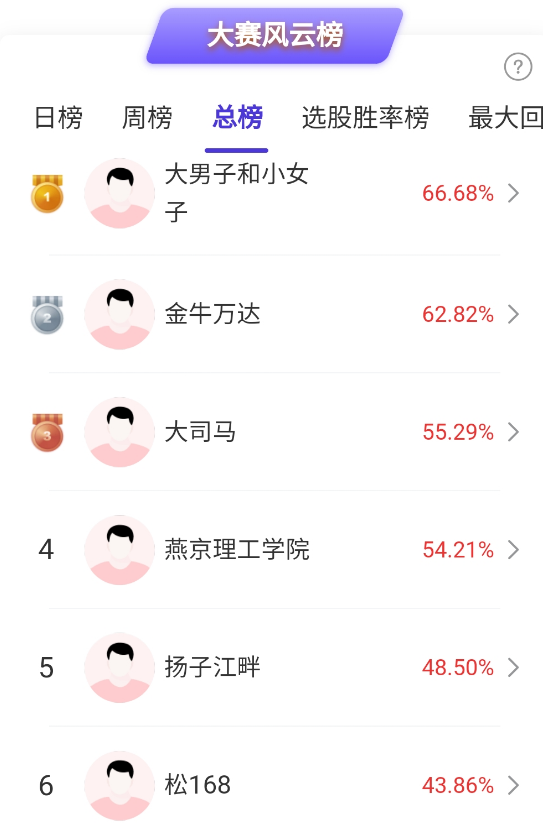
Market Overview - The market experienced a quick pullback in the afternoon on October 30, with the Shanghai Composite Index closing down 0.73% at 3986.90 points. The total trading volume in the Shanghai and Shenzhen markets reached 24.217 trillion yuan, an increase of 165.6 billion yuan compared to Wednesday [1]. Competition Insights - The 76th session of the simulated stock trading competition, hosted by the Daily Economic News App, began on October 20, with several participants achieving impressive results, including two participants with returns exceeding 60%. The competition runs from October 20 to October 31, with a simulated capital of 500,000 yuan [1]. Prize Structure - The pre-tax cash rewards for each competition session are as follows: 688 yuan for the 1st place, 188 yuan for the 2nd to 4th places, and 88 yuan for the 5th to 10th places. Additionally, there is a shared reward of 500 yuan for all other participants with positive returns. Monthly leaderboard prizes include 888 yuan for the 1st place and varying amounts for subsequent ranks [3]. Sector Opportunities - Participants in the competition have expressed optimism about sectors such as brokerage firms, server liquid cooling, humanoid robots, and rare metals, indicating potential investment opportunities in these areas [4]. Brokerage Sector Analysis - Some experts believe that certain companies within the brokerage sector are undervalued, with valuations potentially equivalent to the Shanghai Composite Index at around 3000 points, suggesting an arbitrage opportunity [7].
A股突变!688027,再创新高
Zheng Quan Shi Bao· 2025-10-30 09:08
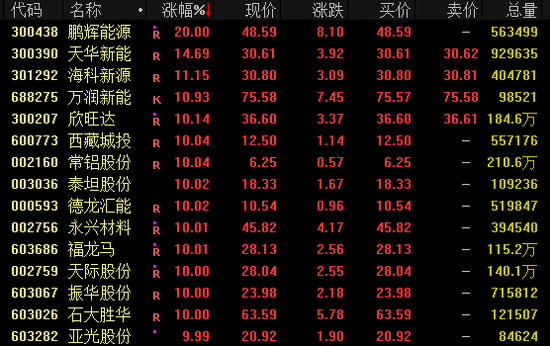
Market Overview - A-shares experienced a decline on October 30, with the Shanghai Composite Index falling below the 4000-point mark, closing down 0.73% at 3986.9 points, and the Shenzhen Component Index down 1.16% at 13532.13 points [1] - The total trading volume in the Shanghai and Shenzhen markets reached 24.646 billion yuan, an increase of 1.737 billion yuan compared to the previous day [1] Sector Performance - The coal sector saw significant declines, with companies like Kailuan Energy and Antai Group hitting the daily limit down [1] - The brokerage sector weakened, with firms such as China International Capital Corporation and East Money falling over 3% [1] - The AI industry chain stocks plummeted, with companies like Tengjing Technology and Tianfu Communication dropping over 10% [1] - Conversely, the steel and non-ferrous metal sectors experienced gains, with companies like Chang Aluminum and Dazhong Mining hitting the daily limit up [1] Lithium Battery Sector - The lithium battery industry chain stocks surged, with Penghui Energy hitting the daily limit up at 20%, and Tianhua New Energy rising nearly 15% [3][4] - The overall performance of lithium battery stocks indicates a strong market demand, driven by seasonal increases in household energy storage battery needs and the growth of AI computing centers [3][5] Quantum Technology Sector - Quantum technology stocks became active again, with Fujida rising nearly 20% and Guodun Quantum surpassing 600 yuan, setting a new historical high [6][7] - The recent government proposals emphasize the importance of quantum technology as a future industry, suggesting potential for further policy support and investment opportunities [8] Innovative Drug Sector - The innovative drug sector faced a downturn, with Hanyu Pharmaceutical dropping over 10% and WuXi AppTec falling over 8% [9] - Hanyu Pharmaceutical reported a revenue of 683 million yuan for the first three quarters, a year-on-year increase of 82.06%, but reported a net loss in the third quarter [9]


收评:三大指数全天震荡调整 锂电概念逆市活跃
Jing Ji Wang· 2025-10-30 08:24
Core Points - The Shanghai Composite Index closed at 3986.90 points, down 0.73%, with a trading volume of 1,070.059 billion yuan [1] - The Shenzhen Component Index closed at 13,532.13 points, down 1.16%, with a trading volume of 1,351.618 billion yuan [1] - The ChiNext Index closed at 3,263.02 points, down 1.84%, with a trading volume of 641.419 billion yuan [1] Sector Performance - Sectors such as coal, brokerage, semiconductor, oil, real estate, and pharmaceuticals experienced declines [1] - Conversely, the steel and non-ferrous metals sectors saw gains despite the overall market downturn [1] - The banking sector showed an upward trend, while lithium battery and quantum technology concepts remained active [1]
若明日券商继续强势,或奏响行情启动序幕
Sou Hu Cai Jing· 2025-10-30 08:14
Group 1 - The market opened high and rose further, surpassing the 4000-point mark, influenced by a strong performance in US stocks overnight, but the trust crisis in brokerage firms did not stimulate bullish sentiment [1] - The Hainan sector was a focal point, with the index rising over 6%, reaching a four-year high due to the upcoming full island closure of the Hainan Free Trade Port on December 18 [1] - The energy storage concept showed strong performance, with Sunshine Power rising over 15%, pushing its total market value above 400 billion, driven by a surge in industry bidding volume [1] Group 2 - The non-ferrous metals sector saw significant gains, with demand for minor metals increasing [1] - The banking sector faced pressure, while brokerages and insurance companies strengthened, indicating a rise in market risk appetite [1] - The overall market surge may be attributed to bets on interest rate cuts, with investors advised to pay attention to evening policy announcements, as any outcomes below expectations could lead to adjustments the following day [1]


收评:沪指跌0.73%失守4000点,煤炭、券商等板块走低,锂电概念逆市活跃
Zheng Quan Shi Bao Wang· 2025-10-30 07:48
Core Viewpoint - The stock market experienced a decline, with major indices falling below key levels, indicating a challenging environment for investors and sectors [1] Market Performance - The Shanghai Composite Index fell by 0.73% to 3986.9 points, the Shenzhen Component Index decreased by 1.16% to 13532.13 points, and the ChiNext Index dropped by 1.84% to 3263.02 points [1] - Over 4000 stocks in the market were in the red, reflecting widespread selling pressure [1] - The total trading volume in the Shanghai and Shenzhen markets reached 246.46 billion yuan [1] Sector Analysis - Sectors such as coal, brokerage, semiconductors, oil, real estate, and pharmaceuticals saw declines, while steel and non-ferrous metals sectors performed positively [1] - The banking sector showed an upward trend, and sectors related to lithium batteries and quantum technology were active [1] Economic Outlook - Dongguan Securities noted that the current macroeconomic environment remains favorable for emerging growth sectors, supported by ongoing economic recovery, accelerated technological iteration, and policy emphasis on innovation [1] - Policies related to mergers, acquisitions, and IPOs continue to favor technology innovation enterprises [1] - The weight of large-cap emerging growth companies has increased, leading to a more balanced impact on market styles compared to the past [1] Future Market Expectations - The market is expected to continue the oscillating upward trend observed since September, with a relatively gentle slope of ascent [1] - The inflow of incremental capital remains steady, providing crucial support for stable upward movement in the market [1]
dbg 盾博市场分析:券商晨会解读A股放量,关注海外基建机遇
Sou Hu Cai Jing· 2025-10-30 02:38
Market Overview - The A-share market experienced significant gains, with all three major indices rising collectively, and the ChiNext index reaching a new high for the year with a nearly 3% increase in a single day [1] - The trading volume in the Shanghai and Shenzhen markets exceeded 2.26 trillion yuan, showing a notable increase compared to the previous day [1] - There was a clear divergence among sectors, with Hainan, photovoltaic, and non-ferrous metals leading the gains, while banking and film sectors showed relatively weak performance [1] Research Insights - CICC expressed a cautious view on the future policy path of the Federal Reserve, suggesting that the pace of interest rate cuts may slow down. Despite a rate cut in October, Powell's statements leaned hawkish, creating uncertainty about further cuts in December [3] - CICC noted an increased internal support for pausing rate cuts, indicating that future easing measures may be more cautious and not overly optimistic. The current round of rate cuts may have a weaker stimulating effect on the economy due to a diminishing "refinancing effect" [3] - Huatai Securities shifted focus to U.S. power infrastructure development, particularly the impact of AI on energy demand. They highlighted a $550 billion investment plan under the Japan-U.S. cooperation framework, with an $80 billion nuclear investment led by Westinghouse as a key highlight [3] - Huatai suggested that rising demand for data center connectivity is increasing pressure on U.S. power supply, which may be temporarily addressed by delaying coal power retirements and developing solar storage and solid oxide fuel cells, while long-term solutions will rely on large-scale gas turbine and nuclear power construction [3] - Guotai Junan Securities focused on the technological evolution in the AI new materials sector, indicating that the application of M9 materials could drive upgrades in the industry chain. Companies expressed optimistic growth expectations and plans to expand capacity at recent industry exhibitions [4] - Guotai Junan analyzed that if the M9 solution is implemented, copper foil may shift to HVLP4 types, electronic fabrics will likely use a combination of Q fabric and second-generation fabric, and resins may trend towards hydrocarbon types. The increased hardness of Q fabric could raise the difficulty of PCB processing, thereby increasing demand for drilling needles and benefiting laser drilling technology [4]

中原证券晨会聚焦-20251030
Zhongyuan Securities· 2025-10-30 02:28
Core Insights - The report highlights the positive performance of the A-share market, driven by multiple favorable factors including the "14th Five-Year Plan" and improved US-China relations, which have boosted market risk appetite [11][12][14] - The report emphasizes the importance of focusing on high-growth sectors such as photovoltaic, aerospace software, and other emerging industries, which are expected to lead the market [11][13][14] Domestic Market Performance - The Shanghai Composite Index closed at 4,016.33 with a gain of 0.70%, while the Shenzhen Component Index rose by 1.95% to 13,691.38 [3] - The average P/E ratios for the Shanghai Composite and ChiNext are 16.34 and 50.24 respectively, indicating a suitable environment for medium to long-term investments [11][14] International Market Performance - Major international indices such as the Dow Jones and S&P 500 experienced slight declines of 0.67% and 0.45% respectively, while the Nikkei 225 saw a modest increase of 0.62% [4] Economic Overview - China's GDP for the first three quarters of 2025 reached 101.5 trillion yuan, growing by 5.2% year-on-year, surpassing the annual growth target of 5% [8] - The industrial added value increased by 6.2%, while retail sales grew by 4.5%, indicating a stable economic performance despite external pressures [8] Industry Focus - The report suggests continuous attention to high-prosperity sectors such as engineering machinery, shipbuilding, and robotics, which are expected to benefit from the "14th Five-Year Plan" [6][15] - The photovoltaic industry saw a slight correction in October after significant gains in previous months, with the industry index down by 1.39% [19][20] Investment Recommendations - The report recommends focusing on leading companies in the photovoltaic sector, particularly those involved in energy storage and advanced battery technologies, as they are expected to benefit from ongoing industry improvements [21][27] - In the automotive interior and exterior parts sector, the report notes a steady growth trajectory, with China's market share exceeding 30% of the global market, driven by increasing production and consumer demand [23][24][25] Sector Analysis - The electric power and utilities sector has shown strong performance, with the index rising by 4.71% in October, outperforming the broader market [29] - The report highlights the importance of monitoring the supply and demand dynamics in the coal and natural gas markets, as well as the impact of water conditions on hydropower generation [30][31]

收评:沪指涨0.7%创指涨2.93% 光伏产业链股爆发
Jing Ji Wang· 2025-10-30 02:12
Core Viewpoint - The Chinese stock market showed positive performance with significant increases in major indices, while certain sectors experienced declines and others saw strong gains [1] Market Performance - The Shanghai Composite Index closed at 4016.33 points, up by 0.70%, with a trading volume of 968.216 billion [1] - The Shenzhen Component Index closed at 13691.38 points, up by 1.95%, with a trading volume of 1287.814 billion [1] - The ChiNext Index closed at 3324.27 points, up by 2.93%, with a trading volume of 616.646 billion [1] Sector Analysis - Banking and liquor sectors experienced declines [1] - The non-ferrous metals sector showed strong gains [1] - Other sectors such as brokerage, coal, insurance, electricity, and oil also saw upward movements [1] - The photovoltaic industry chain stocks surged, while lithium mines, solid-state batteries, and rare earth concepts were active [1]