半导体

Search documents
申万宏源策略一周回顾展望(26/03/02-26/03/07):从第一阶段上行向区间震荡过渡
Shenwan Hongyuan Securities· 2026-03-07 12:15
Group 1 - The core viewpoint of the report emphasizes that the short-term market dynamics are influenced by the US-Iran conflict and "HALO trading," but these factors are not expected to extend into the medium term. The market is currently in a high-intensity phase of geopolitical conflict, which may lead to short-term volatility without necessitating an adjustment of medium-term outlooks [5][7][9] - The report maintains a "two-phase upward market" outlook for 2026, indicating that the market is transitioning from the "first phase of upward movement" to a "consolidation phase." This transition is characterized by a focus on performance and time to digest valuations, as well as cyclical improvements and trends in the industry [7][8][9] - The report suggests that the current market is experiencing a shift towards a consolidation phase, with static valuations reaching historical highs. This shift is expected to last for 1-2 quarters, as the market awaits performance improvements and conditions for a migration towards equity investments [8][9] Group 2 - The report recommends focusing on cyclical sectors, particularly basic chemicals, which may see price increases concentrated in March-April. In the technology sector, attention is directed towards inflation-related opportunities, especially with the upcoming NVIDIA GTC conference [9][10] - The medium-term structural recommendation remains unchanged, emphasizing "growth technology" and "cyclical alpha." Key areas of focus include overseas computing power chains, AI applications, semiconductors, robotics, commercial aerospace, and energy storage [10] - The report highlights that the strategic resources sector may see a revaluation post-US-Iran conflict, with long-term price centers for oil and gas likely to be higher than before. This indicates a potential for increased investment opportunities in strategic resources [9][10]
全球市场回调何时结束?“1970年代”滞胀剧本会重演吗?
华尔街见闻· 2026-03-07 10:56
Core Viewpoint - The global market is undergoing an adjustment triggered by external shocks, raising concerns about when this correction will bottom out and whether the current macro environment is reminiscent of the stagflation nightmare of the 1970s [1] Group 1: Market Adjustment and Conditions - Bank of America Merrill Lynch's latest report indicates that signals for the end of the correction are emerging, but not fully in place; the 2020s are more likely to trend towards inflationary prosperity rather than stagflation collapse, provided geopolitical tensions do not worsen [2] - The current market correction is triggered by external shocks combined with excessive optimism; some "oversold" assets are showing signs of bottoming out, but oil prices and the dollar have not yet provided comprehensive reversal signals [3] - The Bank of America Merrill Lynch Bull-Bear Indicator remains high at 9.2, indicating extreme bullish sentiment, which limits the potential for a rebound [4] Group 2: Investment Trends and Signals - Nvidia's announcement to retract its previously planned $100 billion investment in OpenAI signals a potential slowdown in AI capital expenditure growth, which could significantly impact the tech bond and software sectors [5][14] - The market correction is expected to end when four conditions are met; currently, two conditions are partially fulfilled: "oversold" assets are showing signs of bottoming, and "overbought" assets are being sold off [6] - Recent fund flow data shows significant movements: gold experienced its largest weekly outflow since October 2025 ($1.8 billion), while the energy sector saw its largest inflow ever ($7 billion) [6] Group 3: Historical Context and Future Outlook - The 2020s may not fully replicate the 1970s stagflation scenario, but the historical context is relevant; key variables include the geopolitical situation in Iran, which could influence oil prices and overall market dynamics [8][12] - Factors supporting inflationary prosperity include political populism, reversal of globalization, excessive fiscal expansion, and a "too big to fail" stock market leading to asset inflation [9][10] - Historical asset performance during the 1970s shows that commodities and gold consistently outperformed stocks and bonds during stagflation periods, a trend that is already reflected in current market movements [13] Group 4: Software Sector and Market Stability - The software ETF's peak coincided with Nvidia's investment announcement, and its retraction may signal a slowdown in AI capital expenditure, which could catalyze a reversal in tech bond trading [14][15] - The stability of the software sector is crucial as it is highly correlated with private credit and bank loans; recent outflows from bank loan funds indicate potential stress in this area [15] - The Bank of America Merrill Lynch Bull-Bear Indicator remains in the extreme bullish zone, suggesting that emerging markets, European stocks, and bank stocks are in a state of severe over-allocation, posing significant selling pressure if the market declines further [16]


炬芯科技(688049):抓住AI终端浪潮,迈向长期成长:炬芯科技(688049.SH)
Hua Yuan Zheng Quan· 2026-03-07 10:14
Investment Rating - The report assigns a "Buy" rating for the company, indicating a positive outlook for long-term growth driven by the AI terminal wave [5][9]. Core Insights - The integration of AI and IoT is driving innovation in integrated circuits, presenting structural opportunities for edge chips. The rapid fusion of generative AI and IoT terminals is pushing the industry towards low power consumption and high computing power [5]. - The company focuses on smart audio and AI processor chips, optimizing its product structure to drive profit growth. The revenue from smart wireless audio chips is expected to grow by 25.92% year-on-year in 2024, while the revenue from edge AI processor chips is projected to increase by 141.08% [6]. - The company has established a robust customer base, entering the supply chains of global brands like Xiaomi, Sony, and LG, with over 40% of revenue coming from exports in 2024 [7]. Summary by Sections Market Performance - The closing price of the company's stock is 49.77 yuan, with a total market capitalization of 8,718.09 million yuan and a debt-to-asset ratio of 14.41% [3]. Financial Forecast and Valuation - The company is expected to achieve net profits of 205 million yuan, 288 million yuan, and 388 million yuan for the years 2025 to 2027, corresponding to year-on-year growth rates of 92.36%, 40.38%, and 34.97% respectively. The current price-to-earnings ratios are projected to be 42.52, 30.29, and 22.44 for the same years [9]. Growth Drivers - The smart wireless audio business is anticipated to grow steadily, with revenue expected to reach approximately 4.86 billion yuan in 2024, reflecting a year-on-year increase of 25.92%. The edge AI chip segment is also expected to maintain high growth rates, with projected revenue growth of 45% from 2025 to 2027 [11]. - The company is well-positioned in the wireless microphone market, which is projected to grow significantly, driven by the rise of short video and live streaming content creation [2][48]. Technological Advantages - The company has a strong focus on technology, with a range of proprietary core technologies that enhance its competitive edge in the smart audio chip market. The latest generation of products integrates low-power AI acceleration engines and supports various deep learning frameworks [70][75].

半导体再迎大利空?
格隆汇APP· 2026-03-07 10:08
Core Viewpoint - The article discusses the implications of the new U.S. export control regulations on AI chips, which require companies like NVIDIA and AMD to obtain U.S. approval before exporting to nearly all destinations, significantly tightening control over the global AI chip market [2][6]. Group 1: New Export Regulations - The new regulations transition from a limited country restriction (approximately 40 countries) to a global licensing system, effectively controlling the global AI supply chain [6]. - The U.S. Department of Commerce outlines a tiered approval system for AI chip exports, with three levels of scrutiny based on the scale of deployment [7]. - The first tier involves small purchases under 1,000 units, the second tier requires pre-approval for medium to large deployments, and the third tier mandates government involvement for large-scale deployments exceeding 200,000 units [7][8]. Group 2: Strategic Implications - The new regulations can be seen as a version 2.0 of the AI diffusion policy under the Biden administration, aiming to leverage trade negotiations and investment commitments from countries seeking access to advanced AI technology [9][18]. - The U.S. has previously engaged in similar arrangements, such as with the UAE, where investment commitments were made in exchange for chip exports [11][12]. - The regulations serve as a bargaining chip in negotiations with allies and strategic competitors, potentially forcing concessions in areas like tariffs and military spending [20][21]. Group 3: Impact on China's AI Industry - The new U.S. strategy creates a complex environment for China's AI industry, presenting both challenges and opportunities [24]. - The high costs associated with U.S. chips may accelerate the urgency for domestic alternatives, as companies may feel less pressure to develop their own solutions if they can access expensive imports [26]. - The article suggests that the pressure from U.S. regulations could lead to innovations in algorithm efficiency within Chinese AI firms, potentially allowing them to compete effectively despite the challenges [29][32]. Group 4: Market Dynamics and Valuation - The short-term impact of increased chip costs on Chinese tech companies may lead to profit erosion, but overcoming infrastructure bottlenecks could enable these companies to excel in application areas where they are already competitive [34]. - The article posits that resolving the current limitations in computing power could lead to a valuation recovery for Chinese tech firms, suggesting a potential for long-term growth despite initial setbacks [36]. - The ongoing tug-of-war between domestic production and reliance on imports may lead to volatility in investment flows, affecting market sentiment and stock performance [40].



策略周专题(2026年3月第1期):扰动或渐弱,行情仍可期
EBSCN· 2026-03-07 09:29
Group 1 - The A-share market experienced fluctuations this week, with the Shanghai Composite Index showing the best performance at -0.9% and the Sci-Tech 50 Index the worst at -4.9%. The overall valuation of the entire A-share market is at the 94.8 percentile since 2010 [1][11][13] - In terms of industry performance, sectors such as oil and petrochemicals, coal, and public utilities performed relatively well, with respective gains of 8.1%, 3.8%, and 3.4%. In contrast, industries like media, non-ferrous metals, and computers saw declines of -7.0%, -5.5%, and -5.3% [14][54] Group 2 - The government work report presented during the National People's Congress emphasizes a pragmatic and long-term policy approach, aiming to stabilize economic growth and promote domestic demand [21][22] - The February PMI data indicates a slowdown in manufacturing and construction activities due to the Spring Festival, with manufacturing PMI at 49.0% and non-manufacturing PMI at 49.5% [22][23] - The World Mobile Congress (MWC) 2026 opened in Barcelona, focusing on the integration of AI and communication technologies, with over 350 Chinese companies participating [23][24] Group 3 - External disturbances, particularly from the Middle East, are expected to diminish, allowing the market to regain its rhythm. The upcoming month will see a concentration of data and policy validations, which may support the equity market [4][28] - The report suggests focusing on growth and cyclical sectors in the medium to long term, with particular attention to industries benefiting from ongoing trends in energy transition and AI investments [38][39] - The "price increase" theme has shown notable differentiation, with energy and agricultural sectors performing well, while concerns over geopolitical risks remain [40]
2月全球投资十大主线
一瑜中的· 2026-03-07 06:17
Core Viewpoints - The overall performance of global asset classes in February 2026 ranked as follows: commodities (2.13%) > global stocks (1.59%) > RMB (1.38%) > global bonds (1.12%) > USD (0.64%) > 0% [2] Group 1: Global Asset Overview - Concerns over geopolitical risks between the US and Iran have heightened risk aversion in the US stock market, with the S&P 500 index facing significant resistance at the 7000-point level. The market is exhibiting extreme defensive characteristics, with a notable shift of funds from high-elasticity cyclical sectors to defensive sectors since January 2026 [4] - The relative valuation of US stocks has fallen to a decade-low, with the S&P 500 equal-weight index's price-to-earnings ratio compared to global (excluding the US) markets dropping to 1.11, indicating a significant reduction in the valuation premium of US stocks [19] - A significant divergence in pricing between US stocks and bonds for technology and industrial sectors has emerged, with the credit spread between industrial and technology sectors reaching a historical low of -22 basis points, indicating a reversal in credit confidence towards the technology sector [22] Group 2: Fund Manager Positioning - Global fund managers are experiencing a "non-US" and "cyclical" adjustment in their positions, with the net overweight ratio for emerging markets rising to 49%, the highest level since February 2021. This reflects a significant return of funds to emerging markets at a pace not seen in five years [25] Group 3: Currency and Trade Dynamics - Following the US Supreme Court's ruling against Trump's "emergency" tariffs, the dollar weakened. The ruling led to a decrease in supply chain costs and improved corporate earnings expectations, with the dollar index and VIX index falling by 0.10% and 5.64%, respectively, on February 20 [30] - The Bank of China has reduced the foreign exchange risk reserve ratio for forward foreign exchange transactions from 20% to zero, aiming to curb the rapid appreciation of the RMB and guide the USD/RMB exchange rate back to 6.86 [51] Group 4: International Investment Trends - Overseas investors are actively engaging in a "flattening" strategy for Japanese government bonds, driven by expectations of reduced long-term bond supply starting in April. This strategy allows USD investors to lock in approximately 6% total returns, composed of a 4% coupon and 2% from currency hedging [35] - The yen's status as a global safe-haven asset is closely related to changes in Japan's international balance of payments, with a significant shift occurring in 2005 when overseas investment income began to surpass trade surpluses [38] Group 5: Market Divergence - There is a notable divergence between the Hang Seng Technology Index and the Korean KOSPI Index, with the former experiencing a 10.15% drop in February, entering a technical bear market, while the KOSPI surged past 6000 points, driven by enthusiasm for semiconductors and AI hardware, reflecting a shift in capital flows [43] - The UK stock market has shown a high degree of correlation with global resource stocks over the past decade, particularly since late 2024, as the UK index has a high weight in energy and materials sectors, making it a mirror of global resource pricing [48]

美股突变!大规模抛售,千亿资金出逃!
券商中国· 2026-03-07 03:14
Core Viewpoint - The escalation of conflict in the Middle East has significantly impacted global markets, leading to substantial sell-offs in U.S. stock funds and rising concerns over inflation and interest rates [1][2][6]. Group 1: Market Reactions - Investors sold off U.S. stock funds, with a net outflow of $21.92 billion (approximately 150 billion RMB), marking the largest weekly outflow in eight weeks [1][2]. - The U.S. growth funds experienced a net outflow of $11.15 billion, the largest since December 2025 [2]. - The Dow Jones Industrial Average dropped over 900 points during trading, with major tech stocks like Intel and Nvidia falling by more than 5% and 3% respectively [1]. Group 2: Sector Performance - Despite the overall sell-off, value funds saw a net inflow of $1.46 million, marking the fourth consecutive week of net buying [2]. - Industry funds in the U.S. attracted $1.2 billion, with significant inflows into industrials ($1.65 billion), utilities ($671 million), and metals and mining ($582 million) [2]. Group 3: Global Market Trends - The MSCI global index fell over 2.5%, heading towards its worst week since early April 2025, with global stock funds experiencing a net outflow of approximately $1.44 billion [3]. - European stock funds saw a decrease in inflows from approximately $11.88 billion to $8.8 billion, while Asian funds attracted $7.43 billion in net inflows [3]. Group 4: Commodity and Energy Markets - International oil prices surged, with WTI crude oil futures rising over 12% to $91.27 per barrel, and Brent crude increasing by over 9% to above $93 per barrel [6]. - The ongoing conflict has led to a near-total halt in shipping through the Strait of Hormuz, raising concerns about global oil supply and potential price spikes [7]. - Goldman Sachs warned that if supply disruptions continue, oil prices could exceed $100 per barrel, with some forecasts suggesting prices could reach $150 [6][7].

芯片人才,依旧短缺
半导体行业观察· 2026-03-07 03:07
Core Insights - The semiconductor industry, valued at over $1 trillion, is facing a severe talent shortage that threatens its growth and innovation capabilities [2][3] - Proposed and existing semiconductor tariffs are reshaping global supply chains, compelling companies to rethink their production locations and methods [2][3] - The actions taken now will determine whether companies can proactively address challenges posed by tariffs and supply chain disruptions [2] Talent Recruitment Innovation - In January, tariffs of 25% on specific semiconductor products were introduced, marking the first phase of a broader strategy [3] - The semiconductor industry is under pressure to rapidly shift production domestically or nearshore to mitigate geopolitical risks and shorten production cycles [3] - By 2030, the global semiconductor market is expected to exceed $1 trillion, with the U.S. semiconductor sector projected to add nearly 115,000 jobs, a 33% increase from 2022 [3][4] Key Shortages and Pressure Points - The global technical workforce gap in the semiconductor industry is expected to exceed 1 million by the end of the decade, with over 100,000 new employees needed annually just to maintain operations [4][5] - Only about 1,500 engineers enter the U.S. semiconductor industry each year, representing just 3% of all engineering graduates [5] - Even with planned projects, the gap for engineers and technicians could reach nearly 150,000 by 2029, exacerbated by the long training period required for semiconductor engineers [5] Rethinking Talent Recruitment - Traditional recruitment methods are no longer effective; companies must innovate their hiring strategies to stay competitive [6] - Rapid expansion is crucial when new fabs are launched, requiring experienced recruiters and mature strategies to fill positions quickly [6] - Companies should explore unconventional talent pools, including those from related industries and diverse backgrounds, to build a resilient workforce [6][7] Smart Talent Acquisition Strategies - Recruitment Process Outsourcing (RPO) can provide comprehensive solutions to navigate the complex semiconductor talent market [7] - Data-driven approaches can shorten hiring times and reduce costs while ensuring alignment with business strategies [7] - Targeted training and reskilling programs are essential to equip talent with the necessary skills and practical experience [7]

全球芯片销售额大增
半导体行业观察· 2026-03-07 03:07
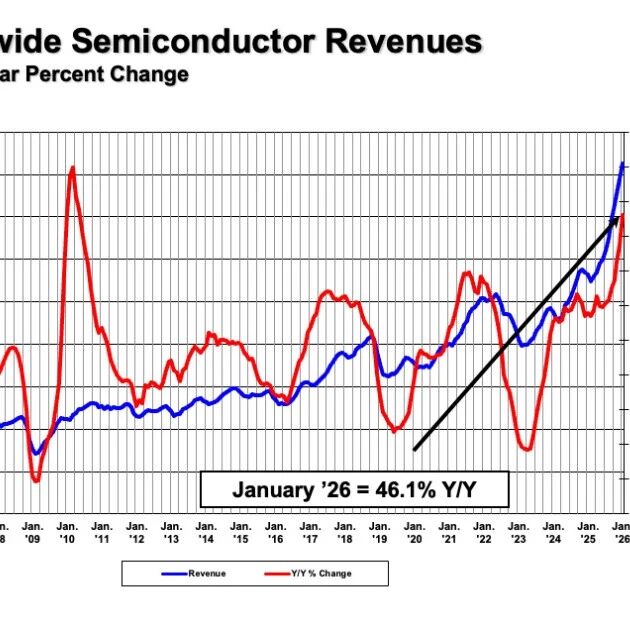
Core Insights - The global semiconductor market is projected to grow by 26.2% in 2025, reaching $795.6 billion, marking one of the strongest annual growths in the industry's history [2] - The growth momentum is expected to accelerate, with Q4 2025 revenues reaching $238.9 billion, a 38.4% increase compared to Q4 2024, driven by strong demand in data center infrastructure and AI-related systems [2] Terminal Market Segmentation - The computer sector is the primary driver of growth in 2025, with a year-on-year increase of over 60%, reflecting ongoing investments in data center infrastructure and AI-related computing platforms [4] - Government-related demand has increased by 15%, supported by defense and infrastructure spending, while the industrial sector has shown a recovery with a 5% growth, indicating easing inventory adjustments and a recovering capital expenditure environment [4] Regional Market Performance - In 2025, semiconductor sales in the Asia-Pacific and other regions grew by 45.4%, followed by the Americas with a 31.4% increase and China with a 17.9% growth, driven by sustained demand for data centers, AI-related products, and advanced logic devices [5] - The European market experienced moderate growth of 6.7%, while Japan saw a decline of 4.3% [5] Product Market Segmentation - Most semiconductor product categories achieved comprehensive growth in 2025, with logic devices and memory devices leading the expansion [6] - Logic devices contributed the most to overall market growth, driven by demand for high-performance chips in data centers, AI accelerators, and advanced computing systems [6] - The memory business also saw strong growth, supported by price improvements and robust demand for high-bandwidth, high-capacity memory solutions [6] Industry Outlook - The global semiconductor industry is on track for its strongest year ever in 2025, with market size approaching $800 billion, and is expected to continue growing into 2026, potentially surpassing the $1 trillion mark [9] - In January 2026, global semiconductor sales reached $82.54 billion, a 3.7% increase from December 2025 and a 46.1% increase from January 2025 [11] - The growth in January was primarily driven by the Asia-Pacific region and China, with year-on-year sales increases of 82.4% and 47.0%, respectively [14]
光芯片,重要突破
半导体行业观察· 2026-03-07 03:07
通常情况下,要反转磁体的极性,需要将其加热到临界温度以上。在较高温度下,磁体的有序排列会 被破坏,自旋会重新排列。当材料再次冷却后,自旋会稳定在新的集体取向,磁体指向不同的方向。 公众号记得加星标⭐️,第一时间看推送不会错过。 巴塞尔大学和苏黎世联邦理工学院的研究人员展示了一种利用聚焦激光束反转特殊铁磁体极性的方 法。这项进展预示着未来或许可以利用光直接在芯片上设计和重新配置电子电路。 研究人员利用激光脉冲(蓝色)改变了一种由扭曲的拓扑层(红色)组成的特殊材料中铁磁态的极性。图片 来源:Enrique Sahagún,Scixel / 巴塞尔大学物理系 铁磁体的工作原理是:材料内部大量微小的磁矩同步运动。每个电子都具有自旋特性,自旋会产生一 个非常微弱的磁场。当许多自旋方向一致时,它们的共同作用就会形成一个强大而稳定的磁体,例如 指南针或冰箱门上的磁体。 这种排列只有在自旋之间的相互作用足够强,能够克服随机热运动时才会发生。低于特定的临界温度 时,这些协同相互作用占据主导地位,材料变为铁磁性。 磁态的动态控制 这种激光的作用远不止翻转磁体。它还能在微观材料内部定义新的边界,从而形成拓扑铁磁态存在的 区域。由于 ...