
煤炭

Search documents
2月第2周立体投资策略周报:活跃资金延续流出-20260224
Guoxin Securities· 2026-02-24 08:15
Group 1 - The core conclusion indicates that in the second week of February, a total net outflow of funds amounted to 72.3 billion yuan, an increase from the previous week's outflow of 52.2 billion yuan [1] - Short-term sentiment indicators are at a medium-high level since 2005, while long-term sentiment indicators are at a medium-low level since 2005 [1][2] - From an industry perspective, the highest transaction volume share in the past week was in the communication, semiconductor, and electric equipment sectors, with shares of 99%, 98%, and 97% respectively [2][15] Group 2 - In terms of fund inflows, the financing balance decreased by 74.7 billion yuan, public fund issuance increased by 43.6 billion yuan, ETF net redemptions were 23.1 billion yuan, and northbound funds estimated a net inflow of 3 billion yuan [8] - The long-term sentiment indicator shows that the recent A-share risk premium is 2.52%, placing it at the 45th percentile historically, while the dividend yield of the 300 index (excluding finance) is 1.23, at the 5th percentile historically [2][15] - The financing transaction share was highest in the machinery equipment, electric equipment, and social services sectors, with shares of 88%, 80%, and 78% respectively, while the lowest were in banking, coal, and real estate at 10%, 12%, and 17% respectively [2][15]
每日报告精选(2026-02-13 09:00——2026-02-24 15:00)-20260224
国泰海通· 2026-02-24 07:59
Group 1: Macroeconomic Insights - In 2026, the maturity of fixed deposits in China is projected to reach approximately 76-77 trillion yuan, with a significant seasonal peak of 32-34 trillion yuan in the first quarter[5] - The year-on-year increase in maturity pressure for 2026 is estimated at 9.6-10.8 trillion yuan, corresponding to a growth rate of 14.4%-16.3%, which is lower than the 17.7% growth rate in 2025[6] - About 25 trillion yuan of high-interest deposits are set to mature, representing approximately 32% of the total maturity volume, indicating a core pressure for renewal[6] Group 2: Trade and Tariff Analysis - As of November 2025, the effective tariff rate in the U.S. reached 9.8%, the highest since 1946, with China facing the highest actual tariff rate of 30.9%[9] - The actual tariff increase for China and India was significant, with increases of 20.2 and 17.3 percentage points respectively compared to 2024[10] - The U.S. is diversifying its import sources, with a notable decrease in imports from Asia, particularly China, while increasing imports from countries like Vietnam and Mexico[12] Group 3: Economic Recovery and Consumer Behavior - During the Spring Festival, average daily cross-regional passenger flow reached 248 million, a year-on-year increase of 5.1%, indicating a recovery in consumer activity[17] - The consumer confidence index is stabilizing, suggesting that the negative impact of previous economic conditions is beginning to ease[28] - The overall inflation rate in the U.S. for January was 2.4%, with core inflation pressures still present, particularly in sectors like transportation and education[31]
粤开市场日报-20260224
Yuekai Securities· 2026-02-24 07:51
Market Overview - The A-share market showed a positive trend today, with major indices mostly rising. The Shanghai Composite Index increased by 0.87% to close at 4117.41 points, while the Shenzhen Component Index rose by 1.36% to 14291.57 points. The ChiNext Index gained 0.99% to finish at 3308.26 points, although the Sci-Tech 50 Index fell by 0.34% to 1465.37 points. Overall, 4003 stocks rose, while 1388 stocks declined, with a total trading volume of 22021 billion yuan, an increase of 2194 billion yuan from the previous trading day [1][2]. Industry Performance - In terms of industry performance, several sectors led the gains, including Oil & Petrochemicals (5.53%), Building Materials (3.71%), Basic Chemicals (3.45%), Nonferrous Metals (3.31%), and Coal (3.10%). Conversely, sectors that experienced declines included Media (-3.20%), Computers (-1.81%), Retail (-1.46%), Food & Beverage (-0.86%), and Non-Bank Financials (-0.42%) [1][2]. Concept Sector Performance - The concept sectors that saw the most significant gains today included Cultivated Diamonds, Glass Fiber, Phosphorus Chemicals, Oil & Gas Extraction, Superhard Materials, Natural Gas, and others. In contrast, sectors such as Short Drama Games, DeepSeek, Kimi, and AIGC experienced pullbacks [2].
国家能源局:“十五五”积极推进煤炭与新能源融合发展 支持采煤沉陷区积极发展光伏风电产业
Zhong Guo Dian Li Bao· 2026-02-24 07:50
Core Viewpoint - The article emphasizes the importance of achieving carbon peak targets through high-level clean and efficient utilization of coal, aligning with the spirit of the 20th National Congress of the Communist Party of China [1][3] Group 1: High-Quality Development of Coal Industry - The coal industry is tasked with constructing a modern coal industry system that ensures supply security, promotes green and intelligent development, and utilizes clean and efficient methods [3][5] - Historical achievements in coal development during the 14th Five-Year Plan period include significant increases in coal production capacity and the establishment of modern coal mines [5][6] - By 2025, the national raw coal output is projected to reach 4.83 billion tons, an increase of over 900 million tons from 2020, ensuring stable energy supply [5] Group 2: Structural Reforms and Technological Advancements - Continuous supply-side structural reforms have optimized the coal industry structure, with major coal production bases established in regions with competitive resources [6][7] - The number of coal mines has decreased to over 4,000, with large-scale mines (over 1.2 million tons) accounting for 85% of total capacity, enhancing production efficiency [6] - The integration of new technologies has led to significant improvements in productivity and safety, with intelligent mining technologies being widely adopted [7][8] Group 3: Clean and Efficient Utilization of Coal - The article outlines initiatives for clean and efficient coal utilization, including the promotion of green mining techniques and the integration of coal with renewable energy sources [7][13] - By 2025, coalbed methane production is expected to reach 15.5 billion cubic meters, 2.3 times that of 2020, contributing to natural gas supply [8] - The implementation of strict environmental management practices is aimed at enhancing the ecological sustainability of coal mining operations [13] Group 4: Future Directions and Strategic Planning - The coal industry is set to focus on high-quality planning and implementation of the 15th Five-Year Plan, with an emphasis on safety and stability in coal supply [10][11] - The establishment of coal supply guarantee bases is crucial for maintaining energy security, with a strategic focus on balancing supply and demand [11] - The integration of technological innovation is essential for the transformation and upgrading of traditional coal industries, enhancing overall efficiency [12]
2026年1月信用利差月报:配置盘支撑下,1月信用利差全线收窄-20260224
Dong Fang Jin Cheng· 2026-02-24 06:51
1. Report Industry Investment Rating - No information provided in the content 2. Core View of the Report - In January 2026, the bond market showed a relatively strong and volatile trend. Driven by factors such as the coupon advantage of credit bonds over interest - rate bonds, increased credit - bond allocation demand from banks and insurance companies during the "good start" period, and the investment preference shift of amortized bond funds during their concentrated opening periods, credit bonds outperformed interest - rate bonds, and credit spreads narrowed across the board. Currently, the spreads of short - duration credit bonds have generally been compressed to historical lows, while some medium - and long - duration varieties still have certain spread spaces. Considering the allocation demand of amortized bond funds for medium - and high - grade credit bonds, it is advisable to moderately extend the duration and use carry trade and leverage on 3 - 5 - year medium - and high - grade credit bonds to enhance returns [2]. 3. Summary According to the Directory 3.1 Various Credit Bond Spread Performances - In January 2026, the bond market was volatile. At the beginning to the middle of the month, the strong performance of the stock and commodity markets suppressed the bond market. In the second half of the month, due to factors such as profit - taking, an increase in margin requirements for financing, the mild implementation of the new public - fund fee regulations, interest - rate cuts by the central bank's structural monetary policy tools, and strong buying by institutional investors, the bond market recovered. Credit bonds outperformed interest - rate bonds, and credit spreads narrowed across the board [3]. - By the end of January, the spreads of most credit - bond varieties narrowed compared to the end of the previous month. Only the spreads of 3 - year AAA - grade non - public industrial bonds, 5 - year medium - and high - grade non - public urban investment bonds, and 5 - year AA + and AA - grade securities company subordinated bonds widened slightly. The spreads of Tier 2 capital bonds and short - and medium - duration low - grade non - financial credit bonds compressed significantly [3]. - In terms of historical quantiles, at the end of January, the historical quantiles of short - duration credit spreads were generally around 5%. The historical quantiles of 3 - year non - public industrial bonds, perpetual industrial bonds, non - public urban investment bonds, bank Tier 2 capital bonds, and insurance company capital - supplementary bonds were around 20%. The historical quantiles of 5 - year AA - grade varieties, medium - and high - grade non - public urban investment bonds, and financial bonds were relatively high, around 25% [3]. - At the end of January, the grade spreads of most credit bonds of various tenors narrowed. Only the grade spreads of short - duration financial bonds and some tenors of industrial bonds widened slightly. The 5 - year (AA +) - AAA and AA - AAA grade spreads were relatively high, mostly above the 40% historical quantile. The 1 - year and 3 - year non - public industrial bonds and the (AA +) - AAA grade spreads of bank perpetual bonds were at relatively high historical quantiles, all above 50%, with the 1 - year bank perpetual bond (AA +) - AAA grade spread reaching 87.9% [6]. - Supported by the "good start" of banks and insurance companies and the allocation demand for medium - and long - duration credit bonds from amortized - cost bond funds during their concentrated opening periods, the term spreads of credit bonds of all grades generally narrowed at the end of January compared to the end of the previous month. However, attention should be paid to the relatively large widening of the 5Y - 1Y spread of medium - and high - grade non - public urban investment bonds. In terms of historical quantiles, at the end of January, the term spreads of non - public urban investment bonds rated AA and above and the 3Y - 1Y spread of non - public industrial bonds were relatively high, all above 55%. The term spreads of public industrial bonds, public, and perpetual urban investment bonds were around the 40% historical quantile. The term spreads of financial bonds were relatively high, with the term spreads of bank Tier 2 and perpetual bonds of all grades generally around the 50% historical quantile, the term spreads of insurance company capital - supplementary bonds of all grades above 60%, and the 5Y - 1Y spread of AAA - grade securities company subordinated bonds reaching 89% [8]. 3.2 Industrial Bond Spreads 3.2.1 Industry - wide Spreads - In January, the credit spreads of AAA - grade industrial bonds generally narrowed. Only the spreads of public and private bonds in the real - estate industry and private bonds in the steel industry widened. Among public bonds, at the end of January, the spreads of the social - service, real - estate, and power - equipment industries were above 50bps. Compared with the end of December, only the spread of the real - estate industry widened by 6.24bps, while the spreads of other industries narrowed, with the social - service industry having the largest narrowing amplitude of 7.20bps. Among private bonds, at the end of January, the spreads of the real - estate, financial - holding, building - materials, and steel industries were above 70bps. Only the spreads of the real - estate and steel industries widened by 3.06bps and 0.89bps respectively compared to the end of the previous month. The spreads of the food - and - beverage and coal industries both narrowed by more than 9bps compared to the end of the previous month [11]. 3.2.2 Key Industry Observations - At the end of January, the credit spreads of 3 - year medium - and high - grade public bonds in key industries (steel, coal, power, and construction engineering) generally narrowed compared to the end of the previous month. Only the AA + - grade spread in the steel industry widened slightly by 0.2bps. Among major bond - issuing enterprises, in the steel industry, the spreads of most enterprises narrowed, with only the spread of China Baowu widening by 5.86bps. In the coal industry, the spreads of key enterprises generally narrowed, with the spread of State Energy Investment remaining basically the same as at the end of the previous month, and the spreads of Jincheng State - owned Investment and Shaanxi Coal and Chemical Industry narrowing by 9bps and 8bps respectively. Affected by the bond extension event of Vanke, the spreads of outstanding bonds of most entities in the real - estate industry widened, with only Beijing Urban Construction, CCCC Group, Nanjing Anju Construction, and Shenzhen Metro narrowing slightly, with the narrowing amplitude within 5bps [14]. 3.3 Urban Investment Bond Spreads - In January, the yields of urban investment bonds of major ratings and tenors declined across the board, and the credit spreads of medium - and long - duration low - grade urban investment bonds declined more significantly. Specifically, at the end of January, the credit spreads of 3 - year AAA, AA +, AA, and AA - grade urban investment bonds were 16.21bps, 20.21bps, 26.61bps, and 59.61bps respectively, narrowing by 1.94bps, 3.94bps, 5.94bps, and 11.94bps respectively compared to the end of the previous month. The spreads of 5 - year AAA, AA +, AA, and AA - grade urban investment bonds narrowed by 2.30bps, 5.80bps, 9.30bp, and 7.30bps respectively compared to the end of the previous month [30]. - Regionally, in January, the credit spreads of public and private urban investment bonds in all provinces narrowed across the board. Among public bonds, at the end of January, the spreads of Inner Mongolia and Guizhou exceeded 100bps, and the spreads of Qinghai, Inner Mongolia, Guangxi, Tianjin, Ningxia, and Yunnan narrowed by more than 10bps compared to the end of the previous month. Among private bonds, at the end of January, the spreads of Guizhou, Heilongjiang, Inner Mongolia, Qinghai, Yunnan, and Guangxi exceeded 120bps, and the spreads of Heilongjiang, Liaoning, Shaanxi, and Tianjin narrowed by more than 11bps [33][34]. 3.4 Financial Bond Spreads 3.4.1 Bank Tier 2 and Perpetual Bonds - In January, the credit spreads of bank Tier 2 and perpetual bonds narrowed across the board. At the end of January, the credit spreads of 3 - year AAA -, AA +, AA, and AA - grade bank Tier 2 capital bonds narrowed by 5.30bps, 7.32bps, 8.32bps, and 6.32bps respectively compared to the end of the previous month; the spreads of 3 - year AAA -, AA +, AA, and AA - grade bank perpetual bonds narrowed by 9.36bps, 9.36bps, 9.36bps, and 9.326bps respectively. The yield curve flattened and declined, and the term spreads narrowed across the board. The 3Y - 1Y and 5Y - 1Y spreads of AAA - grade bank Tier 2 capital bonds narrowed by 1.37bps and 4.62bps respectively; the 3Y - 1Y and 5Y - 1Y spreads of AAA - grade bank perpetual bonds narrowed by 5.11bps and 0.9bps respectively. The grade spreads of bank Tier 2 capital bonds narrowed across the board, while the grade spreads of bank perpetual bonds remained the same as the previous month [36]. 3.4.2 Securities Subordinated Bonds/Insurance Company Capital - Supplementary Bonds - At the end of January, the credit spreads of securities company subordinated bonds and insurance company capital - supplementary bonds both narrowed compared to the end of the previous month. Specifically, at the end of January, the credit spreads of 3 - year AA + and AA - grade securities company subordinated bonds declined by 13.66bps and 10.66bps respectively to 25.99bps and 35.99bps; the credit spreads of 3 - year AA + and AA - grade insurance company capital - supplementary bonds declined by 5.73bps and 5.73bps respectively to 29.60bps and 35.60bps [45].
成都汇阳投资关于供给收缩需求刚性,煤价震荡运行
Sou Hu Cai Jing· 2026-02-24 06:45
Group 1: Coal Market Overview - The thermal coal prices are experiencing a slight decline, with Qinhuangdao port Q5500 thermal coal price slightly increasing while some production areas see price drops. Newcastle thermal coal prices are also down, indicating a weak supply-demand situation before the Spring Festival, but limited downside for coal prices is expected due to supply contraction and demand support [1] - Coking coal prices show mixed trends across different segments, with some areas experiencing price declines while others remain stable. The overall market is expected to see price fluctuations due to marginal supply-demand changes and reduced trading activity before the Spring Festival, but prices may stabilize in the medium to long term as overseas supply contracts and downstream demand recovers [2][3] Group 2: Stock Market Performance - The A-share market is generally experiencing a downward trend, with the coal sector outperforming the index. The market is seeing a shift in investment style, with funds moving from high-valuation technology and precious metals sectors to lower-valuation, high-growth sectors like consumer goods and aviation services. The average daily trading volume across the market is 2.41 trillion yuan, indicating high market activity but increased volatility [5] - The aviation sector is highlighted as the strongest segment, benefiting from increased travel demand before the Spring Festival, full recovery of international routes, and accelerated commercial operations of domestic aircraft like the C919. This has led to improved profitability for airlines [5] Group 3: Company Insights - China Shenhua (601088) is the leading player in the coal industry, recognized as the largest coal-listed company globally, with a market capitalization of approximately 804.7 billion yuan by the end of 2025. The company has a stable profit model with a dividend yield consistently above 7%, making it a core holding for high-dividend strategies [6] - Shaanxi Coal and Chemical Industry (601225) is a leading producer of high-quality thermal coal in the western region, with a projected market capitalization of about 207.3 billion yuan by 2025. The company has a low cost per ton of coal and a dividend payout ratio exceeding 60%, combining growth potential with high dividend attributes [6] - Yanzhou Coal Mining Company (600188) is the first coal company listed in four locations, implementing a dual-base strategy in East China and Australia. The company is expected to have a market capitalization exceeding 140 billion yuan by 2025, focusing on high-end coal chemical and green energy transitions, with a dividend yield around 7% and a low valuation [7]







美锦能源(000723.SZ):目前暂未涉及煤制烯烃及食品相关业务
Ge Long Hui· 2026-02-24 06:26
Core Viewpoint - Meijin Energy (000723.SZ) is currently not involved in coal-to-olefins and food-related businesses, focusing instead on leveraging existing resources and industry foundations for collaborative development along the industrial chain [1] Group 1 - The company is continuously promoting industrial chain synergy based on its existing resource endowments and industrial foundation [1] - Meijin Energy is cautiously researching relevant extension directions in line with national industrial policies and industry development trends [1]

红利国企ETF国泰(510720)涨超1.7%,低利率环境下红利板块配置价值凸显
Mei Ri Jing Ji Xin Wen· 2026-02-24 06:12
Core Viewpoint - The dividend-focused ETF, Guotai (510720), has risen over 1.7% as the value of dividend stocks becomes more prominent in a low-interest-rate environment [1] Group 1: Market Environment - The low-interest-rate environment and policies encouraging long-term capital inflow into the market highlight the attractiveness of dividend assets as a long-term investment direction [1] - The utility sector is identified as a high-quality dividend asset worth investing in over the long term, particularly low-priced utility assets [1] Group 2: Electricity Market Reform - To accommodate a high proportion of new energy consumption, China needs to further promote electricity market pricing reforms to support the increasingly complex new power system construction [1] - The future electricity market will gradually allow for comprehensive pricing of various attributes of electricity commodities, including energy value, adjustment value, capacity value, and environmental value [1] Group 3: ETF Overview - The Guotai dividend ETF tracks the Shangguo Dividend Index (000151), which selects high-dividend-capable and stable dividend-paying companies across sectors such as banking, coal, and transportation, focusing on traditional high-dividend areas [1] - The index employs strict assessments of constituent stocks' dividend yields and sustainability, using a cross-industry diversification strategy to effectively control investment risks and reflect the overall market performance of high-dividend companies [1] - According to the fund announcement, the Guotai dividend ETF has evaluated dividends monthly since its listing and has achieved continuous dividends for 22 months [1]
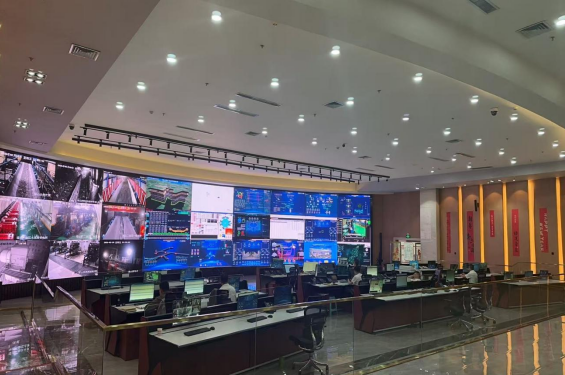
新春走基层 保供进行时:晋能控股煤业集团塔山煤矿春节坚守一线 以实干担当筑牢能源保供坚实防线
Zhong Guo Fa Zhan Wang· 2026-02-24 06:03
Core Viewpoint - The article emphasizes the commitment of the Tashan Coal Mine to ensure energy supply during the Spring Festival, highlighting the dedication of its employees who prioritize public energy needs over personal celebrations [1][3][8]. Group 1: Energy Supply Commitment - Tashan Coal Mine, as a key state-owned enterprise, actively engages in energy supply during the Spring Festival, implementing thorough planning and organization to ensure production and safety [3][6]. - The mine's leadership has established a comprehensive energy supply work system, detailing responsibilities and tasks across various operational areas [3][5]. Group 2: Operational Efficiency - The mine's command center operates 24/7, effectively coordinating production and monitoring various systems to ensure seamless operations [5][6]. - Advanced automation and intelligent mining equipment are utilized to maintain high efficiency in coal production, with strict quality control measures in place throughout the entire process [5][6]. Group 3: Employee Dedication - Employees at Tashan Coal Mine demonstrate a strong sense of responsibility, sacrificing personal time with family to maintain continuous production and energy supply during the holiday [8]. - The company provides support services for employees, ensuring their well-being during the festive period, which enhances their commitment to energy supply efforts [6][8]. Group 4: Future Plans - Tashan Coal Mine aims to continue enhancing its energy supply capabilities, focusing on optimizing production organization and strengthening safety measures to contribute to national energy security and economic development [8].
春节期间地缘驱动油价持续走高,国企红利ETF(159515)涨1.54%
Sou Hu Cai Jing· 2026-02-24 06:01
Group 1 - The core viewpoint of the news highlights the significant rise in major stock indices, particularly the state-owned enterprise dividend sector, with the National Enterprise Dividend ETF (159515) increasing by 1.54% as of 13:30 on February 24 [1] - Notable component stocks within this sector include Shanxi Coal International rising by 5.15%, Lu'an Environmental Energy by 3.97%, and Shaanxi Coal and Chemical Industry by 3.69%, indicating strong performance across the board [1] - The international oil market experienced significant volatility during the Spring Festival period (February 13-23), with WTI crude oil prices climbing from $62.89 per barrel to $66.31 per barrel, a rise of 5.5%, and Brent crude oil increasing from $67.75 per barrel to $71.11 per barrel, a rise of 5.0%, both reaching their highest levels in nearly six months [1] Group 2 - The ongoing tension between the United States and Iran has led to increased military activity in the Middle East oil-producing regions, raising market concerns about potential supply disruptions due to failed negotiations [2] - The deployment of a U.S. aircraft carrier strike group in the Middle East has further exacerbated market volatility, with analysts predicting that the oil market will continue to focus on developments in the geopolitical landscape of the region [2] - Despite crude oil prices being at a relatively high level, uncertainties in geopolitics and declining oil inventories are expected to provide support for oil prices moving forward [2]