
建材

Search documents
用电量折射经济向好态势
Jing Ji Ri Bao· 2025-10-08 00:20
Core Insights - In August, China's total electricity consumption reached 10,154 billion kilowatt-hours, marking a 5% year-on-year increase, and achieving a historical high for the second consecutive month [1] - The first industry saw a significant growth in electricity consumption, with a total of 1,012 billion kilowatt-hours in the first eight months, reflecting a 10.6% year-on-year increase [1] - The second industry continued its recovery, with electricity consumption of 4.34 trillion kilowatt-hours in the first eight months, up 3.1% year-on-year [1] - The third industry maintained rapid growth, with electricity consumption of 1.33 trillion kilowatt-hours in the first eight months, showing a 7.7% year-on-year increase [1] Industry-Specific Insights - High-tech and equipment manufacturing industries collectively saw a 5.3% year-on-year increase in electricity consumption in the first eight months, outperforming the average growth rate of the manufacturing sector by 2.5 percentage points [1] - The new energy vehicle manufacturing sector experienced a remarkable growth of 23% in electricity consumption during the first eight months [1] - The information transmission/software and IT services sector reported a 15.8% year-on-year increase in electricity consumption, driven by the rapid development of mobile internet, big data, and cloud computing [2] - The wholesale and retail sector's electricity consumption grew by 11.8%, with the electric vehicle charging and swapping services seeing a substantial increase of 44.1% [2] Economic Context - The high electricity consumption levels are attributed to the summer heat, with record high loads reported in July and August due to high temperatures across the country [2] - Government policies aimed at promoting consumption and stabilizing industrial growth have contributed to a warming macroeconomic environment, leading to a release of production capacity across various industries [3] - In August, the manufacturing sector's electricity consumption grew by 5.5%, the highest monthly increase this year, with notable recovery in raw material industries such as steel, building materials, non-ferrous metals, and chemicals [3] - The resilience of high-tech and equipment manufacturing is evident, with all sub-sectors achieving positive growth, indicating the emergence of new economic growth points [3]
连续两月创历史新高—— 用电量折射经济向好态势
Jing Ji Ri Bao· 2025-10-07 22:07
Core Insights - In August, China's total electricity consumption reached 10,154 billion kilowatt-hours, marking a 5% year-on-year increase, and setting a historical record for the second consecutive month [1][2] Group 1: Electricity Consumption by Sector - The primary industry saw a robust growth in electricity consumption, with a total of 1,012 billion kilowatt-hours in the first eight months, reflecting a 10.6% year-on-year increase, which is 3.6 percentage points higher than the same period last year [1] - The secondary industry continued its recovery, with electricity consumption of 4.34 trillion kilowatt-hours in the first eight months, up 3.1% year-on-year [1] - The high-tech and equipment manufacturing sectors collectively experienced a 5.3% increase in electricity consumption, surpassing the average growth rate of the manufacturing sector by 2.5 percentage points [1] - The new energy vehicle manufacturing sector maintained rapid growth, with an electricity consumption increase of 23% year-on-year in the first eight months [1] Group 2: Trends in Specific Industries - The information transmission/software and IT services sector saw a significant electricity consumption increase of 15.8%, driven by the rapid development of mobile internet, big data, and cloud computing [2] - The wholesale and retail sector's electricity consumption grew by 11.8%, with the electric vehicle charging and swapping services experiencing a remarkable 44.1% increase [2] - Urban and rural residents' electricity consumption rose by 6.6% in the first eight months, totaling 1.1 trillion kilowatt-hours [2] Group 3: Economic and Policy Influences - The macroeconomic environment is showing signs of recovery, supported by policies aimed at promoting consumption and stabilizing industrial growth, leading to a continuous release of production capacity across various industries [3] - In August, the manufacturing sector's electricity consumption increased by 5.5%, the highest monthly growth rate observed this year, with notable recovery in raw material industries such as steel, building materials, non-ferrous metals, and chemicals [3] - The high-tech and equipment manufacturing sectors demonstrated strong resilience, with a year-on-year electricity consumption growth of 9.1%, indicating positive growth across all sub-industries [3]
什么是西部大开发概念,涵盖哪些产业链
Sou Hu Cai Jing· 2025-10-07 01:12
Core Insights - The Western Development Strategy is a long-term policy initiated in 2000 aimed at reducing the development gap between eastern and western regions of China, promoting comprehensive economic and social progress in central and western areas [1][2] - The strategy has attracted significant attention from the capital markets, presenting new development opportunities in the context of the latest round of policy implementation [1] Infrastructure Development - Infrastructure construction is a key focus area, encompassing transportation, energy, water conservancy, and new infrastructure, which drives the growth of related industries such as building materials and engineering machinery [1] - Continuous improvements in highways, railways, and airports are facilitating the development of these sectors [1] Clean Energy and Resource Utilization - The western region is rich in wind and solar resources, making clean energy a priority for development, with significant growth potential in wind power, photovoltaics, and energy storage [1] - Advanced manufacturing and high-tech industries are being actively developed, leveraging resource advantages and policy support [1] Emerging Industries - New industries such as electronic information, new materials, and biomedicine are gradually forming agglomeration effects in the western regions [1] - Modern agriculture is also transforming under policy support, with the extension of specialty agricultural product cultivation and deep processing industry chains contributing to rural revitalization [1] Ecological Protection - Ecological protection is a crucial component of the Western Development Strategy, with ongoing projects in reforestation, soil and water conservation, and desertification control, which in turn foster the growth of the environmental protection industry [1] - The development process is guided by green and low-carbon principles, promoting energy-saving transformations in traditional industries and the establishment of a circular economy [1] Investment Perspective - Understanding the industrial logic behind the Western Development Strategy is essential for investors, as policy dividends often create long-term structural opportunities [2] - Investment should focus on areas with real performance support and sustainable growth, avoiding the temptation of short-term trends [2] - The strategy not only serves as a key measure for regional coordinated development but also provides a diversified investment perspective for the capital market [2]
战场扩大,中国在世贸掀桌,美国遭公开处刑,印度也呼应中方行动
Sou Hu Cai Jing· 2025-10-06 14:29
Core Viewpoint - China openly criticized the United States' unilateral actions at the World Trade Organization (WTO), highlighting the negative impact of the U.S. "reciprocal tariff" policy on global service trade [3][9][13]. Group 1: U.S. Tariff Policies - On October 1, 2025, the U.S. imposed a 100% tariff on imported patented drugs unless companies establish manufacturing in the U.S., significantly impacting the global pharmaceutical supply chain, particularly affecting India [4][9]. - Additional tariffs include a 50% increase on kitchen cabinets and bathroom fixtures, a 30% increase on imported furniture, and a 25% tariff on heavy trucks, continuing the "America First" strategy [4][9]. - The U.S. Customs data indicated that tariff revenue reached $17.4 billion in May 2025, nearly double from the previous year, reshaping global trade dynamics [7]. Group 2: Impact on Global Trade - The WTO meeting on October 3, 2025, saw China presenting a document outlining three main harms of the U.S. tariff policy: undermining multilateral trade rules, negatively affecting service trade, and exacerbating challenges for developing countries [9][11]. - The global service trade growth is projected to decline by 0.3 percentage points due to the tariff war, affecting multinational companies' outsourcing strategies [11]. - Countries like India and Brazil reported significant economic impacts, with India's pharmaceutical exports dropping by 12% and Brazil's economic growth potentially decreasing by 0.5 percentage points if U.S. tariffs persist [15]. Group 3: Multilateral Response - The meeting prompted a united response from multiple countries condemning U.S. protectionism, contrasting sharply with the U.S.'s long-standing unilateralism [15][17]. - China's call for maintaining WTO rules and establishing a global trade order based on rules rather than power received increasing support from other nations [13][25]. - The concept of "shared responsibility" proposed by China is gaining recognition, emphasizing the need for an inclusive rule system for the healthy development of service trade [25]. Group 4: Long-term Implications - The ongoing trade situation represents a fundamental clash between multilateralism and unilateralism, with China advocating for reforms within the WTO framework [23][25]. - The restructuring of global supply chains is evident, with increased costs in intermediate goods trade by 12% in the first half of 2025, prompting companies to reassess their production capacities [19]. - The U.S. faces domestic repercussions from its tariff policies, with household expenses rising by $1,200 annually due to tariffs, ultimately affecting consumer prices [21].


华新水泥拟更名为“华新建材集团股份有限公司”
Zhi Tong Cai Jing· 2025-10-03 12:57
Core Viewpoint - Huaxin Cement (600801)(06655) announced a proposal to change its Chinese name from "Huaxin Cement Co., Ltd." to "Huaxin Building Materials Group Co., Ltd." and its English name from "HUAXIN CEMENT CO., LTD." to "HUAXIN BUILDING MATERIALS GROUP CO., LTD." [1] Group 1 - The name change proposal requires approval at an extraordinary general meeting by ordinary resolution [1] - The name change is subject to approval from the Hong Kong Companies Registry and issuance of a certificate of registration for the name change [1]

申万宏源:十五五产能优化与科技攻坚共振,AI应用蓄势待发(附十大行业前瞻)
Xin Lang Cai Jing· 2025-10-02 10:45
Group 1: 15th Five-Year Plan Outlook - The primary direction for industrial structure adjustment during the 15th Five-Year Plan is transformation and upgrading, with continued support for technological innovation [1] - The real estate sector is expected to stabilize, with new product development and pricing models emerging in core cities [1] - The home appliance industry will focus on smart, green, and globalized policies, aligning with future manufacturing directions [1] - The construction industry will emphasize overseas expansion and smart construction [1] - The importance of strategic resources will increase, benefiting the prices of non-ferrous metals [1] - Cement and glass industries will face strict capacity controls, focusing on profit recovery rather than just revenue [1] - The chemical industry will see a shift towards replacing outdated capacity, with a positive outlook for chemical exports [1] - The new energy sector is expected to experience favorable supply-demand dynamics, with significant growth in wind and solar power installations [1] - The coal industry will see increased resource scarcity and improved performance as prices rise [1] - The technology sector will benefit from government subsidies for AI capabilities and applications [1] - The cultural industry may see relaxed regulations for overseas expansion, positively impacting supply-side recovery [1] Group 2: AI and Computing Sector Insights - Breakthroughs in computing power and AI applications are expected to lead to a surge in the sector by 2026, with companies achieving over 10% revenue from AI [2] - Despite short-term pressures from subsidy reductions, long-term support for domestic semiconductor replacements remains strong [2] - The internet and cloud computing sectors are experiencing a positive cycle of investment and operational efficiency, with a focus on global entertainment and self-consumption [2] - The telecommunications sector is concentrating on 6G and satellite internet development, with opportunities in the IDC supply chain [2] - E-commerce is currently in a phase of competition for existing market share, but AI products are expected to offset negative impacts from subsidy reductions [2] Group 3: Q3 Earnings Outlook - The reduction in national subsidies is expected to pressure earnings in light industry, consumer electronics, and home appliances [3] - The non-ferrous metals sector is anticipated to see continued improvement in Q3 earnings due to rising domestic metal prices [3] - The pharmaceutical sector is not expected to face severe impacts from tariff policies, contrary to some investor fears [3] - The agricultural sector is projected to see weak growth, particularly in pig prices, through Q1 2026 [3] - The light industry is under pressure from both overseas demand and domestic subsidy reductions, leading to continued earnings challenges [3] - The consumer electronics sector may experience marginal declines in growth following subsidy cuts [3] - The chemical industry is expected to achieve stable growth, with a target of over 5% annual increase in value added by 2025-2026 [3] - The food and beverage sector is facing weak demand, but market expectations are low, which may provide some support [3] - The military industry is projected to see overall revenue and earnings growth, with ongoing attention to the 15th Five-Year Plan's impact [3]

关税冲击美国建材和电影行业 美消费者埋单
Jing Ji Guan Cha Wang· 2025-10-02 03:54
Core Viewpoint - The new round of tariffs imposed by the U.S. government, effective from October 1, will impact various products, leading to increased costs for American consumers [1] Group 1: Tariff Details - The tariffs will affect imported products such as lumber, cabinets, and pharmaceuticals [1] - President Trump has threatened to impose a 100% tariff on all films produced outside the U.S. [1] Group 2: Industry Impact - Industry professionals indicate that the tariffs will have a significant negative impact on multiple sectors in the U.S. [1] - The additional costs from tariffs will ultimately be borne by American consumers [1]
吉安旭程建材有限公司成立 注册资本1000万人民币
Sou Hu Cai Jing· 2025-10-01 01:12
Group 1 - A new company, JI'an Xucheng Building Materials Co., Ltd., has been established with a registered capital of 10 million RMB [1] - The legal representative of the company is Zeng Xiang [1] - The company's business scope includes construction engineering contracting, sales of building materials, and rental of construction machinery and equipment [1] Group 2 - The company is authorized to engage in various construction-related activities, subject to necessary approvals [1] - Specific activities include sales of construction decoration materials, steel products, cement products, and metal fittings [1] - The company can operate independently within the scope of its business license [1]
基本面偏弱 PVC维持弱势
Qi Huo Ri Bao Wang· 2025-09-30 07:57
Core Viewpoint - The PVC industry is facing significant challenges due to weak demand, increased production capacity, and diminishing export advantages, despite some potential for recovery in the future [1][5][6]. Group 1: Market Dynamics - The "anti-involution" policy has driven market growth in sectors like polysilicon and焦煤, while the PVC sector continues to struggle with weak fundamentals [1]. - In 2025, PVC production capacity is expected to expand significantly with 9 new plants planned, adding nearly 2.5 million tons of capacity, primarily in the second and third quarters [2]. Group 2: Demand and Supply - Weak demand for PVC has become a norm, suppressing the industry, with traditional peak demand seasons showing limited improvement in downstream operating rates [5]. - The PVC industry is experiencing a supply-demand imbalance, with prices hitting a ten-year low and significant profit compression leading to regular losses [7]. Group 3: Export Challenges - Export opportunities for PVC have diminished, with 2024 projections indicating over 2.6 million tons of exports, primarily to India, but trade barriers and increased tariffs are complicating this [6]. Group 4: Cost and Profitability - Cost support for PVC has temporarily failed, as production losses are common, although integrated chlor-alkali companies may still find profitability through caustic soda [7]. - There are signs of potential profit compression in PVC and caustic soda, which could enhance cost support in the future, suggesting some room for valuation recovery if demand improves [8].
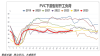
期货市场交易指引:2025年09月30日-20250930
Chang Jiang Qi Huo· 2025-09-30 02:14
Report Industry Investment Ratings - **Macro Finance**: Bullish on the medium to long - term for stock indices, recommend buying on dips; hold a neutral stance on treasury bonds and maintain a wait - and - see approach [1][5] - **Black Building Materials**: Adopt a range - trading strategy for coking coal and rebar; recommend buying on dips for glass [1][7][8] - **Non - ferrous Metals**: Advise cautious trading before holidays for copper; suggest buying on dips after a pullback for aluminum; recommend a wait - and - see approach or shorting on rallies for nickel; adopt a range - trading strategy for tin, gold, and silver [1][11][15] - **Energy and Chemicals**: Expect PVC, caustic soda, styrene, rubber, urea, and methanol to trade sideways; anticipate wide - range fluctuations for polyolefins; recommend an arbitrage strategy of shorting the 01 contract and going long on the 05 contract for soda ash [1][20][22][31] - **Cotton Textile Industry Chain**: Expect cotton and cotton yarn to trade sideways; anticipate narrow - range fluctuations for PTA; expect apples to trend slightly upwards and jujubes to trend slightly downwards [1][34][36] - **Agricultural and Livestock**: Recommend shorting on rallies for pigs and eggs; expect wide - range fluctuations for corn; anticipate range - bound oscillations for soybean meal; expect oils to trend slightly upwards [1][38][45] Core Views - The overall futures market presents a complex situation with different investment strategies recommended for various sectors. Positive factors such as monetary policy easing, industry growth, and technological breakthroughs support the stock index market, while uncertainties in factors like macro - policies, supply - demand relationships, and international trade impact other sectors [1][5][11] Summary by Categories Macro Finance - **Stock Indices**: With the support of positive factors such as moderately loose monetary policy, stable growth in the non - ferrous metals industry, and breakthroughs in the solid - state battery field, the market was active on Monday. The A - share market has been in a sideways trend since September, showing a technology - driven structural market. In the medium term, factors like Fed rate cuts, improved Sino - US relations, and the prosperity of emerging sectors are expected to drive the market upwards. It is recommended to buy on dips [5] - **Treasury Bonds**: Yields rose on Monday, and the curve steepened. The spread between policy - bank bonds and treasury bonds widened. The central bank emphasized policy implementation in the third - quarter meeting minutes, and there is uncertainty about the implementation of incremental monetary policies in the fourth quarter. It is advisable to maintain a wait - and - see approach [5] Black Building Materials - **Double - Coking Coal**: Multiple factors have boosted market sentiment, leading to a "Golden September" in the coal industry. Coal prices have risen across the board, and the procurement rhythm has accelerated. It is expected to trade sideways [7] - **Rebar**: On Monday, rebar futures prices were weak. The current valuation is low, and the demand is weak. It is necessary to focus on the demand in October. It is recommended to wait and see or engage in short - term trading before the holiday [7] - **Glass**: Last week, glass futures first declined and then rose. Spot prices increased, and inventories decreased. The demand for real - estate construction in October provides weak support, and there are positive expectations from domestic macro - news and environmental policies. It is recommended to buy on dips [9] Non - ferrous Metals - **Copper**: The Grasberg mine accident has led to a long - term increase in the copper price center. In the short term, the price has fallen due to profit - taking, but it is expected to be strong. It is recommended to trade cautiously before the holiday [11][12] - **Aluminum**: The price of bauxite has declined, and the production of alumina and electrolytic aluminum is stable. The demand has entered the peak season, and inventories have decreased. It is recommended to buy on dips [11][12] - **Nickel**: The price of nickel ore is firm, and the supply of refined nickel is in surplus. The price of nickel iron has limited upside, and the demand for stainless steel is weak. It is recommended to short on rallies [16] - **Tin**: The supply of tin ore is tight, and the downstream semiconductor and photovoltaic industries are recovering. It is recommended to trade within a range [17] - **Gold and Silver**: The market's expectation of Fed rate cuts has increased, and precious metals are expected to be supported. It is recommended to trade within a range [17][19] Energy and Chemicals - **PVC**: The cost is at a low level, the supply is high, and the demand is weak. The export support may decline, and the overall supply - demand situation is still weak. It is expected to trade sideways in the short term [21] - **Caustic Soda**: The upstream inventory has increased, and the demand from downstream industries has increased. It is expected to trade sideways, and attention should be paid to downstream inventory replenishment and export conditions [23] - **Styrene**: The cost is under pressure, the supply is abundant, and the demand is limited. It is expected to trade weakly within a range [26] - **Rubber**: The raw material supply is expected to increase, and the market trading is light before the holiday. It is expected to trade sideways [27] - **Urea**: The supply has increased, the agricultural demand is scattered, and the inventory has accumulated. It is recommended to pay attention to the support level and arbitrage opportunities [28] - **Methanol**: The supply has recovered, the demand from the main downstream industry has increased, and the inventory has decreased. It is expected to be supported in the short term [29] - **Polyolefins**: The supply has increased, the demand has improved, and the inventory has decreased. It is expected to trade within a range, and the LP spread is expected to widen [30] - **Soda Ash**: The price has been driven up by glass, and the inventory has decreased. The output of Yuanxing's second - phase project is expected to increase, and it is recommended to adopt an arbitrage strategy [32] Cotton Textile Industry Chain - **Cotton and Cotton Yarn**: The global cotton supply and demand situation has changed, and the current spot market is firm, but there is pressure on future prices. It is recommended to prepare for hedging [34] - **PTA**: The conflict in Russia and Ukraine has increased, and the international oil price has risen. The cost and supply - demand relationship are in a game, and the price is expected to fluctuate narrowly [34][35] - **Apples**: The price of early - maturing apples is firm, and it is expected to trend slightly upwards. Attention should be paid to factors such as terminal market transactions and weather [36] - **Jujubes**: The growth of jujubes in Xinjiang shows differences, and the market is currently quiet. It is expected to rebound after a decline [36] Agricultural and Livestock - **Pigs**: The spot price is weak, and the supply is expected to increase in the short and medium terms. It is recommended to short on rallies and pay attention to arbitrage opportunities [38][39] - **Eggs**: The short - term egg price is under pressure, and the long - term supply pressure is still large. It is recommended to short on rallies and pay attention to factors such as chicken culling and environmental policies [40][41] - **Corn**: The supply of new crops is expected to ease the tight supply situation of old crops. It is recommended to take a short - term bearish view and pay attention to the listing rhythm of new crops [42][44] - **Soybean Meal**: The supply is expected to be loose in the fourth quarter, and the price is under pressure in the short term. It is recommended to reduce long positions on rallies and hold on dips [44][45] - **Oils**: The negative impact of the Argentine tariff event has ended. The palm oil inventory is expected to slow down its accumulation, and there are supply gaps in domestic rapeseed oil. It is recommended to wait and see in the short term and pay attention to arbitrage opportunities [47][50]