高技术制造业

Search documents
二季度经济运行开局如何?国家统计局权威解读
Zheng Quan Shi Bao· 2025-05-19 04:39
Economic Overview - In the first four months of 2023, multiple economic indicators showed a year-on-year growth acceleration compared to Q1, indicating stable growth in production and demand, overall stable employment, and the accumulation of new growth drivers [1][4] - The National Bureau of Statistics reported that the total value of goods imports and exports increased by 2.4% year-on-year, accelerating by 1.1 percentage points compared to Q1 [4] Industrial Growth - In April, the industrial added value of large-scale enterprises increased by 6.1% year-on-year, exceeding market expectations by 0.9 percentage points [2] - Among 41 major industries, 36 experienced year-on-year growth, indicating a broad growth base [2] - High-tech manufacturing added value grew by 10% year-on-year, significantly outpacing overall industrial growth [2][3] New Growth Drivers - In April, production of new energy vehicles and lithium-ion batteries for vehicles surged by 38.9% and 61.8% respectively, showcasing rapid growth in smart products [3] - The manufacturing value added of smart drones and smart vehicle-mounted equipment increased by 74.2% and 29.3% respectively, far exceeding the overall industrial growth rate [3] Employment Situation - The urban surveyed unemployment rate in April was 5.1%, a decrease of 0.1 percentage points from the previous month, marking two consecutive months of decline [7] - The average urban surveyed unemployment rate for January to April was 5.2%, consistent with the same period last year [7] Investment Trends - From January to April, fixed asset investment (excluding rural households) reached 147,024 billion yuan, growing by 4.0% year-on-year, with a 0.10% month-on-month increase in April [5][6] - The focus on improving and safeguarding livelihoods, along with significant regional strategies, is expected to drive sustained investment growth [6]
二季度经济运行开局如何?国家统计局权威解读
证券时报· 2025-05-19 04:29
Core Viewpoint - The article highlights that China's economy is showing signs of stable growth, with various economic indicators improving in the first four months of the year, despite external uncertainties. The industrial sector, in particular, has demonstrated robust performance, driven by policy support and innovation [1][5]. Economic Indicators - In April, the industrial added value for large-scale enterprises increased by 6.1% year-on-year, surpassing market expectations by 0.9 percentage points [3][4]. - From January to April, the total value of goods imports and exports grew by 2.4% year-on-year, accelerating by 1.1 percentage points compared to the first quarter [7]. - Retail sales of consumer goods rose by 4.7% year-on-year in the same period, with service retail sales increasing by 5.1% [7][8]. Industrial Performance - In April, 36 out of 41 major industries reported year-on-year growth, indicating a broad-based recovery in industrial production [4]. - High-tech manufacturing saw a significant increase, with added value growing by 10% year-on-year, driven by sectors such as integrated circuit manufacturing and optoelectronic device manufacturing, which grew by 21.3% and 19%, respectively [4]. - Production of new energy vehicles and lithium-ion batteries surged by 38.9% and 61.8%, respectively, showcasing the growth of industrial new momentum [4]. Employment Situation - The urban surveyed unemployment rate in April was 5.1%, a decrease of 0.1 percentage points from the previous month, indicating a stable employment environment [9]. - The average urban surveyed unemployment rate from January to April was 5.2%, consistent with the same period last year [9]. Investment Trends - Fixed asset investment (excluding rural households) reached 147,024 billion yuan, growing by 4.0% year-on-year, with a notable 8.0% increase when excluding real estate development [8]. - The article emphasizes the potential for industrial upgrades and the positive development of emerging industries, such as high-end equipment and artificial intelligence [8].

国家统计局:4月份国民经济应变克难稳定运行 就业形势总体稳定
Sou Hu Cai Jing· 2025-05-19 03:40
Economic Performance Overview - In April, external shocks increased, but China's economic foundation remains stable, with strong advantages, resilience, and potential, supported by coordinated macro policies [1][4] - The overall economic performance in April reflects a complex international environment, making stable economic operation more challenging [1] Industrial Growth - Industrial production showed rapid growth, with the industrial added value of large-scale enterprises increasing by 6.1% year-on-year in April, marking one of the fastest monthly growth rates since last year [1] - The equipment manufacturing sector experienced significant growth, with an added value increase of 9.8% year-on-year, contributing 55.9% to the industrial growth [1] Service Sector Performance - The service sector maintained stable growth, with the service production index rising by 6% year-on-year in April, the second-highest monthly growth rate this year [1] - Digital transformation and increased travel boosted information and business services, with the production indices for information transmission software and IT services, and leasing and business services growing by 10.4% and 8.9% respectively [1] Domestic Demand - Domestic demand expanded steadily, with retail sales of consumer goods increasing by 5.1% year-on-year in April, supported by the effects of the trade-in policy [2] - Fixed asset investment grew by 4% year-on-year from January to April, with equipment and tool purchases increasing by 18.2%, contributing 64.5% to total investment growth [2] Foreign Trade Resilience - Despite a rapidly changing international environment, China's foreign trade demonstrated resilience, with total goods imports and exports increasing by 2.4% year-on-year from January to April [2] - Exports of mechanical and electrical products grew by 9.5% in the first four months, highlighting the effectiveness of diversifying trade partnerships [2] Employment Stability - The employment situation remained generally stable, with the urban unemployment rate at 5.1% in April, a decrease of 0.1 percentage points from the previous month [3] - Policies supporting employment and entrepreneurship for key groups contributed to this stability [3] High-tech Industry Growth - High-tech industries experienced rapid growth, with the added value of high-tech manufacturing increasing by 10% year-on-year in April [3] - Significant growth was observed in aerospace equipment and integrated circuit manufacturing, with increases of 21.4% and 21.3% respectively [3] Future Outlook - The government aims to implement more proactive macro policies to stabilize employment, businesses, and market expectations, while promoting high-quality development [4] - The focus will be on strengthening the domestic economic cycle and ensuring sustainable and healthy economic growth [4]
国家统计局:当前部分企业生产经营还面临不少困难,要继续扩大国内需求
Sou Hu Cai Jing· 2025-05-19 03:40
Core Viewpoint - The industrial production in China has shown a stable and rapid growth in April 2023, driven by effective macro policies and a strong push towards high-end, intelligent, and green transformation in the industry [1][3]. Group 1: Industrial Production Growth - In April, the industrial added value of large-scale enterprises increased by 6.1% year-on-year, marking a relatively high growth rate compared to previous months [1]. - Out of 41 major industries, 36 experienced year-on-year growth, indicating a broad-based recovery with over 80% of industries showing positive performance [1]. Group 2: Industrial Transformation and Upgrading - The trend towards high-end industrial development is evident, with high-tech manufacturing value-added increasing by 10% year-on-year in April, significantly outpacing overall industrial growth [1]. - Specific sectors such as integrated circuit manufacturing and optoelectronic device manufacturing saw substantial increases of 21.3% and 19% respectively in added value [1]. - Notable product growth includes 3D printing equipment and industrial control computers, which surged by 60.7% and 29.5% in production [1]. Group 3: New Industrial Dynamics - The shift towards intelligent and green industrial practices is accelerating, with the new energy sector performing well; production of new energy vehicles and lithium-ion batteries for vehicles rose by 38.9% and 61.8% respectively in April [2]. - The production of smart products is also on the rise, with intelligent unmanned aerial vehicle manufacturing and smart vehicle equipment manufacturing increasing by 74.2% and 29.3% respectively [2]. - Industrial robot production saw a significant increase of 51.5% [2]. Group 4: Policy Impact - The "Two New" policies have had a noticeable impact, promoting technological upgrades and expanding market demand, which in turn supports industrial production growth [2]. - Under the influence of equipment renewal policies, production of agricultural product processing machinery and specialized packaging equipment maintained double-digit growth in April [2]. - The "old-for-new" policy has also driven rapid growth in the production of electric bicycles and LCD screens [2]. Group 5: Overall Economic Outlook - The overall industrial production has been stable and growing, supported by the continuous release of macro policy effectiveness and the stimulation of domestic demand through the "Two New" policies [3]. - The trend towards high-end, intelligent, and green development is becoming more pronounced, with new productive forces being cultivated [3]. - However, challenges remain, including low industrial product prices and operational difficulties faced by some enterprises [3].
国家统计局:人工智能大模型、人形机器人等科技前沿领域实现突破 将进一步促进产业升级发展
news flash· 2025-05-19 03:02
Core Insights - The National Bureau of Statistics highlights breakthroughs in cutting-edge technology fields such as artificial intelligence large models and humanoid robots, which will further promote industrial upgrading and development [1] Group 1: Economic Growth and Innovation - There is a strong push for deep integration of technological innovation and industrial innovation, enhancing the transformation of technological creativity into social productivity [1] - The role of innovation in driving economic development is continuously increasing, injecting new momentum into the economy [1] Group 2: High-tech Industry Performance - The added value of high-tech manufacturing industries above designated size grew by 10% in April, outpacing the overall industrial growth by 3.9 percentage points [1] - The added value of the intelligent unmanned aerial vehicle manufacturing industry surged by 74.2% in April [1] - The production of new energy vehicles increased by 38.9% [1] Group 3: Future Prospects - Breakthroughs in artificial intelligence large models and humanoid robots are expected to further facilitate industrial upgrading and development [1]

海南省高质量发展取得明显成效
Hai Nan Ri Bao· 2025-05-13 01:40
Group 1 - The fifth national economic census in Hainan Province shows significant growth in the number of units in the secondary and tertiary industries, leading to increased employment [1] - By the end of 2023, there were 174,000 legal entities engaged in secondary and tertiary industries, an increase of 74,000 from the end of 2018 [1] - The top three industries by the number of legal entities in the secondary and tertiary sectors are wholesale and retail (39,000), rental and business services (37,000), and construction (18,000) [1] Group 2 - The total assets of legal entities in the secondary and tertiary industries reached 88,627.4 billion yuan by the end of 2023 [2] - In 2023, the total operating income of legal entities in the secondary and tertiary industries was 34,335.8 billion yuan [2] - There were 11,761 legal entities in the core digital economy sector by the end of 2023, employing 78,284 people and generating an operating income of 2,224.8 billion yuan [2] Group 3 - By the end of 2023, there were 139 legal entities in strategic emerging industries in the scale above industrial enterprises and 290 in the scale above service enterprises [2] - The high-tech manufacturing sector had 76 legal entities, generating an operating income of 289.6 billion yuan, while the high-tech service sector had 322 legal entities with an operating income of 1,117.4 billion yuan [2]
消费升级何以引领产业升级
Jing Ji Ri Bao· 2025-05-06 21:59
Core Viewpoint - The 2025 Government Work Report emphasizes that "consumption upgrade leads to industrial upgrade," highlighting the importance of both consumption and industrial upgrades as key drivers of economic development [1] Group 1: Consumption Upgrade - Recent trends show continuous adjustments in China's consumption structure, quality requirements, modes, and concepts [2] - In 2024, the proportion of service consumption in residents' per capita consumption expenditure reached 46.1% [2] - Consumers are increasingly demanding higher quality, functionality, brand, and experience from products, shifting from basic functions to more comprehensive needs [2] - The consumption model is transitioning from offline dominance to an integrated online and offline approach, with innovative consumption scenarios gaining popularity [2] - Consumer attitudes are evolving towards a preference for smart, energy-efficient, and health-oriented products, reflecting a shift from "no change unless broken" to "seeking quality and novelty" [2] Group 2: Industrial Upgrade Driven by Consumption - Demand is the strongest market driver, with consumption representing the ultimate demand that reflects people's needs for a better life [3] - Changes in consumer demand signals will gradually influence production, prompting companies to adjust supply structures and enhance technological innovation [3] - Consumption-led industrial upgrades focus on directly addressing final demand, leading to clearer and more efficient upgrade goals [3] Group 3: Key Directions for Industrial Upgrade - Three key areas for industrial upgrade driven by consumption include: 1. Intelligent development of industries, with increased demand for smart products driving high-tech manufacturing [4] 2. Green development, where the growth of green consumption accelerates the transition to green production methods and promotes the development of green industries [4] 3. Integrated development, requiring cross-industry collaboration to meet diverse consumer needs through new technologies and consumption models [4] Group 4: Conditions for Successful Upgrade - China possesses favorable conditions for consumption upgrade to lead industrial upgrade, emphasizing the need for simultaneous efforts on both supply and demand sides [5] - Enhancing residents' consumption capacity and ensuring sustainable consumption upgrade are prerequisites for industrial upgrade [5] - A supportive environment is essential for achieving a virtuous cycle between consumption and industrial upgrades, including improving consumption infrastructure and reducing market entry barriers [5]
4月PMI数据点评:外部环境对制造企业生产意愿有所影响
Bank of China Securities· 2025-05-06 10:55
Manufacturing Sector Insights - In April 2025, the Manufacturing PMI index dropped to 49.0%, a decrease of 1.5 percentage points from March, indicating a contraction in manufacturing activity[2] - The new orders index fell to 49.2%, down 2.6 percentage points, while the new export orders index significantly declined by 4.3 percentage points to 44.7%, the lowest level since January 2023[2][6] - The production index decreased to 49.8%, down 2.8 percentage points, and the purchasing index fell to 46.3%, a drop of 5.5 percentage points, marking the lowest level since January 2023[2][7] Price and Demand Trends - The manufacturing price index continued to decline, with major raw material purchase prices and factory prices dropping by 2.8 and 3.1 percentage points, respectively[3][10] - The decline in factory prices was more pronounced than that of raw material purchase prices, suggesting a stronger impact of demand on manufacturing market prices[3][10] - In specific sectors, the export orders index for electrical machinery, general equipment, and specialized equipment saw declines exceeding 10%[3][10] Economic Policy and Future Outlook - The Politburo meeting on April 25 emphasized increasing investment to stimulate domestic demand, with a focus on major strategic projects expected to receive enhanced funding support[4][11] - The real estate investment sector is anticipated to stabilize gradually, supported by increased supply of high-quality housing[4][11] - The non-manufacturing PMI index fell to 50.4%, down 0.4 percentage points, but remained in the expansion zone, with new orders index at 44.9%, down 1.7 percentage points[5][13]
2025年4月PMI数据点评:4月官方制造业PMI指数较大幅度下行,后期扩内需将成为主要支撑点
Dong Fang Jin Cheng· 2025-05-06 07:21
Manufacturing PMI Insights - In April 2025, China's manufacturing PMI dropped to 49.0%, a decrease of 1.5 percentage points from March, marking the largest decline in nearly two years[2][3] - The decline is attributed to two main factors: a significant change in the external environment due to increased tariffs from the U.S. and seasonal factors, as April typically sees a decrease in manufacturing activity compared to March[3] - New export orders index fell sharply by 4.3 percentage points to 44.7%, the lowest level in 28 months, primarily due to high tariffs impacting orders from the U.S.[4] Economic Indicators - The production index for April was 49.8%, down 2.8 percentage points from the previous month, reflecting weakened market demand[4] - The main raw materials purchasing price index decreased by 2.8 percentage points to 47.0%, while the factory price index fell by 3.1 percentage points to 44.3%, indicating significant contraction in both indices[4] - High-tech manufacturing PMI remained in the expansion zone at 51.5%, despite a 0.8 percentage point decline, showcasing resilience amid market challenges[5][6] Future Outlook - The construction PMI for April was 51.9%, down 1.5 percentage points, influenced by a slowdown in real estate investment; however, civil engineering activity index rose to 60.9%, indicating potential for increased infrastructure investment[6] - The central government's recent policy directives emphasize stronger counter-cyclical measures and proactive macroeconomic policies, suggesting a focus on boosting domestic demand and infrastructure investment[7] - It is anticipated that the manufacturing PMI may remain in contraction territory in May but could rebound to around 49.5% due to the implementation of growth-stimulating policies[7]
这一次,辽宁先支棱
3 6 Ke· 2025-05-05 22:25
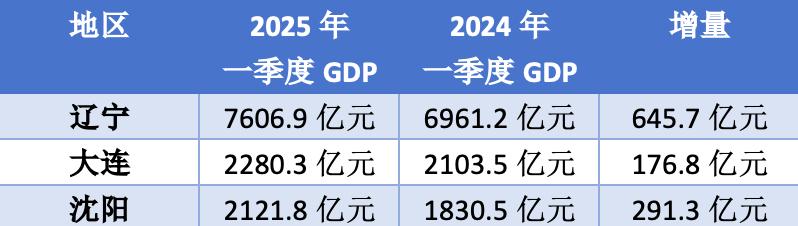
Economic Overview - In Q1 2025, Liaoning's GDP reached 760.69 billion yuan, showing a year-on-year growth of 5.2% and rising from 18th to 16th in national rankings [1][3] - The province's economic growth is driven by industrial and consumer sectors, with the secondary industry increasing by 5.4% and high-tech manufacturing growing by 10.9% [2][3] Investment and Consumption - Fixed asset investment in Liaoning grew by 7.8%, retail sales of consumer goods increased by 6.7%, and exports rose by 10.5%, all surpassing national averages [3] - Manufacturing investment rose by 13.2%, accounting for 26.7% of total investment, with significant growth in aerospace and electronic equipment manufacturing [4] - Consumer spending was boosted by policies aimed at stimulating consumption, with notable increases in retail sales of new energy vehicles (22.5%) and smart wearable devices (13.1%) [4] Trade Performance - Liaoning's exports reached a record 95.11 billion yuan in Q1, growing by 10.5%, supported by a strong performance from private enterprises [5][6] - The province's trade with Belt and Road countries amounted to 102.65 billion yuan, marking a 5.9% increase, with significant growth in exports to ASEAN and Saudi Arabia [7] City Contributions - Shenyang and Dalian are key economic drivers, with Dalian's GDP at 228.03 billion yuan (6.2% growth) and Shenyang's at 212.18 billion yuan (4.6% growth) [8][11] - Dalian's industrial output increased by 10.9%, with strong growth in equipment manufacturing and high-tech sectors [9] - Shenyang's growth was bolstered by a significant increase in the cultural and tourism sectors, with revenues from cultural and entertainment industries rising by 19% [12][13]