电动汽车

Search documents
地缘经济论 | 第八章 绿色产业:应对地缘经济形势下的需求冲击
中金点睛· 2025-09-24 23:56
Core Viewpoint - The global green transition is facing challenges due to the dual impact of demand and supply side factors, particularly influenced by the Trump 2.0 energy policy, which may lead to a 6.3%-8% decline in cumulative global green product demand from 2025 to 2030 compared to baseline scenarios [2][3]. Group 1: Global Green Competition - The competition in the global green economy is characterized by two main aspects: the competition between fossil and green economies, and the competition among countries in the green industry [4][5]. - The Biden administration's policies are expected to accelerate the re-industrialization process in the U.S., posing new challenges for China's green industry [3][5]. Group 2: Global Green Demand - The Trump 2.0 policy is projected to directly impact U.S. green demand, which constitutes 5%-25% of global demand, potentially leading to a 17% decline in U.S. wind, solar, and storage demand by 2030 [8][11]. - The external spillover effects of the Trump 2.0 policy may weaken other countries' support for clean energy, particularly in nations with high fossil fuel self-sufficiency [11][14]. Group 3: Challenges for China's Green Supply - China's green industry faces increased trade barriers, including tariffs and non-tariff barriers, which may hinder its export capabilities [24][25]. - Investment restrictions in developed economies are tightening, making it more difficult for Chinese companies to invest abroad, particularly in the green technology sector [26][27]. Group 4: Impact on Key Green Industries - The negative impact on China's exports is expected to be most severe for electric vehicles, followed by lithium batteries and solar products, due to tariffs and declining demand in key markets [32][33]. - The shift from mergers and acquisitions to joint ventures and technology licensing may increase the risk of technology spillover, affecting China's competitive edge in green technologies [35][36]. Group 5: Strategic Recommendations - To stimulate domestic green demand, policies should focus on enhancing the consumption of green products and improving the infrastructure for renewable energy integration [44][45]. - Expanding regional trade cooperation and promoting green exports to developing countries can help mitigate the impact of geopolitical tensions [45][46]. - Strengthening intellectual property protection is crucial for maintaining China's leadership in green technology innovation [47].


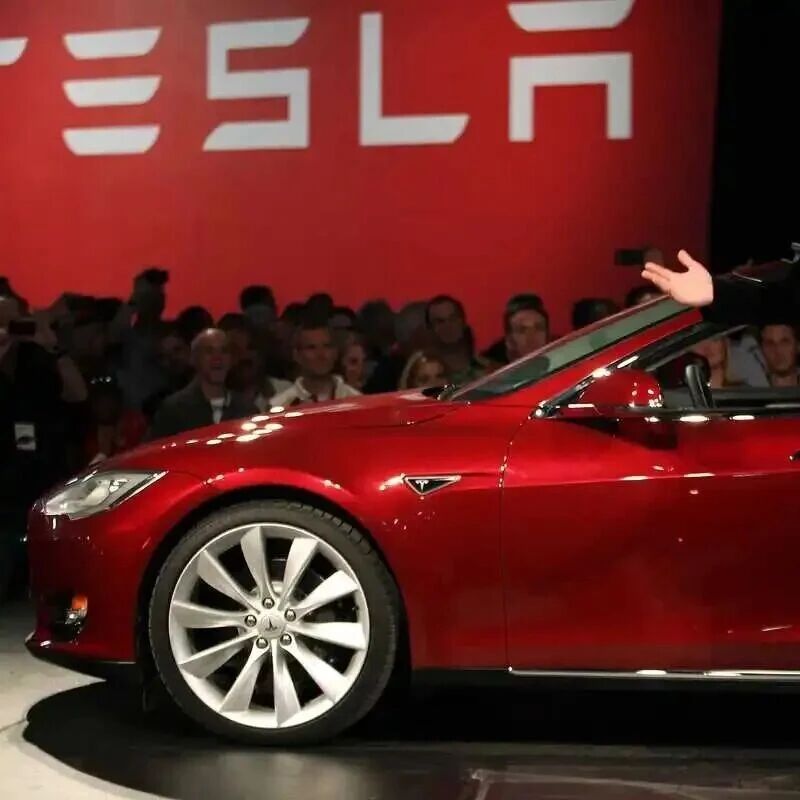
高盛之后UBS跟进,华尔街竞相上调特斯拉三季度交付预期
美股IPO· 2025-09-24 23:36
Core Viewpoint - UBS raised Tesla's Q3 delivery forecast to 475,000 units, exceeding market consensus, driven by strong demand in the U.S. due to the expiration of tax incentives under the Inflation Reduction Act, while maintaining a "Sell" rating due to expected Q4 delivery decline and stock price being more influenced by AI narratives than automotive fundamentals [1][3][9] Delivery Performance - Tesla's Q3 delivery is projected at 475,000 units, a 3% increase year-over-year and a 24% increase quarter-over-quarter, significantly higher than the previous estimate of 431,000 units and about 8% above the consensus from Visible Alpha [3][4] - UBS noted that the new forecast aligns closely with buy-side expectations, which range from 470,000 to 475,000 units [4] Market Insights - Strong U.S. demand is attributed to consumers rushing to take advantage of the $7,500 EV tax credit before it expires, potentially leading to record quarterly deliveries in the U.S. since mid-2023 [7] - European deliveries showed a recovery with a 22% quarter-over-quarter increase in the first two months of Q3, while China's retail deliveries rose approximately 45% [7] - UBS expects Q3 deliveries to exceed production by about 7%, helping to reduce inventory levels [7] Future Projections - For Q4 2025, UBS forecasts deliveries to drop to 428,000 units, a 10% quarter-over-quarter decline and a 14% year-over-year decline, factoring in the launch of the lower-priced Model Y in the U.S. and the Model Y L in China [8] - The total delivery forecast for 2025 has been raised from 1.51 million to 1.62 million units, aligning with market consensus despite a 9% year-over-year decline [8] Energy Storage Insights - UBS anticipates Tesla will report energy storage deployment of 10.4 GWh for Q3, an 8% quarter-over-quarter increase, consistent with market consensus [8] Stock Performance - Tesla's stock rose 4.16% on Wednesday, with a year-to-date increase of nearly 17% [5]


美媒:美对华鹰派为何热衷谈AI
Huan Qiu Wang Zi Xun· 2025-09-24 23:14
Group 1 - The article argues that while the U.S. is focused on artificial intelligence (AI) as a key area in the tech competition with China, this perspective is flawed as AI is not the most critical sector in the U.S.-China tech rivalry [1][2] - China has made significant advancements in various technology sectors, including solar energy, batteries, and electric vehicles, where it currently leads the U.S. [1] - China's overseas investment in clean energy has exceeded $220 billion since 2022, and its new solar capacity in the first half of this year was more than 12 times that of the U.S. [1] Group 2 - Critics argue that AI has not lived up to expectations and has been overhyped, similar to previous technologies like blockchain and the metaverse [2] - The focus on AI by U.S. hawks is partly due to it being one of the few tech areas where the White House has not actively engaged in conflict, despite potential changes in this stance [2][3] - The clean energy sector poses greater challenges for the U.S. to regain competitiveness, requiring substantial investment and political consensus, making AI a more convenient topic for discussion [3]
美股异动|特斯拉股价飙升3.98%市场聚焦AI转型与交付预期
Xin Lang Cai Jing· 2025-09-24 23:13
Core Insights - Tesla's stock price increased by 3.98% on September 24, drawing attention to its future development amidst a strategic shift towards artificial intelligence and robotics [1] - Tesla's market share in the U.S. electric vehicle market has dropped to its lowest point in eight years, despite a temporary increase in sales due to expiring tax credit policies [1] - Wall Street analysts have raised their delivery forecasts for Tesla, with UBS predicting third-quarter deliveries to reach 475,000 units, exceeding market expectations, although there remains a divergence in stock ratings [1] Strategic Adjustments - Tesla emphasizes close collaboration with supply chain companies, including Yu Sheng Aluminum, to maintain high product quality and provide stable orders for suppliers [2] - Panasonic is developing a new battery expected to enhance capacity by 2027, reinforcing its position as a key battery supplier for Tesla [2] - Overall, Tesla is addressing market challenges through strategic transformation and technological upgrades, focusing on the narrative around artificial intelligence and robotics to drive stock performance [2]
扛不住了?加拿大外长火速访华,盼中方网开一面,撤回关税反制
Sou Hu Cai Jing· 2025-09-24 22:11
Core Points - Canadian Foreign Minister Anita Anand plans to visit China and India in the coming weeks to improve strained relations with these major economies [1][4] - The trade dispute between Canada and China originated from Canada's imposition of tariffs on Chinese electric vehicles and steel products, which was seen as aligning with U.S. policies [4][6] Trade Relations - Canada has imposed a 100% tariff on Chinese electric vehicles and a 25% tariff on Chinese steel and aluminum products since October 2024, aiming to protect its domestic industries [4][6] - China is Canada's largest buyer of canola, with annual trade values between $3.6 billion and $4.9 billion, making it crucial for Canada's agricultural sector [7] Retaliatory Measures - In response to Canada's tariffs, China initiated anti-dumping investigations and imposed a temporary anti-dumping measure on Canadian canola, requiring a 75.8% deposit from Canadian exporters starting August 14 [9][12] - The increase in export costs has led to significant financial losses for Canadian canola farmers, with many facing losses of tens of thousands of dollars [12] Domestic Pressure - The backlash from the agricultural sector has prompted pressure on the Canadian government to reconsider its tariffs on Chinese electric vehicles [12][14] - Saskatchewan's Premier has led a trade delegation to China to advocate for the removal of tariffs on canola [14] Diplomatic Efforts - Anand's upcoming visit to China is seen as a critical opportunity to negotiate the lifting of tariffs on canola, although Canada's leverage appears limited [16][18] - Potential discussions may include revisiting tariffs on electric vehicles and exploring energy cooperation, but these may not directly address the canola tariff issue [18][21] Future Outlook - The extension of China's anti-dumping investigation on Canadian canola until March 2026 provides a window for negotiations, indicating that China is not in a rush to resolve the issue [20] - The outcome of Anand's visit will be closely monitored, as it will impact not only the agricultural sector but also Canada's ability to navigate its foreign policy amidst major power dynamics [23]

924行情满周年:全球资本纷纷购买中国资产,股市楼市或迎新动力
Sou Hu Cai Jing· 2025-09-24 15:52
Group 1 - The core viewpoint of the article highlights the significant inflow of global capital into Chinese assets following the Federal Reserve's interest rate cuts, which has led to a bullish trend in the Chinese stock market [3][15][17] - The A-share market has shown remarkable performance, with the total market capitalization increasing from 68 trillion to 104 trillion RMB, and numerous stocks experiencing substantial gains [4][6] - The Chinese stock market has outperformed global markets, with significant increases in indices such as the North Star 50 and the ChiNext, showcasing a strong recovery and growth trajectory [6][15] Group 2 - The article emphasizes the role of China's advancements in technology, defense, and trade as fundamental drivers for the rising value of Chinese assets, positioning them as a "safe haven" amid global uncertainties [7][9][14] - The ongoing technological breakthroughs in sectors like electric vehicles, solar energy, and AI are highlighted as key factors contributing to China's competitive edge in the global market [8][15] - The article notes that the recent Federal Reserve rate cuts are expected to further enhance the attractiveness of RMB-denominated assets, encouraging international capital to flow into China's stock and bond markets [15][16] Group 3 - The article discusses the potential for a recovery in the real estate market, driven by the wealth effect from the stock market gains and supportive government policies [16] - It points out that the structural opportunities in sectors such as semiconductors, AI, and high-end manufacturing are likely to attract significant investment as global capital seeks higher returns [15][16] - The article concludes that the current economic environment presents a unique investment opportunity in China, driven by strong fundamentals and favorable market conditions [17]

工业和信息化部部长李乐成会见沙特工业和矿产资源大臣班达尔·胡莱夫
Shang Hai Zheng Quan Bao· 2025-09-24 10:46
Core Viewpoint - The meeting between China's Minister of Industry and Information Technology, Li Lecheng, and Saudi Arabia's Minister of Industry and Mineral Resources, Bandar Al-Hokail, emphasizes the strengthening of industrial cooperation between the two countries, highlighting achievements in various sectors and the potential for future collaboration [1]. Group 1: Industrial Cooperation - The two countries have deepened cooperation in the industrial sector under the strategic guidance of their leaders, achieving significant results in petrochemicals, automotive, and new energy sectors [1]. - There is a commitment to enhance policy exchanges and strategic alignment to stabilize and streamline industrial supply chains [1]. Group 2: Investment Opportunities - Saudi Arabia welcomes more Chinese enterprises to invest in the country and is committed to providing a better business environment for these companies [1]. - Areas of potential collaboration include advanced manufacturing, petrochemicals, electric vehicles, artificial intelligence, biopharmaceuticals, and additive manufacturing [1].
中美若硬脱钩,全球蒸发7.4万亿美元?赢家浮出水面,中国留后手
Sou Hu Cai Jing· 2025-09-24 08:41
Group 1 - The IMF report indicates that a complete economic decoupling between China and the US could reduce global GDP by 7%, amounting to a loss of $7.4 trillion, equivalent to the combined economic output of France and Germany [2][5] - The ongoing trade tensions have evolved beyond trade disputes, now impacting technology and supply chains, leading to a downward revision of global growth expectations from 3.3% to 2.8% [4] - Emerging economies are rising in this geopolitical landscape, with Malaysia attracting $13.5 billion in foreign investment for semiconductor facilities in 2023, surpassing the total from 2013 to 2020 [7] Group 2 - Vietnam has significantly increased its exports to the US from $50 billion in 2017 to over $100 billion in 2023, with an expected economic growth rate of 5.3% by 2025, benefiting from regional trade agreements [9] - Hungary is also benefiting from Chinese investments in electric vehicle production, with an expected economic growth of 2.4% by 2025, reflecting a shift from fossil fuel dependency to electric transformation [11] - The International Bank for Settlements reports that Western companies are facing increased supply chain costs and inefficiencies due to adjustments, while emerging economies are leveraging low costs and policy flexibility for higher growth rates [13] Group 3 - China is diversifying its market strategies, with exports to ASEAN expected to surpass those to the US in 2024, indicating a significant shift in trade partnerships [15] - The self-sufficiency rate of China's semiconductor industry is projected to rise from 20% in 2018 to over 50% by 2025, showcasing a strategic response to external pressures [17] - The Belt and Road Initiative is expanding from infrastructure to digital and green sectors, with investments in over 80 countries by 2025, promoting high-tech cooperation [18] Group 4 - Global debt has reached $100 trillion, accounting for 93% of GDP, with the IMF projecting a global growth reduction of 0.2% to 7% due to US-China competition [20] - Currently, the US and China have extended a tariff truce for 90 days, with ongoing negotiations, while China's foreign trade is growing at 5.4%, benefiting emerging markets [22]
EV用金属的价格低迷看不到出口
日经中文网· 2025-09-24 02:58
Core Viewpoint - The prices of mineral resources used for electric vehicle (EV) batteries, particularly lithium, are experiencing a downturn due to oversupply in the market, despite some government measures to curb production in China [1][4]. Group 1: Lithium Market Dynamics - As of September 15, the price of lithium carbonate, a key price indicator, is at 72,500 yuan per ton, down 37% from the peak in March 2024 [2]. - The lithium market has seen a previous downturn, with speculative investments driving prices to nearly 568,500 yuan per ton in November 2022, which is about eight times the current price [5]. - Analysts predict that unless there is significant production cutback, lithium oversupply is expected to persist until 2032 [5]. Group 2: Other EV Metals - Nickel, used in high-performance "ternary" batteries, is also in a low price range, with prices at $15,405 per ton, down 29% from the peak in May 2024 [8]. - Indonesia, which accounts for 60% of global nickel production, is projected to triple its output by 2024 compared to 2020 [8]. - Cobalt prices remain low, with the Democratic Republic of the Congo halting exports due to severe oversupply, which is a significant source of revenue for the country [8]. Group 3: Future Demand Projections - Long-term demand for EV metals is expected to grow, with the International Energy Agency (IEA) forecasting that lithium demand could reach nine times the 2024 levels by 2050 under a net-zero emissions scenario [8]. - Nickel demand is projected to double by 2050, but current production is expanding at a rate that exceeds actual demand, indicating a need for time before a market reversal occurs [8].

21社论丨有效市场和有为政府共同成就中国创新速度
21世纪经济报道· 2025-09-24 00:28
Group 1 - The World Intellectual Property Organization (WIPO) released the 2025 Global Innovation Index report, showing China ranked 10th globally, marking its first entry into the top ten and leading among 36 upper-middle-income economies, having risen 25 places since 2013 [1] - In terms of innovation output, China ranked 5th in 2025, up 2 places from 2024, while its innovation input ranked 19th globally, an increase of 4 places from the previous year [1] - China leads in several areas, holding the top position in multiple intellectual property-related sub-indicators and ranking 2nd globally in patent applications per GDP, industrial cluster development, and corporate R&D expenditure as a percentage of GDP [1] Group 2 - Despite China's strong performance, global innovation growth is slowing, with expected R&D spending growth of 2.9% in 2024, down from 4.4% in 2023, marking the lowest level since 2010 [2] - International patent applications are projected to grow by only 0.5% in 2024, significantly lower than the 2.5% average growth rate over the past decade, while China continues to be the largest applicant, accounting for nearly 25% of global applications [2] - The report emphasizes that innovation ecosystems require thoughtful policies, meaningful investments, and cross-sector collaboration, with China's innovation achievements stemming from a strategic, long-term, and systematic national approach [2] Group 3 - China's innovation success is driven by a robust market dynamic, with enterprises as the main innovators engaging in emerging industries and technological transformations [3] - In 2024, R&D spending among 1,510 global companies reached approximately $1.3 trillion, marking the slowest nominal growth since 2010, while Chinese companies are experiencing rapid growth in R&D investments [3] - A total of 524 Chinese companies made it to the global top 2000 in industrial R&D spending, representing 26.2% of the total, with significant growth rates observed in companies like BYD and Tencent [3] Group 4 - China's notable achievements in innovation are attributed to its advantageous position in emerging industries and a vast commercial application market, including sectors like robotics, electric vehicles, and high-speed rail [4] - The rapid growth of technological innovation in China is a result of the effective combination of proactive government policies and a dynamic market, leading to accelerated integration of technological and industrial innovation [4] - With the advantages of a large-scale market and intensified competition among enterprises, China is expected to enhance industrial efficiency and technological superiority across various innovation metrics and fields [4]