食品饮料

Search documents
雀巢集团CEO就奶粉召回公开致歉
Cai Jing Wang· 2026-01-14 09:09
Core Viewpoint - Nestlé's CEO Philipp Navratil issued a public apology regarding a voluntary recall of infant formula due to quality concerns identified at a factory in the Netherlands [1] Group 1: Recall Details - In December 2025, Nestlé confirmed quality issues at a factory in the Netherlands, leading to a proactive voluntary recall across several European countries where the product was sold [1] - The food safety team investigated the issue and concluded that the problem originated from specific raw materials supplied by a vendor [1] - The company immediately ceased distribution of the affected products and initiated a preventive recall in early January in collaboration with local regulatory authorities [1] Group 2: Health Impact - CEO Navratil emphasized that there have been no confirmed cases of illness related to the affected products [1]

雀巢全球CEO发布视频致歉:详解奶粉预防性召回始末,承诺透明迅速处理
3 6 Ke· 2026-01-14 08:34
Core Viewpoint - Nestlé's CEO Philipp Navratil publicly apologized for a precautionary recall of infant formula due to a quality issue, emphasizing the company's commitment to food safety and consumer trust [1][2][4]. Group 1: Recall Details - The recall was initiated after identifying a quality concern at a factory in the Netherlands, affecting multiple brands including Beba, SMA, and others, with a total of 71 batches globally [2][8]. - The recall includes 30 batches from regular channels and 41 batches from cross-border e-commerce channels in China [8]. - The affected products represent less than 0.5% of the company's annual sales, indicating that the financial impact on the overall company is expected to be minimal [8]. Group 2: Response Measures - The company has taken immediate action by halting the distribution of all products containing the affected raw material and has coordinated with authorities for a voluntary recall across impacted European countries [6][7]. - Nestlé has enhanced customer service operations to address consumer inquiries and is working on supply chain adjustments to restore full product availability [2][8]. - A thorough investigation is being conducted in collaboration with the supplier to identify the root cause of the quality issue and prevent future occurrences [2][6].


指数2连跌“凉凉”!“AI元素”霸屏拉升,还有哪些投资机会?
Sou Hu Cai Jing· 2026-01-14 07:35
Group 1 - The core viewpoint is that traditional manufacturing companies in China are the ones realizing performance amidst the global tech market surge, with the future bull market in China relying on physical assets and manufacturing capacity value [1] - Recommended investment sectors include upstream resources (copper, aluminum, lithium, oil, coal) benefiting from potential increases in physical asset consumption and midstream industries like basic chemicals and steel as PPI rebounds [1] - Domestic sectors such as food and beverage, aviation, and apparel are expected to benefit from price stabilization and recovery in domestic demand [1] Group 2 - The introduction of commercial real estate REITs is expected to accelerate market expansion, with 12 consumer REITs currently listed, benefiting from ample inventory and simplified regulations [3] - AI PCB copper powder materials are entering a prosperous cycle, with the copper powder industry expected to see rapid profit growth due to increased usage in PCB production [3] - The copper powder's processing fee is projected to significantly increase, as its usage in PCB production is expected to rise from 15% to over 27% by 2029 [3] Group 3 - Insurance capital has shown a strong interest in equity stakes, with 39 instances of shareholding this year, primarily favoring high-dividend stocks in banking, infrastructure, and logistics [5] - The liquid cooling market for data centers is projected to reach $21.8 billion by 2027, driven by increased efficiency and lower power usage effectiveness (PUE) [5] - Domestic manufacturers are expected to benefit from the rising demand for liquid cooling solutions in AI servers, with a focus on those capable of mass production of core components [5] Group 4 - The Shanghai Composite Index is experiencing a primary upward trend, with financial stocks driving market gains and trading volumes exceeding 3 trillion yuan [11] - Various style indices have adjusted, with cyclical and growth sectors experiencing notable corrections due to recent rapid increases and external market influences [11] - The growth sector is seeing a reduction in momentum for further adjustments, with a focus on sectors benefiting from domestic demand policies such as machinery, home appliances, and consumer electronics [11]







A股多只权重股尾盘竞价再现巨额压单
Jin Rong Jie· 2026-01-14 07:33
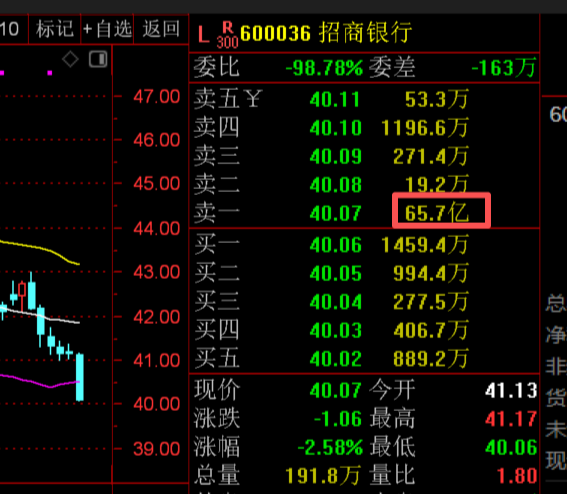
Group 1 - A significant sell-off was observed in the A-share market during the closing auction on January 14, with multiple heavyweight stocks experiencing large sell orders, including China Merchants Bank with over 6.5 billion yuan in sell orders [1] - Other companies such as Zijin Mining, Yangtze Power, China Aluminum, SAIC Motor, Industrial Bank, China Duty Free Group, Ping An Insurance, Heng Rui Medicine, and Kweichow Moutai also had sell orders exceeding 1 billion yuan [1] - Previous instances of sell orders exceeding 1 billion yuan were noted on September 17, October 24, and January 7, 2026, specifically for CITIC Securities [1] Group 2 - China Merchants Bank's order imbalance was reported at -98.78%, indicating a significant disparity between buy and sell orders [2] - The current trading price for China Merchants Bank is 40.07 yuan, with a decline of 2.58% noted [2] - The trading volume for China Merchants Bank was reported at 191.8 million, with a volume ratio of 1.80 [2]

当政策红利遇上消费刚需 中证主要消费指数如何成为行业压舱石?
Sou Hu Cai Jing· 2026-01-14 06:27
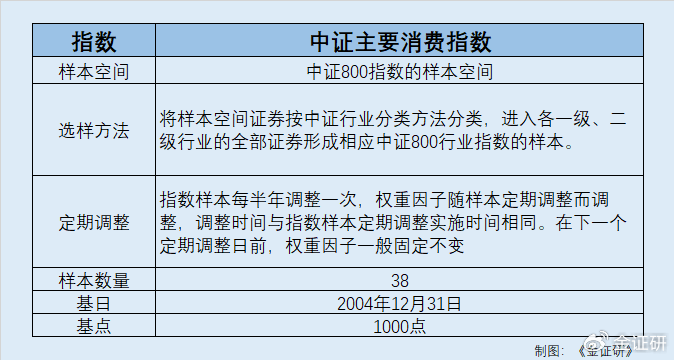
Group 1 - The core viewpoint of the article emphasizes the importance of policies aimed at boosting consumption, highlighting the collaboration between business and financial sectors to enhance consumer spending [1][2] - The China Securities Major Consumption Index, which focuses on the consumption sector, has an average free float market capitalization exceeding 600 billion yuan, reflecting the overall performance of major consumption stocks in the A-share market [2][3] - The index includes 38 sample stocks, with a free float market capitalization ranging from 36.47 billion yuan to 8,885.48 billion yuan, indicating significant growth potential in the consumption sector [2][4] Group 2 - The index is heavily concentrated in the food and beverage sector, with a weight of 67.62%, and agriculture, forestry, animal husbandry, and fishery at 28.42%, together covering over 96% of the index's weight [4][5] - The top ten stocks in the index are supported by leading companies such as Kweichow Moutai, Yili, and Wuliangye, which have strong brand recognition and stable cash flows [5][6] - The ongoing policy support for consumption is expected to enhance the long-term value and growth potential of the consumption sector, making the China Securities Major Consumption Index a quality benchmark for investing in core consumption assets [7]





大行评级|大和:上调康师傅目标价至13港元 评级升至“跑赢大市”
Ge Long Hui· 2026-01-14 06:14
Core Viewpoint - The report from Daiwa indicates that Master Kong's management has reaffirmed guidance for over 10% year-on-year growth in core profits for the previous year, benefiting from favorable raw material prices, with core profits in the second half of last year growing by over 8% [1] Group 1 - Daiwa expects that the carbonated beverage and noodle businesses will maintain growth this year [1] - The new CEO plans to prioritize revenue growth in ready-to-drink tea and juice segments through channel investments [1] - Daiwa anticipates that Master Kong will maintain its market share in the tea and juice sectors, facing more competitive pressure from freshly made beverages compared to its closest competitor, Uni-President China [1] Group 2 - Daiwa has raised Master Kong's target price from HKD 11 to HKD 13 and upgraded the investment rating to "outperform the market" [1]

大行评级|花旗:上调农夫山泉目标价至58.5港元 列为中国食品饮料板块首选之一
Ge Long Hui· 2026-01-14 06:08
Core Viewpoint - Citigroup forecasts that Nongfu Spring's sales will grow by 22% in 2025, which is 7 percentage points higher than the management's guidance and 4 percentage points above market expectations, driven by a stronger-than-expected recovery in bottled water sales and better-than-expected performance in ready-to-drink tea beverages in the second half of the year [1] Group 1 - The expected net profit growth for 2025 is 25%, which is 3 percentage points higher than market expectations [1] - Citigroup has raised its net profit forecasts for Nongfu Spring for 2025 and 2026 by 4% and 3% respectively [1] - The target price for Nongfu Spring has been increased from HKD 53.3 to HKD 58.5, and a 30-day positive catalyst observation has been initiated [1] Group 2 - Citigroup maintains a "Buy" rating and lists Nongfu Spring alongside Dongpeng Beverage as the top picks in the Chinese food and beverage sector [1]
年度展望丨张建胜:“稳健”与“精打细算”
Xin Lang Cai Jing· 2026-01-14 05:12
Core Viewpoint - The investment outlook for 2026 is characterized by a cautious optimism, emphasizing the importance of maintaining a disciplined approach to valuation and investment selection, particularly in the context of a recovering market after a prolonged downturn [1][10]. Market Performance - In 2025, both A-shares and Hong Kong stocks experienced a slow bull market, with public equity funds averaging over a 30% increase, marking it as a significant year for equities [2]. Market Divergence - The market in 2025 was marked by extreme divergence, with sectors like non-ferrous metals and communication equipment seeing over 60% annual gains, while consumer sectors like food and beverage faced negative returns [3]. AI Investment Trends - The capital expenditure in AI, amounting to hundreds of billions, is primarily concentrated among industry leaders, reflecting a level that corresponds to one or two years of net profits for these giants, indicating resilience despite potential delays in returns [4]. Real Estate and Consumption Recovery - A potential recovery in Chinese real estate and consumer sectors is anticipated, with signs that the most challenging phase for cyclical industries may soon pass, leading to valuation recovery opportunities [5]. Investment Opportunities - The investment landscape for 2026 is expected to broaden, with opportunities not only in non-linear growth sectors like AI but also in cyclical industries that may begin to see valuation corrections [6]. Global Trade Dynamics - Despite geopolitical tensions and trade frictions, China's trade surplus exceeded one trillion dollars in the first eleven months of 2025, showcasing the resilience and global competitiveness of Chinese manufacturing [7]. Re-globalization of Chinese Companies - Many leading Chinese companies are experiencing a "re-globalization" trend, with over 30% of their revenues coming from overseas markets, often growing faster than domestic operations [8]. Key Investment Directions for 2026 - The main investment focuses for 2026 include: 1. Non-linear growth in AI, particularly in storage and connectivity sectors, with an emphasis on AI application investments [9]. 2. Resource products and high-end manufacturing benefiting from re-industrialization and re-globalization [9]. 3. Valuation recovery opportunities in traditional industries such as chemicals and consumer goods [9]. Investment Mindset - The investment approach for 2026 will prioritize a "steady" mindset, emphasizing the importance of learning from past market experiences and maintaining a disciplined valuation strategy [10].
ETF盘中资讯|茅台打出市场化“组合拳”!吃喝板块震荡拉升,行业迎周期底部机遇?
Sou Hu Cai Jing· 2026-01-14 03:16
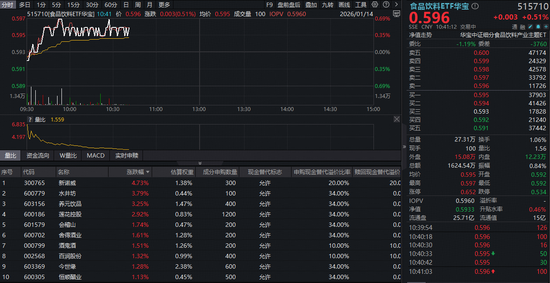
Group 1 - The food and beverage sector experienced a positive trend on January 14, with the Huabao Food and Beverage ETF (515710) rising by 0.51% during trading [1] - Notable gains were observed in several stocks, including XinNuoWei, which surged over 4%, and ShuiJingFang and YangYuan beverages, both increasing by over 3% [1] - The overall valuation of the food and beverage sector is currently at a historical low, with the food index's price-to-earnings ratio at 20.23, indicating a favorable long-term investment opportunity [3][4] Group 2 - Kweichow Moutai announced a new market-oriented operational plan, restructuring its product lineup to enhance market competitiveness [3] - The operational model will shift to a multi-channel approach, including self-sale, distribution, consignment, and online retail, aiming for a more dynamic pricing mechanism [3] - Analysts suggest that this transformation is crucial for Moutai to address supply-demand mismatches and channel issues, emphasizing the essence of the product [3] Group 3 - The white liquor industry is expected to reach a turning point, with potential opportunities for capital market investments as the Spring Festival approaches [4] - The Huabao Food and Beverage ETF is recommended for investors looking to gain exposure to core assets in the food and beverage sector, with significant allocations to leading high-end liquor stocks [4]
茅台打出市场化“组合拳”!吃喝板块震荡拉升,行业迎周期底部机遇?
Xin Lang Cai Jing· 2026-01-14 02:50
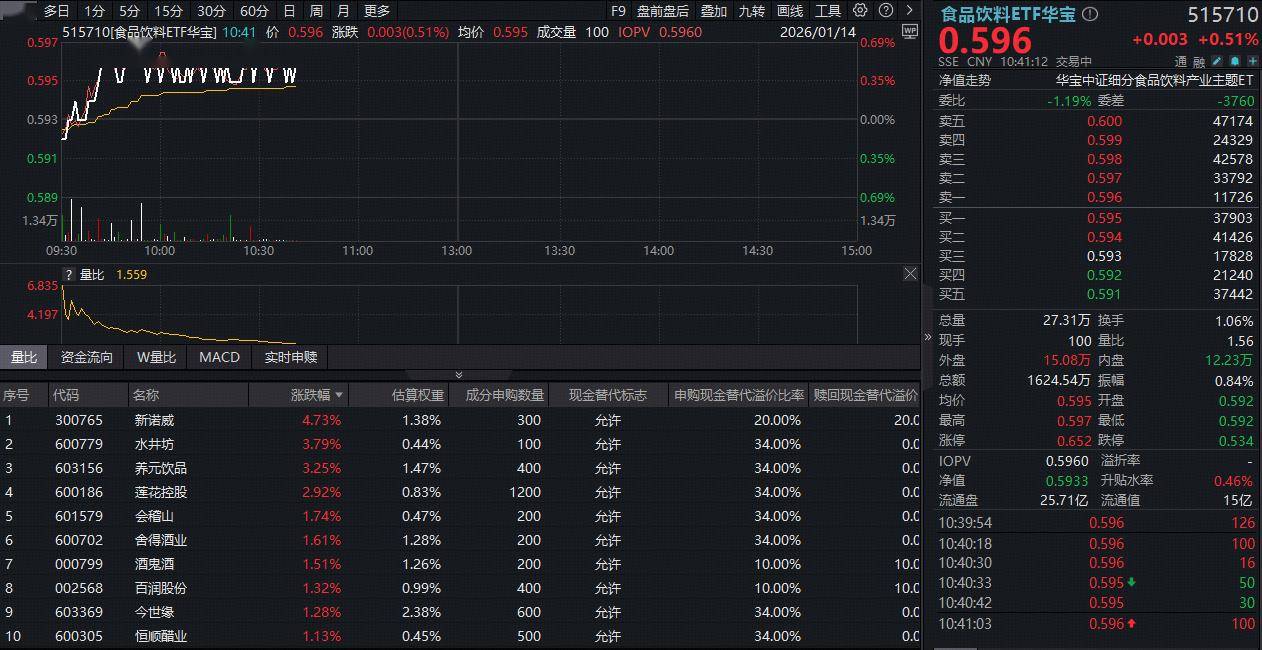
Core Viewpoint - The food and beverage sector is experiencing an upward trend, with the Huabao Food and Beverage ETF (515710) showing a price increase of 0.51% as of the latest report [1][8]. Group 1: Market Performance - The food and beverage ETF Huabao (515710) opened positively and has been fluctuating in the red, with a current price increase of 0.51% [1][8]. - Notable gains were observed in several stocks, including Xin Nuo Wei, which surged over 4%, and Shui Jing Fang and Yang Yuan Beverage, both rising over 3% [1][8]. Group 2: Company Announcements - Kweichow Moutai announced on January 13 that its board approved the 2026 market-oriented operation plan, which aims to return to a "pyramid" product structure [10]. - The new operational model will shift from "self-sale + distribution" to a multi-faceted approach including "self-sale + distribution + agency + consignment" [10]. Group 3: Pricing and Market Strategy - The pricing mechanism will be market-oriented, establishing a dynamic adjustment system for retail prices, with the self-sale price for the flagship product, Moutai 53% vol 500ml, set at 1499 yuan per bottle [10]. - Analysts suggest that this move is a critical step in Moutai's market-oriented transformation, focusing on product, model, channel, and price restructuring to address supply-demand mismatches [10]. Group 4: Valuation Insights - The food and beverage sector is currently at a historical low in terms of valuation, with the food index's price-to-earnings ratio at 20.23 times, placing it in the 6.85% percentile of the last decade [11]. - This presents a potential opportunity for left-side positioning in the sector, particularly as the Chinese New Year approaches, which may signal a turning point for the liquor market [11]. Group 5: Investment Opportunities - The Huabao Food and Beverage ETF (515710) tracks the sub-index of the food and beverage industry, with approximately 60% of its holdings in leading high-end and mid-range liquor stocks, and nearly 40% in beverage, dairy, seasoning, and beer sectors [11]. - Investors can also consider the Huabao Food and Beverage ETF linked funds (Class A 012548/Class C 012549) for exposure to core assets in the food and beverage sector [11].