电力

Search documents
钢材初现去库拐点2026年3月第3周
SINOLINK SECURITIES· 2026-03-25 13:28
1. Report Industry Investment Rating No relevant content provided. 2. Core Viewpoints - The economy shows signs of growth with steel starting to see a de - stocking inflection point, and inflation persists with oil prices remaining at a high level [2][3] 3. Summary by Directory 3.1 Economic Growth: Steel Shows a De - stocking Inflection Point 3.1.1 Production: Power Plant Daily Consumption Returns to the Same Level as Last Year - Power plant daily consumption has returned to last year's level. On March 24, the average daily consumption of 6 major power - generation groups was 79.0 tons, up 8.8% from March 17. On March 19, the daily consumption of power plants in eight southern provinces was 212.2 tons, up 12.5% from March 12 [5][12] - The blast furnace operating rate continues to rise. On March 20, the national blast furnace operating rate was 79.8%, up 1.4 percentage points from March 13; the capacity utilization rate was 85.6%, up 2.6 percentage points from March 13. The blast furnace operating rate of Tangshan steel mills was 93.4%, up 1.0 percentage point from March 13 [5][18] - The tire operating rate shows weak recovery. On March 19, the operating rate of all - steel tires for trucks was 70.7%, up 0.5 percentage points from March 12; the operating rate of semi - steel tires for cars was 78.3%, up 0.5 percentage points from March 12. The recovery slope of the loom operating rate in the Jiangsu and Zhejiang regions has slowed down [5][20] 3.1.2 Demand: Steel Shows a De - stocking Inflection Point - The sales volume of commercial housing in 30 cities is weaker than last year. From March 1 - 24, the average daily sales area of commercial housing in 30 large and medium - sized cities was 22.3 square meters, up 99.4% from February, down 9.3% from March last year, down 2.6% from March 2024, and down 55.1% from March 2023 [5][26] - The retail sales of the auto market are gradually warming up. In March, retail sales decreased by 21% year - on - year, and wholesale sales decreased by 20% year - on - year [5][30] - Steel prices are oscillating strongly. On March 24, the prices of rebar, wire rod, hot - rolled coil, and cold - rolled coil changed by - 1.2%, + 0.5%, + 0.6%, and + 0.3% respectively compared with March 17. Steel has shown a de - stocking inflection point, with the inventory of five major steel products on March 20 at 1411.0 tons, down 12.3 tons from March 13 [5][37] - Cement prices have risen in many places. On March 24, the national cement price index rose 0.4% compared with March 17, with prices in the East China and Yangtze River regions rising 0.8% and 1.5% respectively [5][38] - Glass prices are oscillating at the bottom. On March 24, the active glass futures contract price was 1067 yuan/ton, down 2.6% from March 17 [5][45] - The container shipping freight rate index has ended a three - week rise. On March 20, the CCFI index rose 4.5% compared with March 13, while the SCFI index fell 0.2% [5][49] 3.2 Inflation: Oil Prices Remain at a High Level 3.2.1 CPI: Pig Prices Fall to a Record Low - Pig prices have fallen to a record low. On March 24, the average wholesale price of pork was 16.0 yuan/kg, down 1.0% from March 17. The month - on - month decline has widened [5][54] - The downward slope of the agricultural product price index has slowed down. On March 24, the agricultural product wholesale price index fell 0.7% compared with March 17. By variety, chicken (+ 2.2%) > eggs (+ 2.0%) > beef (+ 0.3%) > fruits (flat) > mutton (- 0.2%) > vegetables (- 0.2%) > pork (- 1.0%) [5][61] 3.2.2 PPI: Oil Prices Remain at a High Level - Oil prices remain at a high level. On March 24, the spot prices of Brent and WTI crude oil were 111.3 and 92.4 dollars/barrel, up 7.5% and down 4.0% respectively compared with March 17 [5][65] - Copper and aluminum prices have fallen sharply. On March 24, the prices of LME 3 - month copper and aluminum fell 6.4% and 5.7% respectively compared with March 17 [5][70] - Most industrial product prices have turned to rise. Since March, most industrial product prices have risen month - on - month, and the year - on - year decline of most industrial product prices has converged [72]
A股电力ETF图谱:发电、送电与存电ETF拆解
市值风云· 2026-03-25 10:15
Core Viewpoint - The investment logic in the power industry has evolved into a tightly integrated ecological loop, driven by the increasing demand for electricity from AI applications and the need for stable and green energy supply [1][41]. Generation Segment - The power sector can be divided into three segments: generation, transmission, and storage [6]. - The distinction between traditional power and green power is crucial; traditional power includes all forms of electricity generation, while green power focuses on cleaner, low-carbon sources [8]. - The core attribute of the power index is its coverage of public utilities and high dividends, making it a defensive asset [10][12]. - Major constituents of the power index include companies like Changjiang Electric Power and China Nuclear Power, with respective weights of 8.81% and 7.56% [13]. Green Power Index - The National Green Power Index is more focused on clean energy operations, with a strong correlation to green power trading mechanisms and carbon neutrality policies [15]. - The demand for green power is rigid due to AI's expansion, with regulations requiring new data centers to source over 80% of their energy from green power [15]. - The National Green Power Index has a lower proportion of thermal power stocks compared to the China Securities Green Power Index, which includes a significant amount of thermal power [21]. Transmission Segment - The transmission segment, represented by grid equipment, shows greater growth elasticity compared to the generation segment due to the high demands of AI on electricity [27][28]. - The State Grid plans to invest 4 trillion yuan in fixed assets from 2026 to 2030, a 40% increase from the previous five-year plan, indicating significant growth potential in this area [28][29]. - The market has two main indices tracking grid equipment: the China Securities Grid Equipment Theme Index and the Hang Seng A-Share Grid Equipment Index, which have shown different performance due to their constituent stocks [30]. Storage Segment - Energy storage is becoming increasingly important as it stabilizes the supply from renewable sources, which can be intermittent [36]. - The geopolitical landscape has highlighted the importance of energy security, making the integration of solar and storage solutions more attractive [36]. - The investment logic for energy storage is being elevated due to the dual catalysts of energy security and the demands of AI [36]. Overall Investment Outlook - The power investment ecosystem is characterized by a stable generation base, capital expenditure benefits from grid equipment, and explosive growth in energy storage driven by AI and energy security needs [41].




港股收评:连续两日反弹!恒生科技收涨1.91%,美团涨超13%,南下资金净买超200亿港元
Ge Long Hui· 2026-03-25 09:58
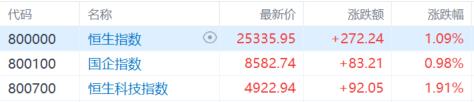
Market Overview - The Hong Kong stock market experienced a significant rebound, with the Hang Seng Technology Index rising by 2.6% at one point and closing up by 1.91% [1]. - The Hang Seng Index and the China Enterprises Index increased by 1.09% and 0.98%, respectively, marking the second consecutive day of market recovery [1]. - Southbound funds recorded a net purchase of over 20 billion HKD in Hong Kong stocks [1]. Sector Performance - Technology stocks led the market rally, with Meituan surging nearly 14% [2]. - Other notable performers included nuclear power stocks and optical communication concept stocks, with Changfei Optical Fiber Cable rising over 12% [2][8]. - The airline sector also showed strength, with domestic flight ticket bookings during the Qingming holiday increasing by approximately 20% year-on-year [2][11]. Key Stock Movements - Meituan's stock price reached 90.000 HKD, up by 13.92% [5]. - JD.com and Alibaba saw increases of 4.85% and 4.63%, respectively [5]. - Gold stocks performed well, with Ji Hai Gold and Lingbao Gold rising over 6% [6][7]. Industry Insights - A commentary in the Economic Daily called for an end to the "food delivery war," highlighting its negative impact on the restaurant industry and the broader economy [4]. - The article emphasized that healthy competition should focus on technological innovation, efficiency improvement, and service optimization [4]. Future Outlook - China Galaxy Securities indicated that if a prolonged conflict occurs between the U.S. and Iran, the Hong Kong market may experience a three-phase evolution: short-term emotional shock, mid-term fundamental transmission, and long-term structural differentiation [19]. - The report suggested focusing on cyclical sectors, financial sectors at valuation bottoms, and technology sectors with self-controllable logic [19].



黄金坑 | 谈股论金
水皮More· 2026-03-25 09:10
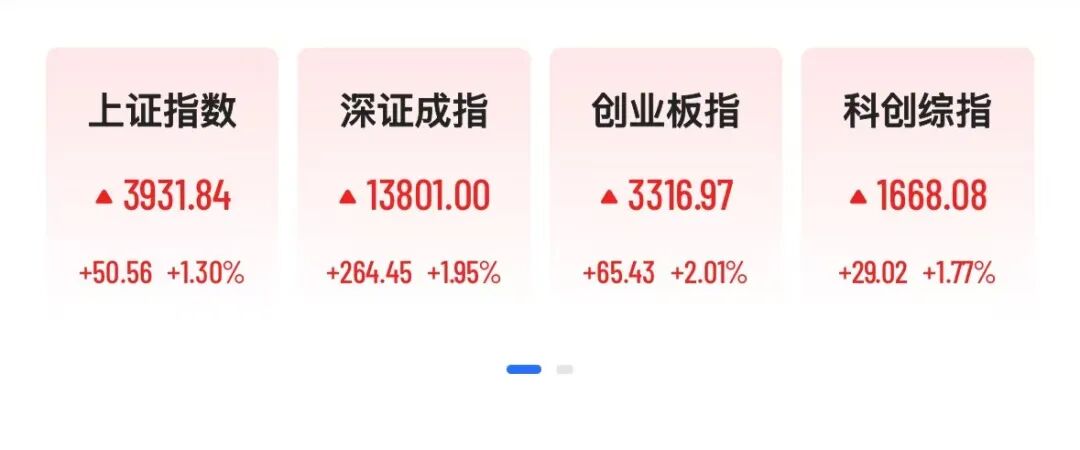
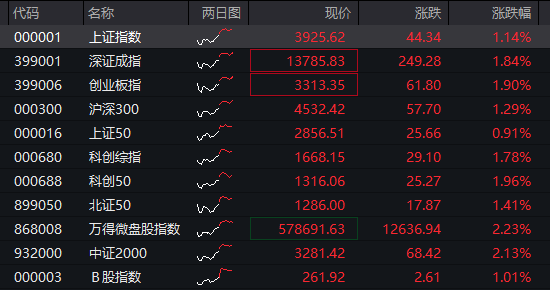
Market Overview - A-shares saw a collective rise in the three major indices, with the Shanghai Composite Index increasing by 1.30% to close at 3931.84 points, the Shenzhen Component Index rising by 1.95% to 13801.00 points, and the ChiNext Index up by 2.01% to 3316.97 points [3] - The trading volume in the Shanghai and Shenzhen markets reached 2.19 trillion yuan, an increase of 968 billion yuan compared to the previous day [3] Investor Sentiment - Global investor sentiment has been fluctuating due to concerns surrounding geopolitical tensions, particularly influenced by former President Trump's actions [4] - Recent developments indicate that both parties involved in the conflict have proposed agreement terms, suggesting a potential de-escalation, which positively impacted global markets, including A-shares [4] Sector Performance - Most sectors are undergoing a valuation recovery, with the exception of the energy (oil and gas, coal) and photovoltaic sectors, which experienced declines [5] - The military and power sectors continued their strong performance, contributing significantly to market gains, with approximately 4800 stocks rising and only about 580 declining [5] Financial Sector - The three major financial sectors—banking, insurance, and securities—recorded around 1% gains without any significant sell-off [6] - The banking sector showed initial adjustments but stabilized in the afternoon, providing crucial support for the index [6] Hong Kong Market Dynamics - The Hang Seng Index experienced volatility, initially declining before recovering due to positive news from Alibaba and Meituan, which saw stock price increases of up to 15% and 6% respectively [6] - The article highlighted the impact of low-price competition in the food delivery sector on the Consumer Price Index (CPI), which is a critical macroeconomic indicator [6] Company-Specific News - Pop Mart experienced a significant drop of approximately 23% in its stock price, attributed to market reactions to its underwhelming performance expectations and over-reliance on a single intellectual property [7]

中国银河证券:国网十五五期间将保持较高投资强度 重点关注特高压和主网等核心方向
智通财经网· 2026-03-25 08:56
Core Viewpoint - The State Grid Corporation of China has announced that its fixed asset investment during the 14th Five-Year Plan (2021-2025) is expected to reach 4 trillion yuan, a significant increase of 40% compared to the 13th Five-Year Plan, with an average annual investment of 800 billion yuan. If combined with the investment from the Southern Power Grid, the total investment for the national grid during the 14th Five-Year Plan could approach 5 trillion yuan, with an average annual investment exceeding 1 trillion yuan [1][2]. Group 1: Investment Strength and Direction - Under the dual carbon goals, the energy transition on the supply side and the rapid increase in demand from sectors like AIDC and new energy vehicles are the core drivers for the upgrade of the power system [2]. - During the 14th Five-Year Plan, the planned investment was 2.4 trillion yuan, while the actual investment reached approximately 2.85 trillion yuan. For the 15th Five-Year Plan, with a planned investment of 4 trillion yuan, the corresponding annualized CAGR is around 6%. Optimistically, considering historical experience, the investment could reach 5 trillion yuan, corresponding to an annualized CAGR of about 13% [2]. Group 2: High Voltage and Main Network - Strengthening investment in high voltage and main networks to enhance the resource allocation capability of the grid is the primary task during the 15th Five-Year Plan. The State Grid aims to expedite the commissioning of 15 planned high voltage direct current lines, increasing inter-provincial transmission capacity by 35% and expanding regional interconnection capabilities by more than double [3]. Group 3: Distribution Network - The main goals for upgrading the distribution network include enhancing the capacity to accommodate new energy sources and increasing the space for distributed generation access. The 15th Five-Year Plan will focus on addressing shortcomings in the distribution network, aiming to increase capacity by over 90 million kilovolt-amperes [4]. - The plan includes promoting demonstration projects for source-based distribution networks in counties and microgrid projects in towns, facilitating the integration of distributed renewable energy sources [4]. Group 4: Smart Grid - Investment in digital platform construction will be advanced, establishing an integrated intelligent scheduling and monitoring platform for new energy, breaking down barriers in scheduling, trading, and consumption [5]. - The focus will be on enhancing smart control technology investments, particularly in precise forecasting for new energy, while promoting the industrial application of flexible control and proactive support technologies [5].

突袭!2000亿新消费龙头,午后闪崩暴跌超20%!什么情况?沪指重回3900,市场连续百股涨停...
雪球· 2026-03-25 07:52
Core Viewpoint - The article discusses the recent market fluctuations, focusing on the significant drop in Pop Mart's stock price despite strong financial results, and highlights the contrasting performance of gold and oil sectors due to geopolitical tensions in the Middle East [2][4][10]. Group 1: Pop Mart Financial Performance - Pop Mart reported a revenue of 37.12 billion RMB for 2025, a year-on-year increase of 184.7%, and an adjusted net profit of 13.08 billion RMB, up 284.5% [6][8]. - The gross margin improved from 66.8% in 2024 to 72.1% in 2025, with gross profit increasing from 8.7 billion RMB to 26.76 billion RMB, an increase of over 18 billion RMB [6][8]. - The overseas revenue reached 16.27 billion RMB, a remarkable growth of 291.9%, accounting for 43.8% of total revenue, up from 31.8% in 2024 [7][8]. - Despite these strong results, the stock price fell over 20% due to concerns about the company's heavy reliance on a single core IP, Labubu, and lack of revenue diversification [4][9]. Group 2: Market Reactions to Geopolitical Events - The article notes that the market is reacting to the easing tensions in the Middle East, which led to a decline in oil prices by over 3% while gold prices surged [11][16]. - Gold stocks such as Chifeng Jilong Gold and Zhongjin Gold saw increases of over 6% and 3%, respectively, reflecting a strong performance in the precious metals sector [12][13]. - Conversely, the oil and gas sector experienced declines, with companies like Tongyuan Petroleum and China Petroleum seeing drops of over 6% [14][15]. Group 3: Emerging Trends in Power and Computing - The article highlights the emergence of the "computing and electricity synergy" concept, with companies like Huadian Liaoning Energy experiencing significant stock gains [17][18]. - The synergy aims to integrate digital technology with power systems, promoting efficient resource allocation and supporting green energy initiatives [20][21]. - National policies are being developed to enhance the role of green electricity in computing infrastructure, indicating a potential growth area for companies involved in this sector [20][21].

华泰证券今日早参-20260325
HTSC· 2026-03-25 07:37
Group 1: Market Trends and Strategies - The market sentiment has shifted from aggressive to defensive positioning, with funds reallocating towards consumer and financial sectors in search of safety margins amid rising uncertainties [2] - After nine weeks of net outflows, broad-based ETFs saw a slight net inflow of 9.5 billion yuan last week, indicating a potential change in investor sentiment [2] Group 2: Power and Environmental Sector Insights - In the first two months of 2026, thermal power generation volume turned positive year-on-year, and coal prices decreased, suggesting potential profit growth for some thermal power companies [3] - The environmental sector is expected to see stable growth, with a focus on waste incineration power companies and adjustments in water pricing [3] Group 3: Renewable Energy and Energy Security - The ongoing geopolitical tensions have highlighted the importance of energy security, prompting a shift towards local and diversified energy sources, which may accelerate the transition to renewable energy [4] - The demand for renewable energy is expected to increase significantly, potentially leading to a doubling of green certificate prices, enhancing profitability for green power operators [6] Group 4: Real Estate Market Dynamics - The real estate market is showing signs of stabilization, with a notable increase in second-hand housing transactions, while new housing sales have declined [5] - The recovery in the real estate market is expected to be gradual, with a focus on quality property companies and property management firms as investment opportunities [5] Group 5: Company-Specific Performance - Huatai Medical reported a revenue of 2.584 billion yuan and a net profit of 821 million yuan for 2025, reflecting a year-on-year increase of 25.1% and 21.9% respectively, indicating a strong performance [8] - Kangnuo Ya-B announced a significant acquisition by Gilead, which is expected to enhance its platform value and accelerate the commercialization of its products [9] - Yunda Co. achieved a revenue of 29.4 billion yuan in 2025, with a net profit of 340 million yuan, despite facing challenges from low-price orders [10] Group 6: Sector Recommendations - The report recommends investing in undervalued Hong Kong green power operators that are expected to benefit from the linkage between electricity certificates and carbon pricing [6] - Companies with integrated green energy capabilities are highlighted as effective strategies to mitigate carbon cost risks and compliance challenges [6]
A股超4800股上涨,航天军工、福建本地股午后爆发,港股美团飙涨12%
2 1 Shi Ji Jing Ji Bao Dao· 2026-03-25 07:37
Market Overview - On March 25, the A-share market experienced a rebound, with all four major indices rising, the Shanghai Composite Index increasing by over 1% to surpass 3900 points, and the ChiNext Index rising by over 2% [1] - More than 4800 stocks in the market rose, with 105 stocks hitting the daily limit, marking the second consecutive trading day with over a hundred stocks reaching the limit [1] Sector Performance - The optical communication sector saw a collective surge, with Tongding Interconnection and Changfei Fiber both hitting the daily limit, while Tianfu Communication rose over 6% and Zhongji Xuchuang increased by over 4% [4] - The aerospace and military sector strengthened in the afternoon, with Changcheng Military Industry hitting the daily limit, Hunan Tianyan achieving two consecutive limit-ups, and several other stocks like Beifang Changlong and Hongdu Aviation rising over 8% [4] - Local stocks in Fujian experienced significant gains, with Pingtan Development hitting the daily limit and several others following suit, driven by a recent government initiative to promote the development of state-owned enterprises [4] - The electric power sector exploded, led by green energy concepts, with over ten constituent stocks hitting the daily limit, including Huadian Liao Energy with eight consecutive limit-ups and Shaoneng Shares with five limit-ups in six days [4] - The computing power leasing concept also gained strength, with stocks like Erli San and Aorui De hitting the daily limit [4] Declines - The oil and gas, as well as coal sectors, faced the largest declines, with stocks like Intercontinental Oil and Blue Flame Holdings dropping over 5%, and China National Offshore Oil Corporation falling over 3% [5] Hong Kong Market - In the Hong Kong market, the Hang Seng Technology Index saw an afternoon increase of up to 2%, with tech stocks collectively rising, including Meituan increasing nearly 12% and Alibaba rising over 5% [5] Company-Specific News - Pop Mart's stock price plummeted by 22% following the release of its 2025 financial report, which indicated that sales of non-Labubu IP products did not meet expectations [7]
沪指收复3900点,电力掀涨停,算力硬件大涨,恒科指午后大涨2%,美团涨超10%,泡泡玛特跌超15%
Sou Hu Cai Jing· 2026-03-25 07:29
Group 1: Market Overview - A-shares experienced a surge, with the Shanghai Composite Index rising over 1% and returning above 3900 points, while the ChiNext and Shenzhen Composite Indexes approached a 2% increase [1][2] - The Hong Kong market also saw gains, with the Hang Seng Index up nearly 1% and the Hang Seng Tech Index rising 2%, driven by strong performances from tech stocks like Meituan and Alibaba [1][5] Group 2: Sector Performance - The power sector saw a significant rally, with multiple stocks hitting the daily limit up, including Huadian Liao Energy and Guangdong Power, both up 10.03% [16][14] - The computing hardware sector exploded, with companies like Aorede and Erli San hitting the daily limit up, driven by strong demand for AI computing [17][20] - The light communication sector continued its strong performance, with stocks like Tongding Interconnection and Mingpu Optical Magnet also reaching the daily limit up [17][20] Group 3: Commodity Market - In the commodity market, domestic metal futures saw an increase, while oil and fuel futures experienced significant declines, with crude oil and fuel dropping over 7% [4][22] - Silver futures rose by 9%, while platinum and palladium increased by over 7%, indicating a mixed performance across different commodities [4] Group 4: Token Economy and AI - The token economy is rapidly evolving, with the average daily token usage projected to increase from 100 billion at the beginning of 2024 to 100 trillion by the end of 2025, and it has already surpassed 140 trillion in March 2026 [19][18] - The integration of AI and token usage is accelerating, with a shift from selling capabilities to selling usage, creating a new value system around token distribution and settlement [19] Group 5: Industry Developments - The Shenzhen Municipal Bureau of Industry and Information Technology has launched an action plan to accelerate the high-quality development of the AI server industry chain, aiming for significant growth in production capacity and market share by 2028 [21] - Recent breakthroughs in optical communication technology have been achieved, including a record transmission capacity of 2.5 petabits per second over a 10.3 km single-mode fiber, highlighting advancements in the sector [21]
国家能源局发布2026年1-2月份全国电力统计数据
国家能源局· 2026-03-25 06:42
Core Insights - The National Energy Administration released national electricity statistics for January-February 2026, indicating a total installed power generation capacity of 3,950.3 million kilowatts, a year-on-year increase of 15.9% [2][4] - Solar power generation capacity reached 1,233.82 million kilowatts, growing by 33.2% year-on-year, while wind power capacity increased by 22.8% to 650.66 million kilowatts [2][4] Installed Capacity - Total installed power generation capacity: 3,948.03 million kilowatts, up 15.9% year-on-year [4] - Hydropower: 449.21 million kilowatts, up 2.7% [4] - Thermal power: 1,550.55 million kilowatts [4] - Nuclear power: 63.73 million kilowatts, up 4.8% [4] - Wind power: 650.66 million kilowatts, up 22.8% [4] - Solar power: 1,233.82 million kilowatts, up 33.2% [4] Utilization and Efficiency - Average utilization hours for power generation equipment: 466 hours, a decrease of 39 hours compared to the same period last year [3][4] - National coal consumption rate for power generation: 287.6 grams per kilowatt-hour, a slight decrease of 0.2% [4] - Total heating amount: 178,536 million kilojoules, an increase of 0.9% [4] - Total raw coal consumption for heating: 11,199 thousand tons, also up 0.9% [4] New Installed Capacity - New installed power generation capacity: 65.91 million kilowatts, an increase of 821% [4] - Breakdown of new capacity: - Hydropower: 1.22 million kilowatts [4] - Thermal power: 19.96 million kilowatts, up 1,337% [4] - Nuclear power: 1.21 million kilowatts [4] - Wind power: 11.04 million kilowatts, up 144% [4] - Solar power: 32.48 million kilowatts, a decrease of 712% [4]