创新药

Search documents
光大证券晨会速递-20251125
EBSCN· 2025-11-25 02:24
2025 年 11 月 25 日 晨会速递 分析师点评 市场数据 行业研究 【医药生物】小核酸药物风起云涌,下一代创新药浪潮呼之欲出——医药生物行业跨 市场周报(20251124)(增持) 本周观点:小核酸药物风起云涌,下一代创新药浪潮呼之欲出。近期,全球范围内的 小核酸药物领域频频出现新进展,引发产业界和投资界的高度关注。小核酸药物已从 概念验证进入产业崛起前夜,行业迎来"技术突破+商业兑现"双主线驱动的黄金发 展期。国内药企研发进展加速,2025 年以来大批企业进入临床研究阶段,建议重点 关注技术平台领先且管线差异化布局的龙头创新药企业,以及有望受益于产业整体景 气度上行的创新产业链企业,建议关注恒瑞医药(A+H)、信达生物(H)、药明康 德(A+H)、前沿生物、成都先导、键凯科技等。 【房地产】加速聚焦核心,1-10 月核心 6 城土拍总价占比近半——土地市场月度跟踪 报告(2025 年 10 月)(增持) 10 月,光大核心 30 城成交宅地 133 宗,同比-33.2%,成交楼面均价 9,279 元/平, 同比-4.5%。1-10 月,百城宅地成交建面同比-9%,成交楼面均价同比+15%,核心 6 ...
机构:持续看好创新药投资机会
Zheng Quan Shi Bao Wang· 2025-11-25 00:40
Group 1 - The Shanghai Municipal Government has issued measures to deepen the reform of drug and medical device regulation, aiming to promote high-quality development in the pharmaceutical industry [1] - The measures include reducing the review and approval time for clinical trials of eligible innovative drugs to 30 working days and actively promoting pilot experiences [1] - Zhongtai Securities maintains a positive outlook on innovative drug investment opportunities, noting a performance vacuum period and a focus on the first quarter of 2026 for establishing the operational situation for the entire year [1] Group 2 - Recommendations include seizing opportunities in the innovative drug sector following adjustments, as short-term gains have been realized and stock prices are now more reasonable while the industrial logic and fundamentals continue to advance [1] - There is an expectation for operational improvements in 2026, with signs of recovery in the market for CRO/CDMO and upstream life sciences sectors, driven by demand recovery and industry clearing [1] - Industrial sentiment for innovative drugs has recently declined, but with ongoing business development (BD) initiatives, the sector's sustainability remains intact, and the trend of "innovation + internationalization" continues [1] Group 3 - After a short-term adjustment, the innovative drug sector's elasticity has increased, and attention should be given to the improving fundamentals within the innovative drug industry chain [1] - Positive trends are observed in investment and financing data, orders, and performance metrics within the sector [1]
中泰证券:以均衡配置渡过纠结期 市场风格会重新聚焦科技
智通财经网· 2025-11-24 23:37
Core Viewpoint - The report from Zhongtai Securities emphasizes a balanced allocation strategy to navigate the current market turmoil, with a focus on waiting for a renewed emphasis on technology sectors [1][2][5]. Market Performance - The market experienced a broad decline this week, with the technology sector suffering the largest drop, indicating a style shift as the market accelerated downward [1][2]. - There has been a significant net inflow into broad-based ETFs, while both northbound and southbound funds are showing balanced allocation trends [2][3]. Fund Flow Dynamics - Leverage and main funds are accelerating their net outflows, with a notable decrease in leveraged trading activity, returning to levels seen in early August [3]. - Northbound funds are increasing their positions in banks, while southbound funds continue to show balanced allocation across various sectors, including retail, electronics, banking, and real estate [3]. Influencing Factors - The market adjustment is attributed to changes in fund dynamics, influenced by multiple direct factors such as concerns over U.S. government shutdowns and lowered interest rate expectations [4]. - The resurgence of AI bubble concerns has also dampened risk appetite, particularly following Nvidia's quarterly report, which raised questions about financial data and the sustainability of the AI boom [4]. - Seasonal effects and stock index futures expirations have amplified market volatility, contributing to a cautious market sentiment [4]. Future Outlook - The market is expected to refocus on technology sectors within the year, with significant adjustments likely accelerating this transition [5].

【医药】小核酸药物风起云涌,下一代创新药浪潮呼之欲出——医药生物行业跨市场周报(20251124)(王明瑞)
光大证券研究· 2025-11-24 23:03
Market Overview - The A-share pharmaceutical and biotechnology index fell by 4.32%, underperforming the CSI 300 index by 0.54 percentage points, and outperforming the ChiNext index by 1.92 percentage points, ranking 30th among 31 sub-industries [4] - The H-share Hang Seng Healthcare Index dropped by 7.5%, underperforming the Hang Seng Index by 2.41 percentage points [4] R&D Progress - Recent IND applications were initiated for HRS-1358 and HRS-3738 by Heng Rui Medicine; clinical applications for SHR-9539 and JS207 were also newly initiated [5] - TQB2934 by Zhengda Tianqing is currently in Phase I clinical trials; Gan Li Pharmaceutical's Bofan Glutide is in Phase III clinical trials [5] Industry Insights - The small nucleic acid drug sector is experiencing significant advancements, indicating a potential wave of next-generation innovative drugs [6] - Since 2025, breakthroughs in delivery technology are expected to expand indications from the liver to cardiovascular and CNS areas, coupled with the commercialization of major products and substantial mergers by multinational pharmaceutical giants [6] - The industry is entering a golden development period driven by "technological breakthroughs + commercial realization" [6] - Domestic pharmaceutical companies are accelerating R&D progress, with many entering clinical research phases since 2025; focus is recommended on leading innovative drug companies with advanced technology platforms and differentiated pipelines, as well as innovative industry chain companies likely to benefit from overall industry upturn [6] Investment Strategy - The investment strategy for the pharmaceutical sector in 2026 emphasizes the importance of clinical value, addressing clinical needs of patients [7] - Both domestic medical insurance policies and global expansion strategies are increasingly assigning higher premiums to clinical value [7]


“越跌越买”!多只恒科ETF四季度净流入超50亿元
Sou Hu Cai Jing· 2025-11-24 18:08
Core Viewpoint - The Hong Kong stock market has been experiencing a correction since the fourth quarter, with significant declines in major indices, yet there is a notable trend of increasing investment from southbound funds, indicating a strong buying interest despite the downturn [1][2][3]. Group 1: Market Performance - As of November 24, the Hang Seng Index has dropped over 4%, while the Hang Seng Technology Index and the Hong Kong Innovative Drug Index have fallen more than 14% and 15% respectively [1][3]. - Southbound funds have shown a consistent net buying trend, with 28 trading days of net purchases and only 4 days of net sales since the beginning of the fourth quarter [2][3]. Group 2: Fund Flows - In the last seven days, southbound funds have accumulated a net purchase of over 60 billion HKD, bringing the total net buying for the year to 1.37 trillion HKD, which is nearly 70% higher than the total net buying of 807.8 billion HKD in the previous year [2][3]. - Cross-border ETFs related to Hong Kong stocks have seen significant inflows, with the top ten ETFs experiencing a combined net purchase of nearly 7 billion HKD in the fourth quarter [1][3]. Group 3: Investment Sentiment - Despite the market correction, there is a strong appetite for quality assets in the Hong Kong market, particularly in sectors aligned with industry trends such as artificial intelligence and innovative pharmaceuticals [4][5]. - Analysts suggest that the current adjustments are viewed as short-term phenomena, influenced by factors such as tightening dollar liquidity and concerns over potential bubbles in the AI sector, rather than fundamental deterioration [5].
雷总增持了1个亿
表舅是养基大户· 2025-11-24 13:30
Group 1 - The geopolitical situation in the Asia-Pacific region remains tense, with Japan's deployment of medium-range air defense missiles causing market disturbances but significantly boosting the defense sector, which saw substantial gains today [1] - The analysis indicates that while the U.S. military may have some technological advantages, the numerical superiority of China's military capabilities is expected to create qualitative changes in the future, especially given China's industrial capacity [4] - Concerns from Japan regarding potential encirclement by China and Russia are highlighted, suggesting a future scenario of multi-faceted pressure on Japan [6] Group 2 - The expectation of interest rate cuts has doubled, leading to a rebound in Hong Kong stocks, particularly in sectors sensitive to interest rates, such as innovative pharmaceuticals and internet stocks [12][13] - A significant data point shows that on a day of market decline, the financing market experienced a net sell-off of 29.2 billion, indicating a potential panic among leveraged investors [17] - The AI sector is witnessing a surge, particularly stocks associated with Google's ecosystem, while previously popular AI stocks are experiencing significant declines [21][23] Group 3 - The aerospace and defense ETF has outperformed the military sector ETF, indicating a strong correlation between the two but with the aerospace sector showing slightly higher elasticity [25] - The 14th Five-Year Plan emphasizes the development of a strong aerospace industry, which could lead to substantial market opportunities in related sectors such as low-altitude economy and commercial space [27] - Alibaba's recent AI application has seen over 10 million downloads in its first week, contributing to a surge in its stock price ahead of its upcoming earnings report [29][32]

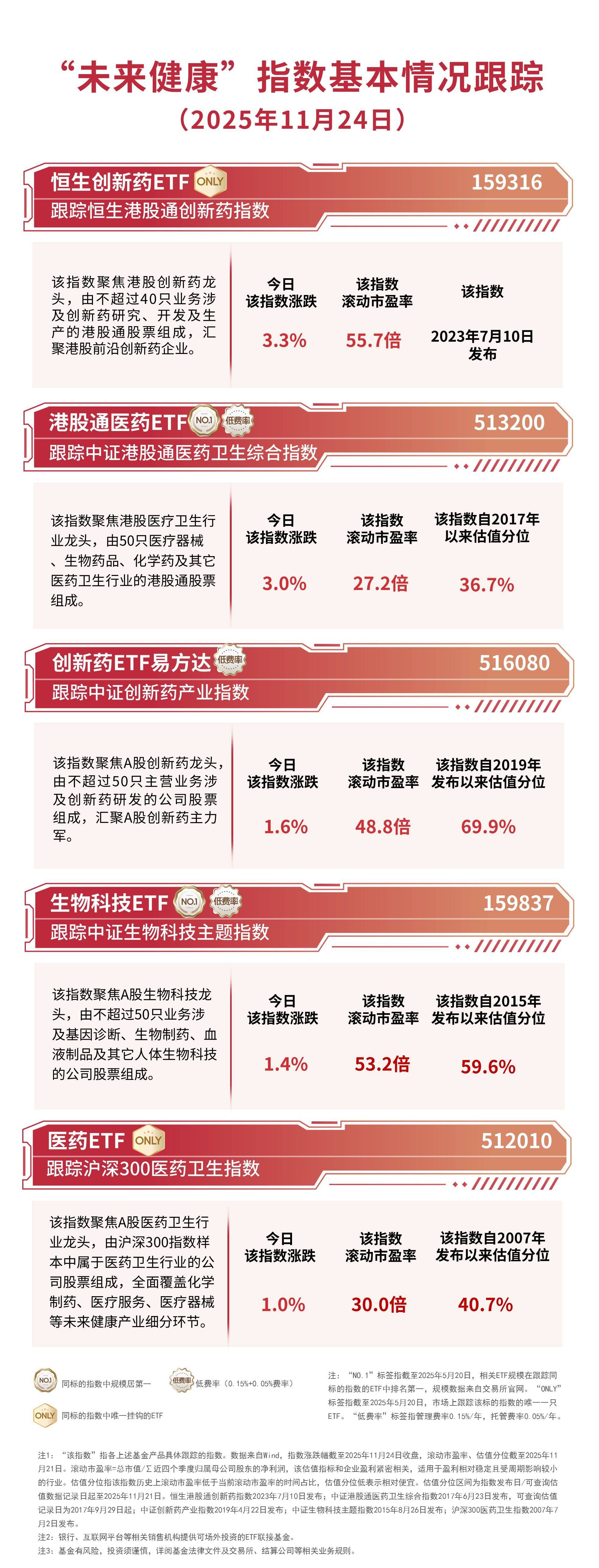
创新药板块今日高开高走,关注恒生创新药ETF(159316)、创新药ETF易方达(516080)等投资价值
Sou Hu Cai Jing· 2025-11-24 12:20
Group 1 - The Hang Seng Hong Kong Stock Connect Innovative Drug Index rose by 3.3%, while the CSI Hong Kong Stock Connect Pharmaceutical and Health Comprehensive Index increased by 3%, indicating a positive trend in the Hong Kong pharmaceutical sector [1] - The China pharmaceutical industry has entered a critical phase characterized by "innovation realization + global layout," supported by population and domestic demand, as well as comprehensive manufacturing capabilities [1] - By 2026, there are opportunities to focus on innovative commercialization, global breakthroughs, policy optimization, and industry mergers and acquisitions [1] Group 2 - The index focuses on leading stocks in the Hong Kong healthcare sector, comprising 50 stocks from medical devices, biopharmaceuticals, chemical drugs, and other healthcare industries [4] - The innovative drug ETF tracks the CSI Innovative Drug Industry Index, which includes no more than 50 companies involved in innovative drug research and development in the A-share market [6] - The biotechnology ETF tracks the CSI Biotechnology Theme Index, focusing on leading A-share companies involved in gene diagnosis, biopharmaceuticals, blood products, and other human biotechnology [11]
A股震荡“翻倍基”仅剩两成,ETF狂揽千亿逆势加仓
Di Yi Cai Jing· 2025-11-24 12:16
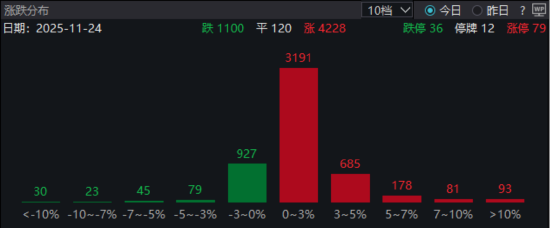
Core Insights - The A-share market has experienced significant volatility, with the Shanghai Composite Index dropping below key support levels, leading to a decline of nearly 5% in just over a week [1][4] - Active equity funds have faced substantial performance declines, with nearly 90% reporting negative returns in the fourth quarter, and over 30% experiencing declines exceeding 10% [2][3] - In contrast, the ETF market has seen a surge in inflows, with over 102.8 billion yuan entering stock ETFs in the fourth quarter, reversing a trend of outflows from the previous quarter [3] Group 1: Market Performance - The Shanghai Composite Index fell to 3836.77 points, with a cumulative decline of 4.78% over the last seven trading days [4] - Active equity funds have seen a dramatic reduction in performance, with only 23% of previously high-performing funds remaining in positive territory [2] - The decline in active funds is attributed to a significant market correction, particularly affecting sectors like AI and pharmaceuticals that had previously attracted substantial investment [2][3] Group 2: ETF Market Dynamics - The ETF market has attracted significant capital, with 102.8 billion yuan net inflow in the fourth quarter, marking a stark contrast to the nearly 50 billion yuan outflow in the previous quarter [3] - Notable inflows have been observed in broad-based ETFs, with specific products like the Southern CSI 500 ETF and the E Fund ChiNext ETF seeing net inflows exceeding 40 billion yuan [3] - Defensive investment strategies have gained traction, with funds focused on low volatility and free cash flow attracting significant capital, indicating a preference for stable assets in a turbulent market [3] Group 3: Future Market Outlook - Analysts suggest that the current market volatility may present long-term investment opportunities in sectors with strong fundamentals, despite short-term challenges [5][6] - The ongoing adjustments in market sentiment are expected to continue, with a focus on sectors such as technology, consumption, and high-end manufacturing as potential growth areas [6] - The overall outlook remains cautiously optimistic, with expectations of a gradual upward trend in the A-share market, supported by structural improvements in the domestic economy and favorable monetary conditions [6]
ETF日报:游戏行业具有相对较好的弹性,经历前期调整后,板块整体的配置性价比有所提升,关注游戏ETF
Xin Lang Ji Jin· 2025-11-24 11:57
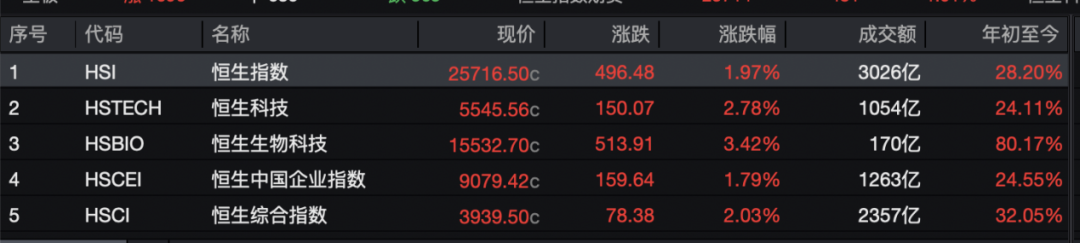
Market Overview - A-shares experienced a slight stabilization today, with the Shanghai Composite Index rising by 0.05% to 3836.77 points and the Shenzhen Component Index increasing by 0.37% to 12585.08 points, amidst a total trading volume of 1.7 trillion yuan [1] - The military and media sectors led the market, while the dividend style saw a pullback, indicating a recent adjustment phase influenced by external economic pressures and high valuations [1] Gaming Sector - The gaming sector showed strength today, with the gaming ETF (516010) rising by 3.15%, recovering from last week's losses, indicating a "post-pullback offensive window" for investment [3] - In Q3 2025, the gaming industry's revenue reached 30.362 billion yuan, marking a year-on-year growth of 28.6% and a quarter-on-quarter increase of 9.48%, with profits growing by 112% to 5.777 billion yuan, reflecting strong profitability and continued industry momentum [3] - AI's impact on cost reduction is significant, with management expense ratios decreasing from 10% in Q1 2023 to 7% in Q3 2025, and R&D expense ratios dropping from 12% to 11% in the same period, enhancing profit margins [3] Media and Internet Sector - In Q3 2025, public funds increased their holdings in the media and internet sector, with the market value proportion rising to 2.50%, and the gaming sub-sector's allocation increasing to 1.68%, indicating a positive outlook for valuation and liquidity recovery [4] - The gaming industry remains resilient due to high fundamental growth, ongoing AI cost reduction trends, and a favorable supply of game licenses, suggesting improved investment opportunities [4] Hong Kong Market - The Hong Kong market rebounded significantly, with the Hang Seng Index rising by 1.97% to 25716.50 points, and the Hang Seng Tech Index increasing by 2.78% to 5545.56 points, indicating a systemic recovery in the internet sector [6] - Despite recent volatility due to hawkish signals from the Federal Reserve and concerns over AI valuations, there is potential for marginal improvement in risk appetite following upcoming policy meetings [6][5] Gold and Innovation Drug Sectors - The gold ETF (518800) saw a slight increase of 0.31%, supported by fluctuating interest rate expectations and geopolitical tensions, which have bolstered safe-haven demand [6] - The innovation drug sector reported a revenue of 48.56 billion yuan in the first three quarters of 2025, reflecting a year-on-year growth of 21.41%, with a significant reduction in net profit losses, indicating a positive trend in the industry [8] - The establishment of a commercial insurance directory for innovative drugs is expected to create a potential funding pool of approximately 20 billion yuan, enhancing the financial landscape for the sector [8]
集体引爆 AI概念上攻!
Zhong Guo Ji Jin Bao· 2025-11-24 11:06
【导读】港股三大指数大涨,AI概念股集体上攻 首先,千问App的底层技术支撑是阿里通义千问(Qwen)大模型。据了解,Qwen系列模型自2023年起便通过开源策略,在全球技术社区积累了广泛影响 力,累计下载量已突破6亿次,其性能也获得了包括英伟达CEO黄仁勋等的公开认可。其次,千问App精准定位为"会聊天能办事的个人AI助手",强调其 实用价值。 创新药涨幅居前 11月24日,创新药概念股涨幅居前,三生制药涨6.07%,恒瑞医药涨5.61%,翰森制药涨5.29%,药明康德涨5.12%。 中国银河证券表示,看好2026年医药行业投资机会,近期震荡调整后估值已回落至相对低位,有望在2026年重启升势。投资思路上,寻找医药硬科技和细 分赛道超额收益。推荐关注创新药、创新器械(影像、高值耗材、消费器械等)、医疗AI等方向,关注医药消费复苏及独立第三方临床实验室(ICL)等 方向。 11月24日,港股三大指数集体大涨。截至收盘,恒生指数涨1.97%,报收于25716.50点;恒生国企指数涨1.79%,报收于9079.42点;恒生科技指数涨 2.78%,报收于5545.56点。全日大市成交额为3026亿港元,南向资金净买 ...