
交通运输

Search documents
社保基金持仓动向:二季度新进11股
Zheng Quan Shi Bao Wang· 2025-08-11 01:45
Core Insights - The article highlights the recent movements of social security funds in the stock market, revealing that 11 new stocks were added to their portfolio in the second quarter [1] - A total of 187 companies have released their semi-annual reports, and the top ten circulating shareholders' data indicates the actions of institutional investors [1] Group 1: Social Security Fund Holdings - The social security fund has invested in 32 stocks, with 11 new entries, 6 increased holdings, and 8 reduced holdings, while 7 stocks remained unchanged in their holdings [1] - The stock with the highest number of social security fund shareholders is Su Shi Shi Yan (300416), with 3 funds appearing in the top ten circulating shareholders [1] - The total holding of Su Shi Shi Yan by social security funds is 14.862 million shares, accounting for 2.94% of the circulating shares [1] Group 2: Performance of Newly Acquired Stocks - Among the newly acquired stocks, the highest holding percentage by social security funds is in Zhong Chumai, with a holding ratio of 3.45% [2] - The stock with the largest number of shares held by social security funds is Su Shi Shi Yan, with 14.862 million shares, followed by Zhongyuan Expressway (600020) and Ta Pai Group (002233) with 13 million and 12.166 million shares, respectively [2] - In terms of performance, 10 out of the newly acquired stocks reported a year-on-year increase in net profit, with Ta Pai Group achieving the highest growth rate of 92.47% [2]



A股三大指数集体高开,深成指涨0.27%
Feng Huang Wang Cai Jing· 2025-08-11 01:35
Group 1 - A-shares opened higher with the Shanghai Composite Index up 0.05%, Shenzhen Component Index up 0.27%, and ChiNext Index up 0.13% on August 11, 2023 [1] - Sectors such as lithium mining, Xinjiang, and rail transit equipment saw significant gains [1] Group 2 - Insurance capital is accelerating its market entry, with 22 instances of insurance capital increasing stakes this year, surpassing the total for 2024 [2] - Ping An Life has made 7 stake increases, and 35 companies have insurance capital among their top ten shareholders, holding a total of 889 million shares valued at 13.727 billion yuan [2] - Key sectors for insurance capital investments include telecommunications, non-ferrous metals, transportation, electronics, and machinery [2] Group 3 - Everbright Securities predicts that the market will enter a new phase of upward momentum in the second half of the year, potentially surpassing the peak levels of 2024 [3] - The market transition from policy-driven to fundamentals and liquidity-driven dynamics is noted, with expectations of continued improvement in fundamentals and sustained capital inflow [3] - Emerging industries are expected to present opportunities, contributing to the anticipated market rally [3] Group 4 - Huatai Securities highlights a rebound in A-shares driven by trading funds, with a focus on sectors showing improvement and potential for catch-up, including storage, software, general automation, certain chemicals, insurance, and coal [4] - Strategic allocations continue to favor large financials, pharmaceuticals, and military industries [4]



券商晨会精华 | 险资加快入市步伐
智通财经网· 2025-08-11 00:28
Market Overview - The market experienced slight declines last Friday, with the Shanghai Composite Index down 0.12%, the Shenzhen Component down 0.26%, and the ChiNext Index down 0.38% [1] - The total trading volume in the Shanghai and Shenzhen markets was 1.71 trillion yuan, a decrease of 115.3 billion yuan compared to the previous trading day [1] Institutional Insights - CITIC Securities noted that insurance capital is accelerating its market entry, with 22 instances of insurance capital increasing stakes this year, surpassing the total for 2024 [2] - The total number of shares held by insurance capital in the top ten shareholders of 35 listed companies amounts to 889 million shares, with a total market value of 13.727 billion yuan [2] Market Outlook - Everbright Securities predicts that the market will enter a new phase of upward momentum in the second half of the year, potentially surpassing the peak levels of 2024 [3] - The market's performance is expected to be driven by fundamental improvements, sustained capital inflows, and opportunities from emerging industries [3] Strategic Allocation - Huatai Securities continues to favor strategic allocations in large financials, pharmaceuticals, and military sectors, while also identifying tactical opportunities in sectors like storage, software, and certain chemicals [4] - The report highlights a return to a "barbell" investment style, focusing on dividend yield and small-cap stocks [4]
中信建投:险资加快入市步伐
Xin Lang Cai Jing· 2025-08-10 23:32
Core Insights - Insurance capital is accelerating its market entry, with 22 instances of capital injection this year, surpassing the total for the entire year of 2024 [1] - Ping An Life has made 7 of these capital injections, indicating a significant role in the market [1] - From the disclosed semi-annual reports of listed companies, 35 companies have insurance capital among their top ten circulating shareholders, holding a total of 889 million shares valued at 13.727 billion yuan [1] Industry Focus - The sectors where insurance capital is heavily invested include telecommunications, non-ferrous metals, transportation, electronics, and machinery [1] - The acceleration of insurance capital entering the market is driven by favorable policies and the need to enhance investment returns [1]
宏观周报:物价低位运行,央行再度增持黄金-20250810
Hua Lian Qi Huo· 2025-08-10 13:27
1. Report Industry Investment Rating No relevant content provided. 2. Core View of the Report - In July 2025, the national consumer price index (CPI) was flat year - on - year. Food prices decreased by 1.6%, non - food prices increased by 0.3%, consumer goods prices decreased by 0.4%, and service prices increased by 0.5%. From January to July, the average CPI decreased by 0.1% compared with the same period last year [5][51]. - In July 2025, the producer price index for industrial products (PPI) decreased by 3.6% year - on - year, and the purchasing price index for industrial producers decreased by 4.5%. From January to July, the average PPI decreased by 2.9% compared with the same period last year, and the purchasing price index for industrial producers decreased by 3.2% [5][58]. - As of the end of July 2025, China's gold reserves were 73.96 million ounces, an increase of 60,000 ounces from the end of June 2025, increasing for 9 consecutive months. It is expected that the central bank will continue to increase its gold holdings [6]. - As of the end of July 2025, China's foreign exchange reserves were $3.2922 trillion, a decrease of $25.2 billion or 0.76% from the end of June, remaining above $3.2 trillion for 20 consecutive months [6]. - In the first 7 months of this year, China's goods trade showed an upward trend. The total value of imports and exports was 25.7 trillion yuan, a year - on - year increase of 3.5%, and the growth rate was 0.6 percentage points faster than that in the first half of the year [6]. - In July 2025, the manufacturing purchasing managers' index (PMI) was 49.3%, down 0.4 percentage points from the previous month. The manufacturing industry's prosperity level declined seasonally and generally remained in a downward trend [6]. 3. Summary According to Relevant Catalogs National Economic Accounting - GDP quarterly year - on - year growth rates from Q1 2023 to Q2 2025 are presented. Different industries such as agriculture, forestry, animal husbandry and fishery, industry, construction, and services have their respective growth rate trends [8]. - The contribution rates of different industries to GDP growth from Q1 2023 to Q2 2025 are shown, including agriculture, forestry, animal husbandry and fishery, industry, construction, and various service - related industries [13]. Industry Industrial Growth Rate - The year - on - year growth rates of added value of major industries from May to June in the past two years are provided, including coal mining and washing, oil and gas extraction, and manufacturing industries [22]. Major Industrial Output - The output data of major industrial products from June 2024 to June 2025 are listed, including energy products, industrial raw materials, and finished products [24]. Industry Electricity Consumption - The year - on - year growth rates of electricity consumption of major industries from March 2024 to May 2025 are given, including agriculture, forestry, animal husbandry and fishery, mining, and manufacturing [33]. Industrial Enterprise Profits - From January to June 2025, the total profit of large - scale industrial enterprises was 3.4365 trillion yuan, a year - on - year decrease of 1.8%. The main industry profit situations vary, with some industries showing growth and others decline [36]. - From January to June 2025, the mining industry's profit was 429.41 billion yuan, a year - on - year decrease of 30.3%; the manufacturing industry's profit was 2.59006 trillion yuan, a year - on - year increase of 4.5%; the electricity, heat, gas and water production and supply industry's profit was 417.04 billion yuan, a year - on - year increase of 3.3% [41]. Industrial Enterprise Inventory - As of the end of May 2025, the finished product inventory of large - scale industrial enterprises was 6.65 trillion yuan, a year - on - year increase of 3.5%. The overall inventory is in a stage from passive replenishment to passive destocking [46]. Price Index CPI - In July 2025, the CPI was flat year - on - year. Food prices decreased, while non - food prices increased. The average CPI from January to July decreased by 0.1% compared with the same period last year [51]. - The year - on - year and month - on - month data of CPI sub - items from July 2024 to July 2025 are presented, including food, clothing, housing, and other categories [52]. PPI - In July 2025, the PPI decreased by 3.6% year - on - year, and the purchasing price index for industrial producers decreased by 4.5%. The average PPI from January to July decreased by 2.9% compared with the same period last year [58]. - The year - on - year data of PPI for major industries from July 2024 to July 2025 are provided, including production materials, living materials, and various mining and manufacturing industries [58][61]. - The year - on - year data of industrial producer purchasing prices from July 2024 to July 2025 are given, including fuel power, black metal materials, and other categories [62]. Main City Newly - Built Residential Prices - The year - on - year and month - on - month data of the price index of newly - built commercial residential buildings in 70 large and medium - sized cities from June 2015 to June 2025 are shown, including data for first - tier, second - tier, and third - tier cities [63][64][66].
通胀指标环比改善,北京优化地产限购
HTSC· 2025-08-10 09:54
Economic Indicators - July CPI growth slowed to 0% from 0.1% in June, while PPI's year-on-year decline remained at 3.6%[6] - The year-on-year decline in PPI's month-on-month change narrowed to 0.2% from 0.4% in June[6] Export and Trade - High-frequency indicators suggest a potential decline in August exports, indicating a gradual retreat from previous "export rush" effects[1] - July's dollar-denominated import/export growth rates improved to 4.1% and 7.2% respectively, up from 1.1% and 5.9% in June[6] Real Estate Market - New home transaction area in 44 cities saw a year-on-year decline widen to 24.4% from 21.4% the previous week, with first-tier cities experiencing a 39.2% drop[61] - Second-hand home transaction area in 22 cities also saw a decline widen to 3.1% from 3.0%[61] Commodity Prices - Brent crude oil prices fell 4.7% to $66.4 per barrel, while COMEX gold prices rose 1.2% to $3,404 per ounce[3] - Domestic copper and rebar prices increased by 0.2% and 0.1% respectively, while coking coal and cement prices rose by 1.7% and 0.7%[3] Financial Market Trends - Interbank liquidity showed marginal easing, with the RMB appreciating 0.39% against the USD[4] - Net issuance of interest rate bonds increased to 808.5 billion yuan, a year-on-year rise of 2.7%[4]
新华财经早报:8月10日
Xin Hua Cai Jing· 2025-08-10 01:14
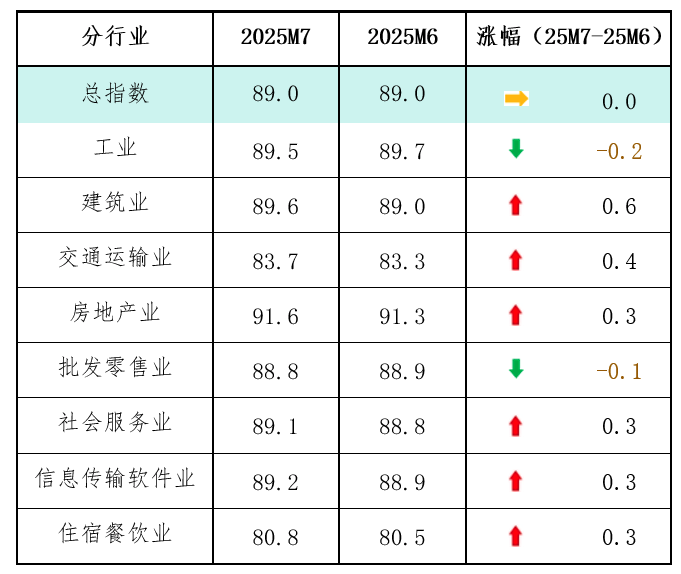
Economic Indicators - In July, China's CPI increased by 0.4% month-on-month, reversing a 0.1% decline from the previous month, and the year-on-year core CPI rose by 0.8%, marking the highest increase since March 2024 [3] - The PPI in July decreased by 0.2% month-on-month, but the decline was narrowed by 0.2 percentage points compared to the previous month, marking the first contraction since March [3] Agricultural Sector - The Ministry of Agriculture and Rural Affairs reported that China's pork production and consumption account for about 60% of total meat consumption, and measures will be taken to adjust the breeding of approximately 1 million sows to prevent price volatility [3] Small and Medium Enterprises - The China Small and Medium Enterprises Development Index (SMEDI) for July remained stable at 89.0, with significant increases in sectors such as construction, transportation, real estate, and information technology [3] Trade and Tariffs - The U.S. trade-weighted average tariff rate has risen to 20.11%, significantly higher than the 2.44% at the beginning of the year, indicating a substantial increase in trade barriers [5] - The World Trade Organization has downgraded the global goods trade growth forecast for 2026 from 2.5% to 1.8%, citing recent tariff adjustments as a negative influence on global trade prospects [5] International Relations - European leaders emphasized that any diplomatic solution regarding the Ukraine crisis must protect the significant security interests of Europe and Ukraine [5] - Discussions are ongoing between Qatar and the U.S. regarding a comprehensive ceasefire agreement for the Gaza conflict, expected to be submitted for discussion soon [5]


中国中小企业协会:7月中国中小企业发展指数为89.0,与上月持平
Xin Lang Cai Jing· 2025-08-09 23:52
Core Insights - The Small and Medium Enterprises Development Index (SMEDI) for July in China is reported at 89.0, remaining unchanged from the previous month [1] Industry Performance - The index shows a positive trend with 6 industries increasing and 2 decreasing in July [1] - Significant increases were observed in the following sectors: - Construction: up by 0.6 points to 89.6 - Transportation: up by 0.4 points to 83.7 - Real Estate: up by 0.3 points to 91.6 - Social Services: up by 0.3 points to 89.1 - Information Transmission and Software: up by 0.3 points to 89.2 - Accommodation and Catering: up by 0.3 points to 80.8 [2] - The Industrial sector saw a slight decline of 0.2 points to 89.5, while Wholesale and Retail decreased by 0.1 points to 88.8 [2]
高频跟踪周报:地产成交继续缩量-20250809
Tianfeng Securities· 2025-08-09 13:52
Report Information - Report Title: High - frequency Tracking Weekly Report 20250809 - Report Date: August 9, 2025 Industry Investment Rating No industry investment rating information is provided in the report. Core Viewpoints - The real - estate new home transactions declined both on a week - on - week and year - on - year basis, falling below the seasonal level, and further policy support is needed. The movie box office recovered, while the migration scale index dropped. Industrial production in the production field was stable, and infrastructure construction maintained resilience. In terms of investment, the consumption and price of rebar were divergent, and cement demand declined. The commodity futures market ran smoothly with differentiated performance among varieties, with lithium carbonate, iron ore, and polysilicon generally rising [2]. Summary by Directory 1. Demand - **Real - estate**: This week, the transaction area of commercial housing in 20 cities declined on a week - on - week and year - on - year basis, significantly below the seasonal level. The transaction area of second - hand housing in key cities also decreased overall. For example, in Beijing, Shanghai, Shenzhen, and Hangzhou, the second - hand housing transaction areas all decreased on a week - on - week basis. The current real - estate supply and demand are weak, and more active real - estate easing policies may be needed in the second half of the year, such as further relaxing purchase restrictions in core cities, lowering mortgage interest rates, and reducing down - payment ratios. On August 8, Beijing announced a new housing purchase policy, allowing eligible families to buy an unlimited number of properties outside the Fifth Ring Road [3][4][14]. - **Consumption**: Movie box office recovered. As of the week ending August 1, the daily average retail sales of passenger cars increased by 41.0% on a week - on - week basis but decreased by 7.7% year - on - year. As of the week ending August 8, the national movie box office increased by 4.7% on a week - on - week basis and was stronger than the same period last year. The national migration scale index decreased by 5.0% on a week - on - week basis, and the subway passenger volume in first - tier cities declined [42]. 2. Production - **Mid - upstream**: The operating rate of Tangshan blast furnaces, petroleum asphalt plants decreased on a week - on - week basis. As of the week ending August 8, the operating rate of Tangshan blast furnaces dropped by 1.1 pct to 82.6%, the operating rate of rebar increased by 0.3 pct to 44.3%, the operating rate of PTA decreased by 2.5 pct to 76.2%, the operating rate of polyester filament in the Yangtze River Delta region decreased by 0.9 pct to 90.7%, and the operating rate of petroleum asphalt plants decreased by 1.4 pct to 31.7% [50]. - **Downstream**: The operating rate of the automotive industry declined slightly. The operating rates of all - steel and semi - steel tires in the automotive industry decreased on a week - on - week basis, and the absolute value of the semi - steel tire operating rate remained at a seasonal high. The trade - in subsidy policy continued to boost domestic demand and may support the production side in the short term [50]. 3. Investment - Rebar's apparent consumption recovered, but its price decreased. As of the week ending August 8, rebar's apparent consumption increased by 3.6% to 211 tons, and its price decreased by 1.0% to 3392.8 yuan/ton. The asphalt price decreased by 2.7% to 3535 yuan/ton. The cement price decreased by 0.6% to 103.8 points, the cement shipping rate decreased by 0.7 pct to 39.2%, and the cement inventory - to - capacity ratio decreased by 0.1 pct to 62.6% [66]. 4. Trade - **Export**: Port throughput decreased, and container shipping prices generally declined. As of the week ending August 8, the port's container throughput decreased by 8.5% on a week - on - week basis, lower than the level of the same period last year. The CCFI composite index dropped by 2.6% on a week - on - week basis, with the European route rising by 0.53% on a week - on - week basis, and the freight rates of the US West and US East routes decreasing by 5.56% and 5.14% respectively on a week - on - week basis. In addition, the BDI index continued to decline, dropping by 3.9% on a week - on - week basis [79]. - **Import**: The container shipping price decreased slightly, and the CICFI composite index was 673.9 points, down 0.9% on a week - on - week basis [79]. 5. Prices - **CPI**: The 200 - index of agricultural product wholesale prices increased by 0.7% on a week - on - week basis. Vegetable prices rose, while egg, pork, and fruit prices declined. Specifically, vegetable prices increased by 3.3% on a week - on - week basis, pork prices decreased by 0.4% on a week - on - week basis, egg prices decreased by 0.8% on a week - on - week basis, and fruit prices decreased by 1.0% on a week - on - week basis [8][90]. - **PPI**: The Nanhua industrial product price index decreased by 1.3% on a week - on - week basis. The spot price of Brent crude oil decreased by 3.4% on a week - on - week basis, the WTI crude oil futures price decreased by 5.2% on a week - on - week basis, the IPE UK natural gas futures settlement price increased by 0.7% on a week - on - week basis, the COMEX gold futures price increased by 2.5% on a week - on - week basis, and the LME copper spot price decreased by 0.6% on a week - on - week basis. The commodity futures market ran smoothly with differentiated performance among varieties. This week, lithium carbonate, iron ore, soda ash and other commodity futures led the gains, while caustic soda, coking coal, and glass led the losses [8][98][109]. 6. Interest - rate Bond Tracking - Next week (August 11 - 15), the planned issuance of interest - rate bonds is 385.4 billion yuan, with a net financing of 173.5 billion yuan. Among them, the planned issuance of government bonds is 260 billion yuan, with a net financing of 164.4 billion yuan; the planned issuance of local bonds is 91.4 billion yuan, with a net financing of - 13.7 billion yuan; the planned issuance of policy - bank bonds is 34 billion yuan, with a net financing of 22.9 billion yuan [9][115]. - As of August 8, the cumulative issuance progress of replacement bonds this year has exceeded 94.2%, reaching 1.883 trillion yuan. The cumulative issuance progress of new general bonds is 68.2%, reaching 545.6 billion yuan, and the cumulative issuance progress of new special bonds is 64.0%, reaching 2.8179 trillion yuan [9]. 7. Policy Weekly Observation - The central bank has increased its gold holdings for the 9th consecutive month. As of the end of July, China's gold reserves were reported at 73.96 million ounces (about 2300.41 tons), an increase of 60,000 ounces (about 1.86 tons) compared with the previous month [126][127]. - Multiple policies were introduced this week, covering pre - school education, finance supporting new industrialization, bond valuation, monetary policy, industrial policy, and real - estate policy, etc. For example, the State Council issued an opinion on gradually promoting free pre - school education; seven departments jointly issued a guiding opinion on financial support for new industrialization; the central bank will conduct a 700 - billion - yuan outright reverse repurchase operation [127][128].
CPI、PPI数据点评(2025.7):金价走高和“反内卷”小幅推升核心CPI
Huafu Securities· 2025-08-09 13:10
Inflation Data Summary - July CPI decreased by 0.1 percentage points year-on-year to 0.0%, primarily due to weak food prices[3] - Core CPI improved for the third consecutive month, rising by 0.1 percentage points to 0.8%, driven by higher gold prices and strong service consumption[3] - July PPI remained at a near 23-month low, with a year-on-year decline of -3.6%[3] Food Prices Impact - July food CPI fell by 0.2% month-on-month, significantly below seasonal levels by 0.9 percentage points[4] - Year-on-year food CPI dropped by 1.6%, influenced by a high base from the previous year[4] - Fresh vegetable and meat prices increased by 1.3% and 0.4% month-on-month, respectively, but were still below seasonal averages[4] Core CPI Drivers - Service prices remained stable at 0.5% year-on-year, with significant increases in travel-related costs: airfares up 17.9%, hotel stays up 6.9%[5] - Gold and platinum jewelry prices surged by 37.1% and 27.3% year-on-year, respectively, due to rising gold prices[5] - Transportation fuel prices saw a reduced decline of 1.8 percentage points to -9.0% year-on-year[5] PPI Trends - PPI's month-on-month decline narrowed by 0.2 percentage points, reflecting the impact of "anti-involution" measures[6] - International oil prices increased, contributing to a 3.0% rise in oil and gas extraction month-on-month[6] - Investment demand remains weak, limiting PPI recovery to a gradual improvement[6]