茶饮

Search documents
喝5元奶茶,吃临期食品,消费正回到十年前!
Sou Hu Cai Jing· 2025-06-23 08:56
Group 1: Industry Overview - The consumption sector is becoming increasingly important, but the growth effect from consumption is lower than expected [1] - The tea beverage industry, particularly the milk tea segment, has seen significant closures, with 197,000 stores shutting down from November 2023 to November 2024 [1] - Nayuki's Tea reported a revenue of 4.921 billion yuan in 2024, a year-on-year decline of 4.7%, with a loss of 919 million yuan [1] Group 2: Market Leaders - Mixue Ice City has emerged as the largest winner in the milk tea market, boasting over 45,000 stores globally and a revenue of 24.8 billion yuan in 2024, with a gross profit of 8 billion yuan [3][4] - The low price point of Mixue Ice City, with drinks priced around 5 yuan, has allowed it to achieve growth amidst a contracting market [4] Group 3: Consumer Behavior Changes - There is a notable shift in consumer behavior, with younger generations now favoring low-cost options, contrasting with previous trends where premium brands were preferred [5][6] - The price sensitivity among consumers has increased, leading to a preference for affordable products like milk tea and discounted food items [23] Group 4: Broader Economic Implications - The decline in consumption is not limited to the milk tea sector but is reflected in other food categories, such as pork, which has seen prices drop to around 10 yuan [10][11] - The rapid growth of the near-expiry food market indicates a shift in consumer preferences, with projections suggesting the market could exceed 200 billion yuan by 2029 [12][13] Group 5: E-commerce Trends - Pinduoduo's revenue for Q1 was 95.67 billion yuan, up from 86.81 billion yuan year-on-year, but the company faced a significant drop in net profit, indicating challenges in the e-commerce sector [17] - The decline of Pinduoduo is attributed to a combination of factors, including a lack of government subsidies and increased competition from other e-commerce platforms [17] Group 6: Economic Transition - The shift from investment-driven growth to consumption-driven growth is crucial for the economy, as over-reliance on investment has led to inefficiencies and excess capacity in various sectors [18][20] - The importance of stimulating consumption is emphasized as a means to support employment and income growth, particularly in light of a large number of college graduates entering the job market [22][23]



新茶饮加速出海:高投入之下 盈利曙光何时现?
Xi Niu Cai Jing· 2025-06-23 08:55
近年来,新茶饮行业掀起出海浪潮,众多品牌积极拓展海外市场,试图在全球饮品版图上占据一席之地。不过,海外市场虽充满机遇,却也荆棘丛生,品牌 在探索过程中面临着诸多考验。 今年2月23日,喜茶首家海外LAB店在美国纽约时代广场开业,并打造全球首个TEA LAB创新实验空间,还单独设立TEA LAB系列产品线,部分高端产品价 格接近10美元。自进驻美国市场以来,喜茶已在美国开出逾20家门店。 今年4月26日,霸王茶姬首家北美门店正式对外试运营,选址位于美国洛杉矶人气商场Westfield Century City,紧邻比佛利山庄和西洛杉矶等重要区域。 瑞幸今年首家门店选址则位于纽约东村东八街,据"剁椒Spicy"援引业内人士的话报道称,瑞幸在曼哈顿的两家店也马上就要开业,前十家店采用直营模 式,冰美式定价2美元至3美元,与星巴克6美元形成价格错位。 除了在美国开始发力以外,东南亚依旧是茶饮品牌出海的关键区域。蜜雪冰城凭借亲民价格和灵活多样的店型,迅速在东南亚下沉市场铺开。 霸王茶姬和奈雪的茶则走高端路线。霸王茶姬聚焦马来西亚和新加坡,以星巴克为参照选址核心商圈。据其财报披露,2025年一季度霸王茶姬海外市场总 GM ...


茅台跌倒,新消费三姐妹却“暴力逆袭”?
Tai Mei Ti A P P· 2025-06-23 08:09
Core Viewpoint - The article highlights the contrasting performance of traditional high-end liquor brands like Moutai, which are struggling, versus the rising success of new consumer brands such as Pop Mart, Mixue Ice City, and Laopu Gold, which are thriving in the current market environment [1][18]. Group 1: Company Performance - Pop Mart has achieved a market valuation close to HKD 300 billion, driven by its successful LABUBU plush toy line and a comprehensive IP ecosystem that includes original IP incubation and a blind box mechanism [3][10]. - Mixue Ice City has over 46,000 stores globally, with annual revenue exceeding CNY 24.8 billion and net profit over CNY 4.4 billion, focusing on affordable pricing and quality [4][10]. - Laopu Gold reported sales of CNY 9.8 billion in 2024, a 166% year-on-year increase, with net profit rising by 254% to CNY 1.47 billion, targeting a younger demographic with culturally rich gold jewelry [5][10]. Group 2: Business Strategies - Pop Mart's strategy involves creating a complete IP incubation system and product lifecycle management, moving beyond just selling blind boxes to a broader range of products [7][14]. - Mixue Ice City emphasizes a strong supply chain and low-cost entry for franchisees, allowing for rapid expansion and high turnover in the beverage market [10][14]. - Laopu Gold differentiates itself by combining traditional craftsmanship with modern aesthetics, positioning itself in high-end shopping districts and appealing to a younger, fashion-conscious audience [15][16]. Group 3: Market Trends - The article notes a shift in consumer preferences, with younger consumers favoring products that offer emotional value and social currency, as seen in the success of the new consumer brands [9][18]. - The traditional high-end liquor market is experiencing a downturn, with brands like Moutai facing challenges due to changing consumer habits and a decline in the "banquet culture" [18][19]. - The new consumer brands are capitalizing on the demand for affordable, trendy, and culturally relevant products, indicating a significant transformation in the consumption landscape [1][19].

泡泡玛特、蜜雪冰城和老铺黄金:三家千亿公司,三种稀缺性
创业邦· 2025-06-23 04:07
Core Viewpoint - The article discusses the rise of three new consumption brands in Hong Kong: Mixue Ice City, Pop Mart, and Laopu Gold, highlighting their unique business models and market strategies that cater to different consumer needs and preferences [5][7][23]. Group 1: Business Models - Mixue Ice City focuses on efficiency by offering low-priced products and expanding through a franchise model, supported by a highly efficient supply chain [10][20]. - Pop Mart capitalizes on emotional engagement through its collectible toys, creating a strong brand narrative and high market expectations, reflected in its elevated price-to-earnings ratio [10][12]. - Laopu Gold targets cultural identity and high-net-worth consumers by positioning itself as a luxury brand, successfully bridging the gap between traditional gold products and modern luxury [15][16]. Group 2: Market Performance - In 2023, the average stock price increase for these brands exceeded 200%, with a total market capitalization surpassing 700 billion HKD, indicating strong investor interest [3][5]. - Pop Mart's market capitalization has fluctuated significantly, reaching a peak of over 100 billion HKD shortly after its IPO in 2020, but later experiencing a decline of over 90% before recovering to around 37 billion HKD by mid-2024 [7][12]. - Laopu Gold has shown remarkable growth, with its revenue increasing from 130 billion CNY in 2018 to 1,573 billion CNY in 2023, demonstrating its successful market penetration [15][16]. Group 3: Channel Strategies - Mixue Ice City operates over 46,000 stores globally, primarily through a franchise model, while maintaining a low-cost structure that allows for competitive pricing [25][44]. - Pop Mart and Laopu Gold utilize a direct sales model, focusing on high-end retail locations to enhance brand prestige and customer experience [25][26]. - Laopu Gold's average store performance in luxury malls exceeds that of international brands, showcasing its effective positioning in the high-end market [25][26]. Group 4: International Expansion - All three brands began their international expansion in 2018, with Mixue Ice City opening its first overseas store in Vietnam, Pop Mart entering South Korea, and Laopu Gold establishing a presence in Hong Kong [34][35]. - By 2024, Pop Mart's overseas revenue accounted for nearly 40% of its total income, indicating a successful international strategy [37][39]. - Mixue Ice City has established a significant presence in Southeast Asia, with over 4,800 stores, while Laopu Gold is still in the early stages of its international expansion [42][43].

中东局势再升级,AH同步调整,该如何应对?
2025-06-23 02:09
Summary of Key Points from Conference Call Records Industry or Company Involved - The discussion primarily revolves around the **financial markets**, including **U.S. stocks**, **A-shares**, **H-shares**, **gold**, **bonds**, and the **semiconductor industry**. Additionally, geopolitical factors, particularly the **Middle East situation** and **U.S. Federal Reserve policies**, are significant themes. Core Points and Arguments 1. **U.S. Federal Reserve's Policy Impact** The Federal Reserve maintained interest rates in June but revised upward its unemployment and PCE forecasts for 2025 and 2026, while downgrading economic data, raising concerns about stagflation in the market [2][3][4] 2. **Middle East Geopolitical Tensions** The U.S. has conducted strikes on Iranian nuclear facilities, marking the onset of a nuclear conflict phase. However, the situation is expected to remain controlled, with a low probability of extreme events occurring [2][5] 3. **Gold Market Dynamics** Despite a 1.8% decline in gold prices recently, the long-term outlook remains positive, suggesting a strategy of dollar-cost averaging for investment [7][17] 4. **A-shares and H-shares Market Performance** Both markets are experiencing adjustments, influenced by external events and concerns over earnings reports. Defensive strategies focusing on AI, military, and stable industries are recommended [6][8][9][18] 5. **Bond Market Trends** Bond yields have slightly decreased, with expectations of liquidity tightening in the coming weeks. A recommendation to reduce positions and focus on short-term bonds is advised [11][12] 6. **Semiconductor Industry Growth** The PCB industry is expected to benefit from increased demand for North American ASIC chips, with projections indicating a market size of approximately $3 billion in 2025 and over $5-6 billion in 2026 [3][23] 7. **Investment Strategies in Current Economic Environment** The overall market sentiment is cautious due to various uncertainties, with a focus on defensive strategies and identifying sectors with potential growth, such as AI and military-related industries [13][14][18] 8. **Market Liquidity Expectations** The next two weeks are anticipated to be the peak of liquidity in the financial market, after which a marginal tightening is expected, impacting both long-term bonds and equities [12] Other Important but Possibly Overlooked Content 1. **Short-term vs Long-term Investment in Gold** The gold market should be analyzed from both a long-term investment perspective and a short-term trading strategy, with the latter suggesting potential reductions in holdings [17] 2. **Impact of External Factors on A-shares and H-shares** The performance of A-shares and H-shares is significantly influenced by external factors, including foreign capital movements and geopolitical tensions, which may lead to adjustments in investment strategies [15][18] 3. **Emerging Opportunities in the PCB Sector** The PCB sector is poised for growth driven by ASIC chip demand, with specific companies like Huadian and Shengyi Technology highlighted as potential investment opportunities [23][25] 4. **Defensive Investment Recommendations** In light of current market conditions, investments in defensive sectors such as banking and public utilities are recommended, alongside monitoring for opportunities in AI and military sectors [8][9][18] 5. **Trends in the White Wine Sector** The white wine sector is experiencing a rebound due to changes in consumption regulations and low valuations, indicating potential for growth [29][31] 6. **Short Drama Market Development** The short drama market is evolving under new regulations, with a focus on quality content production, which may benefit companies involved in this sector [26][27] This summary encapsulates the critical insights and recommendations derived from the conference call records, providing a comprehensive overview of the current market landscape and strategic considerations.
蜜雪冰城泡泡玛特和胖东来,河南人正在定义什么是潮?
Sou Hu Cai Jing· 2025-06-22 23:08
Core Insights - The article highlights the remarkable success of three companies from Henan, China: Mixue Ice City, Pop Mart, and Pang Donglai, which have transformed traditional industries and captured the global middle-class consumer market [2][12]. Group 1: Business Models - Mixue Ice City has established a clear business logic based on extreme cost performance, franchise expansion, and an efficient supply chain, allowing it to dominate the tea beverage market with low-priced products [3][4]. - Pop Mart has evolved from a small toy store to a cultural phenomenon through its blind box model, creating a unique ecosystem that combines IP operation, emotional engagement, and social currency [4][5]. - Pang Donglai has redefined the retail experience by transforming supermarkets into emotional spaces, focusing on high service quality and employee welfare, which has led to significant customer loyalty [5][7]. Group 2: Financial Performance - Mixue Ice City achieved a gross margin of 31.6% in 2024, significantly higher than the industry average, and expanded to 46,479 stores globally, making it the largest fresh beverage brand by store count [4][8]. - Pop Mart's Labubu series generated revenue of 3.041 billion yuan in 2024, a staggering year-on-year growth of 726.6%, contributing to a market valuation exceeding 370 billion HKD [5][10]. - Pang Donglai's single-store efficiency surpasses industry averages, demonstrating its successful adaptation to the retail landscape despite challenges from e-commerce [5][7]. Group 3: Consumer Trends - These companies have tapped into the emotional needs of contemporary middle-class consumers, offering not just products but emotional experiences that provide relief from daily pressures [8][10]. - Mixue Ice City appeals to consumers' desire for value, providing high-quality experiences at a fraction of the cost of premium brands, thus positioning itself as a smart consumption choice [8][10]. - Pop Mart capitalizes on the thrill of uncertainty and nostalgia, allowing consumers to relive childhood joys through collectible toys, which has resonated particularly well with younger audiences [10][11]. Group 4: Philosophical Approach - The success of these companies reflects a unique business philosophy from Henan, emphasizing patience, deep market understanding, and a blend of traditional values with modern practices [12][13]. - The concept of "slow is fast" and "local is trendy" underpins their strategies, focusing on sustainable growth rather than rapid expansion [12][13]. - The integration of social value with business profit is a hallmark of Henan entrepreneurs, as seen in Pang Donglai's employee welfare initiatives and Mixue's support for local suppliers [14][15]. Group 5: Cultural Impact - These companies are not only reshaping the consumer market but also promoting cultural confidence, with Pop Mart and Mixue Ice City successfully exporting Chinese cultural elements globally [15]. - Their stories illustrate that traditional industries can thrive through innovative thinking and emotional resonance, challenging the notion that only high-tech sectors can succeed in today's market [15].

“AI+”茶饮成新宠 年轻人爱上“数字养生茶”
Zhong Guo Xin Wen Wang· 2025-06-22 12:16
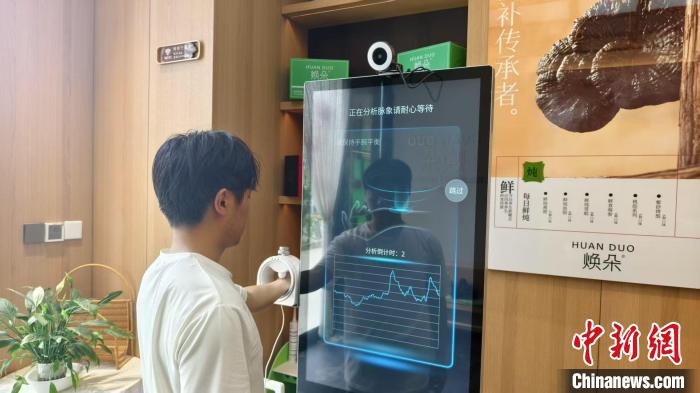
Core Insights - The rise of "AI+" tea drinks is becoming a new trend among young consumers, focusing on health and personalized experiences [1][3][4] - The integration of AI technology in tea shops allows for personalized tea recommendations and health tracking, increasing consumer trust and engagement [3][4] Industry Trends - 42.49% of Chinese consumers choose tea drinks for health and wellness purposes, with AI and 5G technologies expanding the online market for tea [3] - The average monthly repurchase rate of tea products has reached 47% since the implementation of AI projects in tea shops [3] Technological Integration - AI technology enables tea shops to visualize health needs, offering tailored tea recommendations and regular health assessments [3][4] - Innovations such as smart tongue diagnosis and pulse diagnosis are being used to create "symptom-specific" tea drinks [4] Market Outlook - The tea drink market is expected to see significant growth through the integration of AI technology and increased health awareness among consumers [4] - Future developments may focus on enhancing user experience through emotional value design and smarter interactions in the "AI+ tea" sector [4]
创投正迎来退出盛宴
母基金研究中心· 2025-06-22 08:49
Core Viewpoint - The Hong Kong stock market is experiencing unprecedented enthusiasm, with a significant increase in the number of companies going public and the amount of capital raised compared to previous years [1][5][9]. Group 1: Market Performance and Trends - In the first four months of 2025, 19 companies completed their IPOs in Hong Kong, raising 21.3 billion HKD, nearly three times the amount raised in the same period last year [1]. - As of May 20, 2025, 24 companies had listed on the Hong Kong main board, collectively raising over 60 billion HKD [1]. - The number of companies waiting to go public in Hong Kong has reached approximately 150 [1]. Group 2: Investment Institutions and Returns - Various venture capital firms are reaping substantial returns from the current IPO wave, particularly in the consumer sector, with notable companies like Pop Mart and Mixue Ice City backed by prominent investors [1][6]. - The market is seeing a trend where many entrepreneurial companies are choosing to list in Hong Kong due to slower listing processes in the A-share market and the need for financing [6][11]. Group 3: Notable IPOs and Valuations - Companies like Blukoo and Mixue Ice City have seen significant market valuations post-IPO, with Blukoo nearing 40 billion HKD and Mixue Ice City exceeding 200 billion HKD [2][4]. - Horizon Robotics, a tech company, saw its market value soar past 100 billion HKD shortly after its listing [2]. Group 4: Policy Changes and Market Attractiveness - The Hong Kong Stock Exchange has introduced new listing rules that allow unprofitable companies to go public, enhancing the appeal for tech startups [7][8]. - The introduction of the "Special Technology Company" listing mechanism aims to protect sensitive business information during the IPO process, further attracting tech firms [8]. Group 5: A+H Share Listings - A number of leading A-share companies, such as CATL and Heng Rui Medicine, are also pursuing dual listings in Hong Kong, with 45 A-share companies planning to list in Hong Kong as of April 30, 2025 [9][10]. Group 6: Future Outlook - The current IPO boom is expected to continue, with many companies in both consumer and hard tech sectors preparing for listings [11][12]. - The diversification of exit channels for venture capital and private equity firms is seen as a positive development, although the performance of ordinary companies in the IPO market may vary [16][17].

「四大金刚」,挤满商场一楼
投资界· 2025-06-22 07:23
Core Viewpoint - The retail landscape is shifting, with traditional beauty brands being replaced by new categories such as trendy toys, outdoor sports, and tea beverage brands, which are now dominating the first floor of shopping malls [4][5][7]. Group 1: Changing Retail Dynamics - The flagship store of Innisfree, a Korean beauty brand, was replaced by Pop Mart, a trendy toy company, highlighting a significant shift in consumer preferences [4]. - The emergence of the "Four Kings" (trendy toys, outdoor sports, new energy vehicles, and tea beverages) reflects a broader trend where traditional beauty counters are losing prominence in shopping malls [5][6]. - The vacancy rate in shopping malls, even in major cities, has approached 14%, providing an opportunity for the "Four Kings" to establish a presence [7]. Group 2: Impact on Beauty Brands - The number of beauty counters in China has decreased from 15,415 in 2020 to 11,365 in 2022, with low-end beauty counters experiencing the most significant decline [7]. - High-end beauty brands like Chanel and Lancôme continue to maintain their presence in malls despite overall declines in sales, as they contribute to the mall's image and customer traffic [8][9]. - The first floor of shopping malls serves as a "face" for the mall, influencing consumer perceptions and foot traffic [8]. Group 3: The Rise of New Categories - New energy vehicle brands have become a significant presence in shopping malls, with Tesla being a pioneer in this space [11][12]. - The tea beverage sector is rapidly evolving, with brands like Nayuki and Heytea adjusting their pricing strategies to adapt to changing consumer behaviors [15][16]. - The number of tea beverage brands is increasing, with some brands like Bawang Tea Ji opening nearly 3,000 new stores in 2024, indicating a strong expansion trend [16]. Group 4: Strategic Brand Positioning - Brands like Lululemon and Pop Mart are focusing on prime locations in high-end shopping malls, which enhances their brand visibility and consumer engagement [20][22]. - The "Bird Nest Plan" by brands like Arc'teryx emphasizes opening flagship stores in key urban areas, reflecting a strategic shift towards high-value locations [22][23]. - The competition for prime retail space is intensifying, with many mid-tier malls struggling to attract high-end brands, leading to a concentration of successful brands in top-tier malls [23]. Group 5: Future Outlook - The retail environment remains unpredictable, with some brands thriving while others struggle to maintain their presence [24]. - Emerging brands like Mao Geping are successfully expanding in the offline market, demonstrating that opportunities still exist for brands that offer unique customer experiences [24]. - The future of the "Four Kings" and their potential replacements remains uncertain, as consumer preferences continue to evolve [24].

一周上新!祐禾、全家、爱达乐...海内外新品资讯抢先看 | 全球职人情报站
东京烘焙职业人· 2025-06-22 00:18
Core Viewpoint - The article provides a comprehensive overview of the latest product launches and innovations in the baking industry, highlighting new offerings from various brands and companies, showcasing trends and consumer preferences in baked goods and desserts [1]. Product Innovations - Yuhe launched "Yogurt Soft Cake," featuring crispy freeze-dried yogurt particles and a smooth yogurt cream filling, balanced with savory chicken floss [2]. - HPC Bakery introduced "Lychee Cheese European Bread," described as soft and chewy, embodying the essence of lychee [10]. - Dingdong Maicai's "Wuchang Rice Ice Bread" incorporates premium Wuchang rice, with a fluffy exterior and a creamy filling, offering a unique taste experience [12]. - Walmart's "Coconut Latte Puff" features a crispy outer layer that bursts with rich coconut and coffee flavors [15]. - "Black Truffle Bacon French Baguette" from "Kongru" combines truffle sauce, caramelized onions, and crispy bacon for a luxurious taste [18]. Seasonal and Thematic Offerings - Various brands are launching summer-themed products, such as "Rose Lychee Bagel" from "My Bread," which combines fresh lychee and rose flavors [25]. - "Inno" introduced six fruit cakes, including a vibrant mango and guava combination, appealing to summer aesthetics [31]. - "Lai'ao" presented "Melon Cake," featuring smooth cream and fresh melon, ideal for summer enjoyment [34]. Collaborations and Market Trends - CoCo collaborated with the classic anime "Hunter x Hunter" for a special drink promotion, indicating a trend of cross-industry partnerships [110]. - Starbucks announced plans to sell part of its stake in China, aiming to enhance competitiveness in the market [111]. - The rising price of lemons, attributed to climate conditions and increased demand from the beverage industry, reflects market dynamics affecting ingredient costs [113]. New Product Highlights - "Fanen" introduced a series of egg tarts with floral designs, emphasizing the aesthetic appeal of baked goods [57]. - "The Daily Bagel" launched a unique bagel with a special sauce, showcasing innovative flavor combinations [59]. - "Lopus" presented two types of ciabatta, highlighting the trend of artisanal bread with rich fillings [62].