
电商

Search documents
美股反弹,芯片股领涨,中概股走强
第一财经· 2025-12-18 23:39
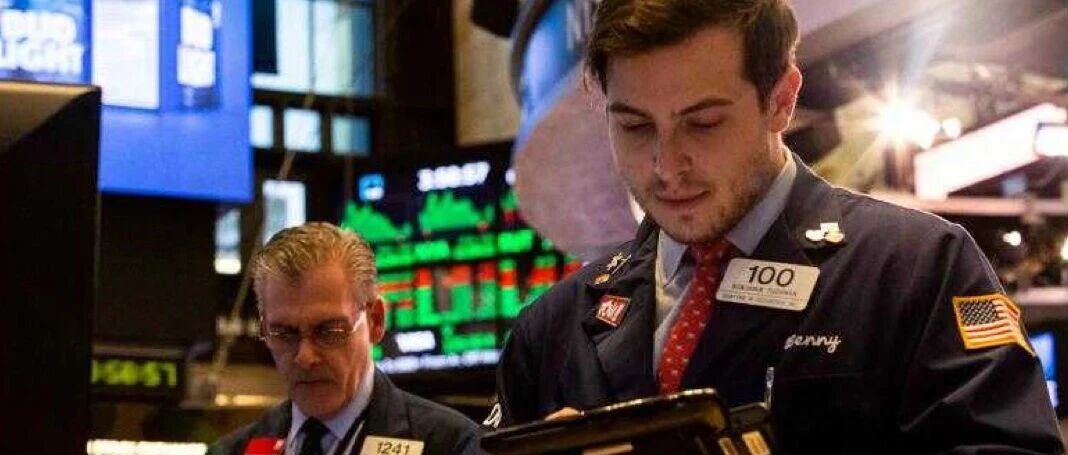
2025.12. 19 本文字数:1273,阅读时长大约2分钟 作者 | 第一财经 胡弋杰 周四,美股主要股指集体收高。美国11月通胀数据明显低于市场预期,强化了投资者对美联储明年 降息的押注,芯片制造商美光科技给出的强劲财测进一步点燃科技板块情绪,推动三大股指自三周低 位反弹。 截至收盘,道琼斯工业平均指数上涨65.88点,涨幅0.14%,报47951.85点;标普500指数上涨 53.33 点 , 涨 幅 0.79% , 报 6774.76 点 ; 纳 斯 达 克 综 合 指 数 上 涨 313.04 点 , 涨 幅 1.38% , 报 23006.36点。小盘股同步走强,罗素2000指数上涨0.62%。 科技股成为当日市场的主要推动力。美光科技股价大涨10.2%,公司给出的季度利润指引接近分析师 预期的两倍,显示人工智能相关需求依旧强劲,带动费城半导体指数上涨2.6%。 中概股整体表现偏强。小鹏汽车上涨2.82%,富途控股上涨2.19%,腾讯控股ADR上涨1.41%,百 度上涨0.83%,拼多多上涨0.75%,京东上涨0.70%,阿里巴巴小幅上涨0.16%。 经济数据方面,美国11月未季调CPI同比上涨 ...

粤港澳大湾区将成为 科技创新和产业升级核心载体
Nan Fang Du Shi Bao· 2025-12-18 23:16
Group 1 - The central economic work conference emphasized the need for China to strengthen its internal capabilities to address external challenges while maintaining openness and promoting win-win cooperation across multiple fields [2][3] - The ongoing US-China trade friction remains a significant "old problem," with tariffs on Chinese goods reaching as high as 145% from the US, while China imposed tariffs of 125% on US goods. Although a temporary agreement reduced these tariffs, the fundamental issues persist [3][4] - New challenges include the restructuring of global supply chains and increasing pressure for green and low-carbon transitions, with developed economies implementing carbon border adjustments that could impact China's high-energy product exports [3][4] Group 2 - The conference proposed a dual circulation strategy, focusing on domestic economic work while engaging in international economic competition. This includes expanding domestic demand, supporting enterprises, stabilizing employment, and promoting technological innovation [4][5] - Fiscal policy is expected to maintain a deficit rate of no less than 4% next year to support infrastructure, technological innovation, and social welfare investments. Monetary policy will also be flexible, focusing on providing credit support to key sectors [6][7] - The emphasis on high-quality economic development prioritizes "qualitative effective improvement" over "quantitative reasonable growth," highlighting the importance of technological innovation, environmental sustainability, and improving people's livelihoods [7][8] Group 3 - The conference highlighted the need for increased foreign investment opportunities and the integration of trade and investment, encouraging the development of digital and green trade, which will benefit small and micro enterprises [8][9] - New policies for foreign investment will enhance market access and competition, leading to improved resource allocation efficiency and a wider variety of imported goods and services for consumers [9][10] - The focus on developing new productive forces and optimizing supply will help stabilize employment and market expectations, contributing to a harmonious social environment [10][11]

新浪财经隔夜要闻大事汇总:2025年12月19日
Sou Hu Cai Jing· 2025-12-18 23:13
Market - US stock market closed higher on December 19, with the S&P 500 ending a four-day losing streak, driven by strong earnings from Micron Technology and lower-than-expected CPI data for November, which rose 2.7% year-on-year [1] - Micron Technology's stock surged 10.2% after reporting better-than-expected revenue and profit, indicating strong demand for storage chips, with the high bandwidth storage chip market projected to reach $100 billion [2] - The Philadelphia Fed manufacturing index showed poor performance, while initial jobless claims decreased, and real average weekly earnings rose 0.8% year-on-year in November [1] Company - Micron Technology reported strong demand for storage chips, with its first-quarter revenue and profit exceeding expectations, leading to a stock price increase of over 10% [15] - CarMax's second-hand car sales declined, with same-store sales down 9% year-on-year, as the company anticipates further reductions in gross margins to boost sales [12] - GE Vernova's stock rose 4.3% after Jefferies upgraded its rating to "Buy," citing optimism about its power business and electrification prospects [26] - The Federal Trade Commission (FTC) is investigating Instacart's AI-based pricing tool, which has led to a slight decline in its stock price [22] - ChatGPT mobile app user spending surpassed $3 billion since its launch in May 2023, with projections indicating a significant increase in spending in the coming years [23]
美国上周首申人数回落至22.4万人,扭转此前激增趋势
Sou Hu Cai Jing· 2025-12-18 15:41
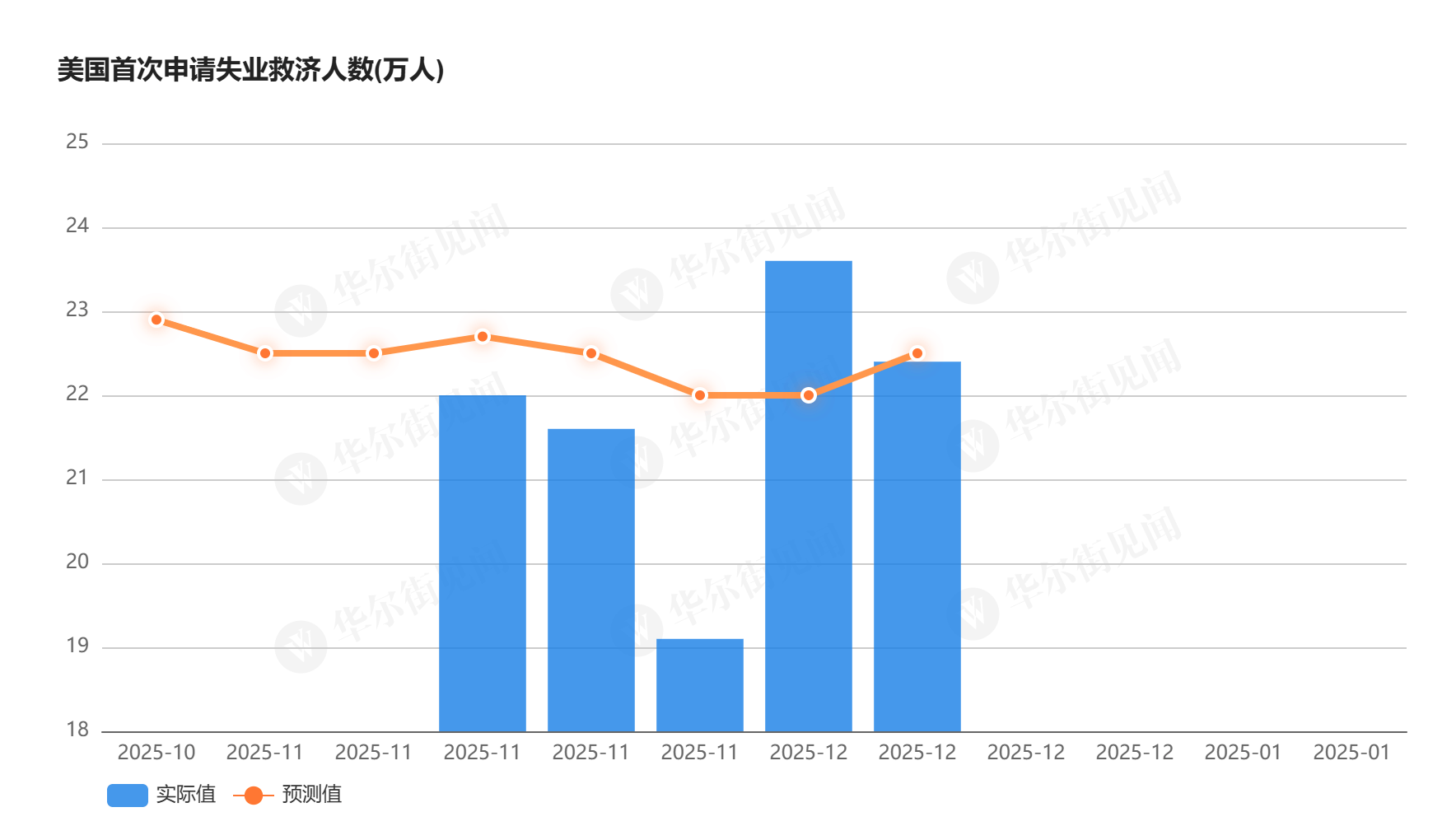
Group 1 - The overall U.S. labor market remains in a "moderate fluctuation" range despite seasonal disruptions during the holiday period, with initial jobless claims decreasing to 224,000, down from 237,000 the previous week, and below economists' expectations of 225,000 [1] - The four-week moving average of initial claims rose slightly to 217,500, indicating ongoing moderate fluctuations in the labor market [1] - Continuing claims for unemployment benefits increased to 1.897 million, better than the market expectation of 1.93 million, with a four-week average of 1.902 million [4] Group 2 - Recent weeks have seen significant volatility in jobless claims, reflecting challenges in data adjustments around the Thanksgiving holiday, but there are no clear signs of acute employment pressure in any region [7] - A survey conducted by the Richmond Fed and Atlanta Fed, involving 548 CFOs, indicated that tariffs are a major concern affecting hiring plans, as companies are scaling back expansion due to unexpected impacts from comprehensive tariff measures introduced by President Trump [8] - The November unemployment rate rose to 4.6%, the highest level since September 2021, influenced by technical factors related to a prolonged government shutdown that hindered data collection [8] Group 3 - The Federal Reserve recently cut interest rates but signaled a pause in further cuts while awaiting clearer signals regarding the labor market and inflation trends [9] - Concerns were raised by Fed Chair Powell that the actual state of the labor market may be weaker than indicated, with potential downward revisions of recent employment data by up to 60,000 jobs [9] - Notable companies such as UPS, General Motors, Amazon, and Verizon have announced layoffs, which typically take months to reflect in government statistics [9]
汇通达网络回购3.81万股股票,共耗资约39.92万港元,本年累计回购52.54万股
Jin Rong Jie· 2025-12-18 15:08
Group 1 - The core viewpoint of the article highlights the recent stock buyback by Huaitongda Network, which reflects the management's confidence in the company's long-term value and aims to optimize capital structure and enhance shareholder returns [1][3] - Huaitongda Network repurchased 38,100 shares at an average price of HKD 10.48 per share, totaling approximately HKD 399,200, with a cumulative buyback of 525,400 shares this year, representing 0.29% of the total share capital [1] - The company has executed multiple buybacks over the past 12 months, with a total amount exceeding HKD 10 million, indicating strong cash flow and consistent strategic execution [1] Group 2 - Huaitongda Network, listed as 9878.HK, is a leading digital service platform for rural commerce in China, focusing on the integration of the supply chain in lower-tier markets [2] - The company connects over 210,000 retail stores in towns across 21 provinces through SaaS tools and supply chain services, reflecting its significant market presence [2] - The latest financial report shows that the revenue from service business has increased to 38%, indicating the effectiveness of its digital transformation [2]
阿里一周减持三家上市公司
第一财经· 2025-12-18 14:48
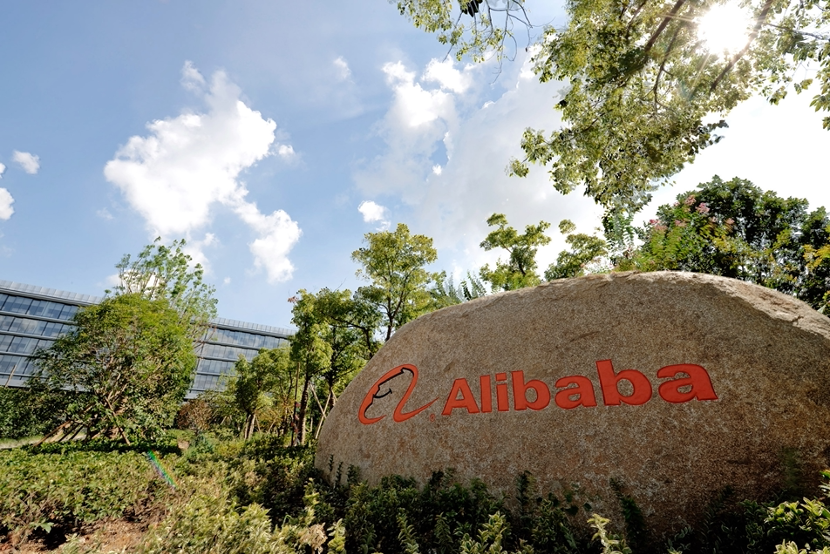
Core Viewpoint - Alibaba Group has accelerated the reduction of its external investments, particularly in the AI sector, while divesting from several listed companies in a short period [3][4]. Group 1: Recent Divestments - On December 17, Huayi Brothers announced that Alibaba's shareholder, Alibaba Venture Capital, reduced its stake by 29,526,820 shares, representing 1.064219% of the total share capital, bringing their total holding down to 4.999996% [3]. - Also on December 17, Aojie Technology reported that Alibaba (China) Network Technology Co., Ltd. completed a reduction of 12,549,000 shares, accounting for 3% of the total share capital, with a total transaction value of 1.056 billion yuan [3][4]. - On December 16, Red Star Macalline disclosed that from December 12 to December 16, Taobao Holdings and New Retail Fund collectively reduced their holdings by 41,646,600 H shares, which is 0.96% of the total share capital, decreasing their stake from 7.33% to 6.37% [4]. Group 2: Shift in Investment Focus - Over the past two years, Alibaba has been focusing on its core business and reducing investments in non-core areas, having previously divested from companies like Kuaigou Dache, Bilibili, and others [4]. - As of the end of 2025, Alibaba appears to be accelerating the divestment of external assets, with a significant shift towards AI investments [4][5]. - Data from Tianyi Think Tank indicates that the proportion of Alibaba's investments in the AI sector increased from 4% before 2023 to 50% after 2023 [4]. Group 3: AI Investment Activity - Alibaba's investments in embodied intelligence have become more active, with notable investments in companies such as Beijing Xingdong Jiyuan Technology Co., Ltd. and others throughout the year [5]. - Alibaba's CEO has indicated that the future may see more agents and robots than the global population, highlighting the importance of embodied intelligence in Alibaba Cloud's future AI applications and computing power usage [5]. - The company's financial reports show a significant cash flow impact, with a net cash flow from operating activities of 10.099 billion yuan, a 68% decrease year-on-year, and a free cash flow outflow of 21.840 billion yuan [5].


阿里一周减持三家上市公司
Di Yi Cai Jing· 2025-12-18 14:21
Group 1 - Alibaba has accelerated the divestment of external assets, having reduced its holdings in three listed companies within a week [1][2] - On December 17, Alibaba's shareholders reduced their stake in Huayi Brothers by 29,526,820 shares, decreasing their ownership from 6.06% to 5% [1] - On the same day, Alibaba Network completed a share reduction of 12,549,000 shares in Aojie Technology, representing 3% of the total share capital, with a total transaction value of 1.056 billion yuan [1] Group 2 - Alibaba's subsidiary, Taobao Holdings, reduced its stake in Red Star Macalline by 41,646,600 shares, which is 0.96% of the total share capital, bringing their ownership down from 7.33% to 6.37% [1] - As of December 18, Alibaba's latest holding in Red Star Macalline is 5.71% [1] - Earlier, on December 10, Meinian Health announced plans for a share reduction of up to 3% of its total share capital by Alibaba's subsidiary [2] Group 3 - A significant trend is that Alibaba's external investments are increasingly focused on the AI sector, with investments in AI rising from 4% to 50% of total investments after 2023 [4] - Alibaba has been actively investing in embodied intelligence, with several investments made throughout the year, including in companies like Beijing Xingdong Jiyuan Technology [4] - The CEO of Alibaba has indicated that the future may see more agents and robots than the global population, highlighting the importance of embodied intelligence in Alibaba's future AI applications [5] Group 4 - Alibaba is increasing its investment in its core businesses, including e-commerce and Alibaba Cloud, with a reported net cash flow from operating activities of 10.099 billion yuan, a 68% decrease year-on-year [5] - The company reported a free cash flow outflow of 21.840 billion yuan, contrasting with a net inflow of 13.735 billion yuan in the same period of 2024, indicating significant cash expenditures in the competitive landscape and AI infrastructure [5]



小米、TCL、海信等集体加入速卖通,国产电视机出海转向新主场
Guan Cha Zhe Wang· 2025-12-18 14:02
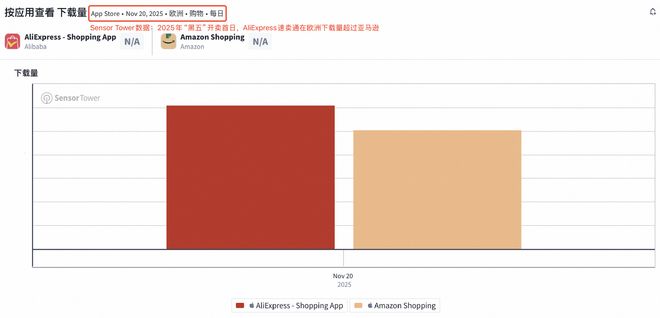
12月18日,一则来自跨境电商平台速卖通的数据引发关注:过去一年,国产电视机在该平台的销售额同 比激增300%,成为大家电品类中增速最快的"明星"。 小米、TCL、海信、创维、康佳这五大国产电视巨头,已集体将速卖通列为出海战略的核心阵地。其 中,小米电视更是在今年"海外双11 & 黑五"大促期间,一举登上速卖通欧洲市场电视品类销售额榜首 的宝座。 最具里程碑意义的信号出现在2025年"黑五"开卖首日。据知名应用分析平台Sensor Tower数据,当日, 速卖通在欧洲多国App下载量超过亚马逊。 2025"黑五"开卖首日,速卖通在欧洲下载量超过亚马逊 这并非偶然的销售脉冲,而是中国品牌依托跨境电商平台,系统性挑战全球电商巨头亚马逊、重塑海外 市场格局的一个缩影。其背后,是平台战略的升级、品牌诉求的转变与全球贸易环境的演变。 业内人士指出,作为"出海四小龙"中唯一能在品牌出海赛道与亚马逊正面竞争的平台,速卖通此次在亚 马逊核心市场实现下载量反超,标志着速卖通开始向亚马逊的核心主场发起挑战,也吸引了各大知名品 牌将速卖通视为新主场。 本文系观察者网独家稿件,未经授权,不得转载。 国产家电品牌出海并非新鲜事,但过去 ...





兰剑智能:公司业务布局涵盖烟草、半导体、电商、航空航天等二十多个行业
Zheng Quan Ri Bao Wang· 2025-12-18 13:41
证券日报网讯12月18日,兰剑智能在互动平台回答投资者提问时表示,公司业务布局涵盖烟草、半导 体、电商、航空航天等二十多个行业,2023年至2024年公司持续在航空航天行业与优质客户中航光电 (002179)科技股份有限公司进行深度合作;相关信息请参考披露的公开资料。 ...


北京7年累计吸引超5000家首店落地!
Bei Jing Shang Bao· 2025-12-18 12:15
12月18日,北京培育建设国际消费中心城市工作成效和亮点新闻发布会上,北京市商务局党组成员、副 局长卢慧玲介绍,在北京消费版图上,商品消费持续焕新升级。北京市持续释放首发经济潜能,2019年 以来累计吸引超5000家首店落地,培育三里屯太古里等12个全球首发中心。 同时,北京市拥有境外旅客购物离境退税商店近1600家,即买即退商店24家,在全国首创"全城退税, 多点通办"模式,在国贸商城等区域设立6个集中退付点。 在品牌培育方面,国际风范与京韵文化交相辉映。国际品牌集聚度稳居全国前列,累计认定老佛爷、星 巴克等26家消费类跨国公司地区总部。2026北京时装周联动隆福寺、古北水镇等标志性场地,汇集300 余个全球品牌,打造超150场线下时尚盛宴。本土品牌同样繁荣,北京市拥有老字号总数274家,其中中 华老字号137家。 在美食消费领域,截至目前,北京市已建成24条特色餐饮聚集街区,累计打造31条"深夜食堂"特色街 区。在此期间,北京创新推出"京彩四季"北京城市消费活动主题品牌,打造了北京国际美食荟等系列品 牌活动,每年带动市场主体开展千余项促消费活动。 截至2025年11月底,全市已建成一刻钟便民生活圈850个 ...