锂矿

Search documents
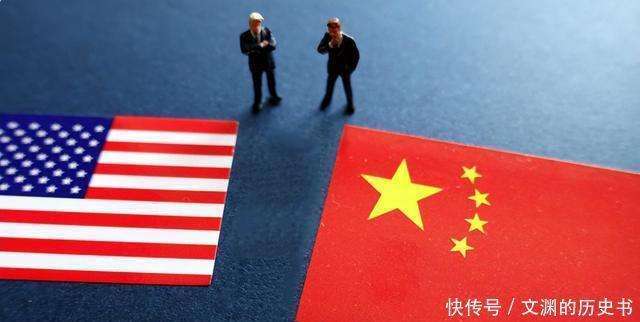
美国“闭关锁国”,意外助攻中国入群!布局26年,我们反将一军
Sou Hu Cai Jing· 2025-10-28 04:20
Core Points - China has become the first Asian observer of the Andean Community (CAN), with unanimous support from its four member countries: Peru, Ecuador, Colombia, and Bolivia [1][3] - The approval reflects a shift in Latin American countries' alignment towards China, influenced by recent U.S. trade policies that have strained their economies [3][5] Group 1: Background and Context - The relationship between China and the Andean Community dates back to 1999, with a formal consultation mechanism established [6] - Recent U.S. tariffs on Latin American products, including a 50% tariff on copper, have led to significant economic challenges for these countries, prompting them to seek new partnerships [5][6] - China's cooperation proposals have been more appealing to Latin American nations compared to U.S. policies, focusing on practical needs rather than ideological values [6][8] Group 2: Economic Implications - The Andean Community countries control 35% of the world's copper and 28% of lithium resources, which are crucial for China's electric vehicle and AI industries [8][11] - By becoming an observer, China can now participate in setting regional trade standards, enhancing the security of its supply chains [8][11] - The shift from bilateral agreements to regional cooperation mechanisms allows China to mitigate risks associated with policy changes in Latin America [6][8] Group 3: Geopolitical Impact - China's entry into the Andean Community challenges the long-standing U.S. influence in Latin America, traditionally viewed as its "backyard" [8][10] - The unanimous vote signifies a collective response from Latin American countries against unilateralism and a desire for diversified partnerships [10][11] - The collaboration between China and the Andean Community is expected to reshape the development logic in the region, moving towards a more integrated economic framework [10][11]

国城矿业:国城锂业20万吨/年锂盐项目一期工程的产能规划是6万吨/年
Mei Ri Jing Ji Xin Wen· 2025-10-28 04:05
Group 1 - The core point of the article is that Guocheng Mining confirmed the expected production capacity of its lithium salt project in the De'a Park is 60,000 tons per year [1] - Guocheng Mining's Guocheng Lithium Industry has a planned capacity of 200,000 tons per year for its lithium salt project, with the first phase set at 60,000 tons per year [1]

中美吉隆坡握手,跟着美国反华的国家这下脸疼了!
Sou Hu Cai Jing· 2025-10-27 16:43
Group 1 - The U.S. has decided not to consider imposing a 100% tariff after negotiations, indicating a shift in stance that may influence other countries that previously aligned with the U.S. against China [1] - Canada imposed a 100% tariff on Chinese electric vehicles to appease the U.S., resulting in an 18% drop in the stock prices of lithium mining companies [1] Group 2 - Japan faced a 13.8% margin requirement from China in rubber trade, leading to a loss of 30% market share [3] - The EU, after accusing China of unfair practices in rare earths, realized its own lack of purification technology, and 83% of EU companies are hesitant to withdraw from China despite sanctions [3] - The narrative of a "united front" against China is seen as a tactic by the U.S. to shift blame, with allies suffering losses while the U.S. acknowledges the unsustainability of the tariff war [3]
盛新锂能20251027
2025-10-27 15:22
Summary of Shengxin Lithium Energy Conference Call Company Overview - **Company**: Shengxin Lithium Energy - **Industry**: Lithium Industry Key Points and Arguments Financial Performance - In Q3, Shengxin Lithium Energy turned a profit due to a 10% increase in lithium prices and better-than-expected downstream demand, particularly in energy storage batteries and automotive sales [2][3] - Q3 revenue reached 1.481 billion yuan, marking a significant recovery from previous losses [3] Production and Capacity Expansion - The company’s production capacity nearly doubled to 130,000 tons with the addition of a new 60,000-ton lithium salt capacity from the Indonesian factory, which began shipping in August [2][3] - The company has a planned 2,500-ton capacity for lithium metal, with preparations already completed [2][9] Market Dynamics - The average lithium price in Q3 rose approximately 10% compared to Q2, with prices fluctuating between 60,000 to 90,000 yuan [3] - The company benefits from limited competition in overseas markets, with higher customer acceptance and pricing compared to domestic markets [2][3][4] Cost Structure - Domestic gross margins have reached 20%-25%, while overseas margins are higher despite increased production costs due to smelting fees [7][8] - The Indonesian factory's operational costs are comparable to domestic costs, aided by tax incentives that offset some expenses [8] Resource and Supply Chain Management - The company has a diversified supply chain strategy, sourcing lithium from its own mines in Sichuan and Zimbabwe, with a focus on maintaining a circular supply chain to meet global demand [3][11] - The average production cost for lithium resources in Sichuan is around 40,000-50,000 yuan, while in Zimbabwe, it is approximately 60,000 yuan due to logistical and tax factors [10] Future Outlook - The company plans to continue expanding its mining operations in Africa and enhance its global resource reserves to mitigate risks from international trade tensions [12] - The long-term outlook for lithium prices and demand remains positive, driven by growth in energy storage and new technologies, despite short-term volatility [18] Inventory and Cash Flow - The company maintains a low inventory turnover in its domestic operations, while the Indonesian factory has higher inventory levels due to initial shipping phases [15] - Operating cash flow has been negative for two consecutive quarters due to increased purchases of raw materials and services [16] Strategic Initiatives - Shengxin Lithium Energy is actively engaging in foreign exchange hedging to mitigate risks associated with currency fluctuations, especially as overseas revenues increase [17] Project Timelines - The Murong lithium mine is expected to begin large-scale production by 2028, with a production capacity of approximately 75,000 to 80,000 tons of lithium carbonate equivalent [13][14] Additional Important Information - The company has established a strong foothold in the lithium market with a focus on both domestic and international growth, leveraging its competitive advantages in resource management and production efficiency [12][18]

华西证券医药生物行业研究报告
HUAXI Securities· 2025-10-27 13:50
Investment Rating - The report recommends a "Buy" rating for the industry, predicting that the industry index will outperform the Shanghai Composite Index by 10% or more during the specified period [3][20]. Core Insights - In Q3 2025, lithium concentrate production reached 224,800 tons, a 2% increase quarter-on-quarter and year-on-year, indicating sustained reliability and processing capacity following the successful completion of the P1000 expansion [1]. - The average actual sales price of spodumene concentrate was $742 per ton, a 24% increase quarter-on-quarter and a 9% increase year-on-year [2]. - The unit operating cost (including freight and royalties) decreased by 9% to $422 per ton, reflecting effective cost control measures [2]. - The company achieved a revenue of AUD 251 million in Q3 2025, a 30% increase quarter-on-quarter and a 20% increase year-on-year [5]. Production and Sales Performance - Lithium concentrate sales in Q3 2025 were 214,000 tons, a 1% decrease quarter-on-quarter but nearly flat year-on-year [1]. - The lithium recovery rate improved significantly to 78.2%, up from 71.6% in the previous quarter, showcasing the effectiveness of operational strategies [1]. - Tantalum concentrate production totaled approximately 74,267 pounds, a 25% increase quarter-on-quarter, while shipments reached about 66,161 pounds, a 9% increase quarter-on-quarter and a 29% increase year-on-year [4]. Financial Performance - The company ended Q3 2025 with cash of AUD 852 million and undrawn credit facilities of AUD 625 million, with a cash outflow of AUD 19 million due to financing activities and foreign exchange changes [5][6]. - Operating cash profit for Q3 2025 was AUD 8 million, benefiting from price increases, although affected by timing factors [5]. Upstream Development Projects - The Ngungaju processing plant is expected to remain in maintenance mode throughout FY 2026 to flexibly increase production capacity amid rising lithium prices [7]. - A feasibility study for the P2000 project is anticipated to be published in FY 2027, with development progress dependent on research outcomes and funding [8]. Downstream Development Projects - The midstream demonstration plant in Australia is on track for completion in Q4 2025 [11]. - The joint venture with POSCO in South Korea has seen production lines operating in a moderate batch production mode to optimize operational efficiency amid fluctuating lithium prices [12]. - A feasibility study with Ganfeng Lithium regarding the construction of a lithium salt processing plant is ongoing, with site assessments being conducted [15].
盛新锂能(002240)2025年三季报点评:Q3印尼工厂开始出货 业绩实现扭亏
Xin Lang Cai Jing· 2025-10-27 12:37
Core Insights - The company reported a turnaround in Q3 with a revenue of 3.09 billion yuan, a year-on-year decrease of 11.5%, and a net profit attributable to shareholders of -750 million yuan, a year-on-year decrease of 63% [1] - Q3 revenue reached 1.48 billion yuan, showing a significant increase of 61.1% quarter-on-quarter and 59.6% year-on-year, with a net profit of 90 million yuan, reflecting a quarter-on-quarter increase of 132.3% and a year-on-year increase of 112.9% [1] - The lithium business became profitable due to rising lithium prices and the commencement of shipments from the Indonesian plant, with an estimated lithium salt shipment of approximately 40,000 tons in the first three quarters [1] Revenue and Profitability - For Q1-3 2025, the company reported a gross margin of 10.2%, an increase of 7.1 percentage points year-on-year, and a net profit margin of -24.3%, a decrease of 11.1 percentage points year-on-year [1] - The average price of lithium products in Q3 was approximately 87,000 yuan, a quarter-on-quarter increase of nearly 15% [1] - The company expects to ship over 60,000 tons of lithium salt for the entire year of 2025, remaining stable year-on-year [1] Production and Costs - The company’s self-supply rate from mining is approximately 50% for the year, with expected production of 200,000 tons from the Sabixing mine and 60,000-70,000 tons from the Yilonggou mine in 2025 [2] - The total expected production for 2025 is around 260,000 tons, equivalent to 32,000 tons of lithium carbonate equivalent (LCE) [2] - The cost of production for the Sabixing mine is estimated at 68,000 yuan per ton, while the Yilonggou mine is estimated at 70,000 yuan per ton [2] Cash Flow and Expenditures - The company reported a decrease in expense ratio to 21.5% for Q1-3 2025, down 5.9 percentage points year-on-year, with Q3 expense ratio at 17.8%, a decrease of 3.9 percentage points quarter-on-quarter [2] - Operating cash flow for Q1-3 2025 was 110 million yuan, a year-on-year decrease of 85.4%, with Q3 operating cash flow at -70 million yuan, reflecting a quarter-on-quarter decrease of 118.2% [2] - Capital expenditures for Q1-3 2025 totaled 750 million yuan, a decrease of 62.1% year-on-year, with Q3 capital expenditures at 140 million yuan, a decrease of 78.7% year-on-year [2] Profit Forecast and Investment Rating - Due to impairment impacts in 2025, the profit forecast for 2025 has been lowered, while the forecasts for 2026 and 2027 have been raised, with expected net profits of -600 million yuan, 550 million yuan, and 1 billion yuan respectively [3] - The company maintains a "buy" rating due to its excellent lithium resource endowment and the ramp-up of production from the Indonesian plant [3]
中矿资源:第三季度净利润1.15亿元 同比增长58.18%
Zheng Quan Shi Bao Wang· 2025-10-27 12:09
Core Insights - Company reported a significant increase in third-quarter revenue and net profit, indicating strong operational performance [1] - Year-to-date revenue growth is primarily driven by increased sales of self-supplied lithium salts and spodumene, along with new copper smelting sales [1] Financial Performance - Third-quarter revenue reached 1.551 billion yuan, representing a year-on-year growth of 35.19% [1] - Net profit for the third quarter was 115 million yuan, showing a year-on-year increase of 58.18% [1] - Year-to-date revenue for the first three quarters totaled 4.818 billion yuan, up 34.99% compared to the previous year [1] - Net profit for the first three quarters was 204 million yuan, reflecting a year-on-year decline of 62.58% [1] - Basic earnings per share for the first three quarters stood at 0.2831 yuan [1]

锂矿低库存碰撞复产预期,能否与下游共振决定了锂价当前走向
Tong Hui Qi Huo· 2025-10-27 11:47
1. Report Industry Investment Rating - Not provided in the content 2. Core Viewpoints of the Report - The current direction of lithium prices is determined by whether the low inventory of lithium ore collides with the resumption of production expectations and resonates with the downstream. The market has three major variables: lithium ore inventory, the resumption of production at Jianxiaowo, and the downstream production schedule in November. Whether the resumption of production at Jianxiaowo in November can resonate with the downstream production schedule is the key to the unilateral price movement [3][4]. 3. Summary According to Relevant Catalogs 3.1 Weekly Report Summary - **Fundamentals**: Domestic lithium concentrate inventory remains low, and the price of spodumene has risen significantly in the past week. The resumption of production at Jianxiaowo is uncertain. After the expiration of the LC2510 contract, lithium carbonate warehouse receipts have flowed out, and the basis has weakened. The social inventory is still high, and the spot market is relatively calm. In the case of tight upstream lithium ore, the production schedule in November is crucial [3]. - **Market Summary**: The market was strong last week. The futures contract price is at an important pressure level, and it is difficult to digest the upward selling pressure without significant marginal changes. The futures market sentiment is high, but the spot price is calm. The basis has weakened significantly, presenting a short - term opportunity in the term market. The unilateral price can go up or down, mainly depending on whether the resumption of production at Jianxiaowo in November can resonate with the downstream production schedule [4]. 3.2 Supply - Demand Balance Sheet - **Lithium Carbonate Balance Sheet**: In September 2025, the supply was 87,260 tons, the demand was 116,801 tons, the import volume was 20,000 tons, the export volume was 410 tons, and the inventory decreased by 9,951 tons. There was an inventory increase in August and significant inventory reduction in September [6][8]. - **Lithium Hydroxide Balance Sheet**: In September 2025, the supply was 27,470 tons, the demand was 24,715 tons, the import volume was 800 tons, the export volume was 7,200 tons, and the inventory decreased by 3,645 tons [9][11]. 3.3 Upstream Ore Supply, Demand, and Price - **Spodumene Import**: In September 2025, the total import volume was 520,514 tons, with an average import price of $684 per ton. Australia was the main source of imports, with an import volume of 347,215 tons and an average price of $734 per ton [13][17]. - **Chinese Lithium Ore**: In September 2025, the output of lithium mica was 8,150 tons, a month - on - month decrease of 9.24%, and the output of spodumene was 6,800 tons, a month - on - month increase of 1.95%. The lithium mica end still has uncertainties [18][23]. 3.4 Lithium Salt Supply, Demand, and Price - **Lithium Salt Spot and Futures Prices**: In the short term, the improvement in demand has boosted the futures price. As of October 24, 2025, the price of battery - grade lithium carbonate was 78,500 yuan per ton, and the price of industrial - grade lithium carbonate was 77,000 yuan per ton [26][28]. - **Production Cost and Profit**: The import ore price has risen significantly recently. As of October 24, 2025, the production cost of lithium carbonate from spodumene was 68,855 yuan per ton, and the production profit was 9,645 yuan per ton [39][43]. - **Lithium Carbonate Production**: In September 2025, the total production of lithium carbonate was 87,260 tons, a year - on - year increase of 52% and a month - on - month increase of 2%. Lithium辉石 was the main raw material for production [44][53]. - **Capacity Utilization Rate**: The next important node is the resumption of production at Jianxiaowo in November. As of September 2025, the overall capacity utilization rate of lithium salt was 55%, and the capacity utilization rate of lithium carbonate from spodumene was 68% [54][58]. - **Lithium Carbonate Monthly Import Volume**: In September 2025, the total import volume of lithium carbonate was 19,597 tons, with 6,948 tons from Argentina and 10,797 tons from Chile [59][63]. - **Lithium Carbonate Inventory**: After the expiration of the LC2510 contract, lithium carbonate warehouse receipts have flowed out, but the overall social inventory is still high [3][64]. 3.5 Lithium Salt Downstream Production and Demand - **Lithium Iron Phosphate**: In September 2025, the production of lithium iron phosphate was 356,750 tons, a year - on - year increase of 43.00% and a month - on - month increase of 12.75%. The capacity utilization rate was 65.00% [70][74]. - **Ternary Materials Production and Capacity Utilization Rate**: In September 2025, the production of ternary materials was 75,360 tons, a year - on - year increase of 31.50% and a month - on - month increase of 2.60%. The capacity utilization rate was not provided for this month, but in August it was 48% [75][79]. - **Ternary Materials Import and Export Volume**: In August 2025, the import volume of ternary materials was 5,567 tons, the export volume was 13,352 tons, and the net import volume was - 7,785 tons [80][84]. - **New Energy Vehicle Production and Sales**: The report provides data on the production of new energy vehicles, including pure - electric vehicles and plug - in hybrid vehicles, but specific analysis is not provided [85].
有色金属周报:碳酸锂:冲高回落,风险上升-20251027
Hong Yuan Qi Huo· 2025-10-27 08:50
1. Report Industry Investment Rating - Not provided in the content 2. Core Viewpoints of the Report - The strategy is to sell high, with an operating range of 71,000 - 85,000. Supply expectations are volatile, but actual production continues to grow. After the price increase, downstream purchasing is weak, inventory - building slows down, and power demand may peak. It is expected that the upside space for lithium carbonate is limited [5][89] 3. Summary According to Relevant Catalogs 1.1 Carbonate Lithium Market Review - Last week, lithium carbonate fluctuated upward, with a weekly increase of 4.96%. Trading volume reached 1.85 million lots (+440,000), and open interest reached 431,200 lots (+272,200). The basis was at a discount of 4,120 yuan/ton [6][9] 1.2 Supply Side Lithium Ore - In September, China's lithium spodumene production was 6,800 tons of LCE, a month - on - month increase of 1.9%; lithium mica production was 8,150 tons of LCE, a month - on - month decrease of 9.2%. Lithium concentrate imports reached 520,500 tons, a month - on - month increase of 10.6% and a year - on - year increase of 38.0%. In August, the volume of lithium spodumene shipped from Port Hedland to China rose to 128,000 tons, a month - on - month increase of 44.3% and a year - on - year increase of 26.6% [13][17][21] Lithium Battery Recycling - In October, the expected recycling volume of waste lithium batteries was 27,934 tons, flat month - on - month and a year - on - year increase of 30.1% [25] Carbonate Lithium - Last week, lithium carbonate production was 21,308 tons, a month - on - month increase of 1.1%. In September, lithium carbonate imports dropped to 19,597 tons, a month - on - month decrease of 10.3% and a year - on - year increase of 20.5%. In September, Chile's exports of lithium carbonate to China were 11,101 tons, a month - on - month decrease of 14.5% and a year - on - year decrease of 33.1% [30][32] Lithium Hydroxide - In October, the operating rate of lithium hydroxide was 40%, and the output was 27,020 tons, a month - on - month decrease of 1.6% and a year - on - year decrease of 11.8%. In September, lithium hydroxide exports were 6,526 tons, a month - on - month increase of 15.0% and a year - on - year decrease of 48.7% [39] 1.3 Downstream Demand Lithium Iron Phosphate - Last week, lithium iron phosphate production was 86,303 tons, a month - on - month increase of 1.5%. In October, the scheduled production of iron phosphate was 329,270 tons, a month - on - month increase of 6% and a year - on - year increase of 58% [42] Ternary Materials - Last week, ternary material production was 17,766 tons, a month - on - month increase of 3.0%. In September, imports increased and exports decreased [43] Ternary Precursors - In October, the operating rate of ternary precursors was 48%, and the output was 90,540 tons, a month - on - month increase of 16.2% and a year - on - year increase of 2.8%. In September, exports increased slightly [52] Manganese Acid Lithium and Cobalt Acid Lithium - In October, the operating rate of manganese acid lithium was 33%, and the output was 12,124 tons, a month - on - month increase of 1% and a year - on - year decrease of 4%. The operating rate of cobalt acid lithium was 69%, and the output was 12,880 tons, a month - on - month increase of 2% and a year - on - year increase of 72% [53] Electrolyte - In October, electrolyte production was 200,180 tons, a month - on - month increase of 1% and a year - on - year increase of 30%. In September, exports of lithium hexafluorophosphate increased [61] 1.4 Terminal Demand Power Batteries - In September, power battery production was 151.2 GWh, a month - on - month increase of 8.3% and a year - on - year increase of 35.8%. Power battery installation volume was 76 GWh, a month - on - month increase of 21.6% and a year - on - year increase of 39.4% [64] New Energy Vehicles - In September, new energy vehicle production was 1.617 million, a month - on - month increase of 16.3% and a year - on - year increase of 23.7%. Sales were 1.604 million, a month - on - month increase of 15.0% and a year - on - year increase of 24.6% [67] Energy Storage - In October, energy - storage battery production was 53.1 GWh, a month - on - month increase of 0.8% and a year - on - year increase of 40.1%. In September, the energy - storage winning bid power scale was 6.45 GW, a month - on - month decrease of 3.7% and a year - on - year increase of 25.0%; the winning bid capacity scale was 16.34 GWh, a month - on - month decrease of 12.4% and a year - on - year increase of 46.3% [72] Consumer Electronics - In September, China's smartphone production was 122.75 million units, a month - on - month increase of 22.3% and a year - on - year increase of 0.2%. China's micro - computer production was 30.98 million units, a month - on - month increase of 11.9% and a year - on - year decrease of 5.2% [75] 1.5 Cost - Lithium ore prices rose. The price of 6% lithium spodumene concentrate increased by 35 dollars/ton, and the price of lithium mica increased by 115 yuan/ton [80] 1.6 Inventory - Total lithium carbonate inventory decreased by 2,292 tons. Structurally, smelter inventory decreased by 602 tons, downstream inventory decreased by 2,460 tons, and other inventory increased by 770 tons. Last week, lithium iron phosphate inventory increased by 1,529 tons, and ternary material inventory increased by 629 tons [85][86] 1.7 Market Outlook - The strategy is to sell high, with an operating range of 71,000 - 85,000. Supply expectations are volatile, but actual production continues to grow. After the price increase, downstream purchasing is weak, inventory - building slows down, and power demand may peak. It is expected that the upside space for lithium carbonate is limited [89]
再创新高,A股似乎选择了方向!
Sou Hu Cai Jing· 2025-10-27 07:31
Group 1 - A-shares have reached a new high, breaking the 10-year record and approaching 4000 points, indicating a strong upward trend in the market [1] - The lithium and silicon materials sectors continue to rise, with lithium stabilizing and potentially gaining upward momentum similar to early August [1] - The Chinese medicine sector has experienced a slight decline, particularly among leading companies, which is attributed to fundamental issues and is not expected to reverse quickly [3] Group 2 - The securities sector opened higher due to positive external news, which has boosted market sentiment, although there is a preference to wait for lower entry points [4] - The overall market direction has been chosen, but there is a cautionary approach to avoid investments outside of one's expertise [5]