
药品

Search documents
警惕“养生讲堂”背后陷阱 老年人保健消费需擦亮眼睛
Xin Hua Wang· 2025-07-10 01:27
Group 1 - The market regulatory authority has initiated a special campaign to address false advertising of drugs and health products targeting the elderly [1][2] - Businesses are using private channels like WeChat to divert customers online, where they exaggerate product benefits under the guise of health consultations [1] - The campaign aims to protect the rights of elderly consumers from misleading marketing practices [1] Group 2 - Consumers are advised to be cautious of offline bait tactics, such as free giveaways and community health events, which lead to online sales through misleading health claims [2] - Emotional marketing tactics are prevalent in private live-streaming sessions, using phrases that imply guaranteed health benefits and creating a sense of urgency [2] - It is recommended to verify the legitimacy of live-streaming platforms by checking for necessary business licenses and product certifications before making purchases [2] Group 3 - Consumers should choose reputable platforms for transactions and keep records of their purchases, including receipts and communication with sellers [2] - Health products are not substitutes for medical treatment, and consumers are encouraged to seek professional medical advice for health issues [2] - In cases of fraud or false advertising, consumers can report to regulatory authorities or seek legal recourse [2]
打脸“脱欧失败论”?欧盟外交官“认输”:英国贸易协议比欧盟的更好
Jin Shi Shu Ju· 2025-07-09 05:04
Group 1 - The EU is nearing a trade agreement with the US, which may involve higher tariffs than those negotiated by the UK, causing concern among some European nations [2][3] - A temporary "framework" agreement is being prepared, setting US tariffs at 10%, aligning with the baseline tariffs imposed on the UK by Trump [2][3] - The EU does not expect to achieve the same market access in the US for steel, automobiles, and other products as the UK has [2][3] Group 2 - The UK has secured better terms on sector-specific tariffs, including a 10% tariff on a quota of 100,000 cars, compared to the 25% faced by other exporters [4] - The UK also received zero tariffs on steel and aluminum, although implementation is still pending [4] - In return, the UK agreed to meet US demands regarding supply chain roles and provided tariff-free quotas for beef and bioethanol [4] Group 3 - The EU is preparing to reduce its trade surplus with the US by committing to purchase more American weapons and liquefied natural gas [5] - The EU has paused its retaliatory actions during negotiations but plans to implement counter-tariffs on $210 billion worth of US goods starting July 14 [5] - A proposal for additional tariffs on $95 billion worth of US goods, including aircraft and alcohol, is being prepared, requiring approval from member states [5]
摩根资管:大而美法案料托底美国经济 投资者要聚焦针对行业的关税
Zhi Tong Cai Jing· 2025-07-07 07:30
Group 1 - Morgan Asset Management estimates that the uncertainty from the tariff war will slow down U.S. economic growth in the second half of this year, but the "Inflation Reduction Act" will provide some support, and inflation is expected to decline to the Federal Reserve's 2% target by the end of next year [1] - The recent trade agreement between the U.S. and Vietnam has provided greater certainty for business planning, but investors should focus on industry-specific tariffs, such as those affecting pharmaceuticals from the EU and automobiles from Japan and South Korea, which may persist after a potential Trump 2.0 administration [1] - The fiscal expansion and regulatory easing from the "Inflation Reduction Act" are expected to take effect later this year and continue to drive U.S. economic growth into next year, providing a positive catalyst for the stock market [1] Group 2 - The AI sector has shown strong recent performance, reflecting market recognition that the increasing prevalence of AI will significantly enhance efficiency, suppress prices, and stimulate consumption [2] - Investment opportunities are gradually shifting towards companies that can effectively apply AI, as AI transitions from a single theme to a tool for improving corporate performance across various industries [2] - Given the current policy and geopolitical uncertainties, investors are advised to diversify across different markets and sectors, with Chinese stocks playing an important role in global asset allocation [2]
帮主郑重解读:7月9日关税大限最后两天 全球贸易谈判最新博弈进展
Sou Hu Cai Jing· 2025-07-07 03:51
Summary of Key Points Group 1: Countries with Agreements - The UK has successfully negotiated a trade agreement with the US, reducing auto tariffs to 10% and eliminating aerospace tariffs, although steel exports still face a 25% tariff which could double to 50% if negotiations fail [3]. - India is close to finalizing a small trade agreement with an average tariff of 10%, but is insisting on concessions from the US regarding steel and auto tariffs while the US demands further opening of India's agricultural market [3]. - Vietnam has seen a significant reduction in base tariffs from 46% to 20%, but faces a "transshipment trap" where third-party goods routed through Vietnam could incur a 40% penalty, while Vietnam must offer zero tariffs on US goods [3]. Group 2: Ongoing Negotiations - The EU has taken a firm stance, demanding the US lower baseline tariffs starting July 9, particularly on autos and steel/aluminum products, and has prepared a €210 billion retaliation list along with a €95 billion additional tariff plan [4]. - Canada has preemptively canceled its digital services tax to restart negotiations with the US, aiming for an agreement by July 21, although it has not yet budged on the 50% tariff on over-quota steel [4]. - South Korea and Japan are struggling with auto tariffs, with South Korea emphasizing the importance of the auto industry and Japan facing threats of tariffs up to 30%-35% while being pressured to open its agricultural market [4]. Group 3: US Trade Actions - The US has signed 12 trade letters, with new tariffs ranging from 10% to 70% set to take effect on August 1, indicating a complex internal debate on tariff strategies [5]. - The US Agriculture Secretary hinted at potential exemptions for certain agricultural products that cannot be grown in the US, suggesting a strategy to appease developing countries [5]. - The overall situation reflects a global trade chess game, with countries calculating their gains and losses, and the high tariffs potentially impacting the global supply chain and ultimately the US economy [5].


帮主郑重:特朗普70%关税砸向谁?这场贸易豪赌背后藏着什么?
Sou Hu Cai Jing· 2025-07-06 09:56
咱们先聊聊这事儿的来龙去脉。其实特朗普打关税牌已经不是头一回了。早在2025年4月,他就推出过"对等关税"政策,对中国、欧盟等国家加征高额关 税,结果导致全球股市暴跌,美国国内物价也跟着飙升。这次更狠,直接把税率上限提到70%,比1930年美国大萧条时期的《斯姆特-霍利关税法》还要 高。这招要是真使出来,简直就是贸易核武器啊! 最近国际经贸圈炸开了锅!特朗普在7月4日放了个大招,宣布从8月1日起对部分国家加征最高70%的关税。这消息一出,全球市场都跟着抖了三抖。作为 在财经圈摸爬滚打20年的老江湖,我今天得跟大家好好唠唠这事儿。 你猜怎么着?这次关税可不是随便说说的。特朗普直接跳过了谈判环节,打算给170多个国家发"关税通知书"。按照他的说法,税率分三档:10%到20% 是给"听话"的,30%到50%针对"顽固分子",60%到70%则是留给"战略对手"。这就像在贸易战场上摆了个鸿门宴,各国要么低头认罚,要么被重锤伺 候。 更有意思的是,特朗普的关税政策还可能打乱全球供应链。越南、墨西哥这些原本被视为"中国替代"的制造中心,现在也可能因为高关税失去优势。比如 泰国可能被征36%的关税,马达加斯加甚至要交47%。 ...
重磅!美国8月1日起关税上限或飙至70%
Huan Qiu Wang· 2025-07-06 01:38
Core Points - The U.S. government is set to implement new unilateral tariffs starting August 1, with the President indicating that the rates could range from 10% to 70% [1][2] - The President has criticized certain trade partners, including the EU and Japan, for being too rigid in negotiations, and has threatened high tariffs, particularly on Japan [2][4] - The trade negotiations with Japan are particularly contentious over the automotive and agricultural sectors, with Japan refusing to compromise on its agricultural policies [4] - India has also drawn "red lines" in negotiations, particularly concerning agriculture and dairy products, indicating a strong stance to protect its farmers [4] - The EU is pushing for a tougher stance in negotiations with the U.S., particularly regarding high industry tariffs, and is facing potential expansion of U.S. tariffs to additional sectors [5] - Recent U.S. trade data shows a decline in both imports and exports, indicating the negative impact of the current tariff policies on the U.S. economy [6] Group 1 - The U.S. will send letters to multiple countries regarding new tariffs, with expectations of 10 to 12 letters being sent out [1] - The President has set July 9 as the deadline for tariff negotiations, indicating urgency in the discussions [1][2] - The potential for tariffs exceeding 50% could exacerbate inflation risks in the U.S. economy [2] Group 2 - Japan's core industries, particularly automotive, are significantly affected by proposed U.S. tariffs, with a 25% tariff on cars posing a major economic threat [4] - India's firm stance on agricultural tariffs reflects the sensitivity of these issues in trade negotiations [4] - The EU is advocating for a united front against U.S. tariff increases, emphasizing the need for retaliatory measures [5]

越南和日本:好孩子和坏孩子
虎嗅APP· 2025-07-04 10:30
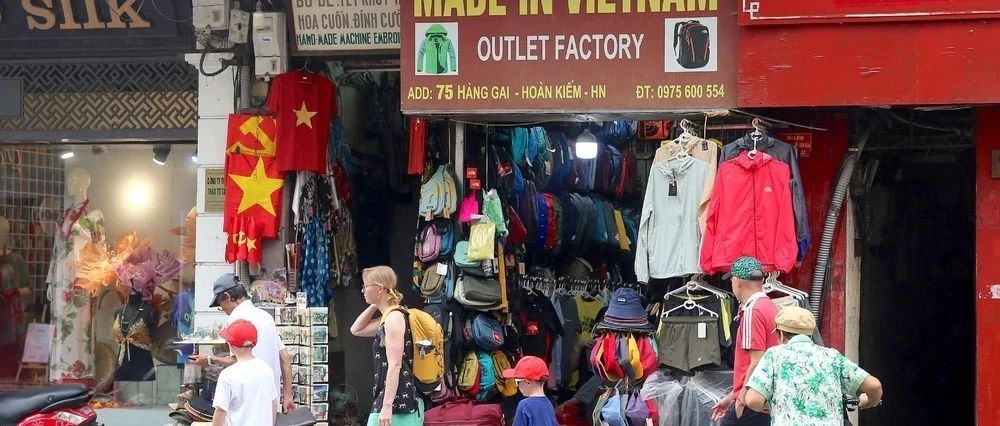
Core Viewpoint - The article discusses the recent trade agreements between the United States and Vietnam, highlighting the differences in negotiation outcomes with Japan and the implications for U.S. trade policy under Trump [3][4][6]. Group 1: U.S.-Vietnam Trade Agreement - The U.S. has agreed to reduce tariffs on Vietnamese products from 46% to 20%, while imposing a 40% tariff on goods transshipped through Vietnam to the U.S. Vietnam will maintain zero tariffs on U.S. goods [3][4]. - The agreement reflects a broader strategy by the U.S. to maintain a competitive tariff differential with other countries, with a minimum differential of 8.2% and a maximum of 20% [6][15]. Group 2: U.S.-Japan Trade Negotiations - Japan's negotiations with the U.S. have stalled, with Japan insisting on comprehensive exemptions from tariffs, while the U.S. focuses on specific tariff rates [11][16]. - The U.S. has threatened to impose tariffs as high as 35% on Japanese goods, indicating a tougher stance compared to the agreement with Vietnam [10][24]. - Japan's position as a major investor in the U.S. has not translated into favorable trade terms, as the U.S. perceives Japan as a "spoiled ally" [11][24]. Group 3: Broader Implications for Trade Policy - The article suggests that the U.S. may adopt a phased approach to tariff negotiations, granting exemptions to countries making progress while applying pressure to those lagging behind [21]. - The potential for a trade agreement with India is highlighted, with India facing a 26% tariff and seeking a similar arrangement as Vietnam [18][19]. - The article notes that the U.S. is likely to be more flexible in negotiations with non-allied countries compared to traditional allies like Japan [17][21].
关税突发!特朗普最新预告!
Sou Hu Cai Jing· 2025-07-04 05:18
Group 1 - The U.S. will send letters to approximately 100 countries detailing new tariff rates ranging from 20% to 30% starting July 4 [1] - The U.S. Treasury Secretary indicated that around 123 countries were initially subject to a 10% reciprocal tariff, with a series of trade agreements expected to be announced before the deadline on July 9 [1][2] - The U.S. has only finalized trade agreements with the UK and Vietnam, while a framework agreement has been reached with China [1] Group 2 - President Trump expressed strong doubts about the prospects of U.S.-Japan tariff negotiations, threatening tariffs of 30% or 35% on Japanese imports, which is higher than the previously proposed 24% [2] - The EU is prepared to reach a principle agreement with the U.S. on tariffs but will take countermeasures if negotiations fail [2][3] - The EU is pushing for the U.S. to eliminate tariffs on EU exports as part of any framework agreement, with current tariffs on EU automobiles at 25% and on steel and aluminum at 50% [3] Group 3 - The U.S. is considering expanding tariffs to additional sectors, including wood, aerospace parts, pharmaceuticals, chips, and critical minerals [3] - Recent trade data indicates that the tariff policies are disrupting the U.S. economy, with a decline in both imports and exports in May, leading to an increased trade deficit [3] - The uncertainty surrounding the July 9 deadline for tariff negotiations is expected to cause further volatility in import and export data [4]
关税战下的美国抢进口:规模、区域和结构——海外周报第96期
一瑜中的· 2025-07-03 13:56
Core Viewpoint - The article discusses the impact of increased tariffs on U.S. imports, highlighting the scale, regions, and types of goods being imported as a response to tariff changes [4][5][6]. Group 1: Tariff Increases - The effective tariff rate in the U.S. rose to 7% in April, with projections of 2.3% for 2024. The effective tariff rate on imports from China increased to 37.5% in April, up from 25% in March, and is expected to drop to 10.6% in 2024. For regions outside China, the effective tariff rate rose to 3.9% in April from 1.8% in March, with a forecast of 1% for 2024 [5][9]. Group 2: Scale of Imports - U.S. imports surged by approximately $188.3 billion, accounting for 68.6% of the average monthly import value for 2024. This surge indicates a potential drag on import growth of about 9.8% over the next seven months due to demand being pulled forward [6][12]. - The share of air freight in U.S. imports increased significantly, peaking at 37.1% in the first quarter of the year, compared to an annual average of 27.6% for 2024, before slightly declining to 31.5% in April [6][12]. Group 3: Sources of Imports - The primary regions contributing to the increase in U.S. imports include the Eurozone, ASEAN, Taiwan, Australia, and India, which collectively accounted for an 11 percentage point increase in year-on-year import growth [7][15]. - The air freight share from Australia, the Eurozone, India, Vietnam, and Taiwan saw significant increases, although there was a decline in April for Australia and the Eurozone, indicating a potential decrease in import momentum from these regions [15][20]. Group 4: Types of Goods Imported - The main categories of goods that U.S. companies have been importing include electronic products, pharmaceuticals, and raw metals, which together contributed 18.5 percentage points to the year-on-year import growth from January to April [8][23]. - In April, while the growth rates for pharmaceuticals and raw metals slowed, electronic products continued to show strong demand, contributing 4.1 percentage points to the overall import growth [23][24].

海外周报第96期:关税战下的美国抢进口,规模、区域和结构-20250703
Huachuang Securities· 2025-07-03 09:36
Tariff Impact - The effective tariff rate in the U.S. surged to 7% in April 2025, up from 2.3% in 2024, with the rate for imports from China reaching 37.5%[6] - By May 2025, the overall tariff rate further increased to 8.7%[6] Import Surge - U.S. imports exceeded historical trends by approximately $188.3 billion from December 2024 to May 2025, representing 68.6% of the average monthly import value for 2024[6] - The import growth rate is expected to be negatively impacted by about 9.8% in the remaining months of 2025 due to this surge[6] Import Sources - Major regions contributing to the import surge include the Eurozone, ASEAN, Taiwan, Australia, and India, collectively boosting U.S. imports by 11 percentage points in the first four months of 2025[6] - In April 2025, the import growth from these regions was approximately 5.7 percentage points, while the Eurozone's contribution turned negative, detracting 0.1 percentage points[6] Import Methods - Air freight imports surged to 37.1% in January to March 2025, significantly higher than the annual average of 27.6%, before dropping to 31.5% in April[6] - The increase in air freight usage indicates a strategy to expedite imports before tariffs took effect[6] Product Categories - The primary products imported during this period were electronics, pharmaceuticals, and raw metals, which together accounted for an 18.5 percentage point increase in overall import growth from January to April 2025[12] - In April 2025, electronics alone contributed 4.1 percentage points to the import growth, while pharmaceuticals and raw metals also showed significant increases[12]