商业航天

Search documents
A股市场大势研判:沪指走势较强,创业板指冲高回落
Dongguan Securities· 2026-01-19 23:52
Market Overview - The Shanghai Composite Index closed at 4114.00, up by 0.29%, while the Shenzhen Component Index closed at 14294.05, up by 0.09%. The ChiNext Index, however, fell by 0.70% to 3337.61 [2][4] - The market showed mixed performance with the three major indices fluctuating throughout the day, indicating a strong performance from the Shanghai index but a pullback in the ChiNext index [4][6] Sector Performance - The top-performing sectors included Basic Chemicals (up 2.70%), Petroleum and Petrochemicals (up 2.08%), and Electric Power Equipment (up 1.84%). Conversely, sectors such as Computers and Communications saw declines of -1.55% and -0.96%, respectively [3][4] - Notable concept indices that performed well included Flexible DC Transmission and Ultra-High Voltage, while concepts like WiFi6 and Xiaohongshu saw declines [3][4] Economic Indicators - The National Bureau of Statistics reported that China's GDP for 2025 was 1401879 billion yuan, reflecting a growth of 5.0% year-on-year. Quarterly growth rates were 5.4%, 5.2%, 4.8%, and 4.5% respectively [5] - The report indicates that the economic development goals for 2025 were successfully achieved, with supportive policies in place to foster economic stability and growth moving into 2026 [5] Market Sentiment and Outlook - The trading volume in the Shanghai and Shenzhen markets was 2.71 trillion yuan, a decrease of 317.9 billion yuan from the previous trading day. This indicates a potential cooling in market activity [6] - The report suggests that despite a recent slowdown in the upward momentum of the A-share market, the overall trend remains stable, with a focus on sectors showing high growth potential and improving fundamentals as the year progresses [6]
估值超百亿 中科宇航IPO辅导验收
Xin Lang Cai Jing· 2026-01-19 23:21
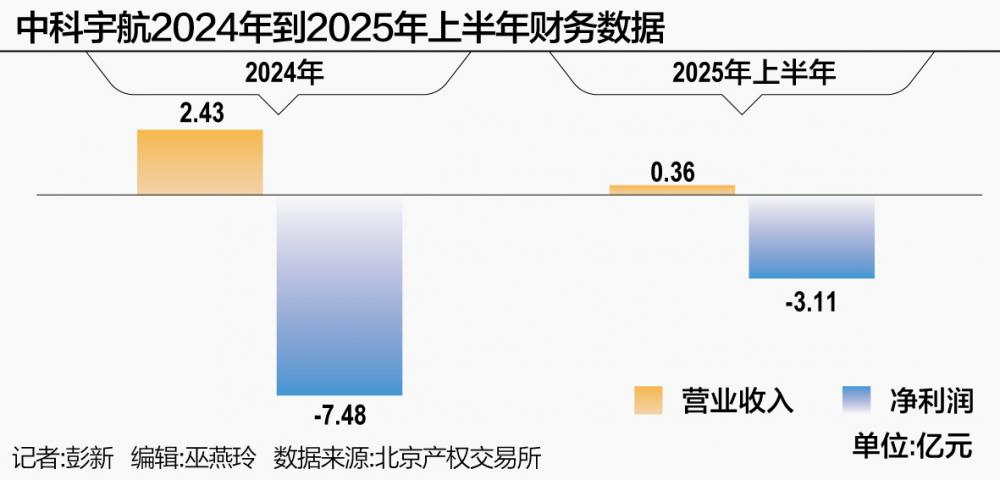
Core Viewpoint - Zhongke Aerospace Technology Co., Ltd. has made significant progress towards its IPO, transitioning to "acceptance of guidance" status as of January 17, indicating it is one of the fastest commercial aerospace companies to pursue an IPO after Blue Arrow Aerospace [1] Company Overview - Established in December 2018, Zhongke Aerospace is a high-tech commercial aerospace company incubated by the Chinese Academy of Sciences, and it is the first mixed-ownership rocket enterprise in China, focusing on medium to large rocket development, customized space launches, suborbital scientific experiments, and space tourism [3] - The company is primarily controlled by Beijing Pengyi Junlian Space Technology Center, which holds 27.7476% of its shares, with Yang Yiqiang as the actual controller [3] - Yang Yiqiang, aged 58, has a notable background in China's space industry, having held various leadership roles in significant projects, including the Long March 11 rocket [3] Investment and Valuation - Zhongke Aerospace has attracted investments from well-known institutions such as Guangzhou Chantuo, CITIC Securities, and Yuexiu Industrial Fund [4] - The company is valued at approximately 11 billion yuan (around 1.1 billion USD) according to the Hurun Research Institute's 2025 Global Unicorn List, ranking 807th [5] - A share transfer listing indicated a valuation of about 11.1 billion yuan based on a 0.7928% stake being sold for 88 million yuan [5] Market Position and Achievements - Zhongke Aerospace's "Liqi 1" rocket successfully completed its maiden flight in July 2022, providing commercial launch services and has since launched 84 satellites into orbit, with a total payload mass exceeding 11 tons, making it the leading company in terms of cumulative payload for a single rocket model among Chinese private/commercial rocket companies [6] - The company has also successfully launched for international clients, including Egypt, Oman, and the UAE [6] Product Development - The company is advancing the development of multiple products, including the Liqi 2, Liqi 2 Heavy, and the Lihong series of reusable vehicles to meet diverse transportation needs [7] - The Lihong 1 vehicle recently completed a suborbital flight test, reaching an altitude of approximately 120 kilometers, marking a significant breakthrough in reusable technology [7] Financial Performance - Despite its rapid growth, Zhongke Aerospace's single rocket launch revenue has not yet covered its costs due to low launch frequency and underutilization of payload capacity, leading to high unit costs [8][9] - In 2024, the company reported revenues of 243 million yuan with a net loss of 748 million yuan, and for the first half of 2025, revenues were 36 million yuan with a net loss of 311 million yuan [9] Industry Context - The commercial aerospace sector in China is experiencing rapid growth, with expectations for significant IPO progress in 2026, supported by new regulations from the China Securities Regulatory Commission [10] - Five domestic companies focused on launch vehicles, including Zhongke Aerospace, have initiated IPO processes, with Blue Arrow Aerospace already in the acceptance stage for its IPO [10] - The cost competitiveness of Chinese commercial aerospace has improved, although there remains a significant gap compared to international leaders like SpaceX [10]

【策略】节前坚守稳健布局,静待节后新动能释放——策略周专题(2026年1月第2期)(张宇生/郭磊)
光大证券研究· 2026-01-19 23:06
本订阅号中所涉及的证券研究信息由光大证券研究所编写,仅面向光大证券专业投资者客户,用作新媒体形势下研究 信息和研究观点的沟通交流。非光大证券专业投资者客户,请勿订阅、接收或使用本订阅号中的任何信息。本订阅号 难以设置访问权限,若给您造成不便,敬请谅解。光大证券研究所不会因关注、收到或阅读本订阅号推送内容而视相 关人员为光大证券的客户。 报告摘要 本周上证指数窄幅震荡 本周上证指数窄幅震荡。从主要宽基指数来看,本周A股主要宽基指数涨多跌少,科创50、中证500涨幅居 前,上证指数小幅收跌,上证50、沪深300跌幅居前。从估值来看,当前科创50、万得全A等指数估值分位 数相对偏高,截至2026年1月16日,其2010年以来PE(TTM)分位数均高于90%。 本周重要事件回顾 政策方面,央行宣布推出八项政策措施,聚焦结构性工具"优化加量降价";沪深北交易所提高融资保证金 比例,将投资者融资买入证券时的融资保证金最低比例从80%提高到100%;居民换房退个税政策期限进一 步延续至2027年底;此外,三部门联合召开新能源汽车行业企业座谈会,部署规范新能源汽车产业竞争秩 序相关工作。 经济金融数据方面,央行发布2025年 ...

勿让概念炒作带歪商业航天
Jing Ji Ri Bao· 2026-01-19 22:13
Core Viewpoint - The commercial aerospace sector has experienced significant volatility, driven by market enthusiasm and policy support, but is now facing challenges related to valuation and regulatory scrutiny [1][2]. Group 1: Market Dynamics - The commercial aerospace sector gained momentum due to clear market opportunities and supportive policies, with notable advancements in reusable rocket technology and satellite internet applications [1]. - The "14th Five-Year Plan" identifies aerospace as a strategic emerging industry, with various local governments establishing funds and policies to support the entire commercial aerospace value chain [1]. Group 2: Valuation and Regulatory Concerns - The sector has accumulated valuation bubbles, with an average price-to-earnings ratio reaching 96 times, and some leading stocks exceeding 1,000 times, indicating a significant disconnect between earnings and valuations [2]. - Regulatory warnings from the Shanghai Stock Exchange regarding inaccurate and incomplete information disclosures have raised concerns about speculative trading, leading to substantial price corrections [2]. Group 3: Long-term Outlook and Investment Strategy - Despite short-term volatility, long-term factors such as policy support, technological breakthroughs, and market demand will continue to drive the industry's development [2]. - Investors are advised to adopt a long-term value investment approach, focusing on companies with core technologies and commercial potential, while avoiding those reliant on speculative trading [3].
2025年年报业绩预告进入加速披露期 40余家上市公司净利翻番 AI成业绩增长强大驱动力
Zhong Guo Zheng Quan Bao· 2026-01-19 21:12
Core Viewpoint - The A-share listed companies are entering a rapid disclosure period for their 2025 annual performance forecasts, with a significant number of companies expected to report strong growth driven by AI and rising commodity prices [1][2]. Group 1: Performance Forecasts - As of January 19, 2025, 451 A-share listed companies have disclosed their performance forecasts, with 156 companies expecting positive results [1]. - Among these, 42 companies anticipate a net profit growth of over 100% year-on-year for 2025 [2]. - Notable companies include: - DingTong Technology expects a revenue of approximately 1.593 billion yuan, a 54.37% increase, and a net profit of about 242 million yuan, a 119.59% increase, driven by AI demand in the communications sector [2]. - Baiwei Storage forecasts a net profit between 850 million to 1 billion yuan, representing a growth of 427.19% to 520.22%, with a revenue expectation of 10 billion to 12 billion yuan [3]. Group 2: Mining Sector Performance - Mining companies are showing significant performance improvements due to rising prices and production volumes of key commodities [4]. - Luoyang Molybdenum expects a net profit of 20 billion to 20.8 billion yuan, a year-on-year increase of 47.8% to 53.71%, attributed to effective cost control and a dual-core strategy focusing on copper and gold [4]. - Zijin Mining anticipates a net profit of approximately 51 billion to 52 billion yuan, a growth of 59% to 62%, with increased production in gold, copper, and silver [5]. Group 3: Innovative Sectors - Companies in semiconductor, innovative pharmaceuticals, and commercial aerospace sectors are gaining market attention [6]. - Haopeng Technology projects a net profit of about 19.5 million to 22 million yuan, a growth of 113.69% to 141.09%, driven by advancements in AI hardware applications [6]. - The pharmaceutical industry is entering a critical phase of innovation and global expansion, with investment opportunities focusing on companies with global competitiveness [7].

40余家上市公司净利翻番AI成业绩增长强大驱动力
Zhong Guo Zheng Quan Bao· 2026-01-19 21:11
Core Viewpoint - The A-share listed companies are entering a rapid disclosure period for their 2025 annual performance forecasts, with a notable influence from AI and rising commodity prices on company performance [1][2]. Group 1: Performance Forecasts - A total of 451 A-share listed companies have disclosed their 2025 performance forecasts, with 156 companies expecting positive results [1]. - Among these, 42 companies anticipate a net profit growth of over 100% year-on-year [2]. - Notable companies include DingTong Technology, which expects a revenue of approximately 1.593 billion yuan, a 54.37% increase, and a net profit of about 242 million yuan, a 119.59% increase, driven by AI demand in the communications sector [2]. Group 2: Mining Sector Performance - Mining companies are experiencing significant growth due to rising prices and production volumes of gold and copper [3]. - Luoyang Molybdenum Co. expects a net profit of 20 billion to 20.8 billion yuan, a year-on-year increase of 47.8% to 53.71%, attributed to effective cost control and increased product prices [3][4]. - Zijin Mining anticipates a net profit of approximately 51 billion to 52 billion yuan, a growth of 59% to 62%, with increased production of gold and copper [4]. Group 3: Innovation and Emerging Sectors - Companies in semiconductor, innovative pharmaceuticals, and commercial aerospace sectors are gaining market attention, with many receiving intensive institutional research following their performance forecasts [4][5]. - Haopeng Technology expects a net profit of about 19.5 million to 22 million yuan, a growth of 113.69% to 141.09%, driven by advancements in AI hardware applications [5]. - The pharmaceutical industry is entering a critical phase of innovation and global expansion, with investment opportunities focusing on companies with global competitiveness [5].
对商业航天产业发展给予更多耐心
Zheng Quan Ri Bao· 2026-01-19 16:12
Core Viewpoint - The recent failures in the aerospace sector highlight the critical challenges that commercial space development must overcome for high-quality growth [2] Group 1: Technical Challenges - The need to respect technology and accept trial-and-error costs is emphasized, as technological innovation is rarely straightforward [3] - The failure of the Gushenxing-2 rocket, a medium-sized solid launch vehicle, reflects the objective development trajectory of China's commercial aerospace moving from technology validation to maturity [3] - The failure of the Long March 3B rocket serves as a reminder of the inherent risks present throughout the lifecycle of complex aerospace systems [3] Group 2: Systemic Capacity Building - The commercial aerospace sector in China is entering a high-density launch phase, but reliable, low-cost, and high-frequency launch capacity has not yet been fully established [4] - By 2026, commercial space launch activities are expected to become more active, with several private rockets set for their inaugural flights [4] - Overcoming capacity bottlenecks requires not only increasing launch frequency but also enhancing systemic capabilities, including the development of reusable rockets and large thrust engines [5] - Improvements in rocket manufacturing and delivery efficiency through standardization and scaling are necessary to support higher-density mission sequences [5] Group 3: Learning from Failures - The complexity of commercial aerospace development means that setbacks are often part of the process, necessitating a rational approach to launch failures and a focus on troubleshooting progress [6] - China's commercial aerospace industry benefits from a rigorous "zeroing" mechanism that allows for systematic fault diagnosis and accelerated technological iteration [6] - The parallel exploration of diverse technological routes creates a risk-diversification and technology-complementation framework, potentially shortening the technology maturation cycle [6] - Long-term healthy development of the commercial aerospace sector requires patient capital support, focusing on companies with core technological strengths and clear business paths [6]
从地面到太空 中国基建正加速迈向宇宙
Jin Rong Jie· 2026-01-19 16:01
Core Viewpoint - The successful launch of 19 low Earth orbit satellite internet satellites using the Long March 12 rocket marks a significant advancement in China's commercial space capabilities, with implications for future global communication and technology integration [1] Group 1: Launch Details - The launch took place on January 19 at the Hainan commercial space launch site [1] - The satellites successfully entered their designated orbits, indicating a successful mission [1] Group 2: Cost Reduction and Technological Advancements - The rapid iteration of rockets is moving towards recoverable and low-cost designs, with launch costs expected to decrease from the "hundred million" level to the "ten million" level [1] - The production of satellites is now akin to mass production, similar to automobiles, enhancing efficiency in satellite deployment [1] Group 3: Future Implications - The advancements in satellite technology will enable direct mobile phone connections to satellites, seamless global communication, and the integration of space-based AI services into daily life [1]
北京火箭大街竣工
第一财经· 2026-01-19 15:24
Core Viewpoint - The article highlights the completion of the Beijing Rocket Street project, which will serve as China's first common research and production base for commercial aerospace, aiming to enhance innovation and ecological development in the industry [2][3]. Group 1: Project Overview - The Beijing Rocket Street project has a total construction area of 145,000 square meters and includes four main functional areas: common technology platform, innovation R&D center, high-end manufacturing center, and display and operation control center [2]. - The project will provide over ten shared services for satellite and rocket development, including various testing services and support for research and production [2]. Group 2: Industry Goals and Policies - Beijing Yizhuang aims to establish a 50 billion yuan commercial aerospace industry cluster by 2028, with a long-term goal of achieving "thousand enterprises linked, thousand stars launched, and thousand billion revenue" [3]. - The development of the commercial aerospace sector is supported by national strategies and local policies, with a focus on innovation and collaboration among various regions [3]. Group 3: Current Industry Status - In 2025, the "Yizhuang Arrow" is expected to successfully launch 24 times, delivering over 160 satellites, with the aerospace industry generating over 30 billion yuan in revenue [4]. - The industry faces challenges such as insufficient rocket capacity, low total supply, and high launch costs, with costs for Chinese commercial launches ranging from 50,000 to 150,000 yuan per kilogram compared to SpaceX's Falcon 9 at approximately 2,940 USD per kilogram [4]. Group 4: Collaborative Development - The industry has historically struggled with a "single-point breakthrough" approach, leading to inefficiencies and high costs [5]. - The completion of the Rocket Street project is expected to enhance the efficiency of the entire industry chain by providing accessible public service support for key testing and production processes [5].
商业航天概念牛股 终止收购
Shang Hai Zheng Quan Bao· 2026-01-19 15:09
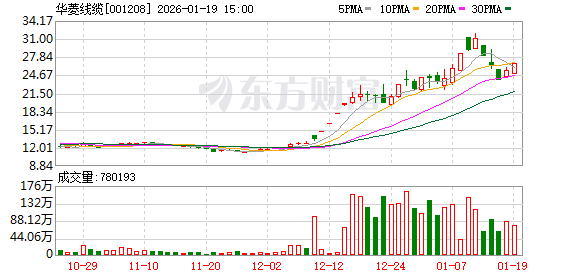
Core Viewpoint - Hualing Cable has officially announced the termination of its acquisition of Hunan Xingxin Aerospace New Materials Co., Ltd. due to the inability to reach consensus on key terms after nearly ten months of negotiations, which was initially seen as a significant step in integrating state-owned and private enterprises in the aerospace sector [2][3] Company Summary - The acquisition was intended to enhance Hualing Cable's position in the aerospace field, as it is a leading company in the domestic special cable sector, with products used in major national aerospace projects. Xingxin Aerospace is a key player in thermal protection materials for aerospace applications [3] - Following the announcement of the acquisition intention, Hualing Cable's stock price surged over 130% from December 1, 2025, benefiting from the "commercial aerospace" concept [4] - The company emphasized that it will continue to pursue its strategic goals through both internal development and external acquisitions, aiming to optimize its industrial layout and enhance its overall competitiveness [4][6] Industry Summary - The acquisition was set against a backdrop of increasing demand for high-reliability special cables and materials, driven by the rapid development of China's satellite internet and favorable low-altitude economy policies [3] - The commercial aerospace sector has seen significant growth, with industry financing reaching 18.6 billion yuan and 92 commercial launches, both showing over 30% year-on-year increases in 2025 [6] - However, the industry faces challenges, including high launch costs and the need for sustainable business models, as the downstream satellite application market is still in the cultivation stage [6]