
建材

Search documents
至暗时刻,家居行业变高危行业!
Jin Tou Wang· 2025-07-29 11:24
本文由"金投网"(ID:wxcngold)编辑,欢迎下载"金投网APP",看行情,聊行情,了解金银走势,欢迎留言! 今年最惨的行业出现了,2个月之内,连续4位创始人大佬出事,要么坠楼、要么坠马,撕开了整个地产圈的遮雨布。 2025年,家居行业似乎被阴霾所笼罩,一系列令人震惊的事件接连发生,让整个行业乃至社会都为之震动。 在"无破数据终端"的统计中,2025年上半年共有131家装企破产清算,平均每1.36天就有一家家装企业走向破产。浙江省成为重灾区,占比超过全 国破产装企总量的23%,上海也意外跻身破产企业数量前十。 家装行业的危机迅速传导至上游建材领域。2025年1-6月,全国共有51家陶瓷及相关配套企业的76项资产被公开拍卖,涉及的资产评估价超过18.2 亿元。然而市场接盘意愿低迷,最终成交率仅31%,成交额约1.7亿元。 这背后就是作为心脏的地产行业供血不足了,数据在血崩。当然,家居企业自身经营模式也存在问题。许多企业采取"重资产+高杠杆"的扩张模 式,像居然之家405家门店中自有物业比例达28%,靓家居48家大店自有物业比例更高达50% 。一旦出租率下滑,固定折旧与财务费用瞬间吞噬现 金流。过去靠"预售 ...




央行天津市分行:逐步推动煤电、建材、交通、航运等“N”个重点行业转型金融标准的试用
news flash· 2025-07-29 08:44
央行天津市分行:逐步推动煤电、建材、交通、航运等"N"个重点行业转型金融标准的试用 金十数据7月29日讯,近日,中国人民银行天津市分行联合天津金融监管局、天津证监局、市地方金融 管理局、市工业和信息化局、市发展改革委、市生态环境局印发《发挥转型金融作用服务天津经济绿色 低碳发展的实施意见》。《实施意见》坚持"三个结合"的转型金融发展总体要求,即政策引导与市场驱 动相结合、标准引领与创新驱动相结合、防控风险与推动发展相结合。提出构建"1+1+N"的转型金融标 准试点应用体系,即重点推动"1"个钢铁行业标准、"1"个化工团体标准的试点应用,逐步推动煤电、建 材、交通、航运等"N"个重点行业转型金融标准的试用。 相关链接 ...
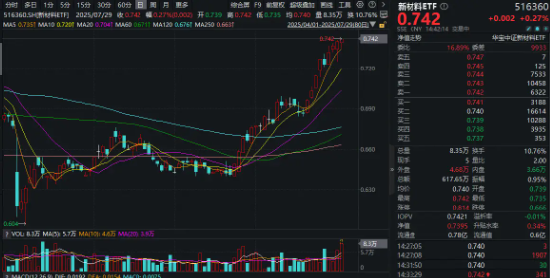
充分受益“反内卷”!细分板块接连上攻,新材料ETF(516360)冲击日线四连阳!机构频频唱多
Xin Lang Ji Jin· 2025-07-29 06:57
近期,或受"反内卷"政策影响,化工、有色金属、新能源等板块涨势不断!今日(7月29日),部分细 分行业再度上攻,截至发稿,一键布局"反内卷"核心获益行业——新能源、化工、建材等先进关键材料 的新材料ETF(516360)场内价格涨0.27%,冲击日线四连阳。 成份股方面,基础化工、新能源、有色金属等多个板块个股有亮眼表现。截至发稿,厦钨新能大涨超 4%,通威股份涨超3%,三棵树、合盛硅业、华友钴业等多股涨超2%。 近期"反内卷"备受关注,高层近期明确提出"依法治理低价无序竞争,推动落后产能有序退出"。而新材 料ETF(516360)标的指数中证新材料主题指数成份涵盖基础化工、电力设备及新能源、建材等有望较 大程度受益于"反内卷"的行业。 建材方面,机构表示,从需求端看,今年以来,多个重要会议聚焦房地产止跌回稳做出了重要部署,中 央城市工作会议提出以推进城市更新为重要抓手,稳步推进城中村和危旧房改造、老旧管线改造升级 等,有望拉动管材、防水、涂料等消费建材需求。同时,后续家装国补、旧改和城市更新等政策支持仍 然可期,有望提振产业链信心。从供给端看,在"反内卷"趋势下,涂料、防水、水泥等行业供给侧有望 出现积极变 ...
建材、建筑及基建公募REITs周报(7月19日-7月25日):《价格法》修正草案征求意见,反内卷政策持续深化落实-20250729
EBSCN· 2025-07-29 05:03
2025 年 7 月 29 日 行业研究 《价格法》修正草案征求意见,反内卷政策持续深化落实 ——建材、建筑及基建公募 REITs 周报(7 月 19 日-7 月 25 日) 要点 《价格法》修正草案征求意见,反内卷相关政策持续深化落实。24 年 7 月中央 政治局会议首次提出防止"内卷式"恶性竞争以来,相关政策持续深化落实。24 年 12 月中央经济工作会议亦提出综合整治"内卷式"竞争,规范地方政府和企 业行为;25 年 3 月政府工作报告指明要综合整治"内卷式"竞争;7 月 1 日中 财委第六次会议再次强调,依法依规治理企业低价无序竞争,引导企业提升产品 品质,推动落后产能有效退出;在 7 月 16 日-17 日中央企业负责人研讨班上, 国资委提出国资央企要超越内卷竞争维护产业价值;7 月 18 日国新办新闻发布 会上,工信部表示,近期将陆续发布新一轮钢铁、有色金属、石化、建材等十大 重点行业稳增长具体工作方案,推动重点行业着力调结构、优供给、淘汰落后产 能;在 7 月 23 日-24 日地方国资委负责人研讨班上,国资委强调要带头抵制"内 卷式"竞争,加强重组整合;7 月 24 日《中华人民共和国价格法修 ...
重视周期大宗的牛市机会
2025-07-29 02:10
Summary of Conference Call Industry Overview - The conference call primarily discusses the outlook for the Chinese capital market, focusing on various sectors including financials, technology, and commodities, particularly in the context of economic challenges and policy reforms. Key Points and Arguments Market Outlook - The Shanghai Composite Index is expected to reach a high of approximately 3,800 to 4,000 points by the end of the year, with the Hang Seng Index and Hang Seng Tech Index also anticipated to hit new yearly highs [2][20]. - Despite some market volatility expected in August, it is viewed as a final opportunity to increase positions in the market for the year [2][20]. Economic Conditions - The prevailing sentiment is that the economic downturn is widely recognized, but it is not expected to lead to significant market corrections as seen in previous years [3][4]. - The current market conditions are compared to Japan's past economic stagnation, noting that while China's economy has not reached that level, asset prices have already adjusted significantly [6][10]. Investment Strategy - The focus remains on sectors such as financials, technology, and certain cyclical commodities, with an emphasis on the importance of long-term investment logic [20][21]. - The decline in risk-free interest rates is highlighted as a critical factor that will drive market growth and attract new capital into the stock market by 2025 [9][20]. Sector-Specific Insights - **Financial Sector**: Strong recommendations for investing in financial stocks, particularly brokerages, as they are expected to benefit from the market's upward trajectory [16][20]. - **Technology Sector**: Continued optimism for growth in technology stocks, especially in AI and related fields, as demand is expected to rise significantly [25][26]. - **Cyclical Commodities**: The cyclical commodities sector is viewed as undervalued, with potential for price increases as economic conditions improve [17][19]. Policy Implications - Recent economic policies are seen as timely and appropriate, aimed at enhancing investor returns, which is a shift from previous years [8][20]. - The importance of structural reforms in the capital market is emphasized, as they are expected to improve the overall investment climate and attract more capital [12][20]. Risks and Considerations - The potential for a disconnect between commodity prices and stock prices is noted, with the latter expected to rise even if commodity prices do not follow suit [19][20]. - The need for investors to focus on companies with clear long-term growth narratives is stressed, as those without such narratives may struggle to attract investment [20][21]. Additional Important Content - The discussion includes insights into specific sectors such as the rare earth materials and chemicals industries, with recommendations for companies that are well-positioned to benefit from current market dynamics [22][29][35]. - The impact of upcoming expirations of high-yield deposits and financial products is anticipated to influence market liquidity and investment behavior [14][20]. This summary encapsulates the key insights and recommendations from the conference call, providing a comprehensive overview of the current market outlook and strategic investment considerations.
居然之家CEO坠亡!广州品牌店曾爆雷,现未完全解决…
Sou Hu Cai Jing· 2025-07-28 15:05
Core Viewpoint - The recent death of Wang Linpeng, the CEO of Juran Smart Home, has raised significant concerns about the company's future and the overall state of the home furnishing industry in China [3][8][20]. Financial Performance - Juran Smart Home's financial indicators have shown a downward trend, with a 4.04% decrease in revenue from 2023 to 2024, totaling approximately 12.97 billion yuan [10][11]. - The net profit attributable to shareholders dropped by 40.83%, from approximately 1.3 billion yuan in 2023 to about 769 million yuan in 2024 [11]. - The first quarter of 2025 also reflected negative trends, with a 39.39% decline in net profit compared to the same period in the previous year [12]. Market Conditions - The home furnishing and building materials market is facing intensified competition due to economic fluctuations and a downturn in the real estate sector, leading to increased pressure on merchants [13][34]. - Juran Smart Home has been forced to provide rent and management fee reductions to support merchants, contributing to a decline in rental and management income [13]. Corporate Governance Issues - Wang Linpeng was recently released from detention just four days before his death, raising questions about the circumstances surrounding his removal and the company's governance [6][22]. - The company has faced scrutiny due to the lack of transparency regarding the reasons for Wang's detention, which is typically associated with serious allegations such as corruption [22]. Industry Trends - The home furnishing industry is experiencing a significant downturn, with many once-prominent brands now struggling or facing bankruptcy [34][40]. - The case of the Foshan International Home Furnishing Expo Center, which is now up for auction due to financial distress, exemplifies the broader challenges facing the industry [39].

策略周思考:“内卷式”消灭1到2倍市净率和“反内卷”行情
Guoxin Securities· 2025-07-28 14:47
Group 1 - The report highlights a significant reduction in the proportion of stocks with a price-to-book (PB) ratio of 1-2x, dropping from approximately 45% in early April to below 30% by late July, indicating a market trend towards eliminating low PB stocks [1][11][12] - Historical analysis shows that the complete elimination of 1-2x PB stocks occurred only during specific periods, such as 2014-2015, driven primarily by active leverage in the market [14][17][22] - The report identifies necessary but insufficient conditions for the systematic elimination of 1-2x PB stocks, including the continuous expansion of profit effects, influx of incremental funds, and alignment of fundamental expectations across various styles [2][26] Group 2 - The "anti-involution" phenomenon is characterized by a two-phase excess return path in heavy asset industries, transitioning from "ROA→, PB↑" to "ROA↑, PB→" [3][36] - The report references the previous supply-side structural reforms in 2016, where industries like coal and steel experienced significant price and volume reversals, driven by policy changes that addressed overcapacity [29][32] - Current core industries under the "anti-involution" theme include photovoltaic materials, cement, and basic chemicals, with a focus on selecting companies that maintain cash flow despite profit losses [39][43]
固收、宏观周报:大宗涨价,债市有所调整-20250728
Shanghai Securities· 2025-07-28 11:22
Report Overview - Report Date: July 28, 2025 - Analyst: Zhang Hesheng - Contact Information: Tel: 021 - 53686158; E - mail: zhanghesheng@shzq.com; SAC No.: S0870523100004 [1] Industry Investment Rating - The report continues to be bullish on the bond market and A - share structural opportunities, but no specific industry investment rating is provided [12] Core Viewpoints - Continue to be optimistic about the bond market and A - share structural opportunities. The rapid price increase of commodities such as coal, steel, and building materials is due to the dual positive catalysts of the increasing expectation of supply - side reform and the incremental demand from the Yarlung Zangbo River Hydropower Project. The bond market is not substantially affected by the commodity price increase, and the short - term adjustment provides an opportunity to go long on the bond market. In the stock market, the Politburo meeting at the end of July may introduce some growth - stabilizing policies, and the upcoming Sino - US economic and trade talks in Sweden are expected to keep investors' risk appetite at a high level. There are still investment opportunities in structural sectors such as rare earths, artificial intelligence, innovative drugs, and commodities [12] Market Performance Summary Stock Market - **US Stocks**: In the past week (July 21 - 27, 2025), the Nasdaq, S&P 500, and Dow Jones Industrial Average changed by 1.02%, 1.46%, and 1.26% respectively, and the Nasdaq China Technology Index changed by 1.91% [2] - **Hong Kong Stocks**: The Hang Seng Index changed by 2.27% in the same period [2] - **A - Shares**: The Wind All - A Index rose 2.21%. Among them, the CSI A100, CSI 300, CSI 500, CSI 1000, CSI 2000, and Wind Micro - cap stocks changed by 2.29%, 1.69%, 3.28%, 2.36%, 1.81%, and 3.63% respectively. In terms of sector styles, both blue - chip and growth stocks in the Shanghai and Shenzhen markets rose, and the North Securities 50 Index changed by 2.85% [3] - **Industry Performance**: Among the 30 CITIC industries, 4 industries declined and 26 industries rose. The leading industries were coal, steel, non - ferrous metals, building materials, and construction, with weekly gains of more than 6%. In terms of ETF performance, rare metals, coal, building materials, non - ferrous metals, and Hong Kong securities performed well, with weekly gains of more than 7% [4] Bond Market - **Domestic Interest - Rate Bonds**: In the past week (July 21 - 27, 2025), the 10 - year Treasury bond futures main contract fell 0.56% compared to July 18, 2025. The yield of the 10 - year Treasury bond active bond increased by 6.72 BP to 1.7324% compared to July 18, 2025. The yield curve became steeper [5] - **Funding Price**: As of July 25, 2025, R007 was 1.6937%, up 18.65 BP from July 18, 2025; DR007 was 1.6523%, up 14.56 BP, and the spread between the two increased. The central bank's open - market operations had a net withdrawal of 70.5 billion yuan in the past week [6] - **Bond Market Leverage**: The bond market leverage level increased. The 5 - day average of the inter - bank pledged repurchase volume increased from 7.24 trillion yuan on July 18, 2025, to 7.70 trillion yuan on July 25, 2025 [7] - **US Treasury Bonds**: In the past week (July 21 - 27, 2025), the long - term US Treasury bond yields decreased while the short - term yields increased. As of July 25, 2025, the 10 - year US Treasury bond yield decreased by 4 BP to 4.40%. The yield curve became flatter [8][9] Foreign Exchange and Commodities - **US Dollar**: The US dollar index fell 0.80% in the past week (July 21 - 27, 2025). The US dollar exchange rates against the euro, pound, and yen changed by - 1.00%, - 0.19%, and - 0.76% respectively. The US dollar exchange rates against the offshore and onshore RMB decreased by 0.18% and 0.12% respectively [10] - **Gold**: The international gold price fell, with the London gold spot price falling 0.35% to $3343.5 per ounce and the COMEX gold futures price falling 0.61% to $3329.1 per ounce. The domestic gold price rose, with the Shanghai gold spot price rising 0.09% to 774.21 yuan per gram and the futures price rising 0.01% to 774.70 yuan per gram [10] Trade Negotiation Progress - The US has reached trade agreements with the Philippines, Japan, and the EU. Sino - US trade talks will be held in Sweden from July 27 - 30, 2025, and the follow - up progress is worthy of attention [11]
资金跟踪系列之四:北上与 ETF 有所回流,个人投资者加速买入
SINOLINK SECURITIES· 2025-07-28 09:09
Group 1: Macro Liquidity - The US dollar index has declined again, and the degree of "inversion" in the China-US interest rate spread has narrowed, with inflation expectations continuing to rise [1][11][14] - Offshore dollar liquidity has marginally eased, while the domestic interbank funding situation has shown a pattern of first easing and then tightening [1][14] Group 2: Market Trading Activity - Overall market trading activity has continued to rise, with most industry trading heat above the 80th percentile [2][20] - The volatility of major indices has also increased, with most industry volatilities below the 40th historical percentile [2][26] Group 3: Institutional Research - The electronic, computer, retail, communication, and pharmaceutical sectors have seen high research activity, while real estate and non-bank sectors have also experienced a rise in research heat [3][36] Group 4: Analyst Forecasts - Analysts have simultaneously lowered the net profit forecasts for the entire A-share market for 2025/2026, while increasing forecasts for sectors such as non-ferrous metals, light industry, steel, and utilities [4][19] - The net profit forecasts for the CSI 500 index for 2025/2026 have been raised, while those for the CSI 300, SSE 50, and ChiNext have been lowered [4][23] Group 5: Northbound Trading Activity - Northbound trading activity has rebounded, with overall net purchases of A-shares, particularly in sectors like non-ferrous metals, pharmaceuticals, and chemicals [4][31] - The ratio of buy/sell amounts for the top 10 active stocks has increased in sectors such as non-ferrous metals and pharmaceuticals [4][32] Group 6: Margin Financing Activity - Margin financing activity has continued to rise, reaching a year-to-date high, with significant net purchases in sectors like machinery, non-ferrous metals, and pharmaceuticals [6][10] - The proportion of financing purchases in real estate, consumer services, and utilities has increased [6][38] Group 7: Fund Activity - Active equity funds have slightly reduced their positions, primarily increasing allocations in sectors like computers, electronics, and banks [5][45] - ETFs have seen overall net subscriptions, particularly in sectors such as construction, steel, and chemicals, while electronic, pharmaceutical, and banking sectors have experienced net redemptions [5][53]
行业轮动周报:ETF资金持续净流出医药,雅下水电站成短线情绪突破口-20250728
China Post Securities· 2025-07-28 06:19
- Model Name: Diffusion Index Model; Construction Idea: The model is based on the principle of price momentum, capturing industry trends through diffusion indices; Construction Process: The model tracks the weekly and monthly changes in the diffusion indices of various industries, ranking them accordingly. The formula for the diffusion index is not explicitly provided; Evaluation: The model has shown varying performance over the years, with significant drawdowns during market reversals[24][25][28] - Model Name: GRU Factor Model; Construction Idea: The model utilizes GRU (Gated Recurrent Unit) deep learning networks to process minute-level volume and price data, aiming to capture trading information; Construction Process: The model ranks industries based on GRU factors, which are derived from the deep learning network's analysis of trading data. The specific formula for GRU factors is not provided; Evaluation: The model has performed well in short cycles but has shown general performance in longer cycles[31][32][35] - Diffusion Index Model, Average Weekly Return: 0.89%, Excess Return Since July: -3.47%, Excess Return YTD: -0.45%[28] - GRU Factor Model, Average Weekly Return: 4.27%, Excess Return Since July: 1.34%, Excess Return YTD: -4.25%[35] - Factor Name: Diffusion Index; Construction Idea: The factor is based on the momentum of industry prices, capturing upward trends; Construction Process: The factor is calculated by observing the weekly and monthly changes in the diffusion indices of various industries. The specific formula is not provided; Evaluation: The factor has shown varying performance, with significant drawdowns during market reversals[24][25][28] - Factor Name: GRU Factor; Construction Idea: The factor is derived from GRU deep learning networks, capturing trading information from minute-level volume and price data; Construction Process: The factor is calculated by ranking industries based on the GRU network's analysis of trading data. The specific formula is not provided; Evaluation: The factor has performed well in short cycles but has shown general performance in longer cycles[31][32][35] - Diffusion Index Factor, Top Industries: Comprehensive Finance (1.0), Steel (1.0), Non-Bank Finance (0.999), Comprehensive (0.998), Non-Ferrous Metals (0.997), Home Appliances (0.995)[25] - GRU Factor, Top Industries: Banking (3.3), Real Estate (0.58), Oil & Petrochemicals (-1.26), Textile & Apparel (-1.73), Light Manufacturing (-2.49), Electric Power & Utilities (-2.83)[32]