
交通运输

Search documents
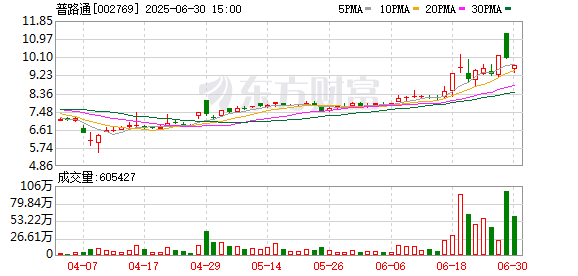
交通运输行业资金流出榜:普路通等6股净流出资金超3000万元
Zheng Quan Shi Bao Wang· 2025-06-30 09:20
Market Overview - The Shanghai Composite Index rose by 0.59% on June 30, with 28 out of the 31 sectors experiencing gains, led by the defense and military industry with a rise of 4.35% and the media sector with an increase of 2.82% [2] - The non-bank financial sector, banking, and transportation sectors were the biggest losers, with declines of 0.77%, 0.34%, and 0.09% respectively [2] Capital Flow Analysis - The net outflow of capital from the two markets was 1.613 billion yuan, with 10 sectors seeing net inflows [2] - The defense and military sector had the highest net inflow of 3.315 billion yuan, followed by the media sector with a net inflow of 1.441 billion yuan [2] Transportation Sector Performance - The transportation sector saw a slight decline of 0.09%, with a net capital outflow of 276 million yuan [3] - Out of 125 stocks in the transportation sector, 50 stocks rose, including one that hit the daily limit, while 60 stocks fell [3] - The top three stocks with the highest net inflow in the transportation sector were Shentong Metro with 121.43 million yuan, Baoshui Technology with 66.98 million yuan, and China Merchants Shipping with 46.91 million yuan [3] Top Gainers in Transportation Sector - Shentong Metro had a gain of 10.06% with a turnover rate of 6.98% and a net capital inflow of 121.43 million yuan [4] - Baoshui Technology increased by 4.51% with a turnover rate of 14.25% and a net inflow of 66.98 million yuan [4] - China Merchants Shipping saw a slight increase of 0.16% with a net inflow of 46.91 million yuan [4] Top Losers in Transportation Sector - Pulutong experienced a decline of 3.39% with a net outflow of 52.30 million yuan [5] - Sanyangma fell by 1.31% with a net outflow of 41.65 million yuan [5] - China National Airlines decreased by 0.75% with a net outflow of 39.32 million yuan [5]


前5月深圳经济平稳运行 规上工业增加值同比增长3.5%
2 1 Shi Ji Jing Ji Bao Dao· 2025-06-30 06:22
Economic Overview - Shenzhen's economy showed overall stability and progress in the first five months of the year, with industrial production maintaining a steady growth of 3.5% year-on-year in the scale of above-designated size industries [1] - High-tech product output continued to grow rapidly, with significant increases in civilian drones (68.0%), 3D printing equipment (40.7%), and industrial robots (38.8%) [1] Investment Trends - Fixed asset investment in Shenzhen faced pressure, declining by 9.2% year-on-year, with real estate development investment down by 11.9% [2] - Industrial technology transformation investment surged by 48.2%, while information transmission, software, and IT service industries grew by 48.7% [2] - Social retail sales showed a notable recovery, with total retail sales reaching 411.59 billion yuan, a year-on-year increase of 4.7% [2] Consumer Behavior - The consumption of basic living goods performed well, with retail sales of daily necessities and grain and oil products increasing by 10.6% and 10.4%, respectively [2] - The "old for new" policy in consumer goods continued to show effectiveness, with significant growth in retail sales of home appliances (74.9%) and cultural office supplies (34.4%) [2] - Online retail also saw robust growth, with sales through the internet increasing by 25.6% [2] Foreign Trade - Shenzhen's total import and export value decreased by 1.9% year-on-year, with exports falling by 8.6% and imports rising by 10.1% [3] - High-tech product exports grew by 6.2%, indicating a positive trend in this sector despite overall declines [3] Financial Sector - Financial institutions in Shenzhen reported a steady increase in deposits and loans, with total deposits reaching 14 trillion yuan, a year-on-year growth of 5.0% [3] - The loan balance also increased by 2.9%, reflecting a stable financial environment [3] Price Trends - Consumer prices in Shenzhen experienced mild inflation, with an overall increase of 0.1% year-on-year [3] - Specific categories showed varied price changes, with food and beverage prices up by 0.7% and clothing prices up by 1.4% [3]
2025年下半年宏观策略报告-20250630
Guang Da Qi Huo· 2025-06-30 05:24
Report Industry Investment Rating There is no information provided in the report regarding the industry investment rating. Core Viewpoints of the Report - The economic data in the first half of 2025 showed a "mixed" pattern. Exports remained resilient, the growth rate of social retail sales increased significantly, but there were "hidden concerns" behind the growth. The decline in real estate investment continued to widen, and it will take time for prices to stabilize [4]. - The intensity of "rush exports" is expected to weaken in the second half of the year. The sales and production of the household appliance industry may cool down, which will affect social retail sales and industrial added value. The decline in real estate investment will continue to expand, and it is necessary to pay attention to the incremental support for urban renewal funds and the introduction of a financing system compatible with the new real - estate development model. It will take time for prices to stabilize [4][5]. Summary According to the Catalog 1. What are the new changes in exports? - **Tariff situation**: The average tariff rate of the United States on China is around 40%, an increase of 29 percentage points compared to before Trump took office. The exemption of some commodities in April 2025 accounted for 24% of China's exports to the United States in 2024 [10]. - **Export data**: In May 2025, China's exports in US dollars increased by 4.8% year - on - year, and imports decreased by 3.4%. In RMB, exports increased by 6.3% year - on - year, and imports decreased by 2.1%. Exports to the US and India decreased significantly, while exports to the UK and the EU increased significantly. The export of labor - intensive goods mostly had negative growth, but the export of clothing and toys rebounded [13]. - **Export delivery value**: The year - on - year decline in export delivery value was obvious. The new export order index moved down from the previous central level, and the kinetic energy of new export orders weakened [18][22]. 2. What policy expectations are there? Consumption policy - **Policy introduction**: In the past year, many consumption - promoting policies have been introduced, indicating that there is potential in the consumption market. However, China's consumption rate is low, and there are also structural problems in consumption [26]. - **Reasons for low consumption rate**: The main factors determining the household consumption rate are consumption ability and marginal consumption propensity. China's income structure shows obvious differentiation, and the imperfect social security system makes residents have a strong preventive savings motivation [33][38]. - **Policy measures**: The "Boosting Consumption Special Action" addresses the problems of consumption ability and consumption tendency by increasing income and reducing burdens. The "Guiding Opinions on Financial Support for Boosting and Expanding Consumption" further expands the scope of financial support for consumption, and the focus of consumption policies may shift to the service consumption field in the future [44][49][52]. Real - estate policy - **City renewal action**: The Politburo meeting in April proposed to intensify the implementation of the urban renewal action, which helps the real - estate investment to stabilize. The key point of follow - up attention is whether there will be incremental support for urban renewal funds [53]. - **Real - estate sales model**: The transition to the spot - sale model means the end of the high - turnover model of real - estate enterprises. The supporting policies, especially the financing policy, are not clear, which affects the funds of real - estate enterprises. It is necessary to pay attention to the introduction of a financing system compatible with the new real - estate development model [5][63]. Infrastructure policy - **Investment situation**: From January to May 2025, infrastructure investment increased by 5.6% year - on - year. If the scale of land reserve special bonds continues to increase this year, the special bond funds invested in traditional infrastructure fields may be less than in 2024 [64]. - **Structural differentiation**: In the context of debt resolution, infrastructure construction with the central government as the construction and expenditure subject may be stronger, while that with local governments as the subject may be weaker. The investment structure differentiation may continue [66]. - **Development space**: Railway investment still has room for development, and canal construction is in full swing. It is estimated that the overall growth rate of infrastructure in 2025 will be around 7.0% [66][70][73]. 3. Can prices stabilize and rebound? - **Price influencing factors**: The impact of currency on prices depends on the supply - demand relationship. Increasing the money supply may lead to an imbalance between supply and demand and make it difficult for prices to rise. The key to boosting prices is to expand effective demand and smooth the supply - demand cycle [76]. - **Policy measures**: The central bank will implement a moderately loose monetary policy, maintain sufficient liquidity, and create a good monetary and financial environment for the reasonable recovery of prices [76]. - **PPI situation**: The tail - wagging factor in the first half of the year continued to drag down the performance of PPI, and it will take time for prices to recover [80].
6月份中国制造业PMI继续回升 新订单指数回升至扩张区间
Guo Jia Tong Ji Ju· 2025-06-30 02:04
Group 1: Manufacturing PMI Overview - The manufacturing Purchasing Managers' Index (PMI) for June is 49.7%, an increase of 0.2 percentage points from the previous month, indicating continued improvement in manufacturing sentiment [2] - Large enterprises have a PMI of 51.2%, up 0.5 percentage points, while medium-sized enterprises have a PMI of 48.6%, up 1.1 percentage points, and small enterprises have a PMI of 47.3%, down 2.0 percentage points, all below the critical point [5] - Among the five sub-indices of the manufacturing PMI, the production index, new orders index, and supplier delivery time index are above the critical point, while the raw material inventory index and employment index are below the critical point [6] Group 2: Manufacturing Sub-Indices - The production index is at 51.0%, up 0.3 percentage points, indicating accelerated production activities in manufacturing [7] - The new orders index is at 50.2%, up 0.4 percentage points, suggesting an improvement in market demand for manufacturing [8] - The raw materials inventory index is at 48.0%, up 0.6 percentage points, indicating a continued narrowing of the decline in major raw material inventories [9] - The employment index is at 47.9%, down 0.2 percentage points, reflecting a slight decline in employment sentiment within manufacturing [10] - The supplier delivery time index is at 50.2%, up 0.2 percentage points, indicating faster delivery times from raw material suppliers compared to the previous month [11] Group 3: Non-Manufacturing PMI Overview - The non-manufacturing business activity index for June is 50.5%, an increase of 0.2 percentage points, indicating continued expansion in the non-manufacturing sector [14] - The construction industry business activity index is at 52.8%, up 1.8 percentage points, while the service industry business activity index is at 50.1%, down 0.1 percentage points [17] Group 4: Non-Manufacturing Sub-Indices - The new orders index for non-manufacturing is at 46.6%, up 0.5 percentage points, indicating a slight recovery in market demand [21] - The input prices index is at 49.9%, up 1.7 percentage points, suggesting stable input prices for non-manufacturing activities [21] - The sales prices index is at 48.8%, up 1.5 percentage points, indicating a narrowing decline in sales prices [21] - The employment index is at 45.5%, unchanged from the previous month, indicating continued weakness in employment sentiment in the non-manufacturing sector [21] Group 5: Comprehensive PMI Output Index - The comprehensive PMI output index for June is 50.7%, an increase of 0.3 percentage points, indicating an overall acceleration in production and business activities across enterprises [27]

奋力建设“五个强省” 推动高质量发展实现重大进展
He Nan Ri Bao· 2025-06-29 23:11
Group 1: Agricultural Strong Province - The construction of an agricultural strong province is a significant responsibility for Henan, which plays a crucial role in national food security and rural revitalization [2][3] - Henan's agricultural advantages include a grain output accounting for nearly 10% of the national total, with wheat production exceeding 25% [3] - The strategic focus includes stabilizing grain production capacity, enhancing farmland protection, and implementing policies to support grain production [4] Group 2: Manufacturing Strong Province - The urgency to build a manufacturing strong province in Henan is highlighted by the competitive landscape and the need for high-quality development [8][9] - Henan has a comprehensive industrial system with 41 major industrial categories, providing a solid foundation for manufacturing growth [9] - Key tasks include strengthening innovation, optimizing industrial structure, and enhancing the integration of traditional and emerging industries [10][11] Group 3: Digital and Intelligent Strong Province - The construction of a digital and intelligent strong province is essential for Henan's modernization, leveraging advancements in information technology [13][14] - Henan's digital economy is growing, with 15.1 million enterprises in the core digital industry, generating significant revenue [14] - The framework for building a digital strong province includes enhancing infrastructure, promoting core digital industries, and applying intelligent technologies across various sectors [15][16] Group 4: Transportation Strong Province - Building a transportation strong province is critical for Henan's modernization, with a focus on creating a comprehensive transportation network [19][20] - Henan's geographical advantages facilitate the development of logistics and transportation infrastructure, including a "米" shaped high-speed rail network [21] - Key tasks involve improving transportation infrastructure, promoting multimodal transport, and enhancing the green and low-carbon transition of the transportation sector [22][23] Group 5: Cultural and Tourism Strong Province - The development of a cultural and tourism strong province is a cultural mission for Henan, leveraging its rich historical resources [24][26] - Recent trends show a significant increase in tourism, with over 1 billion visitors and substantial revenue generated from the tourism sector [26] - Core strategies include optimizing high-quality tourism offerings, developing new tourism formats, and enhancing cultural branding [27][28]
头部私募仓位高企 中期策略研判更趋积极
Zhong Guo Zheng Quan Bao· 2025-06-29 20:22
□本报记者王辉 头部私募仓位高企 顺时投资权益投资总监易小斌认为,近期,部分外部因素的积极变化为A股运行提供了有利环境,但起 决定性作用的仍然是内部因素。这些因素包括:市场自2024年10月高点以来的累计调整时间已超8个 月,技术面面临突破;国内政策密集出台,直接刺激了券商、金融科技等板块爆发;市场资金面充裕, 核聚变、稳定币、固态电池等热点不断涌现,有效维系了市场人气。易小斌判断,这些内外部积极因素 的中期延续性较强,有利因素不断积聚,预计将推动行情持续发展。 融智投资基金经理夏风光从宏观周期角度分析称,下半年全球主要经济体货币政策的"潜在共振"是关键 变量,美联储重启降息进程的可能性正在增大,这将为国内货币和财政政策打开空间。夏风光表 示:"流动性环境的进一步改善叠加经济回暖,有望进一步推升本轮A股的阶段性趋势行情。" 来自第三方机构私募排排网的最新监测数据显示,截至6月20日,全市场股票私募机构的平均仓位水平 为74.62%,较前一周小幅上升0.37个百分点,这一数值处于今年以来的中等偏高水平。在具体仓位上, 54.31%股票私募机构仓位处于重仓或满仓(仓位大于八成)水平,24.41%股票私募仓位处于中 ...
深中双城记 迈向“同城化” 深中通道开通一周年 两座城市一体化提速
Shen Zhen Shang Bao· 2025-06-29 17:12
Core Insights - The opening of the Shenzhen-Zhongshan Channel on June 30, 2024, has facilitated 31 million vehicle trips, with an average daily traffic of 86,000 vehicles, highlighting the economic integration of the Bay Area [1] - The channel has transformed the relationship between Shenzhen and Zhongshan, enhancing cooperation in transportation, industry, and public services [1] - The establishment of a "one-hour commuting circle" between Shenzhen and Zhongshan has been realized, supported by new public transport routes and increased passenger traffic [1][2] Transportation Development - The launch of two cross-city bus lines has resulted in 99,000 trips and 2.73 million passengers since the channel's opening, with an average of 277 trips and 7,600 passengers daily [1] - Water transport has improved with the opening of nine "combined port" routes, achieving a 27% year-on-year increase in container throughput, totaling 260,000 standard containers in 2024 [1] - The "combined port" routes have seen a 103% increase in throughput, effectively doubling the volume [1] Air and Rail Transportation - Zhongshan has established the first cross-sea low-altitude logistics commercial route in the Greater Bay Area, with the airport connection to Shenzhen taking only 50 minutes [2] - The construction of the Shenjiang Railway's Zhongshan section is progressing, with land acquisition and demolition nearly complete [2] - The Shenan Zhong Intercity project is included in the development plan for the Pearl River Estuary West Coast Metropolitan Area, indicating close cooperation between Zhongshan, Shenzhen, and Guangzhou [2] Industrial and Public Service Integration - Since the opening of the Shenzhen-Zhongshan Channel, a collaborative mechanism focusing on industrial chain cooperation and cluster development has been established [2] - The number of administrative services available through the "Shenzhen-Zhongshan Office" has increased to 735, enhancing inter-city administrative efficiency [2] - Over 290 million yuan in housing provident fund has been disbursed through the "Shenzhen-Zhongshan Office," facilitating various housing-related services [2]
【金工】市场仍待上攻合力——金融工程市场跟踪周报20250629(祁嫣然/张威)
光大证券研究· 2025-06-29 13:34
Market Overview - The A-share market experienced a strong rally this week, with the North Securities 50 index leading the major broad-based indices with a weekly increase of 6.84% [3] - Major indices saw comprehensive gains, with the Shanghai Composite Index rising by 1.91%, the CSI 300 by 1.95%, and the ChiNext Index by 5.69% [4] Trading Sentiment - The market's strong rise was accompanied by a steady increase in trading volume, indicating improved liquidity [3] - The volume timing indicator for the North Securities 50 remains cautious, while other major indices have shifted to a bullish signal [3] Fund Flow - ETF funds showed signs of profit-taking, with an overall net outflow from equity ETFs, particularly in the Sci-Tech Innovation Board and small-cap stocks [3] - Southbound capital saw a net inflow of 28.381 billion HKD, with the Shanghai Stock Connect contributing 13.489 billion HKD and the Shenzhen Stock Connect 14.892 billion HKD [10] Valuation Metrics - As of June 27, 2025, broad-based indices such as the Shanghai Composite, CSI 300, CSI 500, and CSI 1000 are at "moderate" valuation percentiles, while the ChiNext Index is at a "safe" valuation percentile [5] - In terms of sector valuation, industries like electricity and public utilities, home appliances, food and beverage, agriculture, non-bank financials, and transportation are classified as "safe" [6] Volatility Analysis - The cross-sectional volatility of the CSI 300 and CSI 500 index constituents increased week-on-week, indicating an improved short-term Alpha environment [7] - Conversely, the cross-sectional volatility of the CSI 1000 index constituents decreased, suggesting a weakening short-term Alpha environment [7] Institutional Focus - The top five stocks attracting the most institutional attention this week were Huichuan Technology (151 institutions), Weigao Medical (144), Jingbeifang (79), AVIC Chengfei (66), and Cangge Mining (64) [9]

中小企业多项指标回升向好,工信部明确下一步政策举措
第一财经· 2025-06-29 06:34
Core Viewpoint - The article emphasizes the importance of small and medium-sized enterprises (SMEs) as a vital support for the resilience of the Chinese economy, highlighting government initiatives to enhance their competitive environment and promote their specialized and innovative development [1][9]. Group 1: Government Initiatives and Support - The 20th China International Small and Medium Enterprises Expo was held from June 27 to 30 in Guangzhou, where the Minister of Industry and Information Technology, Li Lecheng, called for optimizing the competitive environment for SMEs and promoting an open world economy [1]. - Li Lecheng proposed three key initiatives: optimizing the competitive environment, strengthening the specialized and innovative development of SMEs, and deepening practical exchanges and cooperation among SMEs [10][11]. - The government is actively deploying measures to support SMEs in areas such as market expansion, financing, digital transformation, and technological empowerment [1][12]. Group 2: Economic Performance of SMEs - In the first five months of the year, the added value of industrial SMEs increased by 8.0% year-on-year, with 28 out of 31 manufacturing sectors showing growth [3][2]. - The revenue of industrial SMEs reached 32.6 trillion yuan, with profits continuing to grow, particularly in sectors like computer and communication equipment and electrical machinery [4]. - The export index for SMEs was 50.7% in May, indicating a strong export momentum and remaining in the expansion zone for 14 consecutive months [5]. Group 3: Digital Transformation and Innovation - The pace of digital transformation among SMEs is accelerating, with over 3,500 digital service providers selected and more than 10,000 technology products developed to support over 40,000 SMEs in digital upgrades [6]. - The China SME Development Index (SMEDI) rose to 89.5 in May, indicating a recovery in business expectations, with significant improvements in the industrial, construction, transportation, and accommodation sectors [6]. Group 4: Future Prospects and Challenges - The article notes that while there are positive trends in SME development, challenges remain, including external uncertainties and the need for further domestic demand and consumption revitalization [6]. - The government aims to create more market opportunities for SMEs and consolidate the upward trend in their development [6].

新房成交仍处季节性低位
Tianfeng Securities· 2025-06-28 13:29
1. Report Industry Investment Rating No relevant content provided. 2. Core Viewpoints of the Report The report presents a comprehensive analysis of the economic situation in the current week, covering aspects such as demand, production, investment, trade, prices, and interest - rate bonds. It shows that the real - estate market is still at a low level, while the automotive consumption is warming up. Industrial production is stable, and infrastructure construction starts remain strong. Trade shows an upward trend, but prices of some commodities are falling. The issuance of interest - rate bonds has a certain progress [1][2][3][4][5][6]. 3. Summary According to the Table of Contents 3.1 Demand: New home sales decline year - on - year, while automotive consumption continues to recover - New home sales: The weekly sales area of commercial housing in 20 cities increased week - on - week but decreased significantly year - on - year, far below the seasonal level. High - tier cities saw a narrowing decline in new home sales year - on - year, while low - tier cities had a larger decline. The sales area of second - hand housing in key cities mostly decreased week - on - week [1][11][27]. - Consumption: The daily average retail and wholesale sales of passenger cars increased significantly week - on - week. Movie consumption was below the seasonal level, and travel performance was divided. The national migration scale index decreased week - on - week, while the subway passenger volume in first - tier cities recovered [1]. 3.2 Production: Industrial production runs smoothly, and infrastructure construction starts remain strong - Mid - and upstream: The blast furnace operating rate in Tangshan remained basically flat, the rebar operating rate increased, the PTA operating rate decreased week - on - week, and the operating rates of polyester filament and petroleum asphalt plants increased week - on - week, indicating a possible marginal improvement in infrastructure construction starts [2][44]. - Downstream: The operating rate of all - steel tires for automobiles continued to rise, while the operating rate of semi - steel tires decreased slightly week - on - week. The absolute value of semi - steel tires was still higher than the same period in previous years. The trade - in subsidy policy may support the production side in the short term [2][44]. 3.3 Investment: The apparent consumption of rebar recovers, and cement prices decline The apparent consumption of rebar improved, and its price decreased week - on - week. The cement shipping rate decreased, the cement storage capacity ratio increased, and the cement price declined [3][59]. 3.4 Trade: Port throughput increases, and export container shipping prices continue to rise - Export: The container throughput of ports increased, and the CCFI composite index rebounded week - on - week. Freight rates on European routes increased, those on the US West Coast routes decreased, and those on Southeast Asian routes remained basically flat. In addition, the BDI index also declined [4][71]. - Import: Container shipping prices increased, and the CICFI composite index rose slightly by 1.2% week - on - week [4][71]. 3.5 Prices: Agricultural product prices are weak, and international crude oil prices decline - CPI: The 200 - index of agricultural product wholesale prices dropped by 0.2% week - on - week. Pork and fruit prices decreased, while egg and vegetable prices rebounded slightly [5][82]. - PPI: Commodity and metal price indices declined. The Nanhua industrial product price index decreased by 0.9% week - on - week, Brent crude oil spot price dropped by 8.2% week - on - week, COMEX gold futures price decreased by 1.8% week - on - week, and LME copper spot price increased by 1.8% week - on - week [5][90]. 3.6 Interest - rate Bond Tracking: The cumulative issuance progress of replacement bonds this year reaches 90% - Next week (June 30 - July 4), the disclosed issuance of interest - rate bonds is 97.1 billion yuan, with a net financing of - 39.5 billion yuan. Among them, the issuance of national bonds is 0 billion yuan, with a net financing of - 80.2 billion yuan; the issuance of local bonds is 72.1 billion yuan, with a net financing of 21.7 billion yuan [6][101]. - As of June 27, the issuance scale of replacement bonds this year is 1.7959 trillion yuan, with a cumulative issuance progress of 89.8%; the issuance of new general bonds is 445.4 billion yuan, with a cumulative issuance progress of 55.7%; the issuance of new special bonds is 2.1127 trillion yuan, with a cumulative issuance progress of 48.0% [6]. - 29 provinces and municipalities directly under the central government have disclosed their local government bond issuance plans for the third quarter of 2025, with a total planned issuance scale of 2.5868 trillion yuan [6][112]. 3.7 Policy Weekly Observation: The central bank's second - quarter regular meeting emphasizes flexible policy implementation - On June 24, the Ministry of Finance stated that the final accounts were generally good and would implement a more proactive fiscal policy [114]. - On June 23, the central bank's policy committee held its second - quarter regular meeting in 2025, suggesting to increase the intensity of monetary policy regulation and flexibly control the intensity and rhythm of policy implementation [115]. - On June 24, six departments including the central bank jointly issued the "Guiding Opinions on Financial Support for Boosting and Expanding Consumption" [116]. - On June 25 (local time), Federal Reserve Chairman Powell said that the Fed is in no hurry to cut interest rates [117]. - On June 25, Guangdong Province implemented policies on off - site provident fund loans and withdrawals for off - site house purchases [118]. - On June 26, Qingdao City optimized and adjusted its housing provident fund loan policy [119].