
非银金融

Search documents
势如破竹,固收加规模强势增长
GUOTAI HAITONG SECURITIES· 2025-07-29 12:05
1. Report Industry Investment Rating No relevant content provided. 2. Core Viewpoints of the Report - In Q2 2025, the scale of fixed - income plus funds continued to grow, and the inflow of funds was expected to continue due to the bond market under - allocation and the upward movement of equities. Convertible bond funds and fixed - income plus funds still had strong support [4][6]. - Brokers significantly increased their positions in convertible bonds, while public funds and insurance funds actively reduced their positions on the whole. The behavior of brokers was different from that of public funds and insurance funds, with brokers more likely to increase positions in a bull market and the latter reducing positions when the convertible bond valuation was high [10][12]. - Public funds continued to reduce their positions in bank convertible bonds and sought bottom - position substitutes. Other convertible bonds in the financial sector and those in the public utilities sector received certain increases in positions [19]. 3. Summary According to Relevant Catalogs 3.1. Growth of Fixed - Income Plus Fund Shares with Market Support - In Q2 2025, fixed - income plus funds had a net subscription of 56.41 billion shares. Among them, first - tier bond funds had a net subscription of 52.548 billion shares, second - tier bond funds had a net subscription of 7.774 billion shares, and partial - debt hybrid funds had a net redemption of 3.68 billion shares, with the net redemption volume further decreasing compared to Q1 2025. Convertible bond funds had a net redemption of 2.164 billion shares, slightly higher than that in Q1 2025 but with relatively low net redemption pressure compared to Q4 2024 [4][6]. - In Q2 2025, the positions of convertible bond funds and fixed - income plus funds in equity - related assets decreased slightly. The reasons might include the tariff event in early April, profit - taking in May and June, and the reduction in the scope of investable targets in the convertible bond market [8]. 3.2. Public Funds and Insurance Funds Reduce Positions Marginally, while Brokers Increase Positions in Convertible Bonds - Brokers significantly increased their positions in convertible bonds in February, March, May, and June 2025, while public funds and insurance funds actively reduced their positions when the convertible bond valuation was high. With the convertible bond market hitting a new high and the equity market at a relatively high level, there was a need to be cautious about possible valuation drops [10][12]. - From January to June 2025, the positions of funds, insurance, and social security in convertible bonds decreased, while those of brokers' self - operation and asset management increased. The positions of convertible bond ETFs had net outflows in April and May and recovered significantly after late June [12][13][15]. 3.3. Analysis of Public Fund Holdings - In terms of industry distribution, public funds continued to reduce their positions in bank convertible bonds in Q2 2025 due to the forced redemption of Nanyin Convertible Bond, Hangyin Convertible Bond, Qilu Convertible Bond, and the approaching maturity of Pufa Convertible Bond. Other convertible bonds in the financial sector and those in the public utilities sector received certain increases in positions [19]. - Public funds increased their positions in some high - elasticity varieties such as those in the electronics, computer, communication, pharmaceutical, and food and beverage sectors, which might benefit from the structural market of technology, medicine, and consumption sectors. The positions in convertible bonds of the basic chemical and building materials industries also increased [21]. - In addition to financial bottom - position convertible bonds such as bank convertible bonds, public funds increased their positions in high - prosperity and high - elasticity targets such as Outong Convertible Bond, Wentai Convertible Bond, Shenma Convertible Bond, and Hengbang Convertible Bond [26].
主力动向:7月29日特大单净流出195.93亿元
Zheng Quan Shi Bao Wang· 2025-07-29 10:29
(原标题:主力动向:7月29日特大单净流出195.93亿元) 两市全天特大单净流出195.93亿元,其中25股特大单净流入超2亿元,新易盛特大单净流入9.22亿元,特大单净流入资金居首。 沪指今日收盘上涨0.33%。资金面上看,沪深两市全天特大单净流出195.93亿元,共计1658股特大单净流入,3155股特大单净流出。 | 代码 | 简称 | 收盘价 | 涨跌幅 | 特大单净流入 | 行业 | | --- | --- | --- | --- | --- | --- | | | | (元) | (%) | (亿元) | | | 300502 新易盛 | | 193.39 8.77 | | 9.22 | 通信 | | 600570 恒生电子 | | 37.82 10.01 | | 9.10 | 计算机 | | 601727 上海电气 | | 8.29 | 5.61 | 7.94 | 电力设备 | | 002428 云南锗业 | | 24.99 | 9.99 | 5.65 | 有色金属 | | 601162 天风证券 | | 5.18 | 4.02 | 5.62 | 非银金融 | | 300750 宁德时代 | ...







15.43亿元主力资金今日撤离农林牧渔板块
Zheng Quan Shi Bao Wang· 2025-07-29 08:53
沪指7月29日上涨0.33%,申万所属行业中,今日上涨的有16个,涨幅居前的行业为通信、钢铁,涨幅 分别为3.29%、2.59%。跌幅居前的行业为农林牧渔、银行,跌幅分别为1.36%、1.19%。农林牧渔行业 位居今日跌幅榜首位。 资金面上看,两市主力资金全天净流出356.37亿元,今日有4个行业主力资金净流入,医药生物行业主 力资金净流入规模居首,该行业今日上涨2.06%,全天净流入资金29.96亿元,其次是钢铁行业,日涨幅 为2.59%,净流入资金为4.19亿元。 主力资金净流出的行业有27个,有色金属行业主力资金净流出规模居首,全天净流出资金44.34亿元, 其次是机械设备行业,净流出资金为37.92亿元,净流出资金较多的还有计算机、基础化工、非银金融 等行业。 (文章来源:证券时报网) 农林牧渔行业今日下跌1.36%,全天主力资金净流出15.43亿元,该行业所属的个股共103只,今日上涨 的有9只;下跌的有89只。以资金流向数据进行统计,该行业资金净流入的个股有23只,净流入资金居 首的是安德利,今日净流入资金1491.97万元,紧随其后的是福成股份、华英农业,净流入资金分别为 805.52万元、67 ...
李大霄:水牛也是牛,散户别过早下轿,好东西别给机构!外资进场有传递过程,非银金融成主力
Xin Lang Zheng Quan· 2025-07-29 08:18
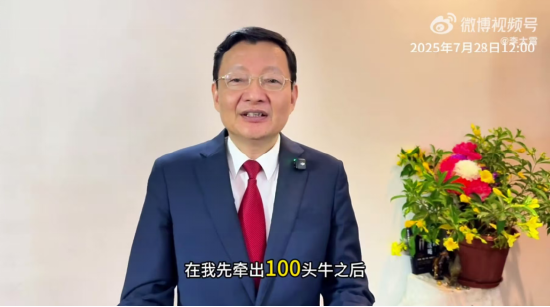
炒股就看金麒麟分析师研报,权威,专业,及时,全面,助您挖掘潜力主题机会! 文/新浪财经上海站 陈秀颖 在当前的A股市场中,"水牛"行情成为了众多投资者关注的焦点。 中信建投观点指出,市场近期已展现出典型的"水牛"特征,不过从具体表现来看,更多呈现为结构性水 牛行情。 而在市场中,李大霄一直以来都对市场有着诸多独特且引人关注的观点,而本次他对"水牛"行情的关注 和坚持显得尤为突出,并强调散户"别过早下轿"、"好东西别给机构"。 他在微博视频号中表示:"100头牛之后,终于有友军牵出来一头水牛也是牛,起码我李大霄不孤独了, 因为我说100头牛都没用,要所有的券商都说牛,这个力量就大了,我们人多力量大,李大霄不再孤 独。" 他更是呼吁散户不要提前下轿子:"好东西不要给机构拿走了,这样你就能够避免跟其他的散户相同的 命运,不要下轿子,我们在2689点位拿住的好东西,不要提早下轿子。" 他指出当非银金融放在涨幅榜第一位,银行止跌回升,多头部队就占据了主动权。 同时,他提到外资对中国市场的了解有一个传递过程,随着中国以全新的姿态拥抱全球,外国人对中国 的了解加深,投资中国将成为热潮,大国牛、外资牛有望出现。 7月27号, ...
反内卷主线切换,债市情绪改善
Zhong Xin Qi Huo· 2025-07-29 02:06
1. Report Industry Investment Ratings - No industry investment ratings are provided in the report. 2. Core Views of the Report - The main line of "anti - involution" in the stock index futures market is switching. The market has expectations for stimulus policies, and new main lines such as high - prosperity sectors in the semi - annual report and sectors related to demand - side policies are emerging. It is recommended to continue to allocate long positions in IM [3][9]. - In the stock index options market, the volatility has shown an inflection point, and the probability of short - term volatility decline is relatively high. It is advisable to build positions for short - volatility strategies. The certainty of volatility strategies is slightly stronger than that of directional strategies [4][10]. - In the treasury bond futures market, the sentiment has improved, but there are still many short - term disturbing factors, and the market is expected to be volatile [4][12]. 3. Summary by Relevant Catalogs 3.1 Market Views 3.1.1 Stock Index Futures - **Market Performance**: On Monday, the Shanghai Composite Index rose and then fell, with narrow - range trading and shrinking volume. The market risk preference was at a relatively high level, and the main line showed signs of switching [3][9]. - **Reasons for Main - line Switching**: Firstly, the China - US tariff negotiation is in progress, and the market has expectations for stimulus policies. Secondly, the "anti - involution" theme has cooled down, and the coal and steel industries in the stock market led the decline on Monday. Thirdly, new main - line directions are emerging, such as high - prosperity sectors in the semi - annual report and sectors related to demand - side policies [3][9]. - **Operation Suggestion**: Hold long positions in IM with a half - position [9]. 3.1.2 Stock Index Options - **Volatility**: Last week, the "anti - involution" policy supported the volatility, but this week, the volatility of most varieties showed an inflection point in the morning and closed down in the afternoon. The short - term probability of volatility decline is high [4][10]. - **Sentiment Index**: Weak liquidity and the expiration of all current - month contracts suggest that trading - type funds are relatively conservative in the short term [4][10]. - **Operation Suggestion**: Focus on short - volatility strategies in the short term and continue to hold the medium - term covered - call strategy [4][10]. 3.1.3 Treasury Bond Futures - **Market Performance**: Treasury bond futures rose collectively, and the sentiment in the bond market improved. The T main contract opened higher and then fluctuated [4][10]. - **Reasons for Improvement**: Firstly, most commodity futures fell, and the speculative sentiment in the market cooled down. Secondly, the central bank's net investment in the open - market operation at the end of the month improved the capital situation. Thirdly, there was an obvious stock - bond seesaw effect in the intraday trading [4][10][12]. - **Short - term Outlook**: There are still many disturbing factors in the bond market, and it is expected to be volatile in the short term [4][12]. - **Operation Suggestion**: Be cautious in trend strategies, pay attention to short - hedging at low basis levels, appropriately focus on the basis convergence of the TL main contract, and the odds of steepening the curve in the medium term are higher [12]. 3.2 Economic Calendar - The economic indicators to be announced this week include the US July ADP employment number, the US Federal Reserve interest rate decision, and China's July official manufacturing PMI [14]. 3.3 Important Information and News Tracking - **Industry**: The National Conference of Heads of Industry and Information Technology Departments proposed to implement the strategy of expanding domestic demand, consolidate the industrial economy, and promote the development of emerging technologies [14]. - **Parenting Subsidy**: The national parenting subsidy system implementation plan was announced, providing subsidies for infants under 3 years old [15]. - **Trade Talks**: China hopes to promote the stable and healthy development of China - US economic and trade relations through dialogue and cooperation [15]. 3.4 Derivatives Market Monitoring - The report mentions to monitor data on stock index futures, stock index options, and treasury bond futures, but specific data is not provided in the summary part.
浙商证券浙商早知道-20250729
ZHESHANG SECURITIES· 2025-07-28 23:30
Market Overview - On July 28, the Shanghai Composite Index rose by 0.12%, the CSI 300 increased by 0.21%, the STAR Market 50 gained 0.09%, the CSI 1000 was up by 0.35%, the ChiNext Index climbed by 0.96%, and the Hang Seng Index increased by 0.68% [3][4] - The best-performing sectors on July 28 were defense and military (+1.86%), non-bank financials (+1.51%), pharmaceutical and biological (+1.47%), comprehensive (+1.29%), and communication (+1.24%). The worst-performing sectors were coal (-2.6%), steel (-1.41%), transportation (-1.38%), oil and petrochemicals (-1.02%), and textiles and apparel (-0.93%) [3][4] - The total trading volume for the A-share market on July 28 was 1.7662 trillion yuan, with a net inflow of 9.253 billion Hong Kong dollars from southbound funds [3][4] Key Insights - The report emphasizes a focus on consumption and growth styles, with industry attention on electric equipment, non-ferrous metals, pharmaceuticals, electronics, and brokerage firms [5] - The report suggests that under the current monetary environment, the "dumbbell strategy" remains effective, but the large-cap growth style may attract market attention in the short term [5] - Factors driving this outlook include strong support from hydropower projects and policy catalysts such as "anti-involution" and Hainan's customs closure, which have impacted the previously strong dumbbell strategy [5] - The report recommends increasing focus on mid-to-large-cap growth styles in August, particularly in sectors related to consumption and growth, as well as electric equipment and non-ferrous metals influenced by industry trends in pharmaceuticals (innovative drugs, AI healthcare) and electronics [5]
【债券季报】2025年二季度信用观察季报:房企境内债重组落地,建工民企新增展期
Huachuang Securities· 2025-07-28 15:37
Report Industry Investment Rating No relevant content provided. Report's Core View - In Q2 2025, the overall default rate of credit bonds showed a downward trend, with a new first - time defaulting entity. The default repayment rate was stable with a slight increase, mainly driven by Sunac's repayment. There were 20 newly - added default bonds, mostly in the real - estate industry with many secondary extensions. The number of urban investment non - standard risk events decreased, while the number of commercial paper overdue entities remained high. Two hot credit events were the failure of AVIC Industry Finance's off - site repayment plan and the extension of a Zhejiang construction private enterprise's debt [2][4][14]. Summary According to the Table of Contents 1. Q2 2025: Overall Default Rate Continued to Decline, Repayment Rate Showed No Obvious Increase (1) Bond Default Rate - The overall default rate of credit bonds declined. There was one new first - time defaulting entity, Xinjie Investment Holding Group Co., Ltd. The default scale in Q2 was 5.938 billion yuan, and the default rates from April to June were 1.02%, 1.02%, and 1.00% respectively, showing a downward trend. The default rate of private - enterprise credit bonds also decreased, with the default amounts from April to June being 4.588 billion yuan, 1.35 billion yuan, and 0 yuan respectively, and the default rates being 9.02%, 9.00%, and 8.92% respectively, lower than that in Q1 [14]. (2) Default Repayment Rate - The cumulative default repayment rate in Q2 2025 was stable with a slight increase. The repayment rate in April was higher than that in the previous quarter, mainly due to Sunac's repayment. The principal repayment scale in Q2 increased compared with the previous quarter, with the repayment amounts from April to June being 3.561 billion yuan, 0.266 billion yuan, and 0.016 billion yuan respectively. Sunac had the largest repayment amount, reaching 3.247 billion yuan in Q2, with a repayment progress of 29%. Many real - estate enterprises were promoting debt restructuring, but the cash repayment for investors was limited [20][24][25]. (3) Credit Event Statistics - In Q2 2025, there were 20 newly - added default bonds in domestic bonds, with a total balance of 14.049 billion yuan. Among them, 18 bonds reached extensions, mostly secondary extensions of real - estate industry bonds, and 2 bonds had substantial defaults. Other industries involved included communication equipment, non - bank finance, and medical [28]. (4) Urban Investment舆情 - The number of urban investment non - standard risk events decreased by 12 from Q1 to Q2 2025, mainly distributed in Shandong. In terms of administrative levels, district - level and prefecture - level entities accounted for 86% and 14% respectively. The number of urban investment commercial paper overdue entities remained high, with 57, 55, and 56 entities in April, May, and June respectively, mainly distributed in Shandong and Yunnan [31][33]. 2. Hotspot Analysis: AVIC Industry Finance's Off - site Repayment Plan Rejected, Zhejiang Construction Private Enterprise's Debt Extension (1) AVIC Industry Finance - AVIC Industry Finance planned to transfer off - site for orderly repayment but was not approved by the bondholders' meeting. Its stock was delisted, and it failed to disclose its 2024 annual report. As of July 23, 2025, it had 19 outstanding bonds, with a domestic bond balance of 20.47 billion yuan and overseas bonds of 300 million US dollars. With the support of AVIC Industry Group and its own equity assets that can be realized, the bond default risk was relatively controllable [39][40][49]. (2) Xinjie Holdings - Xinjie Holdings is a Zhejiang private construction enterprise. Its only outstanding bond, "23 Xinjie 01", with a balance of 350 million yuan, had its interest payment and maturity dates extended. The company's construction business income has been declining for three years, and it faces risks such as shrinking housing construction business, large asset restrictions, concentrated short - term debt repayment pressure, and increased guarantee compensation pressure [53][58][59].

【28日资金路线图】两市主力资金净流出超110亿元 电子等行业实现净流入
证券时报· 2025-07-28 11:29
Market Overview - The A-share market experienced an overall increase on July 28, with the Shanghai Composite Index closing at 3597.94 points, up 0.12%, the Shenzhen Component Index at 11217.58 points, up 0.44%, and the ChiNext Index at 2362.6 points, up 0.96% [1] - The total trading volume for both markets was 17423.07 billion, a decrease of 450.29 billion compared to the previous trading day [1] Capital Flow - The net outflow of main funds from the Shanghai and Shenzhen markets exceeded 110 billion, with a total net outflow of 112.73 billion for the day [2] - The opening net outflow was 66.2 billion, and the closing net outflow was 2.3 billion [2] - Over the last five trading days, the main funds have shown a consistent trend of outflow, with the highest outflow recorded on July 23 at 408.34 billion [3] Sector Performance - The CSI 300 index saw a net inflow of 4.04 billion, while the ChiNext experienced a net outflow of 31.21 billion [4] - The electronic industry achieved a net inflow of 51.20 billion, with a growth of 1.39%, while the defense and military industry saw a net inflow of 38.08 billion, growing by 2.20% [7] - In contrast, the computer sector faced a significant net outflow of 99.75 billion, with a minimal growth of 0.11% [7] Top Stocks - The top stocks with the highest net inflow from institutions included ShenNan Circuit with a 10.00% increase and a net buy of 229.78 million, and Astone with a 9.18% increase and a net buy of 84.84 million [10] - Conversely, stocks like Xingye Technology and Guangxun Technology faced substantial net outflows, with declines of 8.62% and 10.00%, respectively [10] Investment Recommendations - Notable investment recommendations include WanNianQing with a target price of 6.8, currently at 6.24, indicating an upside potential of 8.97% [11] - Other stocks such as JiaAo Environmental Protection and China Duty Free have target prices significantly above their current prices, suggesting strong buy signals [11]

关注银行间科创债券品种和非指数成分券:科创债持续扩容,挖掘科创债投资价值
Hengtai Securities· 2025-07-28 11:28
1. Report Industry Investment Rating No relevant content provided. 2. Core Viewpoints of the Report - The policy support for science - innovation bonds has led to significant growth in issuance and trading activity. The bonds have unique characteristics compared to overall credit bonds, and specific types of science - innovation bonds show investment value [2]. - It is recommended to focus on inter - bank science - innovation bonds (medium - term notes and general short - term financing) and target bonds excluding science - innovation bond ETF index component bonds [2]. 3. Summary by Directory 3.1 Policy Support for Science - Innovation Bonds - **Issuance and Listing Review Rules**: In December 27, 2024, the Shanghai, Shenzhen, and Beijing stock exchanges issued rules for the issuance and listing review of special - variety corporate bonds, including science - innovation bonds. Four types of issuers (science - innovation enterprises, science - innovation upgrade, science - innovation investment, and science - innovation incubation) can issue such bonds under certain conditions, with specific requirements for the proportion of funds invested in the science - innovation field and supporting mechanisms [7]. - **Support for Issuance and Construction of a Multi - tiered Bond Market**: On May 7, 2025, the People's Bank of China and the China Securities Regulatory Commission jointly issued an announcement to support the issuance of science - innovation bonds, aiming to enrich the product system, build a multi - tiered bond market, and improve supporting mechanisms. The issuance subject scope was expanded to financial institutions, technology - based enterprises, private equity investment institutions, and venture capital institutions [10]. 3.2 Overview of Outstanding Science - Innovation Bonds - **Distribution of Different Bond Types**: Medium - term notes and corporate bonds are the core issuance types of science - innovation bonds. Exchange - issued science - innovation bonds are more active than those issued in the inter - bank market. In terms of issuance quantity and bond balance, exchange - issued bonds account for 57.93% and 66.28% respectively, while inter - bank issued bonds account for 42.07% and 33.72% [14]. - **Remaining Maturity Characteristics**: The remaining maturity of outstanding science - innovation bonds is mainly short - to medium - term, concentrated below 5 years. In terms of bond quantity, those with a remaining maturity below 5 years account for 89.44%, and in terms of bond balance, they account for 88.80% [16]. - **Comparison of Basic Elements with Overall Credit Bonds**: Outstanding science - innovation bonds are concentrated in high - credit - rated bonds. The proportion of AAA - rated bonds is 77.45%, 30.68% higher than that of overall credit bonds. They have a longer issuance term and a lower coupon rate compared to overall credit bonds [17][19]. 3.3 Overview of the Primary Market for Science - Innovation Bonds - **Issuance Volume**: With strong policy support, the issuance volume of science - innovation bonds has increased significantly. In May 2025, the issuance volume increased by 120.51% year - on - year, and from May to July 18, 2025, the issuance volume reached 7668.48 billion yuan, accounting for 22.32% of the total issuance volume [25]. - **Rating Distribution**: Science - innovation bonds are concentrated in the AAA high - credit - rating category. The issuance volume and quantity of AAA - rated bonds account for 84.55% and 71.38% respectively, indicating high overall credit quality [29]. - **Industry Distribution**: Compared to overall credit bonds, the industry distribution of science - innovation bonds is more balanced. Although the issuance scale in the banking, non - banking, comprehensive, and building decoration industries is high, the issuance scale in industries such as coal, steel, and electronics is significantly higher than that of overall credit bonds. Science - innovation bonds have certain interest - rate advantages in most industries, with the lowest rate in the national defense and military industry at 0.89% [30][35]. - **Regional Distribution**: Science - innovation bonds in economically developed regions have a large issuance scale and a low issuance rate. Beijing has the largest issuance scale, accounting for 27.85% of the total, followed by Shanghai at 9.29% [36]. - **Issuance Industries after the New Policy**: With policy support, the issuance scale of science - innovation bonds in the financial industry has increased significantly. After the new policy, the issuance quantity of science - innovation bonds in the banking and non - banking financial industries accounted for 5.81% and 15.83% respectively [41]. 3.4 Overview of the Secondary Market for Science - Innovation Bonds - **Trading Volume**: After the new policy, the trading activity of science - innovation bonds has increased significantly. In May 2025, the trading volume was 196.097 billion yuan, a 71.01% month - on - month increase. After the issuance subject was expanded to financial institutions, the trading activity of bank - issued science - innovation bonds ranked first [45][49]. - **Monthly Average Volatility**: Before the new policy, the monthly average volatility of science - innovation bonds remained above 2% for six consecutive months, while after the new policy, it was below 2%, indicating a significant reduction [50]. - **Turnover Rate**: The turnover rate of science - innovation bonds has been rising, increasing from 6.25% in April to 9.16% in June 2025, which has improved the liquidity and pricing efficiency of the secondary market [53]. - **Price Fluctuations**: After the new policy, the quantile curves of price fluctuations of science - innovation bonds have converged, and the trading volatility has narrowed [54]. - **Credit Spread Curve**: Among different types of science - innovation bonds, inter - bank medium - term notes and general short - term financing bonds have certain cost - effectiveness. Non - AAA science - innovation bond index component bonds have relative value [59][71]. 3.5 Investment Recommendations - Recommend focusing on inter - bank science - innovation bonds (medium - term notes and general short - term financing) and target bonds excluding science - innovation bond ETF index component bonds [79].
31股特大单净流入资金超2亿元
Zheng Quan Shi Bao Wang· 2025-07-28 10:38
两市全天特大单净流出57.24亿元,其中31股特大单净流入超2亿元,恒瑞医药特大单净流入14.83亿元, 特大单净流入资金居首。 沪指今日收盘上涨0.12%。资金面上看,沪深两市全天特大单净流出57.24亿元,共计1848股特大单净流 入,2997股特大单净流出。 股价表现方面,特大单资金净流入超2亿元个股今日平均上涨8.79%,表现强于沪指。具体看,上述个 股今日全线上涨,股价以涨停收盘的有硕贝德、幸福蓝海等。 所属行业来看,上述特大单净流入资金居前个股中,电子、通信、非银金融行业最为集中,上榜个股分 别有10只、3只、3只。(数据宝) 特大单净流入资金排名 | 代码 | 简称 | 收盘价(元) | 涨跌幅(%) | 特大单净流入(亿元) | 行业 | | --- | --- | --- | --- | --- | --- | | 600276 | 恒瑞医药 | 62.04 | 10.00 | 14.83 | 医药生物 | | 300476 | 胜宏科技 | 182.77 | 17.51 | 12.78 | 电子 | | 002281 | 光迅科技 | 52.58 | 10.00 | 12.42 | 通信 ...




