咖啡

Search documents
东鹏饮料(605499):复盘日本咖啡发展 现制咖啡为即饮咖啡起到带动作用
Xin Lang Cai Jing· 2026-01-26 06:35
Group 1: Japan Coffee Market Insights - Japan's coffee market has evolved through four iterations, starting from traditional coffee shops to convenience store coffee revolutionizing the market [1] - Key milestones include the introduction of canned coffee by UCC in 1969 and Starbucks' "third place" concept in 1996, which transformed coffee consumption from a functional beverage to a lifestyle choice [1] - As of 2023, the ready-to-drink coffee market in Japan reached 930 billion yen, dominated by Suntory's BOSS and Coca-Cola's GEORGIA, indicating a stable industry development [1] Group 2: China Coffee Market Dynamics - The Chinese coffee market is experiencing rapid growth, with ready-to-drink coffee emerging as a core driver, led by local brands like Luckin and Kudi optimizing efficiency through "delivery + digitalization" [2][3] - By 2024, per capita coffee consumption in China is projected to reach 22.24 cups, a significant increase from 16.74 cups in 2023, marking the first time per capita consumption exceeds 20 cups [2] - The competition landscape for ready-to-drink coffee is shifting from foreign dominance to a triopoly among Nestlé, Starbucks, and local brand Dongpeng Beverage, with Dongpeng's market share approaching 14% by November 2025 [4] Group 3: Investment Recommendations - The ongoing expansion of the coffee industry and the differentiation between ready-to-drink and freshly brewed coffee are expected to drive rapid growth in the ready-to-drink segment [4] - Dongpeng Beverage is highlighted as a top player in the ready-to-drink coffee market, with projected revenues of 209.15 billion, 271.77 billion, and 340.06 billion yuan from 2025 to 2027, reflecting year-on-year growth rates of 32%, 30%, and 25% respectively [4] - The expected net profit for Dongpeng Beverage is forecasted to be 45.06 billion, 59.46 billion, and 77.64 billion yuan for the same period, with corresponding growth rates of 35%, 32%, and 31% [4]

立足生活激发文化之力
Ren Min Ri Bao· 2026-01-26 06:01
Group 1 - Cultural products are gaining prominence due to their aesthetic appeal and the memories they carry, reflecting a trend where cultural elements enhance economic and social development [1] - The integration of culture with tourism and creativity is creating new opportunities and driving economic growth, showcasing the broad and deep effects of cultural empowerment [1] - The rise of cultural trends, such as the popularity of traditional elements among youth, indicates a shift in consumer preferences and the increasing visibility of culture in the economy [1] Group 2 - Cultural empowerment is not just a concept but a practical application that influences daily habits and fosters community values, demonstrating its impact on consumer behavior and social harmony [2] - The success of cultural initiatives relies on meeting actual needs and creating distinctive products that enhance industry competitiveness and foster community spirit [2] - The preservation of cultural heritage, as seen in Suzhou's ancient streets, highlights the importance of maintaining both tangible and intangible cultural elements to avoid homogenization [2] Group 3 - Cultural initiatives aimed at enhancing people's sense of cultural fulfillment and happiness are crucial for societal progress, as seen in poverty alleviation efforts that leverage local cultural resources [3] - The process of cultural empowerment is reciprocal, where innovation and creativity not only rejuvenate cultural products but also contribute to the overall prosperity of culture [3] - The integration of cultural elements into products, such as those related to traditional festivals, reflects a growing market trend and the potential for cultural narratives to inspire personal and collective aspirations [3]
省人大代表许燕:政策红利让海南咖啡香飘海内外
Hai Nan Ri Bao· 2026-01-26 01:42
Group 1 - The core viewpoint is that the Hainan coffee industry is experiencing new growth opportunities due to the release of free trade port policy benefits, with significant achievements in processing and exporting coffee products [2][4]. - The first batch of coffee products processed by Zhengda (Hainan) Xinglong Coffee Industry Development Co., Ltd. achieved over 30% value-added processing and successfully completed the customs declaration process on the first day of the customs closure [1]. - The inclusion of coffee in the zero-tariff raw material list and the implementation of the "two ends outside zero tariff" policy have allowed Zhengda Coffee to export its products, creating a closed-loop system of "foreign procurement of raw materials, domestic processing, and overseas sales" [2]. Group 2 - The company has been actively involved in optimizing customs processes and ensuring product quality, with efforts from customs and various departments facilitating smoother policy implementation [1]. - The company is also focusing on broader industry development, including research into other sectors such as the colorful industry in Wanning and tropical high-efficiency agriculture, emphasizing the importance of quality control and industry chain enhancement for high-quality development [4]. - The company aims to continue promoting the effective implementation of free trade port policies to help more enterprises benefit from tangible advantages [4].


9.9元咖啡卷不动了?头部品牌“调价”,一杯到手涨2~5元
3 6 Ke· 2026-01-26 00:57
Core Insights - The era of 9.9 yuan coffee is fading, with prices for popular items rising to 12.9 yuan, 13.9 yuan, or even 15 yuan, leading to increased monthly coffee expenses for consumers [1][3] - The coffee market in China experienced significant adjustments in 2025, with a decline in low-price competition and an influx of new tea brands entering the market, reshaping the competitive landscape [1][9] Group 1: Price Changes and Market Dynamics - Major brands are reducing subsidies, leading to the gradual disappearance of the 9.9 yuan coffee, with discussions on social media reflecting consumer dissatisfaction with rising prices [1][3] - Luckin Coffee has raised prices for several milk coffee products by 1 yuan, while Kudi continues to offer all items at 9.9 yuan until the end of 2026 [5][6] - Starbucks has maintained stable prices but has slightly adjusted prices for some non-coffee beverages, while other mid-to-high-end brands like Manner and Tims have kept their prices steady in the 15-30 yuan range [6][8] Group 2: New Entrants and Consumer Perception - New tea brands are entering the coffee market with competitive pricing, significantly impacting consumer perceptions of coffee pricing, with some brands offering coffee as low as 4.9 yuan [9][19] - The entry of these new brands is reshaping consumer expectations, leading to a mindset where prices above 10 yuan are scrutinized, thus compressing the overall pricing space for coffee [19][21] - The competition is shifting from a price war to a more structured and differentiated approach, with brands needing to focus on quality, experience, and sustainable growth to succeed [21]


DeepSeek预测:黄金疯涨只是开始!这5样东西也会上涨,囤货清单来了
Sou Hu Cai Jing· 2026-01-24 17:39
Core Viewpoint - The article discusses the recent surge in gold prices and predicts that several other commodities, including silver, copper, natural gas, coffee, and cocoa, will also experience price increases due to various market factors [1][2][4][5][7]. Group 1: Gold Market Analysis - Gold prices have risen significantly, reaching over $4,000, with a year-to-date increase of 52%, marking the largest annual gain since 1979 [1][2]. - Key drivers for gold's price increase include geopolitical tensions, such as the Middle East conflicts and the ongoing Russia-Ukraine war, which have heightened market risk aversion [2]. - The expectation of two rate cuts by the Federal Reserve in 2025 is anticipated to weaken the dollar's appeal, further boosting gold prices [2]. Group 2: Other Commodities Expected to Rise - Silver is expected to rise due to strong industrial demand, particularly in the photovoltaic sector, where it accounts for 65% of industrial usage [4]. - Copper demand is projected to grow over 60% by 2030, driven by energy transition initiatives and infrastructure upgrades, with supply constraints from mining accidents [4]. - Natural gas prices are forecasted to increase by approximately 10% in Europe and 60% in the U.S. in 2025, influenced by geopolitical factors and weather conditions [5]. - Coffee prices are rising due to drought conditions in Brazil, which produces nearly half of the world's Arabica coffee [7]. - Cocoa prices are also increasing due to similar supply issues, with drought affecting production [7]. Group 3: Investment Considerations - Investment in commodities can be approached through physical assets like gold bars or coins, ETFs, or futures contracts for other commodities [10]. - The potential impact of rising commodity prices on everyday costs is acknowledged, particularly for coffee and cocoa, while natural gas price increases may affect heating costs [10]. - The article emphasizes the importance of risk management in commodity investments, suggesting that investors should allocate a reasonable portion of their assets to commodities [12].


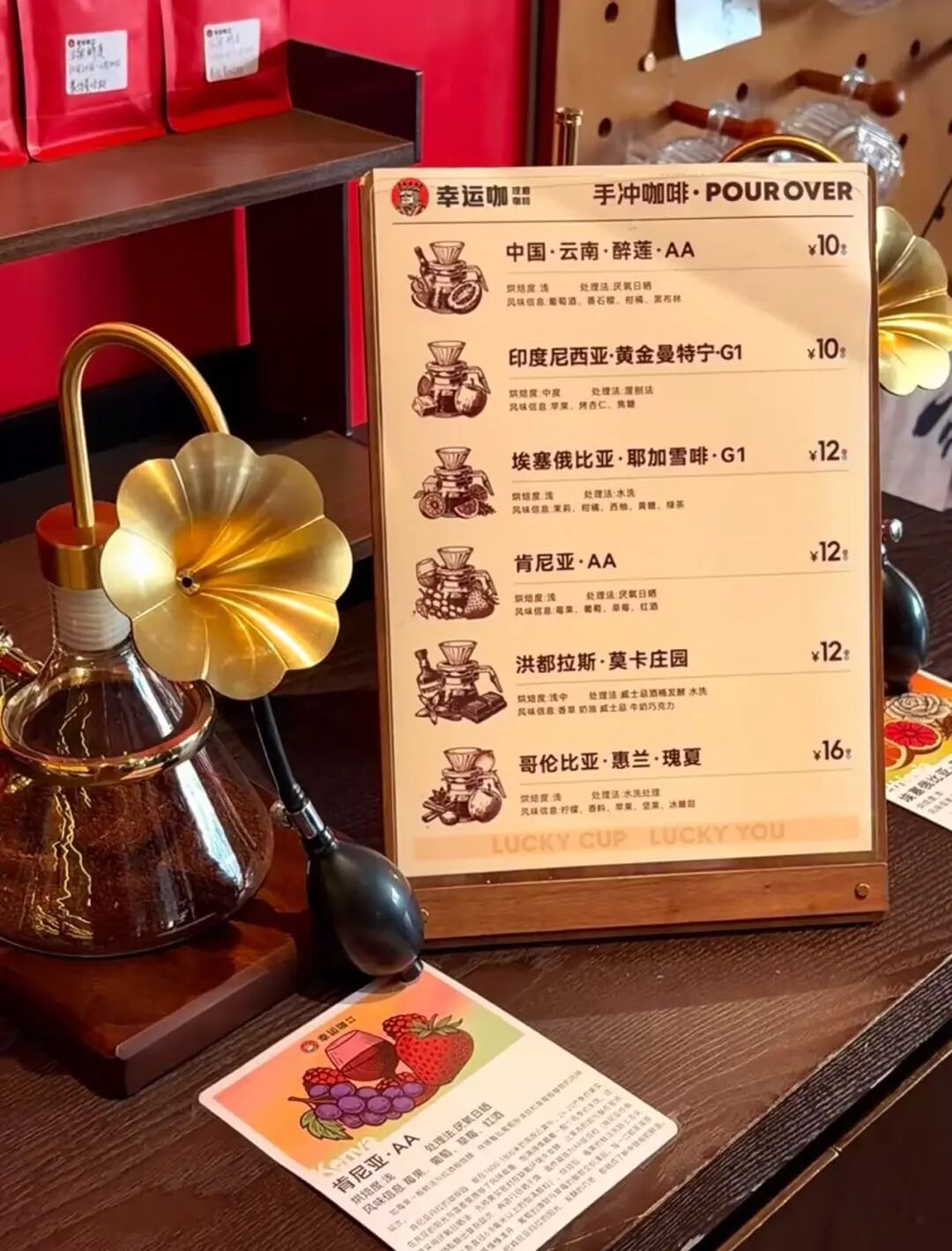
幸运咖涨价,最贵16元,哦,原来是手冲
3 6 Ke· 2026-01-23 04:44
Core Insights - The launch of hand-brewed coffee priced at 10-16 yuan by Luckin Coffee's flagship store in Zhengzhou is a strategic move to attract consumers and challenge the perception of high-end coffee [1][3] - This initiative comes after Luckin Coffee surpassed 10,000 global stores, indicating a shift from mere expansion to seeking new revenue streams amid market saturation [3][16] Pricing Strategy - The introduction of hand-brewed coffee at a low price point is seen as an attempt to break the "low-price" label and explore new revenue growth avenues [3][12] - The pricing strategy aims to capture the "high-quality affordable" market segment, especially as competitors like Starbucks adjust their pricing [10][11] Product Diversification - Luckin Coffee has expanded its product offerings beyond low-priced items, introducing various series such as "True Fruit Coffee" and "Lucky Latte Season," indicating a shift towards a comprehensive product layout [3][4] - The sales of the "Green Grape" series alone exceeded 200 million yuan, showcasing the effectiveness of their diversified product strategy [4] Supply Chain Advantage - The company's supply chain capabilities allow it to offer high-quality coffee at competitive prices, with plans to invest 4 billion yuan in coffee bean procurement over the next 3-5 years [8] - The establishment of self-owned roasting facilities and a nationwide logistics network contributes to cost efficiency, enabling the pricing of premium coffee at lower rates [8][10] Market Trends - The hand-brewed coffee market is experiencing significant growth, with transaction volumes exceeding 1 billion yuan in 2023, reflecting a shift in consumer preferences towards quality and affordability [10] - The competitive landscape is evolving, with brands like Luckin Coffee aiming to fill the gap in the "high-quality affordable" segment, moving away from traditional price wars [10][11] Challenges Ahead - Despite the potential, Luckin Coffee faces challenges related to quality perception, as low prices may lead to skepticism about the quality of coffee beans and brewing standards [12][15] - The company must balance the operational complexities of maintaining quality in hand-brewed coffee while keeping prices low, which poses a significant operational challenge [15][16] - The brand's established image as a budget-friendly option may deter higher-end consumers seeking quality and emotional value in their coffee experience [15][18]
懂花钱的年轻人在哪儿,时髦的家乡就在哪儿
3 6 Ke· 2026-01-23 02:19
曾几何时,潮流趋势总是从北上广深向四面八方扩散,一个概念、一种风味、一件单品,要完成从一线到五线的普及,所需时间常常以年为单位。 然而若你留心观察,不难发现,自己的家乡可能早已成为新的爆款发源地。 比如,云贵川的独特风味,通过Bistro(小酒馆)在全国各地遍地开花。贵州酸汤火锅从"小众口味"直达火锅圈顶流;云南菌子火锅凭借鲜香和高颜值迅 速成为火锅界的"漂亮饭";东南沿海,潮州人将一杯工夫茶喝到出神入化,也让"鸭屎香"这个名字令人费解的茶种,成为了全国茶饮店里的爆款基底。 视线转向北方,内蒙古最寻常不过的奶皮子,在某个冬日与街头小吃冰糖葫芦意外相遇,旋即成为上海、北京街头最甜蜜的风景线,引得无数人甘愿在寒 风中排起长队。 小城的独特风情,正在悄然重塑着一线城市的审美与喜好。而那些过去常常被人忽略的小城,也正在成为新的消费热土。 01 如果在几年前提"回老家",还总是与一些无聊、单调、低消费的刻板印象绑定。和大城市相比,家乡就像退而求其次的选择,掀不起多少波澜。 但如今,家乡小城的形态已经变得鲜活而灵动。2024年底,《经济学人》杂志提出了一个有趣的中国城市观察,即"二、三线城市正在崛起,成为中国未 来城市的 ...

被连锁咖啡馆“贴脸”的独立咖啡店,还怎么存活下来?
东京烘焙职业人· 2026-01-22 08:33
Core Insights - The article discusses the rapid expansion of chain coffee brands like Luckin and Kudi, which has shifted consumer habits towards affordable coffee options, while independent coffee shops struggle to survive in this competitive landscape [1][5]. Independent Coffee Shops' Dilemma - The growth of chain coffee brands has led to a significant increase in competition for independent coffee shops, with a reported closure rate of 40% among coffee-related businesses in China [1][9]. - Luckin Coffee achieved a record net increase of 3,008 stores in Q3 2025, bringing its total to 29,214 stores globally, indicating a fierce competitive environment for new entrants [1][5]. Factors Contributing to Competition - **Location Strategy**: Chain coffee brands utilize comprehensive location strategies based on foot traffic, convenience, and competition density, often leading to independent shops being overshadowed shortly after opening [5]. - **Customer Overlap**: The target demographics for both independent and chain coffee shops largely overlap, with students and office workers being the primary consumers. Chain brands effectively capture this market through standardized products and efficient service [9][15]. - **Cost Efficiency**: Chain brands benefit from economies of scale, allowing them to offer lower prices, such as the common 9.9 yuan coffee, which alters consumer price expectations and makes it difficult for independent shops to compete [9][15]. Strategies for Independent Coffee Shops - **Focus on Quality**: Independent coffee shops can differentiate themselves by emphasizing the quality of their coffee and brewing techniques, appealing to consumers who prioritize taste over price [17]. - **Enhance Value Proposition**: By improving the perceived value and experience, independent shops can attract customers who may otherwise opt for cheaper chain options. This includes offering better ingredients and unique experiences [18]. - **Differentiated Services**: Independent coffee shops can leverage their flexibility to provide diverse offerings, such as light meals and personalized service, creating a unique atmosphere that contrasts with the standardized experience of chain brands [20][21]. Conclusion - Despite the dominance of chain coffee brands, there remains a viable market for independent coffee shops that can capitalize on their unique strengths and adapt to consumer preferences. By focusing on quality, value, and differentiation, these shops can carve out a niche in a competitive landscape [24].
2026年迪拜世界咖啡展正式开幕
Shang Wu Bu Wang Zhan· 2026-01-21 15:42
阿通社1月18日消息,第五届迪拜世界咖啡展在迪拜世界贸易中心开幕,吸引了来自78个国家和地 区的2100多家参展商,为历届规模最大。此次展会持续至1月20日,将举办咖啡拍卖、行业锦标赛、研 讨会等活动,凸显了迪拜在中东精品咖啡产业中的枢纽地位。 (原标题:2026年迪拜世界咖啡展正式开幕) ...
世界中餐业联合会&黑峪投资:中国咖啡产业报告2025
Xin Lang Cai Jing· 2026-01-21 10:26
Core Insights - The global coffee industry is experiencing significant changes, with key events shaping its future, including extreme weather impacts, mergers, and technological advancements in coffee production and processing [3][4][13]. Group 1: Industry Trends - The global coffee production is projected to reach approximately 178.8 million bags (60kg each) in the 2025/26 season, with a notable increase in Robusta production by 10.9% to 8.33 million tons, while Arabica production is expected to decline by 4.7% to 9.55 million tons [4]. - The coffee market is becoming increasingly competitive, with major players like Nestlé, JDE Peet's, and Starbucks dominating the roasting segment, accounting for about 40% of the market share [15][17]. - The introduction of the EU Deforestation Regulation (EUDR) is pushing companies towards sustainable practices, impacting supply chain costs [3]. Group 2: Market Dynamics - The price of coffee futures has reached a 47-year high, exceeding 430 cents per pound, driven by extreme weather conditions and shipping disruptions [3][13]. - The Chinese coffee market is evolving, with a projected consumption of over 400,000 tons by 2025, reflecting a compound annual growth rate (CAGR) of 10% [39][40]. - The coffee roasting capacity in China is expected to surpass 350,000 tons by 2024, with major brands like Luckin Coffee and Starbucks expanding their production capabilities [41][44]. Group 3: Technological Innovations - Advances in coffee processing technology, such as the development of non-caffeinated coffee through molecular restructuring, are emerging as significant trends [3]. - The integration of AI in coffee production is enhancing yield predictions and flavor profiling, marking a shift towards more data-driven approaches in the industry [3][4]. Group 4: Regional Developments - Indonesia's Fore Coffee has successfully listed on the IDX, highlighting the growth of local coffee brands in emerging markets [3]. - China's coffee cultivation is transitioning from expansion to quality improvement, with a diversification of coffee varieties, particularly in Yunnan, where over 80% of coffee is Arabica [23][24][26].