
科技行业

Search documents
摩尔线程理财受质疑折射高估值公司强预期与现实之间的困境
Zheng Quan Shi Bao Wang· 2025-12-16 13:44
摩尔线程拟用75亿额度进行现金管理,我们看到互联网上很多人在冷嘲热讽。该怎么看这个话题?抛开 情绪,不黑不喷,笔者在这里想说一点公道话。 我觉得,对企业经营来说,摩尔线程的这个做法属于理性决策范畴,是上市公司经营与财务管理惯常、 合理的操作,无可厚非;但是对市场来说,社会的观感对比之间折射出了一家高估值科技公司在成长阶 段所面临的预期压力,与现实发展之间的典型的矛盾。 从公司经营与决策角度看,摩尔线程根据经营需要,把不影响公司经营的闲置资金用于现金管理,履行 了必要的法定程序,如公司经营管理方案与董事会批准等;75亿是其额度的上限,公司也明确了具体会 根据实际的资金需求平衡与理财市场现实相机而动,并且期限只是一年。 最后总结一下,我觉得对于高估值公司强预期与现实之间的困境和矛盾以及市场的焦虑,上市公司需要 饱满情绪,时刻进取;市场投资者需要平复情绪,淡定一点。 (本文作者系市场资深研究人士,天津商业大学经济学院兼职教授、老字号协同创新中心特聘专家) 社会观感的反差与强烈的冲击,在于第二个事实,那就是一家高估值科技公司的市场预期与现实发展业 绩表现之间的鸿沟,怎样能够快速填充的问题。社会的预期和心理是能够尽快填 ...
2026年大类资产展望:快慢变量分野,新老资产收敛
GF SECURITIES· 2025-12-16 13:10
Group 1: Asset Performance Overview - In 2025, major asset classes showed extreme differentiation under the "narrative trading" theme, with gold leading the performance, achieving a year-to-date (YTD) return of over 120%[4] - The YTD ranking of major assets as of December 12, 2025, was gold > ChiNext Index > STAR 50 > LME copper futures > European stocks > Hang Seng Index > Japanese stocks > MSCI Emerging Markets > NASDAQ > CSI 300 > global bonds > South China Agricultural Index > China bonds > USD > crude oil > long volatility strategy[4] - The "entrepreneurial board index + LME copper futures + London gold" combination achieved a YTD return of 130.3%, while the "CSI 300 + USD index + Brent crude oil futures" returned only -8.3%, resulting in a performance gap of 138.6%, the highest since 2013[5] Group 2: Market Dynamics and Strategies - The asset rotation speed in 2025 deviated from historical seasonal patterns, with significant fluctuations observed, particularly a sharp decline from July to September, contrasting with typical trends[6] - A simple multi-asset annual rebalancing strategy yielded a cumulative return of 17.5% in 2025, marking the third consecutive year of positive returns, but lagged behind most stock market performances[6] - The classic asset rotation framework, which correlates asset rotation with economic cycles, was challenged in 2025 due to significant macroeconomic changes, suggesting a shift towards a "narrative + macro factor" pricing model for 2026[9] Group 3: Liquidity and Correlation Insights - Short-term liquidity acts as a "switch" for asset price increases, while narrative trading amplifies asset price movements, indicating a symbiotic relationship between liquidity and narrative trading[10] - The CSAD (Cross-Sectional Absolute Deviation) metric indicated a strong correlation between narrative trading intensity and asset prices, with a notable decrease in asset correlation observed in late 2025[11] - The correlation between domestic equities and bonds in China remained negative throughout 2025, with a notable reduction in volatility differences, suggesting a potential shift towards equilibrium in the future[19] Group 4: Future Outlook and Economic Indicators - The 2026 outlook suggests a potential "mirror" relationship with 2025, with expectations of a gradual loosening of narrative trading and a return to lower correlation among major assets[8] - The anticipated nominal GDP growth for 2026 is projected at 4.7% to 5.2%, with a focus on consumption recovery and fixed asset investment stabilization[32] - The performance of major asset classes in 2026 is expected to be influenced by inflation dynamics, with a ranking of asset probabilities indicating that Hong Kong stocks > A-shares > Renminbi > commodities > black metals > US stocks > China bonds > US bonds > gold > USD[30]
瑞众人寿再入手青岛啤酒H股,解码险资“南下”投资新逻辑
Nan Fang Du Shi Bao· 2025-12-16 06:01
Core Insights - Insurance capital is actively entering the market, with a notable investment by Ruizhong Life in Qingdao Beer, coinciding with a regulatory adjustment that lowers investment risk factors for insurance funds [2][3] - The trend of insurance capital acquiring shares reflects a significant shift in investment logic within the industry, driven by policy incentives and pressure on liability-side returns [2][5] Group 1: Investment Activities - Ruizhong Life invested 10.64 million HKD to acquire 200,000 shares of Qingdao Beer, increasing its stake to 5% [3] - This marks the third time in 2025 that Ruizhong Life has made a significant investment in H-shares, focusing on high-dividend, undervalued core assets [3][4] - The total market value of Ruizhong Life's holdings in Qingdao Beer is approximately 1.571 billion CNY, indicating a long-term investment strategy [3] Group 2: Regulatory Environment - The National Financial Regulatory Administration has been adjusting risk factors for insurance company investments, which has facilitated increased equity asset allocations [7][8] - As of December 5, 2023, the risk factor for certain stocks was lowered, allowing for a potential influx of approximately 108.6 billion CNY into the market if insurance funds fully reallocate to these stocks [7][8] - The adjustments are seen as a means to encourage long-term holding behaviors among insurance capital, particularly in high-quality stocks and innovative enterprises [8] Group 3: Market Trends - There has been a significant increase in insurance capital's share acquisitions, with 38 instances recorded in 2025, the highest since 2016 [5][9] - H-shares have become the preferred investment target for insurance capital, with over 80% of acquisitions in 2025 being H-shares, attributed to their valuation advantages and higher dividend yields [5][6] - The shift in investment focus includes a growing interest in technology and pharmaceutical sectors, indicating a diversification of investment strategies beyond traditional high-dividend sectors [6][9]



必创科技:目前无产品应用于AI眼镜、AI手机、AI电脑
Xin Lang Cai Jing· 2025-12-16 04:19
必创科技12月16日在互动平台表示,公司当前没有产品应用在AI眼镜、AI手机、AI电脑,未来公司会 持续关注相关领域的发展趋势和市场机会。 ...

债市长期思维转换主导短期下跌
ZHONGTAI SECURITIES· 2025-12-16 03:30
Report Industry Investment Rating No relevant content provided. Core Viewpoints of the Report - The recent decline in the bond market is not due to a shift from pessimism to optimism about long - term economic growth but a change in market focus towards long - term issues such as "bond market supply and demand", bond industry career development, and how bond funds can outperform benchmarks. There are also short - term trading opportunities in bond spreads, but the "lock - in" risk is greater than the "missing out" risk [5][27][36]. - The overseas interest rate cut and the turmoil in technology stocks have little impact on the domestic market. The domestic monetary policy is "domestically - oriented" and not restricted by overseas easing. Domestic technology stocks are more resilient than their US counterparts [6][28]. - The market has a strong consensus expectation of "strong stocks and weak bonds" at the beginning of next year, but the spring rally in the equity market depends on a favorable macro - environment of loose liquidity and credit at the turn of the year [8][35]. Summary by Relevant Catalogs Overseas Market - **Federal Reserve Meeting**: The Federal Reserve cut interest rates by 25BP as expected, with a dovish stance. It raised GDP growth expectations, lowered PCE inflation expectations, and restarted balance - sheet expansion with an initial monthly scale of $40 billion [2][10][11]. - **US Stocks**: After the Fed meeting, US stocks first rose and then fell. On Friday, they erased nearly two weeks' worth of gains and returned to the level after the October meeting. The AI technology sector is vulnerable, and Oracle's poor earnings on December 10 dragged down the entire US stock market [14]. - **US Dollar and US Treasury Bonds**: The US dollar index weakened by 0.8% to 98.4 after the interest rate cut. The 10Y US Treasury bond yield first declined by about 8BP to 4.1% and then returned to the pre - meeting level of 4.18% [3][14]. Domestic Market - **Policy**: The Central Economic Work Conference reassured the market about previous concerns. The total policy emphasizes necessary policy strength. The monetary policy has three changes in its statement compared to last year, and the real - estate policy encourages the acquisition of existing commercial housing for affordable housing [4][20]. - **Economic Data**: In November, CPI was 0.7% year - on - year, up 0.5pct from the previous month, while PPI was - 2.2% year - on - year, down 0.1pct. The increase in corporate bond financing and bill financing pushed up social financing, and corporate loans drove a marginal recovery in credit. M1 and M2 growth rates declined by 1.3pct and 0.2pct respectively compared to the previous month [21][23][25]. - **Market Reaction**: Policy statements and data have little impact on the market. After the bond market's sharp decline last week, a neutral policy statement helped release market tension, and the market recovered the previous week's losses in three days. The economic fundamentals and data present both bullish and bearish signals, and factors such as Treasury supply and equity preference are also attracting market attention [5][27]. - **Institutional Behavior**: Institutions did not form a unified force during the long - bond recovery. Funds were the main force in the long - bond recovery last week, while securities firms hardly participated. Bond funds face redemption pressure, which restricts their ability to maintain a long - position [6][32]. - **Bond Market Outlook**: The bond market shows signs of a "bearish mindset". There are short - term trading opportunities in bond spreads, but the "lock - in" risk is greater than the "missing out" risk [36].
【UNforex财经事件】数据完整性受限 非农与CPI成为风险重新定价关键
Sou Hu Cai Jing· 2025-12-16 03:14
在政策层面,美联储已完成年内第三次、也是最后一次降息,将联邦基金利率目标区间下调至3.50%— 3.75%。纽约联储主席威廉姆斯表示,当前政策立场已由适度限制性回归中性区间,为应对未来不确定 性保留空间,通胀与就业风险目前大致处于平衡状态。不过,官员内部的分歧并未随之消退。围绕通胀 粘性、就业降温速度以及未来政策独立性的讨论仍在持续。同时,下一任美联储主席人选的不确定性, 也逐渐成为债券市场与风险资产定价中无法忽视的潜在变量。 UNforex 12月16日讯 本周,市场步入一个高度敏感的宏观观察期。美国政府史上最长停摆结束后,被 延迟的关键经济数据开始陆续补发,但这些数据并未如预期般为市场提供清晰锚点,反而在短期内加重 了定价分歧。从时间安排来看,美国劳工统计局将在周二公布10月与11月合并计算的非农就业报告,周 四发布11月CPI数据。然而,由于停摆期间家庭调查与价格采集被迫中断,部分关键指标已确认无法完 整恢复,市场即将面对的是一组存在明显结构缺口的宏观信号,其参考价值和政策指向性均需谨慎解 读。 在非农就业数据内部,各分项的完整度差异明显。雇主端调查依托电子申报系统运行,停摆期间并未完 全中断,因此就业 ...
“十五五”时期的环境演进与金融适变
Jin Rong Shi Bao· 2025-12-15 04:20
Core Insights - The "15th Five-Year Plan" period is crucial for achieving socialist modernization and advancing high-quality financial development, with a focus on adapting to complex changes in the operating environment [1][2] - The international order is undergoing a paradigm shift, impacting domestic development and requiring financial institutions to enhance resilience and adaptability [2][3] Financial Environment Changes - The global development and governance landscape is shifting from a "superpower-led globalization" to a "camp-based, fragmented, and multi-polar balance," necessitating a reevaluation of financial strategies [2][3] - The transition from vertical to horizontal global trade structures is reshaping the profit transmission mechanisms, with emerging economies like China breaking the monopoly of developed nations in high-value segments [3] Low-Interest Rate Impact - A prolonged low-interest rate environment is driving a shift in banking operations from "scale-driven" to "capability-building," emphasizing customer service and innovative financial products [5][7] - Direct financing is gaining traction, with a notable increase in its share compared to indirect financing, indicating a structural change in the financial market [6] Technological Transformation - Technological innovation is becoming a dominant force in reshaping financial paradigms, with AI emerging as a core component of financial services [8][9] - The evolution of financial infrastructure is closely tied to advancements in technology, leading to a systemic transformation in financial assets and services [9][10] Demographic Changes - Population structure changes, particularly aging, are significantly impacting financial factors, including savings rates and investment preferences [11][12] - Financial institutions must adapt to the needs of an aging population by offering tailored wealth management and integrated services [12] Client Demand Evolution - The demand from leading enterprises is shifting towards capital-intensive, specialized, and customized financial services, particularly in technology sectors [13][14] - The rise of lightweight enterprises and digital economy models necessitates a rethinking of service strategies, focusing on data-driven credit models and streamlined online services [14] Strategic Focus for Financial Institutions - Financial institutions should align with national strategies and adapt to trends in international order, technology, demographics, and client needs to enhance competitiveness and service effectiveness [15]
超117万人被裁!
Ge Long Hui A P P· 2025-12-14 08:33
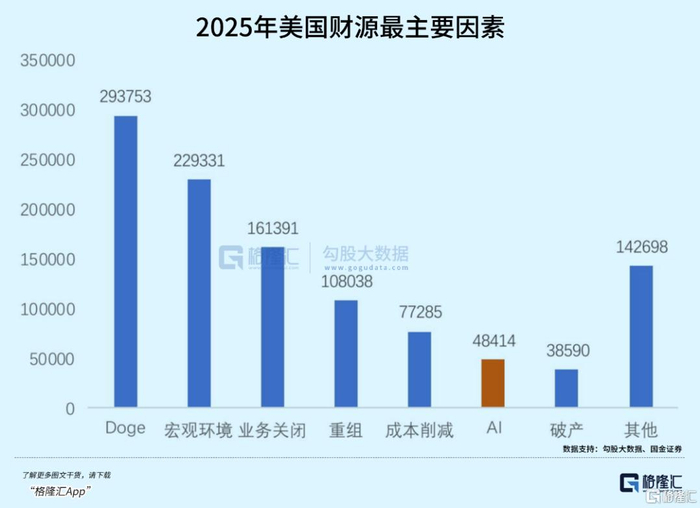
Group 1 - The core issue is the significant increase in layoffs across various sectors, with a total of 1,170,821 employees laid off in the U.S. as of November, marking a 54% increase from the previous year, approaching the levels seen during the 2008-2009 financial crisis [1] - The primary reason for the layoffs is attributed to the impact of the DOGE department led by Elon Musk, which has resulted in 293,753 federal employees and contractors losing their jobs, alongside 20,976 in private and non-profit sectors, an eightfold increase compared to 2024 [4] - The macroeconomic environment, characterized by high costs and tariffs, is also a significant factor contributing to the layoffs [6] Group 2 - The low-interest rate environment has led to a debt hangover, with many companies facing the need to refinance at higher rates, resulting in doubled interest expenses and halved net profits for struggling "zombie companies" [7][8] - The retail sector is the hardest hit, with a notable decline in consumer confidence, as evidenced by the Michigan Consumer Sentiment Index dropping to 51, a more than 20% decrease from the previous year [15] - The service industry has also seen significant layoffs, with 69,089 jobs cut throughout the year, a 64% increase, affecting a wide range of roles from restaurant staff to logistics coordinators [17] Group 3 - The technology sector has been particularly affected, contributing 35% of the layoffs, with a historical high of 28% of layoffs being middle management positions, as AI tools reduce the need for these roles [29][30] - Companies are increasingly using layoffs as a management tool to meet Wall Street's new performance metrics, leading to a culture where reducing headcount is seen as a standard practice rather than a response to crises [31] - The trend of layoffs in the tech industry is expected to continue, with predictions of a peak in cost-cutting benefits in 2026, as operational costs are projected to decrease significantly [37] Group 4 - The layoffs are not only affecting lower-level positions but are also targeting high-salary roles, particularly in finance and technology, indicating a shift in the labor market dynamics [27][28] - The reduction in middle management is leading to immediate operational efficiencies, with companies reporting significant cost savings and improved performance metrics following layoffs [35] - However, the long-term implications of these layoffs may hinder innovation, as a significant portion of laid-off employees hold critical technical expertise, potentially extending product development cycles [41][51]
美联储如期降息25bp,发布超预期资产购买计划
Xin Lang Cai Jing· 2025-12-12 07:56
北京时间今天凌晨,美联储召开了12月FOMC会议,以9票赞成、3票反对的投票结果决定降息25bp至 3.50%-3.75%。本次利率决定和会后表述总体超出市场"鹰派降息"的基准预期,虽然点阵图偏鹰,但会 后鲍威尔讲话偏鸽,叠加超预期的资产购买计划,带来股债齐涨。 发布会上鲍威尔的发言态度并不强硬,针对如下要点给出答复: 1.利率:不认为下次加息是目前任何人的基准假设。 MACD金叉信号形成,这些股涨势不错! 2.经济:政府关门可能对本季度的经济活动造成了压力,但这些影响应该会被下一季度更高的增长所 抵消。消费者支出似乎保持稳健,企业固定投资继续扩张。相比之下,房地产领域的活动仍然疲软。 3.劳动力市场:虽然劳动力市场的逐渐降温仍在继续,但劳动力市场的供给也大幅下降,所以失业率 并没有变动太多。不认为将出现严重失业情况。 点阵图中位数显示的降息路径偏鹰,2026年仅有一次降息。本次会议点阵图指向的降息中位数与上次相 似,即2026年和2027年分别降息25bp。然而,2026年点阵图分布更加分散,这代表本次决议的真实反对 声音其实更大,有7位票委认为明年维持不变甚至需要更鹰,即除了本次反对降息的2名票委外,另有 ...
美股三大指数收盘涨跌不一,道指涨1.34%,纳指跌0.25%,谷歌跌超2%
Mei Ri Jing Ji Xin Wen· 2025-12-11 21:05
每经AI快讯,12月12日,美股三大指数收盘涨跌不一,道指涨1.34%,纳指跌0.25%,标普500指数涨 0.21%,大型科技股多数下跌,谷歌跌超2%,特斯拉、英伟达跌超1%。 ...


