
芯片

Search documents
601208,尾盘强势涨停!芯片概念股,集体异动
Zheng Quan Shi Bao· 2026-01-15 09:01
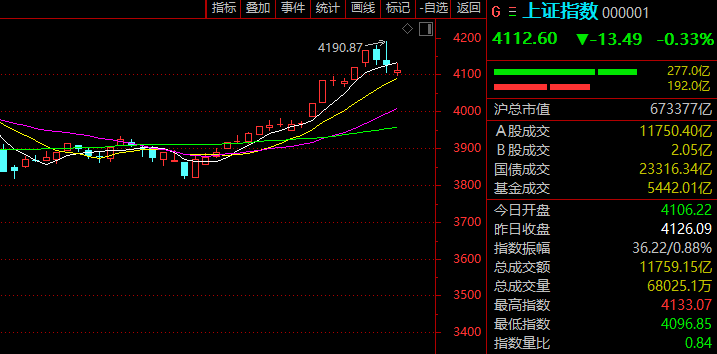
Market Overview - The A-share market opened lower and experienced fluctuations, with the Shanghai Composite Index testing the 4100-point support level. The North Stock 50 and Sci-Tech 50 also saw declines, while the Shenzhen Component Index and ChiNext Index rebounded towards the end of the trading session. The total market turnover was 2.94 trillion yuan [1]. Sector Performance - The semiconductor, rubber, glass fiber, and non-ferrous metal sectors showed significant gains, while commercial aerospace, e-commerce, short drama games, and diversified finance sectors faced notable declines [1]. - The electronic industry attracted over 16.8 billion yuan in net inflows from major funds, while the basic chemicals sector saw over 9.6 billion yuan and the non-ferrous metals sector over 8.2 billion yuan in net inflows. Conversely, the computer sector experienced a net outflow exceeding 16 billion yuan, with defense, non-bank finance, pharmaceuticals, and banking also facing net outflows [3]. Future Outlook - According to Huajin Securities, the fundamental recovery remains weak, but liquidity is relatively ample, and external risks are limited, suggesting that the spring market rally is not over. The economy is expected to continue its weak recovery trend, with potential upward momentum in the profitability growth of technology and cyclical sectors. The central bank may further cut reserve requirements and interest rates in the short term, with market liquidity remaining robust due to strong capital inflows and trading volumes approaching 4 trillion yuan [3]. - The semiconductor industry, particularly the chip supply chain, saw a strong performance in the afternoon session, with the photolithography machine sector leading the gains. Notable stocks such as Dongcai Technology and Qicai Chemical hit the daily limit, while Shanghai Xinyang and Su Da Weige also saw significant increases [3]. Semiconductor Market Insights - TrendForce's latest report indicates that due to a large-scale shift to advanced processes by DRAM manufacturers to meet AI server demands, the supply of conventional DRAM is expected to tighten significantly, with contract prices projected to increase by 55%-60% quarter-on-quarter in Q1 2026. NAND Flash prices are also expected to rise by 33%-38% due to capacity control by manufacturers [5]. - The International Semiconductor Industry Association anticipates continued growth in global semiconductor manufacturing equipment sales, driven by investments in artificial intelligence, with sales expected to reach $145 billion and $156 billion in 2026 and 2027, respectively [5]. - According to Founder Securities, the gap between domestic storage capacity and global leaders is narrowing through "scale production," providing a golden opportunity for upstream companies in equipment and materials [5]. Commercial Aerospace Sector - The commercial aerospace concept stocks experienced significant declines, with companies like Guobo Electronics and Xinghuan Technology hitting the daily limit down. Several other stocks, including Zhaisheng Technology and Daye Shares, have faced three consecutive days of limit downs, with over 40 stocks dropping by more than 10% [6].

美国放行英伟达对华出口H200芯片,外交部:中方已多次表明立场
Xin Lang Cai Jing· 2026-01-15 08:09
Group 1 - The U.S. government has approved the export of H200 AI chips to China by Nvidia, but with conditions including a 25% revenue share to the U.S. government [1] - The U.S. Department of Commerce is revising its export licensing policy for certain semiconductors to China, shifting from a presumption of denial to case-by-case reviews [1] - The H200 chip features significantly improved performance, with six times the capabilities of its predecessor, the H20, although it is not Nvidia's highest-end product [1] Group 2 - Chinese companies are actively developing domestic AI chips to compete with Nvidia, with major players like Huawei, Alibaba, Tencent, Baidu, and ByteDance increasing their investment in chip R&D [2] - The Chinese government advocates for cooperation between China and the U.S. to achieve mutual benefits regarding the export of H200 chips [2]

特朗普通报全球,他带领美国赢了中国!话音刚落,中方对美征关税
Sou Hu Cai Jing· 2026-01-15 08:03
Group 1 - The core argument presented is that Trump's claim of winning against China through tariffs is misleading, as the burden of tariffs falls on American consumers and businesses rather than China [3][18][21] - The U.S. has implemented multiple rounds of tariffs on Chinese goods, with a cumulative increase of 20% on certain products, which violates WTO regulations and reflects unilateral trade protectionism [5][8][10] - China's response to U.S. tariffs has been strategic, imposing tariffs on U.S. exports such as coal, LNG, and agricultural products, targeting key sectors of the U.S. economy [12][14][16] Group 2 - The impact of tariffs has been detrimental to the U.S. economy, with studies indicating that American households face increased costs, averaging an additional $1,140 annually, disproportionately affecting low-income families [21][23][26] - The U.S. manufacturing sector has experienced significant job losses, with 28,000 jobs evaporating in the automotive industry alone by 2025, and major companies like Ford and GM slowing their transition to electric vehicles [23][26] - In contrast, China has diversified its trade partnerships, reducing its reliance on the U.S. market, with exports to ASEAN countries rising to 18.5% of total trade, and has strengthened its domestic industries in response to U.S. trade pressures [28][30][32] Group 3 - The global photovoltaic industry is dominated by China, which holds over 85% of the global market share in polysilicon production, and is expected to contribute over 65% of global solar cell shipments by 2025 [33][35] - The ongoing trade tensions highlight the lack of winners in trade wars, as both countries suffer economic consequences, emphasizing the need for equal cooperation and mutual benefits [35][40][42] - The article calls for the U.S. to abandon its zero-sum game mentality and return to a path of equal dialogue, which aligns with the interests of both nations in the context of globalization [43]
智慧眼与海光信息达成战略合作 共推医疗健康国产化
Zheng Quan Shi Bao Wang· 2026-01-15 07:45
Core Insights - Wisdom Eye Technology Co., Ltd. has signed a strategic cooperation agreement with Haiguang Information, focusing on the healthcare industry and leveraging their respective strengths in AI and controllable computing chips to promote the integration of domestic technology and industry applications [1][2] Group 1: Collaboration Overview - The partnership aims to enhance the penetration and substitution capabilities of domestic products in critical sectors like healthcare [1] - Both companies will establish a "technology-product-market" collaborative system, sharing R&D resources, testing environments, and market channels to achieve complementary advantages and resource integration [1][2] Group 2: R&D Collaboration - Wisdom Eye will utilize its expertise in computer vision, natural language processing, and its "Bianshi" model to optimize AI applications in healthcare, in conjunction with Haiguang's high-performance CPU and DCU [2] - The collaboration will create integrated solutions, with Wisdom Eye focusing on application adaptation and optimization, while Haiguang provides foundational computing support [2] Group 3: Market Expansion - Both companies will act as priority partners in project implementation and solution promotion, leveraging their technological and resource advantages to expand the market space in the healthcare sector [2] - The partnership is expected to accelerate the large-scale implementation of domestic solutions in the healthcare industry [2] Group 4: Industry Impact - The collaboration signifies a deep integration of domestic computing power and intelligent solutions in the healthcare sector, addressing the "chip shortage" issue in medical AI [3] - The increasing application of AI in healthcare will drive the demand for computing power, making domestic computing a crucial foundation for ensuring information security in the industry [3]

A股收评 | 成交缩量万亿!三大信号闪现
智通财经网· 2026-01-15 07:35
Market Overview - The market experienced volatility with the Shanghai Composite Index briefly falling below 4100 points, ultimately closing slightly down, while the ChiNext Index managed to turn positive [1] - Total market turnover reached 2.9 trillion, a decrease of over 1 trillion compared to the previous trading day, with more than 3100 stocks declining [1] - Notably, broad-based ETFs saw significant trading volumes, with the CSI 500 ETF reaching a record turnover of over 26.3 billion, and other major ETFs also experiencing substantial increases in trading volume [1] Signals from the Market - Three key signals were identified: 1. While high-position thematic stocks are retreating, the non-ferrous metals sector is showing strong performance, indicating structural opportunities [1] 2. The bond market has not shown excessive excitement during the stock market adjustment, suggesting that risk appetite has not completely diminished [1] 3. There is a noticeable decrease in trading volume, indicating that market enthusiasm may be waning [1] Regulatory Changes - Morgan Stanley reported that the adjustment of the financing margin ratio by the Shanghai and Shenzhen Stock Exchanges aims to maintain a "slow bull" market, increasing the minimum margin ratio from 80% to 100% [2] - The overall leverage level in the market is relatively low, with the financing balance accounting for approximately 2.3% of the total market value, lower than the peak of 3.8% in 2015 [2] Sector Performance - In terms of sector performance, technology stocks related to chips and computing saw gains in the afternoon, with several stocks hitting the daily limit [2] - The non-ferrous metals sector experienced fluctuations, with precious metals leading the gains, while AI application sectors faced declines [2] - The tourism and hotel sector showed active performance, with multiple stocks achieving consecutive gains [2] Individual Stock Movements - A total of 2230 stocks rose, while 3121 stocks fell, with 65 stocks hitting the daily limit up and 72 stocks hitting the daily limit down [3] - The Shanghai Composite Index closed down 0.33% at 4112.60 points, while the Shenzhen Component Index rose 0.41% to 14306.73 points [3] Fund Flows - Major funds focused on sectors such as batteries, industrial metals, and energy metals, with significant net inflows into stocks like沃尔核材, 航天机电, and 华友钴业 [4] Economic Indicators - The central bank reported that the total social financing scale for 2025 is projected to reach 35.6 trillion, an increase of 3.34 trillion from the previous year [5] - Various forms of financing, including loans and bonds, showed mixed trends, with corporate bond net financing increasing by 4825 billion year-on-year [5] Future Market Outlook - CITIC Securities indicated that despite recent regulatory measures to cool the market, overall trading activity remains high, suggesting a potential for continued growth in the equity market [7] - CITIC Jiantou noted that the upcoming global interest rate cuts could support A-share performance, with a shift in asset allocation favoring equities [7]
特朗普对75国“开火”,唯独对中方收起了枪口,他在害怕什么?
Sou Hu Cai Jing· 2026-01-15 07:21
在全球经济的复杂棋局中,美国最近暂停了75个国家的签证申请,这一消息不仅引发了广泛关注,更引发了人们对于其中潜藏的国际关系博弈的深 刻思考。值得注意的是,中国并不在这份"黑名单"之列,似乎让人意外,但实际上却有其深层次的原因。为了揭示这一复杂现象背后的真相,我们 需要细致剖析美国在对华政策上的微妙变化,以及中美关系的最新动态。 新加坡前总理李显龙曾明确指出,当前美国不大可能主动挑起与中国的争端。这说明,在未来的国际形势中,中美之间的"休战"状态是有其内在逻 辑和必要性的。两国在探索更加稳定的经济结构转型过程中,都希望能够通过合作而非冲突来实现各自的战略目标。 首先,不可否认的是,美国政府在特朗普执政期间对中国采取了相对谨慎的态度。在与众多国家的贸易争端中,特朗普显然意识到与中国的关系不 是可以随意激化的。他的一系列表态和政策,都显示出他正在努力在利益和压力之间寻找一个平衡点。这种现象不仅反映了美国国内各方力量的博 弈,也折射出国际环境的复杂性。 当前的国际局势还在不断变化,随着全球经济的波动与许多国家在经济政策上的不同选择,中美之间的博弈也将愈发复杂。但不可否认的是,未来 几年,中美关系很可能将朝着更加理性的 ...
2025年前11个月,济南规上工业企业营收9962.5亿元
Feng Huang Wang Cai Jing· 2026-01-15 07:18
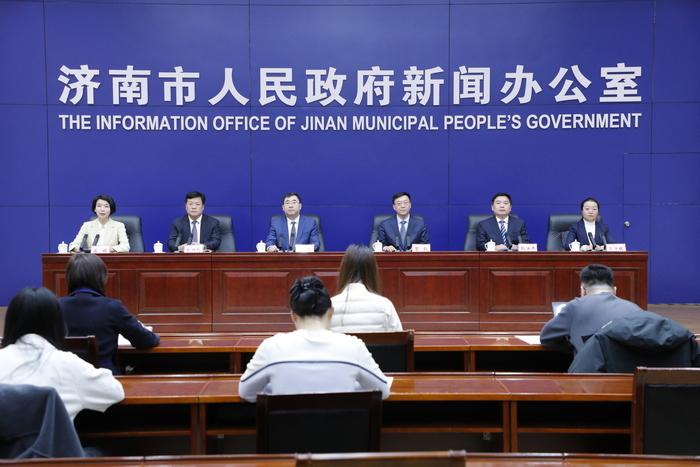
Group 1 - The core viewpoint of the article highlights the significant progress made by Jinan in achieving high-quality economic development through the implementation of the "14th Five-Year Plan," with a focus on industrial growth and innovation [1][3]. - Jinan's industrial revenue for the period from January to November 2025 reached 996.25 billion yuan, reflecting a year-on-year growth of 9.2% [3]. - The total industrial output value in Jinan is projected to exceed 1 trillion yuan for the first time in 2024, reaching 1,018.9 billion yuan, marking a historic milestone for the city's industrial economy [3]. Group 2 - Jinan has seen a significant increase in market vitality, with 15 enterprises achieving over 10 billion yuan in revenue and 807 enterprises surpassing 100 million yuan by the end of 2024, representing a net increase of 5 and 159 respectively compared to the end of the "13th Five-Year Plan" [3]. - The number of large-scale industrial enterprises in Jinan has reached 2,854, an increase of 942 from the end of the "13th Five-Year Plan," with a robust ecosystem of both large and small enterprises [3][4]. - The city has implemented over 1,000 technical transformation projects annually during the "14th Five-Year Plan," contributing to the development of key projects such as BYD's core components for electric vehicles and digital factories [4].
STARTRADER外汇:5万亿市值白银超英伟达成全球第二资产 还能追?
Sou Hu Cai Jing· 2026-01-15 07:08
Core Viewpoint - The global asset landscape is undergoing a historic transformation as silver prices have surpassed $90 per ounce for the first time, elevating its market capitalization to $5.039 trillion, making it the second-largest asset globally, following gold [1][3]. Market Dynamics - The surge in silver's market value is attributed to a dual resonance of its financial and industrial properties. Financially, expectations of global liquidity easing and heightened risk aversion are driving investment into precious metals. Geopolitical tensions, such as the U.S.-Iran and U.S.-Venezuela situations, further enhance silver's appeal as a safe-haven asset [3]. - On the industrial side, there is a significant demand gap for silver, driven by its essential role in emerging industries like photovoltaics, electric vehicles, and AI data centers. Projections indicate that global photovoltaic installations will exceed 600 GW by 2026, leading to a silver paste demand of 8,900 tons. Additionally, the silver consumption in electric vehicles is expected to surpass 3,600 tons annually, and AI servers will require three times more silver than traditional servers, with a year-on-year growth rate of approximately 26% in the AI sector [3]. Supply Constraints - The supply side is tightening, with global silver shortages persisting for five consecutive years. The anticipated shortfall is expected to widen to 6,300 tons by 2026, while independent silver mines account for only 28% of production. Low capital expenditure and aging mines have led to stagnation in supply growth, with visible inventories at major exchanges dropping to a ten-year low, resulting in a consumption-to-inventory ratio of only 0.68 [3]. Market Sentiment - The market's enthusiasm for silver is reflected in the significant inflows into the largest silver ETF, iShares Silver Trust, which recently increased its holdings by 39.47 tons, reaching a historical high of 16,347.95 tons. This indicates strong institutional confidence in long-term allocations [4]. - In the futures market, speculative sentiment is high, with the main silver futures contract's open interest rising to 344,700 lots. However, measures have been implemented to cool the market, including raising margin requirements and limiting intraday positions [4]. Diverging Views - There is a clear divide in market sentiment regarding whether to chase the rising silver prices. The bullish camp believes in the continuation of the strong trend, supported by the long-term supply-demand gap and macroeconomic benefits. Institutions like BNP Paribas and Morgan Stanley have set price targets of $100 per ounce, citing ongoing geopolitical risks and physical shortages as key support factors [4]. - Conversely, the bearish camp warns of potential high-level corrections. JPMorgan has predicted an average silver price of $40.2 per ounce in 2026, citing factors such as index weight adjustments leading to $7 billion in sell orders and the potential for profit-taking due to cooling measures. Other firms, like TD Securities, have established short positions betting on a drop to $40 [5]. Short-Term Outlook - Despite differing opinions, most institutions agree that silver is likely to experience a short-term correction in Q1 2026. Factors such as index adjustments and a low probability of Fed rate cuts could lead to a rebound in the dollar, suppressing precious metal prices. The expected correction range is between $55 and $60 per ounce, with a potential decline of 20-30% [6]. - Key variables influencing silver's future include inventory changes at major exchanges and monthly data on global photovoltaic installations, which reflect the tightness of the physical market and industrial demand resilience. Additionally, the direction of U.S. monetary policy and tariffs on key minerals will play a crucial role in shaping silver's financial attributes [6].
智慧眼:与海光信息达成战略合作,携手推进医疗健康国产化
Cai Jing Wang· 2026-01-15 06:37
今日,智慧眼公众号发布公告称,公司与海光信息技术股份有限公司正式签署战略合作协议。 双方将聚焦医疗健康行业,依托各自在人工智能大健康与自主可控计算芯片领域的核心技术优势,开展 全方位深度合作,共同推动国产化技术与行业应用的深度融合,助力"数字中国"与"健康中国"建设。 ...
2026科技风向标:八大趋势重塑产业与生活
2 1 Shi Ji Jing Ji Bao Dao· 2026-01-15 06:05
Core Insights - The rapid iteration of technology is expected to lead to significant breakthroughs in key areas such as artificial intelligence, quantum computing, fusion energy, and aerospace engineering by 2025, reshaping the global technology landscape and intensifying competition between China and the United States [1] Group 1: Major Technological Events in 2025 - DeepSeek emerged as a leading open-source AI model, significantly improving GPU utilization and reducing model costs, thus enabling a new wave of AI efficiency and innovation in China [2] - The commercial space industry accelerated, with SpaceX's Starship achieving a complete flight cycle and China's satellite internet constellations addressing the "arrow without a star" issue, leading to explosive growth in launch capacity [3][4] - Humanoid robots made a significant appearance at the Spring Festival Gala, showcasing advancements in AI-driven robotics and marking a transition from research to practical applications [5] - The storage chip industry entered a "super cycle" as major companies shifted production towards AI-related storage solutions, leading to price increases across various hardware sectors [6] - China's "artificial sun" achieved a record of 1 billion degrees Celsius for over 1,000 seconds, marking a milestone in controlled nuclear fusion research [7] - The competition in quantum computing intensified, with significant advancements from both China and Google, indicating a shift towards practical applications in various fields [8] Group 2: Trends for 2026 - AI agents are predicted to mature, enabling collaborative intelligence that could revolutionize user interfaces and operational efficiency for small businesses [12] - AI technology is expected to transition from cloud-based systems to physical devices, with AI PCs and glasses becoming standard, enhancing user experience even in low-connectivity scenarios [13] - The commercial viability of Level 3 autonomous driving is anticipated to grow, with more cities implementing pilot programs and new business models emerging [14][15] - Quantum computing is nearing a practical breakthrough, with advancements in hardware and software expected to demonstrate "quantum advantage" in real-world applications [16] - The demand for computational power is driving upgrades in the energy sector, with tech companies investing in stable energy sources to support AI data centers [17] - Brain-computer interface technology is transitioning from experimental phases to commercial applications, with significant investments and developments expected in the coming years [18] - The commercial space sector is expected to mature, with established revenue streams and reduced launch costs through reusable rocket technologies [19][20] - The low-altitude economy is gaining traction, with multiple companies expanding into international markets and significant growth projected in the eVTOL sector [21]