电商

Search documents
格林大华期货早盘提示:全球经济-20251205
Ge Lin Qi Huo· 2025-12-05 00:52
Report Industry Investment Rating - No information provided Core Viewpoints - The global economy is turning weak as the US economy shows signs of decline, with factors like weak employment data, high inflation risks, and a shift in corporate strategies, while the AI industry continues to thrive with significant developments from companies like Amazon [1][2] Summary by Related Catalogs Important Information - In November, US private - sector jobs decreased by 32,000, the largest drop since March 2023, with small businesses being the hardest - hit, losing 120,000 jobs in total [1] - US service charge prices in November rose further as companies shifted higher costs, which may hinder further interest rate cuts and suppress the financial service industry [1] - The US Commerce Secretary is supporting the robot industry, and the US Department of Transportation may announce a robot working group by the end of the year [1] - Due to the price difference between COMEX and LME, funds are flowing into the US for copper hoarding. COMEX copper inventory has exceeded 400,000 tons, a more than 300% increase from the end of last year, accounting for 62% of the total copper inventory of the three major international exchanges [1] - Amazon's self - developed AI chip Trainium2 has achieved billions of dollars in annualized revenue, with over 1 million chips in production. Amazon also released Trainium3 with 4 - times performance improvement [1] - The yield of Japan's 30 - year treasury bonds reached a record high of 3.445%, and the probability of a December interest rate hike in Japan has risen above 80% [1] - Goldman Sachs macro traders expect a fierce battle between bulls and bears in the US stock market next year. Bulls are driven by the AI boom, $600 billion in capital expenditure by tech giants, and $1.2 trillion in stock buy - back authorizations, while bears are due to high valuations, deteriorating market breadth, over - reliance on the AI theme, and consumption and credit risks in a "K - shaped economy" [1] Global Economic Logic - The Fed's Beige Book shows a K - shaped consumer divide. With weakening employment data, the probability of a December Fed rate cut has risen to 90% [2] - The Bank of Japan may raise interest rates in December, which could impact global arbitrage funds [2] - Industry insiders believe there is no AI bubble in the next three years, and companies need to significantly increase AI computing power to meet demand [2] - Morgan Chase strategists estimate that AI data center construction will require at least $5 trillion in the next five years. US data center planning capacity has soared, and developers are building their own power plants [2] - US retail sales in September increased only 0.2%, far lower than expected, indicating a consumer spending cut [2] - Mass layoffs by well - known companies may be an economic warning sign [2] - The global economy is turning weak due to continuous wrong US policies [2]
新东方员工发文吐槽「加班成奴」,账号被秒封!公司回应;负债238亿拟花1.8亿炒股?乐视网:被误读;美光停止向消费者销售存储产品
雷峰网· 2025-12-05 00:44
Group 1 - Micron Technology has decided to exit the consumer storage market, ceasing production of PC-grade SSDs and memory products, focusing instead on high-performance AI chip demands [4][5] - The decision comes as major tech companies, including Samsung and SK Hynix, have also reduced memory production, leading to a global shortage of memory for consumer devices [4][5] - Micron aims to enhance long-term business performance by concentrating on core enterprise and commercial sectors, which are experiencing significant growth due to AI [4][5] Group 2 - LeEco reported a debt of 238 billion yuan and plans to invest 180 million yuan in stock trading, which has sparked public debate [7][8] - The company clarified that a significant portion of the investment is in "risk-free" assets, such as government bond repurchases, rather than speculative trading [7][8] - LeEco relies on operational income and copyright revenues from popular shows like "Empresses in the Palace" to sustain its workforce [8] Group 3 - Canon's Zhongshan factory has announced generous severance packages for laid-off employees, with compensation reaching up to 400,000 yuan [10][11] - The compensation plan includes a formula that significantly exceeds legal standards, providing a substantial financial cushion for affected workers [10][11] - Canon is actively assisting employees in finding new job opportunities, including hosting recruitment events and providing recommendation letters from management [12] Group 4 - Amazon's AGS division is undergoing significant leadership changes, with the departure of Vice President Yang Jun amid a broader restructuring [16][17] - The company has initiated a large-scale layoff plan, affecting various management levels, as it seeks to streamline operations [16][17] - The ongoing changes reflect a challenging environment for Amazon's global selling operations, with expectations of further layoffs in the near future [16][17] Group 5 - Xiaomi's President Lu Weibing announced a strategic focus on AI, emphasizing the integration of AI with physical products and services [21][22] - The company has ramped up investments in AI, with a reported increase of over 50% in funding for AI initiatives in recent quarters [21][22] - Xiaomi aims to position itself as a leader in AI technology, leveraging top talent to enhance its capabilities in this area [21][22] Group 6 - BYD is implementing a "flawless operation" initiative in its battery factories, aiming for zero defects in product manufacturing [31] - The initiative is part of a broader strategy to enhance manufacturing efficiency and meet the growing demand for high-quality battery products [31] - BYD's goal is to achieve industry-leading management standards within a few months, aligning with external customer expectations [31] Group 7 - Eight major e-commerce platforms, including JD.com and Meituan, have signed a commitment to establish self-regulatory norms for AI technology applications [32][33] - The commitment aims to ensure transparency in AI-generated content and protect consumer rights by implementing clear labeling and monitoring practices [32][33] - This initiative marks a significant step towards responsible AI usage in the e-commerce sector, addressing growing concerns over AI's impact on consumer interactions [32][33]




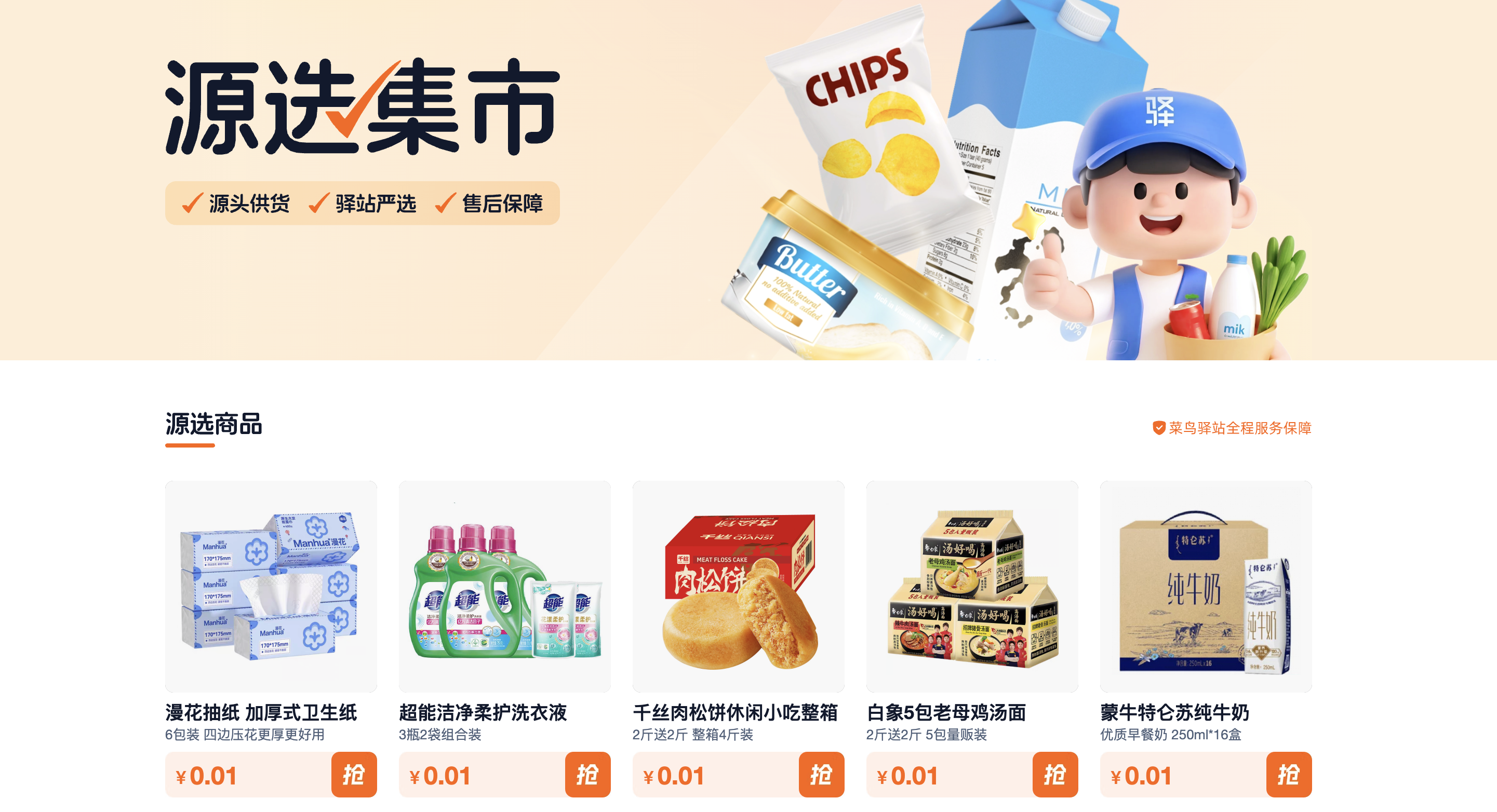
菜鸟驿站上新“源选集市”,阿里再战社区团购?
Di Yi Cai Jing· 2025-12-05 00:25
Core Insights - Alibaba has launched a new community group buying business called "Yuanxuan Market" through its logistics arm, Cainiao, focusing on direct sourcing and strict selection of products [1] - The service is currently in its early stages, with limited product offerings and a user login system restricted to Cainiao members, DingTalk users, or Alibaba employees [1] - This move indicates Alibaba's renewed interest in the community group buying sector, despite previous withdrawals from similar initiatives [1][5] Group 1: Business Model and Strategy - "Yuanxuan Market" operates on a model of direct sourcing, group shipping, and self-pickup at logistics stations, leveraging existing resources and supply chains [1][6] - The initiative aims to cater to older consumers who may find online shopping inconvenient, potentially increasing revenue for Cainiao and expanding its franchise network [6] - The community group buying model is seen as a way to enhance local retail ecosystems and activate the value of Cainiao's logistics network [6] Group 2: Market Context and Competition - Earlier this year, Alibaba's community group buying service, Taobao Maicai, was restructured to focus on direct shipping from production sites, indicating a strategic retreat from the sector [5] - Experts suggest that community group buying will not be the main focus of competition but will serve as a supplementary business model, with major players avoiding significant losses in this area [7] - The renewed interest in community group buying aligns with Alibaba's broader strategy to address consumer demand for high-frequency products amid a saturated e-commerce market [6][7]

读创财经晨汇|①亚马逊首个全球智能枢纽仓落地深圳②饿了么回应《外卖平台服务管理基本要求》
Sou Hu Cai Jing· 2025-12-05 00:17
【深圳经济新闻联播】 广东遴选湾区景观地标 深圳湾成形象品牌 据深圳商报,12月4日下午,广东省人大常委会在广州举行《广东省人民代表大会常务委员会关于促进 粤港澳大湾区内地九市内涵式高质量发展的决定》新闻发布会。记者从会上获悉,广东将率先探索一条 彰显中国气派、岭南风格、湾区特色的城市群发展路径,前瞻布局未来产业,高水平打造"黄金内湾", 打造环湾绿带,共同构建湾区级的蓝绿开敞空间体系。 亚马逊首个全球智能枢纽仓落地深圳 12月4日,美国电商巨头亚马逊首个全球智能枢纽仓正式落地深圳,并计划于2026年3月向所有卖家全面 开放。该设施将提供从货源地始发的全球一体化仓储与分拨服务,标志着亚马逊在全球供应链布局上的 又一重要举措。根据公开资料整理,该智能枢纽仓将于2026年1月开始推广使用,逐步扩大服务范围, 并于3月实现全面开放。 【国内财经新闻】 稀土出口管制:合规的、用于民用用途的出口申请,中国政府都及时予以了批准 12月4日下午,商务部新闻发言人就开展稀土相关物项出口管制进行了回应。商务部新闻发言人何亚 东:中国政府依法依规开展稀土相关物项的出口管制工作,据我所知,只要是用于民用用途的,合规的 出口申请,中 ...
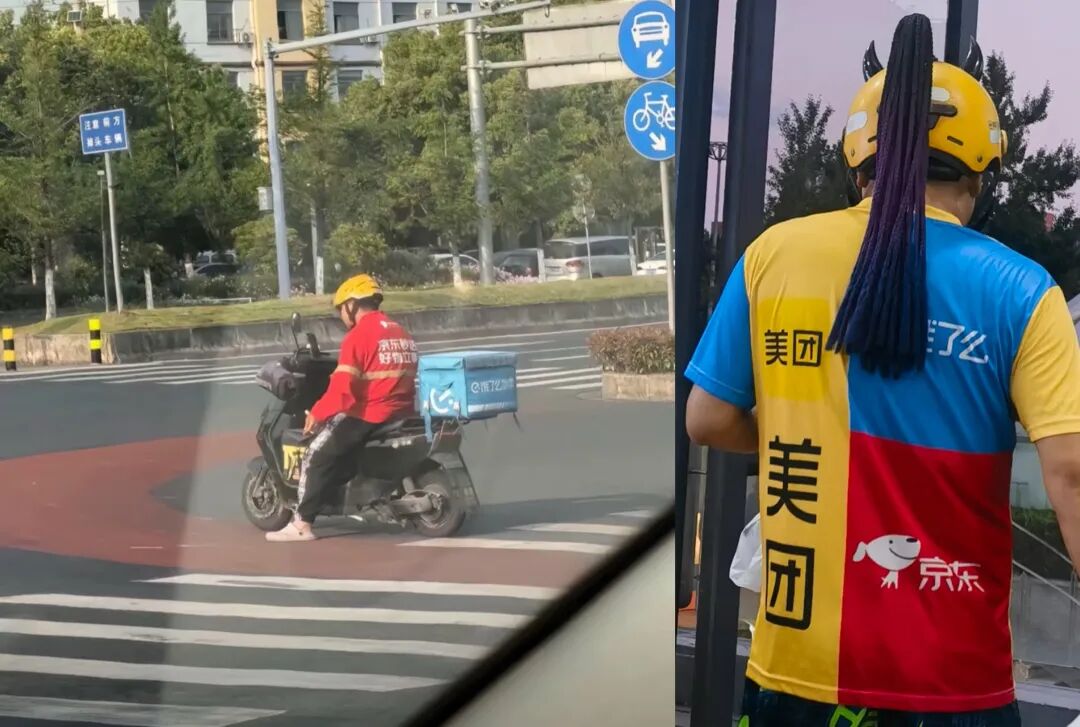
为了三套新工服,外卖平台烧光1000亿
3 6 Ke· 2025-12-04 23:48
Core Insights - The intense competition among Meituan, JD.com, and Alibaba in the food delivery sector has led to a combined loss of nearly 100 billion yuan in profits over the past six months, marking one of the most costly battles in Chinese internet history [1][4][7] - The third quarter saw unprecedented levels of platform subsidies, resulting in significant financial losses for all three companies, with Meituan reporting its largest quarterly loss since its IPO [1][4][12] Financial Performance - Meituan experienced a quarterly loss of approximately 448 million yuan, while Alibaba's e-commerce business saw a staggering 85% year-on-year decline in operating profit [1][4] - JD.com reported a 108% year-on-year drop in overall operating profit, indicating severe financial strain across the board [1][4] - Marketing expenditures surged dramatically, with Alibaba and JD.com increasing their spending by 106% and 110% respectively, while Meituan's marketing costs rose by 91% [4][12] Market Dynamics - The oligopolistic structure of the food delivery market is beginning to shift, with Meituan's market share expected to drop to around 65% in 2024, a decline of nearly 20% from previous levels [4][7] - The competition is not just about food delivery; it serves as a strategic entry point for e-commerce growth, with JD.com and Alibaba leveraging food delivery to drive traffic to their core retail businesses [7][12] User Engagement and Growth - Despite the financial losses, user engagement metrics have shown positive trends, with JD.com's food delivery GMV experiencing triple-digit growth and a nearly 50% conversion rate for new users [7][12] - Meituan's daily active users increased by over 20% year-on-year, indicating a strong user base despite the competitive pressures [7][12] Strategic Shifts - The companies are recognizing the unsustainable nature of the price war, with a collective call to resist "disorderly competition" in the food delivery sector [22][24] - JD.com is reportedly adjusting its strategy by launching an independent app for food delivery and focusing on improving unit economic costs [22][24] - Alibaba plans to significantly reduce its investment in flash sales in the upcoming quarter, indicating a shift towards more sustainable practices [22][24]

【电商月报】11月:跨境电商告别“免税红利” 海上鲜递交招股书
Sou Hu Cai Jing· 2025-12-04 20:13
Core Insights - The e-commerce landscape in November 2025 saw significant developments across various sectors, including digital retail, cross-border e-commerce, and logistics technology, as highlighted by the NetEase Research Center [1][4]. E-commerce Developments - The "Double 11" shopping festival showcased a shift towards rational consumption, with major platforms like Taobao, Meituan, and JD.com focusing on physical convenience stores as new battlegrounds [27]. - JD.com reported a 24.7% year-on-year increase in active users during the "Double 11" period, indicating strong consumer engagement [4]. - The total sales during the "Double 11" event reached 1.695 trillion yuan, with nearly 600 brands achieving over 100 million yuan in sales [4]. Cross-border E-commerce - Douyin's e-commerce GMV is projected to exceed 4 trillion yuan for the year, surpassing JD.com and closely approaching Pinduoduo and Meituan [14][15]. - A global tightening of cross-border tax policies is reshaping the industry, as many countries are eliminating or significantly reducing tax exemptions for small packages [20]. Logistics and Technology - The logistics sector processed approximately 139.38 billion packages during the "Double 11" period, setting a new record for daily processing volume [37]. - JD Logistics has enhanced its logistics capabilities in preparation for the Black Friday sales, with a significant increase in goods stored in overseas warehouses [38]. Regulatory Changes - New regulations targeting "ghost stores" and trademark infringement are being implemented to improve the online shopping environment and protect consumer rights [12]. - The Chinese government has initiated a one-year suspension of trade sanctions between the U.S. and China, which may impact e-commerce dynamics [19]. Company Performance - JD Industrial reported a revenue of 14.1 billion yuan over eight months, reflecting an 18.9% year-on-year growth [33]. - Alibaba Cloud's revenue grew by 34% year-on-year to 39.824 billion yuan, driven by strong demand for AI-related products [35].

深夜,中国资产爆发
证券时报· 2025-12-04 15:54
中概股盘初大涨。 当地时间12月4日晚间,美股三大指数集体高开,随后震荡走低,三大股指一度纷纷转跌,小幅探底后震荡回升。截至发稿,道指涨0.04%,标普500指数跌0.01%, 纳指跌0.1%。 | 代码 | 名称 | 现价 | 涨跌 | 涨跌幅 | | --- | --- | --- | --- | --- | | DJI | 道琼斯工业平均 | 47899.83 | 16.93 | 0.04% | | IXIC | 纳斯达克指数 | 23429.61 | -24.48 | -0.10% | | SPX | 标普500 | 6849.21 | -0.51 | -0.01% | 经济数据方面,美国上周失业救济申请人数创下 2022 年 9 月以来的最低水平,截至11月29日当周(含感恩节假期),初请失业金人数减少2.7万,至19.1万人,预估 为22万人,前值为21.6万人。 芝商所美联储观察工具最新数据显示,市场对下周三降息的定价概率较昨日(90%)小幅下降,但仍有87%,远高于几周前水平。目前,华尔街普遍认为美联储将 在年内最后一次议息会议上降息25个基点。 个股方面,Meta盘初一度涨超5%,截至发稿涨 ...


威海“十四五”商务:惠民利企激发活力,消费升级引领发展
Qi Lu Wan Bao· 2025-12-04 15:34
Core Viewpoint - During the "14th Five-Year Plan" period, Weihai's Business Bureau has focused on the "business for the people" concept, emphasizing "promoting consumption, expanding domestic demand, and benefiting people's livelihoods" through a dual approach of "policy + activities" and "traditional + innovation" to stimulate market vitality and boost consumer confidence [1] Group 1: Financial Support and Consumer Incentives - Over the past five years, Weihai has implemented direct financial support measures, issuing or writing off subsidies totaling 1.35 billion yuan, which has driven sales of 800,000 units of automobiles, home appliances, and electronic products, resulting in over 10 billion yuan in consumption [1] - A total of 126 million yuan has been invested in various consumer vouchers and subsidies, leading to a direct consumer benefit of 2.77 billion yuan [1] Group 2: Traditional Consumption Upgrade - Weihai has invested over 17 million yuan to support the transformation and upgrading of traditional commerce, creating new consumption patterns and enhancing retail innovation [2] - The city has established three provincial-level pedestrian streets and improved 14 characteristic commercial districts, with several being recognized as provincial-level特色街区 [2] Group 3: E-commerce Development - The city has focused on digital empowerment, enhancing e-commerce's role in promoting consumption, with online retail sales increasing from 16.37 billion yuan in 2021 to 23.71 billion yuan in 2024, a growth of 44.84% [3] - Weihai has established partnerships with major e-commerce platforms and developed logistics infrastructure to expand sales channels for local products [3] Group 4: Community and County-Level Commercial Systems - Weihai has invested over 3 million yuan to develop community commercial systems, creating 26 convenient living circles and achieving 100% coverage of county-level commercial service centers [4] - The city has allocated over 11 million yuan for county-level commercial system projects, supporting the establishment and renovation of over 100 retail centers and convenience stores [4] Group 5: Future Development Goals - The Weihai Business Bureau aims to develop into a regional consumption center, leveraging its status as a national retail innovation pilot city to enhance live-streaming e-commerce and smart transformation of business circles [4] - The focus will be on integrating "goods + services" and expanding new service consumption areas such as health, tourism, and home services to continuously optimize supply and improve the consumption environment [4]
阿里再瘦身回笼资金,出售土耳其电商平台85%股权给Uber套现60亿元
Sou Hu Cai Jing· 2025-12-04 13:36
Core Insights - Alibaba Group disclosed a significant asset transaction in its mid-term report for the fiscal year 2026, completing the sale of 85% equity in the Turkish food delivery platform Trendyol GO for $700 million, resulting in approximately 6 billion RMB in gains, which will be reinvested into AI and cloud computing core businesses [2][3] Group 1: Transaction Details - The agreement for the sale was signed in May 2025, and the transaction was completed in September 2025 [2] - Trendyol GO, a key player in Turkey's instant retail market, processed over 200 million orders last year, with a transaction volume of $2 billion, marking a 50% year-on-year growth [2] - Alibaba retains a 15% stake in Trendyol GO, allowing for future collaboration while realizing the value of a core asset [2] Group 2: Strategic Focus - This transaction aligns with Alibaba's "focus on core" strategy, emphasizing AI-driven and cloud-first initiatives [3] - The company has initiated a 380 billion RMB investment in AI infrastructure, aiming to increase the energy efficiency of Alibaba Cloud's global data centers by tenfold by 2032 [3] - Alibaba has been regularly divesting non-core assets, including traditional retail businesses and stakes in various companies, to streamline its asset structure [3] Group 3: Performance and Market Position - Alibaba Cloud reported a 34% year-on-year revenue growth in the latest quarter, with AI-related product revenues experiencing triple-digit growth for nine consecutive quarters, indicating the effectiveness of the strategic focus [3] - Analysts suggest that the local lifestyle segment represented by Trendyol GO has low relevance to Alibaba's core AI and cloud direction, making the divestment a strategic move to enhance resource allocation in key areas [3]
为了三套新工服,外卖平台烧光1000亿
远川研究所· 2025-12-04 13:04
Core Viewpoint - The intense competition among Meituan, JD, and Alibaba in the food delivery sector has led to significant financial losses, with nearly 100 billion yuan in profits wiped out over the past six months, marking one of the most costly battles in Chinese internet history [2][6]. Group 1: Financial Performance - Meituan reported its largest quarterly loss since its IPO, while Alibaba's e-commerce business saw operating profits decline by 85% year-on-year, and JD's overall operating profit dropped by 108% [2][6]. - In Q3, Alibaba's EBITDA decreased by approximately 24 billion yuan, while JD and Meituan's EBITDA fell by 17.5 billion yuan and 44.8 billion yuan, respectively [6]. - Marketing expenses surged dramatically, with Alibaba and JD increasing their spending by 106% and 110% year-on-year, while Meituan's marketing costs rose by 91% [6]. Group 2: Market Dynamics - The oligopolistic structure of the food delivery market is beginning to shift, with Meituan's market share expected to drop to around 65% in 2024, a decline of nearly 20% this year [6][8]. - The competition is not just about food delivery; it serves as a strategic entry point for e-commerce growth, with JD and Alibaba leveraging food delivery to drive traffic to their core retail businesses [8][9]. Group 3: User Engagement and Growth - JD's food delivery GMV experienced triple-digit growth, with new user conversion rates nearing 50%, leading to a 40% increase in active users and shopping frequency [9]. - Taobao's flash sales in August contributed to a 25% year-on-year increase in monthly active users, while Meituan also saw a more than 20% increase in daily active users [9]. Group 4: Strategic Adjustments - The three major platforms have begun to recognize the unsustainable nature of the price war, with joint statements issued to resist "disorderly competition" in July [22]. - JD has quietly adjusted its strategy, including plans to launch an independent app and improve unit economic costs, while Alibaba aims to significantly reduce its flash sales investments in the upcoming quarter [22]. Group 5: Long-term Outlook - Despite the fierce competition, the platforms are now more focused on survival rather than solely defeating competitors, indicating a potential shift towards more sustainable practices in the industry [22][23]. - The ongoing battle in the food delivery sector is expected to continue, with companies acknowledging that the price war has not created value for the industry and is not sustainable [20][26].