
农业

Search documents
筑牢农业发展“耕”基
Jing Ji Ri Bao· 2025-09-18 21:57
Core Viewpoint - The construction of high-standard farmland is a key initiative for promoting high-quality agricultural development in China, focusing on transforming traditional farmland into modern production systems to achieve high yield, cost reduction, and sustainable goals [1][2]. Group 1: Achievements in High-Standard Farmland Construction - Significant progress has been made in high-standard farmland construction, with over 1 billion acres built by July this year, accounting for over 53% of the total arable land area [1]. - This achievement not only represents a quantitative breakthrough but also a qualitative leap, supporting the national grain production stability at over 1.3 trillion jin for several consecutive years [1]. Group 2: Strategic Importance - High-standard farmland construction is crucial for national food security and long-term agricultural development, requiring continuous efforts to strengthen the agricultural foundation [1]. - The initiative has been included in the central government's No. 1 document for over a decade, highlighting its importance [1]. Group 3: Multi-faceted Approach to Promote Construction - The strategy involves a dual drive of "technological innovation + ecological protection" to enhance green production capacity [2]. - Digital technology is being integrated to create a smart management loop, ensuring data-driven decision-making and traceable supervision [2]. - A diversified investment mechanism is being established to enhance funding efficiency, attracting social capital participation [2]. - Regional strategies are being implemented to ensure ecological safety while enhancing production capacity [2].
爱媒关注通过后门途径向俄罗斯供应爱尔兰商品
Shang Wu Bu Wang Zhan· 2025-09-18 16:41
Core Insights - Since the onset of the Russia-Ukraine conflict, Ireland's exports to surrounding countries have surged, raising concerns about the circumvention of sanctions through these nations [1] - By the end of 2024, Ireland's exports to Armenia, Azerbaijan, Georgia, Kazakhstan, Kyrgyzstan, Turkmenistan, and Uzbekistan are projected to reach nearly €216.5 million, an increase of approximately €95 million compared to 2021 [1] - The EU has identified these countries as having a risk of sanction evasion, and pressure has been applied by the EU, UK, and US on nations accused of facilitating parallel imports to Russia [1] Export Growth - The largest increase in exports from Ireland to these countries has been in essential oils and perfume materials, which surged by 63% to over €95 million [1] - Significant growth has also been observed in the export of metal ores, chemical materials, road vehicles, and machinery [1] - Since the end of 2021, exports to Kazakhstan have risen by 13%, reaching nearly €79.5 million, with key products including essential oils, chemical materials, and fruits and vegetables [1] Sanction Considerations - Recent reports indicate that the EU is contemplating imposing sanctions on Kazakhstan due to its export of raw materials used in weapon production to Russia [1]
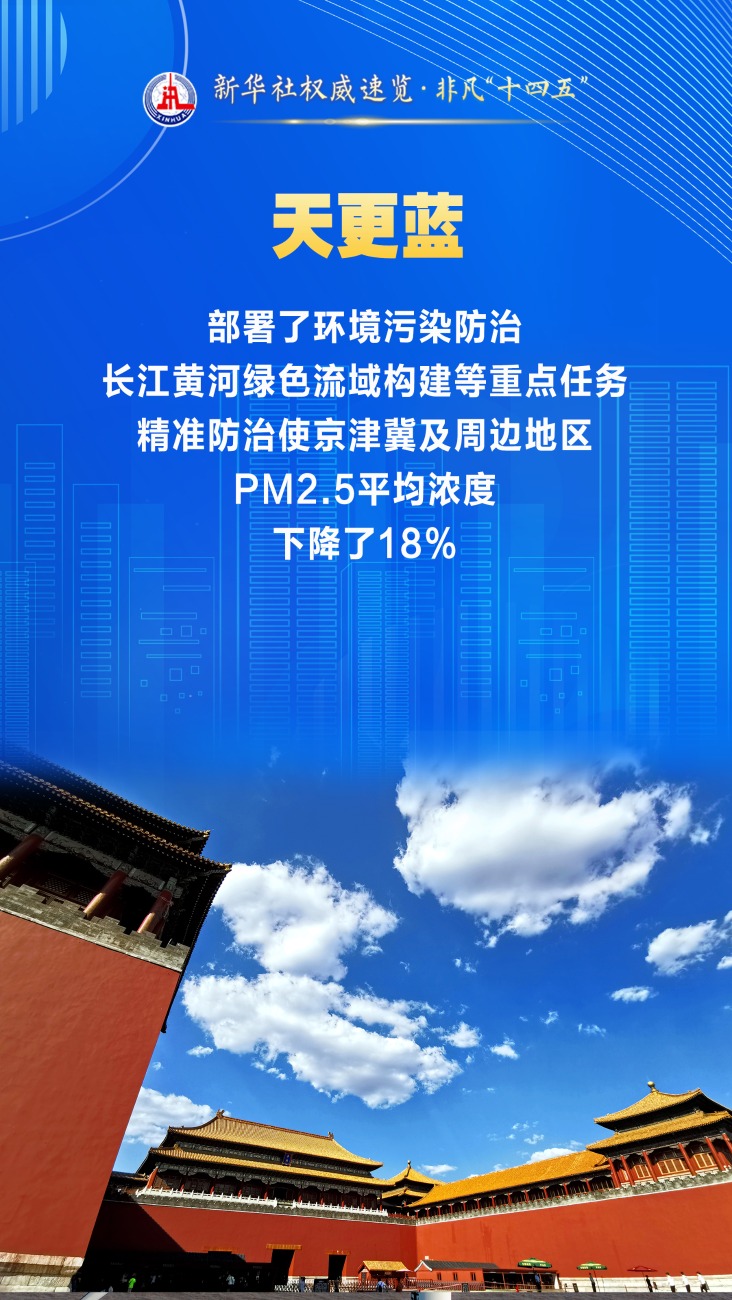
新华社权威速览·非凡“十四五”丨科技让生活更美好:天更蓝、食更优、行更快
Xin Hua She· 2025-09-18 13:47
Group 1 - The core focus of the technology sector is to meet the people's aspiration for a better life, with systematic layouts and breakthroughs achieved during the "14th Five-Year Plan" period [1] - Key tasks include biological breeding and agricultural machinery equipment, leading to the development of major crop varieties such as wheat, corn, and rice, as well as high-end agricultural power equipment [4] - The deployment of transportation equipment includes critical technologies for the Sichuan-Tibet Railway, with CR450 trains capable of operating at speeds up to 400 km/h, and the C919 aircraft moving towards regular commercial operations [6] Group 2 - The technology sector is also focusing on high-end and emergency medical equipment, as well as new drug development [7] - The development of the world's first 5.0T medical equipment has been achieved [8]

【华闻日度观点0918】产量存回升预期,橡胶走弱
Xin Lang Cai Jing· 2025-09-18 13:00
Steel Industry - The supply-demand contradiction in the steel market is strengthening, making it easier for prices to rise than to fall. The demand is gradually recovering as the peak season approaches, with high demand for plate steel and a low recovery in rebar demand. On the supply side, steel mills are facing narrowing profits, leading to a decrease in overall supply. Plate steel supply remains high, while rebar production has significantly decreased, alleviating supply pressure. Overall, with the arrival of the peak demand season and stricter implementation of industrial policies, the supply-demand contradiction and cost support for steel are expected to gradually strengthen. Short-term steel prices are anticipated to continue a trend of fluctuating increases [1][2]. Iron Ore - The expectations for supply and demand are improving, enhancing price support for iron ore. Steel mills are gradually resuming production, leading to a recovery in iron ore demand. On the supply side, overseas mine shipments have significantly increased, resulting in a moderate growth in overall supply. Iron ore inventories are stabilizing at low levels, indicating minimal inventory pressure. Overall, with the continuous warming of macro policy expectations and the recovery of downstream demand, the outlook for iron ore supply and demand is expected to continue improving, with prices likely to maintain a trend of fluctuating increases [1][2]. Coking Coal - The capacity utilization rate of 523 coking coal mines has increased by 1.9% to 84.7%, with daily raw coal output reaching 1.9 million tons, a month-on-month increase of 44,000 tons. The demand side shows strong rigid support, driven by increased washing plant operating rates and a rebound in iron water production. However, the market is still focused on "anti-involution," and the space for further increases in coal mine operating rates is limited due to strong safety supervision policies. Overall, the coking coal supply-demand structure may be optimized, maintaining a trend of fluctuating strength [2]. Shipping Industry - The European shipping index is currently showing a weak trend. On the spot market, major shipping companies are continuously lowering their quotes, with the average price for a large container around $1,650, indicating a slight discount to the market. The supply-demand imbalance is prominent, with demand entering a low season and a lack of new shipping volume. The average weekly capacity in September has increased by 16% year-on-year, but the scale of empty classes in October is not sufficient to alleviate the oversupply situation. The market sentiment remains pessimistic, and the index is expected to continue running weakly in the short term [3]. Methanol - Methanol futures prices have continued to decline. Domestic methanol capacity utilization and output have unexpectedly decreased this week. However, the operating rates of traditional demand products have mostly increased, with significant recoveries in DME and MTBE. The market is expected to maintain a trend of inventory reduction due to pre-holiday stocking and upstream companies actively reducing inventory to avoid accumulation risks during the holiday. Overall, the methanol market is expected to continue a downward trend in the short term, with some support from supply-side reductions and recovering downstream operating rates [4]. Urea - Urea prices have shown a downward trend this week, with capacity utilization and weekly output increasing. The upcoming recovery in production is expected to exceed maintenance, leading to a significant increase in daily output. However, domestic urea demand remains tepid, and the overall supply-demand imbalance persists, with companies facing challenges related to inventory and costs. Without policy changes, urea futures prices are likely to continue fluctuating downward in the short term [4]. Soda Ash & Glass - Soda ash and glass prices are experiencing a downward trend. The overall supply of soda ash is decreasing slightly, with a capacity utilization rate of 85.53%. The weekly output has dropped by 1.54 million tons. The glass market is stable, but demand is insufficient, leading to a gradual decline in production and sales. The overall supply pressure for soda ash remains high, and prices are expected to continue fluctuating weakly [5]. Asphalt - Asphalt prices are showing a weak trend, influenced by the end of the traditional fuel consumption season in the U.S. and ongoing OPEC+ production increases. However, the inventory of asphalt plants and social stocks continues to decline, which may positively impact prices. The upcoming National Day holiday is expected to drive demand, particularly in northern regions, while southern regions face supply pressures [6][7]. Caustic Soda - Caustic soda prices are experiencing a downward trend, with average capacity utilization at 81.9%. The inventory of liquid caustic soda has increased, and demand from downstream aluminum oxide enterprises remains stable. Overall, the caustic soda market is expected to continue fluctuating weakly due to increased supply and limited demand [8]. Polyolefins - Polyolefin prices are declining, with limited demand from downstream sectors. Despite some replenishment activities, the overall purchasing momentum remains insufficient. The supply side is increasing due to more operational facilities, leading to a rise in inventory levels. The market sentiment is cautious, and prices are expected to continue fluctuating downward [9]. Polyester - The polyester market is stable, with supply and demand remaining balanced. The operating rates of PTA and downstream polyester production have increased slightly, but overall demand remains below expectations. The inventory levels of PTA are at historical lows, indicating a tight supply situation. Prices are expected to fluctuate based on cost movements [10][11]. Nonferrous Metals - The copper market is influenced by the recent Fed rate cut, with domestic supply tightening due to maintenance at smelting plants. The market is closely monitoring consumption patterns leading up to the National Day holiday, with expectations of increased purchasing from large enterprises [14]. Agricultural Products - The oilseed market is under pressure due to high domestic soybean inventories and slow demand recovery. The cotton market is experiencing price pressure from low demand and high import levels, while the sugar market is facing downward pressure from increased production in India and Brazil [18][19]. Rubber - The rubber market is experiencing a weak trend, with increased imports and stable production levels. The demand from processing plants remains strong, but overall market sentiment is affected by macroeconomic factors [22][23].

2025年中国(广西)—东盟农业与减贫合作会议在南宁举行
Zhong Guo Xin Wen Wang· 2025-09-18 12:01
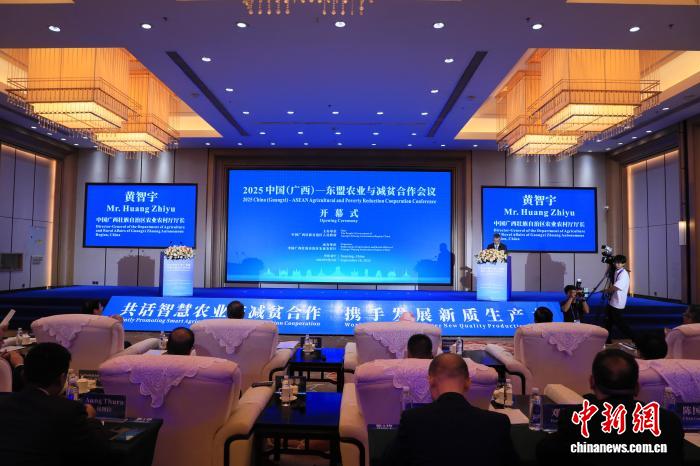
Core Viewpoint - The China-ASEAN Agricultural and Poverty Alleviation Cooperation Conference aims to enhance regional agricultural cooperation and poverty alleviation through dialogue and collaboration among various stakeholders [1][3]. Group 1: Conference Objectives and Themes - The conference focuses on "Smart Agriculture and Poverty Alleviation Cooperation, Hand in Hand to Develop New Quality Productivity" [3]. - Representatives from China, Brunei, Cambodia, Myanmar, and other countries, along with experts and business representatives, engage in discussions on smart agricultural technology innovation, poverty alleviation models, resource optimization, and the development of new quality productivity [3]. Group 2: Achievements and Future Directions - Agricultural cooperation between Guangxi and ASEAN countries has a long history, with recent years seeing an expansion in cooperation areas and methods, resulting in significant achievements [3]. - The total import and export volume of agricultural products between Guangxi and ASEAN countries is projected to reach 30.29 billion yuan in 2024, a 56.5% increase compared to 2018 [3]. Group 3: Strategic Initiatives - Guangxi is leveraging national artificial intelligence initiatives to build a development path that integrates research and development from major cities with applications in ASEAN, aiming to enhance agricultural trade and investment [3]. - The conference advocates for a new framework for smart agricultural cooperation and the establishment of a digital technology collaborative innovation system [5]. Group 4: Key Collaborations and Projects - Four significant cooperation projects were established, including cross-border animal disease prevention and smart agriculture technology collaboration with Laos [5]. - Guangxi Agricultural Vocational and Technical University signed a cooperation agreement with relevant enterprises in Laos to promote various aspects of agricultural technology and education [5]. Group 5: Exhibition and Promotion - The conference featured the first "AI + Agriculture" exhibition area, showcasing advanced technologies such as smart agricultural machinery and agricultural big data platforms [5]. - Over 100 agricultural enterprises from Guangxi participated in the exhibition, promoting local specialty products like Liubao tea and dragon fruit, thereby expanding cooperation in agricultural technology and trade with ASEAN [5].
C919累计获得国内外订单超过1000架
Yang Shi Wang· 2025-09-18 08:15
Group 1 - The State Council's press conference highlighted achievements in technological innovation during the "14th Five-Year Plan" period, focusing on goals such as environmental improvement, food security, transportation efficiency, and public health [1][2] - In environmental improvement, significant breakthroughs were made in pollution prevention, with PM2.5 average concentration in the Beijing-Tianjin-Hebei region decreasing by 18% due to precise control measures [1] - For food security, advancements in biotechnology and agricultural machinery were emphasized, including the development of disease-resistant and drought-resistant crop varieties, which support national food safety and agricultural revitalization [1] Group 2 - In transportation efficiency, key developments included the CR450 train achieving operational speeds of 400 km/h and the C919 aircraft reaching significant milestones in commercial operation, with over 1,000 domestic and international orders [2] - The construction of transportation infrastructure, particularly the Sichuan-Tibet Railway, showcased advanced construction technologies and standards in extreme environments [2] - In public health, innovations included the world's first 5.0T full-body MRI scanner and the first approved dual-antibody drug for solid tumors, which has been included in the national medical insurance directory, alleviating economic burdens for patients [2]
泰国商会忧心泰铢升值呼吁政府加快出台应对措施
Shang Wu Bu Wang Zhan· 2025-09-18 07:49
Core Viewpoint - The rapid appreciation of the Thai Baht raises concerns among the Thai Chamber of Commerce, as the exchange rate has reached 31.70 Baht/USD, the highest level in nearly four years, which contradicts the actual economic situation in Thailand [1] Impact on Key Sectors - **Export Sector**: The appreciation of the Baht leads to increased prices for Thai products, resulting in decreased competitiveness and reduced foreign exchange income [2] - **Tourism Sector**: The rising costs of travel in Thailand make it less attractive to foreign tourists, negatively impacting the tourism industry [2] - **Agriculture Sector**: Farmers, particularly those reliant on exports like rice and cash crops, face income losses due to the strong Baht [2] Causes of Baht Appreciation - The appreciation is attributed to a weaker US dollar, driven by market expectations of potential interest rate cuts by the Federal Reserve, and rising international gold prices leading to increased gold trading and capital inflows into the Baht. Additionally, some capital inflows are from investment and cryptocurrency markets [3] Recommendations - The Thai Chamber of Commerce and the Private Sector Committee recommend that the Bank of Thailand systematically manage the exchange rate, particularly by separately listing gold inflows and outflows for accurate assessment. They urge the government and the central bank to take urgent measures to maintain the Baht at a level that reflects the true economic conditions, in order to avoid undermining the competitiveness of Thai businesses [3]
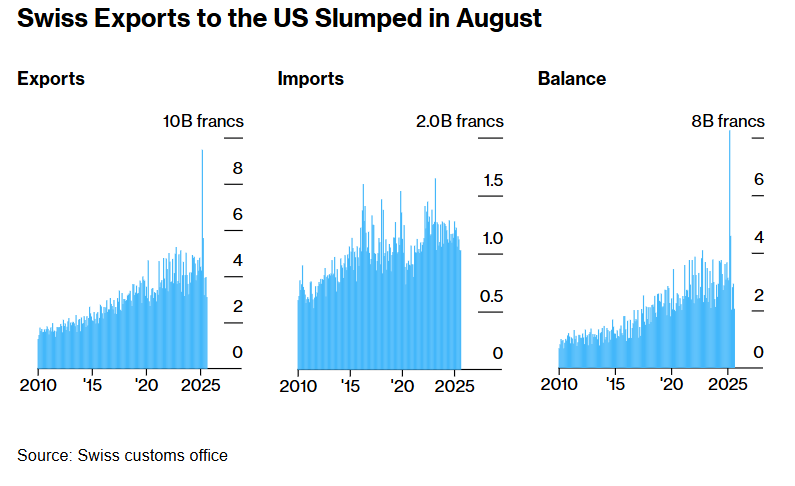
特朗普39%关税生效首月 瑞士对美出口骤降22%
智通财经网· 2025-09-18 07:18
Core Points - The imposition of a 39% tariff by the Trump administration has severely impacted Switzerland's exports to the U.S., with a notable 22% decline in foreign sales in August compared to July, marking a rare occurrence for Swiss exports [1][4] - The trade deficit with the U.S. has significantly narrowed from 2.93 billion Swiss francs to 2.06 billion Swiss francs (approximately 2.6 billion USD), reaching the second-lowest level since the peak of the COVID-19 pandemic [1][5] - The Swiss government has been actively negotiating with the U.S. to lower the tariff rates, but efforts have so far been unsuccessful, despite ongoing dialogues [5][6] Trade Dynamics - The 39% tariff on Swiss goods is substantially higher than the average tariff rate of 15% imposed on developed countries, creating a unique challenge for Switzerland [5] - The Swiss agricultural sector remains sensitive to trade negotiations, with strong domestic opposition to increasing imports of U.S. beef and poultry, reflecting a commitment to food security and self-sufficiency [6] - Overall, Switzerland's exports to other European countries and North America have helped mitigate the impact of the U.S. tariffs, resulting in only a 1% decline in total export volume [6] Sector Performance - Exports of luxury watches from Switzerland decreased by 8.6% in August compared to July, while core pharmaceutical exports, which are exempt from tariffs, unexpectedly fell by 1.3% [7] - Despite the resilience shown by the Swiss economy, the government anticipates a significant slowdown in economic growth due to aggressive U.S. taxation policies [7] - Switzerland is actively seeking to diversify its export markets, recently signing a new free trade agreement with the Mercosur bloc [7]
全品种价差日报-20250918
Guang Fa Qi Huo· 2025-09-18 05:08
| 硅铁(SF51) | 54.60% | 折算价:72硅铁合格块:内蒙-天津仓单 | 5728 | -38 | -0.65% | 5766 | 10 | 0.17% | 折算价:6517硅锰:内蒙-湖北仓单 | 硅锰(SM601) | 6000 | 5990 | 26.60% | | | | | | --- | --- | --- | --- | --- | --- | --- | --- | --- | --- | --- | --- | --- | --- | --- | --- | --- | --- | | 92 | 3260 | 2.90% | 47.10% | HRB40020mm:上海 | 螺纹钢 (RB2601) | 3168 | 30 | 30.20% | Q235B: 4.75mm: 上海 | 3420 | 3390 | 0.88% | 热卷(HC2601) | | | | | | 5.02% | 845 | 40 | 34.60% | 折算价:62.5%巴混粉(BRBF):淡水河谷:日照港 | 铁矿石 (12601) | 805 | -5 74% | 1735 | -100 | 163 ...
X @外汇交易员
外汇交易员· 2025-09-18 04:19
美国农业部长罗林斯表示,特朗普政府正在制定计划,准备动用关税收入来资助一个项目,以支持美国农民应对因出口销售下滑和投入成本上涨而面临的困境,迎接收获季。“通过现正流入美国的关税收入来为这项援助计划提供资金是‘绝对有可能的’”。罗林斯将美国农民面临的困境归咎于拜登政府的贸易政策。 https://t.co/2Ahd7fqwmO外汇交易员 (@myfxtrader):美国大豆协会周二致特朗普的信函写道:“大豆种植户正面临巨大的财务压力。价格持续下跌,与此同时,我们的农民却在投入和设备上花费巨额资金。美国大豆种植户无法承受与我们最大客户之间长期的贸易争端。” ...