
餐饮

Search documents
比格比萨赴港IPO,创始人赵志强回应“环卫工人49元自助福利”
Sou Hu Cai Jing· 2026-01-19 05:50
Core Viewpoint - Big Pizza International Holdings Limited is seeking to go public in Hong Kong, with a focus on expanding its restaurant chain significantly by 2028, while facing some public scrutiny over its pricing strategies for promotional events [2][6]. Group 1: Company Overview - Big Pizza was founded in 2002 in Beijing and has grown to over 380 restaurants, making it the leading pizza chain in China based on GMV for the first three quarters of 2025 [2]. - The company plans to open approximately 610 to 790 new restaurants by 2028, primarily focusing on self-operated locations [2]. Group 2: Financial Performance - The projected revenue for Big Pizza is expected to reach 944 million yuan in 2023 and 1.147 billion yuan in 2024, reflecting a year-on-year growth of 21.5% [2]. - For the first three quarters of 2025, the company's revenue surged to 1.389 billion yuan, surpassing the total revenue for 2024, with a year-on-year increase of 66.6% [3]. Group 3: Ownership Structure - The founder, Zhao Zhiqiang, holds 52.2% of the company through Schinda, while his spouse and CFO, Ma Jifang, owns 21.8% through Lavender International. The family collectively controls about 86% of the voting rights [2]. Group 4: Public Controversy - Prior to the IPO filing, Big Pizza faced criticism for a promotional offer allowing sanitation workers to dine at a discounted price of 49.99 yuan, which some perceived as still too high [6]. - Zhao Zhiqiang responded to the criticism by stating that the pricing was based on minimum costs and emphasized customer choice regarding the offer [6].

马斯克:特斯拉将重启Dojo3的开发工作|首席资讯日报
首席商业评论· 2026-01-19 05:09
Group 1 - Musk announced that Tesla will restart the development of Dojo3, leveraging the maturity of AI5 chip design to enhance its AI capabilities [2] - The Shanghai "15th Five-Year Plan" suggests improving fertility support policies and incentives to lower family costs related to childbirth, education, and childcare [3] - The plan also emphasizes the need for a comprehensive population service system to address aging and declining birth rates, promoting a child-friendly and youth-oriented urban environment [3] Group 2 - A new scalable neutral atom array technology has been validated, laying the groundwork for constructing quantum computers with over 100,000 qubits [4] - The Shanghai "15th Five-Year Plan" includes increasing the supply of affordable housing and enhancing the management of urban builders and managers [5][6] - The plan aims to create a safe, comfortable, green, and smart housing environment while promoting high-quality real estate development [6] Group 3 - The 2026 Spring Festival travel season will begin on February 2 and end on March 13, with ticket sales starting on January 19 [7] - Regulatory bodies have issued warnings or fines to over 10 private equity firms for various violations, indicating a push for compliance and internal control improvements in the industry [8] - Sales of gold jewelry in Hainan's duty-free shops have surged, with prices significantly lower than market rates, signaling a recovery in consumer spending [9] Group 4 - Tea Yan Yue Se, a beverage company, is reportedly expanding its workforce in major cities, leading to speculation about market expansion plans [10] - A study by Geotab indicates that electric vehicle batteries can last up to 13 years with an average annual degradation rate of only 2.3% [11] - Shanxi province's coal production is projected to reach 1.3 billion tons in 2025, with a total of 6.5 billion tons during the "14th Five-Year Plan" period, marking a significant increase [12] Group 5 - Longi Green Energy expects a net loss of 6 to 6.5 billion yuan for 2025 due to ongoing challenges in the photovoltaic industry, including supply-demand mismatches and rising costs [13] - UBTECH Robotics has partnered with Airbus to integrate humanoid robots into the aerospace manufacturing sector, enhancing automation capabilities [14]

社会服务板块2025年四季度前瞻:促消费政策频发、休闲需求稳中向好,关注出行链布局机会
CMS· 2026-01-19 05:07
Investment Rating - The report maintains a positive investment rating for the industry, highlighting a favorable outlook for the tourism and leisure sectors due to government policies aimed at boosting domestic consumption and service spending [1][35]. Core Insights - The report emphasizes the recovery of domestic tourism, with expected growth rates of 12% in revenue and 18% in visitor numbers for Q1-Q3 2025, driven by sustained leisure travel demand and the rise of experiential consumption [1][35]. - The overall tourism market is projected to grow by over 10% for the year, supported by government initiatives such as promoting spring and autumn travel and issuing cultural tourism consumption vouchers [1][35]. - Key companies recommended for investment include China Duty Free Group, Jin Jiang Hotels, Shouqi Group, Tongcheng Travel, and Ctrip Group, alongside high-growth tea beverage stocks like Gu Ming and low-valuation restaurant growth stocks like Green Tea Group [1][35]. Summary by Sections 1. Restaurant Sector - Offline consumption is gradually recovering, with Q4 restaurant revenue showing steady growth, achieving 519.9 billion and 605.7 billion yuan in October and November 2025, respectively, with year-on-year growth of 4.99% and 4.40% [7][10]. - Leading restaurant companies are recovering faster than the industry average, with significant revenue increases noted for major players [10][14]. 2. Tea Beverage Sector - The tea beverage sector has seen a surge in same-store sales growth due to delivery subsidies, with leading brands like Gu Ming and Hu Shang A Yi maintaining high growth rates of 15-20% [7][10][14]. - The number of new store openings has doubled compared to 2024, indicating aggressive expansion strategies among top brands [16]. 3. OTA (Online Travel Agency) - The recovery of outbound travel demand is evident, with strong performance in Southeast Asia routes and a notable increase in visitor numbers to Japan and South Korea [20][24]. - The report highlights the long-term profit potential of leading OTA companies like Ctrip and Tongcheng Travel, driven by the ongoing recovery in leisure travel demand and improved commission rates [24][25]. 4. Hotel Sector - The hotel industry is expected to see a stable RevPAR (Revenue per Available Room) in Q4, with a year-on-year growth of 6-8% in room supply [29][30]. - Major hotel chains like Shouqi and Jin Jiang are projected to maintain or improve their performance, benefiting from cost reductions and increased guest traffic during holiday periods [29][30][31]. 5. Investment Recommendations - The report suggests focusing on the travel sector, particularly companies involved in OTA, hotels, and scenic spots, as they are likely to benefit from favorable government policies [1][35]. - Additionally, it recommends investing in high-growth tea beverage stocks and undervalued restaurant growth stocks, indicating a diversified approach to capitalizing on the recovery in consumer spending [1][35].



2025年餐饮品牌“西贝”营销动作、社媒热度与消费者反馈分析报告
数说Social Research· 2026-01-19 04:20
Investment Rating - The report does not explicitly provide an investment rating for the company. Core Insights - In 2025, the company "Xi Bei" faced a significant public relations crisis due to the "pre-made dish wave," which severely tested its brand reputation and consumer trust. The crisis peaked in September, with online mentions exceeding 400,000 and interactions nearing 70 million, significantly increasing the proportion of negative sentiment [3][4]. - To address the crisis, Xi Bei implemented a series of strategic adjustments in the second half of 2025, including a shift in focus from personal branding to product and service quality, a commitment to "in-store freshly made" dishes for over 30 menu items, and the introduction of a "sunshine kitchen" initiative to enhance transparency [3][4][5]. - The company also adjusted its pricing strategy, reducing the average customer spending from 92 yuan to a range of 75-85 yuan by lowering prices on over 40 dishes and launching large-scale promotional activities such as "Xi Bei invites you to dinner" [3][4][12]. Summary by Sections 1. Marketing Actions in 2025 - Xi Bei undertook a series of marketing adjustments focused on crisis response and brand rebuilding, particularly after the September crisis [5]. - The company quickly implemented transparency and quality enhancement measures in response to consumer concerns about food safety and information rights [7]. 2. Social Media Heat Analysis - In 2025, Xi Bei's social media performance was closely linked to its marketing and public relations events, showing a pattern of "silent periods followed by explosive reactions" [22]. - The brand's online mentions peaked in September, with a surge from approximately 53,000 mentions in August to over 405,000 in September, reflecting a nearly sevenfold increase [26]. 3. Consumer Feedback and Sentiment Analysis - Throughout 2025, consumer feedback evolved from a trust crisis to cautious observation, with neutral sentiment dominating but negative interactions significantly outpacing positive ones [35]. - During the pre-made dish wave, negative sentiment surged, with negative mentions rising from 3.3% to 29.6% [40]. 4. Marketing Strategy Effectiveness and Social Media Performance Correlation - The marketing actions taken by Xi Bei had a clear impact on social media heat, with crisis management actions and subsequent promotional activities leading to significant peaks in online mentions [44]. - The adjustments in marketing strategy influenced consumer sentiment, with proactive measures in the fourth quarter helping to alleviate some negative perceptions [48]. 5. Conclusion - In 2025, Xi Bei navigated a major public relations crisis and implemented a series of marketing and strategic adjustments that led to a temporary recovery in social media heat and customer traffic. However, the long-term rebuilding of brand trust remains a challenge [53][54].
国家统计局:2025年全年社零增长3.7%,餐饮收入增长3.2%|快讯
Hua Xia Shi Bao· 2026-01-19 03:16
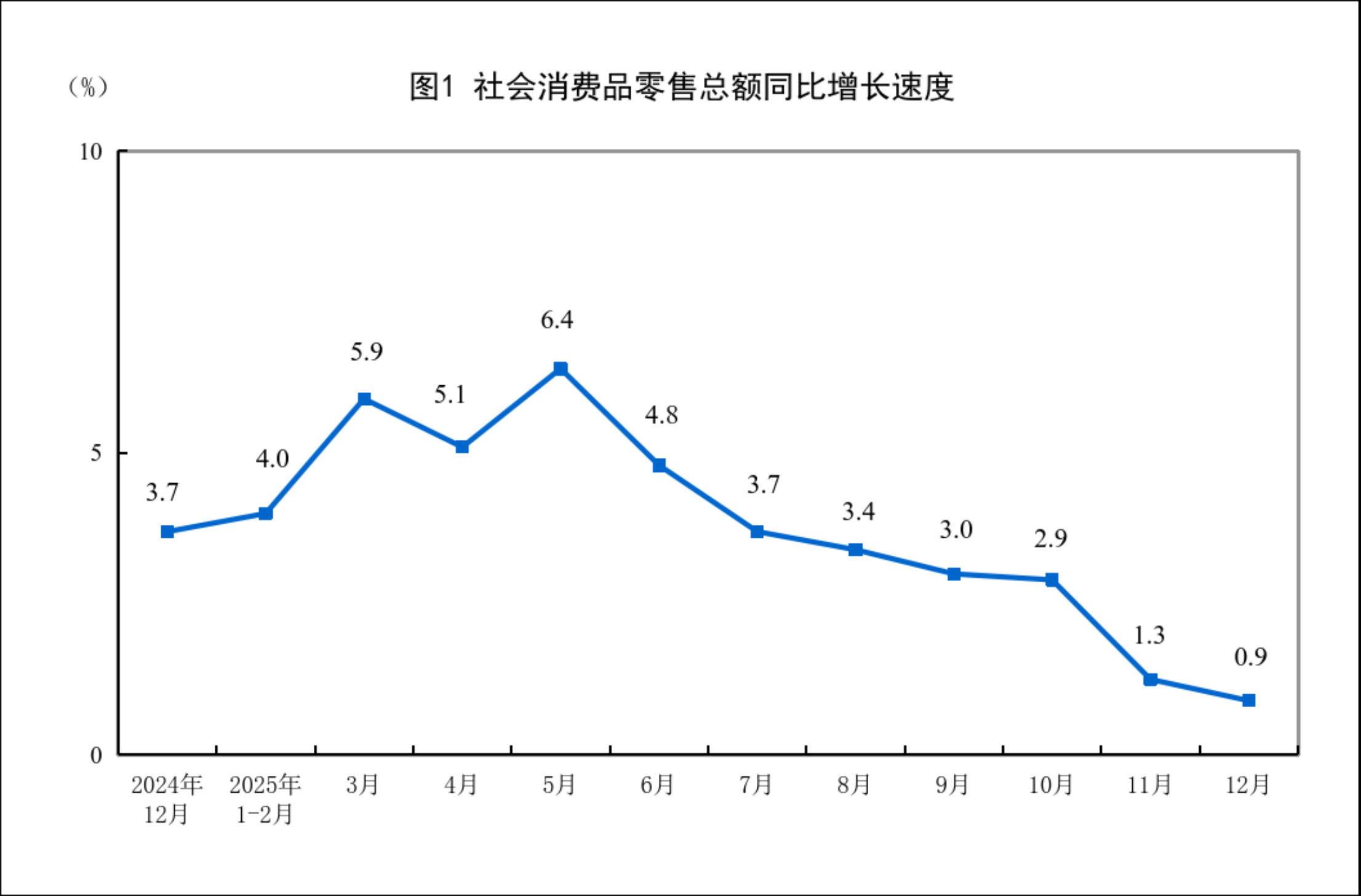
Core Insights - The National Bureau of Statistics released the economic data for the year 2025, indicating a total retail sales of consumer goods amounting to 50,120.2 billion yuan, representing a growth of 3.7% compared to the previous year [2] Group 1: Retail Sales Performance - Urban retail sales reached 43,297.2 billion yuan, growing by 3.6%, while rural retail sales amounted to 6,823.0 billion yuan, with a growth of 4.1% [2] - By consumption type, the total retail sales of goods were 44,322.0 billion yuan, increasing by 3.8%, and catering revenue was 5,798.2 billion yuan, growing by 3.2% [2] - Key categories showing strong sales growth included communication equipment (20.9%), cultural and office supplies (17.3%), sports and entertainment products (15.7%), home appliances and audio-visual equipment (11.0%), and food products (9.3%) [2] Group 2: E-commerce and Service Retail - The total online retail sales reached 15,972.2 billion yuan, marking an 8.6% increase year-on-year, with physical goods online retail sales at 13,092.3 billion yuan, growing by 5.2%, accounting for 26.1% of total retail sales [2] - Service retail sales grew by 5.5% year-on-year, with significant growth in leisure services, communication services, travel consulting and leasing services, and transportation services [2] Group 3: December Performance - In December, the total retail sales of consumer goods increased by 0.9% year-on-year but decreased by 0.12% month-on-month [2] - For December, the retail sales of goods were 39,398.0 billion yuan, with a year-on-year growth of 0.7%, while catering revenue was 5,738.0 billion yuan, growing by 2.2% [2]
必胜客狂开副牌,萨莉亚却赚不动了
3 6 Ke· 2026-01-19 03:11
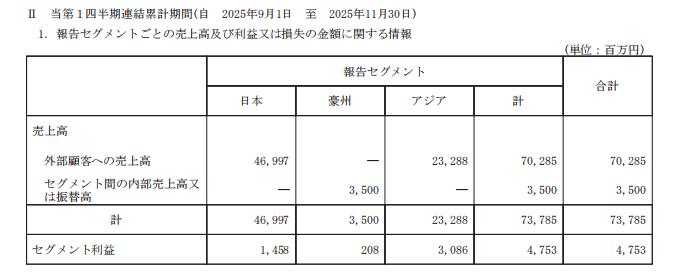
Core Insights - The company is facing a "revenue growth without profit growth" dilemma in the Chinese market, contrasting with strong performance in its domestic Japanese market [1][4]. Financial Performance - For the first quarter of fiscal year 2026 (September to November 2025), the company reported total sales of 70.2 billion yen, a 15% year-on-year increase, and operating profit rose by 19% to 4.6 billion yen [2]. - Adjusted net profit increased by 16% to 3 billion yen, marking the highest level for the same period in two years [2]. Segment Analysis - The Japanese market significantly contributed to overall performance, with sales exceeding 46.9 billion yen, a year-on-year increase of 18.9%, and operating profit reaching 1.4 billion yen, up 184.7% [3]. - In contrast, the Asian segment, primarily driven by China, reported sales of 23.3 billion yen, a 7.1% increase, but operating profit decreased by 6.1% to 3.1 billion yen [4]. Market Strategy and Challenges - The company has been expanding its store presence in China, with 709.61 billion yen in sales last fiscal year, accounting for 84.7% of the Asian market's performance [4]. - Despite opening new stores, the Asian segment's profitability has been declining, attributed to local consumption slowdowns and strategic challenges in major cities [4][6]. - The company has over 490 stores in major cities like Beijing, Shanghai, and Guangzhou, but profits in these areas have dropped significantly, with declines of 23.6%, 27.3%, and 20.3% respectively [6]. Industry Trends - The overall Western dining market in China is experiencing a slowdown, with a projected market size of 82 billion yuan in 2025, reflecting a growth rate of only 3.5%, which is half of what it was two years ago [7]. - Competitors like Pizza Hut are gaining momentum in the Chinese market through innovative store formats and lower pricing strategies, indicating a shift in consumer preferences [9].
国家统计局:2025年12月份社会消费品零售总额45136亿元,同比增长0.9%
Jin Rong Jie· 2026-01-19 03:04
Core Viewpoint - The retail sales of consumer goods in December 2025 reached 45,136 billion yuan, showing a year-on-year growth of 0.9%, with a total annual retail sales of 501,202 billion yuan, an increase of 3.7% compared to the previous year [1][6]. Group 1: Overall Retail Performance - In December 2025, retail sales excluding automobiles amounted to 39,654 billion yuan, growing by 1.7% year-on-year [1][6]. - For the entire year of 2025, retail sales excluding automobiles totaled 451,413 billion yuan, reflecting a growth of 4.4% [1][6]. Group 2: Urban vs. Rural Consumption - In December 2025, urban retail sales reached 38,429 billion yuan, with a year-on-year increase of 0.7%, while rural retail sales were 6,707 billion yuan, growing by 1.7% [2][7]. - For the year 2025, urban retail sales totaled 432,972 billion yuan, up by 3.6%, and rural retail sales were 68,230 billion yuan, increasing by 4.1% [2][7]. Group 3: Consumption Types - In December 2025, the total retail sales of goods were 39,398 billion yuan, with a year-on-year growth of 0.7%, while catering revenue was 5,738 billion yuan, increasing by 2.2% [3][7]. - For the year 2025, total retail sales of goods reached 443,220 billion yuan, growing by 3.8%, and catering revenue was 57,982 billion yuan, reflecting a growth of 3.2% [3][7]. Group 4: Retail Formats - In 2025, retail sales from convenience stores, supermarkets, department stores, and specialty stores grew by 5.5%, 4.3%, 0.1%, and 2.6% respectively, while brand specialty store sales declined by 0.6% [5]. - The total online retail sales in 2025 reached 159,722 billion yuan, marking an 8.6% increase from the previous year, with physical goods online retail sales at 130,923 billion yuan, growing by 5.2% and accounting for 26.1% of total retail sales [5].
广西烟火 | 北海老街:中西合璧共潮生
Guang Xi Ri Bao· 2026-01-19 02:31
Core Viewpoint - The article highlights the transformation and cultural significance of Beihai Old Street, showcasing its historical roots and modern revitalization efforts, blending tradition with contemporary experiences [1][4]. Group 1: Historical Significance - Beihai Old Street, known as "Old Town," dates back to the Daoguang era of the Qing Dynasty, with key streets like Zhuhai Road, Shajizhai, and Zhongshan Road forming the city's initial layout [1][3]. - The core area, Zhuhai Road, originally named Shengping Street, was a bustling commercial hub during the late Qing and Republican eras, featuring consulates and various traditional establishments [1]. Group 2: Cultural Revitalization - Since 2005, Beihai has initiated a restoration project for the old town, focusing on preserving historical artifacts and improving urban infrastructure, transforming the area into a cultural and tourism hub [4]. - The old street has received multiple accolades, including being recognized as the "longest T-shaped stage" by the Shanghai Guinness World Records and designated as a "national-level night cultural and tourism consumption gathering area" [4]. Group 3: Modern Attractions - The coffee shop Guolian Sheng, which took over three years to restore, features over 2,000 antique items, attracting young visitors who enjoy the blend of history and modern café culture [2]. - Local businesses, such as the sugar water shop run by local resident Pang Weishan, have adapted to modern trends while maintaining traditional flavors, indicating a successful integration of old and new [4].

网红烟火城市的品牌顶层设计和产业底层运营
3 6 Ke· 2026-01-19 02:30
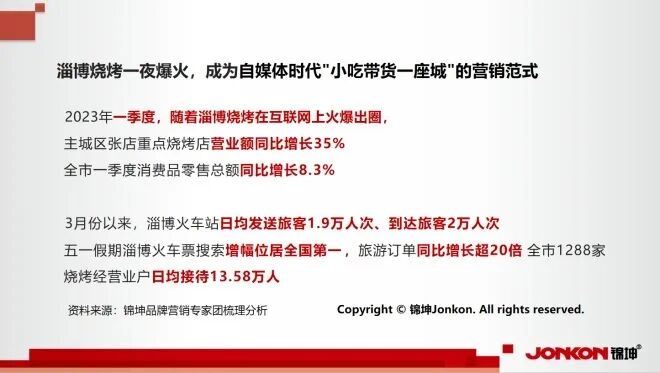
Core Insights - The "smoky economy" has evolved from a basic aspect of people's livelihoods to a core driver of urban industrial iteration and consumer potential activation [1] - Various cities have emerged as "internet celebrity" cities, leveraging unique local IPs to break through traditional consumption patterns, driven by the demands of Generation Z and Alpha [1][3] - The success of cities like Zibo, Harbin, and Changsha highlights the importance of government support and the need for sustainable development in the "smoky economy" [1][30] Group 1: Zibo's Barbecue Economy - Zibo's barbecue gained popularity in early 2023, transforming the city into a "smoky capital" with over 5 million tourists during the May Day holiday, doubling tourism revenue [4][7] - The local government implemented measures such as special barbecue trains and buses, price regulation, and complaint mechanisms to enhance the consumer experience [6] - Challenges include a fragmented supply chain, product homogeneity, and reliance on a single IP, which may lead to a decline in popularity after initial success [7][8] Group 2: Harbin's Winter Economy - Harbin's unique combination of "ice and fire" has made it a winter tourism hotspot, attracting over 30 million visitors and generating over 60 billion yuan in tourism revenue [9][10] - The government has focused on upgrading ice-related IPs and improving infrastructure to enhance visitor experiences [9] - Seasonal dependency and project homogeneity pose significant challenges for sustainable growth [10] Group 3: Tianshui's Culinary Integration - Tianshui's distinct spicy hot pot has gained traction, with a 40% increase in tourist numbers and a 35% rise in tourism revenue [11][12] - The local government is promoting standardization and creating culinary tourism routes to enhance the integration of food and culture [12][14] - However, the lack of chain brands and deep integration with cultural experiences limits long-term growth potential [14] Group 4: Rongchang's Goose Economy - Rongchang's unique braised goose has become a key IP, with a 40% increase in industry output value and a 35% rise in tourist numbers [17][19] - The government is standardizing production and promoting cultural events to enhance the goose's market presence [17][21] - Challenges include a short supply chain and shallow integration with tourism experiences [19] Group 5: Chongqing's Culinary Landscape - Chongqing's hot pot and noodles are deeply integrated into the city's culture, with over 6 billion tourists and 400 billion yuan in tourism revenue [23][24] - The government is promoting standardization and creating unique culinary spaces to enhance the dining experience [23][26] - However, issues like homogeneity and service quality remain significant challenges [24] Group 6: Changsha's Night Economy - Changsha's night economy has become a core aspect of its identity, generating over 300 billion yuan and attracting 260 million visitors [27][28] - The government has implemented policies to support night-time operations and enhance the overall experience [27] - Challenges include brand homogeneity and uneven development across different areas [28] Group 7: Key Takeaways for Sustainable Development - The rise of "internet celebrity" cities underscores the importance of government-business collaboration and the need for sustainable practices [30] - The "smoky economy" relies on a balance of cultural identity, consumer engagement, and industry support to avoid short-lived popularity [30][63] - Future competitiveness will hinge on brand strength and industrial capacity, necessitating a focus on differentiation and sustainability [63]
消费行业2026年春节机会
2026-01-19 02:29
Summary of Conference Call Records Industry Overview - **Consumer Industry**: The consumer industry is expected to see opportunities during the 2026 Spring Festival, particularly in the export chain and food sectors. Key companies like Jiangxin Home, Zhongxin Co., and Gongchuang Turf are projected to maintain steady growth in 2026 [1][2]. - **Agriculture Sector**: The 2026 Central Document No. 1 will focus on food security, poverty alleviation, and agricultural technology. Grain production has exceeded 1.4 trillion jin for two consecutive years, but supply and demand remain tight, necessitating improvements in yield [1][4]. - **Alcohol Industry**: The white liquor market is facing a pessimistic outlook for the Spring Festival, with expected sales declines of nearly double digits due to the impact of alcohol bans and high inventory levels from the previous year [1][7]. Key Companies and Their Performance - **Jiangxin Home**: Transitioning from OEM to OBM, with over 1,000 brand stores established. Stable performance is expected despite short-term stock price fluctuations due to currency changes [3]. - **Zhongxin Co.**: Anticipated profits exceeding 600 million yuan in 2026, with a current PE ratio of about 13 times. The company is performing well in Thailand's pulp molding production [3]. - **Gongchuang Turf**: Expected to maintain a 20% growth rate in 2026, with double-digit revenue growth continuing into the fourth quarter [3]. - **Anjixin Foods**: Projected revenue growth of nearly 20% in December, indicating a rebound in the food supply sector [1][9]. Investment Opportunities - **Export Chain**: Companies in the light industry are expected to perform well, with a positive outlook for Jiangxin Home, Zhongxin Co., and Gongchuang Turf [2]. - **Research Services**: Companies like Haoyuan Pharmaceutical, Baiaosaitu, and Nami Technology are well-positioned to benefit from the overseas expansion of innovative drugs [2][13]. - **AI in Home Appliances**: The potential for AI applications in home appliances is significant, with companies like Ugreen launching AI NAS to integrate localized computing power [2][14]. Agricultural Focus Areas - **High-Standard Farmland Construction**: Aiming to build 1.35 billion mu of high-standard farmland by 2030, with an investment of over 150 billion yuan annually [5]. - **Biotechnology**: Continued emphasis on the commercialization of genetically modified crops, with a focus on increasing planting areas and supporting regulations [5][6]. Consumer Behavior Insights - **White Liquor Sales**: The sales rhythm for white liquor during the Spring Festival is unclear, with expectations of a significant decline in sales due to changing consumer purchasing habits [7]. - **Non-Alcoholic Gifts**: Demand is shifting towards non-alcoholic gifts, including snacks and beverages, as consumers adapt to new purchasing trends [8]. Travel and Dining Sector - **Travel Industry**: Companies like Ctrip are expected to benefit from increased travel flow during the Spring Festival, with significant growth in hotel bookings and dining reservations [10][12]. - **Dining Sector**: Haidilao is highlighted as a key investment opportunity due to its improving turnover rates and potential for rapid expansion under new leadership [10][11]. Challenges and Innovations - **Smart Home Industry**: The smart home sector faces challenges such as high costs and the need for standardization across devices, but it remains a promising area for future growth [17][19]. - **Robotic Innovations**: Companies like Roborock are innovating in the robotic cleaning space, enhancing user interaction through AI capabilities [20]. This summary encapsulates the key insights and opportunities discussed in the conference call, providing a comprehensive overview of the consumer, agriculture, and technology sectors.