零售业

Search documents
2026年春节零售市场数据点评
Lian He Zi Xin· 2026-03-04 11:16
Retail Performance - During the 2026 Spring Festival holiday, retail consumption demand showed signs of recovery, with a 9-day holiday arrangement supporting pre-holiday purchases and holiday consumption[2] - Key retail and catering enterprises reported an average daily sales increase of 10.6% in the first two days of the holiday compared to the previous year[4] - The average daily sales of key retail and catering enterprises during the entire holiday increased by 5.7% compared to the 2025 Spring Festival, accelerating by 1.6 percentage points[4] Consumer Behavior - Offline retail saw significant growth, with foot traffic and sales in monitored shopping districts increasing by 6.7% and 7.5% respectively compared to last year[5] - Jewelry, food, and clothing categories experienced high growth rates, with jewelry sales up by 33.4%, food by 23.0%, and clothing by 17.3%[6] - Instant retail orders surged, with platforms like JD's 7Fresh seeing a 102% increase in online orders year-on-year[5] Policy Support - The "Happy New Year" promotional activities and various consumption subsidy policies provided crucial support for retail demand recovery[7] - Approximately 20.5 billion yuan was allocated for local consumption promotion funds during the holiday, directly supporting consumer spending[8] - The "old-for-new" policy benefited 31.12 million people, generating sales of 207.03 billion yuan, with a 21.7% increase in sales of specific home appliances and digital products compared to the previous year[8] Future Outlook - The sustained improvement in the retail sector will depend on macroeconomic factors such as household income and employment expectations, as well as the continuation of fiscal consumption policies[9] - The retail industry is expected to continue its moderate recovery, supported by improved service capabilities and the penetration of new business models[9]
2月制造业PMI点评:春节影响之外的三点关注
Huachuang Securities· 2026-03-04 10:48
Report Industry Investment Rating No information provided in the content. Core Viewpoints - The February PMI was mainly influenced by the Spring Festival holiday, with the slowdown in production and new orders in line with seasonality. In years when the Spring Festival falls in mid - February, the PMI in March usually recovers sharply and is likely to return above the boom - bust line due to concentrated resumption of work and end - of - quarter sprint demand [4][12]. - For the bond market, three aspects of marginal changes in the PMI are worth noting: price, export, and investment. In February, the factory - gate price expansion was relatively strong, the new export orders declined significantly, and investment demand may be building up [4]. Summary by Directory 1. Manufacturing PMI - **Supply and Demand**: New orders continued to decline seasonally in February, with a more significant contraction. The gap between new orders and new export orders widened to 3.6%, indicating that export orders contracted more than domestic orders. Production was dragged down by the Spring Festival, with a month - on - month decrease of 1.0 pct to 49.6%, and high - energy - consuming industries had the largest production decline [2][18][19]. - **Foreign Trade**: New export orders decreased by 2.8 pct to 45.0%, the lowest level in the same period since 2019. Small - sized enterprises' business climate also dropped significantly, suggesting a possible short - term decline in external demand due to the Spring Festival and geopolitical factors [2][22]. - **Price**: The purchase price of raw materials decreased by 1.3 pct to 54.8%, while the factory - gate price remained at 50.6%. The PPI month - on - month may still be strong, as the factory - gate price maintained a strong expansion slope [24]. - **Inventory**: The raw material inventory increased slightly by 0.1 pct, while the finished - product inventory decreased by 2.8 pct to 45.8% due to the Spring Festival, indicating accelerated passive destocking of finished products [31]. 2. Non - manufacturing PMI - **Construction Industry**: The construction industry PMI contracted more severely in February due to project shutdowns during the Spring Festival. However, new orders, employees, and business activity expectations improved, suggesting strong investment demand in the future, especially in March when projects resume work [3][33]. - **Service Industry**: The service industry PMI increased by 0.2 pct to 49.7% in February, boosted by holiday consumption. Industries such as retail, aviation, accommodation, catering, and cultural and entertainment reached a business climate level of 50% - 55% [3][35].
2月制造业PMI放缓,服务业数据亮眼
第一财经· 2026-03-04 03:10
Core Viewpoint - The manufacturing PMI in February decreased to 49.0%, indicating ongoing economic pressure, while the non-manufacturing business activity index rose slightly to 49.5%, reflecting some positive sentiment due to upcoming policy changes [2][5]. Manufacturing Sector Analysis - The manufacturing PMI dropped by 0.3 percentage points from the previous month, primarily due to the impact of the Spring Festival and ongoing economic pressures [2][5]. - The new orders index for manufacturing fell to 48.6%, down 0.6 percentage points, with significant declines in export orders, which dropped to 45%, a decrease of 2.8 percentage points [5][6]. - Production activities slowed, with the production index at 49.6%, down 1 percentage point, particularly affecting high-energy-consuming industries [6][8]. - The purchasing price index for raw materials decreased to 54.8%, down 1.3 percentage points, indicating a slowdown in price increases, while the factory price index remained stable at 50.6% [8]. Non-Manufacturing Sector Analysis - The non-manufacturing business activity index increased by 0.1 percentage points to 49.5%, with the service sector showing resilience despite remaining below the 50% threshold [10][12]. - The construction industry index fell to 48.2%, while the service industry index rose to 49.7%, driven by strong performance in consumer-related services such as retail and hospitality [11][12]. - The retail and new orders indices for the service sector rose above 50%, indicating a recovery in consumer spending post-Spring Festival [12].


三重压力,恒生科技继续回调,南向资金逆势“抄底”,机构:互联网龙头静待修复
Xin Lang Cai Jing· 2026-03-04 03:00
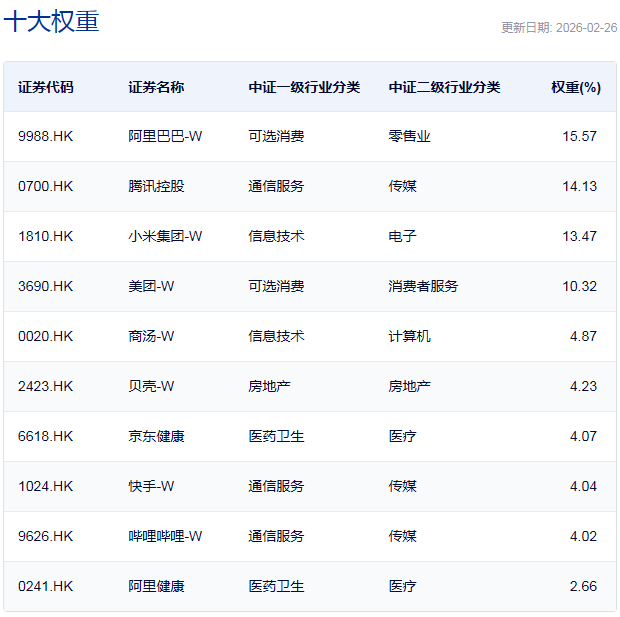
Core Viewpoint - The Hong Kong stock market is experiencing a significant adjustment, particularly in the technology sector, driven by concerns over high expenditures, competition from new AI players, and liquidity pressures due to changing Federal Reserve interest rate expectations [3][11]. Market Performance - On March 4, the Hong Kong stock market opened lower, with the Hang Seng Index and Hang Seng Tech Index both dropping over 1%. The Hong Kong Internet ETF (513770) fell by 1.33%, reaching a new low since July 2025. Major internet companies like Alibaba-W, Meituan-W, and Tencent Holdings saw declines of over 3%, nearly 2%, and 0.88%, respectively [1][9]. Investment Trends - Despite the market downturn, southbound capital has been consistently increasing. As of March 3, there were 27 net inflow trading days out of 36 this year, totaling a net inflow of 181.8 billion HKD. Major internet companies have seen significant increases in holdings, with Tencent's market value exceeding 540 billion HKD and Alibaba's over 320 billion HKD [3][11]. Sector Analysis - Analysts suggest that the current deep adjustment in the Hong Kong tech sector is due to three main pressures: concerns over high spending on delivery subsidies and AI initiatives, competition from emerging AI companies, and liquidity pressures from revised Federal Reserve interest rate expectations [3][11]. - Investment opportunities are emerging in the Hong Kong Internet sector as policies supporting AI development are expected to enhance the growth of internet companies [3][11]. ETF Insights - The Hong Kong Internet ETF (513770) and its linked funds are designed to track the CSI Hong Kong Internet Index, with the top ten holdings including major players like Alibaba-W, Tencent Holdings, and Xiaomi Group, collectively accounting for over 76% of the index [4][12]. - For investors looking to reduce volatility while still gaining exposure to technology, the Hong Kong Large Cap 30 ETF (520560) is recommended, combining high-growth tech stocks with stable dividend-paying companies [14].

早报 | 王毅同以色列外长萨尔通电话;伊朗新任最高领袖选举进入最后阶段;国际油价大涨5%,白银跌近8%;马云新年现身谈AI
虎嗅APP· 2026-03-04 00:10
Group 1 - International oil prices surged significantly, with WTI crude oil rising by 4.86% to $74.69 per barrel and Brent crude oil increasing by 5.04% to $81.66 per barrel [3] - The A-share oil and gas sector experienced a rare surge, with the "three barrels of oil" (China National Petroleum, Sinopec, and CNOOC) achieving consecutive price increases for two trading days, marking a historical first [12] - The Korean stock market faced a significant drop, with the Kospi index declining over 7%, attributed to rising oil prices and a decrease in global risk appetite [15][16] Group 2 - Apple officially launched a new line of MacBook products featuring the M5 series chips, with AI computing performance as a core selling point [17] - The new MacBook Pro models show up to an 8-fold improvement in AI performance compared to the M1 models, while the MacBook Air has doubled its starting storage capacity to 512GB [18] - Google introduced the Gemini 3.1 Flash-Lite model, which offers significant improvements in response time and output speed, making it suitable for high-frequency workloads [19][20] Group 3 - Longsheng Life Insurance reported a decline in solvency ratios, with the core solvency ratio at 64.8% and the comprehensive solvency ratio at 79.7% as of the end of Q4 2025 [28] - Beijing Bank faced scrutiny after a pricing error in gold accumulation products led to significant discrepancies, prompting the bank to suspend operations and revoke orders [25][26]







胖东来调整闭店政策
新华网财经· 2026-03-02 09:07
Group 1 - The core point of the article is that Pang Donglai Commercial Group announced the resumption of the Tuesday closing policy for most of its stores starting from March 3, 2026, to meet consumer demand [2] - The Tuesday closing policy will affect the majority of Pang Donglai's stores, while specific locations in Xinxiang and the Chuxiong region will remain open on Tuesdays [2] - The operating hours for the stores that will remain open on Tuesdays are set from 9:30 AM to 9:00 PM [2]

欧美金融条件边际恶化,美国信用利差飙升——海外周报第129期
一瑜中的· 2026-03-02 06:49
Economic Data and Events - In the past week, US housing prices remained flat, while consumer confidence and inflation exceeded expectations. The S&P/CS 20-City Composite Home Price Index showed a year-on-year increase of 1.4%, aligning with expectations and previous values. The Conference Board Consumer Confidence Index for February was reported at 91.2, significantly above the expected 87 and previous value of 89. The January PPI year-on-year was 2.9%, better than the expected 2.6% but lower than the previous 3% [11][12]. - In the Eurozone, economic sentiment was below expectations, with the February Economic Sentiment Index at 98.3, lower than the expected 99.8 and previous value of 99.3 [11]. - Japan's retail sales and inflation also exceeded expectations, with January retail sales up 1.8% year-on-year, compared to an expected 0.1% and a previous value of -0.9%. The Tokyo Core CPI for February was reported at 1.8%, above the expected 1.7% and previous value of 2% [11]. Weekly Economic Activity Index - The US Economic Activity Index (WEI) showed an upward trend, with a value of 2.65% for the week ending February 21, compared to 2.89% the previous week. The four-week moving average was 2.6% [15]. - The German Economic Activity Index (WAI) remained stable at 0.05% for the week ending February 22, with a four-week moving average of 0.05% [15]. Demand - The US Redbook Commercial Retail Sales growth rate showed a marginal decline, with a year-on-year increase of 6.7% for the week ending February 20, down from 7.2% the previous week. The four-week moving average was 6.78% [19]. - In the real estate sector, US mortgage rates decreased, with the 30-year mortgage rate at 5.98% as of February 26, down from 6.01% the previous week. Mortgage application numbers showed a slight increase, with the MBA Market Composite Index at 340.2, reflecting a 0.4% week-on-week change [21]. Employment - Initial jobless claims and continuing claims for unemployment benefits were better than expected. Initial claims rose to 212,000 for the week ending February 26, compared to an expected 215,000 and a previous value of 208,000. Continuing claims decreased from 1.864 million to 1.833 million, against an expected 1.858 million [26]. - The number of job vacancies remained stable, with the Indeed Job Vacancy Index at 104.47 as of February 20, reflecting a week-on-week increase of 0.45% [30]. Prices - Commodity prices rebounded, with the RJ/CRB Commodity Price Index showing a week-on-week increase of 0.5% as of February 27. US gasoline prices continued to rise, reported at $2.80 per gallon for the week ending February 23, reflecting a week-on-week increase of approximately 0.2% [33]. Financial Conditions - Financial conditions in the US and Europe showed marginal deterioration. The Bloomberg Financial Conditions Index for the US was reported at 0.504 on February 27, down from 0.61 the previous day and 0.648 the week before. The Eurozone index also declined to 1.528 from 1.594 the previous week [37]. - Offshore dollar liquidity showed marginal deterioration, with the euro to dollar three-month swap basis significantly declining to 0.38 basis points from 2.38 basis points the previous week [39]. - The spread-to-worst for high-yield dollar bonds surged to 284.0 basis points on February 27, widening from 271.8 basis points the previous day and 262.1 basis points the week before [40]. - The US-Japan yield spread narrowed to 185.2 basis points as of February 26, while the US-Europe spread remained stable at 127.3 basis points. The Italian-German yield spread continued to narrow, reported at 58.9 basis points [45]. Fiscal Data - As of February 26, cumulative federal spending in the US was approximately $1.3 trillion, reflecting a year-on-year growth rate of 5.8%. This compares to $1.2 trillion in the same period last year, which had a growth rate of 8.1% [50].

“后巴菲特时代”首封股东信:巴菲特仍坐镇,手握3700亿现金,坚守日本投资策略
华尔街见闻· 2026-02-28 14:22
Core Viewpoint - The letter marks the beginning of the "post-Buffett era" with Greg Abel as the new CEO, emphasizing continuity in leadership and commitment to shareholder value [2][12]. Financial Performance - In 2025, the company achieved an operating profit of $44.5 billion, down from $47.4 billion in 2024 but above the five-year average of $37.5 billion [40]. - The net cash flow from operating activities reached $46 billion, exceeding the five-year average of over $40 billion [40]. - The insurance float increased to $176 billion by the end of 2025, significantly up from $88 billion a decade ago [49]. Capital Management - The company holds over $370 billion in cash and U.S. Treasury bonds, maintaining a strong defensive position [3][25]. - The principle of not paying dividends remains unchanged; dividends will only be considered if retained earnings can create more than $1 in market value for shareholders [4][30]. - Stock buybacks are prioritized when the stock price is below the estimated intrinsic value [4][30]. Investment Strategy - In 2025, the company acquired OxyChem and Bell Labs, reinforcing its strategy of investing in companies with sustainable profitability [3][29]. - The company emphasizes a disciplined approach to capital allocation, focusing on investments that align with long-term value creation [27][30]. Insurance Business - The property and casualty insurance business achieved a combined ratio of 87.1%, significantly better than the five-year average of 90.7% [41]. - The insurance sector is facing pricing pressures due to increased capital influx, which may lead to stagnation in premium growth [41][45]. - The company’s insurance float is expected to continue growing, with a return of $29 billion to the parent company in 2025 [49]. Non-Insurance Business - The non-insurance segment includes high-quality companies across various industries, with a focus on operational excellence and accountability [50][51]. - The Burlington Northern Santa Fe Railway Company reported a net cash flow of $8.1 billion in 2025, returning $4.4 billion to the parent company [52]. - Berkshire Hathaway Energy is entering a significant investment cycle, driven by increased electricity demand from data centers [54]. Corporate Culture and Values - The company maintains a decentralized management model, empowering managers while holding them accountable for performance [19][20]. - Integrity and transparency are core values, with a commitment to uphold the company's reputation [21][22]. - The pursuit of operational excellence is a continuous journey, with a focus on long-term value creation rather than short-term gains [36][38].

浙江离境退税销售同比去年春节增长340.27%
Zhong Guo Jing Ji Wang· 2026-02-27 08:22
Group 1 - The core viewpoint of the articles highlights the significant growth in the outbound tax refund sales in Zhejiang Province during the 2026 Spring Festival, with a year-on-year increase of 340.27% compared to the previous year [1] - As of the end of 2025, there were 869 outbound tax refund stores in Zhejiang, with 448 of them being "buy and refund" stores, and the total sales and tax refund amount for outbound tax refund goods increased by 119.77% year-on-year [1] - The continuous enhancement of the outbound tax refund policy and the optimization of the refund experience are reflected in the data, with the full coverage of tax refund services at air ports in Zhejiang since the opening of the Yiwu Airport tax refund service in October last year [1] Group 2 - At Hangzhou Xiaoshan International Airport's T4 terminal, 24/7 self-service tax refund terminals are available, providing convenient tax refund support for travelers from around the world [2] - From February 15 to 22, the number of inbound foreign tourists at Zhejiang ports increased by 18.9%, while the number of tax refund transactions and the total tax refund amount at Xiaoshan Airport customs grew by 219.2% and 44.7% year-on-year, respectively [2] - The establishment of a multilingual youth volunteer service team by the Hangzhou Gongshu District Taxation Bureau has enhanced the shopping experience for foreign tourists, providing face-to-face consultations and digital guidance [2] Group 3 - The diverse highlights of the "China Purchase" consumer market during the 2026 Spring Festival demonstrate the effectiveness of the country's targeted measures to optimize inbound consumption policies [3] - The convenience measures such as "buy and refund" and "one-click tax refund" not only meet the diverse shopping needs of foreign travelers but also stimulate inbound consumption vitality, providing a solid example for transforming tourism traffic into sustained consumption growth [3]
锚定AI应用核心赛道,港股通互联网ETF工银3月2日正式发行
Jiang Nan Shi Bao· 2026-02-27 06:33
Group 1 - The global AI revolution is accelerating, transitioning from model innovation to widespread commercial implementation, with Hong Kong internet leaders expected to experience a "second growth curve" driven by technology [1] - Southbound capital has seen a record net purchase of 1,404.844 billion HKD in 2025, continuing to increase in 2026, with a net purchase of 144.548 billion HKD as of February 26 [1] - The ICBC Credit Suisse CSI Hong Kong Internet ETF (code: 159179) was officially launched on March 2, providing investors with a low-cost, convenient index investment tool focused on the core sector of Hong Kong internet [1] Group 2 - The CSI Hong Kong Internet ETF closely tracks the CSI Hong Kong Internet Index, which selects 30 listed companies involved in internet-related businesses, reflecting the overall performance of internet-themed listed companies [2] - The index features three main characteristics: it covers various types of internet companies, emphasizes "soft technology" without including hard tech companies, and shows strong growth and profitability attributes with a compound revenue growth rate of 16.40% over the past five years [2][3] - The index has demonstrated a return of 63.26% over the past two years, indicating strong performance during the recent internet rebound [2] Group 3 - As of February 26, 2026, the price-to-earnings ratio (PE) of the CSI Hong Kong Internet Index is 22.17, positioned in the lower range of valuations, indicating attractive valuation [3] Group 4 - The internet industry is entering a critical window for the commercialization of AI applications, with various sectors such as e-commerce, AI applications, and cloud services showing significant growth potential [6] - The e-commerce sector is benefiting from strong cash flow and profit inflows, with AI advertising tools enhancing merchant payment willingness and capabilities [6] - The gaming sector is projected to generate 350.8 billion CNY in revenue by 2025, with a year-on-year growth of 7.7%, while self-developed games in overseas markets are expected to earn 20.4 billion USD, reflecting a 10% increase [7] Group 5 - The ICBC Credit Suisse Hong Kong Internet ETF (159179) offers significant advantages in terms of low fees, with a management fee of 0.15% and a custody fee of 0.05%, which are among the lowest in the industry [9] - The fund allows T+0 trading without QDII quota restrictions, enabling flexible investment in the Hong Kong internet sector [9] - The fund's management team emphasizes strict risk control and precise tracking error management, ensuring effective investment deviation control [9]