
手机

Search documents
2025年10月中国手机出口数量和出口金额分别为7059万台和155.24亿美元
Chan Ye Xin Xi Wang· 2025-11-25 03:33
Core Insights - The report by Zhiyan Consulting highlights a significant decline in China's smartphone exports in October 2025, with a total of 70.59 million units exported, representing a year-on-year decrease of 14.2% [1] - The export value for the same period was $15.524 billion, which reflects a year-on-year decline of 16.5% [1] Industry Overview - The data is sourced from Chinese customs, indicating a downward trend in the smartphone export market [1] - Zhiyan Consulting is recognized as a leading industry consulting firm in China, specializing in in-depth industry research and providing comprehensive consulting services [1]


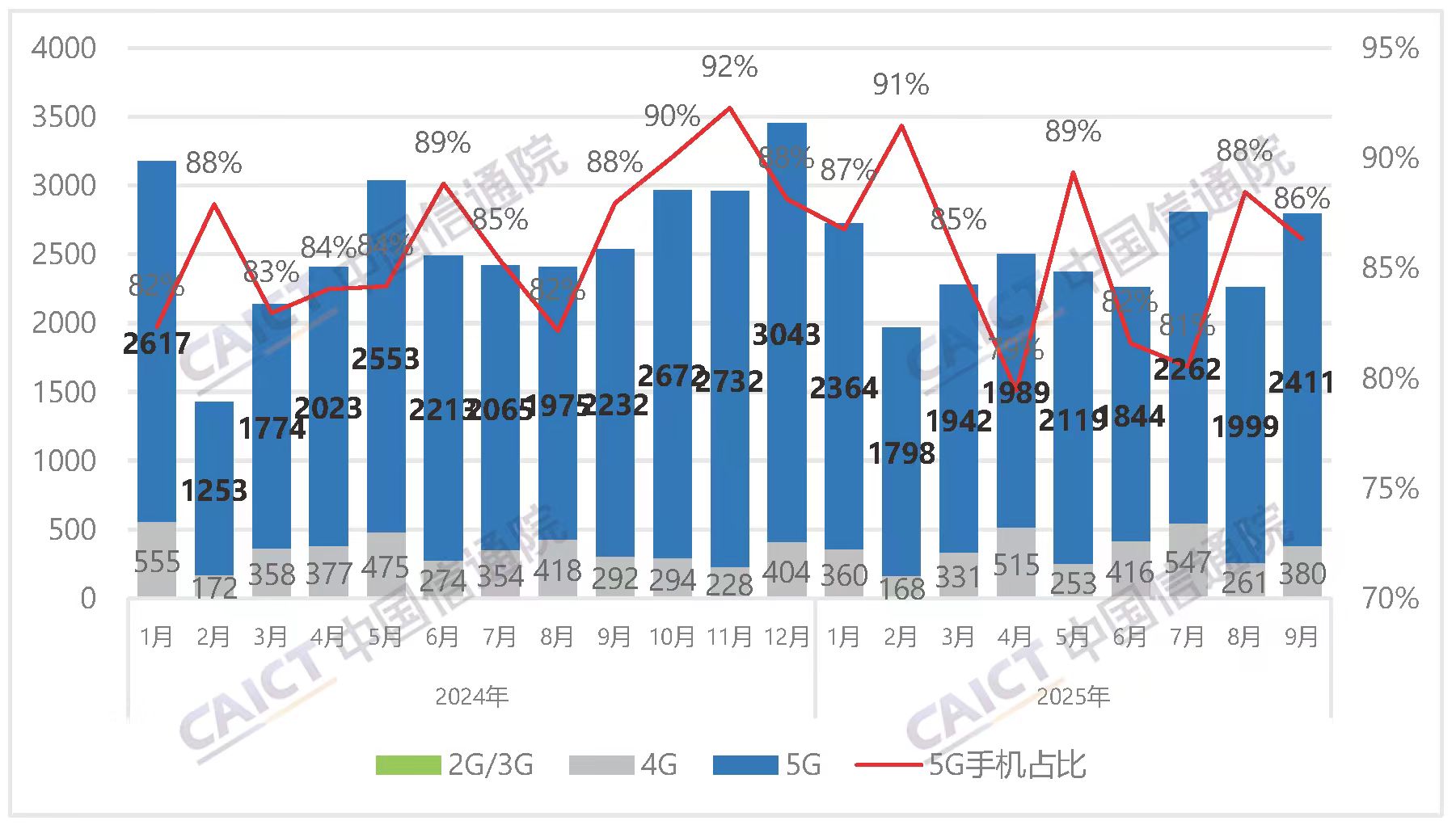
权威发布:2025年9月国内市场手机出货量2793.1万部,其中5G手机占比86.3%
中国信通院· 2025-11-23 05:18
Investment Rating - The report indicates a positive outlook for the domestic smartphone market, with a growth forecast for 5G smartphone adoption and overall market expansion [1][4]. Core Insights - In September 2025, the domestic smartphone shipment reached 27.93 million units, representing a year-on-year increase of 10.1%, with 5G smartphones accounting for 86.3% of total shipments [1]. - From January to September 2025, the total smartphone shipments were 220 million units, showing a slight decline of 0.3% year-on-year, while 5G smartphone shipments increased by 0.1% to 187 million units, maintaining an 85.3% share [1]. - The number of new smartphone models launched in September 2025 was 47, a 30.6% increase year-on-year, with 5G models making up 48.9% of the new launches [3]. - The domestic brands accounted for 84.7% of the total smartphone shipments in September 2025, with a year-on-year growth of 16.1% [4]. Summary by Sections Domestic Smartphone Market Overview - In September 2025, 5G smartphone shipments reached 24.11 million units, a growth of 8.0% year-on-year, contributing to 86.3% of total shipments [1]. - For the first nine months of 2025, 5G smartphone shipments were 187 million units, with a marginal growth of 0.1% [1]. New Smartphone Models - The total number of new smartphone models launched in the first nine months of 2025 was 398, with 180 being 5G models, which is a 1.1% increase year-on-year [3]. Domestic Brand Performance - Domestic brands saw a shipment of 23.64 million units in September 2025, marking a 16.1% increase year-on-year, and accounted for 91.7% of new models launched [4]. Smart Phone Development - In September 2025, smart phone shipments were 25.62 million units, reflecting an 8.0% year-on-year growth, while the number of new smart phone models launched was 29, a significant increase of 52.6% [7].
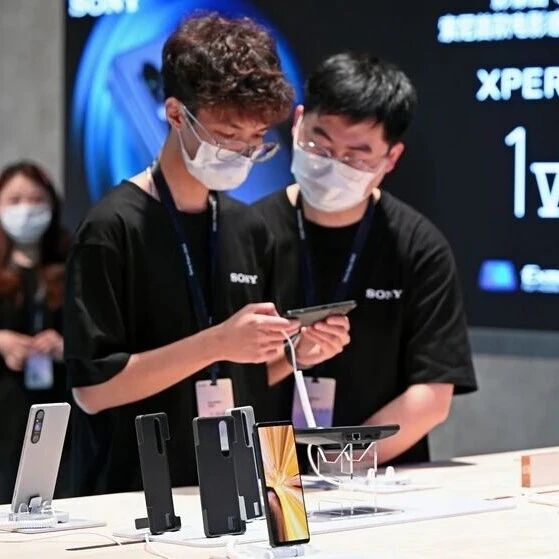
索尼手机败走中国:凉于偏执?
虎嗅APP· 2025-11-22 13:08
Core Viewpoint - Sony's mobile phone business in China has effectively ended, marked by the shutdown of its official WeChat account and the removal of its product listings, following a significant decline in market share and sales performance [5][7][9]. Group 1: Business Operations - Sony's official WeChat account for Xperia was shut down in November 2025, indicating the end of its mobile operations in China [7]. - The last new model launched in China was the Xperia 5V in September 2023, with no subsequent models released [7][9]. - Sony's market share in China's smartphone sector fell below 0.1% as of 2023, categorizing it as "other" in IDC's report [9]. Group 2: Historical Context - Sony's mobile phone success peaked during the Sony Ericsson era, with annual sales exceeding 100 million units, driven by popular products like the Walkman and Cyber-shot series [9]. - After acquiring Ericsson's shares in 2012, Sony's mobile division began a prolonged decline, struggling to compete with the rise of the iPhone and other smartphone innovations [9][10]. - By 2018, global sales plummeted to 1.6 million units, with significant financial losses reported in its mobile communications segment [10]. Group 3: Strategic Missteps - Sony's rigid adherence to a "hardware-driven" philosophy led to a disconnect with market demands, focusing on technical specifications over software services [15]. - The company's strategic misjudgments, particularly in display technology, contributed to its loss of market leadership in consumer electronics [15]. - Despite a strong presence in audio and gaming, Sony's television and mobile divisions are struggling, with market shares dwindling significantly [15][16]. Group 4: Future Outlook - Sony is reportedly planning to release two new Android models, the Xperia 1 VIII and Xperia 10 VIII, in 2026, despite its retreat from the Chinese market [17]. - Any potential return to the Chinese market would require a fundamentally different approach, integrating its strengths in audio, gaming, and sensors rather than relying solely on hardware [18].
“翻车”频现,小米和雷军口碑扭转直下,是谁让消费者不再信赖?
Sou Hu Cai Jing· 2025-11-22 05:11
Core Viewpoint - The controversy surrounding the Xiaomi SU7 Ultra's "carbon fiber perforated hood" has led to a significant trust crisis for the brand, despite the company's impressive financial performance and profitability in its automotive business [1][3][15]. Group 1: Controversy and Legal Issues - The first court hearing regarding the "Xiaomi SU7 Ultra perforated hood" dispute took place, with Xiaomi's legal team presenting 84 pages of new evidence, leading to public outcry over the statement "Lei Jun does not understand structure" [1][11]. - The initial delivery of the Xiaomi SU7 Ultra revealed that the advertised "dual air duct" feature did not function as claimed, prompting customers to accuse Xiaomi of false advertising and seek refunds [9][20]. - Xiaomi's legal defense emphasized that Lei Jun had warned consumers about the product's high price and that the promotional content was not part of the purchase contract, which they argued did not constitute a breach of contract [11][13]. Group 2: Financial Performance - Xiaomi Group reported a revenue of 113.12 billion RMB for Q3 2025, a 22.3% year-on-year increase, marking the fourth consecutive quarter of revenue exceeding 100 billion RMB [15][19]. - The adjusted net profit for Q3 2025 reached 11.31 billion RMB, reflecting an 80.9% increase year-on-year, with a total adjusted net profit of 32.82 billion RMB for the first three quarters, up 73.5% [15][17]. - The automotive segment, described by Lei Jun as his "last entrepreneurial venture," saw revenues soar to 29.01 billion RMB in Q3, a staggering 199.2% increase, achieving profitability within a year of operation [20][21]. Group 3: Brand Image and Consumer Trust - The legal team's assertion that "Lei Jun does not understand structure" undermines his image as a core brand ambassador for Xiaomi, which has relied heavily on his personal brand to build consumer trust [13][14]. - The shift in consumer sentiment towards valuing product performance and safety over marketing narratives indicates a changing landscape where brand loyalty is increasingly tied to tangible product quality [22][23]. - Moving forward, Xiaomi must focus on building brand value through standardized management, transparent information, and professional services to restore consumer trust [23].


美国对印关税大幅降至15%,中国纺织出口迎来强劲对手?
Sou Hu Cai Jing· 2025-11-22 04:15
Core Insights - The US and India are nearing a significant bilateral trade agreement, aiming to reduce tariffs on Indian goods from 50% to 15%-16%, which is a major step towards achieving a $500 billion trade target between the two nations [1][4] - This trade breakthrough is expected to reshape global supply chains and has implications for the trade dynamics involving China, the US, and India [1][6] Trade Agreement Details - The agreement includes substantial tariff reductions, with the US eliminating a 25% punitive tariff on Russian oil imports from India and reducing overall tariffs to the 15%-16% range, impacting sectors like textiles, gems, leather, and machinery [4] - India will gradually decrease its imports of Russian oil and ease restrictions on non-GMO corn and soybean meal imports from the US, opening up a market worth billions [4] Economic Implications - The trade deal is seen as a dual negotiation of political will and market dynamics, with the US benefiting from expanded energy and agricultural export channels while enhancing its economic influence in India [4] - The agreement is also viewed as a strategy for the US to create a supply chain backup to China, leveraging India's cheaper labor [4][5] Challenges for India - While the tariff reductions may boost Indian exports, the increased import of US agricultural products could disrupt local agriculture, and the reduction of Russian oil imports may raise domestic energy costs [5] - India's manufacturing sector remains heavily reliant on Chinese imports, making a quick transition away from China challenging [5] Impact on China - The US-India trade agreement poses three direct pressures on China: potential loss of market share in labor-intensive products, tighter technology restrictions in semiconductor and critical mineral sectors, and intensified competition for global resource pricing [6] - However, these external pressures may drive Chinese companies to enhance technology development and market diversification, reducing reliance on single markets [6] Textile Industry Focus - Indian textile companies may gain a competitive edge against Chinese exports due to lower tariffs and labor costs, prompting the need for Chinese textile firms to innovate and enhance their high-end product offerings [9] - The ongoing global supply chain adjustments highlight the complexity of "decoupling" from established trade relationships, emphasizing the importance of maintaining a robust industrial chain and technological innovation in China [9]

中国信通院:9月国内手机出货量同比增10.1%
Ju Chao Zi Xun· 2025-11-22 02:18
Core Insights - The domestic smartphone market in China saw a shipment volume of 27.93 million units in September 2025, representing a year-on-year growth of 10.1% [1] - 5G smartphones accounted for 24.11 million units shipped in the same month, with a year-on-year increase of 8.0%, making up 86.3% of total shipments [1] - The cumulative smartphone shipments from January to September 2025 reached 220 million units, showing a slight decline of 0.3% year-on-year, while 5G smartphone shipments totaled 18.7 million units, a growth of 0.1% [3] Market Dynamics - In September 2025, 47 new smartphone models were launched, marking a 30.6% increase year-on-year, with 23 of these being 5G models, which is a 64.3% increase [5] - For the first nine months of 2025, a total of 398 new smartphone models were introduced, up 20.6% year-on-year, with 180 being 5G models, reflecting a 1.1% increase [5] - Domestic brands dominated the market, with shipments of 23.64 million units in September 2025, a 16.1% increase, representing 84.7% of total shipments [5] Brand Performance - In the first nine months of 2025, domestic brands shipped 192 million units, a growth of 2.3%, capturing 87.6% of the overall market [5] - The number of new models launched by domestic brands reached 378, accounting for 94.7% of the total new models [5] - In September 2025, the shipment of smart devices was 25.62 million units, with a year-on-year growth of 8.0%, and smart devices accounted for 91.7% of total shipments [7] Future Outlook - Industry experts suggest that the key variables for the future performance of the domestic smartphone market will include the increase in 5G penetration, the push of domestic brands into the mid-to-high-end market, and the optimization of new product structures [7]
王化转岗,雷军转舵
Bei Jing Shang Bao· 2025-11-21 14:54
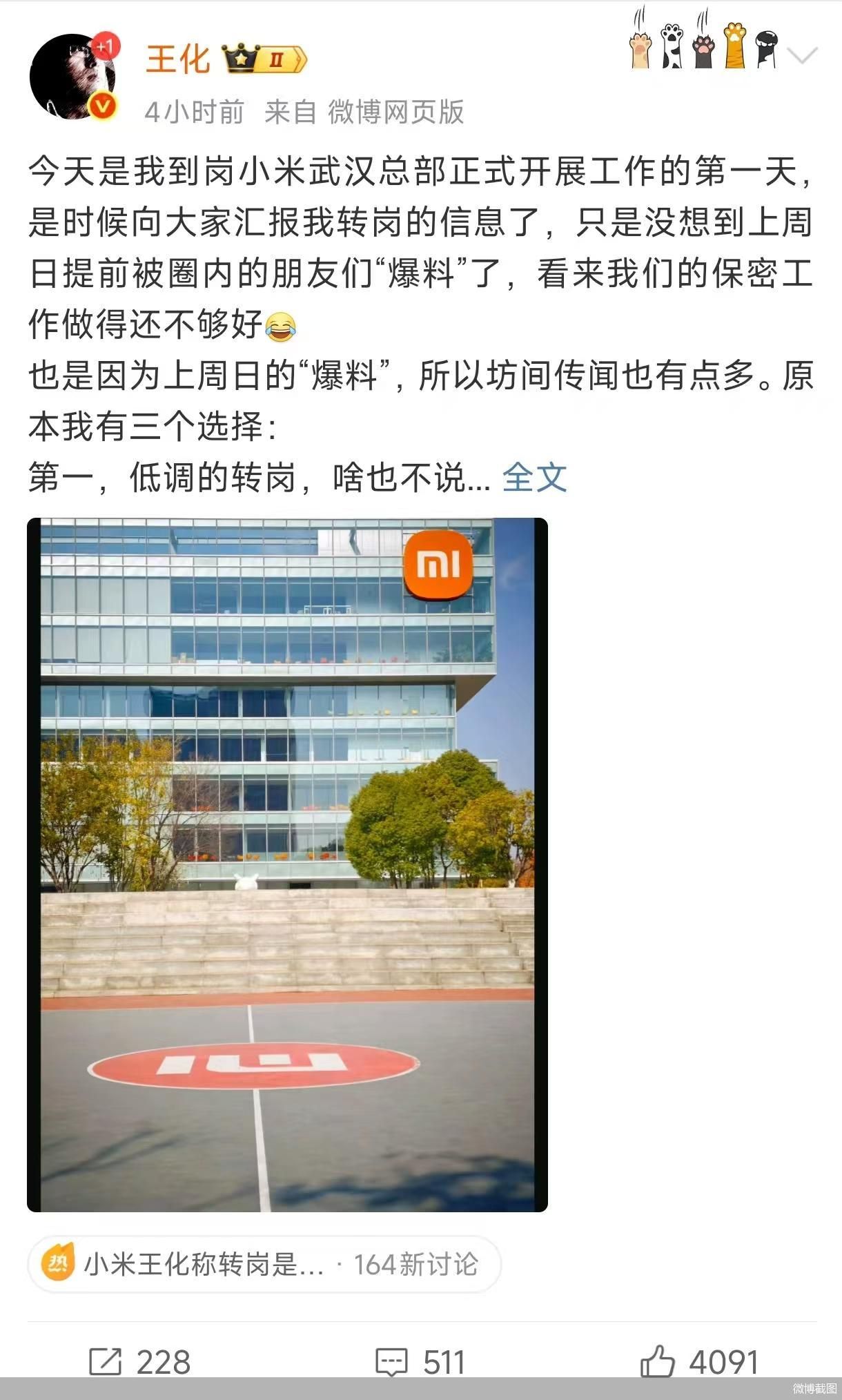
Group 1 - Xiaomi Group's public relations manager Wang Hua has been reassigned to the Wuhan headquarters, with Xu Jieyun taking over as the new public relations head [1][2] - The company's market value has dropped from a peak of 1.4 trillion HKD in 2025 to 991.686 billion HKD as of November 21, 2023, amid various public relations challenges [2] - The recent personnel changes in Xiaomi's public relations department are seen as a potential shift in the company's long-standing external communication strategy [2][10] Group 2 - Wang Hua's career trajectory is closely linked to the development of Xiaomi's public relations department, having joined the company in 2015 and played a key role in establishing the PR team [6][7] - His responsibilities included managing external communications and responding to major controversies, which have become increasingly complex as Xiaomi's business expands into various sectors [7][10] - The need for a stable external communication channel is emphasized, as poor communication can lead to speculation and damage the company's reputation [8][10] Group 3 - The expectation for corporate public relations is not to solve all problems immediately but to maintain professionalism and rationality in communication [11] - The adjustment in public relations roles is viewed as an opportunity for Xiaomi to enhance its communication framework across its diverse business lines [13] - Effective public relations should build trust and provide transparent communication, especially in response to consumer concerns and controversies [12][11]
第一创业晨会纪要-20251121
First Capital Securities· 2025-11-21 05:21
Group 1: Industry Overview - Despite Nvidia's strong performance, major US stock indices experienced declines, with the Dow Jones down 0.84%, S&P 500 down 1.56%, and Nasdaq down 2.15%. AI-related tech stocks, including AMD and Oracle, saw significant drops, indicating a potential correction in the market [2] - The demand for AI computing power in the US is expected to face limitations due to electricity constraints and inherent flaws in LLM models, suggesting that the current high valuations of related stocks may not be sustainable [2] - The smartphone market in China showed signs of recovery, with a total shipment of 27.93 million units in September 2025, a year-on-year increase of 10.1%. 5G smartphones accounted for 24.11 million units, reflecting an 8.0% growth [3] - The Chinese government is considering new supportive policies for the real estate sector, including interest subsidies for new personal housing loans and increased tax deductions for homebuyers, which could alleviate financial pressure on consumers and stimulate economic growth [4] Group 2: Advanced Manufacturing - The lithium battery industry in China shows a high market concentration, with CR6 and CR10 indicating stable competition among leading firms. The positive scale effects of top companies are evident [7] - The cathode materials sector remains fragmented due to diverse technology routes and application scenarios, while the separator materials sector has the highest concentration with a CR10 of 94% [7] - The development of sodium batteries is gaining momentum, with predictions that by 2035, the ratio of lithium iron phosphate batteries to sodium batteries will be 4:6. The company plans to establish a production capacity of 300,000 tons of lithium iron phosphate by next year [8] Group 3: Consumer Sector - LVMH reported significant recovery in Q3 2025, particularly in the Chinese market, where local consumption shifted from negative to mid-single-digit growth. The trend of consumption returning to Hong Kong and mainland China is becoming established [10] - The innovative retail strategies employed by brands like LV have led to impressive terminal performance, with flagship stores in Shanghai achieving high foot traffic and sales [10] - The luxury goods sector is showing signs of warming, indicating a potential rebound in consumer spending [10]
以史为鉴,内存涨价对手机行业影响有多大?
Hua Er Jie Jian Wen· 2025-11-20 13:19
Core Insights - The memory supply chain is experiencing a surge driven by strong AI demand, leading to a price increase cycle for memory chips, with mobile DRAM contract prices expected to rise by 30%-40% in Q4 2025 and NAND prices increasing by a high single-digit percentage, potentially continuing into mid-2026 [1][2] Group 1: Impact on Different Smartphone Segments - The impact of rising memory prices varies significantly across smartphone segments, with mid-range and low-end models like the Redmi series being the most affected, where memory costs account for over 10% of ASP, potentially leading to a 2-3 percentage point decline in gross margins for Xiaomi [1][3][4] - High-end models, such as the iPhone, are less affected as memory costs constitute only 4% of ASP, indicating a stronger resilience against price hikes [3][4] Group 2: Market Dynamics and Manufacturer Strategies - The surge in AI demand is fundamentally different from past price fluctuations driven solely by supply-demand cycles, with AI servers requiring eight times the DRAM and three times the NAND compared to regular servers, prompting major chip manufacturers like Samsung and SK Hynix to shift production focus from low-margin LPDDR chips to high-margin HBM products [2][6] - The ongoing supply tightness is exacerbated by chip manufacturers pausing quotes, creating a dilemma for smartphone manufacturers caught between the risks of purchasing at inflated prices or facing shortages [2][6] Group 3: Historical Context and Future Trends - Historical trends indicate that memory price increases often lead to market consolidation, with smaller brands struggling to adapt and potentially exiting the market, while leading companies gain market share [7] - The current environment is prompting manufacturers to adopt new survival strategies, including high-end product line expansions, improved supply chain management, and technological innovations to mitigate cost pressures [6][7]