
玩具

Search documents
每经热评|“哭哭马”逆袭成新年“黑马” 义乌精神恰是冲破困境的光
Xin Lang Cai Jing· 2026-01-11 13:10
Core Insights - The "crying horse" toy, initially a production error, unexpectedly became a commercial success, highlighting the ability to turn mistakes into business opportunities in Yiwu [1][4] - The phenomenon reflects a growing trend in consumer behavior where emotional value surpasses functional value, resonating particularly with modern workplace anxieties [2][3] Group 1: Emotional Value in Consumer Products - The "crying horse" resonates with contemporary workers' emotional pain points, serving as a soft representation of their unexpressed fatigue and stress [2][3] - The success of the "crying horse" illustrates how emotional resonance can drive consumer demand, as seen in other successful media that address similar themes of resilience and acceptance [2][3] Group 2: Yiwu's Market Dynamics - Yiwu's rapid response to market trends, including the swift production of the "crying horse," showcases its strong supply chain capabilities and market sensitivity [3][4] - The "crying horse" phenomenon exemplifies the Yiwu spirit, characterized by adaptability, courage in facing challenges, and a commitment to maintaining market integrity through pricing strategies [4][5] Group 3: Broader Implications for Market Economy - The "crying horse" phenomenon emphasizes the importance of individual empowerment within the market economy, creating opportunities for ordinary people to seize unexpected chances [5]
布鲁可(00325):公司动态研究报告:看IP驱动新品与海外进展
Huaxin Securities· 2026-01-11 13:03
Investment Rating - The report maintains a "Buy" investment rating for the company [7] Core Insights - The company is positioned to benefit from the rapid growth of the building block toy market, particularly in the character-based segment, which has a projected CAGR of 29.0% from 2023 to 2028 in China [4] - The company has successfully commercialized 19 IPs with 925 SKUs, and several new products are expected to launch in 2026, which could drive revenue growth [4] - The overseas market, particularly North America, has shown significant growth, with a 898.6% year-on-year increase in overseas revenue in the first half of 2025, contributing to 38.6% of total revenue [5] - Revenue forecasts for 2025-2027 are projected at 29.40 billion, 37.85 billion, and 47.34 billion yuan respectively, with corresponding EPS of 2.47, 3.15, and 4.24 yuan [6] Summary by Sections Market Performance - The building block toy segment is expanding rapidly, with a focus on character-based toys, which are becoming a new market highlight [4] Product Development - The company plans to launch multiple new products in 2026, including both Eastern and Western IPs, which are expected to attract consumer attention and boost sales during the Chinese New Year [4] International Expansion - The company has made significant strides in the overseas market, with a focus on localized products and a robust multi-channel sales strategy [5] Financial Projections - The company is expected to achieve substantial revenue growth, with a projected increase in net profit from a loss of 401 million yuan in 2024 to a profit of 1.057 billion yuan by 2027 [6][9]
当资本爱上9.9元手办:桑尼森迪的“下沉奇迹”能持续多久?
Zhi Tong Cai Jing· 2026-01-11 10:44
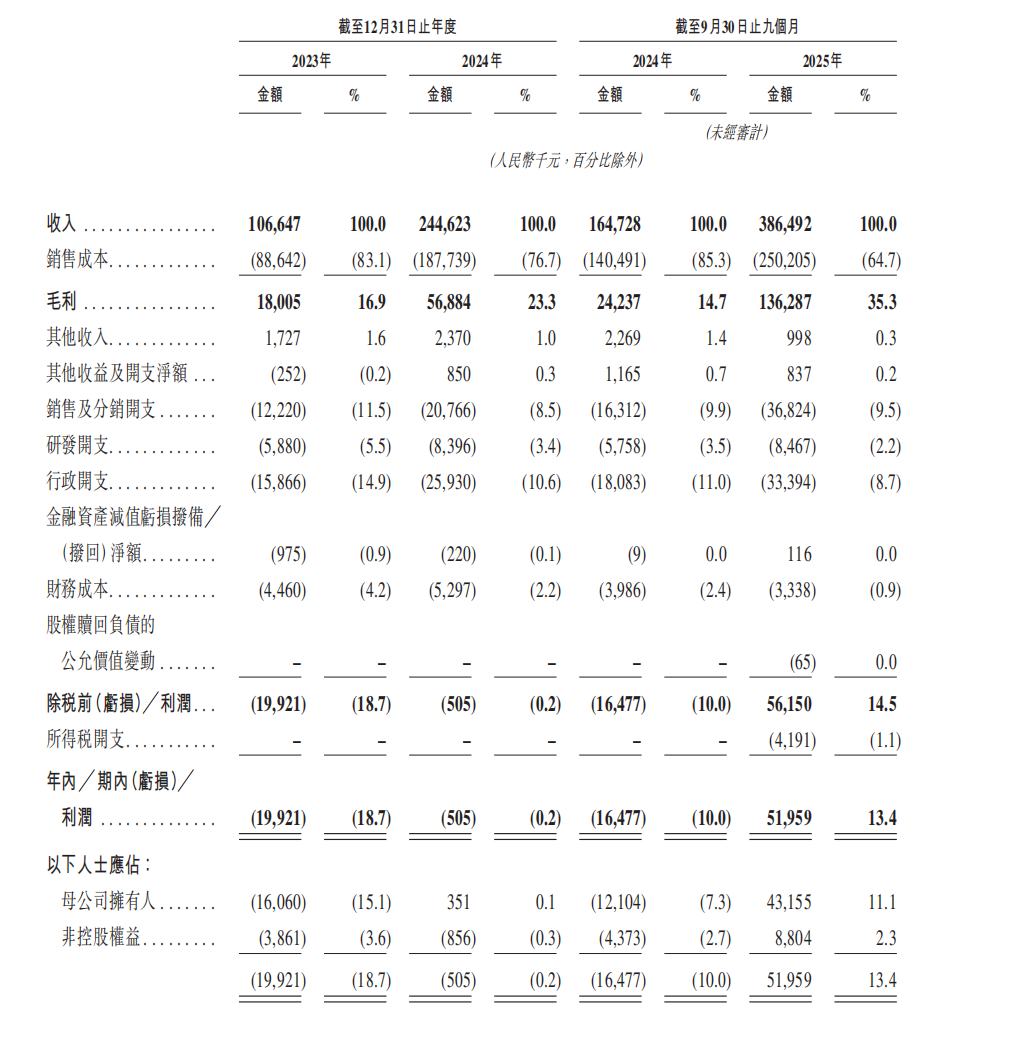
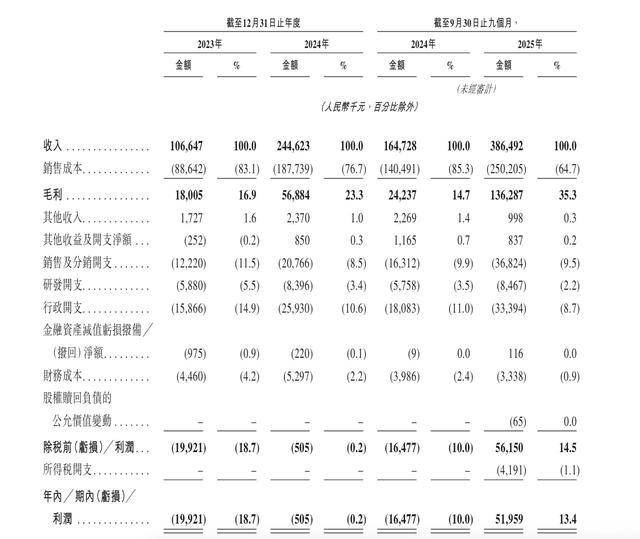
Core Viewpoint - The company, Sunnysondi, has submitted its IPO application, positioning itself as a low-cost player in the toy market, focusing on affordable IP toys priced below 20 RMB, and has quickly captured the leading position in low-priced toy sales nationwide [1][2]. Group 1: Financial Performance - In the first three quarters of 2025, the company achieved revenue of 386.49 million RMB, a year-on-year increase of 135%, with a net profit exceeding 52 million RMB and a net profit margin maintained at around 14% for three consecutive years [2][3]. - The company's revenue structure shows significant growth, with a compound annual growth rate exceeding 100% from 2023 to 2025, although it recorded net losses in 2023 and 2024 before turning profitable in 2025 [4][5]. - The gross profit margin fluctuated significantly, increasing from 16.9% in 2023 to 35.3% in the first nine months of 2025, indicating improvements in cost structure but also highlighting volatility [4][5]. Group 2: Business Model and Risks - The company has shifted its business model dramatically over three years, with the "IP toys+" segment contributing 72% of revenue in 2023, transitioning to a more consumer-focused "IP toy products" model that accounted for 78.3% of revenue by the first nine months of 2025 [7][8]. - The growth is heavily reliant on a few successful IPs, particularly two major animated IPs that contributed approximately 200 million RMB, over half of the total revenue, raising concerns about sustainability and vulnerability to market fluctuations [9][10]. - The company faces risks from short IP licensing periods, typically 1 to 2 years, which may not support long-term product planning and could lead to challenges in maintaining revenue streams [10]. Group 3: Competitive Landscape - The low-cost strategy creates a narrow competitive moat, making the company susceptible to competition from new entrants and existing players who can easily replicate products and engage in price wars [11]. - The toy market's low entry barriers and consumer price sensitivity mean that the company's current advantages could be eroded, especially as competitors expand their offerings [11]. - The reliance on capital for rapid growth has led to high valuations, with the company achieving a valuation of 4 billion RMB after recent funding rounds, which may set high expectations for future performance [10][11].

新股前瞻|当资本爱上9.9元手办:桑尼森迪的“下沉奇迹”能持续多久?
智通财经网· 2026-01-11 10:40
Core Viewpoint - The company, Sunnysondi, has submitted its IPO application, positioning itself as a low-cost IP toy manufacturer targeting the mass market with products priced below 20 RMB, achieving significant sales growth and market penetration in a short period [1][2]. Financial Performance - In the first three quarters of 2025, the company reported revenue of 386.49 million RMB, a 135% year-on-year increase, with a net profit exceeding 52 million RMB and a net profit margin maintained at around 14% for three consecutive years [2][3]. - The revenue structure shows a significant shift, with the "IP toy products" segment accounting for 78.3% of total revenue in the first nine months of 2025, indicating a transition from a reliance on OEM business to a focus on branded products [7][8]. Growth Strategy - The company employs a dual-driven model of "IP retail + enterprise customization," establishing a distribution network covering over 32,000 retail points nationwide [2]. - The growth strategy heavily relies on popular IPs, with two major animated IPs contributing approximately 200 million RMB, over half of the total revenue for the period [9]. Risks and Challenges - The company's growth is highly dependent on scale expansion, with a history of net losses in 2023 and 2024, only turning profitable in 2025, indicating a sensitivity of profitability to growth rates and market competition [4][5]. - The gross profit margin has shown significant volatility, rising from 16.9% in 2023 to 35.3% in the first nine months of 2025, but with fluctuations that raise concerns about cost control and operational efficiency [4][5]. - The reliance on short-term IP licenses (typically 1-2 years) poses a risk to sustainable operations, as the company may struggle to maintain a consistent product pipeline and could face increased costs upon renewal [10]. Market Position - The low-cost strategy has created a narrow competitive moat, with the potential for competitors to erode market share through price wars and imitation, especially as the market for affordable toys is characterized by low entry barriers [11]. - The company has achieved a high valuation through rapid capital influx, but this places it under pressure to meet high expectations without a solid foundation of proprietary IP or brand loyalty [10][11].
一边万人大厂停工,一边出口订单暴增:“潮玩之都”东莞,深陷冰火两重天
首席商业评论· 2026-01-11 04:57
Core Viewpoint - The article discusses the decline of the Dongguan toy industry, exemplified by the closure of the Changrong Dongguan Toy Factory, and highlights the need for transformation from a reliance on OEM (Original Equipment Manufacturer) to developing proprietary brands and IP (Intellectual Property) in response to changing market demands [4][7]. Group 1: Industry Overview - Dongguan, known as the "Toy Capital of China," hosts over 4,000 toy manufacturers and nearly 1,500 supporting enterprises, forming a robust industrial cluster [6]. - The city has historically thrived on low labor and land costs, alongside an outward-oriented economic strategy, making it a leader in toy manufacturing [6][11]. - The industry has faced significant challenges, including a heavy reliance on OEM models, lack of product innovation, and increasing operational costs, leading to many factories closing down [6][7]. Group 2: Market Dynamics - Despite the decline of some manufacturers, the overall toy export market remains strong, with China's toy exports reaching $60.04 billion in the first 11 months of 2025, a year-on-year increase of 18% [7]. - Some companies, like "Pinku," have successfully transitioned from OEM to developing their own brands, achieving a 50% year-on-year growth in overseas e-commerce revenue in 2024 [7][19]. Group 3: Transformation and Future Outlook - The closure of Changrong Toy Factory symbolizes a broader shift in the traditional manufacturing sector, moving towards a future characterized by stronger and more innovative companies [7]. - Dongguan's toy industry is evolving from a focus on OEM to prioritizing original IP products, with local government support for innovation and market expansion [21][27]. - The "潮玩" (trendy toys) sector has seen significant growth, with exports increasing by 78% year-on-year, indicating a shift in consumer preferences and market opportunities [21][23].

耗资9亿,90后AI创业者王帆拿下年营收仅2.26亿、连续六年亏损的高乐股份控制权,复牌后连涨三日
Xin Lang Zheng Quan· 2026-01-09 12:05
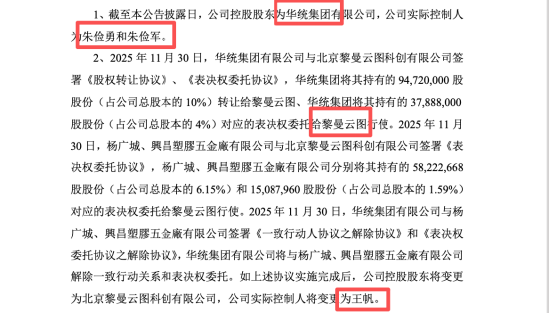
Core Viewpoint - A 34-year-old AI entrepreneur, Wang Fan, acquired control of Gaole Shares (002348.SZ) for nearly 900 million yuan, linking a struggling traditional company with his newly established AI business [2][3]. Group 1: Capital Changes - Wang Fan, through Beijing Lieman Yuntu Technology Co., Ltd., became the actual controller of Gaole Shares by purchasing 94.72 million shares at 4.329 yuan per share, totaling approximately 410 million yuan [3]. - The shareholding structure changed, with Lieman Yuntu obtaining 21.74% of the voting rights after the transaction [3]. - Wang's controlled Beijing Lieman Xingtou Technology Partnership plans to subscribe to a private placement of Gaole Shares at 3.7 yuan per share, expected to cost around 490 million yuan [4]. Group 2: Market Reaction - Following the completion of the transaction, Gaole Shares experienced a rapid price increase, hitting the daily limit for three consecutive trading days from December 2 to 4, and again on December 8, indicating strong market interest in the control change [5]. - However, from January 1 to 9, 2026, the stock's increase was only 4%, suggesting a cautious investor sentiment regarding the company's fundamental improvements after the initial excitement [6][9]. Group 3: Financial Performance - Gaole Shares reported a revenue of 226 million yuan for the first three quarters of 2025, with a net loss exceeding 800 million yuan, marking six consecutive years of negative performance [7]. - The company’s total assets were approximately 715.63 million yuan, with equity attributable to shareholders at about 445.22 million yuan, reflecting a decline of 2% and 2.72% respectively compared to the previous year [7]. - Previous attempts by the former controlling shareholder, Huadong Group, to pivot the company towards new energy projects have not yielded significant revenue contributions, leading to a continued financial struggle [7]. Group 4: Strategic Positioning - Wang Fan's capital strategy revolves around two main series of enterprises, focusing on AI software, integrated circuit design, and cloud computing, although six out of seven core companies he controls are not yet operational [8]. - The future business plan for Gaole Shares remains unchanged, continuing with its traditional toy business and an unlaunched solid-state battery project [8]. - The case of Gaole Shares exemplifies a "traditional asset + emerging capital" model, contrasting with other AI companies that have successfully capitalized on their innovations [9].

关税裁决交易指南:如果最高法院说“不”,特朗普还有什么牌?
Hua Er Jie Jian Wen· 2026-01-09 11:35
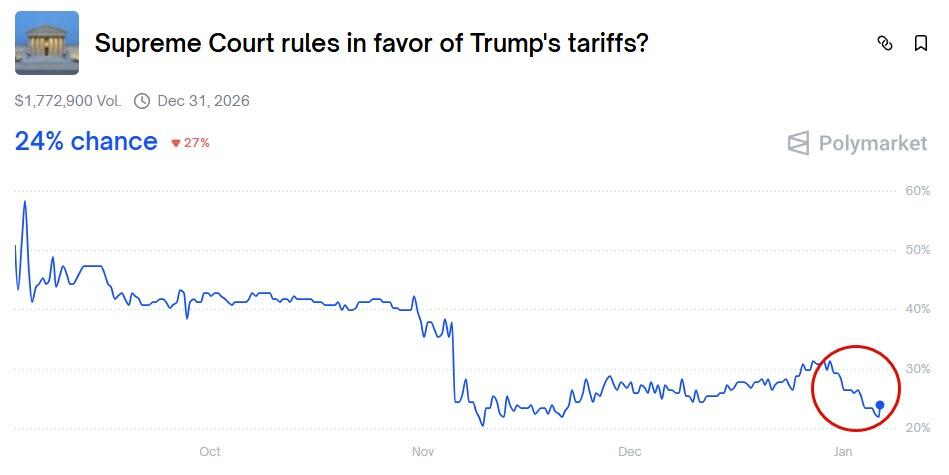
Core Viewpoint - The U.S. Supreme Court is set to make a ruling on tariffs, which is expected to significantly impact market direction, with a focus on potential responses from the White House following the decision [1][3]. Market Reactions - If tariffs are overturned but replaced, the S&P 500 index may initially rise but then decline, while a complete removal of tariffs would benefit consumer and financial stocks but could raise concerns about fiscal deficits, complicating the Federal Reserve's interest rate path [1][3]. - Current market predictions indicate a 24% chance that Trump's tariff policy will be maintained, with analysts expecting a 7:2 or 6:3 majority against the tariffs [1][3]. Sector Analysis - Consumer and retail sectors, particularly companies reliant on imports like Nike and Mattel, are expected to benefit the most if tariffs are lifted [4]. - Financial institutions such as JPMorgan and Goldman Sachs may gain from increased consumer confidence, while transportation stocks could also see positive impacts if tariffs are removed alongside tax cuts [9]. Legal Alternatives - The government has alternative legal avenues to maintain its trade agenda, including the use of various trade laws, although these options may face significant legal challenges [3][7]. - Specific trade laws mentioned include the Trade Expansion Act of 1962 and the Trade Act of 1974, which provide the president with broad powers to impose tariffs but come with limitations and potential legal hurdles [10].
一边万人大厂停工,一边出口订单暴增:“潮玩之都”东莞,深陷冰火两重天
创业邦· 2026-01-09 10:11
Core Viewpoint - The article discusses the decline of the Dongguan toy industry, exemplified by the closure of the Changrong Dongguan Toy Factory, and highlights the need for transformation from a reliance on OEM production to developing original IP and innovative products [5][10][11]. Industry Overview - Dongguan, known as the "Toy Capital of China," hosts over 4,000 toy manufacturers and 1,500 supporting enterprises, forming a robust industrial cluster [8]. - The city has historically thrived due to its proximity to Hong Kong, low labor and land costs, and an outward-oriented economic strategy, mastering the "OEM" model [8][12]. - However, many factories are now facing closures due to over-reliance on OEM, lack of product innovation, and shrinking orders, leading to a significant shift in the market landscape [8][10]. Market Dynamics - Despite the challenges, the toy export market remains strong, with a reported export value of $60.04 billion in the first 11 months of 2025, marking an 18% year-on-year increase [10]. - Some companies, like "Pinku," have successfully transitioned from OEM to developing their own brands, achieving a 50% increase in overseas e-commerce revenue in 2024 [10][19]. Transformation and Innovation - The decline of traditional manufacturing is seen as a necessary evolution, pushing the industry towards a future characterized by quality and innovation [10][25]. - The rise of "潮玩" (trendy toys) has led to a new focus on original IP development, with local brands increasingly gaining market share over traditional OEM businesses [25][28]. - By 2023, the value of original IP products in Dongguan surpassed that of OEM, accounting for 53% of the market [25]. Success Stories - Companies like "Pinku" and "ToyCity" have emerged as leaders in the original IP space, successfully integrating Chinese cultural elements into their designs and achieving significant sales growth [21][23]. - The trend of "潮玩" has been embraced by various brands, leading to a surge in exports, with a reported 78% increase in潮玩 exports compared to traditional categories [28][30]. Government Support and Future Outlook - The Dongguan government has implemented policies to support the toy industry, focusing on R&D, IP authorization, and market expansion, which are crucial for the industry's evolution [34]. - The future of Dongguan's toy industry is poised for growth, transitioning from a manufacturing hub to a center of creativity and innovation on a global scale [34].
卖平价IP玩具,桑尼森迪冲刺港股IPO!扭亏背后营销开支激增,大客户兼任供应商
Sou Hu Cai Jing· 2026-01-09 08:11
Core Viewpoint - Sunnysondi (Hunan) Group Co., Ltd. has submitted its listing application to the Hong Kong Stock Exchange, aiming to capitalize on its position as a leading player in the affordable IP toy market in China, with significant growth in revenue projected for the coming years [1]. Group 1: Company Overview - Sunnysondi was established in 2015 and specializes in IP toys, collaborating with popular IPs such as "Nezha: Birth of the Demon Child" and "The King's Avatar" [1]. - The company offers its IP toy products at a suggested retail price of 9.9 yuan or lower, which is significantly below the prices of other leading companies in the Chinese IP toy industry [1]. Group 2: Market Position - According to Frost & Sullivan, Sunnysondi ranks first in the affordable 3D IP toy segment priced at 20 yuan or below, based on projected sales for 2024 [1]. - Among the top five companies in the affordable IP toy industry, Sunnysondi is noted to be the fastest-growing company in terms of retail revenue growth from 2023 to 2024 [1]. Group 3: Financial Performance - For the reporting periods of 2023, 2024, and the first three quarters of 2025, Sunnysondi achieved revenues of approximately 107 million yuan, 245 million yuan, and 386 million yuan, respectively, with profits of -19.92 million yuan, -0.505 million yuan, and 51.96 million yuan [2]. - The company has shown a significant turnaround in profitability, with a projected profit of 51.96 million yuan for the first three quarters of 2025 [2]. Group 4: Marketing and R&D Expenditure - Marketing and distribution expenses increased significantly from 16.3 million yuan for the nine months ending September 30, 2024, to 36.8 million yuan for the nine months ending September 30, 2025, primarily due to increased investment in e-commerce and a larger sales and marketing team [3]. - R&D and administrative expenses have also seen substantial increases during the same periods [4]. Group 5: Dependency on IP Partnerships - Sunnysondi's revenue from IP toy products constituted 28.0%, 48.6%, and 78.3% of total revenue for the respective reporting periods, indicating a growing reliance on IP partnerships [5]. - The company faces risks related to the renewal of licensing agreements, which typically last one to two years and may not automatically renew [5]. Group 6: Customer and Supplier Overlap - Sunnysondi has overlapping relationships with its top customers and suppliers, with two of its top five customers also serving as suppliers [6]. - The company has reported revenues from one of these overlapping customers, with significant increases in revenue from 0 yuan to 7.69 million yuan over the reporting periods [6].
就在今天!特朗普关税案迎关键裁决,如何影响美国经济及股债?
Feng Huang Wang· 2026-01-09 04:03
Group 1 - The U.S. Supreme Court is expected to rule on the legality of tariffs imposed by President Trump, which could significantly impact trade policy and the U.S. fiscal situation [1] - The ruling will focus on whether the Trump administration had the authority to impose tariffs under the International Emergency Economic Powers Act (IEEPA) and if the government must refund tariffs if deemed illegal [1] - Treasury Secretary Yellen anticipates a compromise ruling, suggesting that the government could still collect tariffs at similar levels even if it loses the case [1] Group 2 - If the tariffs are invalidated, it could negatively affect U.S. industrial repatriation plans and fiscal health, potentially raising interest rates, while benefiting corporate profits by lowering input costs [2] - The probability of the Supreme Court supporting the current tariff policy is only 28%, indicating a strong expectation of a ruling against the tariffs [2] - The Treasury Department projects tariff revenues of approximately $195 billion for FY2025 and $62 billion for FY2026 to date [2] Group 3 - The upcoming ruling is seen as a significant test for U.S. equity and bond markets, with potential long-term uncertainty if tariffs are overturned [3] - Analysts predict that if tariffs are lifted, corporate profit margins may increase, boosting the stock market, while complicating the Federal Reserve's interest rate decisions [3] - A potential economic stimulus from halting tariffs could exacerbate the government's budget deficit, putting pressure on U.S. debt [3] Group 4 - Wells Fargo's chief equity strategist forecasts a 2.4% increase in EBITDA for S&P 500 companies in 2026 if the Supreme Court overturns the tariff policy, likely leading to higher stock prices [4] - Companies heavily reliant on imported goods, such as apparel and toy manufacturers, are expected to benefit the most from tariff removal [5] - Financial institutions may also gain from increased consumer spending, along with industrial manufacturing and transportation sectors benefiting from potential economic boosts [5] Group 5 - Conversely, sectors benefiting from trade protectionism, such as materials and commodities, may underperform if tariffs are lifted [6] - Bond traders are preparing for market volatility, with U.S. Treasury bonds having risen over 6% last year, marking the best performance since 2020 [6] - The removal of tariffs could reignite fiscal concerns, leading to a rise in long-term yields, although the impact is expected to be limited as the Trump administration may seek alternative legal avenues to restore most tariffs [6]