茶饮

Search documents
走自己的路,喜茶不再盲目?
Xin Lang Cai Jing· 2026-01-10 02:28
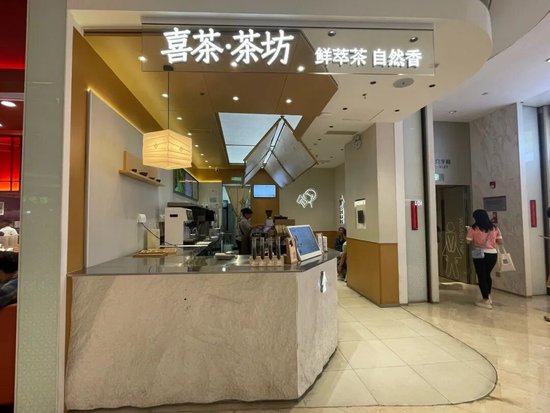
Core Viewpoint - Heytea, known for its cheese tea, quickly gained popularity in the beverage industry but has faced challenges due to price wars and a decline in brand appeal [2][35]. Group 1: Market Position and Strategy - In December 2025, Heytea had 3,883 operating stores, a decrease of over 500 compared to the previous year, indicating a contraction in its market presence despite strong consumer demand [4][21]. - The decision to open franchises in November 2022 marked a significant shift from its previous self-operated model, aimed at maintaining a high-end brand image [5][22]. - By the end of 2023, Heytea's store count exceeded 3,200, with 2,300 being partner-operated, reflecting a move towards a more mainstream market [7][24]. Group 2: Challenges and Responses - The rapid expansion through franchising has led to quality control issues, with reports of inconsistent product quality across different locations [8][25]. - In February 2025, Heytea announced a strategic shift to focus on brand differentiation and paused new franchise applications, recognizing the negative impact of price competition on consumer perception [9][26]. - The company has reduced its collaboration efforts, with the number of partnerships dropping from 14 in 2024 to 5 in 2025, and is focusing on unique product offerings like "super plant tea" [12][28]. Group 3: Future Outlook - The introduction of new quality standards for tea beverages in 2026 is expected to benefit Heytea, which has already positioned itself for a focus on quality and health [30][31]. - Despite the shift back to a high-end focus, the company faces challenges in maintaining profitability and expanding its market share in a competitive landscape [33][34]. - Heytea has also increased its international presence, with over 100 overseas stores by August 2023, indicating a strategy to diversify its market reach [34].

当面包开始「奶茶化」
36氪· 2026-01-10 01:19
Core Viewpoint - The article discusses the trend of "milk tea-ification" in the baking industry, where traditional baked goods are increasingly incorporating popular ingredients from the milk tea sector to attract younger consumers and enhance product appeal [4][6][22]. Group 1: Milk Tea-ification in Baking - The baking industry is experiencing a transformation where products are no longer limited to traditional ingredients, with items like taro and glutinous rice becoming central components in baked goods [6][10]. - The trend reflects a broader consumer preference for visually appealing and flavorful products, as seen in the rise of items like "taro snow mountain buns" and "glutinous rice soft European bread" [8][10]. - The incorporation of diverse fillings and flavors is becoming a key selling point, with consumers increasingly valuing products that are rich in ingredients and visually attractive [11][13]. Group 2: Consumer Behavior and Market Dynamics - Despite a general trend of consumption downgrade, consumers are willing to pay a premium for innovative and high-quality baked goods, indicating a shift in spending habits towards frequent, enjoyable food experiences [22][25]. - The average price of baked goods has risen significantly, with items like bagels and ciabatta now commanding prices well above their previous levels, reflecting a willingness to invest in quality [22][28]. - Data shows that while luxury goods are seeing a decline in sales, the demand for high-quality baked products is increasing, with an average annual growth of 8% to 10% in the sector [28][29]. Group 3: Innovation and Product Development - The article highlights the innovative approaches taken by various baking brands, such as integrating local flavors and ingredients into traditional recipes, which enhances the appeal of products like ciabatta [18][20]. - The concept of "doing addition" in product development is emphasized, where brands are not just adding ingredients but also creating new culinary experiences that resonate with consumer preferences [29][31]. - The success of these products is attributed to their ability to balance flavors and meet the emotional needs of consumers, leading to a new wave of popular items in the market [31].

扩张与挑战交织,霸王茶姬发布2025年终回顾
Nan Fang Nong Cun Bao· 2026-01-10 00:34
Core Insights - Bawang Chaji has experienced significant expansion and challenges in 2025, with a focus on global growth and brand reputation issues [2][3][21] Expansion and Growth - By the end of 2025, Bawang Chaji expanded its store presence to 8 countries across 2 continents, including China, Malaysia, Indonesia, the Philippines, Vietnam, Thailand, Singapore, and the United States [10] - The overseas market membership in the Asia-Pacific region grew by 177% year-on-year in 2025 [12] - The annual tea procurement volume exceeded 10,000 tons, covering six major tea categories and over 100 cooperative tea factories [14] - The product "Boyar Jue Xuan" became a phenomenon, with over 30 million customers ordering two or more cups in a year, and cumulative sales reaching 1.25 billion cups from January 2022 to June 2025 [19][20] Challenges and Controversies - Bawang Chaji faced significant challenges, including a food safety incident involving a staff member's improper handling of ingredients, which led to a public backlash and damage to the brand's reputation [23][27] - The company also encountered controversy regarding caffeine content in its products, prompting legal action to defend its reputation [28][29] - Following these controversies, Bawang Chaji's stock experienced a significant drop of 14.5% on December 26, 2025, resulting in a market value loss of approximately $200 million [35][36] Financial Performance - In the third quarter of 2025, Bawang Chaji reported a total GMV of 7.93 billion yuan, with net revenue of 3.208 billion yuan, reflecting a year-on-year decline of 9.4% in revenue and a 22.3% drop in net profit [44][46] - The decline in domestic market performance was attributed to intensified competition in the food delivery sector, affecting customer retention [47][48] - Despite domestic challenges, the overseas market showed strong growth, with GMV surpassing 300 million yuan in the third quarter, marking a year-on-year increase of 75.3% [56]

英德红茶×喜茶港澳上新!全球喜粉纷纷打卡,“什么时候轮到我们”?
Nan Fang Nong Cun Bao· 2026-01-09 12:03
Core Viewpoint - The collaboration between Yingde Black Tea and Heytea has led to the launch of new products that are gaining popularity globally, showcasing the brand's strong market presence and innovative potential in the beverage industry [9][31][40]. Group 1: Product Launch and Popularity - Heytea has introduced two new limited products in Hong Kong and Macau: "Salty Cheese Yinghong" and "Yinghong Milk Tea," which are receiving positive feedback from consumers [9][10]. - The new products are being celebrated on social media platforms, with users in various regions, including Sydney and Seoul, sharing their experiences and referring to the drinks as "summer saviors" and "afternoon essentials" [18][19][20]. Group 2: Brand Collaboration and Market Impact - This marks the third collaboration between Heytea and Yingde Black Tea, with previous launches achieving significant sales records, such as 1,500 cups sold in a single store in one day and 800,000 cups sold on the first day of a previous product launch [32][36]. - The brand value of Yingde Black Tea has reached 5.178 billion yuan, ranking first among regional public brands in the black tea category in China [39]. - The total industrial output value of Yingde Black Tea has surpassed 10.2 billion yuan, contributing to employment for 155,000 people [41]. Group 3: Cultural and Market Transformation - Yingde Black Tea has successfully transformed from a traditional product into a contemporary cultural symbol, connecting historical significance with modern trends [42][44]. - The brand is not only a product but also a cultural IP that represents Chinese tea culture in a modern context, appealing to global consumers [43][44].
霸王茶姬还没做成“东方星巴克”,先得了星巴克的病
3 6 Ke· 2026-01-09 10:24
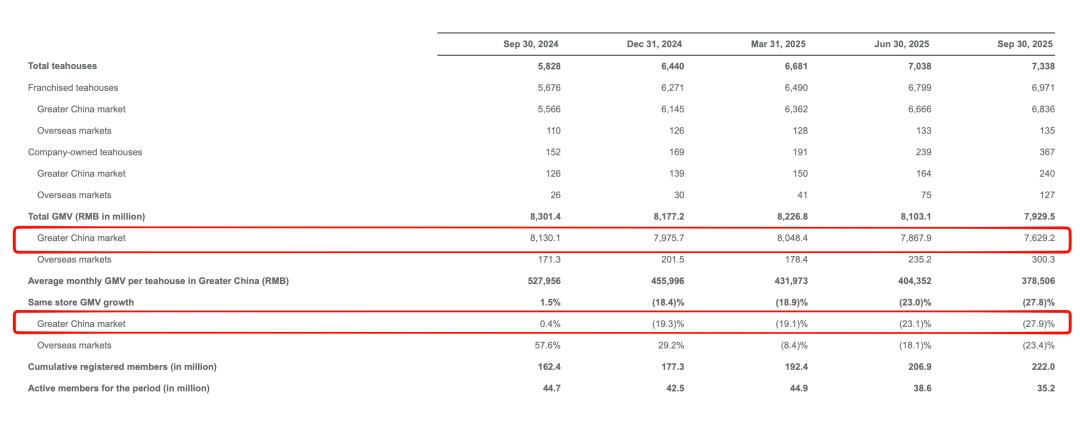
Core Viewpoint - The company BaWang Tea Ji, which went public on NASDAQ less than a year ago, is reportedly considering a secondary listing in Hong Kong, although it has denied these rumors. The company is experiencing a significant slowdown in revenue and profit growth, raising concerns about its market position and brand image [1][3][4]. Financial Performance - BaWang Tea Ji's revenue and profit growth have noticeably slowed over the past year, with growth rates declining for three consecutive quarters. In Q3 of the previous year, the company reported a revenue decline of 9.4% year-over-year and a nearly 40% drop in net profit, marking the first time its quarterly GMV turned negative [1][5]. - The average monthly GMV per teahouse in Greater China has been declining for seven consecutive quarters, with the same-store GMV growth rate falling into negative territory for four quarters, reaching a decline of nearly 28% in Q3 [1][2]. Market Position and Brand Image - BaWang Tea Ji has faced multiple public relations crises that have damaged its high-end brand image, including controversies over product ingredients and employee behavior. The company is known for its significant marketing expenditures, which have helped it establish a premium position in the market [3][4][11]. - The company has refrained from participating in the aggressive food delivery subsidy wars that have benefited competitors, which has contributed to its revenue decline. While other brands like MiXue Ice City and GuMing have seen substantial growth, BaWang Tea Ji's revenue growth has sharply decreased since Q2 of the previous year [5][6][7]. Expansion and Future Strategy - BaWang Tea Ji has expanded its store count significantly, from 1,087 in 2022 to 6,440 in 2024, but the pace of new store openings is expected to slow in 2025 [8][10]. - The company is exploring overseas markets, where it has seen better performance, with GMV in international markets exceeding 300 million RMB, reflecting a year-over-year growth of 75.3% [22]. Stock Performance - Since its peak market valuation of over $7 billion, BaWang Tea Ji's stock price has dropped by more than 60%, with a current market cap of approximately $2.366 billion [23].
一周4000万曝光,喜茶找了下一个“Labubu”联名
东京烘焙职业人· 2026-01-09 08:34
Core Viewpoint - The collaboration between Heytea and Pop Mart's IP "Starry Person" has emerged as a significant event in the beverage industry, marking a successful global launch of a new product line that has generated substantial consumer interest and engagement [6][11]. Group 1: Collaboration Highlights - The partnership represents the first global collaboration in the tea beverage industry, covering multiple dimensions including product, materials, space, and international markets [7]. - The new product "Tiramisu · Rich Chocolate" was launched on December 29, 2023, and sold out quickly, with social media discussions reaching over 40 million views [6][7]. - The collaboration features a series of themed products, including drinks and pastries, enhancing the consumer experience through unique design elements that encourage social sharing [7][9]. Group 2: Market Impact - The collaboration has been strategically timed to coincide with the Christmas and New Year period, allowing for a synchronized global launch across multiple countries, including Malaysia and the United States [9][17]. - Heytea has expanded its international presence, with over 100 overseas stores, including more than 30 in the United States, providing a broader market reach for the collaboration [9][11]. - The partnership is expected to significantly contribute to Pop Mart's revenue, with predictions indicating that "Starry Person" could account for 8% of total sales by 2027 [6][11]. Group 3: Strategic Approach - Heytea's cautious yet flexible approach to collaborations has allowed for focused marketing efforts, with only two IP collaborations launched in 2025, ensuring high levels of attention and engagement [14][15]. - The innovative use of materials and interactive marketing strategies has enhanced the consumer experience, allowing for creative expressions of the "Starry Person" brand [15][17]. - The collaboration exemplifies a shift in both brands towards becoming cultural symbols, moving beyond their original product categories to create a broader lifestyle narrative [17][18].


高盛:古茗(01364)今年透过多重策略推动同店销售增长 予“买入”评级
智通财经网· 2026-01-09 07:25
Core Viewpoint - Goldman Sachs released a report indicating that Gu Ming (01364) faces high base pressure for same-store sales growth but expects support from key factors such as coffee product promotion, gradual breakfast offerings, early store openings, product category expansion, and enhanced in-store experiences [1] Group 1: Company Outlook - Gu Ming's management anticipates same-store sales growth to face high base pressure but remains optimistic due to strategic initiatives [1] - The company plans to maintain its store expansion at a year-on-year level, focusing on existing regional penetration and new market development [1] - The gross margin is expected to remain stable, while operating profit margin is projected to increase moderately due to operational leverage [1] Group 2: Market Strategy - Management noted a recent easing in subsidy intensity but believes the overall impact remains manageable due to cautious brand activities, successful new products aiding customer retention, and in-store sales recovering from low levels [1] - Long-term, Gu Ming aims to expand to 30,000 to 40,000 stores in China under the current model, indicating potential for further growth if new store potential is realized [1] - The group reaffirmed its commitment to a payout ratio exceeding 50% [1]
高盛:古茗今年透过多重策略推动同店销售增长 予“买入”评级
Zhi Tong Cai Jing· 2026-01-09 07:24
Core Viewpoint - Goldman Sachs released a report indicating that Gu Ming (01364) acknowledged challenges in same-store sales growth due to high base pressure, but several key factors will provide support, including coffee product promotions, gradual breakfast offerings, early store openings, product category expansion, and enhanced in-store experiences [1] Group 1: Company Outlook - Gu Ming's management expects same-store sales growth to face high base pressure but remains optimistic about support from various initiatives [1] - The company anticipates its store expansion to remain flat year-on-year, focusing on existing regional penetration and new market development [1] - The gross margin is expected to remain stable, while operating profit margin is projected to rise moderately due to operational leverage [1] Group 2: Market Strategy - Management noted a recent easing in subsidy intensity, but believes the overall impact remains manageable due to cautious brand activities, successful new products aiding customer retention, and in-store sales recovering from low levels [1] - Long-term, Gu Ming aims to expand to 30,000 to 40,000 stores in China under the current model, indicating potential for further growth if new store potential is realized [1] - The group reaffirmed its commitment to a payout ratio exceeding 50% [1]
牛市早报|12月CPI今日公布,中国石化与中国航油实施重组
Xin Lang Cai Jing· 2026-01-09 00:16
Market Overview - As of January 8, the Shanghai Composite Index fell by 0.07% to 4082.98 points, while the STAR 50 Index rose by 0.82% to 1455.17 points. The Shenzhen Component Index decreased by 0.51% to 13959.48 points, and the ChiNext Index dropped by 0.82% to 3302.31 points [1] - In the U.S. stock market, the Dow Jones Industrial Average increased by 270.03 points, closing at 49266.11 points, a rise of 0.55%. The S&P 500 Index rose by 0.53 points to 6921.46 points, a change of 0.01%, while the Nasdaq Composite Index fell by 104.26 points to 23480.02 points, a decline of 0.44% [1] Oil Prices - International oil prices saw a significant increase on January 8. The price of light crude oil futures for February delivery rose by $1.77 to $57.76 per barrel, marking a 3.16% increase. The March delivery of Brent crude oil futures increased by $2.03 to $61.99 per barrel, a rise of 3.39% [1] Industry Developments - The Ministry of Industry and Information Technology, along with other regulatory bodies, held a meeting to discuss the regulation of the power and energy storage battery industry. The meeting highlighted the rapid development of the industry and the need to address irrational competition and overcapacity risks. Measures will include strengthening market supervision, enhancing product quality checks, and promoting industry self-regulation [2] - A meeting focused on the development and implementation of the "Mobile Power Safety Technical Specifications" was held, emphasizing the need for standardization to prevent safety incidents related to mobile power sources. This initiative is seen as crucial for ensuring public safety and promoting high-quality industry development [3] - The State Administration for Market Regulation has reportedly conducted discussions with major companies in the photovoltaic industry regarding monopoly risks and has issued corrective measures to ensure fair competition and prevent price collusion [4] - China Petroleum & Chemical Corporation and China Aviation Oil Group have received approval for a merger, which aims to leverage their integrated refining and aviation fuel supply advantages to reduce costs [5] Company News - Vanke Enterprise Co., Ltd. announced that its executive vice president, Yu Liang, will resign due to retirement age, effective January 8, 2026 [6] - Wens Foodstuff Group Co., Ltd. projected a net profit of 5 billion to 5.5 billion yuan for 2025, representing a year-on-year decline of 40.73% to 46.12% [6] - Semiconductor equipment manufacturer Zhongwei Semiconductor Equipment (Shanghai) Co., Ltd. announced plans for a share reduction by its major shareholder, which may involve up to 12.52 million shares, or 2% of the total share capital [7]

美宣称:将无限期控制委石油销售丨今日财讯
Sou Hu Cai Jing· 2026-01-08 15:08
Group 1 - The People's Bank of China conducted a reverse repurchase operation of 1.1 trillion yuan with a term of 3 months (90 days) [2] - China Petroleum & Chemical Corporation (Sinopec) and China Aviation Oil Holding Company announced a restructuring, with China Aviation Oil being the largest aviation fuel service provider in Asia [2] - Domestic flight ticket prices have significantly dropped after New Year's Day, with some tickets as low as 210 yuan, equivalent to a 1.1% discount [2] Group 2 - Multiple automotive companies have announced promotional discounts in response to the impact of the new energy vehicle purchase tax, including Tesla's low-interest financing options [5] - Bawang Tea has denied rumors of plans for a Hong Kong IPO, stating that there are currently no such plans [6] - The U.S. government has announced it will indefinitely control the sale of Venezuelan oil, with revenues being deposited into U.S. controlled accounts [7] Group 3 - The memory market has entered a "super bull market" phase, surpassing historical highs from 2018, driven by increased demand from AI and server capacity [8]