锂电

Search documents
永杉锂业2025年业绩预亏,股权拍卖与治理优化引关注
Jing Ji Guan Cha Wang· 2026-02-12 10:39
Economic Overview - The company Yongshan Lithium Industry (603399) recently disclosed a projected net loss for 2025, estimating a loss between 310 million to 390 million yuan, primarily due to a decline in lithium salt prices, increased inventory impairment losses, and low profit margins in the molybdenum business [2]. Recent Events - In January 2026, the company experienced multiple equity auction events, including the sale of 10 million unrestricted circulating shares for 99.264 million yuan, with subsequent auctions involving nearly 100 million yuan, which may impact the shareholder structure [3]. Company Structure and Governance - On January 6, 2026, the company announced the complete解除 of share pledges, resulting in a decrease in the proportion of frozen shares. Additionally, the governance structure has eliminated the supervisory board to enhance decision-making efficiency and share liquidity [4]. Industry Policy and Environment - The lithium battery sector is influenced by fluctuations in lithium carbonate prices and policy directions. The Tianfeng Metal New Materials team noted that the clearing of supply-side capacity in lithium could present structural opportunities, with the company's performance closely tied to lithium prices [5].

从卖方到买方“无缝衔接”!华富基金沈成:产业框架之下,大胆假设、小心求证
聪明投资者· 2026-02-12 07:26
Core Insights - The article emphasizes the importance of a structured research framework in analyzing industries and companies, particularly in understanding supply and demand dynamics and technological advancements [2][4][12]. Group 1: Research Framework and Methodology - The research methodology involves building a framework, making bold hypotheses, and continuously validating and adjusting these assumptions based on ongoing data [20][21]. - Supply-side research is highlighted as a critical area for generating differentiated insights, as it is often more challenging and time-consuming than demand-side analysis [4][19]. - Understanding industry cycles is deemed essential, with a focus on the cyclical nature of growth industries, which are often misclassified as non-cyclical [11][12]. Group 2: Industry Analysis and Investment Strategy - The investment strategy is categorized into core and satellite positions, where core positions focus on mainstream growth opportunities, while satellite positions seek out undervalued stocks with significant upside potential [30][31]. - The article outlines different stages of industry development, emphasizing that investment focus shifts from growth potential in early stages to valuation and competitive dynamics in later stages [22][25]. - The importance of management capabilities varies by industry, with strategic vision being crucial in early stages and operational efficiency becoming more significant as companies scale [28][29]. Group 3: Sector-Specific Insights - The article discusses the lithium battery supply chain, indicating that price discrepancies will eventually balance out, and there is no need for excessive concern [8][44]. - In the human robotics sector, the focus is on the product capabilities of Tesla's Gen3 robot, with the supply chain's importance ranked from core Tesla-related companies to potential domestic players [49]. - The electric grid equipment sector is divided into domestic-focused companies and those expanding internationally, with the latter expected to benefit significantly from AI advancements [50][53].


跨境出海周度市场观察:行业环境头部品牌动态投资运营产品技术营销活动-20260212
Ai Rui Zi Xun· 2026-02-12 07:13
Industry Trends - The automotive industry is entering a new phase of "systematic overseas expansion," with the release of the "Automotive Data Export Security Guidelines (2026 Edition)" to enhance compliance and reduce cross-border risks[2] - China's self-developed games are projected to achieve overseas sales revenue of $20.455 billion by 2025, marking a year-on-year growth of 10.23%[2] - The lithium battery industry is expected to undergo a supply-demand restructuring by 2025, driven by technological innovations and overseas expansion efforts[4] - Uzbekistan is emerging as a key investment destination for Chinese companies, with a projected GDP growth rate of 7.7% by 2025 and a total foreign trade volume exceeding $81 billion[4] - The Chinese energy storage battery sector is experiencing a surge in overseas orders, particularly in Africa, where the demand for renewable energy solutions is high[5] Top Brand News - JD.com is testing its European online retail brand Joybuy in the UK, focusing on categories like maternal and infant products, with plans to double its overseas warehouse area by 2025[9] - Airwallex has completed a $330 million Series G financing round, achieving a valuation of $8 billion, and supports cross-border payments in over 200 countries[11] - Anta Sports has announced a strategic acquisition of a 29.06% stake in Puma for approximately $12.278 billion, aiming to revitalize the brand amid its recent financial struggles[12] - The Chinese tea brand Mixue Ice Cream has expanded its overseas presence to 4,733 stores, leveraging a low-price strategy to attract global consumers[14]
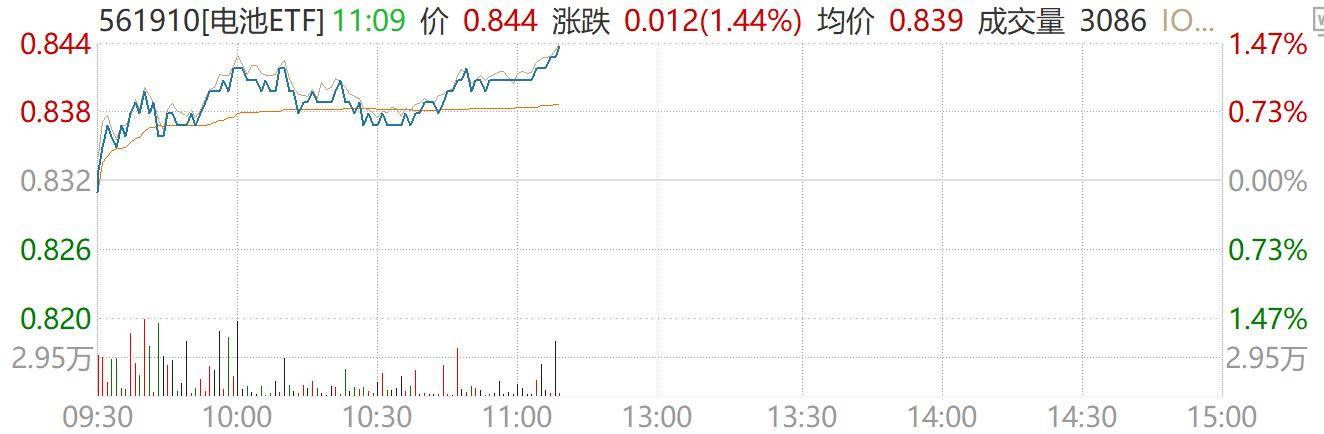
锂电从周期底部迈入业绩上行期,电池ETF(561910)盘中拉涨1.5%,科士达、银轮股份领涨!
Sou Hu Cai Jing· 2026-02-12 03:28
Core Viewpoint - The battery sector continues to show strong performance, driven by a combination of robust demand, capacity utilization, and profitability recovery, alongside advancements in solid-state battery technology [2][3]. Group 1: Demand Dynamics - Downstream demand has exceeded expectations, with the global electric vehicle (EV) sales projected to reach 23.54 million units by 2025, marking a year-on-year growth of 29.1%, with China accounting for over 70% of this market [4]. - The energy storage sector is expected to see explosive growth, with global energy storage battery shipments projected to reach 640 GWh by 2025, representing a staggering year-on-year increase of 82.9% [4]. - Major Chinese battery manufacturers reported a production increase of over 45% year-on-year in January and February, significantly surpassing previous forecasts of less than 30% growth for the year [4]. Group 2: Supply and Pricing Dynamics - The supply-demand landscape in the lithium battery industry has fundamentally shifted, moving from a phase of oversupply and profit decline to one of recovery and price increases starting June 2025 [5]. - The price of lithium hexafluorophosphate and lithium carbonate has risen since September, driven by strong demand from downstream battery cell manufacturers and improved capacity utilization in the materials sector [5]. - Recent earnings forecasts from several lithium material companies indicate substantial growth in Q4 2025, confirming the industry's transition from a "cyclical bottom" to an "upward performance phase" [5]. Group 3: Technological Advancements - The solid-state battery sector is experiencing accelerated industrialization, with significant developments such as the mass production of dry electrode technology and the first international output of domestic dry process technology [6]. - The battery ETF (561910) closely tracks the battery theme index, which is strategically positioned to benefit from the current industrial cycle, with 56% exposure to energy storage and over 45% to solid-state battery concepts [6]. - The top ten weighted stocks in the index include leading companies across various segments of the battery supply chain, indicating a strong focus on industry leaders [6].


对话天齐锂业 | 碳酸锂期货的产业应用“法则”
Qi Huo Ri Bao· 2026-02-12 00:25
Core Insights - The launch of lithium carbonate futures has restructured the pricing logic in the lithium battery industry and integrated risk management tools into various segments of the industry chain, becoming essential for enterprises to manage price fluctuations and stabilize operations [1][3][4]. Industry Development - The lithium carbonate industry has developed a complete and mature supply chain, and the introduction of futures has injected new vitality into this sector, providing a new price discovery mechanism and risk management system [3][4]. - The futures market has transformed the pricing model in the lithium industry, requiring companies to respond more quickly to market price fluctuations, thereby enhancing market sensitivity and professional judgment [4][14]. Risk Management - Futures tools allow industry enterprises to shift from passively enduring price fluctuations to actively managing price risks, marking significant progress in the lithium battery sector [4][6]. - The core logic of hedging is to transfer risks through the futures market, safeguarding spot operations [3][9]. Market Participation - The market participants have diversified since the launch of lithium carbonate futures, with financial institutions, futures companies, and funds entering the market, enhancing liquidity and trading activity [4][12]. - The introduction of futures has fundamentally changed the operational rhythm and response strategies of enterprises, necessitating timely adjustments to pricing strategies [4][12]. Practical Application - Companies like Tianqi Lithium have actively explored the application of lithium carbonate futures, integrating hedging into daily operations to achieve stable development [8][9]. - A professional market analysis team within the company focuses on supply and demand relationships to ensure that futures operations align with industry realities [9][10]. Future Outlook - The integration of futures tools into the lithium industry is expected to deepen, with the potential for more diverse and professional risk management tools as the futures market evolves [14]. - The company aims to continue optimizing its hedging operations and serve as a model for other industry enterprises to leverage futures tools effectively [14].

碳酸锂期货的产业应用“法则”
Qi Huo Ri Bao· 2026-02-12 00:03
Core Viewpoint - The launch of lithium carbonate futures has restructured the pricing logic in the lithium battery industry and integrated risk management tools into various segments of the industry chain, becoming essential for enterprises to manage price fluctuations and stabilize operations [1][2]. Industry Development - The lithium carbonate industry has developed a mature supply chain, and the introduction of futures has injected new vitality into this sector, providing a new price discovery mechanism and risk management system [2]. - The listing of lithium carbonate futures has fundamentally changed the pricing model in the industry, requiring companies to respond more quickly to market price fluctuations [5]. Pricing Mechanism - The futures prices provide a fair and transparent price reference for the industry, moving away from reliance on quoted prices or fixed pricing models [3]. - Futures tools allow enterprises to shift from passive acceptance of price fluctuations to proactive management of price risks, marking significant progress in the lithium battery industry [3]. Market Participation - Prior to the futures listing, market participants were mainly industry enterprises and a few traders, but the market has since diversified with the entry of financial institutions and futures companies, enhancing liquidity and trading activity [4]. - The diversification of market participants has transformed the lithium market into a composite market that integrates industry and finance, reflecting real market supply and demand [4]. Operational Changes - The listing of lithium carbonate futures has led to significant changes in corporate operational strategies, compelling companies to enhance their market sensitivity and analytical capabilities [5]. - Futures tools provide customized services tailored to specific enterprise needs, allowing for more flexible risk management options [5]. Practical Application - Companies like Tianqi Lithium have actively explored the application of lithium carbonate futures, integrating hedging into daily operations to achieve stable development [6]. - A focus on fundamental analysis and a calm operational approach are key to successful futures trading, ensuring that operations align with market realities [6][7]. Risk Management - Companies must establish a robust risk management system, ensuring that trading scales match their financial reserves to effectively utilize futures tools [8]. - The essence of hedging is to stabilize operations rather than pursue speculative gains, emphasizing the importance of aligning futures trading with actual market needs [7]. Collaborative Efforts - The successful application of lithium carbonate futures in the industry relies on the collaborative efforts of exchanges, futures companies, and industry enterprises [9][10]. - Continuous professional development and training for industry participants are crucial for maximizing the value of futures tools [10][11]. Future Outlook - The futures market is expected to provide more diverse and professional risk management tools as the system of futures products continues to evolve [12]. - Tianqi Lithium aims to deepen the integration of futures and spot markets, enhancing its hedging operations and leading other enterprises in utilizing futures tools for high-quality development in the new energy sector [12].

多家公募机构看好持股过节
Zheng Quan Ri Bao· 2026-02-11 16:17
Group 1 - The core viewpoint of the article emphasizes the debate among investors regarding whether to hold stocks or cash during the upcoming Spring Festival, with many public fund institutions advocating for holding stocks based on historical data and current macroeconomic conditions [1][2]. - Historical data from FuGuo Fund indicates that the A-share market tends to perform weakly before the Spring Festival but shows significant strength afterward, with average returns of -2.20% in the second week before the festival and 2.03%, 0.86%, and 0.83% in the first, second, and third weeks after the festival, respectively [1]. - Public fund managers suggest that the current macro environment supports holding stocks, citing improved liquidity conditions and a stable external environment as key reasons [2]. Group 2 - Fund managers recommend focusing on two main investment directions: technology and domestic demand value, with specific sectors such as food, retail, tourism, and resources being highlighted for their potential benefits from the Spring Festival consumption [3]. - The expectation of a "red envelope market" post-festival is noted, with anticipated strong consumption data and increased market activity due to concentrated capital inflow and positive policy expectations [3]. - Investment strategies should be tailored to individual risk preferences, with higher-risk investors encouraged to maintain higher positions, while lower-risk investors may consider reducing exposure to mitigate potential volatility during the holiday period [3].
恒指站稳27000点盘整向上 短线活跃资金离场观望
Xin Lang Cai Jing· 2026-02-11 13:36
Market Performance - The Hong Kong stock market continued its upward momentum, with the Hang Seng Index and the Hang Seng China Enterprises Index rising by 0.31% and 0.28% respectively, while the Hang Seng Tech Index saw a peak increase of 1.3% before closing up by 0.9% [2] - Major tech stocks showed recovery, with Xiaomi surging by 5.4%, and slight increases in NetEase, Kuaishou, Baidu, and Meituan [2] Sector Analysis - Gold stocks rebounded strongly, contributing to the activity in the non-ferrous sector, while other industries such as building materials, cement, automotive, lithium batteries, shipping, and coal also experienced gains [3][4] - In contrast, sectors such as film, semiconductors, insurance, dining, and aviation showed weak performance, with AI application concepts experiencing divergence [4] Trading Volume and Short Selling - The total trading volume for the day was HKD 217.218 billion, indicating a continued trend of reduced trading activity as some funds began to exit ahead of the holiday [4] - The total short selling amount reached HKD 28.824 billion, accounting for 13.27% of the Hang Seng Index's trading volume, with Alibaba, Tencent, and Xiaomi leading in short selling amounts [4] Macroeconomic Context - The macroeconomic environment appears to be warming, with overseas markets showing overall strength, as evidenced by the Dow Jones Index reaching a new high [5] - The People's Bank of China released a report indicating a focus on supporting key areas such as expanding domestic demand and technological innovation, which may benefit sectors like chemicals and raw material imports [6] Investment Outlook - Analysts suggest that the technology sector remains a long-term investment focus, supported by rising prices in the supply chain, trends towards domestic production, and accelerated AI applications [8] - The consumer sector is also expected to benefit from policy support, with current valuations at relatively low levels, indicating potential for long-term growth [8]







摩根资产管理赵隆隆:跨市场、跨产业的周期成长投资
点拾投资· 2026-02-11 11:00
Core Viewpoint - The forum discussed how active equity can create excess returns, with insights from industry experts on investment strategies in various sectors, particularly focusing on the cyclical growth opportunities in the energy metals and the lithium battery supply chain [1][2]. Group 1: Investment Strategies - Zhao Longlong emphasized the importance of supply-demand dynamics in identifying cyclical growth opportunities, particularly in the lithium battery industry, which is believed to be emerging from a low point due to increasing global demand for energy storage [1][5]. - The investment approach is simplified to supply-demand research, highlighting that while demand for energy metals is growing, supply is constrained due to low capital expenditure in recent years [5][9]. - The characteristics of companies that can traverse manufacturing cycles include having vision, capability, and the ability to keep pace with technological advancements [7][8]. Group 2: Market Outlook - For 2026, four key directions are anticipated: upstream resource products, manufacturing overseas, potential explosive AI applications, and a value reassessment in the new energy sector [2][12]. - The demand for energy storage is expected to surpass that of electric vehicles in the coming years, marking a significant shift in the lithium battery supply chain [9][12]. - The new energy sector is projected to undergo a value reassessment, with opportunities for reversal across various fields within the industry [13].

玻纤板块集体涨停,化工牛股5天4板,白银急升4%,加密货币超10万人爆仓
2 1 Shi Ji Jing Ji Bao Dao· 2026-02-11 08:11
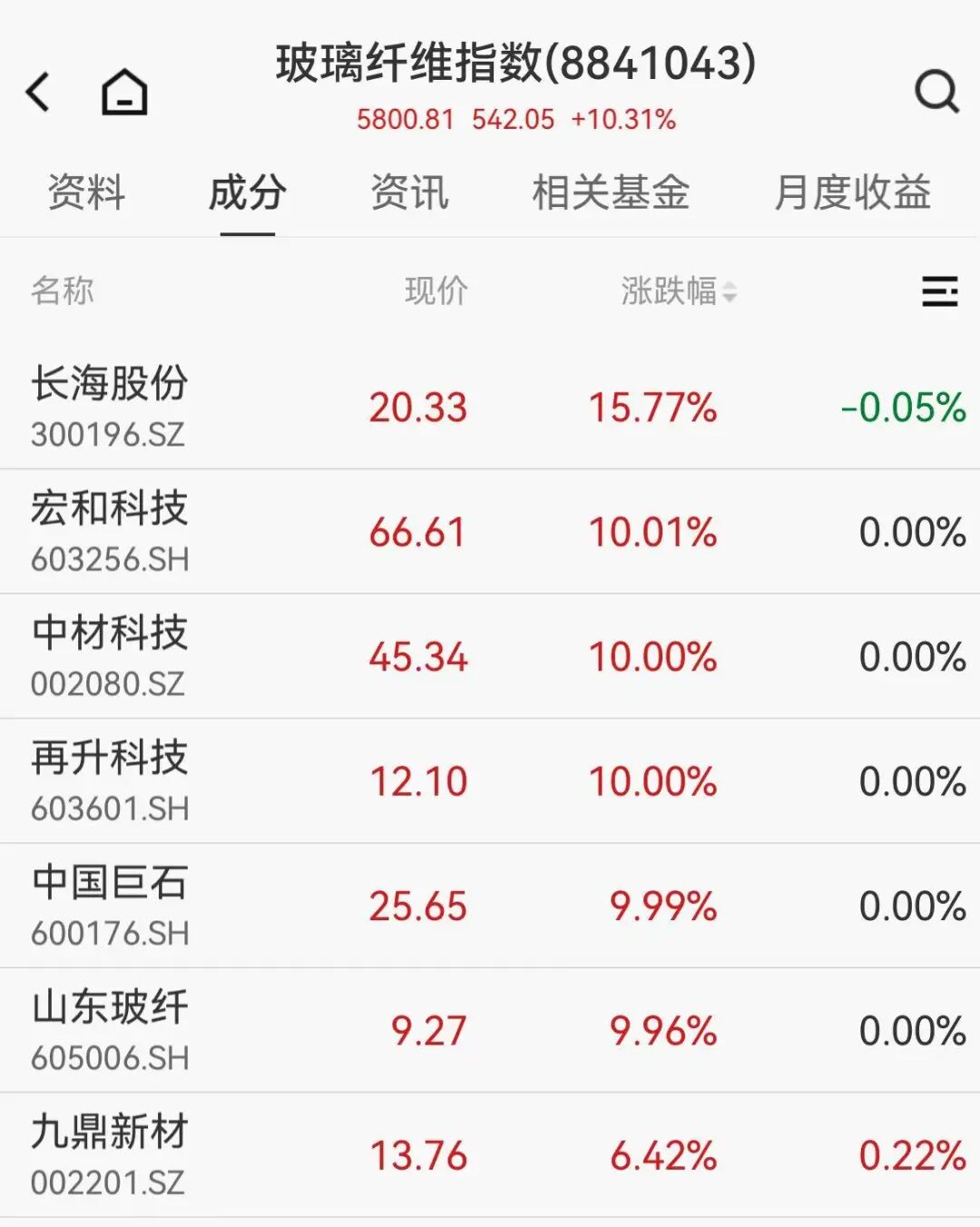
Group 1: Market Overview - The A-share market showed mixed performance on February 11, with the ChiNext Index falling over 1% and total trading volume in the Shanghai and Shenzhen markets reaching 2 trillion yuan, a decrease of 123.7 billion yuan from the previous trading day [1] - Over 3,200 stocks in the market experienced declines, indicating a broad-based sell-off [1] Group 2: Chemical Industry Insights - UBS recently released a report raising expectations for the Chinese chemical industry, predicting a new upward cycle from 2026 to 2028 due to multiple positive factors, with expectations for profit recovery and valuation increases [1] - The chemical sector has shown resilience, with companies like Jihua Group and Taihe New Materials experiencing significant stock price increases [1] Group 3: Fiberglass Sector Performance - The fiberglass manufacturing sector saw a collective surge, with nearly all stocks hitting the daily limit, a rare occurrence in the market [1] - Notable stocks included International Composite Materials, which hit a 20% limit up shortly after market open, and others like Changhai Co., Honghe Technology, and China Jushi also saw significant gains [1][2] - The fiberglass sector's revaluation is linked to price increases and demand driven by AI, with major manufacturers indicating price hikes and low inventory levels [3] Group 4: Lithium Battery and Precious Metals - Lithium battery stocks were active, with Zhongcai Technology hitting the limit up and reaching a historical high [4] - The domestic commodity futures market saw most prices rise, with lithium carbonate increasing over 9% [4] - Precious metals also experienced volatility, with silver futures rising over 4% and gold prices recovering above $5,050 per ounce [5]