
机械

Search documents
加快建设现代化产业体系——访工业和信息化部党组书记、部长李乐成
Ren Min Ri Bao· 2026-01-13 07:02
Core Viewpoint - The Chinese government emphasizes the integration of technological and industrial innovation to build a modern industrial system with international competitiveness, as highlighted by General Secretary Xi Jinping and the Central Economic Work Conference [1]. Group 1: Industrial Economic Development - The industrial economy in China is expected to maintain stability and growth, with a focus on four key areas: stability, expansion, innovation, and enhancement [2]. - Stability involves ensuring growth in key industries and regions, which account for 80% of the industrial total, through targeted support and policy measures [2]. - Expansion focuses on increasing effective demand by promoting flexible manufacturing and accelerating the application of new technologies [2]. - Innovation aims to enhance value creation through the revitalization of traditional industries and the development of emerging industries [3]. - Enhancement seeks to boost the vitality of business entities, particularly small and medium-sized enterprises, by improving cash flow and reducing burdens [3]. Group 2: Manufacturing Development Strategies - The Ministry of Industry and Information Technology plans to promote intelligent, green, and integrated development in manufacturing during the 14th Five-Year Plan period [4]. - Traditional industries will undergo revitalization through the implementation of targeted improvement plans and the adoption of digital and green technologies [4]. - Emerging industries will be accelerated through the establishment of demonstration bases and large-scale applications of new technologies [5]. - Future industries will be strategically developed, focusing on areas such as quantum technology and 6G, to achieve breakthroughs [5]. Group 3: Enhancing Technological Innovation - The government aims to increase high-quality technological supply and enhance the integration of technology and industry [7]. - Policies will be implemented to strengthen the role of enterprises in technological innovation, including tax incentives and support for specialized small and medium-sized enterprises [7]. - Efforts will be made to streamline the conversion of technological achievements into practical applications, including the establishment of a national service network for manufacturing [8]. Group 4: Digital Transformation in Manufacturing - The Ministry will focus on the large-scale application of industrial internet and the integration of artificial intelligence in manufacturing [9]. - A strong emphasis will be placed on building a solid digital foundation by improving data collection and utilization in key manufacturing sectors [9]. - The government will enhance network connectivity and promote the development of digital solutions tailored to specific industries and scenarios [10]. - Initiatives will be launched to implement artificial intelligence in manufacturing, fostering the development of intelligent enterprises and applications [10].
今年工业经济发展形势如何?将采取哪些措施保增长?访工信部部长
Xin Lang Cai Jing· 2026-01-13 06:22
Core Viewpoint - The construction of a modern industrial system in China is being accelerated, focusing on the integration of technological and industrial innovation to enhance international competitiveness [1] Group 1: Industrial Economic Development - The industrial economy in China is expected to maintain stability and growth, with a focus on four key areas: stability, expansion, innovation, and enhancement [2] - Stability involves supporting key industries and regions that account for 80% of industrial output, implementing growth plans, and ensuring policy support [2] - Expansion focuses on increasing effective demand through flexible manufacturing and promoting new technologies, while also initiating major engineering projects [2] - Innovation aims to enhance value creation by upgrading traditional industries and developing emerging sectors, such as integrated circuits and aerospace [3] - Enhancement emphasizes improving the vitality of enterprises, particularly small and medium-sized ones, by reducing burdens and ensuring timely payments [3] Group 2: Manufacturing Development - The focus during the "14th Five-Year Plan" period will be on intelligent, green, and integrated development of manufacturing, ensuring supply chain security and stability [4] - Traditional industries will undergo renewal through the implementation of targeted upgrade plans and the adoption of smart and green technologies [4] - Emerging industries will be promoted through the establishment of demonstration bases and large-scale application of new technologies [5] - Future industries will be strategically developed, focusing on areas like quantum technology and 6G, with an emphasis on innovation and ecosystem building [5] Group 3: Technological Innovation - The integration of technological and industrial innovation is prioritized to enhance productivity and secure a competitive edge in global markets [6] - High-quality technological supply will be increased through national projects and collaboration between enterprises and research institutions [6] - The role of enterprises in technological innovation will be strengthened, with policies to support R&D investments and enhance participation in major projects [7] Group 4: Digital Transformation - The promotion of digital transformation in manufacturing will be driven by the large-scale application of industrial internet and artificial intelligence [8] - A strong digital foundation will be established by focusing on high-quality data collection and usage, particularly in key manufacturing sectors [8] - The development of industrial internet platforms and smart solutions will be prioritized to enhance connectivity and application in various industries [9]
李乐成:加快建设现代化产业体系
Ren Min Ri Bao· 2026-01-13 03:15
Core Viewpoint - The interview with Li Lecheng, Minister of Industry and Information Technology, emphasizes the importance of implementing the spirit of the Central Economic Work Conference to ensure a strong start for the "14th Five-Year Plan" by focusing on innovation-driven development and building a modern industrial system with international competitiveness [2][3]. Group 1: Industrial Economic Stability - The industrial economy in China is expected to maintain stability and growth, with a focus on four key areas: stabilizing growth in key industries and regions, expanding effective demand, promoting value creation, and enhancing the vitality of business entities [3][4]. - Key industries and regions account for 80% of the total industrial output, necessitating targeted support and policy measures to ensure their growth [3]. Group 2: Modernization of the Industrial System - The "14th Five-Year Plan" aims to accelerate the modernization of the industrial system by promoting intelligent, green, and integrated development in manufacturing [5][6]. - Traditional industries will undergo renewal through the implementation of targeted upgrade plans, while new industries will be developed to create new growth drivers [5][6]. Group 3: Technological Innovation - The Ministry plans to enhance the integration of technological and industrial innovation, focusing on high-quality technological supply and the establishment of national manufacturing innovation centers [8][9]. - There will be an emphasis on increasing the participation of enterprises in major national technology projects and enhancing their innovation capabilities [8]. Group 4: Digital Transformation - The Ministry will promote the digital transformation of manufacturing through the large-scale application of industrial internet and artificial intelligence technologies [10][11]. - Efforts will be made to improve data quality and facilitate the digital transition of enterprises, particularly small and medium-sized enterprises [10][11].
开源证券:AI+的高beta现阶段依然有望获得支撑 本轮行情为科技+周期双主线
智通财经网· 2026-01-13 02:13
Group 1 - The core viewpoint is that the current AI+ high beta still has support, but a more balanced investment approach is recommended, focusing on performance improvements in AI hardware and opportunities in AI application sectors with lower institutional positions [1] - The first year of the 14th Five-Year Plan should emphasize new themes transitioning to main lines, such as commercial aerospace and brain-computer interfaces [1] - The current market trend is characterized by a dual focus on technology and cycles, with price increase clues and anti-involution support making cyclical styles promising [1] Group 2 - The hardware cycle discussion highlights the concept of "stronger becoming stronger" and the potential for valuation digestion if ΔG shows signs of weakness, although no significant turning point for ΔG has been observed yet [1] - The 2000 US tech bubble serves as a reminder that during the bubble formation phase, many tech companies experienced rapid valuation increases disconnected from actual profitability, driven by blind expectations and emotions [2] - The "6+6" model illustrates the process from bubble to disillusionment, emphasizing that true market survivors possess technological leadership, clear profit paths, and sound capital management [2] Group 3 - The end of the mobile internet era in A-shares from 2013 to 2015 reflects a similar disconnect between valuation and profitability, with weak macro cycles leading to concentrated trading in high-demand sectors [3] - The acceleration of leveraged funds contributed to a lack of safety margins in valuations, and the sustainability of industry competition and business models became critical considerations post-bubble [3]
商业航天连涨,AI全面扩散!2026年投资抓什么?
Zhong Guo Zheng Quan Bao· 2026-01-12 23:50
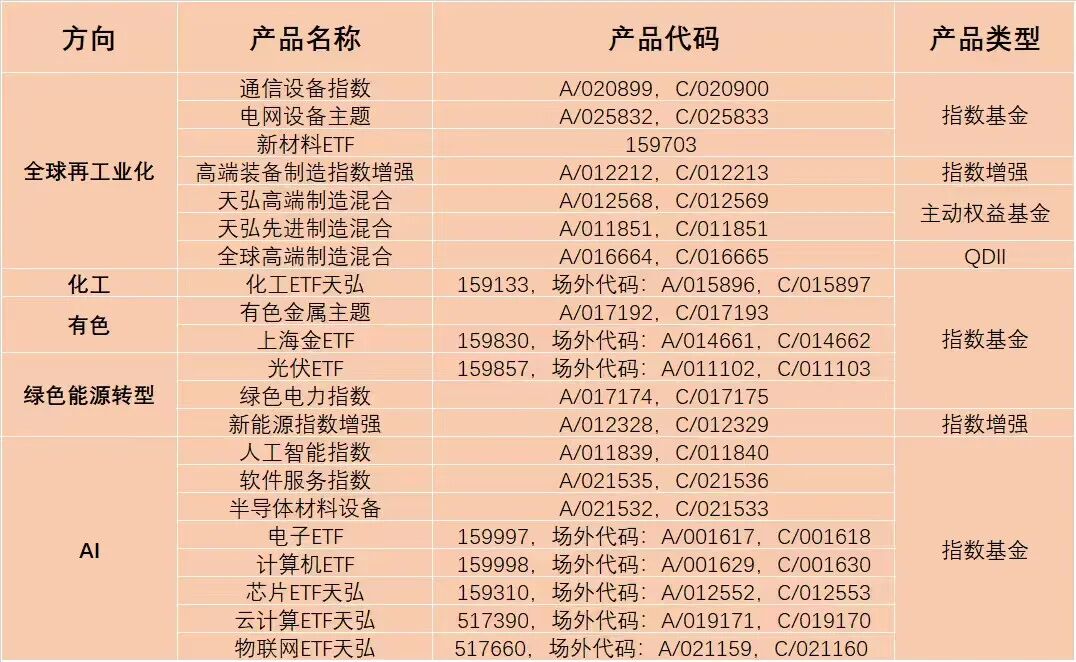
Core Viewpoint - The core investment opportunities for the next five years are centered around "global re-industrialization," driven by changes in geopolitical dynamics, the AI technology revolution, and a collective commitment to sustainable development [1][3]. Group 1: Global Re-industrialization - Global re-industrialization is driven by three main factors: geopolitical changes prompting countries to reassess supply chain security, the AI technology revolution leading to unprecedented investments in computing power and energy, and a commitment to sustainable development transforming green energy from a concept into actionable infrastructure projects [3]. - Chinese enterprises are participating in global re-industrialization through three pathways: initial type focusing on supply-side constraints, resource type extending downstream processing, and承接型 embedding into new supply chains to leverage manufacturing advantages [3][4]. Group 2: Investment Opportunities - The A-share market is expected to see a favorable investment window as industrial enterprise turnover rates and capacity utilization begin to rise, with a stable liquidity outlook for 2026 [5]. - Two main investment themes for 2026 are identified: 1. Embracing "reasonably valued winning assets," particularly manufacturing leaders with international competitiveness and stable profitability, such as those in the chemical industry [6]. 2. Exploring "potentially elastic betting assets," focusing on cyclical and certain consumer goods, where demand recovery could lead to significant price elasticity [7]. Group 3: Investment Products - A range of investment products is available for those interested in global re-industrialization, including index funds and actively managed funds targeting sectors like communication equipment, new materials, and green energy [9].

加快建设现代化产业体系(权威访谈·开局“十五五”) ——访工业和信息化部党组书记、部长李乐成
Ren Min Ri Bao· 2026-01-12 23:21
Core Viewpoint - The Chinese government emphasizes the integration of technological and industrial innovation to build a modern industrial system with international competitiveness, as highlighted by General Secretary Xi Jinping and the Central Economic Work Conference [1]. Group 1: Industrial Economic Development - The industrial economy in China is expected to maintain stability and growth, with a focus on four key areas: stability, expansion, innovation, and enhancement [2]. - Stability involves ensuring growth in key industries and regions, which account for 80% of the industrial total [2]. - Expansion focuses on increasing effective demand through flexible manufacturing and the application of new technologies [2]. - Innovation aims to enhance value creation by upgrading traditional industries and developing emerging sectors [3]. - Enhancement seeks to boost the vitality of business entities, particularly small and medium-sized enterprises, by improving cash flow and reducing burdens [3]. Group 2: Manufacturing Development Strategies - The Ministry of Industry and Information Technology plans to promote intelligent, green, and integrated development in manufacturing during the 14th Five-Year Plan period [4]. - Traditional industries will undergo renewal through the implementation of targeted improvement plans and the adoption of digital and green technologies [4]. - Emerging industries will be accelerated by creating demonstration bases and promoting large-scale applications of new technologies [5]. - Future industries will be strategically developed, focusing on areas such as quantum technology and 6G [5]. Group 3: Enhancing Technological Innovation - The government aims to increase high-quality technological supply and enhance the innovation capabilities of industries [7]. - Policies will be implemented to strengthen the role of enterprises in technological innovation, including tax incentives for R&D [7]. - Efforts will be made to streamline the conversion of technological achievements into practical applications [8]. - A supportive ecosystem for innovation will be established, focusing on talent development and financial integration [8]. Group 4: Digital Transformation in Manufacturing - The Ministry will promote the digital transformation of manufacturing, leveraging industrial internet applications and artificial intelligence [9]. - A focus will be placed on building high-quality industry data sets and enhancing digital capabilities among enterprises [9]. - Network upgrades will be prioritized to improve connectivity and support the development of industrial internet platforms [9]. - The "Artificial Intelligence + Manufacturing" initiative will be implemented to foster intelligent upgrades in manufacturing [10].
诺德基金罗世锋:A股行情或由估值修复向基本面驱动转变
Xin Lang Cai Jing· 2026-01-12 21:04
Core Viewpoint - The A-share market is expected to show significant structural differentiation in 2025, reflecting profound changes in industry prosperity and China's economic structure. The trend of economic transformation and upgrading is anticipated to deepen in 2026, potentially driving improvements in corporate profitability and supporting market upward momentum [1][2]. Group 1: Market Structure and Performance - In 2025, sectors such as technology, high-end manufacturing, and non-ferrous metals are expected to perform strongly, while consumer sectors may lag. The market capitalization of technology manufacturing sectors like electronics, power equipment, machinery, and military industry has increased by nearly 5 percentage points since the beginning of the year, indicating a shift in market structure [1]. - The changes in market structure reflect varying industry prosperity and suggest that technology manufacturing may become a driving force in China's economy [1]. Group 2: Corporate Profitability and Market Drivers - Corporate profitability, as indicated by the return on equity (ROE), has stabilized for four consecutive quarters, with a slight improvement noted in Q3 2025. This improvement in profitability is expected to provide new momentum for the stock market [2]. - The primary factor driving the A-share market upward in 2025 is valuation enhancement, while in 2026, the market's upward momentum is likely to shift from valuation recovery to being driven by fundamentals [2]. Group 3: Industry Focus and Future Trends - In 2026, the A-share market is expected to continue its structural differentiation, with a focus on technology, advanced manufacturing, domestic consumption, and overseas industrial chains amid economic transformation [2]. - The technology and advanced manufacturing sectors, particularly those related to artificial intelligence, are currently in a phase of significant capital expenditure to enhance large model applications. China is deeply involved in various segments of the AI industry chain and holds a competitive advantage in key areas such as large models and computing power [2]. - The consumer sector, particularly food and beverage, is gradually showing long-term investment appeal after nearly five years of adjustment, with expectations for related policy implementations to support domestic demand [2]. - The overseas industrial chain is also seen as a sector with long-term potential, with exports performing well in 2025, showcasing China's strong competitive edge due to its comprehensive industrial system and engineering talent [3].
每日报告精选-20260112
GUOTAI HAITONG SECURITIES· 2026-01-12 15:21
Macroeconomic Insights - The US unemployment rate fell to 4.4% in December, down from a revised 4.5% in November, indicating a temporary halt in concerns over job market deterioration[11] - The US manufacturing PMI declined while the services PMI increased, reflecting mixed economic signals[7] - Consumer confidence in the US continued to recover in January, with inflation expectations slightly rising[7] Market Trends - Risk assets generally rose in the week of January 2-9, 2026, with major economies' stock markets and commodity prices increasing[7] - The 10-year US Treasury yield rose by 5.7%, while domestic 10Y government bond futures prices fell by 0.1%[7] - The dollar index increased by 0.7%, with the USD/CNY exchange rate at 6.98, indicating a slight appreciation of the yuan[7] Sector Performance - The AI application sector is expected to see significant growth, with a projected compound annual growth rate (CAGR) of over 35% for the AI industry and over 63% for the large model market[23] - The consumer electronics sector, particularly smart glasses, is experiencing rapid growth, with a projected 110% year-on-year increase in global shipments in the first half of 2025[38] Investment Recommendations - It is advised to overweight A/H shares due to multiple factors supporting Chinese equity performance, including an expected expansion of the fiscal deficit and a more aggressive economic policy[18] - Gold is recommended for overweight allocation due to its strong resilience and safe-haven attributes amid rising geopolitical uncertainties[20] - The report suggests a cautious approach to oil investments, recommending a lower allocation due to expected price pressures from geopolitical events and US policy directions[20]



2025年前10个月,泰国与自由贸易协定伙伴的贸易额增长13%
Shang Wu Bu Wang Zhan· 2026-01-12 08:01
Core Insights - Thailand's trade volume showed significant growth in the first ten months before 2025, particularly with 18 countries/regions that have signed Free Trade Agreements (FTAs) [1] - The total trade volume reached $337.379 billion, marking a 13% increase compared to the same period last year [1] - China remains Thailand's most important trading partner, followed by ASEAN countries, Japan, and India [1] Trade Growth with FTA Partners - Trade with FTA partner countries grew at a satisfactory pace, with China increasing by 28%, India by 27%, ASEAN by 13%, and Japan by 2% [1] - Trade with FTA partners accounted for 59.2% of Thailand's total trade volume [1] Export and Import Performance - Exports to FTA partner countries reached $154.555 billion, with an 8% increase [1] - The highest growth in exports was seen in industrial products, which rose by 12% to $118.061 billion, while agricultural and processed agricultural products saw a 1% increase [1] - Imports from FTA partner countries totaled $182.824 billion, reflecting an 18% year-on-year growth [1] - The majority of imports were production inputs, making up 67% of total imports, including essential raw materials such as electrical machinery, machinery, chemical products, steel, and metal ores [1]
西部证券晨会纪要-20260112
Western Securities· 2026-01-12 00:56
Group 1: Home Appliances Industry - The report emphasizes the importance of capturing opportunities at the bottom of the consumer sector, focusing on the "dividend +" allocation direction as high-end consumption and certain mass-market products show signs of recovery [1][5] - The report highlights that the market is gradually returning its attention to the consumer sector due to the implementation of national subsidy policies and the demand for high-quality investments, although high valuations and non-mainstream sectors remain less attractive [1][5] - Key recommendations include focusing on companies with strong business models, high dividends, stable performance, and favorable valuations, such as Haier Smart Home, Midea Group, and Gree Electric [3][5] Group 2: Commercial Aerospace and Power Equipment Industry - The commercial aerospace sector in China is characterized by grand planning and significant potential, with expectations for a transition from "hundreds" to "thousands" of low-orbit satellites between 2026 and 2027, marking a shift to mass production and high-density launches [6] - The report suggests that the aerospace cable industry, which requires high environmental performance and reliability, is expected to see significant growth due to the increasing frequency of rocket launches, with recommendations to focus on companies like Hualing Cable [6][7] - The report also discusses the importance of rocket fuel tanks, which represent a significant cost in rocket structures, and suggests monitoring companies like Taisheng Wind Energy for investment opportunities [7] Group 3: Inflation and Economic Indicators - The report notes that the Consumer Price Index (CPI) increased by 0.8% year-on-year in December, the highest since March 2023, indicating a recovery in prices [10][11] - The Producer Price Index (PPI) showed a month-on-month increase of 0.2% in December, with a narrowing year-on-year decline, suggesting a potential acceleration in nominal GDP growth [11][12] - The report anticipates that the trends of rising inflation and nominal GDP growth will continue into 2026, supported by improving economic indicators [11][12]