
证券业

Search documents
大摩闭门会-原材料-金融-交运行业更新-纪要
2026-01-15 01:06
Summary of Key Points from Conference Call Industry Overview - The conference call primarily discusses the financial, insurance, and transportation industries, with a focus on market trends and investment opportunities for 2026 [1][2][19]. Financial Industry Insights - **Loan Rates**: Loan rates are expected to gradually rebound due to regulatory changes, improved pricing awareness, and a balance in supply and demand. The central bank has shifted its focus from lowering financing costs to maintaining them at low levels, which will reduce pressure for rate cuts [3][4]. - **Market Activity**: An active capital market is beneficial for the financial sector, leading to increased household financial asset growth and significant contributions to fee income from new technologies and economic stabilization [6]. - **Investment Opportunities**: Preferred banks include Ningbo Bank and Minsheng Bank, with strong growth potential. In the insurance sector, China Life Insurance and regional insurers are highlighted as having significant growth potential [5][9]. Insurance Sector Projections - **Premium Growth**: The insurance industry is expected to see strong growth in new premiums and business value in 2026, driven by improved product attractiveness and the expansion of major companies in the bancassurance channel [9]. - **Investment Trends**: In 2025, insurance capital is projected to enter the market at approximately 1.8 trillion RMB, with about 1 trillion RMB flowing into the stock market. A shift from high-dividend stocks to growth stocks is anticipated [11]. Brokerage Industry Outlook - **Operating Environment**: The brokerage industry is expected to have a favorable operating environment in 2026, with active trading and a more friendly regulatory environment. Firms like Dongfang Caifu are expected to perform well due to high trading volumes [12]. - **IPO Activity**: The IPO market is anticipated to remain active, with a significant recovery in financing volumes expected in 2026, benefiting brokers with strong underwriting capabilities [13][14]. Transportation Industry Analysis - **Airline Sector**: The airline industry is in an upward cycle, with supply constraints due to delayed aircraft deliveries and increased demand for air travel in China. Policies promoting tourism and infrastructure investment are expected to support growth [19][20]. - **Shipping and Express Delivery**: The oil shipping sector is poised for growth due to increased demand for compliant vessels, while the express delivery market is expected to consolidate, with leading players gaining market share [19][21]. Market Risks and Challenges - **Risk Management**: The financial sector is effectively managing risks, particularly in manufacturing and small enterprises. Real estate risks are being closely monitored by authorities [7][8]. - **Economic Outlook**: The macroeconomic environment is stable, which is favorable for the financial sector's development. However, the shipping industry faces risks related to macroeconomic demand outlooks [20]. Additional Insights - **Commodity Markets**: The export of photovoltaic components and batteries is expected to increase significantly, impacting the electrolytic aluminum market. The lithium carbonate market is experiencing price increases due to environmental inspections and production delays [22][23]. - **Copper and Aluminum Supply**: The copper market is facing supply constraints, while aluminum prices are supported by strong demand from the photovoltaic sector [25][26]. This summary encapsulates the key insights and projections from the conference call, highlighting the financial, insurance, and transportation industries' dynamics and investment opportunities for 2026.
利空也砸不下大A
虎嗅APP· 2026-01-15 00:29
Core Viewpoint - The A-share market is experiencing extreme enthusiasm, prompting regulatory measures to cool down the market, indicating a shift towards a "slow bull" market rather than a "crazy bull" market, emphasizing the need for investors to focus on fundamentals rather than emotions [5][6]. Market Sentiment and Regulatory Response - On January 14, the exchange announced an increase in the minimum margin ratio for financing from 80% to 100%, leading to an immediate market downturn [5]. - The regulatory stance is clear: the market can rise, but it should not be driven solely by emotions, and investors must return to fundamentals [6]. Investment Opportunities and Risks - The focus should be on identifying key sectors that are likely to perform well while avoiding those that may pose risks [7][8]. - The analysis will cover 13 high-interest sectors to provide insights on potential investment opportunities [9]. AI Computing Power - The rise of AI infrastructure is supported by increased investments from cloud vendors, with companies like "易中天" (New Yizhong, Zhongji Xuchuang, Tianfu Communication) showing significant stock price increases [11]. - However, the current high valuations may be unsustainable, and without new positive developments, there is a risk of a bubble burst in this sector [11]. Space Computing Industry - The space computing industry is expected to emerge as a significant market, with technologies deploying data centers in space to address ground-based limitations [13][15]. - China's advancements in space computing are supported by government initiatives, with plans for a comprehensive deployment strategy by 2025 [17][18]. Humanoid Robots - The humanoid robot sector is anticipated to see differentiation by 2026, with industrial applications being the primary focus, while household robots remain underdeveloped [20][22]. - Companies like 优必选 (UBTECH) are ramping up production, with expectations of significant output increases in the coming years [22][23]. Semiconductor Equipment - Domestic wafer fabs are planning expansions to meet AI chip demand and enhance production capacity, which will benefit semiconductor equipment suppliers [25][26]. Controlled Nuclear Fusion - The commercialization of controlled nuclear fusion is accelerating, with multiple technological pathways being explored [28][30]. - China is making significant strides in fusion energy, with projects like EAST and BEST expected to lead to practical applications by 2027 [32][33]. Commercial Aerospace - The commercial aerospace sector is experiencing a surge, driven by fears of missing out on investment opportunities, although there are concerns about the sustainability of this growth [41][42]. - China's satellite deployment is rapidly increasing, positioning the country as a major player in the global space race [44]. Photovoltaics - The photovoltaic sector is expected to reach a turning point in 2026, driven by supply-side adjustments and improved fundamentals [47][51]. - The cancellation of export tax rebates is likely to increase costs for exporters, benefiting larger firms with economies of scale [51][52]. Consumer Sector - The consumer sector is seen as a safe haven during market volatility, with specific focus areas including media, service consumption, and premium goods like liquor [66][70]. - The overall consumer demand is expected to recover gradually, but structural changes may lead to a lack of strong support for broad-based growth [67]. Banking Sector - The banking sector has shown resilience despite fundamental pressures, with attractive dividend yields drawing in long-term investors [72][73]. - However, the sector is unlikely to lead the market due to its lower growth potential compared to technology and growth stocks [74]. Insurance Sector - The insurance sector has outperformed banks, benefiting from stock market recovery and expected growth in both asset and liability sides [76]. - The aging population is likely to increase the importance of insurance companies in key areas like healthcare and retirement [76]. Brokerage Firms - Brokerage firms have seen strong earnings growth but face challenges in maintaining investor interest due to perceived volatility and lack of long-term growth [77].


收到绿包 请配合监管查看
Datayes· 2026-01-14 12:50
Core Viewpoint - The article discusses recent regulatory measures in the A-share market aimed at cooling down excessive market activity, particularly by increasing the margin requirement for financing transactions from 80% to 100% to protect investors and manage leverage levels [2][3][5]. Regulatory Measures - The increase in financing margin requirements is intended to reduce leverage and protect investor rights, applicable only to new financing contracts [3]. - The market reacted with significant sell orders on major stocks, indicating a cautious sentiment among investors [5]. Market Reactions - Major stocks like China Merchants Bank saw sell orders exceeding 6.5 billion yuan, with several other stocks also experiencing large sell orders [5]. - Analysts suggest that while the measures may alter the pace of market growth, they do not fundamentally change the overall bullish trend of the market [5]. Industry Highlights - The article highlights the performance of various sectors, noting that the healthcare sector showed strength with stocks like Nuo Si Ge and Pu Rui Si rising over 10% [14]. - Alibaba's upcoming AI application launch is expected to stimulate the AI sector, with several related stocks experiencing significant price increases [10][14]. Financial Performance - Alibaba's cloud revenue is projected to grow by 35% year-on-year in the upcoming quarter, reinforcing its leading position in the market [14]. - The article mentions that the silver market has reached a historic high, with prices surpassing $90 per ounce, indicating strong demand in various industries [12]. Stock Market Overview - The total trading volume in the three markets reached 39,872.20 billion yuan, marking an increase of 2,881.10 billion yuan from the previous day, with over 2,700 stocks rising [14]. - The article notes that 111 stocks hit the daily limit up, reflecting a robust market sentiment despite regulatory interventions [14].

朱民研判2026全球经济金融:结构性变局下的“脆弱增长”|宏观经济
清华金融评论· 2026-01-14 12:34
以下文章来源于清华五道口终身学习 ,作者清华五道口云课堂 沐浴清华之风,继承道口传统,保持前沿视野,按照"更专业、更科技、更国际、更人文、最清华"的路径,搭建终身学习平台。 当前,全球经济增长动能减弱,贸易格局深刻重塑,财政可持续性承压, 金融风险持续积累,世界正步入一个充满"脆弱韧性"的复杂阶段。在这一 背景下,如何穿透低增长的迷雾,在结构性变革中识别风险、把握机遇, 成为各国政界、学界和商界共同关注的焦点。 20 26年1月10日,清华大学主楼接待厅座无虚席,清华五道口在线大讲堂 联合全球经济治理五十人论坛推出的新年首讲在此举行,特邀国际货币基 金组织(IMF)原副总裁、中国人民银行原副行长朱民担任主讲嘉宾。本 次讲座主题为"世界经济金融2 026:脆弱的增长——结构性变化的挑战和 机遇",由清华大学五道口金融学院院长焦捷教授主持,数百名清华五道 口师生、校友及业界人士现场聆听,同时通过线上平台吸引了广泛关注。 朱民以其深厚的学术功底和丰富的国际金融实践经验,系统梳理了当前全 球经 济金融面 临的六 个 维 度结 构 性变 化, 勾勒 出一 幅机 遇与 风险 交 织的 20 26年世界经济图景,为各界人士 ...

【笔记20260114— 股市过山车,债农先吐了】
债券笔记· 2026-01-14 10:28
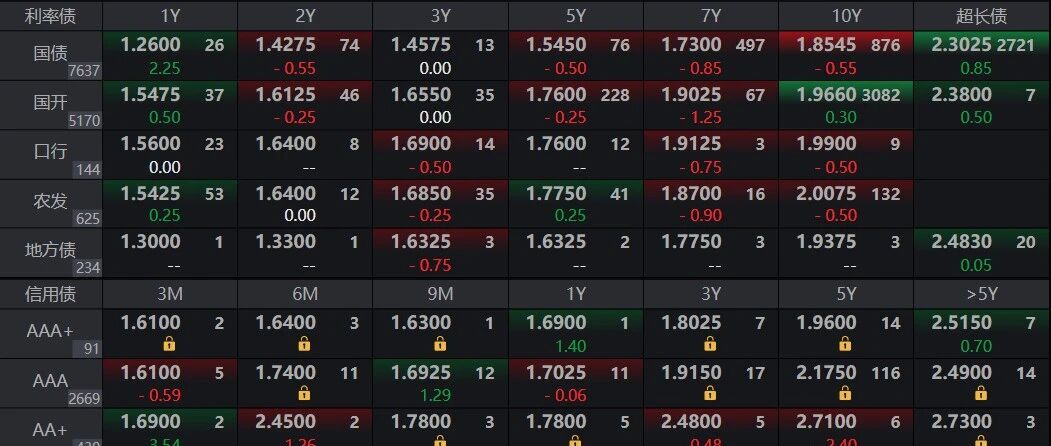
Group 1 - The stock market experienced significant volatility, with a sharp rise followed by a decline, described as a "roller coaster" effect [6] - The People's Bank of China (PBOC) conducted a 240.8 billion yuan reverse repurchase operation, with a net injection of 212.2 billion yuan after 28.6 billion yuan of reverse repos matured [3][5] - The 10-year government bond yield fluctuated, opening at 1.85%, peaking at 1.8605%, and later dropping to a low of 1.838% before closing at 1.843% [5][8] Group 2 - Import and export data for December exceeded expectations, contributing to market movements [5] - Regulatory measures were implemented to increase the margin requirement for new financing contracts, aimed at cooling down the stock market [6] - The bond market showed mixed reactions, with bond yields experiencing fluctuations throughout the day [5][6]
晚间公告|1月14日这些公告有看头
Di Yi Cai Jing· 2026-01-14 10:21
Key Points - The article summarizes important announcements from various companies, highlighting stock price fluctuations and financial forecasts [2][3][4][5][6][7][8][9][10][11][12][13][14][15][16][17][18][19][20][21][22] Group 1: Stock Price Fluctuations - Shangwei New Materials warns that if its stock price continues to rise, it may apply for a trading suspension due to significant deviations from its fundamentals [2] - Guangyun Technology indicates that its stock price has significantly diverged from market trends, and it may apply for a trading suspension if prices rise further [3] - Zhuoyi Information reports a cumulative price increase of over 100% in ten trading days, indicating severe abnormal fluctuations [5] - Aobang Ceiling states that its stock price has deviated significantly from its fundamentals, and it may apply for a trading suspension if prices rise further [8] Group 2: Financial Forecasts - Dayou Energy expects a net loss of 1.7 billion yuan for 2025 [13] - CITIC Bank projects a net profit of 70.618 billion yuan for 2025, a year-on-year increase of 2.98% [14] - CITIC Securities anticipates a net profit of 30.051 billion yuan for 2025, a year-on-year increase of 38.46% [15][16] - Hu Silicon Industry forecasts a net loss between 1.28 billion and 1.53 billion yuan for 2025 [17] - Huazheng New Materials expects a net profit of 260 million to 310 million yuan for 2025, indicating a turnaround from losses [18] - Jinyu Group anticipates a net loss between 900 million and 1.2 billion yuan for 2025 [19] - Kinghaitong expects a net profit of 160 million to 210 million yuan for 2025, a year-on-year increase of 103.87% to 167.58% [19] - Qu Mei Home anticipates a net loss of 75 million to 110 million yuan for 2025, with a narrowed loss margin [20] - The Robot company expects a net loss for 2025 [21] Group 3: Major Contracts - China Electric Power Construction has signed a contract for a seawater desalination project in Iraq, valued at approximately 17.193 billion yuan [21]







提前大选前景恐加剧日本财政风险,日债再遭猛烈抛售
Sou Hu Cai Jing· 2026-01-14 03:11
Group 1 - Japanese Prime Minister Fumio Kishida has decided to dissolve the House of Representatives on January 23, leading to early elections, amid concerns that expansionary fiscal policies will exacerbate fiscal risks, causing a surge in Japanese government bond yields [1] - The 10-year Japanese government bond yield reached 2.18%, a 27-year high, while the 30-year yield hit 3.52%, a record high, reflecting market anxiety over potential increases in economic stimulus and debt levels [1][2] - Following the announcement, the Nikkei 225 index surged over 3.6% at the open, closing with a 3.1% gain, while the yen and Japanese bonds faced significant declines [1] Group 2 - Since taking office, Kishida has faced challenges including a weak yen, inflation above targets, and economic sluggishness, prompting a record economic stimulus plan of 21.3 trillion yen and a budget of 122.3 trillion yen for fiscal year 2026 [2] - The Bank of Japan has shifted from a long-standing ultra-loose monetary policy to a forward-looking adjustment, with interest rates expected to rise to 0.75% by December 2025, the highest level in 30 years [2] - Concerns about Japan's fiscal health have intensified, with the country's debt exceeding twice its economic output, leading to increased government bond issuance and a rising debt servicing burden [2] Group 3 - Kishida emphasized that promoting economic growth is more important than concerns over rising long-term interest rates, stating that the new budget includes significant future-oriented investments aimed at creating a virtuous cycle of investment and growth [3] - The government projects a nominal GDP growth rate of 3.4% and a real wage growth rate of 1.3%, indicating a clearer economic outlook [3]
【申万固收|信用周报】信用债ETF冲量规模回落,信用利差整体收窄——信用债市场周度跟踪(20260105-20260111)
申万宏源证券上海北京西路营业部· 2026-01-14 02:07
Key Points - The net supply of ordinary credit bonds in the primary market increased on a month-on-month basis, with total issuance reaching 269.9 billion yuan and net financing at 131.1 billion yuan during the period from January 5 to January 11, 2026 [3][5] - The issuance of industrial bonds decreased to 139.2 billion yuan, while net financing surged to 91.7 billion yuan. Conversely, local government bonds saw a significant increase in issuance to 130.7 billion yuan, the highest since November 2025, with net financing rising to 39.4 billion yuan [3][5] - In the secondary market, bond yields showed mixed performance, with overall credit spreads narrowing, particularly for 1-year bonds, which experienced the largest contraction [3][5] - The yield on 7-year bonds performed the best, with a decline of 2.36 basis points for AA+/AA/AA- rated local government bonds, while 5-year bonds saw an overall increase [3][5] - The trading volume of credit bond ETFs decreased significantly, with a net outflow of 55.3 billion yuan over four days, approaching 50% of the inflow seen in December 2025 [3][5] - The investment outlook for credit bonds remains favorable, with expectations of a stable bond market environment in the first quarter of 2026, despite potential pressures on credit spreads [3][5] - The strategy for credit investment focuses on short to medium-term credit bonds, particularly those with a maturity of 3-5 years, and emphasizes the opportunities presented by high-grade bonds [3][5] - The performance of various credit bonds is expected to vary, with short-term bonds outperforming longer-term bonds in terms of yield and credit spread [3][5][11]
六大经济部委释放2026关键信号
2 1 Shi Ji Jing Ji Bao Dao· 2026-01-13 23:16
Core Viewpoint - The Chinese government is focusing on stabilizing economic growth, expanding domestic demand, supporting technological innovation, and stabilizing the real estate and stock markets as it prepares for the economic goals of 2026, the first year of the 14th Five-Year Plan [1][2]. Economic Policy Initiatives - Various ministries are implementing proactive macroeconomic policies, including enhancing economic monitoring, improving policy tools, and ensuring effective fiscal and monetary policy coordination [2]. - The fiscal policy for 2026 will be more active, with an expanded fiscal spending plan and optimized government bond tools to enhance local financial capabilities [2][3]. - The People's Bank of China will maintain a moderately loose monetary policy, focusing on high-quality economic development and reasonable price recovery, with expectations of a 25-50 basis point reduction in the reserve requirement ratio [2][3]. GDP and Fiscal Projections - The GDP growth target for 2026 is expected to remain around 5%, with a fiscal deficit rate holding steady at 4% and an increase in special bonds to 4.8 trillion yuan [3][4]. - The broad deficit scale is projected to rise from 11.86 trillion yuan in 2025 to approximately 12.45 trillion yuan in 2026, corresponding to a broad deficit rate increase from 8.4% to 8.5% [3]. Consumer and Investment Stimulus - The government aims to boost consumption through practical measures, including optimizing the trade-in policy for consumer goods and expanding service consumption [5][6]. - Investment will be supported through various government funding initiatives, including the issuance of special bonds and increased central budget investments [5][6]. Real Estate and Stock Market Stability - Policies will focus on stabilizing the real estate market through targeted measures, including optimizing housing purchase policies and promoting the use of existing housing for social needs [12]. - The central bank will work on mitigating financial risks in key areas and enhancing market confidence through specific monetary policy tools [13]. Emerging Industry Development - There is a strong emphasis on fostering new and emerging industries, including integrated circuits, new materials, and artificial intelligence, with significant investments planned in these sectors [8][9]. - The establishment of the National Venture Capital Guiding Fund aims to attract substantial investment in high-tech fields, with an expected total investment scale exceeding one trillion yuan [9]. Innovation-Driven Growth - The focus for 2026 will be on building an innovation-driven growth model, enhancing the modern industrial system, and promoting technological self-reliance [10].
每日投行/机构观点梳理(2026-01-13)
Xin Lang Cai Jing· 2026-01-13 11:44
Group 1: Concerns about Federal Reserve Independence - UBS suggests that concerns over the independence of the Federal Reserve may lead to a more hawkish stance in monetary policy [1] - Goldman Sachs expects the Federal Reserve to continue making data-driven decisions despite the pressure from the criminal investigation against Chairman Powell [1][2] - Rabobank indicates that increasing political pressure on the Federal Reserve could result in higher volatility for the dollar in 2026 [1] Group 2: Market Reactions and Implications - Rabobank warns that the investigation into Powell could reignite "sell-America" trades, posing significant downside risks for the dollar [2] - ABN Amro suggests that the investigation may delay any potential interest rate cuts by the Federal Reserve as officials may adopt a more hawkish stance to defend the institution [2] - The Swiss franc has become a favored safe-haven currency amid concerns regarding the Federal Reserve's independence [4] Group 3: Economic Forecasts and Trends - State Street Global Advisors reports a greater than 30% probability that spot gold will exceed $5,000 per ounce this year, driven by geopolitical dynamics and Federal Reserve policies [2] - Fitch Ratings anticipates a moderate recovery of the Japanese yen from historical lows by 2026, despite ongoing challenges in the labor market [4] - Zhongjin Securities predicts that the Federal Reserve may cut interest rates by approximately 50 basis points in 2026 due to weak employment data [8]