TMT

Search documents
【十大券商一周策略】市场风格切换已起,短期调整后或迎来修复行情
券商中国· 2025-10-19 14:30
Group 1 - The core viewpoint is that the current structural fundamental clue in A-shares is the outbound expansion of Chinese enterprises, influenced by the ongoing US-China tensions, which may affect market pricing for outbound investments [2] - The new focus is on China's long-term strategy to ensure resource security, industrial chain safety, and leading technology security, indicating a shift in investment themes post-dividend rotation [2] - The adjustment in the leading industries, such as optical modules, PCB, and innovative pharmaceuticals, is expected to continue, with potential for new highs as the third-quarter reports approach [3][4] Group 2 - The market is currently in a bull market consolidation phase characterized by high-low fund rotation and index stagnation, with the expectation that the bull market logic remains intact [6] - The market's recent adjustments are attributed to high valuations and uncertainties in US-China relations, but historical patterns suggest that such corrections are common in bull markets [7] - The upcoming policy expectations and the focus on the "15th Five-Year Plan" are likely to provide new investment opportunities, particularly in sectors with strong performance certainty [8][10] Group 3 - The recent market adjustments are seen as the beginning of a structural shift, with a focus on domestic industries that are experiencing a recovery in demand [9] - The investment strategy should prioritize sectors with strong growth potential, such as new consumption, military industry, and advanced manufacturing, while also considering defensive sectors [11] - The fourth quarter is anticipated to see continued upward movement in indices, driven by policy catalysts and stable earnings expectations [14]


锚定基本面 赚企业盈利成长的钱——访华安基金栾超
Shang Hai Zheng Quan Bao· 2025-10-19 12:31
Core Viewpoint - The fundamental purpose of investment is to provide reasonable returns to investors, emphasizing the importance of anchoring on the fundamentals of listed companies and pursuing genuine earnings growth as the source of fund returns [3][5][10]. Investment Framework - The investment framework constructed by the fund manager consists of three interconnected layers: macro asset timing to determine overall market direction, industry comparison to identify high-potential sectors, and micro company research to select quality stocks [5][6][10]. - The framework emphasizes a balanced allocation strategy, with no single sector exceeding 30% of the portfolio, ensuring comprehensive coverage across various industries [6][10]. Risk Management - Risk control is prioritized, involving understanding, assessing, and responding to risks, along with a flexible approach to market feedback [6][10]. Trend Analysis - Identifying sustainable industry trends lasting over three years is crucial for investment success, focusing on long-term value creation rather than short-term market fads [8][9]. - In-depth research and early identification of trends are essential for capturing investment opportunities, with a strong emphasis on field research and direct engagement with companies [9][10]. Future Investment Opportunities - Current investment opportunities are seen in AI and technology growth, which are pivotal during economic transitions, with significant potential from upstream computing power to downstream applications [11]. - The "new dividend" assets are highlighted, particularly in high-quality leading companies with stable earnings and increasing dividend rates, as the macroeconomic environment stabilizes [11].

机构论后市丨短期市场风格切换;中期关注TMT和先进制造
Di Yi Cai Jing· 2025-10-19 10:30
Core Viewpoint - The A-share market is experiencing a cautious sentiment with a focus on the upcoming "14th Five-Year Plan" and the third quarter earnings reports, which are expected to provide more investment clues [2] Group 1: Market Sentiment and Trends - The Shanghai Composite Index fell by 1.47% this week, while the Shenzhen Component and ChiNext Index dropped by 4.99% and 5.71% respectively, indicating a bearish trend in the A-share market [2] - Short-term market sentiment is cautious, with reduced trading volumes and a likelihood of phase-based fluctuations [2] - The upcoming 20th Central Committee's Fourth Plenary Session will focus on the "14th Five-Year Plan," which is expected to influence market dynamics [2] Group 2: Sector Focus and Investment Opportunities - China Galaxy Securities suggests focusing on sectors with strong policy support and earnings certainty, as the current market adjustment presents a layout opportunity for investors [2] - CITIC Securities highlights that the biggest structural fundamental clue in the A-share market remains the overseas expansion of Chinese enterprises, with a need to monitor new trends related to resource security and AI technology [2] - Everbright Securities recommends short-term attention on defensive and consumer sectors, while mid-term focus should be on TMT (Technology, Media, and Telecommunications) and advanced manufacturing sectors [3] - Huajin Securities indicates that while the technology-driven style may shift to a more balanced approach in the short term, the long-term preference for technology growth remains unchanged [4]
策略周报:牛市中非主线行业何时领涨?-20251019
Xinda Securities· 2025-10-19 08:32
Core Conclusions - In a bull market, the style is relatively stable in the early and late stages, but it tends to fluctuate in the mid-stage. Non-mainstream sectors may lead in the later stages of the bull market, influenced significantly by capital flow rather than performance realization, typically lasting 1-2 quarters [2][10][28] Historical Cases - During the 2005-2007 financial cycle bull market, from January to May 2007, small-cap growth stocks surged, with non-mainstream sectors like textiles, environmental protection, and pharmaceuticals leading the gains. This was attributed to accelerated capital inflow and a shift in market focus towards previously underperforming sectors [3][11][14] - In the 2013-2015 TMT bull market, the fourth quarter of 2014 saw large-cap value stocks outperform, with non-bank financials, construction, banking, and steel sectors leading. This shift was driven by significant inflows of retail capital and a change in focus from performance to valuation [19][21][27] Market Dynamics - Non-mainstream sectors tend to lead in the later stages of a bull market due to increased capital inflow, as mainstream sectors often reach high valuation levels, leading investors to seek undervalued sectors with high safety margins [3][28] - The performance of non-mainstream sectors may be supported by earnings growth, as seen in the textiles sector in early 2007, but there can also be instances where performance realization remains weak despite leading gains, such as in the construction and steel sectors in late 2014 [30][28] Current Market Outlook - The report suggests that the current market may be entering a main upward trend, with potential for style switching towards low-value sectors, particularly in banking and non-bank financials, as well as in low-valued electric equipment and cyclical stocks [37][38] - The financial sector is highlighted as having low overall valuations, with potential for rebound due to style switching and regulatory support for long-term capital inflows [39]

投资策略周报:珍惜优质筹码,修复行情将在10月下旬缓慢展开-20251019
HUAXI Securities· 2025-10-19 08:29
Market Review - Since October, global risk events have increased, including the potential U.S. government shutdown, heightened political uncertainty in Japan, and escalating China-U.S. trade tensions, leading to a rise in market risk aversion. Precious metals have strengthened while oil prices have declined, with Hong Kong stocks experiencing a greater drop than A-shares and U.S. stocks due to the strong U.S. dollar and international capital flow impacts. A-shares have shown characteristics of risk-averse trading, evidenced by a decrease in trading volume, with daily turnover falling below 2 trillion yuan, and a style shift where previously strong sectors like the ChiNext and STAR Market have seen significant adjustments while defensive dividend indices have risen [1][2]. Market Outlook - The report emphasizes the importance of cherishing quality assets, predicting a gradual recovery in the market starting in late October. Recent signals from U.S. trade representatives indicate a potential easing of trade tensions, with expectations for some consensus to be reached during upcoming economic discussions and the APEC summit. This contrasts with the previous widespread declines in April, as the current trade situation reflects a shift in capital flows rather than a broad market downturn. Overall, financing and ETF funds continue to see net inflows, suggesting that micro liquidity in the stock market remains relatively abundant. The construction of a "stabilizing mechanism" in the capital market and improvements in investor return systems are highlighted as key features of this market cycle, supporting the notion of a sustained "slow bull" market in A-shares, which are currently viewed as not overly expensive [2][3]. Key Focus Areas 1. The U.S. government has released signals indicating a potential easing of trade tensions, with discussions between Chinese and U.S. trade leaders suggesting a possible return to "TACO" trading dynamics. This could lead to a recovery in capital market risk appetite [2]. 2. Positive domestic and international factors are expected to support the market, with the upcoming 20th Central Committee meeting likely to address various themes such as new productivity, green development, and external openness, potentially catalyzing investment opportunities. Additionally, a likely interest rate cut by the Federal Reserve and a stable U.S. dollar index are anticipated to provide further support [3]. 3. The recent market style shift, characterized by a decline in tech-heavy indices and a rise in defensive dividend stocks, reflects a defensive positioning by investors amid reduced trading volumes. The report attributes the tech sector's adjustment to several factors, including increased trading congestion and profit-taking amid rising risk aversion due to trade tensions [4][5]. Industry Configuration - The report suggests that the current valuation fluctuations in the tech sector do not indicate a permanent style shift. Upcoming events, including the Central Committee meeting and the release of quarterly reports, are expected to boost market sentiment and catalyze thematic trading. The report notes that growth sectors like TMT continue to show relative performance advantages, while cyclical sectors lack fundamental support due to ongoing negative PPI trends. The report anticipates that once market structures stabilize, the focus will likely return to growth and technology investments, with a recommendation to pay attention to "mergers and acquisitions" as a theme [5][6].
科技板块处于A浪调整末端?
Guotou Securities· 2025-10-19 03:33
- The quantitative review system signals have consistently pointed to low valuation and dividend sectors since October 1st, indicating a market shift towards these areas [7] - The TMT sector's transaction amount share has continued to decline, while cyclical and financial real estate sectors have seen a gradual increase in transaction amount share, supporting the "high-to-low switch" logic previously proposed [7] - The Sci-Tech 50 Index has experienced a significant adjustment, which can be analyzed as being in the A-wave phase of the fourth wave adjustment according to the Elliott Wave Theory [7] - The high-frequency thermometer indicator for the Sci-Tech 50 Index has dropped below 20, suggesting that the current adjustment may be nearing its end [7]
A股市场运行周报第63期:“内外两因”触发调整,再平衡、控弹性-20251018
ZHESHANG SECURITIES· 2025-10-18 11:05
Core Insights - The report indicates that the A-share market is under pressure due to both internal factors (previous excessive gains leading to inherent adjustment pressure) and external factors (Trump's renewed tariff war), resulting in negative returns across major indices [1][53]. - The report anticipates that the ChiNext index has "effectively broken" its upward trend line, suggesting a high probability of weekly-level consolidation in the future, while the Shanghai Composite and Shanghai 50 indices remain above their upward trend lines, retaining the potential for further upward movement [1][4][55]. - Market style is shifting, with large-cap stocks undergoing a "gear shift," and it is expected that funds will continue to switch styles and rebalance sectors, particularly with large financials (especially brokerage firms) being a "core variable" for the resurgence of weighted indices [1][4][56]. Weekly Market Overview - Major indices recorded negative returns, with the Shanghai Composite, Shanghai 50, and CSI 300 down by 1.47%, 0.24%, and 2.22% respectively, while growth indices like CSI 500, CSI 1000, and CSI 2000 fell by 5.17%, 4.62%, and 4.69% respectively [12][53]. - The ChiNext index and STAR 50 experienced larger fluctuations, declining by 5.71% and 6.16% respectively, with the North Star 50 down for the sixth consecutive week by 4.91% [12][53]. - The Hong Kong market mirrored the A-share adjustments, with the Hang Seng Index and Hang Seng Tech down by 3.97% and 7.98% respectively [12][53]. Sector Analysis - In terms of sector performance, 4 out of 30 sectors rose while 26 fell, indicating a "dividend style supporting the market" with significant pullbacks in technology-related sectors [13][54]. - Financial sectors such as banks and coal saw increases of 4.99% and 4.27% respectively, while technology sectors like electronics, media, computing, and communications experienced declines of 7.10%, 6.28%, 5.90%, and 5.63% respectively [13][54]. - Non-bank financials fell by 1.09%, but this was a relatively smaller decline compared to other high-beta sectors, indicating potential resilience [13][54]. Market Sentiment and Fund Flow - The average daily trading volume in the Shanghai and Shenzhen markets decreased to 2.18 trillion yuan, down from 2.59 trillion yuan the previous week, indicating a drop in market sentiment [21][28]. - The margin trading balance slightly increased to 2.45 trillion yuan, with a financing buy ratio of 11.1%, showing a slight decline from the previous week [28]. - The report notes a net inflow of 159 billion yuan into equity ETFs, with the banking ETF seeing the highest inflow of 65.8 billion yuan, while the pharmaceutical ETF experienced the largest outflow of 6.9 billion yuan [28][33]. Valuation Insights - The dynamic valuation model indicates that major market indices are generally in a moderately high valuation range, with the ChiNext index showing a slightly lower valuation percentile [44][46]. - As of October 17, 2025, the PE-TTM ratios for major indices are as follows: Shanghai Composite at 16.51 (92.58 percentile), Shenzhen Component at 30.02 (71.33 percentile), ChiNext at 41.35 (32.51 percentile), and CSI 300 at 14.15 (55.25 percentile) [44][46].
首批基金三季报出炉 人工智能主题景气延续丨财经头条
Di Yi Cai Jing· 2025-10-17 09:52
Core Insights - The public fund's Q3 2025 reports highlight a recovery in the TMT sector driven by artificial intelligence and the innovative pharmaceutical industry, which is experiencing improved performance and rising sentiment [1] Group 1: AI Theme Funds - AI-themed funds have shown changes in their heavy stock structure and position ratios, indicating a strategic shift in investment focus [1] - The performance of AI-related investments is becoming increasingly significant as the sector matures and gains traction [1] Group 2: Fund Allocation Strategy - The report discusses the fund allocation strategy for Q4, suggesting a continued emphasis on sectors benefiting from AI and overseas business expansion [1] - Analysts are optimistic about the potential for further gains in the TMT and innovative pharmaceutical sectors as market conditions improve [1]
“十五五”研究系列(一):“十五五”规划前瞻:从政策方向寻找产业线索
Ping An Securities· 2025-10-17 09:07
Group 1 - The "14th Five-Year Plan" has achieved high-quality completion of most policy goals, including economic growth, labor productivity, and R&D investment, with significant progress in urbanization and life expectancy indicators [9][10][11] - The "15th Five-Year Plan" is positioned as a critical period for achieving Chinese-style modernization, focusing on solidifying the foundation for modernization and comprehensive development [7][8] Group 2 - Four industrial clues are identified for the "15th Five-Year Plan": fostering new productive forces, expanding domestic demand, advancing the construction of a unified national market, and enhancing resource utilization and protection [4][12][16] - The macroeconomic environment shows new momentum in domestic growth, with a need to address insufficient effective demand, emphasizing the importance of technology innovation and expanding domestic consumption [13][14] Group 3 - The focus on new productive forces includes the development of emerging industries, traditional industry upgrades, and the stimulation of digital economy innovation [4][12][18] - Expanding domestic demand involves promoting consumption through initiatives like "old-for-new" exchanges and investing in human capital, alongside infrastructure investment to support urban renewal [4][12][16] Group 4 - The construction of a unified national market aims to reduce internal competition and enhance efficiency in sectors like new energy, traditional cycles, and consumer goods [4][12][16] - Resource utilization and protection strategies emphasize the development of the marine economy and the safeguarding of strategic mineral resources [4][12][16] Group 5 - The market outlook suggests that technology innovation sectors such as TMT, new energy, and biomedicine will continue to be key investment themes, supported by policy and industry growth [4][12][16] - Historical analysis indicates that A-share market trends around the announcements of previous five-year plans show a pattern of initial growth followed by sector rotation and differentiation [4][12][16]
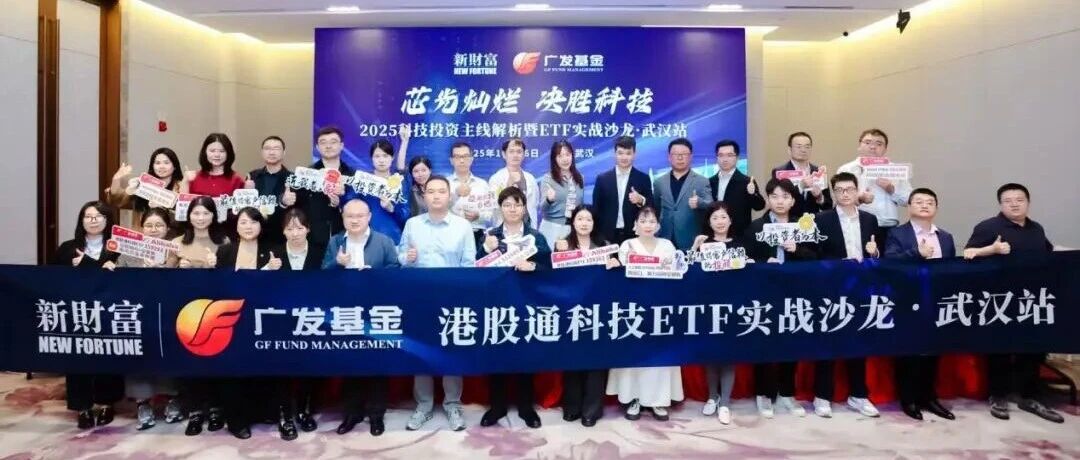
科技股大跌,怎么办?新财富最佳分析师和广发基金经理最新观点
新财富· 2025-10-17 08:37
Core Viewpoint - The event focused on the booming technology sector investment, emphasizing the importance of AI computing infrastructure as the most certain investment line in the current market [4][6]. Group 1: Event Overview - The "Shining Chips, Winning Technology" seminar was held in Wuhan, attracting over 130 investment advisors from more than 30 securities firms to discuss technology investment opportunities [1][3]. - The event aimed to provide a high-quality platform for learning and exchanging ideas on technology stock investment logic and trends [3]. Group 2: Key Insights from Speakers - Hong Jiajun, a leading analyst, highlighted AI computing infrastructure as the most reliable investment line, focusing on three core sectors: server support (liquid cooling/power management), storage chips (especially HBM), and semiconductor equipment (notably advanced packaging) [6]. - He noted that despite short-term market fluctuations, the fundamental drivers of the industry remain unchanged, with steady demand from cloud giants and third-party data centers, and decreasing computing costs fueling more AI application scenarios [6]. Group 3: Investment Strategies - Summer Haoyang from GF Fund emphasized the long-term growth logic of the technology sector, despite recent market volatility due to macroeconomic factors [9]. - He suggested that investors consider the Hong Kong Stock Connect Technology ETF as a tool to capitalize on the technology wave, highlighting the significant valuation discount of Hong Kong tech stocks compared to U.S. stocks [9]. - Two suggested investment paths include maintaining a technology position while dynamically adjusting between domestic and overseas computing and switching part of the position to defensive sectors during market volatility [9]. Group 4: Role of Investment Advisors - Zhuo Feng, a top investment advisor, discussed the evolving role of advisors from information transmitters to value creators and asset guardians, emphasizing the importance of long-term investment and combining ETFs with retirement planning [11]. - The event concluded with a lively exchange of ideas among advisors regarding opportunities in technology stock segments and practical ETF marketing experiences, fostering new thoughts on technology investment and client service models [11][13].