
公用事业

Search documents
2025年业绩高增长股提前看,136股净利润增幅翻倍
Zheng Quan Shi Bao Wang· 2026-01-23 01:45
Core Viewpoint - A total of 717 companies have announced their annual performance forecasts for 2025, with 232 companies expecting profit increases, representing 32.36% of the total [1]. Group 1: Performance Forecasts - Among the 717 companies, 232 are expected to report profit increases, while 57 anticipate profits, leading to a total of 40.31% of companies reporting positive forecasts [1]. - Companies predicting a net profit increase of over 100% include 136 firms, while 119 companies expect a profit increase between 50% and 100% [1]. - The company with the highest expected net profit increase is Huisheng Biological, forecasting a median increase of 1355.24% [1]. Group 2: Industry Analysis - The sectors with the most companies expecting profit increases include electronics (20 companies), basic chemicals (19 companies), and pharmaceutical biology (15 companies) [1]. - In terms of stock market segments, the main board has 80 companies, the ChiNext board has 42, the Sci-Tech Innovation Board has 12, and the Beijing Stock Exchange has 2 companies expecting profit increases [1]. Group 3: Stock Performance - Stocks expected to double their profits have averaged a 13.25% increase this year, outperforming the Shanghai Composite Index [2]. - The stock with the highest increase this year is Jinhaitong, which has risen by 88.03% [2]. - Among stocks that have decreased in value, Penghui Energy has seen the largest drop at 15.67%, followed by Hongyuan Green Energy and Defu Technology with declines of 13.77% and 12.82%, respectively [2]. Group 4: Notable Companies and Their Forecasts - The following companies are notable for their expected profit increases: - Huisheng Biological: 1355.24% increase [3] - Southern Precision Engineering: 1273.50% increase [3] - Shanghai Yizhong: 831.86% increase [3] - Other companies with significant expected profit increases include: - Jin'an Guoji: 763.47% [3] - Zhongtai Co.: 677.22% [3] - Nanfang Energy: 667.73% [3]
谁能跻身全球品牌价值500强?光大银行下滑71名,民生银行降60名
Xin Lang Cai Jing· 2026-01-23 01:08
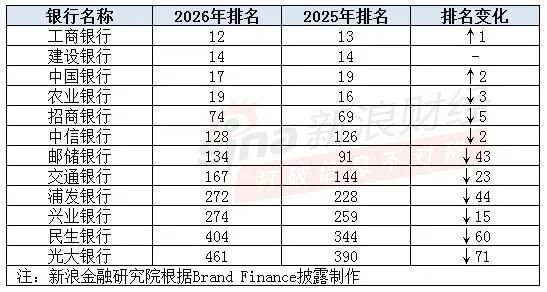
Group 1: Core Insights - The Brand Finance 2026 Global Brand Value 500 report was released, highlighting the performance of various banks and insurance companies [1][7] - Chinese brands have shown a double-digit growth in total value, indicating strong resilience and potential for future growth [7] Group 2: Banking Sector Summary - Major Chinese banks included in the ranking are Industrial and Commercial Bank of China (ICBC) at 12th, China Construction Bank at 14th, and Bank of China at 17th, with ICBC holding a brand value of $90.88 billion and a brand strength index of 91.5 [2][3] - China Bank surpassed Agricultural Bank, which dropped to 19th place, while China Merchants Bank ranked 74th as the highest among joint-stock banks [3][4] - Notable declines were observed for China Everbright Bank, which fell 71 places to 461st, and Minsheng Bank, which dropped 60 places to 404th [1][4] Group 3: Insurance Sector Summary - Among the insurance companies, Ping An Insurance ranked 32nd globally, being the only Chinese insurer in the top 100, with a brand strength rating of AAA- [5][6] - Other insurers like China Life and China Pacific Insurance also maintained positions within the top 200, while Prudential Insurance saw a significant drop of 117 places to 350th [5][6] - Notably, Cathay Life Insurance improved its ranking by 180 places to 407th [6] Group 4: Overall Brand Performance - The report indicates that 12 Chinese brands made it to the top 50 globally, with Douyin's brand value increasing by 45.1% to $153.54 billion, ranking 6th [7] - State Grid Corporation achieved a brand value of $102.44 billion, ranking first in the global utility sector, with a 19.6% increase in brand value [8]





中金公司:欧美贸易摩擦给“全球欧洲”的盈利修复带来不确定性
Jin Rong Jie· 2026-01-23 00:19
Group 1 - The report from CICC indicates that in the short term, the euro may be negatively impacted by tariffs and geopolitical tensions, which could further weaken economic growth in Europe [1] - Conversely, rising uncertainty in U.S. policies may lead to questions about the reliability of the U.S. as an investment destination, which could negatively affect the dollar [1] - The report highlights that the market's trading contradictions during this trade friction may be more focused on the latter point regarding the dollar [1] Group 2 - From an equity market perspective, sectors such as biopharmaceuticals, media and entertainment, and food and beverages in Europe may face pressure due to their exposure to U.S. sales [1] - Absolute export values show that pharmaceuticals, transportation equipment, machinery, chemicals, and aircraft have high export values to the U.S. [1] - While companies may adjust supply chains and localize production to cope with these challenges, there remains uncertainty regarding the profitability recovery for "global Europe" [1] Group 3 - In this context, the report expresses a relatively positive outlook on "self-reliant" themes in domestic demand industries such as banking and utilities [1] - For sectors exposed to external demand, it is recommended to focus on those with reasonable valuations and profit expectations, where policy headwinds are relatively small [1]

中金:地缘争端下的欧美贸易关系
智通财经网· 2026-01-22 23:58
Group 1: Tariff Announcement and Economic Impact - On January 17, Trump announced a 10% tariff on eight European countries, effective February 1, with plans to increase it to 25% on June 1 until an agreement on the "complete and thorough purchase of Greenland" is reached [2][6] - The eight affected countries include Denmark, Norway, Sweden, France, Germany, the UK, the Netherlands, and Finland, with six being EU members [2] - The potential impact on the Euro is mixed; tariffs and geopolitical tensions may weaken European economic growth, while rising uncertainty in U.S. policies could undermine the dollar's reliability as an investment destination [10] Group 2: EU's Economic Ties with the U.S. - The EU and the U.S. have the largest bilateral trade and investment relationship globally, with the EU accounting for 17% of U.S. exports in February 2025, surpassing China, ASEAN, and Japan [3] - The EU is the largest source of FDI into the U.S., with a stock of $2.4 trillion in 2023, supporting approximately 3.4 million jobs in the U.S. [3][4] - Despite a trade surplus in goods, the EU faces a significant services deficit with the U.S., indicating a balanced overall trade structure [3] Group 3: EU's Dependence and Challenges - The EU is heavily reliant on the U.S. in defense, finance, technology, and energy, which limits its ability to respond to geopolitical pressures [4] - Over 60% of defense imports come from the U.S., and European financial infrastructure is largely dependent on American companies [4] - The EU's energy dependence on the U.S. is expected to increase, with projections indicating that 57% of LNG imports will come from the U.S. by 2025 [4] Group 4: Internal Political Divisions in the EU - Significant political divisions within the EU complicate the implementation of unified responses to tariff issues, with varying attitudes among member states and political parties [5] Group 5: Economic Forecasts and Market Reactions - The impact of tariff increases on GDP is expected to be limited, with consumer confidence already weakened and investment data remaining low [7] - The European Central Bank may maintain its current stance unless trade tensions escalate significantly, with inflation pressures primarily stemming from service sectors [7] - The potential for increased European autonomy in defense and technology sectors is noted, with discussions on structural investments in these areas [8] Group 6: Market Implications - The likelihood of Europe selling off U.S. assets in response to tariffs is low, as the EU and the UK are significant investors in U.S. markets [9] - The current asset allocation trends indicate a higher proportion of investments in the U.S. compared to Europe, prompting a reevaluation of asset sustainability [9] - Sectors such as banking and utilities, which align with the theme of "autonomous independence," are viewed favorably, while industries with high exposure to U.S. markets may face challenges [10]
中金 • 全球研究 | 地缘争端下的欧美贸易关系:现状和影响
中金点睛· 2026-01-22 23:37
Core Viewpoint - The article discusses the recent tariff disputes between the US and Europe due to geopolitical tensions, highlighting the current tariff situation and its potential impacts on the European economy and markets [1]. Group 1: Current Tariff Situation - On January 17, 2026, Trump announced a 10% tariff on eight European countries, effective February 1, with plans to increase it to 25% by June 1 unless an agreement regarding the purchase of Greenland is reached [2]. - The eight affected countries include Denmark, Norway, Sweden, France, Germany, the UK, the Netherlands, and Finland, with six being EU members [2]. - Following negotiations with NATO, Trump stated that tariffs on certain European countries would not be implemented as initially planned [2]. Group 2: EU's Economic Ties and Challenges - The EU and the US share the largest bilateral trade and investment relationship globally, with the EU accounting for 17% of US exports as of February 2025, surpassing China (6%), ASEAN (6%), and Japan (4%) [6]. - The EU is the largest source of foreign direct investment (FDI) in the US, with a stock of $2.4 trillion in 2023, primarily in manufacturing [6]. - Despite a trade surplus in goods, the EU faces a significant services deficit with the US, indicating a balanced overall trade structure [6]. Group 3: Potential Economic and Market Impacts - The article suggests that the impact of tariff increases on GDP will be limited, as consumer confidence in Europe has already declined, and investment remains weak [10]. - The European Central Bank (ECB) is expected to maintain its current policy stance unless trade tensions escalate significantly, with potential inflationary pressures primarily affecting supply chains [10]. - The article notes that Germany will be the main contributor to fiscal space in Europe, while France faces political gridlock that limits its fiscal capacity [10]. Group 4: Geopolitical Implications and Future Directions - The ongoing geopolitical developments may enhance Europe's determination for "strategic autonomy," with Germany's fiscal shift and the EU's rearmament plans reflecting this trend [12]. - The EU may adopt measures to strengthen its independence in defense, technology, infrastructure, and finance, despite internal political divisions complicating unified responses [12]. Group 5: Market Reactions and Asset Allocation - The article indicates that Europe is unlikely to sell off US assets in the short term, as it remains a significant investor in US equities and bonds [13]. - However, the potential for Europe to "weaponize" its financial investments against the US is considered low due to the implications for existing holdings and the legal complexities involved [13]. - The article suggests that the current geopolitical tensions may prompt Europe to reassess its asset allocation, with a focus on domestic sectors and industries less exposed to US market fluctuations [13].

Utility Stocks Beware. Politics Are Starting to Eat Into Profits.
Barrons· 2026-01-22 21:56
Early signs of a political backlash against utilities played out in New Jersey and New York this week, in a preview of what could be a rocky year for the sector. In this article PEG CEG VST New Jersey's residential electricity rates increased by 42% in the past five years, based on the latest government data. (KENA BETANCUR/AFP via Getty Images) ...
别人吃肉我喝汤?致那些正在“煎熬”中的红利投资者
Sou Hu Cai Jing· 2026-01-22 03:20
Core Viewpoint - The current market sentiment shows a stark contrast between the booming technology sectors and the underperforming dividend products, leading to emotional trading among investors [1][4]. Group 1: Market Sentiment and Trading Behavior - The disparity in market performance is causing investors to feel anxious, as technology stocks are experiencing significant gains while dividend products are lagging [1]. - Historical trends suggest that extreme market sentiment can indicate a potential reversal in investment styles, urging caution against emotional trading [4]. Group 2: Dividend Investment Strategy - Dividend investment should not be approached as a short-term trading tool; it is based on long-term holding for stability and consistent returns [5]. - The core returns from dividend investments primarily come from dividends, and frequent trading can lead to losses from transaction fees and missed dividend opportunities [5]. - Dividend stocks, typically from stable sectors like banking and energy, serve as a "ballast" in an investment portfolio, providing stability during market fluctuations [5]. Group 3: Long-term Perspective - Dividend investing is likened to a marathon rather than a sprint, emphasizing the importance of long-term holding and the benefits of compounding over time [8]. - Maintaining composure during market exuberance and adhering to fundamental investment principles is crucial for navigating market cycles successfully [8].
299股获杠杆资金大手笔加仓
Zheng Quan Shi Bao Wang· 2026-01-22 03:04
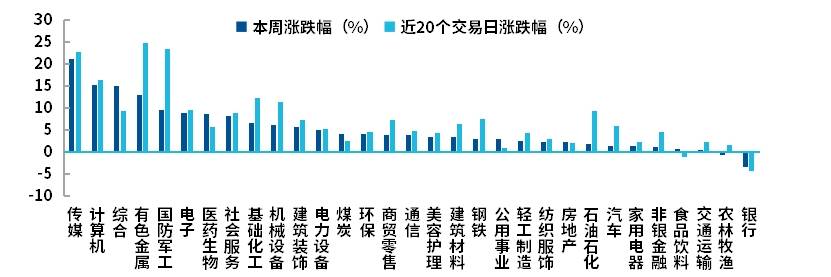
Market Overview - On January 21, the Shanghai Composite Index rose by 0.08%, with the total margin trading balance reaching 27,210.23 billion yuan, an increase of 11.664 billion yuan compared to the previous trading day [1] - The margin trading balance in the Shanghai market was 13,746.08 billion yuan, up by 10.112 billion yuan; in the Shenzhen market, it was 13,373.67 billion yuan, increasing by 1.48 billion yuan; and in the Beijing Stock Exchange, it was 90.48 billion yuan, up by 0.072 billion yuan [1] Industry Analysis - Among the industries classified by Shenwan, 23 sectors saw an increase in margin trading balances, with the largest increase in the non-ferrous metals sector, which rose by 1.904 billion yuan. The electronics and basic chemicals sectors followed, with increases of 1.625 billion yuan and 1.043 billion yuan, respectively [1] Individual Stock Performance - A total of 1,851 stocks experienced an increase in margin trading balances, accounting for 49.09% of the total. Among these, 299 stocks had an increase of over 5% in their margin balances [1] - The stock with the highest increase in margin balance was Southern Power Grid, with a latest margin balance of 153.41 million yuan, reflecting a 47.30% increase from the previous trading day. The stock price rose by 4.09%, outperforming the Shanghai Composite Index [1] - Other notable stocks with significant increases in margin balances included Meibang Technology and Jiangtian Chemical, with increases of 45.26% and 44.75%, respectively [1] Top Gainers and Losers - Among the top 20 stocks with the highest increase in margin balances, the average price increase was 2.58%. The top gainers included Yifan Transmission, Hongbaoli, and Meiyang Jixiang, with increases of 20.00%, 9.98%, and 9.98%, respectively [2] - Conversely, the stocks with the largest declines in margin balances included Huilong Piston, which saw a decrease of 60.26%, and Yinen Power and Huawai Design, with declines of 32.43% and 31.33%, respectively [4][5]


中泰国际每日晨讯-20260122
ZHONGTAI INTERNATIONAL SECURITIES· 2026-01-22 02:33
Market Overview - On January 21, Hong Kong stocks experienced a slight adjustment in the morning but rebounded in the afternoon, with the Hang Seng Index rising by 97 points (0.4%) to close at 26,857 points[1] - The Hang Seng Tech Index increased by 62 points (1.1%), closing at 5,746 points, with total market turnover reaching HKD 250.5 billion[1] - Southbound capital inflow expanded to HKD 13.89 billion[1] Sector Performance - The semiconductor sector remained strong, driven by Micron's announcement of a potential memory shortage lasting until 2028, with Hua Hong Semiconductor and SMIC rising by 4%-6%[1] - TCL Electronics surged by 14.8% after announcing a joint venture with Sony, holding a 51% stake[1] - Skyworth Group's stock jumped by 37.5% following its announcement of a spin-off and share buyback[1] Geopolitical Impact - Gold stocks generally rose due to heightened geopolitical tensions, with Lingbao Gold and Zhaojin Mining increasing by 5%-8%[1] - The report suggests a short-term focus on strong sectors such as semiconductors and gold[1] U.S. Market Reaction - In the U.S., the Dow Jones Index rebounded by 588 points (1.5%) to 49,077 points, while the Nasdaq and S&P 500 indices rose by 270 points (1.2%) and 78 points respectively[2] - Gold prices remained strong, peaking at USD 4,888.4 per ounce[2] Macroeconomic Policy - The National Development and Reform Commission outlined policy directions for 2026, focusing on strengthening domestic circulation and expanding domestic demand strategies[3] Automotive Sector - China National Heavy Duty Truck Group saw a 7.5% increase in stock price after a major shareholder reduced their stake by 2%[4] - The company is expected to maintain strong export growth and a high dividend yield of approximately 7%[4] Energy and Utilities - Defensive sectors like environmental protection and gas utilities received support amid rising geopolitical risks, with stocks like Hong Kong and China Gas and CLP Holdings rising by 1.1%-3.2%[4] - Alibaba and China National Nuclear Corporation formed a joint venture for nuclear energy, potentially benefiting related companies[4] Healthcare Sector - The Hang Seng Healthcare Index rose by 0.7%, with WuXi Biologics increasing by 3.5%[5] - The CXO sector is expected to see a rebound in demand, with a projected 20.6% increase in clinical trial projects per company by 2025[5]
市场全天冲高回落
Dongguan Securities· 2026-01-22 01:01
Market Overview - The A-share market experienced a day of fluctuations, with the Shanghai Composite Index closing at 4116.94, up 0.08% [2] - The Shenzhen Component Index rose by 0.70% to close at 14255.13, while the ChiNext Index increased by 0.54% to 3295.52 [2] - The STAR 50 Index saw a significant rise of 3.53%, closing at 1535.39 [2] Sector Performance - The top-performing sectors included non-ferrous metals, electronics, machinery, steel, and building materials, with non-ferrous metals leading at a gain of 2.79% [3] - Conversely, the banking sector saw a decline of 1.58%, along with coal and food & beverage sectors, which fell by 1.57% and 1.53% respectively [3] - Notable concept indices included lead and zinc metals, which rose by 5.01% and 4.83%, while the duty-free shop sector declined by 1.16% [3] Future Outlook - The market is currently consolidating after reaching a new high, with a trading volume of 2.6 trillion yuan, down 177.1 billion from the previous trading day [6] - The report suggests that the market's upward trend may continue, supported by regulatory guidance and macroeconomic factors [6] - As the earnings forecast season approaches, investor sentiment is expected to increase, shifting focus from macro liquidity to micro performance verification [6] - Key sectors to watch include dividends, TMT (Technology, Media, and Telecommunications), and power equipment [6] Policy Insights - The National Development and Reform Commission emphasizes the importance of expanding domestic demand and enhancing consumer capacity through strategic plans for 2026-2030 [5] - The focus is on creating an economic model driven by domestic demand and consumption, which is expected to support overall market stability [5]