应用软件

Search documents
美股IPO动态|全年回顾2025中企赴美上市全景图:93家企业申请
Sou Hu Cai Jing· 2026-01-07 03:47
Group 1 - The core viewpoint of the article highlights the active trend of Chinese companies listing in the US, characterized by steady growth in numbers, diverse structures, and significant regional concentration [1] Group 2 - In terms of listing paths and methods, traditional IPOs dominate, with 90.3% of the 93 companies listed through this method, while only 8.6% used De-SPAC [2] - The choice of exchange shows that Nasdaq remains the preferred platform for Chinese companies, with 95.7% of listings occurring there [4] Group 3 - The financing scale structure indicates a concentration at the top, with 84 IPO companies raising a total of $2.822 billion, where the top three companies accounted for 33.9% of the total [5] Group 4 - The industry distribution reveals that technology and service sectors are key drivers for Chinese companies listing in the US, with application software companies leading the way [7] Group 5 - The geographic origin of the companies shows a significant concentration in coastal and developed regions, with Hong Kong leading, followed by Zhejiang and Taiwan [8] Group 6 - The listing cycle varies significantly among companies, with the fastest completing the process in 115 days, while the slowest took over 1,400 days, highlighting differences in preparation and compliance capabilities [9]

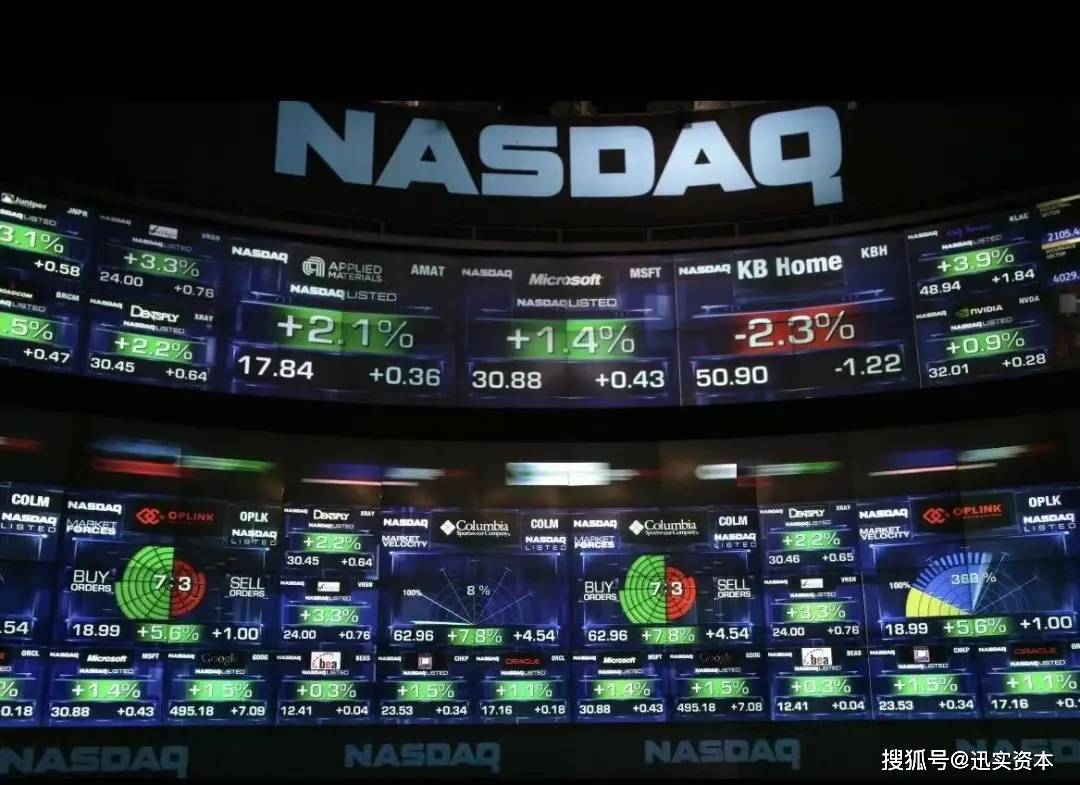
2025年中企赴美上市盘点,93家企业成功登陆,149家企业递交申请
Sou Hu Cai Jing· 2026-01-05 03:46
Group 1 - By the end of 2025, 93 Chinese companies successfully listed on US stock markets, with 149 companies publicly submitting listing applications, showing moderate growth compared to 69 companies in 2024 [1] - Nasdaq maintained its absolute advantage with 89 companies listed, accounting for 96% of the total, while only 4 companies chose the New York Stock Exchange [1] - The industry distribution is diverse, with technology companies like application software leading, while traditional industries such as construction and industrial sectors follow steadily, and modern service industries like pharmaceuticals and food logistics show vibrant growth, reflecting the robust momentum of China's economic transformation [1] Group 2 - Among the three main listing paths, IPO remains the mainstream route, favored for its direct financing and brand premium advantages, with 84 Chinese concept stocks completing their US listings through IPOs [1] - Smithfield (SFD) topped the list with over $500 million raised, becoming the largest IPO project of the year, followed by Bawang Tea (CHA) with $411 million, and Ascentage Pharma (AAPG) with $126 million [1] - The majority of other companies raised amounts mostly under $20 million, with nearly 70% of companies financing not exceeding $10 million [1] Group 3 - De-SPAC (Special Purpose Acquisition Company) and OTC transfer models play important supplementary roles, with 8 companies listing through De-SPAC, including Global IBO Group Ltd, which achieved a valuation of $8.3 billion, marking one of the largest transactions of the year [2] - One company, Tianci International Inc (CIIT), successfully transferred from the OTC market to Nasdaq, a path more suitable for companies that have built liquidity and valuation on the OTC market [2] - The outlook for 2026 suggests that with new Nasdaq regulations increasing the net income standard by 200%, the barriers for traditional IPOs will rise, potentially providing greater opportunities for small and medium enterprises in OTC transfers [2]

全球亿万富豪加速涌现,中国大陆新增70位亿万富豪,来自哪些行业?
Xin Lang Cai Jing· 2025-12-28 01:56
Group 1 - The core viewpoint of the article is that a new generation of billionaires is emerging, driven by business innovation and wealth transfer, with a notable increase in the number of self-made billionaires [2][3] - According to UBS's report, the number of billionaires globally is projected to increase by 287, reaching a total of 2,919 by 2025 [3] - The report defines "new billionaires" as individuals whose assets first reach or exceed $1 billion [3] Group 2 - Among the 287 new billionaires, 196 are self-made entrepreneurs, while 91 gained wealth primarily through inheritance [4] - The total wealth inherited by the 91 heirs reached a historical high of $2,978 billion, despite a decrease in the number of heirs [6] - In China, 70 new billionaires were added, bringing the total to 470, with 98% being self-made entrepreneurs, a higher proportion than in other major economies [7] Group 3 - The technology sector is expected to become the largest industry for billionaires, benefiting from the performance of companies involved in the AI wave [9] - The overall asset scale of tech billionaires increased by nearly a quarter (23.8%), amounting to approximately $3 trillion, making it comparable to the consumer and retail sectors [10] - The fastest-growing six American tech billionaires saw their combined wealth increase by $171 billion, with a growth rate exceeding 25% [11] Group 4 - The report indicates that geopolitical conflicts, tariffs, and policy uncertainties are major risks faced by billionaires, leading to an increasing number considering relocation [12] - Among surveyed billionaires, 36% have relocated at least once, and nearly 10% are contemplating moving [12] - A significant majority (82%) of billionaires with children wish for their offspring to develop skills for independent success rather than relying solely on inherited wealth [13]

对于2026年,这是高盛顶级科技交易员最关心的10个问题
美股IPO· 2025-12-26 00:24
Core Viewpoint - The focus of technology stocks is shifting from hardware speculation to a deeper examination of AI investment returns and market breadth as 2026 approaches, according to Goldman Sachs trader Callahan [1][3]. Group 1: Market Trends and Performance - Despite the Nasdaq 100 index rising over 20% in 2025, it was not an easy year, with the "Magnificent 7" contributing approximately $3.5 trillion to market cap growth, a slowdown from $5.4 trillion in 2024 and $4.8 trillion in 2023 [3]. - Over 30% of the Nasdaq 100 components ended 2025 in decline, indicating significant internal market differentiation [3]. Group 2: AI Investment and Sustainability - Investors are increasingly focused on whether generative AI (GenAI) can deliver on its high capital expenditure promises over the next 12 months, with discussions centering on the sustainability of AI infrastructure spending, which could reach $3 trillion to $4 trillion annually by 2030 according to Nvidia [5] [6]. - Callahan outlined ten key questions that will dominate the technology stock narrative in 2026, addressing both sector rotations and fundamental macroeconomic and technological cycles [6]. Group 3: Key Questions for 2026 - The ten core questions include the direction of AI debates, the potential shift towards "physical AI" (robots, autonomous vehicles, smart glasses), and which companies will emerge as productivity winners [7]. - Other questions involve how software companies will repair valuations, the implications of GenAI-driven efficiency, and the potential cyclical turning points in housing and commercial real estate [7][8]. - The report also questions the future of large language models (LLMs) and their market dynamics, including the role of Chinese models and the potential for productization versus remaining in the "primitive intelligence" competition [8]. Group 4: Investment Strategies and Outlook - Callahan suggests that the Nasdaq 100 index's return outlook remains robust, with potential gains skewed towards the first half of 2026 due to recent market consolidation and low expectations surrounding AI spending sustainability [9]. - The investment theme for 2026 should focus on "expansion trades," where capital flows from crowded AI infrastructure stocks to other sectors, seeking "second derivatives" of AI that leverage cost reductions and new revenue streams [9].


帮主郑重:甲骨文联手TikTok,美股AI板块“回血”!A股科技股能跟上吗?
Sou Hu Cai Jing· 2025-12-20 01:17
Core Insights - The recent surge in the Nasdaq index, which rose over 300 points, signals a recovery in the technology sector, particularly in AI-related stocks, driven by Oracle's acquisition of TikTok's U.S. operations [1][3] Group 1: Market Reaction - Oracle's stock increased nearly 7%, reversing previous declines caused by financing issues in data center projects [3] - The $100 billion deal with TikTok has addressed market concerns regarding high AI capital expenditures by demonstrating viable application scenarios [3] - News about potential easing of chip export restrictions from Nvidia has alleviated fears regarding technology sanctions, contributing to a positive market sentiment [3] Group 2: Implications for A-Share Investors - The rebound in U.S. tech stocks may provide a stabilizing external environment for the A-share technology growth sector [4] - Improved risk appetite for global tech stocks is expected to enhance pricing confidence among A-share investors in sectors like computing power, semiconductors, and application software [4] - A focus on domestic technology sectors with strong policy support and independent industrial logic, such as domestic substitution and AI applications, is recommended [4] Group 3: Strategic Recommendations - Investors are advised to optimize their technology holdings by leveraging the external sentiment recovery while focusing on domestic industrial logic [5] - For existing technology positions, it is suggested to reassess holdings and prioritize companies with real orders and high technical barriers [5] - New investors should monitor U.S. market trends as emotional indicators but base decisions on the fundamentals of domestic companies, paying attention to upcoming policy signals and industry leaders' performance [5]


如何做好研究与投资?
材料汇· 2025-12-19 15:08
Core Insights - The article emphasizes the importance of time management in research and investment, highlighting that time is the most scarce asset for individuals [3] - It advocates for focusing on significant issues and understanding the macro, industry, business, and financial logic to make informed decisions [5][6] - The essence of industries and their core drivers should be grasped, especially during critical changes, to identify investment opportunities [7][8] Group 1: Research and Investment Insights - Time management is crucial; individuals should prioritize researching significant issues over minor details [3] - Research should focus on major problems, industry directions, and high-probability outcomes [3] - A scientific and rational research methodology should be established and continuously optimized [4] Group 2: Analytical Frameworks - Four logical frameworks for analyzing important issues include macro logic, industry logic, business logic, and financial logic [5] - Macro logic considers economic factors, societal trends, and geopolitical relationships that influence industries [5] - Industry logic examines how core drivers and competitive factors change across different development stages [6] Group 3: Industry Characteristics and Changes - Understanding the essence of different industries is vital; for example, the stability of the water and electricity industry versus the rapid changes in technology-driven sectors [7] - Key drivers of industry growth and company success must be identified, such as product strength in consumer goods [8] - Recognizing critical changes at inflection points in industries, like the end of the smartphone boom, is essential for strategic investment [8] Group 4: Core Competencies and Business Models - Companies should align their business models with societal trends and human development to ensure sustainability [9] - The importance of a strong governance structure and entrepreneurial spirit in driving a company's core competitiveness is emphasized [10] - Sustainable competitive advantages can be built through strong systems, R&D capabilities, and brand loyalty [10] Group 5: Industry-Specific Analysis - In the consumer goods sector, the disappearance of demographic dividends and the rise of the middle class will shift market dynamics [11] - The service industry is expected to grow as consumer preferences shift towards experience and service consumption [14] - Manufacturing in China retains competitive advantages due to its comprehensive capabilities and large domestic market [18] Group 6: Research Methodology - Research involves three processes: induction, deduction, and empirical validation, which should be interlinked for effective analysis [24] - Induction requires organizing fragmented information to identify key issues, while deduction involves formulating hypotheses based on this information [24] - Empirical research validates hypotheses and can lead to new insights, enhancing understanding and decision-making [25] Group 7: Characteristics of Successful Researchers - Curiosity and a strong desire to learn are essential traits for effective researchers [26] - Honesty and self-reflection are critical for recognizing biases and improving research quality [29] - Independent thinking allows for clearer analysis and the development of a unique research framework [30] Group 8: Daily Work Recommendations - Establishing a personal network of experts can enhance research quality and provide diverse perspectives [33] - Continuous learning and broad reading are vital for staying informed and developing a comprehensive understanding of industries [35] - Structuring research documentation can improve efficiency and facilitate future analysis [37]

申万期货品种策略日报——股指-20251117
Shen Yin Wan Guo Qi Huo· 2025-11-17 03:45
1. Report Industry Investment Rating - No information provided in the report. 2. Core Viewpoints of the Report - The 15th Five - Year Plan still focuses on technological self - reliance, and the technology sector is expected to be a long - term direction [2]. - Domestically, the liquidity environment is expected to remain loose, and residents may increase their allocation of equity assets. With the Fed's interest rate cut and RMB appreciation, external funds are also expected to flow into the domestic market [2]. - Near the end of the year, funds are relatively cautious, and the market style is more balanced compared to the third quarter. From the current trend, the market is still expected to maintain a long - term and slow - bull trend [2]. 3. Summary by Relevant Catalogs 3.1 Stock Index Futures Market - **IF Contracts**: The previous day's closing prices of IF contracts (current month, next month, next quarter, and far - quarter) were 4614.00, 4600.40, 4572.40, and 4531.60 respectively, with declines of - 75.00, - 72.80, - 68.60, and - 65.60. The trading volumes were 22853.00, 67288.00, 14864.00, and 4984.00, and the open interest changes were - 424.00, 543.00, 3546.00, and 1709.00 respectively [1]. - **IH Contracts**: The previous day's closing prices of IH contracts were 3034.00, 3030.40, 3025.80, and 3017.00, with declines of - 36.60, - 37.40, - 37.40, and - 39.40. The trading volumes were 9482.00, 32072.00, 5074.00, and 1605.00, and the open interest changes were - 824.00, 1112.00, 452.00, and 66.00 respectively [1]. - **IC Contracts**: The previous day's closing prices of IC contracts were 7208.00, 7137.40, 6960.00, and 6762.00, with declines of - 111.40, - 113.40, - 109.20, and - 104.00. The trading volumes were 22554.00, 71699.00, 16437.00, and 5922.00, and the open interest changes were - 1650.00, 610.00, 1362.00, and 986.00 respectively [1]. - **IM Contracts**: The previous day's closing prices of IM contracts were 7468.40, 7372.00, 7140.00, and 6913.40, with declines of - 81.80, - 90.80, - 91.80, and - 88.80. The trading volumes were 34335.00, 125074.00, 23113.00, and 10057.00, and the open interest changes were - 1680.00, - 1368.00, 2359.00, and 1746.00 respectively [1]. - **Inter - month Spreads**: The current values of inter - month spreads for IF, IH, IC, and IM next - month minus current - month contracts were - 13.60, - 3.60, - 70.60, and - 96.40 respectively, compared to previous values of - 16.60, - 3.80, - 66.40, and - 87.60 [1]. 3.2 Stock Index Spot Market - **Major Indexes**: The previous day's values of the CSI 300, SSE 50, CSI 500, and CSI 1000 indexes were 4628.14, 3038.43, 7235.46, and 7502.76, with declines of - 1.57%, - 1.15%, - 1.63%, and - 1.16% respectively. The trading volumes (in billions of lots) were 192.09, 48.80, 205.86, and 271.97, and the total trading amounts (in billions of yuan) were 4447.20, 1203.76, 3104.85, and 4062.93 respectively [1]. - **Industry Indexes**: Among CSI 300 industry indexes, energy, raw materials, industry, and optional consumption had declines of - 1.04%, - 2.09%, - 1.63%, and - 1.22% respectively. Main consumption, medical and health, real - estate finance, and information technology had declines of - 1.09%, - 0.83%, - 0.40%, and - 3.39% respectively. Telecommunication services and public utilities had declines of - 2.87% and - 0.71% respectively [1]. 3.3 Spot - Futures Basis - **IF Contracts**: The previous day's spot - futures basis values of IF contracts (current month, next month, next quarter, and far - quarter) minus the CSI 300 index were - 14.14, - 27.74, - 55.74, and - 96.54 respectively, compared to previous two - day values of - 8.47, - 25.07, - 56.27, and - 100.67 [1]. - **IH Contracts**: The previous day's spot - futures basis values of IH contracts minus the SSE 50 index were - 4.43, - 8.03, - 12.63, and - 21.43 respectively, compared to previous two - day values of - 1.07, - 4.87, - 9.67, and - 14.07 [1]. - **IC Contracts**: The previous day's spot - futures basis values of IC contracts minus the CSI 500 index were - 27.46, - 98.06, - 275.46, and - 473.46 respectively, compared to previous two - day values of - 19.89, - 86.29, - 267.89, and - 469.89 [1]. - **IM Contracts**: The previous day's spot - futures basis values of IM contracts minus the CSI 1000 index were - 34.36, - 130.76, - 362.76, and - 589.36 respectively, compared to previous two - day values of - 24.58, - 112.18, - 344.58, and - 578.58 [1]. 3.4 Other Domestic and Overseas Indexes - **Domestic Indexes**: The previous day's values of the Shanghai Composite Index, Shenzhen Component Index, Small and Medium - sized Board Index, and ChiNext Index were 4002.76, 13289.01, 8077.94, and 3134.32, with declines of - 0.39%, - 1.03%, - 1.31%, and - 1.40% respectively [1]. - **Overseas Indexes**: The previous day's values of the Hang Seng Index, Nikkei 225, S&P 500, and DAX Index were 26696.41, 50911.76, 6846.61, and 24088.06, with increases of 0.18%, 1.26%, 0.21%, and 0.53% respectively [1]. 3.5 Macroeconomic Information - National People's Congress Standing Committee Chairman Zhao Leji will conduct an official friendly visit to New Zealand and Australia from November 19th to 25th [2]. - Han Wenxiu proposed to cultivate and expand emerging and future industries, and accelerate the development of strategic emerging industry clusters such as new energy, new materials, aerospace, and low - altitude economy [2]. - Hong Kong's economy is expected to achieve positive growth for the third consecutive year, and the economy is expected to continue growing next year [2]. - By the end of the third quarter of 2025, the balance of insurance funds' investment reached 37.46 trillion yuan, with the book balance of stocks at 3.62 trillion yuan, an increase of nearly 50% compared to the end of last year. The third - quarter increase was 5524 billion yuan. Bank stocks remained the favorite of insurance funds, and industries such as steel, communication, and food and beverage were heavily increased in the third quarter, while power equipment, non - ferrous metals, and transportation were reduced [2]. 3.6 Industry Information - In the era of the stock housing market, the substitution effect of second - hand housing for new housing is increasing. From January to October, the online signing area of second - hand housing transactions in China increased by 4.7% year - on - year, accounting for 45% of the total transaction volume. In more than a dozen cities, the online signing area of second - hand housing transactions increased by more than 10% year - on - year [2]. - In 2025, the global clothing market size is expected to reach 1.84 trillion US dollars, accounting for 1.6% of the global GDP [2]. - In the third quarter, many large Wall Street hedge funds reduced their positions in the "Magnificent Seven" US stocks and increased their investments in application software, e - commerce, and payment fields. They also reduced their risk exposure to well - known enterprises in the healthcare and energy sectors [2].
华尔街对冲基金削减美股“七巨头”的持仓
Huan Qiu Wang· 2025-11-17 01:47
Group 1 - Major hedge funds on Wall Street reduced their holdings in the "Big Seven" U.S. stocks during the third quarter while increasing investments in software applications, e-commerce, and payment sectors [1] - Several funds lowered their risk exposure to well-known companies in the healthcare and energy sectors during the quarter ending September 30 [1] - Nomura Asset Management noted that technology stocks experienced significant declines due to their recent strong performance and relatively high valuations, but the growth trend in AI remains unchanged, and cloud service providers continue to increase capital expenditures [1]
三季度A股机构调研热潮涌动 这些领域成关注焦点
Huan Qiu Wang· 2025-10-05 00:57
Group 1 - In the third quarter, nearly 3,000 listed companies in the A-share market received institutional research, with over 400 institutions focusing on the leading robotics company, Huichuan Technology [1][3] - The focus of institutional research is on companies in the "hard technology" sectors, including integrated circuits, electronic components, and application software [3] - Huichuan Technology plans to invest 8% to 10% of its revenue in R&D, emphasizing software development to address domestic shortcomings and expand into overseas markets [3] Group 2 - The technology sector, particularly AI, remains a key focus in the A-share market, with expectations for continued growth in the computer industry through Q3 2025 [4] - Institutions suggest focusing on AI applications and computing power in Q4, including management software, office software, computing chips, servers, cloud vendors, and smart driving [4] - Upstream capital expenditure in AI is expected to benefit sectors like servers and data centers, while caution is advised for communication and chip leaders in the short term [4]


陆家嘴财经早餐2025年10月5日星期日
Wind万得· 2025-10-05 00:49
Group 1 - The total cross-regional population flow in China during the National Day and Mid-Autumn Festival holiday is expected to reach 306.66 million, a year-on-year increase of 8.0% [2] - The sales revenue of key retail and catering enterprises in China increased by 3.3% year-on-year during the first four days of the holiday [2] Group 2 - The Hang Seng Technology Index rose by 13.9% in September, outperforming other major global indices [4] - Nearly 3,000 A-share listed companies were investigated by institutions in the third quarter, with over 400 institutions researching the leading company in the robotics sector, Huichuan Technology [4] - The domestic ETF market in China has reached a total scale of approximately 5.5 trillion yuan, surpassing Japan and becoming the largest ETF market in Asia [4] Group 3 - The total box office for the National Day holiday has exceeded 1.1 billion yuan, with several films backed by A-share listed companies [5] - The Chinese Geographic Information Industry Association predicts that the total output value of the national geographic information industry will reach nearly 1 trillion yuan by 2025, growing nearly 30% from the end of the 13th Five-Year Plan [5] Group 4 - Global memory chip prices have been rising, with major manufacturers like Samsung and SanDisk notifying customers of price adjustments [6] - Morgan Stanley predicts a "super cycle" for the memory chip industry driven by the AI boom [6] Group 5 - SHEIN plans to open its first physical store in France in November, marking its entry into the offline retail space [10] Group 6 - The Japanese ruling party's election resulted in the election of the first female president, who plans to address inflation and tax policies [11] - The U.S. government shutdown is expected to last at least 10 days, affecting economic data reporting [12] - The German economy ministry has revised its growth forecast for this year from 0% to 0.2% [12]