
白电

Search documents
家电行业2026年2月投资策略:材料价格上涨对白电龙头影响有限,白电1-2月排产增速环改善
Guoxin Securities· 2026-02-02 11:56
Core Views - The report maintains an "Outperform" rating for the home appliance industry, indicating a positive outlook despite recent challenges [5][3] - Rising raw material prices, particularly copper and aluminum, are expected to have a limited impact on the profitability of leading white goods manufacturers, as historical data shows diminishing effects over time [1][17] - The report anticipates that the overall gross margin decline for white goods companies will be less than 2 percentage points due to price adjustments and cost-saving measures [1][17] Production and Demand Trends - In February, the total production of white goods in China reached 23.79 million units, reflecting a year-on-year decline of 22.1%, but the rate of decline is improving compared to previous months [2][24] - The cumulative production decline for January and February is estimated at 5%, showing signs of recovery driven by government subsidy policies [2][24] - The report highlights that the demand for white goods is expected to stabilize and recover as the effects of national subsidy policies continue to manifest [2][24] Retail Market Performance - The retail scale of China's home appliance market is projected to decline by 4.3% in 2025, with small appliances showing relatively better performance [2][31] - Specific categories such as air conditioners and refrigerators are experiencing significant declines in retail sales, while kitchen small appliances are expected to see growth [2][31] Key Investment Recommendations - The report recommends several companies for investment, including Midea Group, Haier Smart Home, TCL Smart Home, and Hisense Home Appliances in the white goods sector, and Stone Technology and Bear Electric in the small appliances sector [3][12] - The report emphasizes the importance of companies with strong overseas growth potential and solid domestic performance, particularly those benefiting from cost reduction and efficiency improvements [12][14] Company Profitability Forecasts - The report provides profitability forecasts for key companies, indicating expected earnings per share (EPS) growth for Midea Group, Haier Smart Home, and TCL Smart Home, among others [4][50] - The projected price-to-earnings (PE) ratios for these companies suggest favorable valuations compared to historical averages, supporting the investment thesis [4][50]






地产、建材、消费联合专题:看好地产温和复苏,重视产业链机会
Western Securities· 2026-01-31 08:04
Investment Rating - The industry investment rating is "Overweight" and has been maintained from the previous rating [6] Core Views - The report is optimistic about the real estate sector's moderate recovery and emphasizes opportunities within the industry chain, particularly in real estate, building materials, and consumer sectors [5][10] - There has been a notable rebound in second-hand housing transactions since January, attributed to factors such as the late Spring Festival, wealth spillover effects from the stock market, and a mismatch in supply and demand due to significant price drops at the end of last year [9][10] - The report suggests that if supportive policies are introduced post-holiday, the market could continue to improve into May and June, with a favorable outlook for real estate stocks and related sectors [10] Summary by Sections Real Estate - The report highlights a rebound in second-hand housing transactions, with a focus on the key recommendation of Beike for second-hand housing and several developers including Binhai Group, New Town Holdings, and Yuexiu Property [11][12] - The report notes that while new home sales have not shown significant recovery, developers are encouraged by the cancellation of the "three red lines" policy, which is expected to benefit new home sales in the long run [11] Building Materials - The report recommends Oriental Yuhong, a leading company in the waterproofing industry, which is expected to benefit from industry recovery and improved operational quality [14][21] - The company is focusing on overseas expansion and has seen a compound annual growth rate (CAGR) of 37% in overseas revenue from 2020 to 2024, indicating a strong growth potential [15] - The report also mentions significant improvements in the company's operational quality and a reduction in the risk of share pledges by the controlling shareholder [17][21] Home Appliances - The report emphasizes the importance of leading white goods companies like Midea Group and Haier Smart Home, which are expected to benefit from a recovery in the real estate market [22] - The report suggests that the current valuations of these companies are attractive, and they are well-positioned to improve their performance as market conditions stabilize [22] Home Furnishing - The report recommends Gujia Home, highlighting its strong performance and growth potential due to its retail transformation and global expansion [27][28] - Other recommended companies in the home furnishing sector include Sophia, Oppein Home, and Bull Group, with a focus on their potential for growth in market share [28]
家电行业 2025Q4 基金重仓分析:重仓家电比例略有回升,白电、黑电及两轮车获增配
Huachuang Securities· 2026-01-30 09:31
Investment Rating - The report maintains a recommendation for the home appliance industry, specifically for white goods, black goods, and two-wheeled vehicles [1]. Core Insights - The proportion of actively managed equity funds holding home appliance stocks has slightly increased, with a Q4 holding ratio of 3.14%, up by 0.04 percentage points from the previous quarter. The over-allocation ratio for home appliances is 0.74%, an increase of 0.15 percentage points [10][9]. - The report anticipates that the continuation of national subsidy policies in 2026 will support domestic sales, while leading home appliance companies are expected to accelerate penetration into emerging markets such as Europe, the Middle East, and Latin America, leading to steady growth in export revenues [10][9]. - The white goods sector has seen an increase in fund holdings, with a Q4 market value accounting for 1.58% of total fund holdings, up by 0.23 percentage points. The number of funds holding white goods stocks has increased by 79 [18][17]. - The report suggests that leading companies in the white goods sector, such as Midea Group, Gree Electric, and Haier Smart Home, are expected to benefit from stable performance and high dividend yields, making them attractive investment options [63][64][65]. Summary by Sections Home Appliance Sector - The report indicates a slight recovery in the proportion of actively managed equity funds holding home appliance stocks, with a Q4 holding ratio of 3.14% and an over-allocation ratio of 0.74% [10][9]. - The white goods sector has seen a recovery in fund holdings, with a market value of 1.58% of total fund holdings, and an increase in the number of funds holding these stocks [18][17]. - The black goods sector has also experienced a slight increase in fund holdings, with a market value of 0.22%, up by 0.03 percentage points [28][29]. - The two-wheeled vehicle sector has seen an increase in fund holdings, with a market value of 0.74%, up by 0.08 percentage points [32][35]. Investment Recommendations - For white goods, the report recommends Midea Group, Gree Electric, Haier Smart Home, and Hisense Home Appliances due to their strong performance and high dividend yields [63]. - In the black goods sector, companies like Hisense Visual and TCL Technology are highlighted for their technological leadership in the MiniLED field [63]. - For two-wheeled vehicles, the report suggests focusing on Ninebot, Aima Technology, and Yadea Holdings, as market demand is expected to concentrate on leading companies [63]. - In the kitchen small appliances sector, companies like Supor, Bear Electric, and Beiding Co. are recommended for their growth potential through brand expansion [63]. - The report also highlights electric tools companies such as Techtronic Industries and Greebo for their expected order growth due to rising market demand [63].



掘金顺周期-多行业系列联合会议
2026-01-30 03:11
Summary of Key Points from Conference Call Records Industry Overview - **General Economic Outlook**: The Chinese economy shows signs of stabilization, with nominal GDP growth expected to enhance corporate profits. Supply contraction outpacing demand may improve industry prices and corporate earnings, highlighting opportunities in cyclical industries [1][2][3]. Real Estate Sector - **Investment Value**: The real estate sector is deemed to have high investment value, with significant growth in second-hand housing transaction volumes and a narrowing decline in listing prices. Major cities like Beijing and Shanghai have seen listing volumes drop by over 15% [1][3]. - **Policy Catalysts**: Continuous policy support for real estate investment trusts (REITs) and other measures are expected to catalyze the market. The valuation of real estate stocks is considered to have a sufficient margin of safety, with many leading companies trading at a price-to-book (PB) ratio significantly below 1 [1][3][11]. - **Market Dynamics**: The short-term data indicates positive changes in the real estate market, with a notable decrease in listings for older urban properties, as owners prefer renting or waiting for redevelopment rather than selling at lower prices [4][5]. Travel and Transportation Sector - **Positive Outlook**: The travel industry is expected to benefit from government policies promoting tourism, with signs of recovery in duty-free and hotel sectors. The airline industry anticipates strong growth in passenger traffic, with ticket prices expected to be higher than last year [1][8][9]. - **Airline Performance**: During the 2026 Spring Festival travel period, the airline industry is projected to see a 5-6% increase in passenger traffic, with improved ticket pricing compared to 2025. The industry is entering a positive development phase, with a supply growth rate of about 4% and demand growth of approximately 5.5% [9]. Home Appliance Sector - **Investment Opportunities**: The home appliance sector is currently undervalued, presenting good investment opportunities across various segments, including kitchen appliances and white goods. Leading companies are expected to maintain stable performance and high dividend payouts [1][10][11]. Coal Industry - **Market Conditions**: The coal industry is experiencing a marginal improvement in supply-demand dynamics, with a stable price recovery expected. Supply constraints are anticipated to reduce domestic coal supply by 70 million to 100 million tons in 2026, while demand remains resilient [2][19][20]. Chemical Industry - **Future Trends**: The chemical industry is gaining attention due to increased market liquidity and expectations of positive producer price index (PPI) trends. Supply-side constraints and improved demand from global markets are expected to drive price increases [17][18]. Consumer Healthcare Sector - **Recovery Signs**: The consumer healthcare sector is showing early signs of stabilization, particularly in ophthalmology and dental services. Key players in these segments are expected to benefit from a recovering market environment [16]. Food and Beverage Sector - **Market Performance**: The food and beverage sector has seen significant price increases, particularly for premium brands like Moutai. However, potential risks include the release of pent-up supply post-holiday, which could impact prices [21][22]. Construction and Building Materials - **Market Changes**: The construction materials sector is adapting to a shift in demand from new housing to renovations of existing properties. Recent data indicates a recovery in demand for glass and other materials, with expectations of price stabilization and potential increases [24][25]. Conclusion - **Investment Strategy**: Overall, the cyclical industries, particularly real estate, travel, and home appliances, present promising investment opportunities. The focus should be on companies with strong fundamentals and favorable market conditions as the economy stabilizes [1][3][8][11].
港股通50ETF(159712)涨超2%,机构关注港股配置价值
Mei Ri Jing Ji Xin Wen· 2026-01-28 07:04
Core Insights - The Hong Kong Stock Connect 50 ETF (159712) rose over 2% on January 28, indicating increased institutional interest in the value of Hong Kong stocks [1] - Huatai Securities noted that during periods of RMB appreciation, AH equities typically perform well, with Hong Kong stocks being more sensitive to these changes [1] Group 1: Investment Opportunities - Beneficiaries of the configuration effect include white goods, batteries, engineering machinery, power grid equipment, and beverage dairy sectors, which are favored by foreign capital [1] - Industries with high total dollar borrowings relative to net assets and high exchange gains relative to operating income, such as motorcycles, seed industry, auto parts, engineering machinery, and photovoltaic equipment, are expected to benefit from the liability effect [1] - Industries with high external dependence are likely to see improvements in gross margins, including electronic chemicals, seed industry, and steel raw materials, due to cost effects [1] Group 2: Sector Performance - Sectors that drive relative fundamental cycles upward, such as real estate chains and advanced manufacturing, as well as high beta industries like non-bank financials, are expected to benefit from relative fundamental effects [1] - The Hong Kong Stock Connect 50 ETF tracks the Hong Kong Stock Connect 50 Index (930931), focusing on the 50 largest listed companies within the Stock Connect framework, primarily large-cap leading enterprises across new and traditional economic sectors [1] - The index emphasizes financials, discretionary consumption, and information technology, aiming to reflect the overall performance of related listed company securities while combining high growth potential with low valuation characteristics [1]
兴业证券:后续还有哪些催化值得期待?
智通财经网· 2026-01-25 11:55
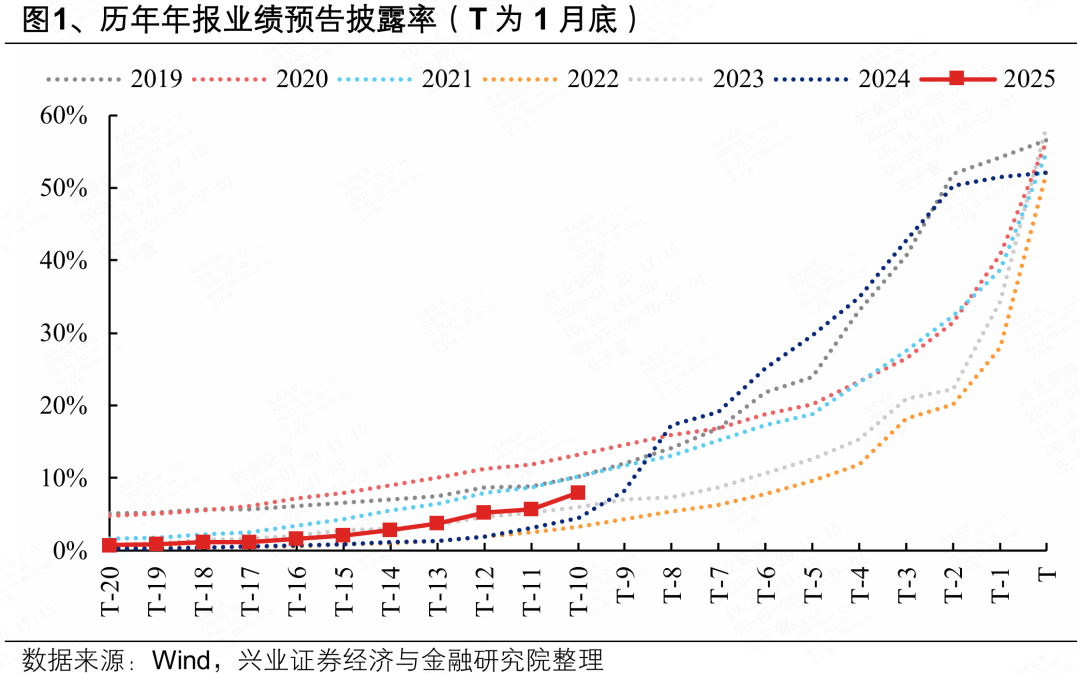
Core Viewpoint - The report from Industrial Securities emphasizes that the recent cooling in the market affects the rhythm and structure rather than the overall trend, with the core logic supporting the upward spring market remaining unchanged. The current spring market is still in progress, and although the market rhythm has slowed, the upward trend continues, with the profit effect expanding to a broader range [1]. Group 1: Liquidity and Catalysts - A liquidity-rich environment is the core driving force supporting the upward trend of the spring market, stemming from the strong performance of insurance funds and the influx of foreign capital due to the appreciation of the RMB [1][2]. - Insurance funds have shown impressive performance in the "opening red" period, with individual insurance premium growth rates exceeding 30% for leading companies, and some companies' individual insurance premiums surpassing 10 billion [1]. - The first half of this year is expected to see a peak in the maturity of residents' fixed deposits, creating an important window for residents to increase their allocation to equity assets [2]. - The continuous appreciation of the RMB is attracting foreign capital back to the market, with a record high of $99.9 billion in bank foreign exchange settlement surplus in December 2025, including a $11.5 billion surplus in securities investment [2]. Group 2: Market Structure and Performance - The current market is characterized by a warm macro environment and supportive policies, which are enhancing market risk appetite and driving the profit effect to expand across various sectors [3]. - The upcoming week will feature a concentrated window for industry catalysts, particularly with the earnings reports from North American tech giants, which may influence the domestic market [4]. - The earnings preview period is approaching its peak, with a disclosure rate expected to reach around 55%, which will significantly impact market structure [4][7]. Group 3: Earnings Forecasts and Sector Focus - As of January 23, 2025, 889 A-share listed companies have released earnings forecasts, with 304 companies expecting net profit growth exceeding 50%, primarily in sectors such as computing, chemicals, new energy, pharmaceuticals, and computer technology [5][6]. - The sectors with high growth or exceeding expectations in earnings forecasts include storage, new energy (battery storage, grid equipment), chemicals, and innovative pharmaceuticals [6][7]. - The report highlights that industries with low price increases during the current market rally include AI hardware, new energy, and various cyclical sectors [8]. Group 4: Future Market Outlook - February is anticipated to be a core window for bullish market activity, with a typical pattern of market volatility driven by liquidity and risk appetite, particularly in small-cap and growth sectors [9]. - The report suggests that themes such as AI applications, commercial space, and energy narratives should be revisited as they may gain renewed attention in February [9].

家电基本面更新-高低切板块买什么
2026-01-22 02:43
Summary of Conference Call Records Industry Overview - The conference call primarily discusses the home appliance industry, focusing on major players such as Midea, Haier, TCL Electronics, and Hisense. The overall performance of the industry is influenced by domestic demand, government subsidy policies, and international market dynamics [1][2][4]. Key Points and Arguments 1. Performance of Major Companies - Midea and Haier are expected to maintain positive revenue growth, with Midea's annual profit growth projected at 14% and Haier's at 12% [1][4]. - Hisense is facing profit pressure, with a slight decline in annual profits [1][4]. - TCL Electronics has exceeded market expectations, driven by an improved product mix in overseas markets [1][4]. 2. Domestic Demand and Pricing Strategies - In Q4 2025, domestic demand is under pressure due to reduced subsidies and high base effects, particularly affecting categories like robotic vacuum cleaners [2][5]. - Midea has announced a price increase of 3-6% for air conditioners, and Gree plans to raise prices as well, which may alleviate pricing competition [1][5]. 3. Investment Recommendations - Three main investment themes are suggested: - The black electronics sector, particularly TCL Electronics and Hisense Visual [6][11]. - Export-related companies [6]. - Innovative small appliance firms [6]. 4. Global Market Outlook - The global television market is expected to perform well in the first half of 2026, benefiting from pre-World Cup inventory replenishment [7]. 5. Impact of Panel Prices - The increase in panel prices is expected to have a minimal impact on company profits, with a projected overall increase of less than 5% [8]. 6. Strategic Partnerships - TCL Electronics has formed a joint venture with Sony, holding a 51% stake, which aims to enhance TCL's competitive position in the high-end market and improve profit margins [9][10]. 7. Future Prospects for the Black Electronics Sector - The black electronics sector is anticipated to have several catalysts in 2026, including business integration at Hisense and strong performance from TCL Electronics [11]. 8. High Dividend Recommendations - Midea and Haier are recommended for their high dividend yields, with expected profit growth in the single digits and attractive valuations [12]. 9. Focus on Tool Chain Companies - In the context of U.S. interest rate cuts, companies in the tool chain sector, such as Juxing Technology and Quanfeng Holdings, are highlighted for their potential due to improving real estate data and demand recovery [13]. Additional Important Insights - The overall retail decline in large appliances is relatively small, indicating resilience in the sector [3]. - The expected valuation recovery for TCL Electronics could reach 12-15 times earnings, with potential stock price increases exceeding 50% [11].
海尔智家拟回购D股 斥资不超200万欧元注销股份
Zheng Quan Shi Bao Wang· 2026-01-21 02:13
Core Viewpoint - Haier Smart Home has announced a D-share repurchase plan, aiming to enhance its capital structure and reduce registered capital through the buyback of up to 1 million shares, with a total funding cap of 2 million euros [1][2] Group 1: D-Share Buyback Plan - The repurchase plan will commence around January 21 and continue until February 13, executed through the Frankfurt Stock Exchange and EU multilateral trading facilities [1] - The buyback is authorized by the 2024 annual general meeting, allowing the board to repurchase up to 30% of the total issued D-shares, with the current plan representing approximately 0.369% of D-share capital and 0.011% of total share capital [1][2] Group 2: Historical Context and Market Performance - Haier's D-shares were listed in October 2018 at a price of 1.05 euros per share, primarily to fund global R&D, market expansion, and supply chain optimization [2] - The D-share performance has been influenced by external market fluctuations, exchange rate changes, and industry cycles, with recent trends showing increased trading activity and a generally upward price movement [2] Group 3: Strategic Growth and Market Position - The company has maintained growth resilience in the North American market through local factory efficiency and capacity expansion, while also experiencing rapid growth in emerging markets such as South Asia and Southeast Asia [3] - Haier's strategy includes a high-end brand focus and global digital transformation, enhancing product structure and operational efficiency through a digital procurement platform [3] Group 4: Industry Outlook - Analysts predict that the home appliance industry will experience a balance of controlled domestic pressure and resilient growth in exports by 2026, with emerging markets being a key growth driver [4] - The easing of US-China tariffs and a recovering US real estate market are expected to create additional opportunities for global home appliance companies [4]
兴业证券:A股业绩预告即将进入披露高峰 关注哪些方向?
智通财经网· 2026-01-20 10:56
Core Viewpoint - As of January 19, the disclosure rate of annual performance forecasts for A-shares is 7.98%, with a peak expected in late January, where the final disclosure rate may reach around 55% [2][5]. Group 1: Performance Forecasts - The performance forecasts indicate that companies with significant net profit growth are primarily in sectors such as computing power, new energy, chemicals, pharmaceuticals, non-ferrous metals, and computers [6][10]. - By January 19, 447 A-share companies have released annual performance forecasts, with 144 companies expecting net profit growth exceeding 50%, mainly in computing power (semiconductors, communication equipment), new energy (batteries, photovoltaics), and chemicals [6][10]. Group 2: Market Reactions - As the performance forecasts enter their peak disclosure period, the correlation between stock prices and performance is expected to increase significantly in the latter half of January, with market sentiment returning to rationality [5]. - The market is likely to undergo a structural adjustment based on fundamentals, with previous hot sectors facing performance validation, while some low-performing but high-quality sectors may attract new capital inflows [5]. Group 3: Industry Insights - The sectors with upward revisions in profit forecasts since November include technology (especially in upstream computing hardware and downstream applications like consumer electronics and software), advanced manufacturing (new energy, military, automotive), and cyclical industries (building materials, non-ferrous metals, coal, steel) [12][13]. - The industries with lower performance growth since the last market rally include AI computing power, new energy, pharmaceuticals, and cyclical sectors like steel and glass fiber [14].

财信证券黄红卫:“降温”稳节奏不改趋势 五大主线锚定2026年投资方向
Zhong Guo Zheng Quan Bao· 2026-01-20 00:33
Group 1 - The A-share market has experienced a strong start in 2026, driven by a combination of market trend continuation, spring market catalysts, and a recovery in overseas markets [1][2] - Recent market fluctuations are attributed to the implementation of counter-cyclical adjustment policies and profit-taking in popular sectors, indicating a healthy adjustment that does not alter the overall upward trend [1][3] - The spring market typically lasts around 57 days, and historical data suggests that A-shares tend to strengthen during this period, supported by liquidity and valuation drivers [2][7] Group 2 - Investment strategies should focus on five main lines for 2026: the artificial intelligence industry chain, high-dividend assets, anti-involution sectors, domestic demand expansion, and resource sectors, all of which have performance support and policy backing [1][7][8] - The AI industry is transitioning, with investment opportunities expected to shift from hardware to application sectors, emphasizing the importance of commercial viability [7] - High-dividend assets remain a stable investment choice, with long-term funds continuing to increase their positions in dividend-paying stocks, which are characterized by stable returns and low volatility [7][8] Group 3 - The anti-involution sectors, including coal, steel, photovoltaic, and lithium battery industries, are expected to see performance improvements due to high state-owned enterprise ratios and market consolidation [7][8] - The expansion of domestic demand should focus on new consumption areas such as health, sports, and travel-related industries, which are poised to benefit from recovering consumer scenarios and policy support [7][8] - Resource sectors, particularly precious metals and strategic minor metals, are anticipated to experience valuation recovery in 2026, presenting potential investment opportunities [8]